by Steve | Oct 31, 2016 | In the News, Perspective E-Newsletter
By Walter Fenton
Earlier this week the Council of Bishops of The United Methodist Church announced the 32 people who will serve on its Special Commission on a Way Forward. Eleven laity, 11 elders, eight bishops, and two deacons were selected. Three additional bishops will serve as moderators. (Our friends at United Methodist News Service have helpfully listed the commission members HERE.)
The bishops, at the May 2016 General Conference in Portland, Oregon, proposed the creation of the special commission, and it was approved by the conference’s delegates. The commission is charged with perhaps the most challenging task given to a body since the formation of the UM Church in 1968. Its mandate includes “a complete examination and possible revision of every paragraph in our Book of Discipline regarding human sexuality,” and finding some way to maintain church unity despite deep differences regarding the church’s sexual ethics, its teachings on marriage, and increasingly, over its polity.
The Rev. Karen Oliveto. UMNS photo.
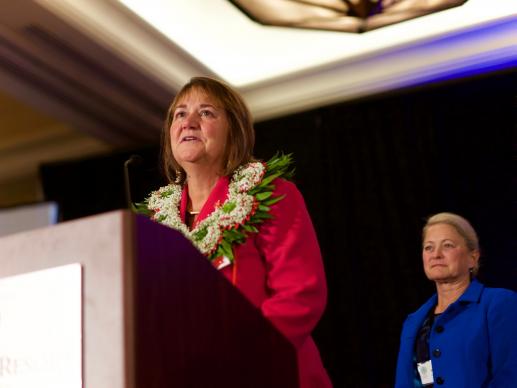
During the late spring and summer of this year, its work was made even more daunting by serial acts of ecclesial defiance regarding the church’s teachings and its ordination standards. Several annual conferences and two jurisdictions took actions in direct opposition to those reaffirmed by the General Conference. Chief among them was the Western Jurisdiction’s election of the Rev. Dr. Karen Oliveto as a bishop of the whole church. Oliveto, who now presides over the Mountain Sky Episcopal Area, is married to her female partner, who is a deaconess in the UM Church.
While people across the connection expressed their hopes and prayers for the newly appointed commission and its work, others offered mild to severe critiques of its composition.
“We feel erased and disappeared in the mission statement of the Commission,” wrote a group of more than 60 openly lesbian, gay, bisexual, transgender, queer or questioning United Methodist clergy and clergy candidates in a statement entitled, “United Methodist Queer Clergy Respond to Naming of Special Commission.” It noted that “only two self-identified LGBTQI persons” were selected as members, and protested that their “lives and the ministries entrusted to [them] will be on the agenda of a body whose make-up is unfairly hegemonic.”
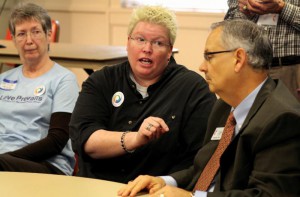
Rev. Amy DeLong
Love Prevails, a UM affiliated LGBTQ+ advocacy group, posted on its Facebook page that “the Commission is not representative of LGBTQ diversity, much less does it represent an LGBTQ majority,” something it pressed for earlier this summer. According to UMNS, the Rev. Amy DeLong, one of the organizations leaders, “found it ‘startling and unconscionable’ that there are no out lesbians or transgender individuals on the commission.”
Still others voiced support for the commission, but also had regrets. “It is problematic to include [caucus group] employees as voting members of the commission,” wrote the Rev. Jeremy Smith, a progressive blogger based in Portland, Oregon. “Their jobs are contingent on their caucus group boards, which is quite a collision of the role to discern a path forward that their boards may not approve of.”
Smith specifically cited Matt Berryman, president of the pro-gay advocacy group Reconciling Ministries Network, the Rev. Tom Lambrecht, vice-president of Good News, and Pat Miller, executive director of the Confessing Movement.
We’re biased of course, but we’re delighted Lambrecht and Miller were included on the commission. And while we differ with Berryman on a number of issues, we are not troubled by his inclusion as well.
Lambrecht and Miller have earned the respect of leaders across the theological spectrum. They have participated in numerous roundtable discussions, spoken at annual conferences, and have always respectfully engaged with those who are in disagreement with the church’s polity, sexual ethics, and teachings on marriage. We are confident they will only enhance the work of the commission, and will act out of conscience and their affection for the church.
Along with Berryman, Lambrecht and Miller represent important and dedicated constituencies in the church. A failure to include knowledgeable representatives from each of these groups would have immediately imperiled the commission’s chances of bringing forward a plan that could gain the broad support necessary for a way forward.
The commission’s charge is not an enviable one, and no one will be surprised if it cannot reach consensus and present a viable plan for the church’s consideration. The hour is late, so they will have to work thoughtfully and deliberately in the months ahead, and therefore the members deserve our thoughts and prayers.
We are disappointed it took the Council of Bishops five months to appoint the commission. We fear valuable time for deliberation and crafting recommendations has been lost. Even more importantly – and particularly in light of all the defiance, the approval of so-called “just resolutions,” the quiet dismissals of valid complaints, and the provocative election of Oliveto – the bishops’ delay further eroded the trust rank-and-file United Methodists have in their leadership and the institution as a whole.
Most, if not all, of the proceedings at General Conference, projected an alarming sense of institutional paralysis, and a disheartening sense that the long and acrimonious debate over the church’s sexual ethics, now amplified by routine and flagrant acts of ecclesial defiance, will go on indefinitely.
In a church facing a major demographic crisis in the coming decade, it is now imperative that its bishops act swiftly and boldly to maintain the good order and integrity of the church. No one doubts their faithfulness, passion for the church, and commitment to building bridges to keep the church unified. However, as laudable as all those attributes are, the necessity of finding consensus around a definitive resolution, and the courage to lead is what they need most to exhibit in the coming months.
by Steve | Oct 24, 2016 | In the News, Perspective E-Newsletter
 By Walter Fenton-
Dear Theophilus, many have undertaken to set down an orderly account of the events that have recently been fulfilled among us, … so I too have decided, to at least write an account of what a few wise progressives are pretty sure happened in Chicago at the Wesleyan Covenant Association (WCA) Conference. True, only one of the three actually attended the event, but they’re all confident in their analysis, and even in some of their prognostications.
First, let me report some of the most shocking details about the event. According to one of the progressive commentators, himself from a predominantly white annual conference, most of the people who attended the event were “white.” Imagine that, in a U.S. church that is 94 percent white, most of the participants present in Chicago were white too. Even worse, many of them were wearing “khakis and button shirts.” But here’s the really bad news, according to this analyst, a “prominent theme” of the conference was “submission to authority, whether Biblical or Spiritual.” And to prove it, the participants sang songs that “included, ‘On Christ the solid rock I stand.'”
What is very important to know dear Theophilus, is that according to these sage observers “the [WCA] is not what they [sic] present to be.” So, if you don’t “decode the language,” you won’t be able to see how dangerous they are. These clever WCA people, we are told, are “very disciplined in message management.” They even claim to be “centrists,” and – another shocker – their Chicago conference had a “common approach” with “recurring themes.”
Fortunately, one of our progressive reporters has the powers to cut through the WCA’s disciplined message management and he can even decode its language. It’s obvious to him that “in practice and in composition, the WCA continues the dividing and eroding of the centrist qualities of the [UMC].” Although he has no close relationships with the presenters, and probably has never personally met most of the WCA’s leaders, from his perch he’s certain its “conveners, elected leadership, and supporters come heavily from the anti-gay culture warriors of the past 40 years.” In his insular groupthink world, his mere assertion is all that is needed to make this case. No need for messy things like citations and evidence for proving his accusation.
To be fair, dear Theophilus, these liberal scribes report how concerned they are about the unity of the church and therefore are worried about the disunity being promoted by the WCA. As evidence of the WCA’s determination to divide the church, they report that the conference in Chicago reaffirmed the UM Church’s doctrinal statements, spoke warmly of its polity, and, to make matters even worse, invited those present to stand and recite the Nicene Creed.
Unlike many progressive United Methodists who proudly style themselves as proponents of unity, the WCA did not encourage people to pick and choose their
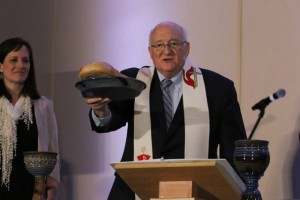
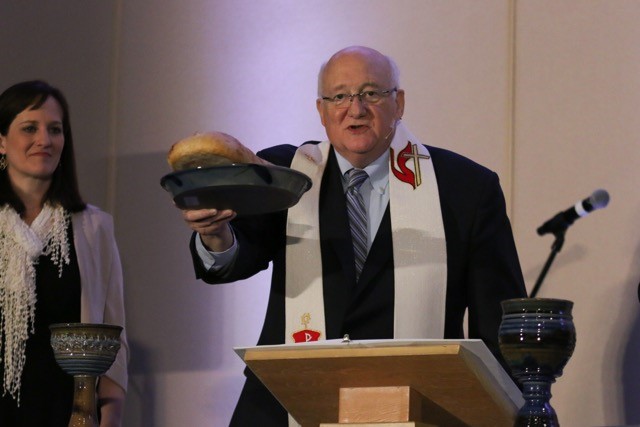
Bishop Mike Lowry celebrates Holy Communion.
preferred UM Church teachings. It didn’t go on record saying it would defy the church’s covenant and the will of the General Conference. And, finally, it did not provocatively push for the election of a bishop that would bring the church to the very edge of separation.
True, two bishops did celebrate Holy Communion, and one of them brazenly proclaimed, “we preach Christ and him crucified.” So in short, the WCA stubbornly adhered to Scripture and the church’s teachings, which, when decoded, clearly means they’re trying to divide the church.
Fortunately, dear Theophilus, the most wizened among our three commentators responded most thoughtfully to the conference with, “meh.” She reports that she’s seen groups come and go, and a gathering of 1,800 United Methodists is just so many small potatoes. Unlike all of those other unnamed and un-cited “[UM] commentators” who according to her “are all agog over the official launch of the WCA,” she fancies herself an unimpressed H.L. Mencken, our very own curmudgeon with a keyboard. It’s a wonder she deigned to dedicate a whole article to the paltry, little gathering.
But she did. And she can hardly constrain her contempt for these rabble-rousers. “In reality,” she writes, “the WCA offers little more than a new wineskin dressing up a very old wine that has turned to vinegar.” Mencken, indeed.
By the end of her “analysis,” however, the WCA is apparently more of a threat than she initially indicates. She darkly worries that the “[WCA’s] organizers have set up sufficient mechanisms to create their own denomination.” The small group also reminds her of “the hijacking of the 2016 General Conference by conservatives forces. It’s entirely possible,” she warns, “the WCA and its followers [that measly lot of 1,800?] could seek to hold the denomination hostage.” Yikes.
Dear Theophilus, I am sorry if this account is disconcerting, but I just wanted you to beware of a bunch of khaki clad people singing “On Christ the solid rock I stand.” Be warned, “There’s money behind this.” And as Lucy said to Charlie Brown, “It’s run by a big eastern syndicate you know.”
by Steve | Oct 19, 2016 | In the News, Perspective E-Newsletter
During the first hour of its launch event in Chicago on October 7, leaders of the Wesleyan Covenant Association (WCA) were scrambling to find more chairs to accommodate the standing-room-only gathering, as well as swaying and clapping to the enthusiastic and impromptu participation of African United Methodists during the opening worship time – a visible reminder of the global nature of the denomination.

Rev. Dr. Jeff Greenway
“I am convinced God is doing a new thing among those of us who claim the historic, orthodox, evangelical, Wesleyan expression of our faith,” said the Rev. Dr. Jeff Greenway, lead pastor of Reynoldsburg (Ohio) United Methodist Church, in his presentation on the group’s purpose. “I believe we are planting seeds today – that when full grown – will bear the fruit of a vital Wesleyan witness and a dynamic Spirit-filled Methodism across the globe.”
The inaugural gathering was a high-energy mixture of affirmative messages on the Lordship of Jesus, the Wesleyan drive to transform the world through Christian discipleship and social holiness, and the centrality of the Scriptures in the life of the Church.
The Chicago event was also a show of solidarity to orthodox clergy and laity in sections of the church that no longer adhere to the global United Methodist views on marriage and sexuality. The day-long event culminated with a communion service overseen by two United Methodist bishops.

Bishop Mike Lowry
“We don’t live on the world’s wisdom, we do not exist on the world’s power,” said Bishop Mike Lowry of the Fort Worth Area of the Central Texas Conference, during his communion homily. “You know and I know it is Christ, the power of God and the wisdom of God. What is at stake for us in this struggle we are in is not ultimately the issue of human sexuality; what is at stake for us is who is Lord, who rules, who saves us. We preach Christ and Him crucified.”
Nicene Affirmation
Interspersed between messages calling for a revitalized Wesleyanism, WCA leaders crowd-sourced affirmation of its theological underpinnings, purpose, and moral principles. “We are reciting the Nicene Creed today without crossing our fingers behind our backs,” said Dr. Bill Arnold, professor of Old Testament at Asbury Theological Seminary, before leading the group in the ancient affirmation of faith.

Rev. Carolyn Moore
It also christened a new leadership team through audience affirmation by applause and “amens.” As the council members began their work together they elected Dr. Jeff Greenway as the group’s chairperson; the Rev. Carolyn Moore, pastor of Mosaic United Methodist Church outside of Augusta, Georgia, as vice chairperson; the Rev. Madeline Carrasco Henners, pastor of First United Methodist Church in Luling Texas, as secretary; and Ferrell Coppedge, lay leader of Mt. Bethel United Methodist Church in Marietta, Georgia, as treasurer.
With more than 1,800 participants, the Donald E. Stevens Convention Center near O’Hare Airport in Chicago was flooded with enthusiastic United Methodists from every conference across the denomination in the United States and from ten conferences in Africa.
Chicago Statement
Through a “Chicago Statement” that was affirmed by a standing ovation and cheers, the group asked the Council of Bishops to “swiftly name the members” of the Commission on the Way Forward and “approve the call for a special General Conference in early 2018 to enable resolution of the conflict that divides us before further harm is done to United Methodist members, congregations, conferences, and ministries.”
“We believe it is imperative for the commission to propose a plan that calls for accountability and integrity to our covenant, and restores the good order of our church’s polity,” states the Declaration. “If the commission determines no such plan is possible, then we believe it should prepare a plan of separation that honors the consciences of all the people of the church and allows them to go forward in peace and good will.”
Preparing for Change

Rev. Rob Renfroe
In the midst of dissension and uncertainty within United Methodism, leaders of the Wesleyan Covenant Association say the group was formed in order to bring a unifying voice of hope and encouragement to evangelicals and traditionalists as they face the future.
“We don’t know what the future will bring,” said the Rev. Rob Renfroe, pastor of adult discipleship at The Woodlands (Texas) United Methodist Church, during his message to the group. “We are not here to promote schism. But we are not here to be naïve either. Change is coming to the United Methodist Church. We all know that. The bishops know that and many have said so publicly.”

Rev. Dr. Jerry Kulah
The Rev. Dr. Jerry Kulah, the West Africa Central Conference Coordinator of the UMC Africa Initiative, reminded the group about the importance of choosing the right way when two divergent paths are presented at a crossroad. “The only sustainable path to global unity of the people called United Methodist is total submission and loyalty to the Lordship of Jesus Christ, and an exclusive obedience to the Word of God as primary authority for faith and Christian living,” said Kulah, the dean of the Gbarnga School of Theology (United Methodist) in Liberia. “While we live within diverse cultures and religious worldviews, it is important that we love and embrace everyone, but we must continually live within God’s parameter of grace defined by Scripture.”
Tamed by Culture
“Wesley’s great fear was that the Methodist movement would – in a process that had happened again and again over the centuries – be tamed by the culture until it was nothing more than a docile lapdog,” said the Rev. Dr. Andrew Thompson, a Wesley scholar and pastor of First United Methodist Church in Springdale, Arkansas. “He was afraid that Methodism’s engagement with the culture would dilute it until it was a shell of its former self.”
In his opening sermon, the Rev. Kenneth Levingston, senior minister of Jones Memorial United Methodist Church in Houston, said that the “core of our struggle” is when men, women, and the Church attempt to put other things in God’s rightful place. “Salvation without sacrifice is a false god. Sanctification without submission is a false god,” he said. “Mercy and grace without truth and transformation are false gods. Social holiness without Scripture is a false god. Forgiveness without faithfulness is a false god. Redemption without renunciation of sin is a false god.
“Unity without covenant is a false god,” concluded Levingston.
Rescued for Something
Throughout the day, many of the speakers exhorted United Methodists to live out a vibrant form of Wesleyan Christianity, one that envelopes deep spirituality, passionate worship, and meaningful outreach for people of all walks of life, especially the downtrodden.

Rev. Jessica LaGrone
“We meet not just to find a way forward, but to remember how we found The Way, the Truth, and the Life in the first place,” said the Rev. Jessica LaGrone, Dean of the Chapel at Asbury Theological Seminary. “And to remember that to fully know life is not just to be rescued from something, but to be rescued for something. To become the rescued and transformed means to be those intent on the rescue and transformation of others.”
Wesleyan Covenant Association leaders announced during the afternoon session that they had run out of membership forms and encouraged participants to sign-up online.
by Steve | Sep 22, 2016 | In the News, Perspective E-Newsletter
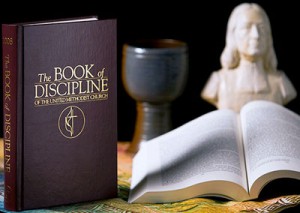 With the election of the Rev. Karen Oliveto as a bishop of The United Methodist Church, a pastor who is married to another woman and therefore unqualified to assume the office, it is clear to most people that the church has reached a crisis point.
Thousands of people across the connection have endorsed a statement that will be shared with the Council of Bishops. To read the statement and add your endorsement, click HERE.
by Steve | Sep 22, 2016 | In the News, Perspective E-Newsletter
 By Walter Fenton-
Evangelical United Methodist Church (EUMC), one of the denomination’s fastest growing large churches, has decided to withhold paying its annual conference and general church apportionments. The Greenville, Ohio, congregation reached its decision in late August.
“The open defiance by annual conferences to ignore the Book of Discipline and defy the Word of God, and the Western Jurisdiction’s decision to elect a gay bishop compelled us to act,” said Matt Hamilton, chairman of the congregation’s leadership board.
According to the blogger Len Wilson, in 2014 the West Ohio church was the third fastest growing UM congregation with worship attendance over 1,000. It now averages approximately 1,200 to 1,300 people in attendance at five weekend worship services in a rural community with a population of just over 13,000.
“In the layperson’s workplace, if you sign a contract stating you’ll fulfill a certain job within a corporation, and then you fail to uphold your duties, you’d be terminated,” said Jill Steinbrunner, another member of the congregation’s leadership board. “EUMC is looking for the bishops to display clear and definitive support of biblical truths … and holding clergy accountable to their ordination vows and our Book of Discipline.”
Over the past several years the West Ohio Annual Conference, like many others, has witnessed challenges to the denomination’s sexual ethics and its teachings on same-sex marriage. In 2010, on a very narrow vote (948 to 920), the conference elected an openly gay man as its conference treasurer. He has been re-appointed to the post every year since. And earlier this year, just three days before the convening of General Conference, UM Pastor David Meredith made statewide news when he married his male partner at Broad Street UM Church in Columbus, Ohio. A complaint was filed in the case, but to date there has been no word of its resolution.
“EUMC has been increasingly alarmed at the way UM leaders have chosen to disregard the tenants of our church,” said Steinbrunner. “It has put more emphasis on maintaining unity than on teaching biblical truth and saving souls.”
The church recently joined a diverse mix of 20 other congregations in Darke County, Ohio, in an effort to share the Gospel with unchurched people. The initiative, called Time to Revive, has resulted in over 500 people making decisions for Christ.
“I am excited,” said Steinbrunner, “that the church is not only growing in the number of attendees, but more importantly, we’re seeing people growing in their depth of faith and knowledge of Christ. We’ve had dozens of people volunteer to meet one-on-one with people who have recently become Christians. It’s very exciting to witness.”
The congregation has a history of paying 100 percent of its apportionments, and both Steinbrunner and Hamilton said the board reached its decision reluctantly and after months of discussion and prayer.
According to Hamilton, the leadership team decided it could no longer, in good conscience, support a conference and general church that is failing to abide by its own polity and teachings.
He explained that the leadership team unanimously voted to withhold the apportionments. It then held a church-wide membership meeting to solicit feedback before moving forward. “Members were overwhelmingly supportive of our decision,” he said.
“If the bishops would enforce the Book of Discipline we could begin paying apportionments again,” he added. “But right now the general church is in chaos. In fact, our people feel like the bishops’ inability to maintain good order in the general church makes it more difficult for us to do our ministry. We’ll continue to do what we’ve been doing, but the bishops aren’t helping.”
Walter Fenton is a United Methodist clergy person and an analyst for Good News.
by Steve | Sep 7, 2016 | In the News, Perspective E-Newsletter
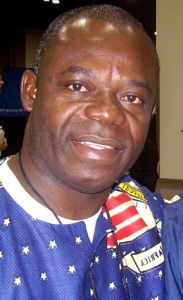 The Rev. Jerry Kulah, West Africa Central Conference Coordinator of the UMC Africa Initiative and the dean of the Gbarnga School of Theology, a United Methodist seminary in Liberia, is set to speak at the WCA launch event Friday, October 7.
Jerry is an ordained United Methodist clergyperson and has served as both a local church pastor as well as the Monrovia District Superintendent overseeing 35 churches. He has represented the Liberia Annual Conference as a delegate to General Conference.
With his miraculous story of escaping death during the Liberian civil war, Jerry has been instrumental in organizing Liberia’s non-denominational National Day of Prayer and is widely regarded as one of its most influential Christian leaders. He was also instrumental in bringing the medical mission Mercy Ships to Liberia that has blessed hundreds in need of medical services that would otherwise be out of reach.
Jerry’s sermon, “Methodists at the Crossroads,” inspired hundreds of people at the first worship service ever hosted by Africans at the 2016 General Conference. We are thrilled to have Jerry join us in Chicago.
To register for the launch event, click HERE.