by Steve | Feb 13, 2019 | In the News, Perspective E-Newsletter
 By Thomas Lambrecht –
Ask the wrong question, and you will get a wrong or misleading answer. Asking the right question will help move toward understanding. A recent newsletter from the One Church Plan advocacy group “Mainstream UMC” makes the claim that, “The central question for every delegate is: ‘Are you willing to share a denomination with Christians who think differently than you?'”
With all due respect, that is the wrong question. Neither the Traditional Plan nor the Modified Traditional Plan nor the revisions being made to those plans ask for uniformity of belief in The United Methodist Church on the question of the church’s ministry with LGBTQ persons. For fifty years, evangelicals and traditionalists have shared a denomination with Christians who think differently than we do.
The right question is, “Are you willing to share in a denomination that has mutually contradictory official teachings and mutually contradictory practices?” Under the One Church Plan, the denomination would officially say that marriage is “between two adults,” but elsewhere “traditionally understood as a union of one man and one woman.” Which is it? We would have two mutually contradictory teachings. Some would say marriage is one man and one woman, while others would say marriage is two adults. Essentially, the church would have two official definitions of marriage.
Furthermore, under the One Church Plan some annual conferences would ordain self-avowed practicing homosexuals as clergy, while other annual conferences would not. Some local churches would accept an openly gay or lesbian pastor, while others would not. Some clergy would perform same-sex weddings or unions, while others would not. There would be mutually contradictory practices within the church.
While most United Methodists can accept the idea that there will be differences of opinion and belief within the church, many could not accept that the church would have mutually contradictory teachings or practices. The contradictions would undermine our connectional system, moving us toward a congregational arrangement and fundamentally altering our Methodist identity.
The Modified Traditional Plan requires annual conferences to vote on this statement: “The annual conference and its subsidiary units will support, uphold, and maintain accountability to the United Methodist standards found in The Book of Discipline of The United Methodist Church, 2016, in their entirety, including but not limited to ¶ 304 ‘Qualifications for Ordination,’ ¶ 341 ‘Unauthorized Conduct,’ ¶ 613 ‘Responsibilities of the Council on Finance and Administration,’ and ¶ 2702.1 ‘Chargeable Offenses.'” The focus of this statement is not beliefs, but actions. Will the annual conference abide by the provisions of the Book of Discipline or not?
The Modified Traditional Plan requires bishops to certify this statement: “I, (Name), certify that I will uphold, enforce, and hold all those under my supervision accountable to the standards and requirements of The Book of Discipline of The United Methodist Church, in their entirety, including but not limited to standards on marriage and sexuality and the ordination of self-avowed practicing homosexuals (¶¶ 304.3, 341.6, 414.2, 5, 9, 613.19, and 2702.1a-b).” Here again, the focus is not on belief, but upon action. Will the bishop abide by, and hold his or her clergy and congregations accountable to, the Book of Discipline or not?
Clergy are not required to certify anything. They are merely required to “maintain their conduct within the boundaries established by the Book of Discipline.” That is what they have always been required to do.
It is false to say that the MTP seeks to drive out those who think or believe differently. It only requires those who desire to be United Methodist to maintain their conduct within the boundaries set by General Conference.
Any organization or business has standards and requirements, and consequences for failing to keep those rules. The church is no different. Those employed by the church, just like those who are members of organizations or employed by a business, are expected to keep the rules of the enterprise. This is not unreasonable, but essential. Inability to live by a common set of guidelines creates anarchy within an organization.
The question is what happens when a person disagrees with the rules that have been established. One may try to get the standards changed, while continuing to live by them. Progressives have worked for over 40 years to change the covenant standards of The United Methodist Church, but have been unable to convince a majority to make that change. Change in the near future seems unlikely. But this response has integrity and allows for the expression of dissenting opinions.
If the disagreement with the rules is a matter of deep conscience or fundamental belief, one may make the decision that integrity demands they resign their position in order to find another church that has standards they can live by. This response also has integrity, maintaining the identity of the organization while recognizing that one may no longer fit within it.
What does not have integrity, and a course too many have adopted, is when our church’s leaders, from some bishops on down, determine they do not have to live by the denomination’s rules. Whether it is failing to live by, or enforce, the Discipline or electing an openly lesbian bishop, their disobedience has fostered the crisis we are in. It distorts our church’s identity and forces the church to devote too many of its resources to gaining compliance with our standards in order to maintain our identity.
We agree with the statement, “In essentials, unity.” Standards of sexual morality are an essential for faith and discipleship. They are founded on the clear teaching of Scripture. They are essential elements in forming our United Methodist identity. Allowing various standards of sexual morality in the denomination would balkanize the church.
The Mainstream UMC caucus newsletter says, “Schism is NOT inevitable. It is a choice by a few.” That is right. The few who have chosen to flaunt the church’s standards and processes in disobedience have created schism. It is not only inevitable, it is already here. Proponents of the Modified Traditional Plan simply recognize a reality that proponents of the One Church Plan want to waive away.
The accountability provisions of the Modified Traditional Plan are not designed for the purpose of punishing people. They are designed to motivate United Methodist leaders to adjust their behavior to stay within the boundaries established by the church. Those who cannot abide by our requirements ought to have the integrity to withdraw from a denomination they can no longer support. Their insistence on disobeying and disrupting the church in order to impose their own judgments is an inappropriate response to 40 years of consistent decisions by our global church and is destructive of the very church they love.
Only by restoring uniformity of practice can our church begin to reestablish its identity. We insist our pastors baptize infants, encourage women to participate in ordained ministry, and offer ourselves in service through the appointment system. That is part of our DNA as United Methodists. Whether they agree with those requirements or not, pastors are expected to abide by them. A common standard of sexual morality is also part of our DNA. To dismantle it would be to deny or fundamentally change our identity.
Is it any wonder that many who hold traditional understandings of biblical sexual morality would find themselves unable to continue in a church that so dramatically changed its identity? Yet the Mainstream UMC and Uniting Methodists caucuses would deny such traditionalists an opportunity to act with integrity on their consciences by withdrawing as a congregation, keeping the mission and ministry of that local church intact. Instead, they want to force people to leave as individuals without church property, destroying a congregation’s ministry in the process.
Mainstream UMC says, “The Commission on the Way Forward did NOT introduce the idea of ‘exit.’ The ‘exit’ provisions were introduced by the few rogue anonymous bishops who wrote the Traditional Plan.”
As a member of the Commission on a Way Forward, I can tell you this statement is simply false. At every meeting of the Commission during the first year of its existence, members spoke of the need for an exit path for congregations that felt the need to depart, no matter what plan or proposal the General Conference passed. An exit path for all plans was included in the Commission’s preliminary report to the Council of Bishops in November 2017. Such an exit path was mentioned in nearly every news story reporting on the work of the Commission during 2017.
Why was there not an exit path in the Commission’s final report? It was because the Council of Bishops initially said they would discuss and recommend an exit path. Then the Council of Bishops decided that it was not necessary to have an exit path at all. Despite their initial support for an exit path, many centrist and progressive leaders have now adopted the Council of Bishops’ position that an exit path is not necessary.
The General Conference faces several important decisions.
- Will the church’s leaders vote to fundamentally change our church’s identity by adopting mutually contradictory teachings on marriage and mutually contradictory practices regarding same-sex marriage and the ordination of practicing homosexuals?
- Will the church’s leaders ignore the reality of schism currently present in the church and expect its members and clergy to put aside their conscientious objections (on either side) and all “just get along?”
- Will the church’s leaders attempt to keep a lid on the pressure cooker by failing to provide a consistent and fair exit path for congregations to depart with their property?
The answers to these questions will determine whether The United Methodist Church has a faithful future ahead, or will simply follow all the other mainline U.S. Protestant denominations into legal conflicts, decline, and irrelevance.
Thomas Lambrecht is a United Methodist clergyperson and the vice president of Good News. He is a member of the Commission on a Way Forward.
by Steve | Feb 12, 2019 | In the News
— By Maxie Dunnam
From the first General Conference of The United Methodist Church, we defined ourselves on social issues on the basis of our commitment to Scripture. This has certainly been true in relation to marriage and homosexuality.
Dr. Richard Hays, internationally recognized New Testament scholar and authority on Paul’s writing, has contributed immensely to our commitment. His essay in Staying the Course, a book I edited with Newton Maloney in 2003,is a clear and convincing statement of the biblical witness concerning homosexuality. His witness is that the biblical texts that address the topic of homosexual behavior are “unambiguously and unremittingly negative in their judgement.”
Early in his essay he examines Old Testament sections that address homosexual action; though few, they are unambiguously and unremittingly negative in their judgement. Then he examines some New Testament passages to show that “the early church did consistently adopt the Old Testament teaching on matters of sexual morality, including homosexual acts.”
“In 1 Corinthians 6, Paul, exasperated with the Corinthians – some of whom apparently believe themselves to have entered a state of exalted ‘knowledge,’ in which the moral rules of their old existence no longer apply to them (cf. 1 Cor. 4:8, 5:1-2, 8:1-9) – confronts them with a blunt rhetorical question: ‘Do you not know that wrongdoers will not inherit the kingdom of God?’ He then gives an illustrative list of the sorts of persons he means: fornicators, idolaters, adulterers, malakoi, arsenzokoitai, thieves, the greedy, drunkards, revilers, robbers (6:9). I have left the terms pertinent to the present issue untranslated because their translation has been disputed recently by John Boswell and others. The word malakoiis not a technical term meaning ‘homosexuals’ (no such term existed either in Greek or in Hebrew), but it appears often in Hellenistic Greek as pejorative slang to describe the ‘passive’ partners – often young boys in homosexual activity. The other word, arsenoleoitai, is not found in any extant Greek text earlier than 1 Corinthians. Some scholars have suggested that its meaning is uncertain, but Robin Scroggs has shown that the word is a translation of the Hebrew mishkav zakur (‘lying with a male’) derived directly from Leviticus 18:22 and 20:13 and used in rabbinic texts to refer to homosexual intercourse. The Septuagint (Greek Old Testament) of Leviticus 20:13 reads, ‘Whoever lies with a man as with a woman (meta arsenos koitén gynaikos),they have both done an abomination.’ This is almost certainly the idiom from which the noun arsenokoitai was coined. Thus, Paul’s use of the term presupposes and reaffirms the holiness code’s condemnation of homosexual acts.
“In 1 Corinthians 6:11, Paul asserts that the sinful behaviors cataloged in the vice list were formerly practiced by some of the Corinthians. Now, however, since they have been transferred into the sphere of Christ’s lordship, they ought to have left these practices behind: ‘This is what some of you used to be. But you were washed, you were sanctified, you were justified in the name of the Lord Jesus Christ and in the Spirit of our God.’ The remainder of the chapter (w. 12-20), then, counsels the Corinthians to glorify God in their bodies, because they belong now to God and no longer to themselves.
“The 1 Timothy passage includes arsenokoitaiin a list of ‘the lawless and disobedient,’ whose behavior is specified in a vice list that includes everything from lying to slave trading to murdering one’s parents, under the rubric of actions ‘contrary to the sound teaching that conforms to the glorious gospel’” (Staying the Course, pp. 67-68).
After a similar clear examination of Romans 1:18-32, which explains the condemnation of homosexual behavior in an explicitly theological context, Hays concludes, “From Genesis 1 onwards, Scripture affirms repeatedly that God has made man and woman for each other and that our sexual desires rightly find fulfillment within heterosexual marriage” (See, Mark 10:2-9; 1 Thess. 4:3-8; 1 Cor. 7:1-9; Eph. 5:21-33; and Heb. 13:4).
Nothing is more central for our assessing The Way Forward Plans at our upcoming General Conference than Scripture. The One Church Plan eliminates from our Discipline our present position on homosexual action and marriage, making these issues matters of local option. This is in opposition to Scripture as understood and interpreted by a huge majority of the millions of Christians around the world.
The Rev. Dr. Maxie Dunnam is the former president of Asbury Theological Seminary and a member of the board of directors of the Confessing Movement. Reprinted by permission of the Confessing Movement.
by Steve | Feb 8, 2019 | In the News, Perspective E-Newsletter
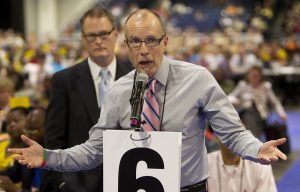
The Rev. Mike Slaughter, front, speaks at the 2012 General Conference in Tampa, Florida. “I support the One Church Plan, but if we can’t agree to disagree, I would support a gracious exit plan that is just,” Slaughter said recently. Photo by Mike DuBose, UMNS.
By Thomas Lambrecht –
Recent statements from two different groups portend an agenda of institutional survival taking precedence over resolving the conflict in The United Methodist Church at the upcoming General Conference. Many across the theological spectrum (including many members of the Commission on a Way Forward) have previously said that a gracious exit path for congregations to leave the denomination with their property would be necessary regardless of which plan General Conference adopted. Now, some leaders are pulling back from that position in an attempt to coerce churches into maintaining the current institutional structure.
Reconciling Ministries Network, a pro-LGBTQ organization in the UM Church, recently posted a statement on their Facebook page that demonstrates the level of hypocrisy or denial it takes to try to preserve a broken institution.
They state, “Already built into The UMC are ways to leave the Church agreed upon by the Church.” That is only partly true. The Discipline contains a provision allowing an annual conference to deed a local church property over to “another evangelical denomination.” The conditions for such an action would depend upon whatever the annual conference chooses to impose upon the local church. Some congregations have not been allowed to leave with their building at all, despite the fact that over 90 percent of the members voted to withdraw. Other congregations have been asked to pay large sums to keep their property. The local church is at the mercy of the annual conference, which can choose to be gracious or play hardball in what they require. What congregations are asking for is a fair, gracious, and standardized exit path that assures them there is an equitable way to keep their property.
It is helpful for United Methodists to keep in mind the congregations of brothers and sisters who have attempted to depart from other mainline denominations over issues of marriage and sexuality. The legal fees spent by the national Episcopal Church exceeded $45 million, not including what local churches spent. Presbyterian churches spent millions, and found that the disparity between different presbyteries (equivalent of our annual conferences) in how they treated departing congregations created unfair and often punitive and adversarial conditions. We can learn from their experiences and do better.
The Reconciling Ministries statement goes on, “What we need at General Conference 2019 is the resolve to come together to further the well-being of the Church, not to dissolve it.” The statement thus equates some local congregations leaving the denomination with “dissolving” the church. Such hyperbole does not serve us well and distorts the truth. Even if hundreds of congregations were to depart, there would still be a United Methodist Church. We have nearly 30,000 congregations, and no one is suggesting that all or even most are going to depart. And how is continuing the current conflict (by not allowing those opposed to our standards to leave with their property) “furthering the well-being of the Church?”
Finally, the statement says, “Plans for so-called ‘gracious’ exit are plans for schism, dissolution, and disobedience to the mission of the Church.” It is highly ironic that those causing the schism in United Methodism are now blaming those who want a fair and gracious exit path for fomenting schism. It goes beyond irony to arrogance for those who are currently disobeying the United Methodist Discipline and covenant to be charging those who want an exit path with disobedience.
On the contrary, those desiring an exit path want the church to provide that so the congregation desiring to depart is NOT being disobedient in choosing to do so. Evangelicals and traditionalists have consistently operated within the boundaries of the Discipline.
Those who have fomented this crisis through their own disobedience have no standing to call others schismatic or disobedient, nor to prevent congregations from living out their Christian faith and mission in a way that is faithful to their conscience.
Only slightly less objectionable is a statement from Uniting Methodists, a newly formed caucus group advocating for the One Church Plan, calling for all exit paths to be referred to the 2020 General Conference.
“It’s clear that the first priority for the Body of Christ is always to search for unity rather than division,” said the Rev. Dr. James A. Harnish, spokesperson for the group. While unity is indeed a value for followers of Jesus Christ, there are other even higher values. Values like remaining in Christ (John 15:5), allowing the Word of God to remain in us and bear fruit in our lives (John 15:7), and keeping Christ’s commandments (John 15:10). Faithfulness and obedience to God’s will take precedence over unity. Fostering a “pretend” unity through structural coercion is an unhealthy approach to resolving our crisis.
Traditionalists are not “searching” for division, but recognizing the division that already exists and the practical impossibility of continuing structurally united with those who deny the teachings of Scripture and disrespect our United Methodist identity and covenant.
Harnish further maintains, “Action on exit plans are [sic] not consistent with the primary purpose for establishing the Commission on a Way Forward.” However, if one reads the motions adopted at the 2016 General Conference, they do not anywhere mention preserving the unity of the church. Instead, they reference ending or resolving our conflict and providing a way for the church to move forward. We all wish that we could find a way forward that would preserve the unity of the church. But the deep theological divide and unwillingness of some to submit to our agreed-upon covenant makes unity impossible without repentance and a change of behavior.
Harnish’s final reason for postponing action on exit paths is “Delegates will not have adequate time to gather all of the facts, understand the consequences, and participate in thoughtful debate.” These proposals have been publicly before the church for seven months. Much ink has been spilled with writings on all sides of a complex issue. Delegates have had ample time to study the proposals and understand the possible consequences. If the delegates are not ready to act now, they never will be.
Proposals for exit are found in seven of the 78 petitions to be considered. Only two of them need to be enacted (one from the Modified Traditional Plan allowing transfers out by annual conferences and congregations and one exit path for individual congregations). One of those proposals already passed a legislative committee in 2016. In 2020, General Conference will be considering hundreds of petitions spanning dozens of topics. Despite having more days of sessions, the delegates would not have any more time to focus on the exit paths than they do in 2019.
Even some Uniting leaders have publicly supported an exit path. According to a UMNS article, “the Rev. Mike Slaughter, pastor emeritus of Ginghamsburg United Methodist Church, agrees that exiting the denomination should be done with grace.
“‘I support the One Church Plan, but if we can’t agree to disagree, I would support a gracious exit plan that is just. In other words, one that would come up with a just ‘buyout’ that would cover the liabilities that we are all accountable for. Not unlike divorce, where two parties have to determine fair support for what they have created together,’ he said.”
Since making that statement, Slaughter has reiterated his personal support for an exit path, saying “he doesn’t think discerning a just exit plan should top the agenda but should definitely be part of what’s under consideration. ‘I want to do whatever to keep the majority of us together, and we need to look at that first,’ he said. ‘And then we need to look at, if that doesn’t work for some, how there can be a gracious, just exit.'”
Uniting Methodists’ call to refer the exit path petitions to 2020 is a way to kill those proposals or, at best, once again “kick the can down the road.” If the One Church Plan is adopted, many proponents undoubtedly want to coerce traditionalists into staying in the church so that proponents can continue to try to change our minds while benefiting from our continued financial support of the institutional structure. Our church has reached a decision point on ministry with LGBT persons. Our lay members will not withstand another delay in resolving a crisis that is severely damaging our church’s ability to make disciples of Jesus Christ for the transformation of the world. Delaying any exit path would only exacerbate the conflict in our church, not resolve it.
The question is, do our leaders care more about enabling our church to move forward in effectively carrying out our mission, or about trying to preserve an institutional structure? If the latter, our denomination will continue to decline and the kingdom of God will lose.
Here, another saying of Jesus is instructive. “I tell you the truth, unless a kernel of wheat falls to the ground and dies, it remains only a single seed. But if it dies, it produces many seeds” (John 12:24). We need to be willing to surrender our instinct for institutional self-preservation for the sake of allowing the church to move into a healthier place. We cannot continue to operate in the current way and expect to see fruitful ministry in the years ahead. A healthy institution would allow those who can no longer conscientiously participate in the institution’s mission to amicably withdraw and pursue their own mission as they perceive it. Anything else is simply an institutional power play.
Thomas Lambrecht is a United Methodist clergyperson and the vice president of Good News. He is a member of the Commission on a Way Forward.
by Steve | Feb 7, 2019 | In the News

Dr. William J. Abraham
By Maxie Dunnam
The way some folks talk and write about the issues facing our upcoming special General Conference suggests they don’t know or care about how our United Methodist Church has been faithful in subjecting its teaching on homosexuality to serious investigation. We have been open to fresh insights and new truth that may emerge on our faith pilgrimage. The issue has been on the agenda of every General Conference since union with the EUB in 1968. We have had a General Conference Study Commission on Homosexuality that worked for four years; we have had formal dialogues in which all parties have participated and had a say in the debate.
The book, Staying the Course, which I edited with Newton Malony in 2003, was a big part of that dialogue process and a response to the General Conference study commission. In the first essay in the book, Billy Abraham wrote on “The Church’s Teaching on Sexuality.” He made the case that our statement on homosexuality in The Discipline contains four distinctive elements.
“First, there is a distinction between persons and their sexual behavior, between persons and their actions. This is not a redeployment of the old distinction between the sinner and the sin. The move here is correctly positive in its anthropological content, insisting that all persons are of sacred worth. It begins with persons before they are sinners, so to speak. Even then, this language is perhaps too thin and emaciated. What we really want to say is that all persons are made in the image and likeness of God and all persons have been redeemed at an incredible price by the precious blood of Christ. This is the basis of their sacred Worth, and it is one of the reasons we must distinguish between person and act. Given the distinction between person and act, our Church insists that it is possible to be fully committed to the welfare of the person even though one disagrees with the moral character of her or his behavior.
“Second, it is claimed that the practice of homosexuality is incompatible with Christian teaching. This claim is at once both substantive and modest. It is substantive where it needs to be, that is, in saying cleanly what is at stake on the first-order moral question at issue. Hence, it is substantive in that it draws a line in the sand and says that homosexual practices lie outside the boundary of acceptable Christian teaching. It is equally modest where it needs to be, that is, in second-order questions about justification and warrant. This is a reticent claim, for it leaves a host of questions unanswered about the identity and warrants for Christian teaching. The teaching of the Church also rightly does not tackle the complex matter of pastoral care, surely something that cannot be micromanaged with appropriate sophistication in any ecclesiastical pronouncement. Not surprisingly these lacunae create ample space for discussion and debate.
“Third, it is affirmed that God’s grace is available to all. Again, this is modest, but we can surely assume that what is at stake here is the whole panoply of grace, that is, prevenient, justifying, and sanctifying grace. Recovering this way of thinking and speaking is one of the jewels of the last generation’s work in Wesley studies and on splendid display here, even if it remains tacit.
“Fourth, there is a commitment to be in ministry for and with all persons. Our Church is resolute in its inclusivity at this point. We covenant to be engaged in a comprehensive ministry for and with everybody.” (Staying the Course, pp. 16-17)
After much thoughtful examination of issues that intersect this most troublesome one, Billy says, “The crucial point is this: If The United Methodist Church were to abandon its current teaching on homosexual behavior, it would cease to be a body of congregations among which the pure word of God is preached; and would thus undermine its own most important ecclesiological insight.” (Staying the Course, p. 30)
What is at stake is not only our commitment to the authority of Scripture, but also to the nature of the church. The One Church Plan is championed by many on the basis of unity. But what unity? Those of us who support the Traditional Plan believe that issues like marriage and ordination are not “local option” matters; they are central to the whole church.
Billy closed his essay, rehearsing the issues and why The United Methodist Church continues to speak as she does on this issue.
“It is the mark of a robust and mature church that it be able to articulate its position on controversial issues in a relatively clear, sophisticated, sensitive, and self-consistent manner. We have seen that this applies to the position of The United Methodist Church in its teaching on homosexuality. That position is neither homophobic nor narrow; it is neither superficial or simple; it is neither naïve nor hastily developed. On the contrary, it is carefully nuanced, complex, informed, substantive, and refined. Moreover, its formal teaching fits squarely with its commitment to the place of divine relation in arriving at its central theological and moral commitments and with its core ecclesiological insights …”
The United Methodist Church “has sought to be faithful to its Lord and Savior in its teaching on sexuality, whatever it may cost in terms of popularity or acceptance in either popular or elite culture. Under the grace of God, The United Methodist Church can continue to stand firm. Indeed, it can do no less, given its clear ecclesiological commitments on the place of the Word of God in its regular proclamation and in its ongoing integrity as a connection of faithful congregations” (Staying the Course, p. 31).
The Rev. Dr. Maxie Dunnam is the former president of Asbury Theological Seminary and a member of the board of directors of the Confessing Movement. Reprinted by permission of the Confessing Movement.
by Steve | Feb 6, 2019 | In the News
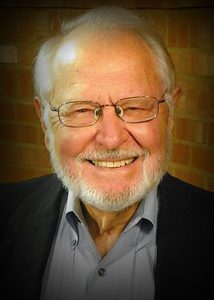
Dr. Maxie Dunnam
By Maxie Dunnam
In times like these, when a special General Conference within a few weeks will determine the future of my beloved United Methodist Church, I’m spending a lot of time remembering, hoping, and praying. I’ve been a minister in this church all the years it has existed as The United Methodist Church. It has been a rich and rewarding journey. I have been blessed immensely and have had the opportunity to serve in many leadership roles.
There has not been a more critical time in the life of our church than the present one with the issues we face at this special General Conference. So, I’m remembering: events, watershed moments in my life connected with the church, redemptive directions we have taken and/or failed to take, persons who have touched my life and contributed to my ministry, denominational leaders with integrity who have inspired me.
One of the persons I’m spending a lot of time in memory with is Bill Hinson; in fact, I have gone back and reread the marvelous biography of him by Stan Copeland. I’m sure my memory is heightened because he was one of my valued colleagues in ministry and we shared so much work related to the General Conference.
Bill was an impeccable dresser, and one of the things I remember is that his shoes were always shined and mine were most always needing a shine. He once said to me, “Brother Dunnam,” (though intimate friends, he often addressed me that way and I often called him ‘Brother Bill,’) “Brother Dunnam, the only thing I excel you in is in my shined shoes.” “That’s true, Brother Bill,” I responded, “and the only reason you excel me there is I excel you in humility; that’s the reason I wear scruffy shoes.”
Bishop Robert Hayes, in recommending Stan’s biography, Lord, He Went, said, “Bill saw a denomination drifting, and sought to correct its course by taking it back to its Wesleyan roots…a man of God who had the ability to dream and see visions most of us never knew existed.”
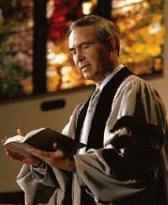
Dr. William Hinson
To that I would say, amen.
I would especially enjoy having Bill around today as we are preparing for the special session of the General Conference. He would make sure the conversations dealt honestly with the issues, but he would also add enough humor to keep us going.
I can’t do it with his humor, but I can with his honesty. Remembering, I’m going to share from Staying the Course, a book published by Abingdon Press in 2003.
The book was a collection of essays written by biblical scholars, theologians, pastors, sociologists, and pastoral caregivers, seeking to faithfully support our UM position on homosexuality. I’m sorry the book is out of print. I found only three available on the internet for $78 each. They are worth more than that, but I recommend you follow this series of posts, since you can’t get the book
In our preface to the book, co-editor Newton Molony and I wrote,
Feelings are intense; and the dialogue, unfortunately, has deteriorated into name-calling. As among those who have taken a conservative point of view, it pains us deeply to have those on the other side label our opinions as “homophobic,” “heterosexist,” or “biblically literalistic.” We firmly deny the validity of any of these labels and feel the discussion deserves more thoughtful and reasonable debate than such appellations evoke. We consider these labels as pejorative and offensive as labels such as “heterophobic,” “homosexist,” or “biblical revisionist” might seem to others. It is unfortunate that political correctness now dominates the discussion, and those who affirm the traditional approach to these matters are considered to be prejudiced, unjust, and autocratic.
We offer the essays in this volume as a counter to such stereotypes. We fully affirm the statements about sexuality embedded in The Book of Discipline of The United Methodist Church and are convinced that their formulation was inspired by the Holy Spirit. We believe that the insights they reflect are firmly grounded in biblical, theological, ethical, and scientific understandings. Furthermore, we are convinced that these disciplinary affirmations are consonant with the heritage of the church universal and, more particularly, with the tradition of the Wesleyan movement. Our forefather, John Wesley, was convinced that the role of the church was to redeem fallen creation, not to conform to changing customs—as others would seem to recommend.” (Maxie Dunnam and Newton Malony, Staying the Course, Abingdon Press, 2003, p. 13)
This is probably the most critical time in our history as The United Methodist Church. I am remembering, hoping and praying. I will post every few days between now and General Conference, primarily sharing the convictions of some of our most outstanding leaders of our Wesleyan Movement as they wrote in Staying the Course.
The Rev. Dr. Maxie Dunnam is the former president of Asbury Theological Seminary and a member of the board of directors of the Confessing Movement. Reprinted by permission of the Confessing Movement.