by Steve | Apr 20, 2017 | In the News, Perspective E-Newsletter
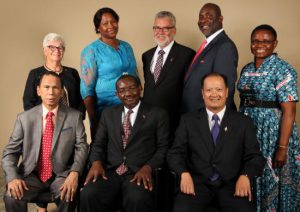 The United Methodist Church’s Judicial Council, essentially its Supreme Court, will hear oral arguments on Tuesday morning, April 25, 2017, regarding the legality of the Western Jurisdictional Conference’s election of an openly lesbian and married clergywoman to be a bishop in the church. After deliberations, the Council will share its decision with the general church several days later.
What is the nature of the case before the UM Church’s “Supreme Court”?
On Friday, July 16, 2016, delegates at the UM Church’s Western Jurisdictional Conference elected the Rev. Karen Oliveto, an openly lesbian clergywoman in a same-sex marriage, to be a bishop in the church. She was consecrated by other bishops and then assigned to serve as the leader of the Mountain Sky Episcopal Area (an area encompassing the states of Colorado, Montana, Utah, Wyoming, and parts of Idaho).
Since the UM Church defines marriage as between one man and one woman, requires its clergy to either exhibit “fidelity in heterosexual marriage” or “celibacy in singleness,” and finds the “practice of homosexuality to be incompatible with Christian teaching,” the Judicial Council (the Church’s “Supreme Court”) is being asked whether it was legal for the jurisdictional delegates to nominate, elect, consecrate, and assign Oliveto as a bishop of an episcopal area.
To be clear, the case is about the legality of the actions of those who elected, consecrated, and assigned Oliveto to her episcopal office. The Judicial Council is not being asked to render decisions about the church’s sexual ethics, its teachings on marriage, or its ordination standards. Furthermore, it will render no decision regarding Oliveto’s ministerial credentials.
(To read Good News’ analysis of the leading legal briefs filed in the case, click HERE.)
How do people become members of the Judicial Council, and how many people serve on it?
Laity and clergy are nominated by bishops and General Conference delegates to serve on the Council. Every four years they are elected or re-elected by the General Conference delegates. Nine members serve on the Council and, unlike U.S. Supreme Court justices, they have term limits. To read about the current Council members click HERE.
Ordinarily, the Council does not hear oral arguments, why is it doing so in this case?
At its discretion, the Council can decide to hear oral arguments. It typically does so when a particular case’s outcome will have major ramifications for the whole church.
What are the most likely decisions the Judicial Council could reach in this case?
There are only two likely decisions.
The Council could decide that since Oliveto was at her election and assignment in a same-sex marriage (and still is), she was not an eligible episcopal candidate, therefore, her election and assignment were invalid. Just as the Judicial Council has overruled other acts of non-conformity recently emanating from defiant annual and jurisdictional conferences, it could decide the Western Jurisdictional Conference was knowingly engaging in an act of ecclesial disobedience when it wittingly elected, consecrated, and appointed a person widely known to have defied church teaching with regard to same-sex marriage.
Alternatively, the Council could hold that since Oliveto was a clergy member in “good standing” at the time she was nominated, elected, consecrated, and assigned as a bishop, she is entitled to serve as such. That is, even though it was widely known she had presided at same-sex weddings and was in a same-sex marriage herself, none of the boards of ordained ministry, district superintendents, or bishops who had oversight of her ministry ever filed a complaint against her, and therefore she was never found to be in violation of the church’s ordination standards.
In the case of the latter decision, Oliveto could be charged in a separate action with violating UM Church law by marrying a same gendered person herself, and for presiding at same-sex weddings (she has admitted to presiding at approximately 50 such ceremonies). If someone were to bring charges against her for either of those offenses, the UM Church has a process for charging a clergy member for violating its ordination standards, and trying him or her if necessary. According to church law, every clergy member is guaranteed the right to a trial and appeal. Any complaints against Oliveto would be handled by the Western Jurisdiction’s College of Bishops (composed of active and retired bishops in the jurisdiction). The complaints could be resolved or referred for a church trial under the supervision of the president of the Western Jurisdiction’s College of Bishops.
If the Judicial Council upholds Oliveto’s election, the Council would essentially be remanding the case to the Western Jurisdiction so the complaint process could be followed. The Council could reserve the right to review any outcome in the event of a just resolution or a verdict in a trial.
If the Council rules to invalidate the election and assignment of Bishop Oliveto, what would happen next?
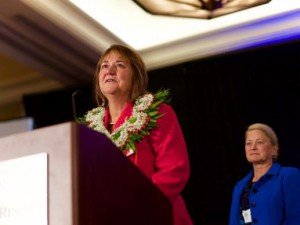
Rev. Karen Oliveto accepting her election, UMNS
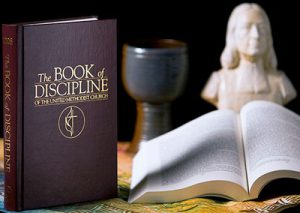
She would have to vacate her office and the Western Jurisdiction Episcopal Committee would then select an interim bishop to preside over the Mountain Sky Episcopal Area until a new election could be held. Oliveto would remain a clergy person in the UM Church and be entitled to an appointment. Any complaints filed against her would have to be handled according to procedures outlined in the Church’s Book of Discipline.
If the Council rules that Bishop Oliveto’s election was valid, what would happen?
She would remain as the bishop of the Mountain Sky Episcopal Area. Any complaints filed against her (and reportedly complaints were filed in August 2016) would be handled according to the Discipline. A variety of things can happen with a complaint. In an effort to avoid a church trial, the church would first work to reach a “just resolution.” Among other possibilities, such a resolution could leave Oliveto in place as a bishop or alternatively lead to her voluntary resignation. If no just resolution is reached, Oliveto could face a church trial. If she were found guilty, she could be removed from office and lose her ministerial credentials. However, she could also reach some agreement (e.g., involving admission of fault and a demonstrated willingness to abide by the Discipline) that would allow her to retain her credentials and office.
If Oliveto’s election and assignment is upheld, would this mean the UM Church has changed its sexual ethics, teachings on marriage, and standards for ordination?
No. The Judicial Council is not being asked to rule on the validity of the church’s sexual ethics, teachings on marriage, or requirements for ordination. They would all remain in force regardless of any decision in this particular case.
Where does Good News stand on this matter?
Good News believes our church’s sexual ethics, teachings on marriage, and standards for ordained ministry are rooted in Scripture, confirmed by nearly 2,000 years of church tradition, and endorsed by the vast majority of Christian denominations worldwide. Furthermore, our General Conference, composed of a global and diverse body of United Methodists, has affirmed and reaffirmed its decisions on these matters for the past 45 years. Based on the evidence presented, we believe the Judicial Council should invalidate the Western Jurisdictional Conference’s nomination, election, consecration, and assignment of Bishop Karen Oliveto. For the sake of the church’s principled teachings, its good order, and its future health and viability, we believe it is imperative for the Council to stem the rampant acts of ecclesial disobedience that are undermining our church’s mission.
by Steve | Apr 17, 2017 | In the News, Perspective E-Newsletter
 By Walter Fenton-
Good Friday
Sometimes the sordid episode is almost too hard to believe. The fear, the hatred, the rage, the brutality, the blood, and the death – sometimes it is too horrible to fathom. But there is Jesus, on the cross, bleeding and dying, right at the very center of our faith.
And what is more, we read in the Old Testament it was the will of the LORD to crush him with pain (Isaiah 53.10). We try to turn away from that staggering truth to the consolation of the New Testament, but then Peter preaches to us, this man [was] handed over to you according to the definite plan and foreknowledge of God (Acts 2.23).
Why? Perhaps the only way to answer that great question is with other questions. Can we bear the weight, the burden, and the cursed death of our sins? Can we intercede by ourselves with the righteous God of all creation? Can we make ourselves clean? Often reluctantly, we must truly confess, no, we cannot.
On the cross, Jesus poured out himself to death, and he was numbered among the transgressors; he bore the sin of many, and made intercession for the transgressors – for us. Amazing love! How can it be that thou, my God, shouldst die for me?
It is, in the most paradoxical way possible, a very Good Friday for us.
Holy Saturday
What a quiet and strange day. We know that Jesus lives, and yet this day we are invited to ponder that Jesus died and was laid in a tomb. As the most ancient version of the Apostles’ Creed puts it, “he was crucified, died, and was buried; he descended to the dead.”
Sometimes we want to speculate and talk about where Jesus was, and what he did on that day. But on this day before Easter, it is probably best to be quiet. Perhaps it is a day to be as silent as the grave.
We don’t need to be excessively morbid, but we do need, for or at least some part of this day, to join with the fearful and dismayed disciples. We need to draw close to those women who saw the tomb and how his body was laid. We are so familiar with the living Jesus, but they saw the dead Jesus. And it was those same women, with fear and grief still in their hearts, who would go to his tomb to tend to his lifeless body.
Low in the grave he lay, Jesus, my Savior.
Easter Sunday
Up from the grave he arose, with a mighty triumph o’er his foes!
In a great prayer of the church, we are regularly reminded that in Jesus’ death and resurrection we are liberated from our slavery to sin and our fear of death. That is good news, great news!
For people who have a nagging suspicion death might have the last word and so tend to live life too timidly and too frightened, the victory of God, made known in Jesus’ glorious Resurrection, is liberation indeed! It frees us from all that ensnares us and keeps from an abundant life. It empowers us to live obedient, disciplined, sacrificial, and joyful lives in the knowledge that Jesus leads us through even the darkness of death and brings us to everlasting glory!
Christ the Lord is risen today! Alleluia!
Walter Fenton is a United Methodist clergy person and vice president of the Wesleyan Covenant Association.
by Steve | Apr 11, 2017 | In the News, Perspective E-Newsletter
 By Walter Fenton-
“The Holy Spirit had swept across the room; its power and presence real and obvious. It was a sacred moment on holy ground,” wrote the Rev. Kent Ingram and Emily Allen about the election of the Rev. Karen Oliveto, an openly married, lesbian, as a bishop of The United Methodist Church.
Ingram and Allen were two of the 88 Western Jurisdictional (WJ) delegates who voted for Oliveto in July 2016. Later this month the Church’s Judicial Council will rule on whether or not it was proper for the delegates to elect such a candidate.
Recently, other United Methodists have added their voices to the delegates’ claim that the Holy Spirit was not only behind Oliveto’s election, but is also validating her short tenure as leader of the Mountain Sky Episcopal Area.
“Bishop Oliveto’s election was a momentous movement of the Holy Spirit,” says a call to prayer on the Rocky Mountain Annual Conference’s website. It goes on to say, “Western Jurisdiction delegates believe something sacred took place in Scottsdale, Ariz., as they responded to the movement of the Holy Spirit and elected Bishop Karen.”
The Reconciling Ministries Network (RMN), the leading LGBTQ+ advocacy group in the UM Church, writes in a resource guide in support of Oliveto and preparing people for the Judicial Council’s decision, “Who can deny that the Spirit has produced such fruit through the election and ministry of [her]? Who would dare stand in the way of God’s work of producing fruit?”
“The Spirit is moving,” answers the guide in a suggested prayer, “and wherever we are willing to join in her work, she will birth fruit through us… Holy One, you have assured us that though we cannot see the Spirit herself, we can see the fruit of her work in one another, in our lives, and in the world. We know she is there wherever we see love, joy, peace, patience, kindness, generosity, faithfulness, gentleness, and self-control. Against these things, you have told us, there is no such law.”
And finally, Oliveto herself, in a video released earlier this week, testifies to the Holy Spirit’s movement in her ministry.
What one of us does not want to invoke the Holy Spirit as the guiding power behind our cherished plans and hopes for the future? But these invocations of the Spirit as the guiding force behind Oliveto’s election and her ministry demonstrate just how deep the fissures are between many progressives and the UM Church.
For just as the WJ delegates claim the Holy Spirit “swept across” its meeting in Scottsdale, so a global and diverse church claims the Holy Spirit was guiding its deliberations and decisions at General Conference. It received no word from the Holy Spirit compelling it to overturn its sexual ethics and teachings on marriage. Instead, it heard just the opposite: the Holy Spirit’s reaffirmation or reconfirmation of ethics and teachings rooted in Scripture and 2,000 years of church history.
Anyone who has been party to disruption in a local church can attest that once a faction begins to claim the Holy Spirit’s guidance in contradiction to the wider community of faith, it is time for the parties to go their separate ways. The faction becomes convinced it alone truly discerns the will of the Holy Spirit. Its clash with the church is no longer a matter of differing interpretations and choices, but their superior claim to rightly discern the voice and will of the Holy Spirit.
The United Methodist Church, since its inception, has vested its authority in the will of the General Conference. It has adopted a fair and open polity that allows for a wide degree of give and take in the process of discernment. And yet, by faith, it believes the Holy Spirit is in its midst when it gathers, as a global body, to reaffirm, change, or adopt new teachings for the whole church.
Given the long and acrimonious debate, and now the progressives’ claim that the Holy Spirit is leading them to not just contest, but to defy the teachings of the UM Church, they need to fully embrace where they believe the Spirit is leading. For the sake of comity, and the larger mission of the church, it is time for them to create a new denomination in order to follow the Holy Spirit to a place where the UM Church does not believe it is leading.
Walter Fenton is a United Methodist clergy person and an analyst for Good News.
by Steve | Apr 3, 2017 | In the News, Perspective E-Newsletter
 By Walter Fenton-
Moderates and conservatives long ago gave up on any hope the UM Church’s General Board of Church and Society (GBCS) would demonstrate any fairness or impartiality when it comes to non-liberal plans for health care, tax policy, education, energy policy, military spending, minimum wage laws, … well, you get the point. So there was little surprise when the Rev. Dr. Susan Henry-Crowe, General Secretary of GBCS, unloaded on a Republican backed bill that would have modified the Affordable Care Act (ACA).
To her credit, Henry-Crowe is not nearly as strident as some of her predecessors, but she can get off some zingers. Not long after a press conference with U.S. Rep. Nancy Pelosi (D-California), we received inquiries wanting to know about “the United Methodist Statement” that said, “people will die” if a Republican backed health care bill passed in Congress (as most know by now, it did not).
We were confident no such statement existed. The UM Church, thankfully, does not make a habit of pontificating on every bill that comes before Congress. Only the General Conference, which meets every four years, can pronounce authoritatively for the UM Church. What we suspected was that Rep. Pelosi had read something a UM bishop or the General Secretary of GBCS had said about the bill. And sure enough, Henry-Crowe had recently opined, “People will die because of efforts like this to roll back health care.” Pelosi gladly took Henry-Crowe’s personal prognostication that “people will die,” as the UM Church’s official word on the bill. It is not.
Henry-Crowe, who holds two degrees in theological studies, and for 22 years served as the dean of the chapel and religious life at Emory University before her role at GBCS, offered no evidence to support her hyperbolic claim. Her remark is particularly interesting in light of a recent column by New York Times columnist Ross Douthat. To be sure, like Henry-Crowe, Douthat is not a health care expert. But unlike her, he actually references reputable studies that find claims about how many lives this or that insurance plan will save to be overblown. As Douthat notes, since the expansion of Medicaid under the ACA, Americans have not become healthier or experienced lower mortality rates (they’re actually higher in some of the states and counties where Medicaid was expanded).
It is hard to understand why, in a church with rank-and-file members from across the political spectrum, GBCS has felt compelled to march almost uniformly to the left on most issues. And it often seems incapable of even acknowledging people of good faith and good will might find alternative prescriptions to be reasonable, responsible, and compassionate. GBCS has a propensity to close off options and stifle conversation before it gets started. So if you don’t stand with Henry-Crowe and GBCS on the recent bill before Congress, you’re evidently comfortable with a plan that will allow “people [to] die.”
After reading a missive from the GBCS team, you cannot help but think they are unaware of people like Arthur Brooks, Robert George, or Michael Gerson, thoughtful Christians who are as faithful and as informed as they, who do offer alternative solutions and valid critiques of progressive proposals. GBCS seems to have no dialogue partners in a church that desperately needs them.
This is odd and even unhelpful coming from an organization appointed to serve and represent the whole church, not just its left wing. True, GBCS can appeal to the UM Church’s Book of Resolutions, a huge compendium full of progressive nostrums written by or sponsored by GBCS and its allies, passed in haste at General Conferences, and then trotted out as necessary when needed. But this is no way to build consensus in a diverse church. Progressives often style themselves as community organizers for social justice, but you seldom get the impression that GBCS folks are actually out organizing among the grassroots. Instead, they are more often found provoking laity and pastors with progressive pronouncements issued from their Capitol Hill offices in Washington D.C.
As for the healthcare debate, we’re happy to leave it to the experts who study these matters to share their findings, make recommendations to our Congressional representatives, and then engage in a civil debate on the matter. In the future, we hope Henry-Crowe can find the good in other proposals and refrain from conversation stoppers like, “people will die.”
Walter Fenton is a United Methodist clergy person and an analyst for Good News.
by Steve | Mar 24, 2017 | In the News, Perspective E-Newsletter
By Walter Fenton-
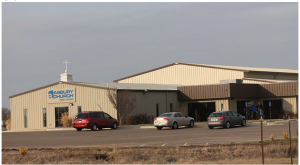
A congregation in Wichita, Kansas, that averages 350 in worship has voted to leave The United Methodist Church. As a satellite campus of Asbury UM Church, the congregation announced its decision on Sunday, March 19.
“Some pastors and people are weary of all the defiance and unaccountability in the denomination,” said the Rev. Rick Just, senior pastor of Asbury UM Church. “While we at the central campus are praying and waiting for the Commission on a Way Forward to provide leadership and guidance during this unsettling time, Pastor Aaron Wallace, the leadership team, and the congregation at our west campus reached the conclusion that the ongoing battles in the denomination are a distraction from the kind of kingdom work they want to do.”
Asbury UM Church planted its west campus site 10 years ago in an effort to reach unchurched people and younger families on Wichita’s growing west side. The satellite congregation grew quickly and attracted its target audience. The west campus is filled with people in their 30s and 40s, and boasts thriving programs for children and youth. The central campus also remains one of the healthiest and most evangelistic churches in the Great Plains Annual Conference.
“We are sad about their departure,” said Just, “but church leaders have been going their separate ways to do ministry since Peter and Paul took different paths. Asbury is proud of what we accomplished with our west campus. We’re not bitter about the situation, and we foresee partnership opportunities with Pastor Wallace and his congregation as we all work to make disciples of Jesus Christ.”
In a media statement shared with Good News, Wallace acknowledged his “struggle with some of the conflict that has been occurring in the life of the denomination.”
According to an article by Todd Seifert, Communication Director for the Great Plains Annual Conference, Bishop Ruben Saenz, Jr., the episcopal leader in the area, said, “Clergy and laity throughout The United Methodist Church are in a season of waiting and discernment as members of the denomination experience varying levels of frustration with the impasse on human sexuality and the unity of the church. The denomination is awaiting a ruling from the Judicial Council on the election of an openly gay bishop serving in the Western Jurisdiction and is following closely the progress of the Commission on a Way Forward, a group appointed by the Council of Bishops to review language related to human sexuality in the Book of Discipline.”
Word of the congregation’s decision comes just weeks after two large UM churches in Mississippi voted to leave the denomination. Both congregations are still in conversations with Mississippi Annual Conference leaders regarding the terms of their exits.
“I fear these departures are just the most visible manifestations of what is going on across the connection,” said the Rev. Rob Renfroe, President of Good News. “People hoped our bishops would stand up and defend our church’s teachings on marriage and its sexual ethics, instead, they’ve witnessed a train of defiance and dysfunction. My guess is many more rank-and-file United Methodists are just simply walking away from local churches. It’s a sad indictment of many of our leaders.”
Walter Fenton is a United Methodist clergy person and an analyst for Good News.