![Archaeologist, Mama, Defender of the Faith]()
by Steve | May 15, 2018 | May/June 2018

Dr. Sandy Richter at the edge of the Ramon Crater in Israel. Photo by Lawson Stone of Asbury Theological Seminary.
By Elizabeth Glass Turner –
The petite, deeply tanned woman you might find at a local coffee shop or watching her daughter’s figure skating practice has an unassuming air and wry sense of humor that leans towards the self-deprecating. Behind the quiet presence lies a quick intensity that shows up in a piercing gaze and direct questions frankly stated.
The tan may come from gardening – or hours spent under the Middle Eastern sun digging in archaeological excavations with college and seminary students. The same daughter who now skates was once worn in a baby carrier to digs in Israel. The woman’s childhood in foster care has given her quick instincts for others’ pain, and she is quick to walk alongside them as they find healing, hope, and redemption in the broken lives of patriarchs and cast-off women scattered through the first two-thirds of the Bible.
Dr. Sandy Richter lives the happily jumbled life of dead languages and volleyball tournaments, travel to keynote presentations and organic gardening, mother to two Old Testament-level miracle children, married to Sanskrit-reading scholar Dr. Steve Tsoukalas.
When asked what initially hooked her in to the Old Testament – a subject in which it’s difficult to call to mind many female biblical scholars – Richter responded with her characteristic frankness and zeal:
“There aren’t many women in my age category in biblical studies at all! Add a husband and children to that and the numbers drop dramatically,” Richter responds. “I started studying Bible for the sake of ministry. When I realized I would be transitioning from ministry into education, I went back and studied more. By then I was doing Hebrew and Aramaic and archaeology and systematics.” Before long she was intensively studying Hebrew (known as Rapid Reading) under Jo Ann Hackett, noted Old Testament scholar at Harvard University, and working on the Tel Dothan archeology collection in Jerusalem under Gary Pratico from Gordon-Conwell Theological Seminary. Richter took modern Hebrew at Hebrew University in Jerusalem and applied to excavate under Larry Stager of Harvard University in Ashkelon, a historic Philistine city along the coast of Israel. For her, there was no turning back.

Professor Richter teaching field archeology at Tel Dan in Israel.
Ten years ago, Richter had put the final touches on a book adapted from her Introduction to Old Testament seminary class content. Pastors she trained were yearning for a way to easily communicate the depth of her material to their congregations. After all, the Old Testament is often the wince-inducing portion of the Bible for many Christians. Richter continually managed to do something almost quixotic: she made the Old Testament clear and approachable – and therefore interesting – without sacrificing nuance, substance, or academic rigor. The Epic of Eden will soon be out in a 2nd edition from InterVarsity Press, while the Seedbed Publishing curriculum that builds on the original volume continues its widespread popularity.
“What actually strikes me the most about Epic is the sense of calling I had in writing that book,” Richter reflects. “Of course, in academia you are expected to write. Getting a job, building a reputation in the guild are all dependent on getting those books and articles out. But with Epic I felt called to write the book. I honestly felt like God wasn’t going to let me die until it was written. And now looking back at these past ten years — I am struck by the fact that it has been my most widely distributed and most influential publication.”

Professor Richter teaching Hebrew language at Wesley Biblical Seminary in Jackson, Mississippi.
Richter’s sense of personal calling and her ability to bridge the divide between pulpit and chalkboard are hallmarks of her writing and teaching. She has influenced students at Asbury Theological Seminary, Wesley Biblical Seminary, Wheaton College, and now holds the Gundry Chair at Westmont College in Southern California. Whether she’s typing away at a scholarly piece for an academic journal or eating pie in a church basement, Richter finds much to be encouraged by in both the academy and the church.
“In the academy I continue to be encouraged by what I see happening on the side of archaeology, epigraphy, and ethnographic studies,” Richter said. “Amazing new data is coming to light on a daily basis that is putting ‘flesh’ on our biblical characters. For example, the translation and publication of the Mari archive is giving us tremendous new insights into the era of the patriarchs.” Mari is an ancient library that dates to c. 1800 BCE that contains scores of letters and administrative texts involving the identity, language, and movement of the Amorite nomadic pastoralists.
“The first Philistine cemetery to be discovered was just excavated two years ago and being written about currently,” she reports. “The continuing trickle of finds from the City of David excavations are bringing biblical heroes into focus such as Hezekiah. We might even have the Isaiah bullae. Cool stuff.” For lay readers, a bullae is a lump of clay impressed with a person’s seal for a personal letter or document so the recipient knew the correspondence had not been tampered with.
She is always on call to teach clergy and laity alike. “As always, I look into the faces of our pastors and I pray for vision and endurance. These folks are on the front lines and taking it from every side,” she said. “As for the lay people, it is completely untrue that they are disinterested in serious study of the Bible! Hundreds show up every single time with hungry hearts and a level of dedication that puts the rest of us to shame.”
Her speaking schedule takes her to camp meetings and academic conferences alike, among the Redwoods or Swiss mountaintops. She is as comfortable celebrating scripture in a church fellowship hall as she is on a platform speaking to thousands of pastors at a clergy conference.
And that’s what characterizes what others might anemically attempt to call her career: Richter celebrates scripture. She relishes it with a zeal that makes casual students suddenly ponder why they haven’t considered signing up for archaeology or a dead Middle Eastern language.

Dr. Richter holds her daughter Elise at four-months-old in the Wadi Qelt. Photo by Lawson Stone of Asbury Theological Seminary.
“I am convinced that people want to know what is in the Bible. Believers and unbelievers alike are more than curious about the characters who stand as the ancestors of the faith,” she said.
Richter doesn’t waste time with bland Bible study platitudes and inspirational quotes; she delves for something deeper, harder: the truth of the nature of God as it is revealed in the grand narratives of the text. And it turns out, people are starving for it.
“I am as interested in the archaeologically reconstructed economy of the southern Levant in the Iron Age as I am in the ethics of environmental concern as I am in the 6th grade girl sitting in my living room reading the story of Abraham for the first time,” she said. “So bringing the technical data within reach of the average believer and offering them an informed theological read of the text that actually applies to their everyday life and faith here and now.”
Richter believes that both the Church and the skeptic need that opportunity. “It is important that the person sitting in the pew can say with confidence, ‘Hey, I don’t understand all this stuff about the immigration of Semites into the Wadi Tumilat region of Egypt during the Middle Bronze Age, but Sandy Richter does. And she says that immigration helps substantiate the plausibility of Jacob’s immigration into Goshen. So apparently I’m not an intellectual toad for thinking an Exodus might be possible.’
“It is equally important that the skeptic can ask the hard question and get a well-trained and informed response. A God-honoring, Ivy-league response to the hard questions creates ‘room for faith’ for believer and unbeliever alike. People still want real, respectable answers.”
Richter’s commitment to her calling illustrates an unwillingness to pit faith and reason against each other. Piety is not an excuse for sloppiness; academic excellence does not replace the necessity to be of service to the church. A high view of scripture doesn’t exempt one from rigorous study: it demands rigorous application.
The professor is careful in her classes to distinguish what an archeological find can prove about a biblical account versus what it shows may be consistent with the Bible’s account of a particular event. In this way, evidence is carefully weighed. At the end of the day, she queries students, does the evidence leave room for faith? She is happy to say it does.
“The last thing the Church needs is another shoddy, half-baked answer to a real and necessary question,” she said. “If we truly believe that the God of the Bible is the God of truth, we have nothing to be afraid of as we delve deeply into the content and context of the Bible. But if we lie to our children and our congregants in order to ‘protect’ them, give them half-truths that we know one day their own disciplines will expose as false, we are risking their very souls.”
It is a happy antidote to the kind of flippant “God says it, I believe it, that settles it” bumper stickers that shut down curious inquiry into the world of the Old Testament. And what she finds, wherever she goes, is that young and old believers alike are eager to ask these questions and get weighty answers.
It is a rare scholar who influences academics, clergy, and laity with such strong conviction and far-reaching consequence. But this is how Richter lives out her calling in the broad Kingdom of God. The scriptures don’t get old, and her love of them does not wane with re-reading, but deepens.
“God deserves our best. I am a biblical scholar,” Richter states. “And I intend to be as good at that calling as I possibly can be.”
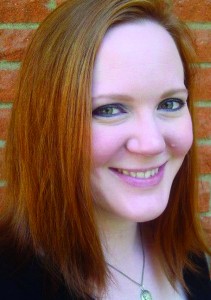
Her charge is clear every time she speaks and teaches: this is the story of God’s activity in real time, in real places. This is your story. This is our story. Tell the story, and tell it well. She lives out that charge with fierce particularity and gentle joy.
“What keeps me in the game is the transformation on the faces of my students,” she said. “There is magic in that moment when the person you are teaching realizes, often for the first time, that this is their story.”
Elizabeth Glass Turner is a frequent and beloved contributor to Good News. In addition to being a writer and speaker, she is Managing Editor of www.WesleyanAccent.com. Look out soon for Richter’s The Fifth Gospel: A Christian Entry in the Book of Isaiah.

by Steve | May 15, 2018 | Magazine Articles, May/June 2018

Pastor Adria Nuñez Ortiz from Havana Central Methodist Church in Havana, Cuba, leads a worship song at Celebration event. Photo by Nichole Morten for Celebration.
By Rebekah Clapp –
“The Spirit of the Lord is upon me, because he has anointed me to bring good news to the poor. He has sent me to proclaim release to the captives and recovery of sight to the blind, to let the oppressed go free, to proclaim the year of the Lord’s favor.” – Luke 4:18-19
“Estamos en Cuba?” I asked myself more than once over the first weekend of March, at the national conference of Celebration Women’s Ministries, held in Houston, Texas. “Are we in Cuba?” The question did not arise because of the damaged water main that caused our four-star hotel to be without water most of a day, leaving us all to freshen up with bottled water, but rather because of the tangible outpouring of the Holy Spirit across this weekend event, the like of which I had only before experienced among Methodist sisters and brothers in Cuba.
In fact, I attended this event because of my connections in Cuba. I was asked to interpret for the conference’s guest speaker, who is a close friend and colleague, Pastor Adria Nuñez Ortiz from Havana Central Methodist Church in Havana, Cuba. This was a first for Celebration Women’s Ministries. Their president and co-founder, Judy Graham, shared with me that they had never before had an interpreter for one of their events and they weren’t sure how it would go.

Participants at the Celebration Women’s National Conference in Houston. Photos by Nichole Morten for Celebration.
A number of women told me that before Pastor Nuñez preached they were worried they wouldn’t be able to follow the sermon, since they weren’t accustomed to listening through an interpreter. They were pleasantly surprised to discover it didn’t cause a problem, and in fact they actually enjoyed it. They were mesmerized by the way that two people could work together to share a message across languages.
Because these women were open to bringing a preacher from Cuba, and were willing to risk the uncertainties, an opportunity presented itself: a large number of Cuban and other Latina women from Methodist churches in the Houston area decided to attend the conference, feeling it would be a welcome space for them.
Having worked with diverse groups of Methodists across the United States and around the world, it is always a beautiful thing to see us bridge cultural differences and come together under the powerful movement of the Holy Spirit, which does not belong to any one tribe, nation, or tongue. This is what we experienced at Celebration 2018. The theme of the conference was “Now is the Time” from 2 Corinthians 6:2, “…I tell you now is the time of God’s favor, now is the day of salvation.” This fit nicely with Celebration’s mission focus of salvation, healing, and equipping. Along with Pastor Nuñez, Jennifer Cowart of Harvest Church in Georgia was the other featured speaker, and together these women inspired us with their messages to be courageous and trust in God’s power to save us, heal us, and use us for God’s mission in the world. Pastor Nuñez’s messages focused on the stories of women from the Bible who can be models for us in boldly living out our faith and believing in God’s faithfulness.

Jen Cowart and Judy Graham. Photo by Nichole Morten for Celebration.
After concluding each dynamic and lively sermon, which involved both of us running around the ballroom, Pastor Nuñez closed with a time of prayer. She invited the women to come forward for healing prayer and for impartation. Together with Celebration’s prayer team, we spent hours each night laying on hands, interceding, and inviting the Spirit’s presence – in English and in Spanish – to touch the lives and hearts of these women, to heal them, to equip them, and to empower them. Tears and trembling. Kneeling and dancing. Falling over and jumping for joy.
It looked and felt like worship in Cuba. While I know that these things happen in some churches in the United States, too, most of us, especially United Methodists, aren’t all that comfortable with much moving and shaking and miracle-talk. It’s easy to dismiss charismatic faith expressions in our postmodern society. To chalk it up to cultural differences and contextualization. But, we weren’t in Cuba. And most of the women at this event didn’t have much experience with the Spirit manifesting in these ways. But it wasn’t just the Latina women who were falling in the Spirit or being healed. We all gathered together in the Spirit’s presence with a diverse group of women from across the United States: white, black, and Hispanic; praying in English, Spanish, and in heavenly languages, and women were healed. Across the weekend, we heard testimonies of salvation and recommitment of faith. Testimonies of physical and emotional healing. Testimonies of restoration and peace.

dria Nuñez Ortiz and Rebekah Clapp. Photos by Nichole Morten for Celebration.
I have seen it in Cuba and in the United States, and many other countries as well. Among Latinos and Americans. God is moving and working and seeking to bring all people to himself. God’s Spirit knows no boundaries. When we gather together in unity of the Spirit and proclaim the good news of Jesus Christ, captives are released, the oppressed go free, and the sick are healed. It’s happening right now around the world, because now is the time of God’s favor. The year of Jubilee has come.
Rebekah Clapp is a United Methodist clergyperson, graduate of United Theological Seminary, and doctoral student at Asbury Theological Seminary. She is the Strategy Coordinator for Hispanic/Latino Ministries of the West Ohio Annual Conference.
Next year’s Celebration National Conference in Houston will be held April 5-7, 2019. The Rev. Carolyn Moore will be the speaker. For details contact Judy Graham at president@celebrationministries.org or visit www.celebrationministries.org.
by Steve | May 15, 2018 | Magazine Articles, May/June 2018
By Ruth Burgner –
This January I read a report by Open Doors about countries where Christian persecution is most severe. It is heartbreaking data, representing massive injustice and suffering. Like other such reports, this one should have kicked off a whole kaleidoscope of emotions in me. But instead, I felt mostly numb. I wasn’t happy about that, but as it turns out, feeling numb is pretty normal.
I learned this from listening to an interview with Nicholas Kristof, a columnist for The New York Times. His work, at that time, was to write articles that would spark compassion in Americans for the atrocities in Darfur and Congo. Kristof remembered that New Yorkers then were more up in arms about a red-tailed hawk who had been evicted from a Central Park condo than hundreds of thousands of people being expelled from their homes. So to do his work, Kristof had to daily reckon with our tendency to shut our eyes to the world’s pain, which meant he had to become a student of compassion fatigue.
He told about a stunning experiment. Participants in this experiment were shown a photo of a starving girl from Mali. They wanted to give to help her. Then they were shown a photo of a needy boy and, similarly, they wanted to contribute to help him. But when they were shown the photo of both the girl and the boy, the donations dropped off. “What is kind of devastating,” said Kristof, “is that the number at which we begin to show compassion fatigue is when the number of victims reaches two!” Evidently, in ourselves, we don’t have capacity for a whole lot of compassion. So how can we care about our world when we can’t? Maybe we first have to be convinced that our caring – our investing or interposing ourselves in some way – is of any importance, that it matters.
I remember when I was a kid at camp meeting. My brothers and I could hear “old” people praying and weeping in the tabernacle until late into the night. They were moaning and crying out to God on behalf of someone who had knelt at the altar hours earlier. I thought all that late-night ruckus was just a curiosity. Now I think it’s how the world gets changed.
Old Testament scholar Dr. Dennis Kinlaw writes, “[T]he key to every person’s well-being and salvation rests outside of himself [or herself] in somebody else.” Huh?
There is a mediatorial principle in God’s work, Kinlaw explains. For example, we don’t come to the Father on our own. We come through Jesus. “All things come to us from the Father, through the Son, by the Holy Spirit.” In prayer, says Kinlaw, this mediatorial principle is also at work. “The Hebrew verb most commonly translated as ‘pray’ is hithpallel, which means ‘to interpose oneself.’… So at the heart of the Old Testament concept of prayer is the mediatorial idea of standing between two persons or interposing oneself to facilitate dialogue between them.”
Those who interpose themselves between God and the world’s needs are very important. Again and again, the Old Testament shows God searching for an intercessor. It seems as if God has so ordered his world that he seeks another to interpose, someone to be a conduit, someone “through whom the sin of the world and the grace of God can meet.” Wow!
So maybe we don’t think that our caring matters. But the Scripture tells us otherwise. One person, willing to intervene, can change things in the life of another. Through prayer, says Kinlaw, “something can happen in my heart that can make a difference in someone else’s circumstances…. If we come to the place where somebody else is more important in his well-being than we are, and we are ready to pour ourselves out ‘like a drink offering,’ as Paul says, that other person’s circumstances automatically begin shifting, and possibilities go there that were not there before that person became our burden.”
In the end, it seems a secret to caring is knowing that one person can make a difference. God is still looking for an intercessor.
Ruth A. Burgner is the senior communications director of TMS Global (tms-global.org). Some of the quotations here are taken from Prayer: Bearing the World as Jesus Did, by Dennis F. Kinlaw and Christiane Albertson (Francis Asbury Press).
by Steve | May 15, 2018 | Magazine Articles, May/June 2018
 By B.J. Funk –
I thought my life would turn out one way, but it turned out another. The big dreams I had never materialized.
My life didn’t turn out as I thought it would. It turned out better.
I prayed for a godly husband, but then this husband brought pain, disappointment and an eventual dissolvent of our marriage. Crushing blows to the life I had planned brought more heartache than I had ever known. I didn’t get a godly husband. So I had to try to become a more godly me.
That prayer didn’t turn out like I wanted. It turned out better.
I prayed for health, but then I had a tumor in my lung and went for surgery. After the surgery, the doctor told me that 98 percent of tumors in the lung are cancerous. I was in the 2 percent that wasn’t.
A deep sense of humility and gratitude paved the way for a deeper sense of God’s nearness. My prayer for health didn’t turn out like I thought it would. It turned out better.
I prayed for a straight body. Because of scoliosis, I grew up embarrassed over my crooked spine which not only altered my appearance, but brought much pain starting in my teenage years. In my fifties, the doctor told me my crooked spine was getting worse, and I had to have rods in my back.
My prayer for a straight body didn’t happen as I had planned. A painful surgery, however, placed rods on either side, and now my straight and pain-free back is one of the best parts of me.
That prayer didn’t turn out like I wanted. It turned out better.
I have always gained inner strength from a certain nationally published magazine. I don’t believe I’ve missed an issue. I just knew my writing would create a space for me to be trained by them in New York. I just knew that would open the door to book publishing.
That never happened, even as I sent my manuscripts off with a prayer. But, somewhere in the middle of my big dream, God offered me a different intensely satisfying one. Two Christian publications now regularly print my work. I have tremendous fulfillment in not being recognized by the larger audience I thought I wanted.
My prayer for fame didn’t turn out as I had planned. It turned out better.
My plans were to have at least four children. But I could not get pregnant. Then, God sovereignly brought an unexpected, adorable, baby boy into my life through adoption and soon after, an unexpected pregnancy brought another baby boy. I was greedy. I wanted more, but that didn’t happen.
Later, the Lord brought a new love and marriage into my life, and with that, three stepsons. I had wanted four. God gave me five. My prayer didn’t turn out as I wanted. It turned out better.
My guess is that you have traveled this same sort of journey, one of lost hopes and dreams and prayers that were answered differently than you expected.
We can always trust in God through the tears of lost hope, pain, and broken dreams. He will walk with us through each chapter and challenge of our lives. Sometimes a lost love or a job or circumstance opens up the opportunity for God to do something even better.
“All things work together for good to those who love the Lord and are called according to his purposes,” Paul wrote (Romans 8:28). He then went on and declared, “Who shall separate us from the love of Christ? Shall trouble or hardship or persecution or famine or nakedness or danger or sword? … No, in all these things we are more than conquerors through him who loved us.” Sometimes our prayers don’t match our circumstances. Sometimes episodes in our lives turn out better. Yes. Even better than good.
by Steve | May 14, 2018 | In the News, Perspective E-Newsletter, Uncategorized
 By Thomas Lambrecht-
On Monday, May 7, the Council of Bishops announced [link] that two of the five amendments to the United Methodist Constitution approved by the 2016 General Conference were defeated by the votes of the annual conferences. In order to amend the Constitution, it takes approval by two-thirds of the General Conference delegates and two-thirds of all the annual conference members. Results on the voting had been anticipated last November, but some annual conferences failed to vote in a timely fashion.
The two amendments that were defeated both related to combatting discrimination, particularly discrimination based on gender. Amendment I lost by less than two-tenths of one percent — by my calculations roughly 65 votes out of over 47,000 ballots cast. Amendment II lost by 5.3 percentage points, or a little more than 2,500 votes out of more than 47,300 ballots cast.
The women bishops issued a pastoral letter lamenting ongoing sexism and resolving to continue working for inclusion. The Rev. Dr. Steve Harper identified misogyny and a chauvinistic theology of God as one major factor in the amendments’ defeat.
These and other overwrought statements are simplistic and ignore other concerns that played a role in the defeat of the amendments.
For fifty years, Good News has been a voice for women’s equality, affirming in particular women as pastors and teachers and highlighting efforts to combat human trafficking and rescue girls and women from oppression. While we are aware that a few evangelical United Methodists oppose women in leadership in the church, we have attempted to clearly advocate for the full equal value and participation of women at all levels of the church.
Amendment I
At the same time, in a statement posted last year, Good News expressed concerns (although not opposition) about the two defeated amendments. Amendment I added a whole new paragraph to the Constitution (which we thought more appropriately belonged in the Social Principles) about the equal value of girls and women, acknowledging a long history of discrimination and making a commitment to eliminate such discrimination. We stated, “While this statement is well-intentioned, and we support its strong emphasis on the equality of women, we are concerned with its theological fuzziness being written into our Constitution. The church’s advocacy for women’s equality is well-stated elsewhere in the Book of Discipline.” In particular, we were concerned that “the second sentence raises theological concerns when it says, ‘it is contrary to Scripture and to logic to say that God is male or female … maleness and femaleness are … not characteristics of the divine.’ Does this mean Jesus is not male? Or does it mean that Jesus, who is obviously male, is not divine? Either position is contrary to our doctrinal standards.”
In response to Harper, I agree that “God is a composite of genders, the essence of Being that is neither defined by or limited to any specific gender.” However, Jesus Christ is fully God as well as fully human. And male/female gender is a characteristic of being human. So Jesus, while God, did have a male gender. That is not a basis for elevating men over women, discriminating against women, or devaluing women in any way. But the statement in the amendment was confusing and theologically inexact. Putting it in the Constitution had the potential for all kinds of adverse unintended consequences.
Amendment II
Amendment II added the words “ability, age, gender, and marital status” to the list of types of persons against which the church cannot discriminate. Good News stated, “While in sympathy with the intentions of the proposed additions, we are concerned about potential unintended consequences of adopting this amendment as presently worded. We encourage careful consideration of the issues involved before adopting this amendment. We would hope to support better wording in the future that could accomplish the purposes in a clearer and less controversial way.”
We had three concerns about Amendment II:
- The word “gender” is no longer understood to be merely a binary (male/female) term. It has recently become a loaded word in Western culture and carries within it connotations of transgender, gender queer, and other perceptions of gender that we do not believe should be granted blanket and unconditional inclusion in the Constitution.
- We are concerned that adding “marital status” without defining the term could be interpreted to give a mandate in our constitution to recognize same-sex marriage or polygamy in those countries that allow such. The current definition of marriage in the Social Principles could be nullified by this Constitutional language.
- The inclusion of “age” could result in the elimination of mandatory retirement for bishops and clergy. There was no discussion of this possibility at General Conference, and we are concerned that this could be an unintended consequence of adopting this amendment. If we are to eliminate mandatory retirement, it should at least be discussed and considered by the General Conference delegates before being approved.
The women bishops “weep for those who are not protected from exclusion in the church because of race, color, gender, national origin, ability, age, marital status, or economic condition.” However, our Constitution already explicitly protects persons from discrimination based on race, color, national origin, status, or economic condition (¶ 4). While discrimination is alive and well in our church for these qualities, defeat of the amendment did not reflect, nor did it increase the likelihood of, such discrimination against these brothers and sisters. We must continue to be vigilant in eradicating such discrimination.
These concerns were also identified by others, including the Rev. Dr. Jerry Kulah in Liberia. The United Methodist Church has numerous other statements in our Constitution and throughout the Book of Discipline that affirm the value and role of women in the church and combat discrimination against women and girls.
A Soap Opera Plot Twist
Now it turns out that the very sentence that caused so much concern in Amendment I was actually deleted by the General Conference and should not have been included in the wording that was put up for ratification in the annual conferences. This colossal error following the 2016 General Conference means that the amendment (with the correct wording) will now have to be voted on again by all the annual conferences.
The deletion of the controversial sentence removes most of the concerns Good News had with this amendment, and we predict it will ultimately pass and be ratified by the annual conferences.
Amendment V
Lost in all the controversy was the approval of Amendment V, which grants the Council of Bishops the power to intervene (by a two-thirds vote) in a complaint process against a bishop. This means that, if the Council of Bishops is unsatisfied with the outcome of the complaint process, it can take over the process and pursue a better outcome.
This amendment was ratified by an 81 percent approval, although the Western Jurisdiction voted against it by an 81 percent margin. The Western Jurisdiction annual conferences were evidently concerned that this amendment would now enable the Council of Bishops to ensure that Bishop Karen Oliveto is eventually removed from office.
Although Good News supported this amendment as a welcome enhancement of the accountability process with bishops who are alleged to have violated the Discipline, I have no illusions that a two-thirds majority of the Council of Bishops is willing to ensure accountability for any bishop, let alone for Bishop Oliveto. Someday, this provision might be helpful, but I do not see it having immediate impact (although I could be wrong).
In short, all the hand-wringing and controversy over the supposed misogyny of United Methodists leading to defeating essential protections for women and girls is a tempest in a teapot. Many protections already exist in our Discipline, and the vast majority of United Methodists are committed to equal valuing and treatment for women and girls. What we are hesitant to approve are vague and confusing statements that lock our church into constitutionally protected language that could have serious unintended consequences. For that, our annual conference members ought to be commended, not criticized.
Tom Lambrecht is a United Methodist clergyperson and the vice president of Good News.