by Steve | Sep 3, 2019 | Magazine, Magazine Articles, September-October 2019
 By Reed Hoppe –
It has been a rough season in The United Methodist Church. Infighting and factions seem to receive more news coverage than the programs we created to spread the gospel, relieve poverty, help victims of natural disasters, and minister to hurting people.
When I become overwhelmed with the uncertainty of the future, I go back to our core mission: The mission of the church is to make disciples of Jesus Christ for the transformation of the world.
I think of the fourth- and fifth-grade students I teach in Sunday school, and the questions they ask as they explore faith in Jesus. I think of the people in our local church who are being discipled and growing in faith. And I think of TMS Global’s cross-cultural workers who humble and inspire me. They relate stories back to their supporters about the ways they see transformation as Jesus works in the lives of people.
For example, Arthur and Mary Alice Ivey have served in Peru for 17 years. When their three children lived and served with them, the Iveys would frequent a restaurant in Huancayo.
Willy served as a waiter in the restaurant. He would often wait on the Iveys and noted how happy they were and how much they laughed together. After watching them for several months, Willy pulled Arthur aside and wanted to know why his family was different from most families Willy knew.
Arthur shared the gospel with Willy, and he put his trust in Jesus. Willy was already attending Alcoholics Anonymous, but after coming to faith, he was completely freed of his addiction to alcohol. As Willy grew in faith, he became more and more involved in the Iveys’ ministries. Willy attended a discipleship group and learned more about Jesus and what it means to follow him. He began volunteering with short-term medical teams that traveled from the United States to serve under-reached areas in Peru.
Willy’s family noticed a tremendous change in him and became curious about his new faith. His wife, Margot, and his daughters, Nicole and Jhomara, began attending the Iveys’ weekly discipleship group. The Iveys shared the gospel with Margot, and she put her faith in Jesus. Willy learned how to share his faith in Christ through participating in the Iveys’ ministries and led his two daughters to faith. He also led his parents, in-laws, and several other family members to put their trust in Jesus.
Willy led his son, Matias, to faith, but Matias engaged in a time of rebellion for several years. He started going to pagan festivals, drinking, and experimenting with drugs. Matias eventually dropped out of school.
The Iveys and Willy spent a lot of time in prayer for Matias, and he eventually turned back to the Lord. Matias returned to school and is doing very well. He was recently baptized by Arthur and is growing rapidly in his faith.
“God has done marvelous things in the lives of this family,” said Mary Alice. “More than a dozen people have come to know Jesus as Lord through Willy sharing his faith with them.”
It’s easy to get distracted from accomplishing our core mission. I can become so focused on serving my family that I spend much more time doing chores for them than spending time with them. In the same way, we can become so involved in the politics of church that we cease to be the church in our neighborhoods, communities, and the world.
Willy invested his time and energy into sharing the gospel with his family. People came to faith through Willy’s witness, and he and the Iveys are discipling these new believers in their walk with Jesus.
Whatever the future holds for The United Methodist Church, the commission of Jesus will not change. May we look for ways to love God, love people, and make disciples despite the circumstances in which we find ourselves.
Reed Hoppe serves as the associate director of marketing for TMS Global (www.TMS-Global.org).
by Steve | Sep 3, 2019 | Magazine, Magazine Articles
 By B.J. Funk –
When I was a little girl, I rode often with my mother to the home of a woman named Grace. Mother, Grace, and I rode around town, spending leisurely time away from Grace’s home which was located in an unkept section of our town. They just rode around and talked, while Grace wiped tears from her eyes. My place was to stay in the back seat and not ask questions, an almost impossible job for a child of five. Mother usually stopped to buy us each a delicious melt-in-your-mouth vanilla ice cream cone from Dairy Queen, my mother’s way of keeping my curious mind busy and my hands occupied.
One day I realized that Grace’s home was different from mine. It was actually an apartment, too crowded with children who looked like they had not bathed in a week and with a mother who never smiled.
Grace was the victim of spousal abuse. During our many trips to see Grace, my mother taught me about another kind of grace, the grace Jesus exemplified. She taught me grace without ever saying a word. I just watched and took in the sweet smell of grace that moved from my mother into Grace’s life, a no-cost gift of unconditional love. It landed on the heart of Mother’s friend with a touch of welcomed love, encouraging her with a fresh start for another day.
What I remember most about Grace’s bare apartment was the strong, overbearing, nauseating smell of Clorox, as if – I would surmise later – Grace tried to scrub away every heartache and every abuse. But Clorox could not wipe away sin. Its stench went into each hour of Grace’s day, touching every child in her home until Grace’s teenage daughter announced that she was pregnant with her own daddy’s child. That’s when I watched my quiet, southern mother get out of her high heels and step into shoes of faith. Moving way out of her comfort zone, she made arrangements for this daughter to go to a friend’s home in another state, a safe oasis where the baby could be born.
Mother knew that gossip would follow this young girl if she stayed in our town. She also knew she could receive disapproval from those whose critical attitude blamed the poor girl. My brave mother stood alone, surrounded by those yelling loud insults of hate, each firmly gripping a huge stone.
“Neither do I condemn you,” her actions whispered.
Years passed. Grace divorced, moved away and married again. Not much improvement in husbands. My mother kept in touch. She had the “each one reach one” attitude long before it was even popular in churches.
Grace’s church? Don’t believe she had one. Her biblical knowledge? Probably close to zero. Her love of hymns? She probably never heard one. But Grace’s understanding of grace? Off the charts because my mother showed unconditional love.
My mother and Grace left this earth many years ago, but I received lessons my Mother never realized from the backseat of her car. The definition of grace sank deeply into my spirit, where it planted itself in the soil of my soul. Mother watered it often, without ever saying a word. She lived grace. She was grace.
I’ve been thinking a lot recently about the way the church evangelizes. There may be many effective ways, but mother’s backseat evangelism was the most effective for me. It’s called watching a Christian, listening to a Christian, receiving the beautiful truth of the gospel simply by observation of the way she lives her life. Daily, my dear mother watered the seed planted in the soil of my soul by the way she lived, by the kindness she placed at the feet of others, and for the many selfless acts she gave to the less fortunate. And I am unbelievably humbled by the knowledge that I, too, am the daughter of grace, a beautiful recipient of my mother’s grace filled life.
I don’t know about you, but I cannot handle an “in your face” evangelism that shouts at me with another’s need to bring me to Christ. That might work for some, but the single reason I am a believer today is because of my mother’s quiet and deeply beautiful life. She lived Jesus.
Give me backseat evangelism any day.
by Steve | Sep 2, 2019 | In the News, Perspective E-Newsletter

Minneapolis Convention Center, location of the 2020 United Methodist General Conference. Photo: Meet Minneapolis
By Thomas Lambrecht –
The deadline for submitting petitions to General Conference 2020 is less than three weeks away. So far, three major plans for “separation” have been released. More are in the works.
The UMC Next Plan proposes to remove all the restrictions in the Book of Discipline regarding clergy performing same-sex weddings and self-avowed practicing homosexuals being ordained as clergy. At the same time, it would provide a way for traditionalist local churches and clergy who want to maintain the current stance of our church a way to leave the denomination with their property.
The Bard-Jones Plan proposes to create three new denominations — progressive, centrist, and traditional — by allowing annual conferences and local churches to withdraw from The United Methodist Church. By 2025, there would be no more members in The United Methodist Church.
The Indianapolis Plan (of which I am a member of the development team) proposes to birth two new denominations — a traditionalist church that maintains the current stance of the church and a centrist/progressive church that removes all the restrictions regarding LGBTQ marriage and ordination. Other additional “branches” could also emerge under this plan, including a progressive church that mandates same-sex marriage and LGBTQ ordination for all. The current structure of the UM Church would persist in the centrist/progressive church, although leaders of that group say they want to make significant changes in how the denomination would function. The traditionalist church and any other expression formed under this proposal would have the opportunity to write their own Book of Discipline, while borrowing whatever is helpful from the current one.
It is important to understand the big picture of what each of these plans is trying to accomplish.
The UMC Next Plan wants a United Methodist Church that continues much as it is today, but without the restrictions on LGBTQ marriage and ordination. It would force individual local churches to vote (by a 2/3 majority) to leave the UM Church if they could not abide the removal of these restrictions. It is an attempt to enact the One Church Plan, only this time with an exit for traditionalists that centrists attempted to deny in St. Louis. Essentially, it would reverse the decision made by the 2019 Special General Conference.
The Bard-Jones Plan would result in the dissolving of the denomination. The three new denominations would share some general boards and agencies, while most other agencies would continue with the centrist church. While all three could share the cross and flame, none could use the UMC name (just “Methodist”). There are some constitutional, as well as some practical, concerns as to whether this approach can work. I have written more about it here.
The Indianapolis Plan is an attempt to create a process for a relatively equal, amicable separation to take place in the UM Church. It envisions at least two, and probably more, new churches growing out of the existing UM Church. All would be legal successors of the UM Church and share in its doctrinal heritage. All could use the United Methodist name with a geographical or theological modifier (but are not required to do so). All could use a modified version of the cross and flame. Annual conferences would vote first (by majority vote) on aligning with one of the proposed denominations, minimizing the need for local churches to vote. There would be some type of division of general church assets among the new expressions.
However, the Indianapolis Plan does NOT dissolve The United Methodist Church. The centrist/progressive branch would continue to operate according to the current Discipline and carry with it most of the current structure of the church.
There are several reasons why The United Methodist Church should not be dissolved.
General Conference cannot force annual conferences to take a vote on aligning with one of the proposed expressions. Those that do not take a vote need to have a default place to land, which would most likely be the centrist/progressive church in the U.S. So it makes the most sense for this group to carry on the United Methodist structure.
There may be legal aspects that fall between the cracks. Having a continuing United Methodist Church would make it easier to care for these details after the realignment.
Many United Methodists do not want to see the church dissolve, particularly in the central conferences outside the U.S. This plan keeps the UM Church relatively intact for those who desire it.
Some have questioned why the centrist/progressive church should be the continuation of The United Methodist Church and not the traditionalist branch, since the traditionalists prevailed in the voting at the 2019 General Conference. The short answer to this question is that many traditionalists believe the current structure of the UM Church, with its many boards and agencies, has become more of a liability than an asset to the ministry of the local church. While the general church agencies do accomplish some valuable work on behalf of the denomination, there are also many instances where their efforts are ineffective or even counterproductive to the goal of making disciples of Jesus Christ. The financial resources needed to maintain a highly structured bureaucracy might be better spent in a leaner structure that would free more resources for mission and ministry locally and globally.
It is also true that nearly every general agency operates from a more progressive understanding of the church. All the agencies except one endorsed the One Church Plan. Were the agencies to be given to the traditionalist church, substantial changes in personnel and program would be needed. Many traditionalists believe our efforts would be better spent designing a new type of leaner structure better suited for the 21st century reality than trying to reform a 20th century structure that is no longer effective.
With all the efforts the Indianapolis group has made to provide for an equitable separation, it is disheartening to hear repeated criticisms that this plan is simply “dissolution” under another name. A critique by the Rev. Dr. Stan Copeland recently published by Mainstream UMC unfortunately misrepresents the Indianapolis Plan in order to attack it as a “dissolution” plan.
Copeland first blames the Indianapolis group for not revealing all the authors/endorsers of the plan. However, the list of those who worked on the plan and allowed their names to be displayed with it was shared with UM News Service and linked in the story about the release of the plan. Copeland’s charge that “it should be general knowledge by now that there was not a consensus bringing the Indy Plan to the table” is false. There was one person involved in the conversation who declined to sign off on the plan. The other 12 participants all agreed to place their names as persons who worked on the plan. Since the plan is still under development, no final endorsement was asked of any of the participants.
A question to which Copeland gives no answer is, “What does it mean to ‘dissolve’ the UM Church?” In my way of thinking, it means that The United Methodist Church ceases to exist, replaced by successor denomination(s). Under that definition, only the Bard-Jones Plan is a “dissolution plan.” Under that plan, the UM Church would have no members as of 2025.
Under the Indianapolis Plan, The United Methodist Church continues to exist under the auspices of the centrist/progressive church. The centrist/progressive church envisions significant changes to the UM Church in this scenario, including removing all the restrictions related to LGBTQ marriage and ordination, as well as perhaps adding the notion of the U.S. as its own central conference. Structural changes will be needed as well, but these will come no matter which plan is adopted, due to the departure of at least some members and the financial retrenchment taking place in the general church.
Copeland asks, “If the Indy Plan is NOT a move to dissolve the denomination, then why could not the United Methodist Church General Conference 2020 simply birth a new expression — a Traditionalist United Methodist Church?” This question illustrates the difference between leaving and separating. In leaving, there are winners and losers, those who stay and those who go. In separating, all parties are treated as equally as possible. No one party has the advantage. The goal of the Indianapolis Plan, as well as the desire of Good News and the Renewal and Reform Coalition, has been to find a way forward that treats all groups equally and has no winners or losers. Otherwise, we might as well just continue the fight that was begun in St. Louis. To move past the fight, we need to move past the win/lose dichotomy to a fair and equitable separation.
Copeland then asks, “If this is NOT dissolution then why cannot the Centrist/Progressive branch that would be the ‘legal’ continuation and be responsible for the boards and agencies be The United Methodist Church?” The Indianapolis Plan envisions all successor groups being able (but not required) to use the name “United Methodist” with a modifier to distinguish one group from another. Some United Methodists care deeply about keeping the name, while others do not. One group that is deeply committed to keeping the “United Methodist” name is the church in Africa. However, African delegates and leaders have told us repeatedly they could not remain in a church that allows same-sex marriage and LGBTQ ordination. Copeland’s plan (and the UMC Next Plan) would force the Africans to choose between keeping the name and being faithful to their theological principles. To choose the latter would impose great difficulties on their churches in countries where freedom of religion is not always allowed by law or practice. It is mainly for their sake that we have consistently advocated for all groups to have access to the name. After all, all groups are equally historical successors to The United Methodist Church.
When the early ideas behind the Indianapolis Plan were first being informally circulated for feedback from various constituencies, our group heard from some centrists that they thought the plan was a form of dissolution. That is why we chose to specifically add a provision that stipulates that The United Methodist Church is not dissolving, but continuing structurally under the auspices of the centrist/progressive church. Now we are faced with an accusation from Copeland, “It’s been my experience that when persons or groups go out of their way to say what something ‘is not’ it usually IS at least a version of what is being denied.” Apparently, we are being criticized by some centrists for not clarifying what our plan does, while at the same time being criticized by other centrists for trying to offer the desired clarity. It makes one wonder whether this “critique” is a good faith effort or merely an attempt to misrepresent and slander a plan that is different from the one many centrists want to put forward — a plan to drive traditionalists out of The United Methodist Church.
Thomas Lambrecht is a United Methodist clergyperson and the vice president of Good News.

by Steve | Jul 1, 2019 | Uncategorized
By Kenneth Tanner
The hands that crafted humanity from the dust are the hands that grasp Mary’s finger as she looks on her infant God with awe.
The divine finger that etched the commandment concerning adultery into the stone on Sinai is the human finger that drew in the sand as the frenzied crowd picked up stones to slay the adulteress.
The hand that wrote on the palace wall that Belshazzar, the pagan king, had been weighed in the balance and found wanting is the hand that was nailed to the tree and bled for the failures and imbalances of every human tribe.
The fingers that set the moons and stars in the cosmos like a master jeweler, smear mud on the eyes of the blind so that they might once again behold the light of heaven.
And even as the cosmos is held in his hands – suspended on his charity, all things set in motion by his energies – his sacred hands are contained and constrained for nine months within the womb of the virgin.
The hands that deliver Israel from slavery in Egypt are the hands that offer the paschal cup that promises and will in time deliver the renewal of all things.
He opens his sovereign hands and feeds all the woodland, pasture, and desert creatures and his calloused carpenter’s hands take, and bless, and break the bread that grants life without end, the bread of Christ.
As the right hand of the Father Jesus touches lepers, dines with tax collectors, offers living water to the woman whose people are the enemy of his people, and washes the feet of his followers – cleansing everyone he meets, because the Son only ever does what he sees his Father doing – and is the risen, transfigured right hand that rests on the shoulder of John in the apostle’s great vision of the world that is coming to this world, and says to his beloved friend in a still small voice: “Don’t be afraid! I am the First and the Last. I am the living one. I died, but look – I am alive forever and ever! And I hold the keys of death and the grave.”
Kenneth Tanner is pastor of Church of the Holy Redeemer in Rochester Hills, Michigan. His writing has appeared in Books & Culture, The Huffington Post, Sojourners, National Review, and Christianity Today. This article appeared in the July/August 2019 issue of Good News. Artwork is a segment of Michelangelo’s “Hand of God: The Creation of Adam” found in the Sistine Chapel. Public Domain.
by Steve | May 29, 2019 | Uncategorized
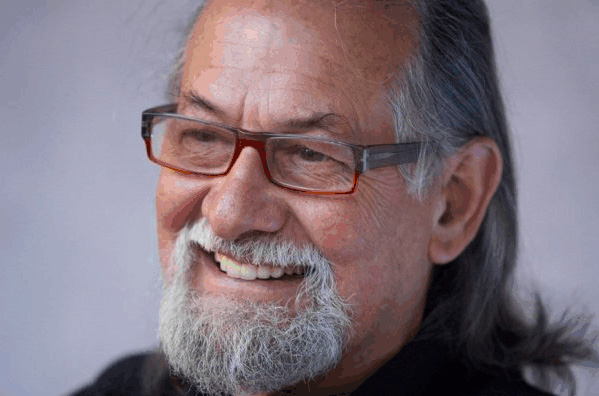
Shepherd to the fringes: John “Bullfrog” Smith (1942-2019)
By Steve Beard
March/April 2019
“Jesus was not crucified in a cathedral between two candles, but on a cross between two thieves; on the town’s garbage heap; at a crossroad so cosmopolitan that they had to write His title in Hebrew and Latin and Greek … at the kind of place where cynics talk smut, and thieves curse, and soldiers gamble. Because that is where He died. And that is what He died for. And that is what He died about. That is where churchmen ought to be and what churchmen ought to be about.”– The Rev. George Macleod, Church of Scotland clergyman and one of the founders of the Iona Community (1895-1991).
More than 20 years ago, I was sitting across the table in a Chinese restaurant in Nicholasville, Kentucky, when John Smith recited Macleod’s sentiments with righteous authority and a piercing gaze to describe part of the inspiration of the calling on his life. At that time, Smith, a well-known media commentator and evangelist to those on the cultural fringe in Australia, was doing doctoral work in missiology at Asbury Theological Seminary.
As a well-scrubbed son of a Methodist minister and a brand new Bible school graduate in the late 1960s, Smith recalls driving past a “bunch of menacing-looking outlaw bikers parked by the side of the road. Oddly, I felt a surge of compassion for these guys who no one really wanted to know. I couldn’t see the local minister making much headway with people like that,” he wrote in his autobiography, On the Side of the Angels.
Smith began to pray that “God would raise up someone able to get alongside such outsiders and show them something of the love of Christ.” At that moment, he sensed the corresponding answer: “Why don’t you answer your own prayer.” Initially, he doubted the call – but eventually he became the president of God’s Squad Motorcycle Club and an authentic ambassador of Christ to the marginalized, rejected, and forsaken.
John Smith died on March 6, 2019, after a long battle with cancer. He was 76 years old. Hundreds of bikers were in attendance at Smith’s funeral in Ocean Grove, a coastal community in the southeast of Australia, to pay their respects – including those from the Hell’s Angels, Gypsy Jokers, Bandidos, Coffin Cheaters, and Immortals.
Sean Stillman, president of God’s Squad UK chapter and author of God’s Biker: Motorcycles and Misfits,described Smith at the funeral as an “academic, a pastor, a preacher, a prophetic voice, an irritant to a comfortable church, an advocate for justice, the poor, the marginalized, and the arts.” More significantly, Stillman said, was his role as husband to Glena, Smith’s wife, and father to his three children and 17 grandchildren.
With a gregarious personality and an encyclopedic knowledge of poetry, pop culture, ecology, philosophy, and theology, Smith garnered attention and stirred controversy through his Christian message, advocacy for social justice, and roaring motorcycles. His appeal was infectious. Currently, there are God’s Squad members in 16 nations around the globe.
Stillman reported on Smith’s ability to connect with men and women “whether it be in a smoky clubhouse bar, backstage at a rock ‘n roll gig, or in the corridors of political power, a chapel pulpit, a street corner talking to a complete stranger, sitting amid Indigenous communities, engaging in academic dialogue, or crying in the pouring rain at a graveside with a grieving family.”
Smith spoke at rock festivals, biker rallies, government hearings, secondary schools, and before the United Nations Human Rights Commission. But his real love was talking one on one with someone who felt alienated from God and the church.
“For Smithy, the road was the place of discipleship and mission, and like John Wesley, one of his mission inspirations, the world very much became his parish,” said Stillman. “It was where you worked out what it meant to be a follower of his hero, Jesus of Nazareth. The road would take you to the marginalized. He taught us that the Gospel still ought to be good news for the poor and uncomfortable news for the powerful.”
Smith was a tireless advocate for human rights and indigenous peoples. Aunty Jean Phillips, an Aboriginal Christian leader from Queensland, testified at the funeral to Smith’s friendship with the Aboriginal community and recalled his “real heart for justice.”
An email from U2 frontman Bono was even read at the funeral. “To John the Bible was an incendiary tract – not some handbook on religion,” wrote Bono. “It was not a sop for mankind’s fear of death – it was an epic poem about life. It spoke about culture, about politics, about justice.” U2 first became acquainted with Smith while touring through Australia in 1984 during the “Unforgettable Fire” tour.
Interestingly enough, the last time I saw John and his wife Glena was after a U2 concert many years ago in Chicago on Bono’s birthday during the Vertigo tour. John asked if my friend, Father Kenneth Tanner, and I could give them a lift across town after the show. They sat in the back and talked about loving the concert but being too tired to attend the after-gig birthday bash for Bono. We dutifully drove them up Lake Shore Drive to the Jesus People commune – silently wishing they had given us their passes to the after party.
Bono’s message at the funeral was spot-on: “When Bob Dylan sang ‘always on the other side of whatever side there was,’ he might have been singing about John, an outsider in an outsider community, an outlaw of a different kind preparing the way for the coming of a different kind of world, speaking truth to power.
“In our last meeting he spoke truth to me, gave me a hell of a hard time, thought I had gone soft and become too comfortable around the powerful. Thought I was living too well,” Bono recalled. “He was probably right. I still think about it.”
That was John Smith. He had the arched brow of an Old Testament prophet but the tenderness of Jesus welcoming the little children into his presence. He was pastoral and irritating. Not everyone can pull that off. It just seemed authentic with John Smith.
“For 35 years, I have been discovering that the world isn’t nearly as hostile to the gospel as I thought it would be. It is not nearly as frightening as we have been told it will be,” he wrote in the pages of Good News two decades ago. “Outside the walls of the church there are many people who want to be loved and would love to have a connection with someone that didn’t treat them like a prize to be won, but persons to be loved….
“I have spent most of my life rubbing shoulders with hippies, outlaw bikers, high school students, secular non-churched folk, artists, and just ordinary people,” Smith continued. “Sure, there are murderers and dangerous people out in the real world. But I have discovered that most people who look a bit scary are actually quite ordinary. At the same time, a lot of people who look very suave are actually very dangerous. The mafia doesn’t go around looking like hippies. They wear the best Italian suits. So if you are going to judge from appearances, you’ll fail from the start. As Jesus said, man looks on the outward appearance but God looks on the heart.”
That was the heartbeat of his message to the church.
John Smith “remained passionate about the need for the message of Jesus to be faithfully proclaimed in the public sphere, but he also taught us that it should be something that should be lived,” concluded Stillman. “Putting it into practice was not an optional extra.”
Ride on, Brother John. Thanks for the arched brow and the grin. RIP.