by Steve | Aug 13, 2021 | In the News, Perspective E-Newsletter
Illustration by Shutterstock.
By Thomas Lambrecht –
Denominations are not in vogue right now in American culture. For the past 20 years, the non-denominational church movement has grown across the country until its congregations make up a significant portion of the Body of Christ in the U.S. and in Africa, as well. This reflects the tendency toward “do-it-yourself” (DIY) religion. Rather than submit to a prescribed set of beliefs, many pick and choose from various religious traditions to fashion their own personal religion. This smorgasbord approach to religion is highly individualized and made possible by the acceptance of the idea that there is no such thing as Truth, only an individual’s personal truths. It is amazing to hear some of the bizarre, unorthodox beliefs espoused by some who claim a Christian identity, even though (and perhaps because) they rarely or never attend a Christian church.
The individualization of religious belief is reflected in the non-denominational church movement, as well. Each church creates its own doctrinal statement and members join if they are in agreement (or at least can live with the statement). Church structure varies widely from one church to another, but most congregations have some kind of church board that may be either elected or appointed. Pastors are called or hired by the congregation, and each congregation is pretty much an island unto itself.
Some United Methodist congregations are dipping their toes in the water of non-denominationalism through the disaffiliation process enacted by the 2019 General Conference. The 100 or so churches in the U.S. that have separated under this provision have often become independent congregations, rather than affiliating with another denomination. Many of those churches may hope to align with the proposed new Global Methodist Church when it is formed. Others may find non-denominationalism attractive.
Becoming independent can be exhilarating. No one telling you what to do. No one demanding that you pay for this or that. No one telling you whom you must have as a pastor. You are free to structure your church as you like. You can decide as a congregation whether or not to support particular missions. It’s the same feeling one gets the first time one leaves home to live on one’s own.
Pretty soon, however, reality sets in. The responsibility of making all the decisions for a congregation without any guidance or support can become overwhelming. This is particularly true for smaller and mid-sized congregations.
That is why it is good to remember the reasons for being part of a larger denominational group.
Security in Doctrine
We are not saved from our sins and transformed into the image of Jesus by the correctness of our beliefs. But what we believe certainly influences our ability to be saved and informs the kind of life we live as a Christian. This is true at both the individual and the congregational level.
If we believe that everyone is going to heaven, then it is not important for us to share the good news of Jesus Christ or for individuals to surrender their lives to the lordship of Christ. If we believe the Bible is fallible, then it is all right for us to compromise the teachings of Scripture in order to be more culturally acceptable. If we believe the Bible and the Church historically are wrong about certain activities being contrary to God’s will for us, then we will be comfortable ignoring those biblical standards in the way we live our lives.
That is why it is so important for us to get our doctrinal beliefs right. Incorrect beliefs can lead us away from God and cause us to live lives that are not in keeping with God’s desire for us.
The Christian faith is not up for negotiation, either by individual persons or by individual congregations. The virtue of a denomination is that it has a set of beliefs that are consistent with historic Christian doctrine and vetted by a larger body of people. This helps keep individual Christians and individual congregations from going off the rails in their beliefs and “shipwrecking their faith.” Doctrinal accountability is essential for the Christian life.
That accountability is especially true when our theological perspective is a minority view within the overall Body of Christ in the U.S. Among evangelical circles, the predominant theology is Calvinist, whereas Methodists take a Wesleyan/Arminian perspective on theology. A colleague who is a professor at Asbury Seminary has often remarked that Wesleyan/Methodist churches that go independent tend to become Calvinist in theology within a generation of their departure from a Wesleyan denomination. Doctrinal accountability can keep our churches faithful to a doctrinal perspective that is valuable and needed in the Body of Christ today.
In Africa, many freelance independent, non-denominational churches preach a prosperity Gospel. For churches there, being part of an established Wesleyan denomination can help guard against the adoption of heretical doctrines that are harmful to their members in the end.
Accountability
That leads us to the next value of denominations: a system of accountability for both doctrine and behavior. In order to be effective, accountability has to be broader than what an individual congregation or its leaders can provide. Yes, it should not have to be this way, but in our fallen, sinful condition, we have human blind spots and mixed motivations that prevent us from seeing problems or from acting on the problems we do see, especially when we are close to the situation.
Throughout my ministry, I have witnessed repeatedly a congregation victimized by pastoral leadership that transgresses the boundaries of Christian behavior. Christianity Today just produced a podcast series that chronicles the rise and fall of Mars Hill Church, a megachurch based in Seattle, Washington. The congregation grew from a small Bible study to a multi-site congregation with 15 locations in four states. Weekend attendance was over 12,000. Then the pastor, Mark Driscoll, and other leaders were accused of “bullying” and “patterns of persistent sinful behavior.” Within 18 months, that giant church ceased to exist. Ironically, Driscoll became pastor of another church and continues some of the same dysfunctional patterns.
One can reel off the names of other high-profile pastors and ministry leaders who for years perpetuated a pattern of life and ministry that was deceitful and destructive. Those with oversight responsibility were too close to the situation or the person to see the problems.
In Africa and other parts of the world, the pastor is sometimes given unbridled power in the congregation. Some bishops take advantage of their position for personal gain. The church becomes an environment where the leaders say what is right, rather than looking to Scripture and denominational policies and procedures. In such an atmosphere, pastors and church members alike can be harmed by arbitrary and dictatorial leadership. Denominational accountability is the only thing that can protect pastors and church members from harm.
Denominational accountability systems do not always work the way they are intended (as our own United Methodist Church’s failures in this regard testify). But at least there is a system of greater accountability that can be reformed and made more effective. I believe the system envisioned for the proposed Global Methodist Church enhances accountability and fairness in a way that addresses some of the shortfalls in our UM accountability system. Certainly, there is a much greater possibility of holding leaders and congregations accountable when that accountability comes from outside the situation. We are often much more able to see and respond to the sins and shortcomings of others than we are in ourselves or our own families.
The Power of Collective Action
The United Methodist Church is a small church denomination. Over 75 percent of the more than 30,000 congregations in the U.S. average fewer than 100 in worship attendance. Individually, small churches have limited resources to accomplish large projects. Collectively, however, churches working and contributing together can do great things for God. That is one area where The United Methodist Church has leveraged our connectional system to make a real-world difference in the lives of people all over the globe. When it comes to hunger relief, poverty alleviation, education, ministerial training, and health care to name just a few areas, the UM Church has been able to pool the resources of many small churches to achieve significant results.
It is possible for independent churches to join associations of churches or otherwise link to support missions and ministries they agree with. The value of doing so as a denomination is to have the confidence that the missions and ministries supported by the denomination are consistent with the denomination’s doctrinal and moral standards. A denomination can make a long-term commitment to a geographic area or a certain large project that can be sustained, despite the fact that individual congregations might have to drop their support for a time, as other congregations come on to make up the shortfall. There is a greater chance of consistency and effectiveness with denominational programs that have built-in oversight and accountability from outside (as mentioned earlier).
Providing Pastoral Leadership
One of the most important tasks of a denomination is to provide pastoral leadership to its congregations. The denomination vets and approves candidates for a pastoral position in terms of doctrine, skills, and personal lives. This is work that an independent congregation would have to do for itself, often without the expertise in personnel work and theology to make informed judgments. In the case of independent congregations, finding a pastor takes a number of months and often a year or more, during which time the congregation is without a pastor. Smaller congregations will attract fewer and less qualified applicants, whereas, in a denominational system clergy express their willingness to serve where needed.
Again, the United Methodist system of clergy placement is not perfect. Many appointments are good matches between congregation and pastor. Other times, the match is not good. Part of the reason for this mismatch is the guaranteed appointment, meaning all United Methodist clergy must be assigned a place to serve. The proposed Global Methodist Church will not have a guaranteed appointment, whereby clergy who are theologically incompatible or deficient in skills still receive an appointment to a church regardless. The GMC is also committed to more extensive consultation with both potential clergy and congregations to ensure the best possible match and to enable longer-term pastorates.
The important point is that, when done well, the denominational process can supply churches with quality, committed pastoral leaders who will help the congregation realize its potential. It can help guard against clergy who are doctrinally or personally unqualified to serve in leadership. The process can do most of the heavy lifting that would otherwise fall to inexperienced volunteers in the local congregation.
Practical Resources
What is a good curriculum for your church’s Sunday school? What would be a good Bible study on stewardship? How can we get our youth more involved in the life of the congregation? What outreach strategies might be effective in our community? What type of pension, health insurance, and property insurance should our church provide? How much should we pay our pastor?
The list of questions and decisions that a local church needs to deal with is endless. A denomination can give a local church the resources to address these questions. In some cases (like the pension and insurance question), the denomination can provide a program the local church can plug into that it could not duplicate on its own.
I am excited that the proposed GMC is already working through various task forces to identify and flesh out resources and ministry models that can help guide local churches into more effective ministry in many different areas. A denomination can provide those resources and guidance for local churches in a way that the local church can trust. Those resources will be theologically consistent with the denomination’s doctrine and philosophy of ministry. Those resources will be tried and proven as workable and practical. Each congregation will not have to reinvent the wheel, but can draw upon the pooled wisdom and resources that many churches being part of one denomination can provide. Having one place to turn for ideas and guidance will save time and energy at the local level that can be effectively directed into actual ministry.
Much more could be said about the benefits of being part of an effective denomination. Part of a brief childhood poem by Henry Wadsworth Longfellow speaks to our situation:
There was a little girl,
Who had a little curl,
Right in the middle of her forehead.
When she was good,
She was very good indeed,
But when she was bad she was horrid.
United Methodists have experienced some of the horrid aspects of being in a denomination that is dysfunctional and ineffective in some key ways. The temptation is to jettison the idea of a denomination entirely, believing that we can certainly do better on our own. That is a false temptation.
We are certainly better and more effective as churches and as individuals when we work together with like-minded believers. A denomination gives us the structure and the possibility of doing just that. Together, we can make our new denomination good and experience that it can be “very good indeed!”
by Steve | Aug 11, 2021 | July/August 2021, Magazine, Magazine Articles
 By Max Wilkins –
At TMS Global, we talk a lot about “joining Jesus in his mission.” But what, exactly, is that mission? Maybe you’ve wondered that, too. In recent decades, parts of the church in North America have watered down the mission of Jesus until anyone who is doing anything even remotely helpful or is simply being nice to others is thought to be on mission.
From its inception, however, the actual mission of Jesus has been about one thing: making disciples. Jesus spent the entirety of his earthly ministry making disciples. And as he gathered with his disciples on the evening before he was crucified, he prayed to his heavenly Father: “I have brought you glory on earth by finishing the work you gave me to do” (John 17:4).
It is essential to note that Jesus had not yet been to the cross, much less risen from the dead. He had much remaining work to do. But he had made disciples. And it says something about the importance the Lord places on disciple-making that he would indicate that this was the work his Father sent him to do, and that by doing it, he had brought glory to his Father on earth. How remarkable that Jesus would now entrust this God-glorifying mission to us! Yet, that is exactly what he does.
The final words in Matthew’s gospel have come to be widely known as the Great Commission. It is understood by the church that in these words Jesus is giving marching orders to those who would join him in his mission.
“Then Jesus came to them and said, ‘All authority in heaven and on earth has been given to me. Therefore go and make disciples of all nations, baptizing them in the name of the Father and of the Son and of the Holy Spirit, and teaching them to obey everything I have commanded you. And surely I am with you always, to the very end of the age’” (Matthew 28:18–20).
There is a command in these verses, and only one. I have had the opportunity to share with communities of believers in dozens of countries around the world, and I commonly ask them: “What is the command in the Great Commission?” Nearly 100 percent of the time the immediate and enthusiastic answer is: “Go!”
Many years ago, the late Christian singer Keith Green recorded a song entitled “Jesus Commands Us to Go.” It is a beautiful song, and the song’s sentiments are shared by many passionate believers. It is, however, also theologically incorrect. The Great Commission does not command us to go. We know this because the text is handed down to us in Greek, a language in which command verbs have their own form. When looking at this passage in Greek, it becomes clear: the only command in the entire passage is “make disciples.” In fact, Jesus seems to assume that those who follow him would not need to be commanded to go. Movement is more or less implied in the act of following. A better translation of this passage in English would be something like: “As you are going … make disciples!”
The mission of Jesus is to make disciples. Period. And while there are thousands and thousands of ways to make disciples, and we can utilize many platforms to accomplish this vital work, not everything that is nice and helpful is also disciple-making. It is essential that those who would live lives worthy of the calling of Jesus be about the work of making disciples. It is the only mission that ultimately matters, and the one that brings glory to God on the earth.
The good news is that we are not on our own as we live into this mission. Paul reminds the believers in Thessalonica that it is the power of God that makes the mission possible. These outcomes are both accomplished “by his power” (2 Thessalonians 1:11).
At TMS Global our mission statement calls us to join Jesus in his mission, but we understand that mission to be making disciples. Thus, all TMS Global cross-cultural workers are engaged in disciple-making regardless of their platform for ministry.
Max Wilkins is the president and CEO of TMS Global. This column is adapted from his latest book, Focusing My Gaze: Beholding the Upward, Inward, Outward Mission of Jesus. To learn more, visit seedbed.com/focusingmygaze, or inside cover.
by Steve | Aug 6, 2021 | July/August 2021, Magazine, Magazine Articles
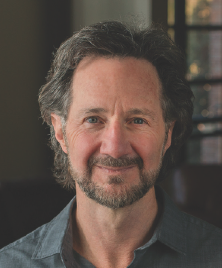
The Rev. Rob Renfroe, president of Good News
By Rob Renfroe –
Will we hold General Conference in 2022? That’s the question many people are asking. The simple answer is we must. And we can.
This year, the most vocal progressive church in my annual conference, the Texas Annual Conference, requested and was granted disaffiliation. It will join the United Church of Christ, a denomination that has no ties with our Wesleyan heritage.
Last year, the second largest congregation in our conference left. It is a traditionalist church with a pre-COVID weekly worship attendance of 3,000.
Outside of Texas we are witnessing the same exodus. The largest progressive church in the country, Glide Memorial in San Francisco, disaffiliated earlier this year. Asbury Memorial Church in Savannah, Georgia, left in 2020 explicitly because of United Methodism’s stance on marriage and sexuality. Three smaller progressive churches in Maine are in the process of leaving the New England Conference. UM News Service reports that 51 congregations disaffiliated from the UM Church in 2020.
Two traditionalist midwestern megachurches have also disaffiliated. Granger Community Church in Indiana, with a weekly worship attendance of nearly 4,000, and multi-campused Christ Church in Illinois, with a weekly attendance of well over 2,000, have both departed.
The longer we wait to resolve our differences, the more opportunity there will be for mistreatment of congregations, real or imagined. The largest church in Georgia, Mt. Bethel in Marietta, has announced its intention to leave because its senior pastor was to be removed without the church or the pastor being consulted. The largest church in New Jersey (a Korean congregation) has split for a similar reason. And three Korean churches in Southern California are at odds with their bishop and district superintendents because their pastors have been told they would be removed. (See article on page 36.)
Of course, it’s not just churches; it’s people, too. We are told that some persons are leaving UM churches or not joining because they cannot be associated with a denomination that does harm to LGBTQ persons. Every week our office receives notice from long-time Methodists that they are leaving the denomination because they can no longer sit under the ministry of a pastor or a bishop they believe is preaching a gospel that is contrary to what God has revealed in Scripture.
Some of the exiting churches are uniting with other Wesleyan denominations. Some are not. Most of our members who are leaving are joining Baptist or non-denominational churches.
Whether we are progressive, “centrist,” or traditionalist, we all believe there is something very special about our Wesleyan witness that prioritizes God’s grace and emphasizes his call to holiness of heart and life. The longer we wait to hold General Conference and adopt the Protocol of Reconciliation and Grace through Separation, the more churches and members we will lose to the Wesleyan way and the weaker our witness will be.
We must end our division and move on. That means General Conference must meet in 2022.
But, can we? What if delegates outside the United States are not fully vaccinated and are unable to travel? Or they cannot receive visas to come to this country? Good News is encouraging overseas delegates to get vaccinated wherever possible. We are working with others to try to ensure visas will be available to delegates and others.
But what if, despite all of our efforts, international travel is still impossible and an in-person General Conference cannot take place with all our international delegates present? Then a virtual or a hybrid General Conference can and should be held. Is that really do-able? Of course, it is. Corporations hold meetings with hundreds of their employees in scores of different countries every day. They have found the required technology to hold such meetings.
The reason these companies did not decide that virtual meetings are too difficult to pull off is simple. They want to make money. The desire for greater profits has been sufficient for corporations to find or develop the technology required to conduct detailed, multinational meetings. And if we do not do the same, it will only be because the Kingdom of God is not as important to United Methodists as making money is to corporate America.
Nearly every capital city in the world has a hotel near its major airport with sufficient technology for delegates to connect securely with General Conference. Delegates could stay in those hotels at no greater cost to the church than the hotels in Minneapolis. And whatever additional technological costs may be required will be more than offset by the savings of not having to pay for air travel to the United States.
Some of us have been calling for separation since 2004. It has taken others of us longer to reach the same conclusion. But the vast majority of our representatives were prepared to vote on the Protocol in 2020. We gave the Commission on General Conference the benefit of the doubt when GC 2020 was postponed, and we understood their concern that equal access to technology and full participation at the Conference might not be possible for all delegates.
But it is now time for the Commission to be understanding of us. The Church is hurting. We’re losing congregations and members. Our Wesleyan witness is being weakened. We need the Protocol to be passed. We need to adopt it no later than 2022. It can be done and it must be done.
by Steve | Aug 6, 2021 | July/August 2021, Magazine, Magazine Articles

Blood-stains from World War II on the pews of the church-turned-combat-hospital in Angoville-au-Plain, France. Photo by Bob Kaylor.
By Bob Kaylor
Driving through the countryside of the Normandy region of France feels a bit like entering the world of an animated Walt Disney film. The green fields, bushy hedgerows, lolling cows, and medieval-period stone houses, churches, and barns call to mind many stories that we learn as kids – stories that begin, “Once upon a time…”
A few years ago, I chose this area because the D-Day battlefields have been a place on my bucket list that I have always wanted to visit. We based ourselves in Sainte Mere Eglise, the tiny village where the 82nd and 101st Airborne Divisions landed in the early morning hours of June 6, 1944. An effigy of Private John Steele of the 101st and his shredded parachute still hangs from the church’s bell tower, commemorating where he landed on the roof that night. During that early morning, this sleepy Norman village quickly became a maelstrom as paratroopers landed in the midst of stunned villagers and scrambling Germans who had been fighting a house fire. The town looks today much like it did in 1944, but with a few more cafes, ice cream shops, and memorabilia stores.
I had arranged an all-day private tour with a local guide, Monica Baan, a Dutch resident of Saint Mere Eglise, who was very knowledgeable and who spent a lot of time interviewing veterans of D-Day, most of whom are gone now. The stories I had read in a myriad of history books suddenly came to life as we walked through the town and then drove to places like Utah Beach, Pointe du Hoc, Omaha Beach, and even to Brecourt Manor where Easy Company and Lt. Dick Winters of Band of Brothers fame fought their first engagement. It was stirring to visit those sites and be reminded of the immense task at hand that day for these soldiers, sailors, and airmen.
As someone with a passion for military history, I knew a lot about what took place, but Monica filled in some gaps with stories I had never heard. While driving through the Norman countryside, she stopped by a little church in the village of Angoville-au-Plain, a place so small that it’s barely noticeable in the midst of the bucolic backdrop of farms and fields. “I want to tell you a story you probably have never heard,” she said. We went through the side door of a small 11th century Catholic church into a quiet sanctuary where the story took place.
In the early morning hours of D-Day, thousands of U.S. paratroopers were scattered across Normandy and small crossroad villages like Angoville-au-Plain suddenly became hotly contested territory. As the wounded began to cry for help, two medics from the 101st, Robert Wright and Kenneth Moore, looked to set up an aid station and the village church seemed to be the best available option. They set about gathering the wounded from both sides into the church using a handcart and wheelbarrow they found, often exposing themselves to enemy fire in the process. They used the pews of the church as hospital beds and, incredibly, there are still several of those wooden benches in use that continue to show the stains of blood where those wounded were treated.
A hole in the roof, still stuffed with canvas, and a shattered tile on the floor are remnants of the intense fighting around the church where a mortar round entered the sacred space but failed to detonate. As the battle raged back and forth, American paratroopers were forced to retreat from the village and the medics faced a difficult decision. Their lieutenant wanted to withdraw them, but Wright and Moore insisted on staying to tend to the wounded, even if it meant their capture by the enemy.
Robert Wright described the scene in the church on the evening of D-Day: “By the evening we had 75 of them (wounded personnel and one local infant, in the church). Our own folk had come to tell us that they could not stay any longer. So we were left with the wounded. A German Officer soon arrived and asked if I could tend to his wounded too. We accepted. During the night the churchyard was the scene of another battle. Two of our casualties died. But among those I could tend, none lost their lives. I tended all sorts of wounds, some were skin deep but others were more serious abdominal cases.”
The battle raged outside for three days, with the village changing hands several times. All the while, Wright and Moore kept tending the wounded from both sides. At one point, several Germans stormed through the door of the church, but seeing that the medics were treating wounded from both sides they quietly left and marked the door with a Red Cross. In another instance, a German soldier came seeking treatment but Wright and Moore had established a rule that no weapons would be allowed in the church. They refused to treat the German until he added his weapon to the growing pile outside the church door. He would eventually do so and come under their care.
The windows of the church were all blown out and Wright was hit by a piece of the falling ceiling. He would receive a Purple Heart for it, but it was a medal he only grudgingly accepted. On June 8, a couple of days into the fighting, two Germans who had been in the bell tower of the church since before D-Day finally came down and surrendered to Wright and Moore, who immediately put them to work. The medics tended the wounded for 3 days straight with no break and no sleep, short on supplies and under constant fire, but they saved some 80 lives in the sanctuary of this little church. Many other lives would be birthed in the future families of those whom they saved. The pews that had been built for saving souls became the place where people broken by conflict and pain found salvation of their bodies as well.
As I listened to Monica spin out this true story, it occurred to me that Wright and Moore were doing the ultimate form of pastoral ministry in that holy place. They had been baptized by fire and ordained by duty to continue their work. They were priests officiating over a sacrament of broken bodies and shed blood. Their tireless work revealed a much deeper truth about what the church is about – a hospital for broken people, no matter their “side” or whether they are combatants or innocent civilians. These priestly medics seemed to understand this instinctively to the point at which even their enemies recognized the importance of the mission. They were being the church, not just using one for an aid station.
With this story echoing in my soul, I began to have a deeper awareness of the wounded people I saw around me. I noticed them walking around places like London and Paris, standing in doorways puffing a cigarette, or crammed into a pub looking for some solace or community. I saw it in the hollow eyes of business people walking quickly to a job they might have hated and in the immigrant trying to find his way in a strange new land. Casualties are stacking up in a culture where people have become commodities and pawns in a consumeristic war for their bodies and souls. What sort of ministry will reach them?
It will be the kind of ministry that will risk everything to save the people around us, no matter who they are. I loved the way one pastor put it in his welcome at one church I visited that summer: “If you’re our guest today, we want you to know that this is a place where it’s OK to not be OK. But our hope is that you don’t want to stay in that not-OK place. We love you enough to tell you the capital ‘T’ truth about Jesus Christ.” That’s a welcome for all – an invitation to add our weapons and conflicts to the pile outside and come inside to be made whole.
I spent the first part of my life and ministry as a soldier – a soldier bearing weapons of war and then the sword of the Word of God, which I have wielded in defense of the faith. Those are both honorable occupations, but standing in that little church in Normandy I felt a conviction that what the world needs the church to be right now is more of an aid station, and pastors to be more like medics. The cultural battles might continue to rage around us, but we have a job to do. It’s not to preserve a pristine institution, but to be the kind of place where blood stains on the pews remind us that our work is about saving lives, both bodies and souls.
Robert Wright would return to Normandy in 2002 for the dedication of a monument to what he and Moore did during those three days in June. He died in 2013 and is buried in the little cemetery outside that church in Angoville-au-Plain under a simple marker that reads “R.E.W.” He wanted his final resting place to be near this sanctuary of life that he and his friend created in the midst of horror and death.
I loved that this little church didn’t fix the holes, patch up the floor, or scrub down the pews after the war. The missing pieces of stone on the walls that were taken off by bullets and shrapnel haven’t been paved over. They did replace the windows, but with a tribute to these two medics who became saints. This holy place is now a monument to the kind of church God has called his church to be.
Bob Kaylor is Lead Pastor of Tri-Lakes United Methodist Church in Monument, Colorado. He is a member of the Good News Board of Directors and a council member of the Wesleyan Covenant Association. Dr. Kaylor is the co-host of the WCA podcast called Holy Conversations.
by Steve | Aug 6, 2021 | July/August 2021, Magazine, Magazine Articles, Uncategorized
 By B.J. Funk –
“It is always just possible that Jesus Christ meant what he said when he told us to seek the secret place and to close the door,” C.S. Lewis observed in God in the Dock.
In the Beatitudes, Jesus said, “And when you pray, you are not to be like the hypocrites; for they love to stand and pray in the synagogues and on the street corners so that they will be seen by people. Truly I say to you, they have their reward in full. But as for you, when you pray, go into your inner room, close your door, and pray to your Father who is in secret; and your Father who sees what is done in secret will reward you” (Matthew 6:6, NASB).
When my two sons were little boys, I gave them each a drawer at a table in their room. That drawer was theirs only. I called it their Special/Secret Drawer. They were young – ages five and three – and it gave them joy to have their own special place. Their own crayons, their own stamp collection, etc. I don’t know why it worked so well, but it did.
At that same time, I had my own Special/Secret Drawer in our guest bedroom. Into that drawer, I stuffed page after page of my hurtful marriage. I wrote a lot about my pain, my broken heart, and also a lot about what God was teaching me. I read books that I knew would give me spiritual strength.
The book I clung to was Dennis Bennett’s book, Nine O’Clock in the Morning. Bennett, an Episcopal priest, found himself in a spiritual wilderness. Along with his wife, Rita, he shared the fire that led to a longed-for renewal. This now classic story tells how the Charismatic Movement began and swept into churches across America.
I was in a spiritual wilderness. I could not sleep. I lost weight rapidly. I cried to the Lord for help.
The title of Bennett’s book is taken from a New Testament episode and the words of the Apostle Peter right after the Holy Spirit descended on the small group gathered and waiting for the Lord’s guidance. When they came into the streets, they were swaying and stumbling and so they were accused of being drunk. Actually, they were woozy with the power of the Spirit. Peter corrected them.
“These men are not drunk, as you suppose,” he said. “It’s only nine o’clock in the morning” (Acts 2:15). Then Peter explained that the prophet Joel had prophesied this very thing, that God said through Joel that he would, in the last days, pour out his Spirit on all people. That’s when the church was born, and three thousand people were added to their roll on that very day.
I began meeting the Lord each morning before the boys got up. There, he bathed me in love. I learned that, as C.S. Lewis said, Jesus implores us to pull away and go to God in secret. He would reward us.
That marriage lasted five more years before my husband divorced the boys and me. I include the boys in that statement because, by his choice, their dad has not seen them in thirty years.
But that’s not really the point of this article. I believe that my special times with my Lord in those early morning hours were the real reason I didn’t hit bottom five years later. The Holy Spirit had become real to me. And in all of the feelings of loneliness and betrayal that would come to me again, I knew I would make it. I threw away everything in that drawer.
In many churches, the Holy Spirit is ignored or feared. Yet when we ask him to baptize us with his Spirit, we find a life with Jesus that we had not known before. And by the way, he has never required me to do anything that would embarrass me. He is a Gentleman. My walk with him is between a Gentleman and a Lady.
Oswald Chambers says, “The Holy Spirit makes real in me all that Jesus did for me.” The United Methodist Church needs the power of the Holy Spirit to invade our lives with depth, joy, and power. And we would all welcome a 3,000 member surge. Dear Lord, let it be.
B.J. Funk is Good News’ long-time devotional columnist and author of It’s A Good Day for Grace.