by Steve | Jan 17, 2022 | In the News

Mural of Coretta Scott King at the Martin Luther King Jr. National Historical Park in Atlanta. Photo: Steve Beard.
By Coretta Scott King (1927-2006) –
Throughout the epic freedom struggle of African Americans, our great sustainer of hope has been the power of prayer. We prayed for deliverance in a dozen African languages, chained to the holds of slave ships, on the auction block, in the fields of oppression, and under the lash. We prayed when we “followed the drinking gourd” on the Underground Railroad. We prayed when our families were torn asunder by the slave traders. We prayed when our homes and churches were burned and bombed and when our people were lynched by racist mobs. So many times it seemed our prayer went unanswered, but we kept faith that one day our unearned suffering would prove to be redemptive.
As a young child growing up in Marion, Alabama, I remember my pastor at Mt. Tabor Church responding to the racial abuse of one of our congregation by saying, “God loves us all, and people will reap what they sow. So just keep on praying. Don’t worry. God will straighten things out.” I believed he was right then, and I believe it still.
My parents made sure that prayer would be a regular part of my life, and it has been to this very day. Prayer is how we open our hearts to God, how we make that vital connection that empowers us to overcome overwhelming obstacles and become instruments of God’s will. And despite the pain and suffering that I have experienced and that comes to all of our lives, I am more convinced than ever before that prayer gives us strength and hope, a sense of divine companionship, as we struggle for justice and righteousness.
Prayer was a wellspring of strength and inspiration during the Civil Rights Movement. Throughout the movement, we prayed for greater human understanding. We prayed for the safety of our compatriots in the freedom struggle. We prayed for victory in our nonviolent protests, for brotherhood and sisterhood among people of all races, for reconciliation and the fulfillment of the Beloved Community.
For my husband, Martin Luther King Jr., prayer was a daily source of courage and strength that gave him the ability to carry on in even the darkest hours of our struggle. I remember one very difficult day when he came home bone-weary from the stress that came with his leadership of the Montgomery Bus Boycott. In the middle of that night, he was awakened by a threatening and abusive phone call, one of many we received throughout the movement. On this particular occasion, however, Martin had had enough.
After the call, he got up from bed and made himself some coffee. He began to worry about his family, and all of the burdens that came with our movement weighed heavily on his soul. With his head in his hands, Martin bowed over the kitchen table and prayed aloud to God: “Lord, I am taking a stand for what I believe is right. The people are looking to me for leadership, and if I stand before them without strength and courage, they will falter. I am at the end of my powers. I have nothing left. I have nothing left. I have come to the point where I can’t face it alone.
Later he told me, “At that moment, I experienced the presence of the Divine as I had never experienced Him before. It seemed as though I could hear a voice saying: ‘Stand up for righteousness; stand up for truth; and God will be at our side forever.’” When Martin stood up from the table, he was imbued with a new sense of confidence, and he was ready to face anything.
I believe that this prayer was a critical turning point for the African-American freedom struggle, because from that point forward, we had a leader who was divinely inspired and could not be turned back by threats or any form of violence. This kind of courage and conviction is truly contagious, and I know his example inspired me to carry on through the difficult days of my journey.
A few nights after Martin’s moment of truth, I had mine. I was sitting in my living room in Montgomery, chatting with a friend, while my new baby daughter, Yolanda, was asleep in the back room. Suddenly, we heard a loud thump on the front porch. Because of all the recent threats, I urged my friend to get up. “It sounds as if someone has hit the house. We’d better move to the back.”
As we moved toward the back, we felt a thunderous blast, followed by shattering glass and billowing smoke. I hurried to Yolanda’s room and thanked God that she was all right. I called the church where my husband was speaking, but he was addressing the audience at the time. He called me back shortly afterward as a large crowd gathered at our house, and then he rushed home.
The crowd was angry at what had happened, and there was a lot of tension between the police and those who had gathered, some of whom were armed with guns, rocks, and bottles. In the midst of all of the turmoil, I said a silent prayer for the protection of our family and the restoration of peace. Then Martin began to speak to the crowd from the front porch of our home. “My wife and baby are all right, ” he said. “I want you to go home and put down your weapons. We cannot solve this problem through retaliatory violence. We must meet violence with nonviolence.”
As Martin continued to speak, I was enveloped by a growing calm. “God is with us,” I thought. “God is truly with us.” The fear and anger around me began to melt like the receding snows of spring. Almost at that moment, Martin concluded his remarks to the crowd: “Remember, if I am stopped, this movement will not stop, because God is with this movement. Go home with this glowing faith and this radiant assurance.”
Martin’s speech on that day was yet another crucial turning point for our freedom struggle because it set the tone of nonviolence that gave our movement its unique credibility and enabled all of the victories we achieved under his leadership.
From that day on, I was fully prepared for my role as Martin’s wife and partner in the struggle. There would be many more days of difficulty and worry, and there would be many more prayers. But the unwavering belief that we were doing God’s work became a daily source of faith and courage that undergirded our freedom movement.
It is said that every prayer is heard and every prayer is answered in some way, and I believe this is true for people of all faiths. I still believe that the millions of prayers spoken by African Americans from the Middle Passage on down to today have been heard by a righteous and loving God.
Coretta Scott King (April 27, 1927 – January 30, 2006), the late widow of the Reverend Martin Luther King, Jr., was the Founder and former Chairman, President, and CEO of The King Center for Nonviolent Social Change in Atlanta, Georgia. Mrs. King was a human rights activist for more than 40 years.
This excerpt appeared in the March/April 2004 issue of Good News. Reprinted from “Standing in the Need of Prayer” from the Schomburg Center, with permission from The Free Press, a division of Simon & Schuster.
by Steve | Jan 14, 2022 | In the News
 By Thomas Lambrecht
In October 2021, after 16 months of Covid-related delay, the General Synod of the Reformed Church in America (RCA) adopted a plan to allow traditionalist congregations to disaffiliate over the church’s gridlock over LGBTQ ordination and same-sex marriage. That plan has now given rise to a new, theologically conservative denomination called the Alliance of Reformed Churches. Several smaller networks of traditionalist churches also formed prior to the General Synod’s action.
According to articles by Kathryn Post in Religion News Service (RNS), “The RCA is a historically Dutch Reformed denomination dating back to the 1620s, when New York was known as New Amsterdam. Today, the RCA has fewer than 200,000 members and 1,000 churches.”
“It’s really about how we view the Bible, how we understand God and the nature of the church,” the Rev. Lynn Japinga, professor of religion at RCA-affiliated Hope College, is quoted as saying. “It’s a fundamental difference in approach to the Christian faith that’s the source of all this.”
The Rev. Ron Citlau, senior pastor of Calvary Church near Chicago, frames the question this way, “The issue for me and many of the people I know is, is it a thing for which Jesus Christ needs to come to redeem us, or is it a blessing he wants us to embrace? If we get sin wrong, there are larger issues at stake.”
The Reformed Church has similar issues of accountability comparable to The United Methodist Church. According to the articles, “The RCA has a localized structure that gives classes – regional church groups [similar to UM annual conferences] – authority over matters such as discipline and ordination. While all RCA churches follow the Book of Church Order, they don’t have to follow the General Synod’s recommendations.”
David Komline, associate professor of church history at Western Theological Seminary, is quoted as saying, “The General Synod has repeatedly made statements that are more traditional in orientation about sexuality, but those are just statements. There are no mechanisms in place to hold people accountable to these statements.”
Attempts to amend the Book of Church Order to define marriage as between a woman and a man passed the General Synod, but failed to win the necessary two-thirds approval from classes. According to Citlau, “We found that the RCA is designed in such a way, intentionally or not, in which the vast majority cannot move to what they believe is right because there are just enough progressive classes that can veto.”
The 2018 General Synod formed a team “charged with discerning whether the RCA should stay together, restructure, or separate.” The team proposed three options: 1) organizing the classes [annual conferences] by affinity, rather than geography, allowing churches to opt into classes based on shared values; 2) creating an external RCA mission agency that would allow departing churches to continue supporting RCA’s global mission work; and/or 3) allowing a departing church to retain its property and assets. These three proposals were considered at the 2020 General Synod that was postponed until 2021.
Even before the General Synod acted, one class [annual conference] withdrew from the RCA. As Citlau, one of the leaders in the breakaway class, is quoted as explaining, “The RCA has this albatross around its neck, and historically it moves very slow. From our point of view, the house is burning. We can’t keep saying, we’re going to wait five more years and have a couple of committees. It’s already a bloody mess, and until you’re willing to get in there and make some choices, there’s no way through.”
Komline, the church history professor, is quoted as saying, “People on different sides of the spectrum have been fighting for about 40 years and they’re sick of it. They believe their fighting is impeding their mission. I think that’s the case on both sides. The liberals want to go pursue justice, as they define it, and the evangelicals want to share the gospel as they define that.”
In response to the conflict, the 2020/21 General Synod adopted regulations for churches that have chosen to leave the RCA to retain their assets and buildings (the third proposal above). “We believe that the RCA has an opportunity in this moment to act in an exemplary way by providing a generous exit path for churches who decide to leave, and also by inviting these churches to act generously themselves,” Brian Keepers, a Vision 2020 team member who presented the recommendation, is quoted as saying.
The delegates overwhelmingly defeated a proposal to create an external global mission agency (the second proposal above).
However, the delegates did approve the first proposal above, forming a team to restructure the denomination’s regional church groups by affinity, rather than geography. Each group/class would make its own decisions on ordination and marriage.
It remains to be seen, however, whether traditionalist churches will stick around to participate in affinity classes. On New Year’s Day, 43 congregations left the RCA to join the traditionalist Alliance of Reformed Churches (ARC). According to the articles, “At least 125 churches from various denominations are in conversation with ARC leaders about joining.” Steven Rodriguez, an RCA church planter in Brockport, New York, is quoted as describing the departing churches as “a large group of conservative churches that are also providing a lot of income to the denomination.”
The new Alliance, according to one RNS report, “besides not affirming same-sex marriage or ordination of LGBTQ individuals, will have a strong emphasis on church planting and feature a flexible organizational model meant to foster theological alignment and efficient decision-making, according to ARC leaders.” As Tim Vink, the new denomination’s director of spiritual leadership and outreach, describes it, “We have a passion for this remnant of believers to become a part of reformation and revival in the Northern Hemisphere. Part of our strategic thinking is designing things for the 21st century that allows a multiplication of gospel-saturated churches and a multiplication of disciples.”
“We believe if the church is going to be successful in the 21stcentury, it needs to be powered by a more agile structure and it needs to be more theologically aligned than theologically diverse,” Dan Ackerman, ARC’s director of organizational leadership, is quoted as saying.
According to the RNS report: “Joel Baar, an ARC board member and elder at Fellowship Reformed Church in Hudsonville, Michigan, which opted to join ARC by a vote of 604-9, said that theological conformity of ARC is part of what appealed to his congregation. ‘As the RCA was attempting to define and clarify marriage,’ said Barr, ‘and efforts had been happening over the decades in that regard, there continued to be this tension within the RCA of whether or not the Bible was the full authority of God’s Word. We started feeling at Fellowship we no longer belonged within the RCA.’”
RNS continued: “ARC will replace national in-person conferences with video calls, digital messaging platforms, and other forms of virtual communication to make decisions more efficiently, organizers said. Its board already meets twice a month to expedite response times.”
According to the articles, “RCA leadership has reached out to its congregations, hoping to sell them on RCA’s increasing diversity and new international church-planting and missional partnerships. Yet, the RCA is also committed to allowing departing churches to leave on good terms. ‘We want to bless our brothers and sisters who are choosing to find another denominational family,’ said Christina Tazelaar, director of communication for the RCA.
“The ARC seems equally dedicated to a smooth transition. ‘We bless the RCA, we pray for the RCA,’ said Vink.” Nevertheless, he went on, “the General Synod in October made it clear to many conservative churches that the time is now to look for a new wineskin.”
It is striking how similar the RCA’s situation is to our United Methodist dilemma. Even the words used by the leaders on both sides correspond almost exactly to what UM leaders have said.
If the Reformed Church in America could find a way to pull off an amicable separation, why couldn’t The United Methodist Church do the same? Here’s hoping the 2022 General Conference will follow their gracious example.
Thomas Lambrecht is a United Methodist clergyperson and the vice president of Good News.
Article Links
The Reformed Church in America faces rupture over LGBTQ gridlock
The Reformed Church in America moves toward restructuring, prepares for departures
Reformed Church in America splits as conservative churches form new denomination
by Steve | Jan 7, 2022 | In the News, Perspective E-Newsletter

Photo: Shutterstock
By Thomas Lambrecht
The slogan “We Are Better Together” has been used for everything from a political campaign to the headline for efforts to keep The United Methodist Church from separating. Efforts to promote greater unity in our country deserve support. After all, this is the only country we have, and we need to learn how to live together in this country. On the other hand, my colleagues Rob Renfroe and Walter Fenton have shown in their book, Are We Really Better Together?, that we are not really together in our denomination. Attempts to patch over the things that divide us deeply from each other in our denomination cannot mask the reality that we are simply not operating from the same worldview. In that case, we are not “better together” because our togetherness leads to continual conflict over the direction of the church. And this is not the only church that exists. There are other alternatives.
However, today I want to use that slogan “Better Together” to talk about a different kind of togetherness – the embodied community found in the local church. Over the course of the Covid pandemic, local churches have suffered the loss of community. Many churches closed for months and some have recently closed again due to Omicron. Many members have created a new Sunday morning habit of tuning in online to watch church. Many others have created a new Sunday morning habit that disregards church altogether. Estimates are that local churches will lose one-third to two-thirds of their members over the course of this pandemic.
As we begin this new year of 2022 and its attendant New Year’s resolutions, I want to make the case that we should prioritize once again gathering in person as safely as possible with our brothers and sisters in Christ to worship God and grow in holiness. While there are understandable times and circumstances that could cause us to temporarily withdraw from in-person worship, there is simply no substitute for meeting in the flesh with other believers to strengthen and express our faith.
Scripture Commands It
The writer to the Hebrews encourages, “And let us consider how we may spur one another on to love and good deeds, not giving up meeting together, as some are in the habit of doing, but encouraging one another – and all the more as you see the Day approaching” (Hebrews 10:24-25). Neglect for the regular meeting together of believers is not a new phenomenon in 2022. It has been happening since the first century!
It is important to understand why meeting together is necessary for the life of faith. The kind of mutual encouragement and stimulation to grow in love and good deeds can generally happen only in person. Watching a worship service online does not give us the opportunity to interact with our fellow believers, offering and receiving encouragement in the faith with them. We can engage with the chat function, but it is just not the same as looking someone in the eye and telling them you are praying for them.
The same section of Hebrews offers other reasons for in-person gathering. Verse 22 invites us to “draw near to God with a sincere heart and with the full assurance that faith brings.” We can absolutely draw near to God in the privacy of our own home as an individual – and we should on a daily basis. But gathering with other believers strengthens our faith and helps to purify our hearts, so that we can even more effectively draw near to the Lord. Again, there is no substitute for this personal gathering that enables us to draw near. Singing hymns and worship songs with others really lifts me into the presence of the Lord. Experiencing the preacher looking me in the eye when she exhorts me to a life of holiness carries a power that is minimized when we are separated through electronics.
Verse 23 commands us to “hold unswervingly to the hope we profess, for he who promised is faithful.” If we don’t gather in person, we forgo the opportunity to converse with others about what God is doing in our/their lives. We miss hearing how the Lord answered prayer this week or unexpectedly ministered to a personal need. Meeting together gives us the strength we need to “hold unswervingly to [our] hope.” It is the difference between sitting on the bench with our fellow players in the game, versus watching the game on TV.
The bottom line is that, when we forsake meeting together, we cultivate (at best) a spectator mentality toward church that weakens our faith and deprives us of the ability to live out that faith in everyday life.
Jesus said, “Whoever does not gather with me scatters” (Matthew 12:30). I once read an illustration of this truth in the picture of the coals in a fire (whether in a grill or fireplace). When the coals are all together, they burn with a hot and steady fire. When an individual coal is placed out to the side away from the rest, it soon grows cold and loses its fire. That is exactly what happens to our faith when we neglect meeting together – it grows cold.
Gathering for Worship Improves Our Health and Well-being
A recent article in Christianity Today by Tyler J. Vanderweele and Brendan Case of the Human Flourishing Program at Harvard University surveys research relating church attendance with personal health and human flourishing. They find that “religious service attendance powerfully enhances health and well-being.”
The article states, “a number of large, well-designed research studies have found that religious service attendance is associated with greater longevity, less depression, less suicide, less smoking, less substance abuse, better cancer and cardiovascular-disease survival, less divorce, greater social support, greater meaning in life, greater life satisfaction, more volunteering, and greater civic engagement.” Specifically, when compared with those who never attend religious services, regular attenders have 33 percent reduced risk of death, 84 percent reduced risk of suicide, 29 percent reduced risk of depression, 50 percent reduced risk of divorce, 68 percent reduced risk of “deaths of despair” for women and 33 percent reduced risk of such deaths for men, 33 percent reduced risk of adolescent illegal drug use, and 12 percent reduced risk of adolescent depression.
The authors found “regular service attendance helps shield children from the ‘big three’ dangers of adolescence: depression, substance abuse, and premature sexual activity. People who attended church as children are also more likely to grow up happy, to be forgiving, to have a sense of mission and purpose, and to volunteer.”
It is important to note that these benefits accrue to people not based on what they believe, but on what they practice. As the article puts it, “Our research suggests that religious service attendance specifically, rather than private practices or self-assessed religiosity or spirituality, most powerfully predicts health. Religious identity and private spirituality may, of course, still be very important and meaningful within the context of religious life, but their effects on health and well-being don’t seem to be as strong as those of regular gathering with other believers.” They go on, “Something about the communal religious experience seems to matter. Something powerful takes place there, something that enhances health and well-being; and it is something very different than what comes from solitary spirituality.”
The authors attribute this beneficial effect in part to the embodied community engendered by church worship participation. “Religious communities provide a strong social safety net that other institutions can’t easily replace. … The apostle Paul’s metaphor of the church as a body may also help us understand part of the power of communal religious life. (See I Corinthians 12) … Through their diverse gifts, and the help they provide one another, members of churches are supported in religious faith and spiritual growth, but also in more mundane matters, from care during illness to help finding work after a layoff.”
The authors point beyond the mundane to the spiritual power present in the gathering of believers. “Paul’s use of the body imagery is not merely a metaphor, however, but a claim about the intensity and reality of Christ’s presence in and through the church.” The gathering helps all present to draw near to the Lord and experience his life-giving presence and power. After all, Christ promised “where two or three gather in my name, there am I with them” (Matthew 18:20).
Consequences for Society
At the macro level, the individual outcomes of decreased health due to decreased worship attendance contribute to massive social consequences. As Brendan Case, one of the authors of the CT article, points out in another article in First Things, “Deaths of despair caused drops in overall life expectancy in the United States for three consecutive years (from 2015 to 2017), the longest period of decline since World War I.” He goes on to state, “The Human Flourishing Program at Harvard University has … assembl[ed] a body of evidence that suggests that about 40 percent of the increase in suicides from 1996 to 2010 was attributable to declining religious participation.”
The way Case sees it, “Job losses, declining marriage rates, and shrinking religious communities interact in complex ways to bring about deaths of despair. Low (or no) wages reduce men’s ‘marriageability’ and so drive down marriage rates. Lower marriage rates cause church attendance to decline, which in turn has been shown to increase divorce rates. The result is an atomized society in which deep friendships and simple human warmth become luxury goods. One recent study found that loneliness may increase mortality risk over a fixed period of time by 26 percent, perhaps in part because communities afflicted by isolation and atomization are natural breeding grounds for self-destructive behaviors.
“Religious communities are crucial sources of social connection, but perhaps equally important is their role in directly teaching that suicide or abusing drugs and alcohol is wrong. As social psychologist Jonathan Haidt has put it, ‘religions are moral exoskeletons.’ They provide ‘a set of norms, relationships, and institutions’ that protect individuals from their own worst instincts and from giving in to self-destructive temptations.”
Church attendance is a key tool in combatting loneliness, depression, and the isolation that this Covid pandemic has forced upon us. Worship participation not only grows our faith, it helps restore a healthier society, both individually and collectively.
There may be good reasons why an individual or family needs to stop attending worship for a time. The risk is the temporary pause becomes a habit. As the CT article puts it, “the most common experience of Christians who don’t go to church seems to be less a deliberate choice and more a substitution of habits.”
Now at this renewing of the year, we have the chance to renew our commitment to church participation through “our prayers, our presence, our gifts, our service, and our witness.” We will be healthier for it – physically, spiritually, and societally!
by Steve | Jan 7, 2022 | Home Page Hero Slider, January/February 2022, Magazine Articles
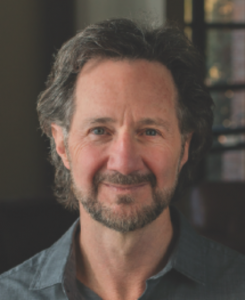
The Rev. Rob Renfroe, president of Good News
By Rob Renfroe –
Welcome to the mission field! That may sound strange to those of you living within the United States, but it’s true, and it’s important for us to understand that we are living on a mission field. That reality should impact how we see ourselves and how we relate to those around us.
Because of the First and Second Great Awakenings and later revivals, our culture in this country has been greatly impacted by the Christian faith. Since the founding of the colonies, Christians in the United States enjoyed what you could refer to as “home field advantage.” From that time until the 1960s Christian beliefs and values were held by most of our citizens. There were skeptics in every time period, even some of our founding fathers, who did not affirm the Christian faith. But their views were a minority opinion with little impact on the masses and their beliefs. Most people, even many of those who were not professing Christians, viewed the church as an important part of American life and respected its moral teachings.
That has been changing and it will continue to change. According to Gallup research, “U.S. church membership was 73 percent when Gallup first measured it in 1937 and remained near 70 percent for the next six decades, before beginning a steady decline around the turn of the 21st century.” In 2020, church membership among Americans fell below 50 percent.
We now live in a culture that rejects traditional morality, openly attacks a belief in God, and condemns traditional Christians as judgmental bigots. Christians no longer have home field advantage in the U.S. Barring a miracle, we Bible-believing Christians will find ourselves more and more objects of ridicule, discrimination, and possibly persecution.
“The decline in church membership is primarily a function of the increasing number of Americans who express no religious preference,” reports Gallup’s Jeffrey M. Jones. “Over the past two decades, the percentage of Americans who do not identify with any religion has grown from 8 percent in 1998-2000 to 13 percent in 2008-2010 and 21 percent over the past three years.”
It’s important to understand that those of us who follow Jesus are not just people with a mission. We are people living on a mission field – and that should change how we see the people around us.
Go to a mission field and you don’t expect people to think or act like Christians. India, China, the Middle East. You know people there have different beliefs and different values. You expect them to see the world differently than you do. It doesn’t offend you that they do not believe or behave like Christians. In fact, you are moved by compassion for them, and you look for ways to help them come to know the truth of the Gospel.
That’s how we should see our current reality in the U.S. More and more people have never been in a church. Many have never heard enough about Jesus to accept him or reject him. What they “know” about Christians is what the culture has told them through movies, television shows, and the progressive websites and blogs they read. Of course, their values and their sexual ethics and where they look for happiness and meaning are different from those of us who know Jesus. Of course, they’re skeptical of our message and our motives.
Our unchurched neighbors and friends are deeply loved by God. Jesus said, “For the Son of Man came to seek and save the lost” (Luke 19:10). They are lost from God and from his ways. A lost world has told them who they are, what to value, and how to live. And along the way, they have become lost from all that God desires for them.
The right response to people who are lost is not anger but compassion. The mission is not to condemn them, but to rescue them. We don’t wash our hands of them; we open our hearts.
Having our heartfelt values rejected in the public square is painful. We can become angry and bitter. We can resemble the old man who yells in frustration at the neighbor’s kids who are tearing up his yard, “Get off my lawn.” But when we understand we are on a mission field, we will not feel angry or threatened when we find people around us who believe and act differently. We will feel genuine concern, and we will pray for them and ask God to show us how to reach them.
The Apostle Paul lived his life on the mission field because during his lifetime that’s what the whole world was. Look how he told Timothy to respond to nonbelievers, even those who opposed him.
“The Lord’s servant must not be quarrelsome but must be kind to everyone, able to teach, not resentful. Opponents must be gently instructed, in the hope that God will grant them repentance leading them to a knowledge of the truth, and that they will come to their senses and escape from the trap of the devil, who has taken them captive to do his will” (2 Timothy 2:24-26).
When I was in India, I visited a Hindu temple where I watched as a mother had her two sons kneel with her and offer a plate of fruit to an idol of one of their deities, Hanuman, whose features so resemble a monkey that Hindus refer to him as “the Monkey God.” I watched them worship a competitor, a rival to my Lord Jesus Christ. I saw their lips moving, asking Hanuman for blessing and protection and life. I did not feel anger towards that mother or her sons. My heart broke for them. They are lost in a lost world, seeking life and knowing of no better place to look for what they desperately need.
When you’re on a mission field, you don’t get angry at people for who they are or how they live. You weep for them. You feel compassion for them. You pray for them.
Whether they are Hindus in India, the people of Paul’s day who were without Christ, or those in our time who oppose the Gospel and reject all we believe, Paul tells us we must be “kind,” “not resentful” towards such people. We are to engage with them “gently” and never be quarrelsome.
We are on a mission field. The people who may bother us – how they look, what they think, who they have sex with, the values they live by – they need Jesus.
And the right response is not anger or revulsion – the right response is compassion and concern. Remember you are on a mission field and that will be much easier to do.
by Steve | Jan 7, 2022 | January/February 2022, Magazine Articles

Photo: Shutterstock.
By Maggie Ulmer –
People come to faith in all kinds of ways. God will use anything and everything if it permits him access to the human heart. I know of a young man raised in a Christian family who adopted the moral and ethical frameworks of Christianity, yet he remained largely untouched by conviction in the existence of God until he read C. S. Lewis’ Mere Christianity. Something about Lewis’ arguments broke down the internal intellectual structure he had made against God. The young man was consumed with deep certainty that there was, in fact, a God – and Jesus Christ was this God. Another woman I know came to faith because she finally allowed a Christian friend to pray for her, and she experienced supernatural assurance of God’s love for her, which led her to accept Christ as her Lord. The common element in these two instances, and I would argue in most cases, is an honest openness to truth.
Some of us actively research the claims of Jesus, like Lee Strobel famously does in The Case for Christ, and some of us seem to trip into a life of faith, but every follower of Jesus has a moment of encounter like Moses. We see something strange, decide to investigate, and then realize we’re standing on holy ground. As a result of his willingness to “go and see,” every part of Moses’ life is changed and he became the executor of God’s deliverance of the Hebrews from bondage. An inverse refrain, “Come and see,” is spoken throughout the Gospel of John as the disciples are gathered to Christ, with the same transformative intention. The invitation is an appeal to see, just as Moses did, and perceive the unfolding reality of Jesus. The divine grace that prepares the human heart to respond to Christ is “prevenient” or “preventing” grace. John Wesley describes these first moments of spiritual awareness as “the first wish to please God, the first dawn of light concerning his will … All these imply some tendency toward life; some degree of salvation; the beginning of a deliverance from a blind, unfeeling heart, quite insensible of God and the things of God” (“On Working Out Our Own Salvation”).
It’s hard to say why some see and some don’t. The Parable of the Sower illuminates the reality that the seeds of the gospel land on a variety of soils both prepared and unprepared to receive the good news. Many encountered Christ during his ministry but missed the truth of who he was. At the end of chapter 9 in the Gospel of Luke, Christ describes the cost of a life given to him; we see there are those Christ calls to follow him but they seem to hesitate, asking to tend to family matters before they do so. Christ’s response is definite, “No one who puts a hand to the plow and looks back is fit for service in the kingdom of God” (Luke 9:62).
We shouldn’t read this statement as a permanent rejection of those who don’t “get it” the first time; it’s not that at all. Christ is simply saying that those who constantly meditate on the past, and on what is left behind, will miss the revelation happening before them. Those people are not yet ready to serve the purposes of God, but they could be, if they would turn and see the strangeness of Jesus. There are also those who claim to seek the truth of God but in reality have already decided what they believe for one reason or another, and in essence choose to remain in error. C.S. Lewis refers to this type of person as one who “has lost his intellectual virginity” (God in the Dock). Someone who has lost his or her intellectual virginity intentionally evades reason, sound argument, and evidence in an effort to protect a preferred intellectual narrative. Unfortunately this type of behavior among believers is sometimes coddled in the church. Kind-hearted ministry leaders will often cite the Parable of the Lost Sheep as a rationale for excusing this kind of mental dishonesty. But sheep who are in the church know exactly where their earthly and heavenly shepherds are. They aren’t lost; they’re in rebellion.
It’s tempting to be dismissive of those who reject God or find the teachings of Christianity primitive, and certainly there is no need to pour good teaching into those who delight in defiance and make mockery of faith. But what do we do when we love people who are unbelieving and perhaps even hostile to faith? How do we tell them that we long for them to know how desperately they are loved by the Lord, even as they reject him?
My own father was an avowed secular humanist. Over many years of debate and discussion with my spiritual step-mother, he became a barely tolerant and often lapsing agnostic. My own whole-hearted embrace of orthodox Christianity baffled him. He was a reader of Bultmann, Dawkins, Kant, Sartre, and others. When I was quite new in my faith, about 14, he once told me he felt my practice of Christianity was probably a harmless intellectual exploration and that it would make me a better person – after all, if one were to boil the whole of the Christian philosophy down to a phrase it would be, “Be nice.” I don’t share these things to malign my father. I love and admire him even in the midst of my profound frustration with him. Our many conversations over the years contributed to my ability to give a defense of my hope in Christ, and my daughterly love for him helped me do so (most of the time) kindly.
That being said, our skirmishes over faith weren’t always without injury. I remember losing my temper after one particularly contentious debate. I was a young woman and unable to answer one of his rebukes of Christianity. I felt confused and ashamed, as if I’d failed at something of great importance. In prayer that evening the Lord made very clear to me how badly I misunderstood my role as a witnessing Christian in my father’s life. The Lord showed me I could not convert my dad, or anyone else for that matter, by winning an argument. Furthermore, I would never win an argument to which my father had already determined the conclusion. I was devastated and felt completely helpless. But this moment illuminated two things that drove me to my knees on behalf of my father and in thanksgiving of God’s lovingkindness. First and most importantly, I remembered I did not save myself. I am not a Christian because I had the power or the cognitive insight to reveal God to myself, nor was my faith the result of being convinced by another human being. Without the prevenient grace of God I would not even be capable of understanding my need for him. The grace that prepared me to receive the come-and-see invitation was ultimately the result and work of God himself, and I should have no expectation of being able to accomplish that work in someone else. Second, I understood that if God was correcting me, that must mean he would teach me the better way to witness to my dad and others who struggle in doubt and reject faith. The Lord showed me that the best approach includes steadfast prayer for the hearts of unbelievers and simple, gentle invitations rooted in humble remembrance of my own rescue. Constant abiding in the presence of Christ creates the opportunity to extend his invitation to others. It may sound silly, but I remind myself often that I am someone’s burning-bush, and so are you! We carry the Spirit of God in us; we are purified but not burned up. We are a strange sight in this cacophony of powers and principalities. What a privilege it is to invite someone onto the holy ground of our transformed lives!
For many years after that last failed debate I did not bring up religion with my father. But I did pray for him. Not long before he died I sat next to his sick bed. He was no longer able to read, so I read aloud to him from a book he had become increasingly fascinated with, the book of Ruth. After reading the first chapter of Ruth to him for a third time he finally asked in exasperation, speaking of Ruth: “Why would she do that? Why would she leave everything she knows for her mother-in-law, who can’t give her anything?” I began to flounder for an answer when a childhood memory came to mind and, without fully understanding why, I asked him if he also remembered it.
When I was young, Dad took my sister and me on a camping trip up and down the Pacific Coast Highway when I was about 9 years old. My favorite parts of the trip were the times when we would drive at night. I sat in the front seat of the rambling Chevy conversion van and dad and I would talk about “serious things.” One such evening we drove with the windows down along the coast. I could hear the ocean and smell the salt mixed with the Monterey pine trees, the air was the perfect temperature, the sky was clear, and the stars and the moon were bright enough to throw shadows through the trees onto the road. In that moment I was overcome by a deep, and expansive love and I stuck my arms and head out the window of the moving van and shouted: “I love everything!” Upon flopping back into my seat I asked my dad: “Who is God?”
As I retold the story, Dad smiled. He admitted my question had caught him off guard and he remembered fumbling for an answer, not knowing what to say. Then I asked him if he remembered what happened the next day.
After getting a late start, Dad only drove a couple hours before pulling onto the shoulder of the highway near a scenic view of the ocean to make lunch. It wasn’t long after settling back into our seats to resume our journey that we realized the van was stuck. The combination of the soft sandy soil of coastal California, the early morning rain, and our parking location at the bottom of a steep incline meant the ground was saturated with moisture and gave no resistance to the spinning rear wheels of the van. No matter what Dad tried, he couldn’t get the van unstuck. At this point, with no motorists stopping to help, Dad was faced with the possibility of trekking down Route 1 with his young daughters in tow. I remember my Dad pounding the steering wheel and muttering under his breath; it was unusual for him to lose his cool. But no sooner had he done so than a battered, primer-white hatchback came zipping around the curving highway and pulled directly in front of us. The driver was a young man. He and Dad spoke for a few moments through Dad’s driver-side window.
I remember hearing the gloppy suction sound the stranger’s work boots made in the mud as he walked to the back of his car and proceeded to pull a heavy chain from the trunk to hook to the front of Dad’s Chevy. In a few moments we were free from the muddy shoulder. Disobeying Dad’s instructions to stay in the car while he spoke with our good-samaritan, I scrambled out of the van and stood next to my father while he profusely thanked the stranger. Dad took some cash out of his wallet and offered it to the man as a show of gratitude, but the young man waved his hand, turning the money down, and simply said, “Don’t thank me, thank Jesus Christ.”
Then the man looked at me and playfully tapped me on the nose, turned, got in his car and drove away.
The weight of what I was asking Dad to consider, that the God of the universe would answer the question of a nine-year-old girl, hung in the air between us. I had made that connection before this moment, but what I didn’t expect was that my father would begin to choke back tears and tell me that when we were stuck on the side of the road and he pounded the steering wheel with his fists, he had said a prayer. It was a short, defensive, angry prayer, but prayer nonetheless. “Well,” he asked, “where are you?”
My father did not know that our God is an incarnational God. A God who is with us. A God who does not require us to know all of the answers. A God who prepares a path to our hearts for himself even before we know him. A God who works through simple invitations. Dad believed he was alone and that he had to fix everything on his own, and that his value was of his own making. But something about that moment caused him to make the smallest appeal to the slightest possibility that there could, maybe, perhaps, be a God who could come rescue him and his daughters out of a ditch.
 Why would God do that?
Why would a gentile sinner who has no place among God’s people cling to a woman who is rejecting her and say: “Where you go, I will go?” Why would the God of all creation who has no need for any of us, cling to us as we reject him and say, “ Where you go I will go?”
It’s a simple answer. It’s because he loves us.
Maggie Ulmer is Resource Director for Spirit & Truth Managing Editor of Firebrand, and one of the hosts of Plain Truth: A Holy Spirited Podcast. This article first appeared at Firebrand (firebrandmag.com) and is reprinted here by permission.