
by Steve | May 20, 2013 | Magazine, Magazine Articles, May-June 2013
By Rob Renfroe
I think many of us are feeling that things are changing. Our culture, once friendly to the Christian faith, is becoming more and more hostile. And persons who hold to a traditional view of morality are often ridiculed as judgmental, mean-spirited, and on the wrong side of history.
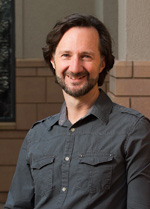
Rob Renfroe
I’m not willing to give up on the power of the Gospel to convert people thoroughly, heart and mind, to Jesus Christ. And I’m not willing to believe that the church cannot influence our culture in powerful and dramatic ways. I believe we can. In fact, I believe in the present dark moment, we, as the people of God, can have one of our finest hours.
But I am certain that the battle to bring secular people to faith in this cynical era will not be won through politics, power or even by the most compelling intellectual answers. We’ve tried to do it that way and it didn’t work.
There are still important reasons for Christians to engage the culture philosophically and through the arts. But I’m convinced the only way we will impact our culture significantly is for people to see the truth, not just hear it. And the truth is that the way of Jesus is a better way to live.
Our current secular culture perceives Christians as judgmental, angry, self-righteous, and defined by a political agenda. Only after Christians are seen as living authentic lives of love and compassion and service – and the Church is seen as a servant community that cares more and loves more than anyone else on the planet – will we get our culture to listen to our claim that Jesus Christ is Lord and Savior, who can connect lost souls to God and bring life out of death.
And it can happen. I’m sure of it because it happened once before. In the early centuries AD of the Roman Empire, society was cynical, violence was celebrated, morals had decayed and life was cheap. Twenty centuries later, does any of that sound familiar?
The Romans were cynical about their gods. Their deities were flawed and petty, engaging in foolish and egotistical rivalries – not better than people wanted to be, but worse. And though Romans might sacrifice to their gods in hopes of blessing and prosperity, religion as a whole was losing its influence on the daily lives of the middle and upper classes.
Our culture is also cynical about religion. Fewer and fewer people in the U.S. claim a connection with organized religion. It has become more prevalent to attack and dismiss religion as a crude superstition.
Whether it’s the intellectual attacks of those known as “the new atheists,” secular attempts to remove faith from the public square, or the exposure of the church’s flaws (especially the unforgivable cover up of child abuse by church officials), you can see that persons in our time are as cynical regarding religion as the Romans were in the first centuries after Christ.
During that same period, Romans reveled in the violence of “the games.” They rejoiced to see men fight to the death, whether at the hands of other gladiators or being mauled by wild beasts in arenas throughout the empire, including the Coliseum which seated 50,000.
We haven’t gone quite that far, but there are similarities. Boxing has given way to UFC cage matches. G.I. Joes for boys have given way to explicit video games that simulate murder and even rape.
Morally, first century Rome was a time of sexual promiscuity and decadence. Affairs were common, marriages didn’t last, and it was permissible for men to keep young male and female slaves for their sexual pleasure.
Our time is characterized by human trafficking, the omnipresence of pornography, strip clubs, children sending naked pictures of themselves and others via telephone (sexting), casual hook ups and friends with benefits, so that sex is devalued to nothing more than the gratification of physical desires.
Human life in both cultures is deemed expendable if inconvenient or unwanted. Roman children born deformed or weak or even female could be discarded, left exposed to the elements to die of starvation or mauled and eaten by wild beasts.
Today, we create “clinics” where the unwanted life, often because of defect or gender, is dismembered and discarded. Over the last 40 years we have seen over 50 million abortions. Of those, less than five percent were conducted because the life of the mother was at stake or because of rape or incest.
Two cultures, 2000 years apart, but not that dissimilar. And yet, three centuries after it began as a lower-class Jewish sect in faraway Palestine, the Roman Emperor Constantine announced his conversion. And before the year 400, Christianity had become the official religion of the Empire, embraced, some estimates state, by nearly half of its inhabitants.
How had a despised and persecuted sect with no political power, that worshipped a man executed as an insurrectionist, and that appealed at first primarily to the poor and the uneducated, change the hearts and minds and eventually the culture of people who were cynical, licentious, crass, and crude? Simply put, the early Christians lived the way Jesus lived. They loved the way Jesus loved. They served the way Jesus served. And when persecuted, they died the way Jesus died, praying for the forgiveness and the salvation of those who had ordered their deaths.
Over time, the Romans came to see that the Christian way of life was simply – better. And they came to believe that the Christian faith could make them better. And they came to believe that the most outlandish thing was true – God was in Christ, reconciling the world to himself, offering life to all who would repent and believe.
How did the early Christians love and serve and live better? There were unwanted babies left to die because they were deformed or because they were female (there were 50 percent more boys in Roman households because female infants had been discarded). Christians would go into the woods and rescue those abandoned children and raise them as their own.
In times of plague, the Romans commonly abandoned their relatives at the first sign of illness, even pushing them into the streets before they died, in hopes of escaping the disease themselves. Not so the Christians. They not only cared for their own and nursed them to health, but also took in and cared for unbelieving neighbors and strangers – many dying themselves as a result of contracting the disease.
Christians provided food and assistance to the poor regardless of their faith and to both sexes, though Roman welfare was given only to males. They were faithful to their wives and kind to their children.
Pliny the Younger, a Roman governor, gave the following account of the Christians he had interrogated sometime between 111-113 A.D.: “… They were accustomed to meet on a fixed day before dawn and sing responsively a hymn to Christ as to a god, and to bind themselves by oath, not to some crime, but not to commit fraud, theft, or adultery, no(r) falsify their trust …”
In the midst of the decadence and the cynicism and the hedonism of Rome, the Christian way, the way of compassion and purity and service, looked like life, a superior kind of life. And what was once despised became treasured. And the foolish One, crucified in weakness and shame on a cross, became adored as Lord of all, God in the flesh. And a culture was changed.
Our culture can be reached. Its promises of life and happiness in material possession and pleasures will leave people in our time as empty and as unfulfilled as did the cynicism and selfishness of the Roman Empire. But whether they know it or not, people in our crass and cynical society are looking for a better way. And when they see it in us – the way of service, sacrifice and love – they will be able to believe that the way of Jesus is the way that leads to life.
We don’t have home field advantage anymore. But we do have a real opportunity to become focused on the way of Jesus and live it out the very best we can. If we do, I believe God will be pleased and a world can be transformed.
Rob Renfroe is the president and publisher of Good News.
by Steve | May 14, 2013 | Magazine, Mar-Apr 2013
By Rob Renfroe
In Lewis Carroll’s Through the Looking Glass (1871), there is an amazing passage. I think it provides a great deal of insight into the debates and discussions that occur between those of us who are orthodox and those who refer to themselves as “progressives.”
Rob Renfroe
In this sequel to Alice’s Adventures in Wonderland, Alice enters a strange world and encounters Humpty Dumpty, whom she has a difficult time comprehending. He uses words with which Alice is familiar, but the way he uses them seems odd, if not completely nonsensical. When she tells him that she does not know what he means by a word, “Humpty Dumpty smiled contemptuously. ‘Of course you don’t — till I tell you.’ … ‘When I use a word,’ Humpty Dumpty said in rather a scornful tone, ‘it means just what I choose it to mean – neither more nor less.’ ‘The question is,’ said Alice, ‘whether you can make words mean so many different things.’ ‘The question is,’ said Humpty Dumpty, ‘which is to be master – that’s all.’”
Sound familiar? Words I think I understand and have in the past found very useful in communicating with others, when talking with my progressive friends seem to have been given altogether different meanings.
Take the word “open.” Certainly, being open is a valuable trait as we seek after God and his truth. “Being open” is the virtue of admitting that no matter how much we may know, we still have much to learn. Openness is the sincere acknowledgement that God often speaks in surprising ways – even through people with whom we disagree, and so we need to listen to all who want to dialogue in good faith.
It’s here where progressives often take us traditionalists to task. They claim that we are anything but open because we have made up our minds regarding certain doctrines and seemingly won’t budge, no matter how out of step we are with the most current beliefs.
But does being open mean having no settled opinions or beliefs? If it does, then many progressives are as closed-minded as they claim we are. For example, most progressives in The United Methodist Church would never consider ordaining anyone who discounted the validity of ordaining women or who rejected infant baptism. Of course, neither would traditionalist Wesleyans, but the point is that the progressive worldview never would allow this thought: “In rejecting this candidate for ministry, we’re not being very open, are we? In fact, we’re rather intolerant.”
No, it would never occur to them that holding to these particular beliefs and implementing these standards for ordained ministry would ever make them guilty of not possessing “open hearts, open minds, [or] open doors.”
John Wesley described true openness, calling it a “catholic spirit.” He described it this way: “A man of a truly catholic spirit has not now his religion to seek. He is fixed as the sun in his judgment concerning the main branches of Christian doctrine. It is true, he is always ready to hear and weigh whatsoever can be offered against his principles; but as this does not show any wavering in his own mind, so neither does it occasion any. He does not halt between two opinions, nor vainly endeavor to blend them into one.”
It’s not wrong, in fact it’s imperative, that a church has particular doctrines and practices and is willing to defend and enforce them. I don’t believe that means we’re not open. I agree with G.K. Chesterton who said, “The object of opening the mind, as of opening the mouth, is to shut it again on something solid.”
It’s not wrong to hold views that you have decided are correct – in fact, so correct that you are unprepared to change them. What’s wrong is condemning others for doing so when you have done the same thing. One could say it borders on hypocrisy.
In evangelical-progressive dialogues, “openness” among progressive advocates too frequently means that you must believe what they believe – and be absolutely sure that everyone else is wrong.
If for example, it were stated that many gay persons were not “born gay,” but came to same-sex attraction through events that occurred in their lives, you are likely to be labeled by progressives not only as closed-minded, but as hateful – even though there are no reputable scientific studies that conclude all gay persons are attracted to the same gender because of genetics or other biological causes. And if you are invited to give a prayer at the presidential inauguration, holding this view, you will discover, as Pastor Louie Giglio did, just how “open” progressive guardians can be.
Or, express your belief that abortion on demand is immoral. Forget “closed-minded;” you will never be on the staff of our most progressive, and one would assume therefore, our most “open,” UM agency – the Board of Church and Society!
But many who assert just as strongly that gays are born gay and abortion is never wrong if it’s the woman’s choice fancy themselves to be open, not closed, even though they will not for a minute consider another position.
And what about our most important claim: that God has revealed himself uniquely in Jesus Christ, and that no one comes to the Father except by him? Why does claiming that The Truth is found in the Christian faith cause the “open-minded” progressive wing of a Board of Ordained Ministry to be on edge or even hostile, as many of our orthodox colleagues have discovered? Because being open in the progressive worldview often does not mean being open to traditional Christian teaching, what Wesley called the “grand Scriptural” doctrines. Instead it means being open to the latest theological fad – which will be yesterday’s news and forgotten in a generation. And it means being open to what other religions teach and failing to affirm that what we have in the Christian faith is a revelation that is uniquely true and authoritative.
In The Closing of the American Mind, Professor Allan Bloom writes: “Openness used to be the virtue that permitted us to seek the good by using reason. It now means accepting everything and denying reason’s power.”
We live in an Alice in Wonderland world when some people claim, for example, that Islam worships the same God as Christianity, even though Christians believe that God sent his Son Jesus into the world for our salvation and Muslims do not. That kind of openness isn’t broadmindedness – it is simply denying the reality that contradictory views cannot both be true. Have you ever been told that Buddhism and Christianity are simply two different paths to the same God? It cannot be true. Buddhism denies that the death and resurrection of Jesus is in any way connected to our salvation. Christians believe it is essential. The same holds true for Hinduism and its pantheon of thousands of gods and goddesses. It’s not being open or generous of heart to claim Christianity is true and at the same time assert that all religions lead to God, even those that deny the uniqueness of or the need for the life, death, and resurrection of Jesus; it’s being disingenuous. It’s mistaking being open for accepting everything, even beliefs that are contradictory, and denying reason’s power.
We can be open to persons who differ with us in their beliefs – we can learn from anyone. We can be and should be open to persons, regardless of their lifestyles – we are all sinners, and all are deserving of the ministry of the church. There’s no question about that.
What we cannot be open to is the false logic that contradictory religious beliefs can all be correct. What we cannot be open to are those who claim to be morally superior to persons who will not recant their traditional Christian beliefs, when they themselves are every bit as obstinate in their beliefs as those they judge. What we cannot be open to are those who sit on Humpty Dumpty’s wall, redefining words, because they have decided that’s the way to master the conversation and, ultimately, the church.
Rob Renfroe is the president and publisher of Good News.
![The God of Free Grace]()
by Steve | May 14, 2013 | Magazine Articles, May-June 2013

By Andrew Thomspon
Is salvation available to all God’s children?
For many people, that seems like a no-brainer. Of course it is! But it’s also a question that has been long debated in the history of the church. Many people both past and present have concluded that salvation is not, in fact, available to all people. They believe God has predestined only some to eternal salvation. Those who have found favor in God’s sight are the “elect.” Others God has chosen not to save, and thereby consigned to an eternity without God in hell. Such people are known as the “reprobate.”
It seems harsh to think that God would create some people for the purpose of damning them. But there are some biblical reasons for thinking that this is exactly God’s plan. Think about the great story of Israel in the Old Testament: God’s chosen people, just a small nation out of all the peoples of the world. And of course, the Church is a continuation of the story of Israel. Those whom Jesus Christ has called to be a part of his body have been grafted into the tree of Israel–like wild olive shoots! (See Romans 11:13-24). Yes, Gentiles are now a part of God’s people. But being a part of God’s people is still a special calling.
And then there are the passages in the Apostle Paul’s Letter to the Romans which speak of God predestining those whom he foreknew for salvation (Romans 8:29-30). Doesn’t that suggest that some are chosen to be saved and others to be cast out–and isn’t this God’s decision made from all eternity? If this is true, then Jesus Christ died only for these fortunate “elect” people and not for the sins of the whole world.
In fact, it is not true. John 3:16-17 tells us, “God so love the world that he gave his only Son, that whoever believes in him should not perish but have eternal life. For God did not send his Son into the world in order to condemn the world, but rather so that the world might be saved through him.”
I count as one of my chief spiritual mentors the 18th century Anglican priest John Wesley, who once wrote a powerful sermon on “free grace,” the idea that God gives grace freely to all and enables all those who will to respond to Him in faith. Wesley looked upon the passage in Psalm 145:9 as an indication of God’s disposition toward his creation: “The Lord is good to all, and his mercies are over all his works.” In other words, the God we find in Scripture–and the God we find revealed in Jesus Christ–is a God who does not despise the creatures he has made. He created out of love, and it is through love that he desires his creation to be redeemed.
The evangelical character of God’s love is seen in many places in the Bible. We see it depicted most wonderfully in the life, death, and resurrection of Jesus Christ. “For the Son of Man came to seek out and save the lost,” Jesus tells us (Luke 19:10). And we also see God’s desire for the salvation of his creatures other places as well. When Paul is counseling Timothy to pray for non-Christians, he says, “This is good and pleases God our Savior, who wants all people to be saved and to come to a knowledge of the truth” (1 Timothy 2:3-4).
For those who wonder why history goes the way it does, or why Christ’s return does not happen immediately, Peter gives us a clue that points to the wide arms of God’s love: “The Lord is not slow to fulfill his promise as some count slowness, but is patient toward you, not wishing that any should perish, but that all should reach repentance” (2 Peter 3:9). God desires the salvation of all.
Does this mean that all people will be saved? No, there is nothing in Scripture to suggest that all people will be saved. There is actually quite a bit to suggest that this won’t happen, from the parables of Jesus in the gospels to the images of the end times in Revelation. The reason is not because God does not love all His creatures. It rather has to do with the character of God’s grace and the way grace works in salvation. Grace energizes, enables, and empowers. By grace, God beckons to us as a lover beckons his beloved. But God’s grace is not irresistible. Grace is God’s love for us, which has the power for salvation. But love does not coerce if it is true love; that holds for God as much as it holds for us.
So what about those passages in Romans that speak of predestination? One important thing to remember about Scripture is that we should never interpret any single passage in a way that makes a mockery out of the rest of Scripture’s witness about God’s identity or the nature of salvation. Obscure Scripture passages are always to be illuminated by passages that are more clear. That’s a basic rule for Scriptural interpretation, in fact. The Romans passage is about God’s omniscience–about the breadth of God’s vision. God does know who will respond to grace and embrace the gift of salvation. Therefore to say that God predestines those whom he foreknows is to say that God’s knowledge is perfect.
To believe that God creates so that he can damn is to make God into a monster. While there are many names given to God in Scripture, monster is not one of them. God is Love, as John tells us in 1 John 4:8. That is God’s character, and nothing He does will prove Him to be otherwise.
Andrew C. Thompson is Assistant Professor of Historical Theology and Wesleyan Studies at Memphis Theological Seminary. Reach him at www.andrewthompson.com. Follow him on Twitter @andrew72450.
Original art by Scott Erickson (www.scottericksonart.com)
![The God of Free Grace]()
by Steve | May 14, 2013 | Features, Magazine Articles, May-June 2013
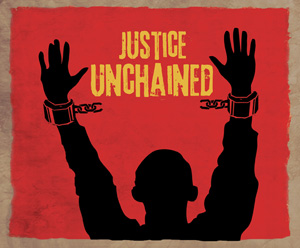
By Bethany H. Hoang
Seeking justice doesn’t begin at the door of a brothel. Seeking justice begins with seeking the God of justice.
For followers of Jesus, the difference between a pursuit of justice that brings transformation for real people suffering real violence and a pursuit of justice that amounts to little more than good intentions is simple—perhaps even simpler than we want it to be. The difference is found at our starting point, every single day. It begins with the choices we make, large or small, all day long.
Fighting injustice—the abuse of power that oppresses the vulnerable through violence and lies—can be excruciatingly hard work. It can be exhausting.
It is relentless. But Jesus offers to make our burdens light, even the burden of fighting injustice. And so, seeking justice—bringing right order and exerting life-giving power to protect the vulnerable—does not begin at the threshold of abuse. Seeking justice begins with seeking God: our God who longs to bring justice; our God who longs to use us, every one of his children, to bring justice; our God who offers us the yoke of Jesus in exchange for things that otherwise leave us defeated.
Every day we have an opportunity to respond to the injustice we see in the world. And every day we will be tempted to figure it out on our own, whether that means charging forward with blind ambition or shrinking back in frustrated resignation.
At the end of the day, if our attempts to seek justice do not first begin with the work of prayer, we will be worn and weary. And our weariness will not be that deeply satisfying, joy-filled tiredness that comes from the worthy battles of justice, but rather a bone- and soul-crushing weariness.
But when the work of justice is pursued first, and throughout, as a work of prayer and an outpouring of our relationship with Jesus Christ, obstacles become opportunities to know the riches of God’s glory and great presence in ever-increasing measure. And the victories won through the hand of God will be breathtaking beyond what any of us could ever imagine.
If you have heard accounts of slavery, human trafficking, rape, police abuse and other forms of violent injustice in our world today and have felt compelled to act, I invite you to join others in bringing lifelong sustainability to your convictions. I invite you into a rhythm of daily spiritual disciplines that will not only enable you to be strengthened in the work of doing justice when the going gets tough, but to ground your entire justice passion not in temporary reactive bursts but rather in God the Father, Son and Holy Spirit as the very source of all that you do and give in the name of God’s own character of justice.
One of the ways that I live out my own response to God’s justice call is through my work with International Justice Mission (IJM). Compelled by the biblical command to seek justice, rescue the oppressed, defend the orphan and plead for the widow (Isaiah 1:17), IJM brings tangible relief for those who suffer from violent injustices such as slavery, forced prostitution and illegal detention. For my colleagues, being obedient to God’s clear call to justice looks like this: we partner with local authorities to bring rescue to victims of violent injustice and hold their perpetrators accountable under local laws; we equip survivors to heal through long-term aftercare and support; and we work with the local government to actually transform the elements of the public justice system that are broken (such as local law enforcement, courts or social services) so that the poor are protected in the long term, because would-be traffickers, rapists or slaveowners are afraid to harm them.
God has called his people—all of God’s people—to the work of justice. But understanding how that call plays into our daily lives isn’t always easy. Both the work of justice itself and the daily work of discerning our roles in God’s movement of justice in our world today require thoughtful rhythms that will serve to sustain us and form each of us individually and as a body into the very likeness of Christ.
Sometimes, when faced with enormous need in our world today, we ask, What can I do? And, as Christians, often what we are really thinking is, What can I do . . . besides just pray? But usually when we ask that question it is not because we’ve grown to a place of satiation in our prayer life— rather we are at a place of exasperation, thinking to ourselves, I hardly even know where to begin when praying, and I’m not sure how it can possibly be as effective as doing something other than praying.
We might know in our heads that prayer and other spiritual disciplines matter, but more than likely we pursue prayer more as a half-hearted occasional duty rather than as the God-given relationship and power undergirding and fueling all of our action. Or perhaps we view it as much more relevant to our personal spiritual growth and the issues and pain we see in the lives of those closest to us—not the pain and mind-boggling complexity of millions who suffer injustice in the world. And yet this great power and source of intimacy with God is what God intends prayer to be in our lives, in every area of mission to which God calls us.
More often than not we are so eager to jump straight into whatever we perceive to be “action” that we distract ourselves from the very practices that must form, inform and even transform our action—the very practices that must form us if our action is to be wise, effective and sustained throughout the inevitable obstacles and distractions to come. For many followers of Christ, being obedient to God’s commands to do justice is certainly a daily, on-the-ground, person-by-person work of rescuing and protecting victims and restraining the hand of oppressors. However, for every follower of Christ, being obedient to God’s commands to do justice is just as much a daily, on-the-ground, person-by-person work of prayer.
The explosive growth in passion for justice over the past ten years has been an incredible testimony to the reality of need in our world today and also the reality of God’s call on his people to act. In many ways this growth is an outworking of the movement of the Holy Spirit. But there is a danger at hand as well. With large-scale growth, a movement can lose its moorings or never fully find them in the first place.
 When we seek justice without first, and throughout, seeking the God of justice, we risk passion without roots. And passion without roots cannot be sustained. Burnout is inevitable. Beyond this risk of burnout, when a justice movement loses its roots of formation in Christ and yet continues wildfire growth for a season, justice itself can be turned into a commodity for consumption by the very people passionate to pursue it.
The commoditization of justice is a sign that we have begun to pursue justice more as a means toward our own self-actualization rather than a means toward the true end of freedom and transformation for those who desperately need rescue from violent abuse. We must learn to see and know the difference between a movement that is growing and being sustained because it is well-grounded versus a movement that is growing and being sustained because it is providing a commodity for self-actualization to the masses.
You have been called into a daily pursuit of God that permeates every aspect of your life. And as you grow to know God more with each day, I pray that God will daily lead you to better understand the specific ways you have been created and called to act in the face of injustice in our world today.
The apostle Paul makes a bold claim in Romans 5 that if we hope in the glory of God, this hope will not disappoint, simply because God himself has poured out his love into our hearts through his Holy Spirit. This same Holy Spirit intercedes for us when our words have run dry, when we feel we can no longer even pray. The Holy Spirit pouring God’s love into our hearts enables us to cast off all temptation to despair and instead to pour out our hearts before our God.
Sometimes our prayers are met with great effect. There are other times when we pray and pray, and we do not seem to see God answering. But even as we pray, because we are drawing near to the God who is good and gracious, by the mystery of the Holy Spirit interceding with groans and words we cannot even express (Romans 8:26-27), we draw strength to persevere and to acknowledge God’s ultimate reign even in uncertainty. As we pray, we find that God himself is drawing us even deeper into the riches of his call and his kingdom.
The choice to pray, to ask of God, to listen for his voice, leads us to encounter hope that trumps our temptation to despair. In prayer we are reminded that decades and even centuries of injustice sometimes take great time and persevering work to reverse. And so we wait in prayer with hope. We keep asking God. We listen with great expectation.
We bring God our hope for the little girls locked in darkness. Hope for the slave trapped by viciously brutal owners. Hope for those unjustly accused.
We pray with hope as Paul instructs, without ceasing.
When and if we begin to open ourselves to see inhumanity and injustice around the globe, “man’s inhumanity to man” can all too easily become crushing. Unbearable. Paralyzing. Even numbing. It can evoke utter despair.
And yet God asks us, as those who would take up our cross and follow Jesus to Golgotha, to allow ourselves to be drawn into the pain of suffering and violence. To let it break our hearts. Even to lead others to these places of pain.
Yes, we are called to “bear witness.” But our witness must not end with observation or with unbearable pain as the final word. We are called to live as those who, in the midst of the unbearable, in the midst of pain, do not shrink back but rather rise up.
We are called to rise up, engage injustice, take “the pain of man’s inhumanity to man” and bring it to the foot of the cross. At the cross we meet the God who drew near to us without fear. We meet the God who moved toward the oppressed. We meet the God who joyfully submitted to bearing all our sin, all our shame, all our burdens; the God who offers us his yoke, who makes our burdens light. At the cross we can proclaim with boldness the call of the psalms and the prophets, “I will remember the deeds of the Lord” (Psalm 77:11).
May we make choices every day that move us toward the God who alone can deepen the passion and conviction of his calling on our lives, the God who alone can sustain us; our God who will cleanse us from broken-hearted fear and despair; our God who, when we simply ask, will surely make us people who are marked and moved by great hope, courage and, above all, love.
May we move forward with deep roots, filled with the Holy Spirit, sustained by knowing the only hope that never disappoints—the hope of God’s glory, the hope of God’s healing, the hope of God’s kingdom, now and to come.
You are invited.
 Bethany Hoang serves as the Director of the Institute for Biblical Justice for International Justice Mission (www.ijm.org). IJM is a human rights agency that secures justice for victims of slavery, sexual exploitation and other forms of violent oppression.
This article was excerpted from her book Deepening the Soul for Justice (InterVarsity Press). Reprinted by permission of InterVarsity Press. Reprinted by permission of InterVarsity Press and International Justice Mission.
Bethany Hoang serves as the Director of the Institute for Biblical Justice for International Justice Mission (www.ijm.org). IJM is a human rights agency that secures justice for victims of slavery, sexual exploitation and other forms of violent oppression.
This article was excerpted from her book Deepening the Soul for Justice (InterVarsity Press). Reprinted by permission of InterVarsity Press. Reprinted by permission of InterVarsity Press and International Justice Mission.
by Steve | Mar 5, 2013 | In the News
By Riley B. Case
The greatest revival in religious history was fueled by Methodists in America between 1784 and 1850. This period marked the 66 years after Methodism was formed in this country. During that time, Methodism grew from 2 percent to 33 percent of the religious adherents in America.
In 1850, 12 percent of all Americans were Methodist. This was accomplished without the benefit of seminaries, or professionalized Sunday schools, and with almost no church bureaucracy. According to the American Almanac in 1837, Congregational seminaries enrolled 234 students, Presbyterians 257, Episcopalians 47, Baptists 107, and Methodists none. Instead, Methodists at the time were organizing camp meetings, composing gospel spirituals, and crisscrossing the country with their system of circuit riders.
Analyzing Methodist spiritual strength in America, Bishop Matthew Simpson wrote A Hundred Years of Methodism in 1876. Simpson was known at the time as Mr. Methodist. Converted at age 18 at a camp meeting, Simpson felt called to preach and was on a circuit at age 23, became a college president (Indiana Asbury) at age 28, elected editor of Western Christian Advocate at age 37, and elected to the episcopacy at age 41. Simpson fought against slavery and alcohol, was a friend of Abraham Lincoln (and preached his funeral sermon), and lobbied four different presidents for Methodist presence in government. He served as a bishop for thirty-two years.
According to Simpson, Methodist growth and influence could be summed up by three factors: Methodism’s doctrines, its piety and zeal, and its system of government. Simpson referred to the Articles of Religion for doctrine, the General Rules for moral purity, and the conferences for system of government.
Simpson summarized Methodism’s doctrine as follows:
“Its creed may be styled evangelical Arminian. It teaches the natural depravity of the human heart; the atonement made by the Lord Jesus Christ as a sufficient sacrifice for the sins of the whole world; that salvation is offered to every individual on conditions of repentance toward God and faith in our Lord Jesus Christ; that a man is justified by faith alone, but that good works follow and flow from a living faith. It teaches that every believer may have the witness of the Spirit attesting his sonship, and insists upon ‘following after holiness, without which no man shall see the Lord.’”
On zeal and moral purity Simpson said:
“…its success has not been owing to any lowering of the moral standard, or catering to the tastes or prejudices of society. The voice of the Church has been clearly heard in the denunciation of vice in every form….It sacrificed in many instances the favor of wealth and influence rather than to forbear its testimony.”
What has happened?
How did we get from there, from the Methodism of Bishop Simpson, to where we are today? Instead of 12 percent of the American population, United Methodism today counts 3 percent of Americans as United Methodist (and this after the EUB merger). In 1890, Methodism claimed 7.1 million members, almost as many as today, when the population was only a fifth of what it is today.
Methodism’s “piety and zeal,” especially for the saving of souls, has waned, and the moral witness hardly exists. This is no better illustrated than by the accusation that the church’s stance on sexuality in the Discipline is “immoral and unjust and no longer deserving of our loyalty and obedience” (Bishop Melvin Talbert). The immoral and unjust stance Talbert objects to is the church’s traditional stand of faithfulness in marriage and celibacy in singleness. Simpson’s term for this compromise is “catering to the tastes or prejudices of society.”
In church government, the Call to Action recommendations, with modest proposals for reform and revitalization, after several years of study, $500,000 spent on expenses, and untold hours of discussion, failed spectacularly at General Conference, due, among other things, to the inability of United Methodists to think and work together.
The straight answer to what has happened is that Methodism has for a long time been compromising its core beliefs and values. This is not something that has just happened recently but has been going on for over one hundred years. This has not been like a tire blow out, but like a long, slow leak.
Modernism’s denials
Even during Simpson’s time, the attacks on the core beliefs of Christian faith were being launched. Those who did not want the Methodism of Bishop Simpson, who believed that to be credible in a modern world, the beliefs of the church would have to change, were called modernists. Modernists started with a denial of Original Sin. John Wesley had stated that the whole Christian Gospel rested on the assumption that all are born in sin and that the person who denied Original Sin was not a Christian.
No matter. Horace Bushnell, a Congregational minister, was teaching even before the Civil War that children did not have to be taught they were sinners before they could become Christians. A child could grow up and never imagine anything but that he or she had always been a Christian. This theory, when taken to its logical conclusion, cut the heart out of Wesleyan doctrine. If persons can always have been Christians there is no need for the Atonement, Repentance, or the New Birth.
Modernists could not change the stated doctrine of the Church, which was protected by constitutional law, but where they could make changes, they did. The section, “Depravity,” always a part of Methodist hymnals, was deleted in the 1905 hymnal. In 1910, the M.E. Church South omitted words in the baptismal ritual that said “For as much as all men are conceived and born in sin, and that our Savior Christ saith, Except a man be born of water and of the Spirit he cannot enter into the kingdom of God,” and replaced these words in the ritual: “Forasmuch as God in his great mercy hath entered into covenant relations with man, wherein he hath included children as partakers of its gracious benefits….” This was further diluted so that by 1932 the ritual said: “Forasmuch as all children are members of the kingdom of God….”
This is significant. The Church went from believing all have been born in sin to believing that we are all members of the Kingdom. No wonder we today have the ideology of “Inclusivism,” the approach that since all are already members of the Kingdom there is little interest in talking about Original Sin, Atonement, Repentance, Redemption, Salvation. Under this ideology, beliefs, practices, and standards do not matter. Neither pastors nor church boards nor the Discipline can make a judgment on a person’s readiness for church membership, or a person’s salvation, if one can even talk about salvation.
The Holy Scriptures
By 1920, new members were no longer required to respond to the question, “Do you believe in the doctrines of Holy Scriptures as set forth in the Articles of Religion of the Methodist Episcopal Church?”
In 1935, E.B. Chappell, editor of church school materials in the M.E. Church South, asserted in the book Recent Developments of Religious Education in the Methodist Episcopal Church that earlier leaders “lacking in scholarly equipment” were well-intentioned but did not realize the “larger meanings” of theology and taught an “inherited Calvinism” leading to “erroneous opinions that became a serious hindrance to the development of effective religious education.” Chappell identified the erroneous opinions as total depravity, emphasis on blood atonement, and the necessity for radical conversion. Chappell admitted the task before the leaders with scholarly equipment was great, since almost all Methodists still clung to the old ways of thinking, but these Methodists would have to change.
Chappell was followed by Ethel L. Smither in a 1937 book entitled The Use of the Bible with Children, which stated clearly that what was being presented was not just one person’s idea, but was “official” and “approved” by the Board of Education of the Methodist Episcopal Church. Smither started with a discussion of “universal reconstruction” – old ways were not adequate; new ways must prevail. The new ways were that the learning of facts, doctrine, and Bible stories was no longer acceptable. What was acceptable was having “vital experiences.” The purpose of Christian education was not to impart knowledge about God or the Bible or salvation, but character growth and personality development. The end result was that most Bible material, including stories from Bible story books, and especially the Old Testament, was not suitable for children, since they would present a picture of God that was distorted by contact with pre-Christian ideas.
Harold Paul Sloan, representing a small and unsuccessful evangelical effort to counteract the modernist juggernaut, in the 1916 book The Child and the Church argued that the most important crisis in the Church was over what would be taught to children. To deny the doctrine of Original Sin was also to deny the cross, the Atonement, and the doctrine of Christ the redeemer.
In 1929, George Betts published a study The Beliefs of 700 Ministers. The affirmation: “Man was originally in a state of complete moral perfection which he lost by his disobedience and fall,” was affirmed by only 61 percent of the 700 ministers studied. While 71 percent of the Evangelical Association pastors affirmed the statement, only 40 percent of the Methodists could do so. Among seminary students, only 18 percent affirmed the statement. After Congregationalists, Methodists were the most liberal group of the denominations surveyed.
Modernism as an approach to theology and Christian education was discredited by the 1950s. It was a spiritually bankrupt theology. Many ideologies have been, however, advocated in its place: idealism, process theology, existentialism, feminism, womanist theology, liberation theology – all of which have failed to win the hearts and minds of ordinary people, who still read their Bibles, and in countless churches across the nation, still preach a Christ crucified.
Those who worry about United Methodism should know that, thanks in part to Good News and other evangelical renewal movements, United Methodists have greatly modified their views since Betts’ study in 1929. Except for American Baptists, United Methodists are now more conservative in their doctrinal and moral views than any of the other mainline denominations. Groups like the United Church of Christ, the Episcopalians, the Lutherans (once the most conservative theologically of all mainline groups), the Disciples, and the Presbyterians are imploding and in statistical free-fall. It can be argued there is a direct relationship between how theologically liberal a denomination is and how great is the disintegration.
Disintegrating relevance
The disintegration is not just in statistical numbers, but in influence and relevance. Without a central core of essential truth, churches and denominations meander into meaninglessness. This is the major issue facing United Methodism today. It may be fine to present Plans of Action with important restructuring. It may be fine to talk about Vital Congregations which are welcoming and diverse and friendly. It may be fine to be involved in works or mercy in the community. It may be fine to seek social justice and to work for the end of poverty and racism. It may be fine to have highly educated ministers trained in philosophy and the social sciences. But without the preaching of the pure Word of God, the people perish. Would that we might hear that word from our bishops and our church leaders.
For many years, progressives ruled in the seminaries and the boards and agencies and even at the General Conferences in The United Methodist Church. Under their leadership, the church has suffered. At the moment there is no hint that these people have the slightest clue as to the connection between what they have been advocating and the destruction of the church.
But maybe, just maybe, the tide is beginning to turn. When Bishop Melvin Talbert went into a rant following the General Conference and called what is in the Discipline “immoral and unjust and no longer deserving of our loyalty and obedience,” he may have been doing the church a favor. Some other bishops stood with Talbert. He was supported by some jurisdictions and conferences and special interest groups. Let us understand this for what it is: an outburst of desperation because the church is no longer willing to march to the progressive drum beat.
Many of us wish still to uphold the doctrines and discipline of The United Methodist Church. We are not willing to jettison that which made us vital and strong. For this we pray and work.
Riley B. Case is a retired member of the North Indiana Conference, assistant executive director of the Confessing Movement, and a member of the Good News Board of Directors. He is also the author of Evangelical and Methodist: A Popular History (Abingdon)