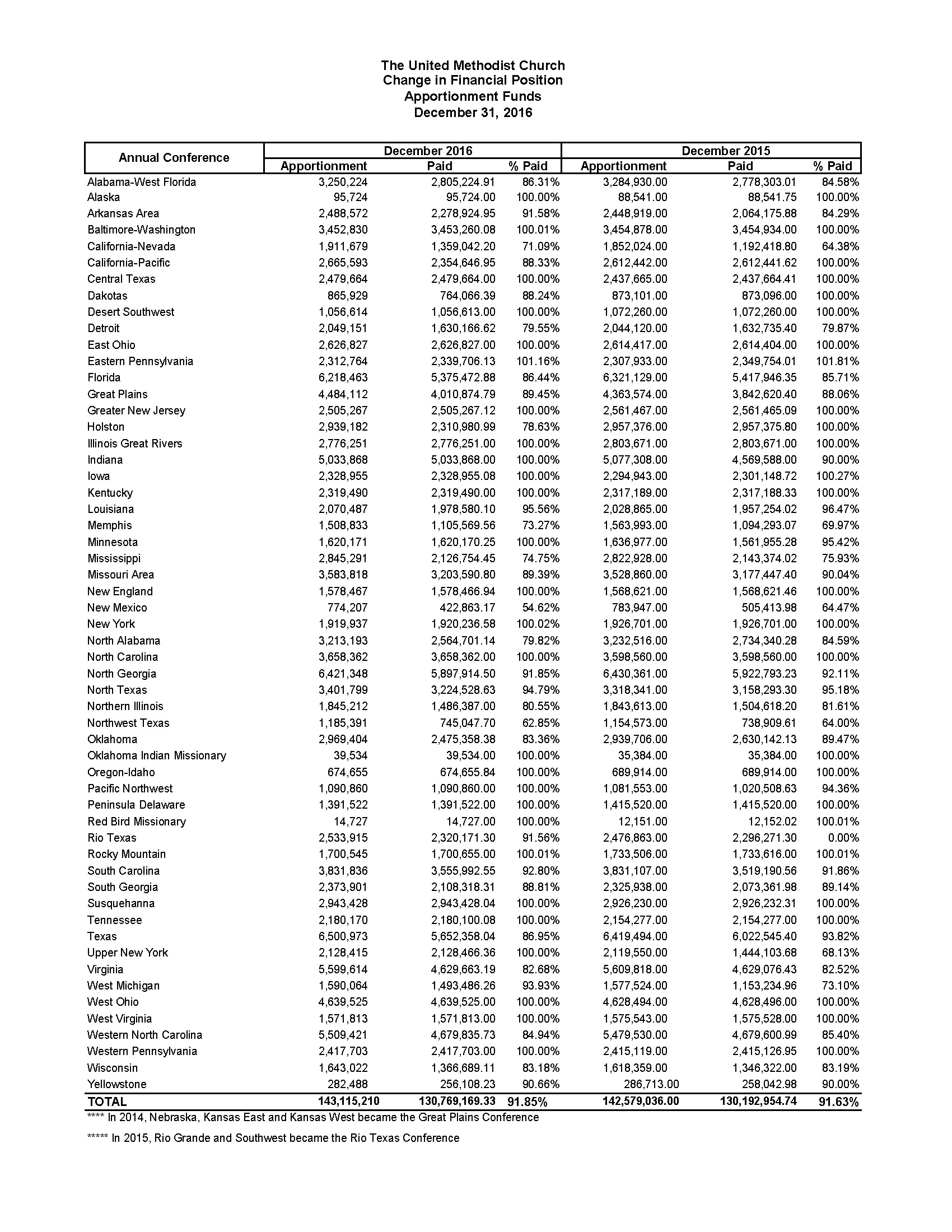
The United Methodist Church Change in Financial Position Apportionment Funds December 31, 2016


In this short video, the Rev. Rob Renfroe, president of Good News and pastor of discipleship at The Woodlands UM Church (The Woodlands, Texas), talks about the imperative of being the church even in the midst of discord and distractions. He identifies sharing the Gospel, making disciples, and being mission oriented as three key markers of a healthy and vibrant local church. We encourage you to watch the video, share it with your leadership and even your congregation, and then reclaim your focus for the ministry and mission of your church
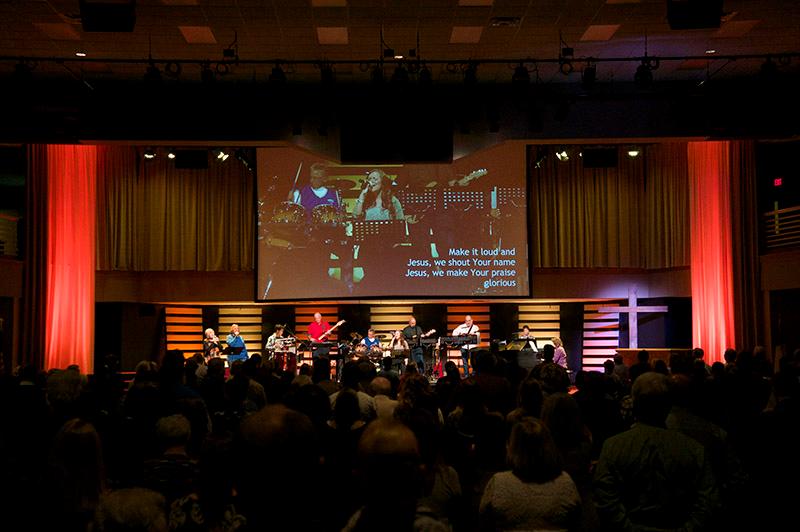
Getwell Road UMC, Southaven, MS
By Walter Fenton-
Two large local United Methodist churches in the Mississippi Annual Conference have taken congregation wide votes to leave the denomination. Ninety six percent of the parishioners at Getwell Road UM Church in Southaven and 99 percent at The Orchard UM Church in Tupelo supported separation on Sunday, February 5.
The senior pastors at both churches explained that their congregations are now in a process of discernment with the annual conference regarding their departures. Getwell Road UM Church, a vibrant and growing suburban congregation in the greater Memphis, Tennessee, area, averages over 800 people in worship. And The Orchard is the 15th largest United Methodist church in the U. S. in terms of worship attendance. On average, over 2,700 people attend its weekend services.
“We want our departure to be as peaceful and God honoring as possible,” said the Rev. Bryan Collier of The Orchard. “We will be in conversation with Bishop James Swanson about the details and timing of this process. We want to act honorably and peacefully.”
Bishop Swanson, the resident bishop of the Mississippi Episcopal Area released a statement on Monday afternoon informing the conference of the news. He reported that he and two district superintendents are engaging in a discernment process with the pastors and their congregations.
“Our staff and lay leadership have had conversations about this move for some time; it’s not something we rushed into,” said the Rev. Bill Beavers of Getwell Road UM Church. “This past October we invited the whole congregation to engage in conversation and prayer over the possibility. Several serious months of discernment preceded our congregational vote.”
Both pastors cited their congregations’ frustration with the denomination’s long and acrimonious debate over the church’s sexual ethics and teachings on marriage. Going forward, they said their congregations want to focus on kingdom matters so they are removing themselves from unproductive battles that distract them from their larger missions.
Collier cited the Judicial Council’s (essentially the denomination’s “Supreme Court”) impending decision regarding the validity of the Western Jurisdiction’s July election of the Rev. Karen Oliveto as the denomination’s first openly gay bishop. This April the Council is expected to answer several questions of law pertaining to her election.
“Either way, the Council’s decision is just going to prolong a bitter and divisive debate,” Collier said. “We don’t want to be part of the argument anymore.
We have more important things we need to do in the Tupelo community and well beyond it.”
Neither pastor nor Bishop Swanson offered a hard timeline regarding the discernment process they have agreed to enter into. Swanson asked for prayers for all concerned.
“I want to do my best to take care of and do right by Getwell Road,” said Beavers. “Our entire leadership team wants to be proactive, rather than reactive. We will continue to be in prayer and in a time of discernment as we work with Bishop Swanson.”
Other sources have reported that additional local UM churches in the Mississippi Annual Conference are contemplating similar actions in March or late April after the Judicial Council answers the questions of law pertaining to Bishop Oliveto.
Walter Fenton is a United Methodist clergy person and an analyst for Good News.
By Walter Fenton-
Two recent guest commentaries by the United Methodist News Service (UMNS) warrant a response. Both pieces are critical of conservative United Methodists. One, without evidence, makes a scurrilous claim about the work of evangelical groups at General Conference. And the other is a retired bishop’s attempt to blame others for the crisis now confronting our denomination.
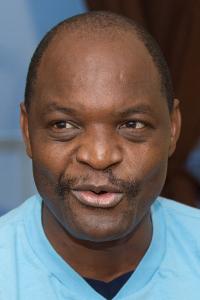
Rev. Lloyd T. Nyarota by Mike DuBose, UMNS
In early January, UMNS posted Zimbabwean Rev. Lloyd Nyarota’s commentary where he makes the sensational claim that conservatives in the U.S. “have managed to drag my [African] brothers and sisters by the collar to vote with them” at General Conference.
Nyarota, presently living in Alberta, Canada, serves a two-point charge for the United Church of Canada. Although he has never served as a General Conference delegate himself, he has worked in the corridors of the conference as a consultant for the UM’s reflexively liberal General Board of Church and Society.
Here at Good News we understand commentary; we write a fair bit of it ourselves. But thankfully our editor exercises a sharp pen when it comes to claims that have no basis in fact, even in commentaries.
Nyarota’s audacious accusation is not supported by any evidence. He went on to claim, again without evidence, that the relationship between Africans and US conservatives “is like that of a horse and rider, which is more colonial.”
We would have considered this fair game if Nyarota had produced just one African General Conference delegate (there were several hundred) who would have concurred with his claim or given some evidence of how it is based in facts or even an interpretation of them.
Had African delegates to General Conference been asked, they would have testified that the working relationship between themselves and U.S. evangelicals is one of partnership. Ultimately, it was General Conference delegates of all stripes that empowered Africans as equals at General Conference. This was evident by the unprecedented number of Africans elected as legislative committee officers and other positions of leadership and responsibility in 2016.
More recently there is the case of retired Bishop William Lewis’ commentary, a post loosely in touch with reality.
He would have us believe the church’s 45-year-old debate over its sexual ethics and teachings on marriage has been largely manufactured by “the theological
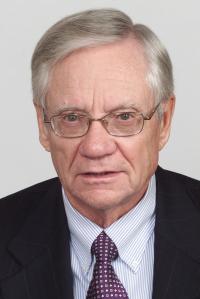
Bishop William B. Lewis by Mike DuBose, UMNS
culture of Wilmore, Kentucky, and … the Tenderloin District in San Francisco.” We don’t know whether to be offended or flattered by the bishop’s flamboyant hyperbole, but we do know he is asking his readers to believe the preposterous.
The idea that Wilmore, Kentucky (aka, Asbury Theological Seminary and Good News), and United Methodists attending church in the Tenderloin District of San Francisco (aka, Glide Memorial UM Church) have wagged the institutional dog for the past five decades is simply not true. The debates over homosexuality and how to define the institution of marriage have not only demanded the close attention of mainline Protestants and Roman Catholics, they have also been addressed in local, state and federal legislatures, and adjudicated by courts at every level. It is fair to say the debate over these matters has been one of the most contested issues our culture has addressed in the past 50 years.
But according to Lewis, most United Methodists are “hardly aware [the debate] is going on, … and [they] don’t get bent out of shape about it.” They are “unwitting victims of [a] conflict” ginned-up by extremist on the left and the right in San Francisco and Wilmore. Please.
If rank-and-file United Methodists are unaware General Conference has been debating these issues for the past 45 years, then they are being ill served by clergy and its denominational leaders. The church seldom gets the luxury of choosing the issues it must confront. And when it tries to pretend particular challenges do not exist, it is only sowing the seeds for a greater crisis in the future.
We’ve heard this claptrap from UM Church institutionalists like Lewis for many years now. It insults people’s intelligence and impugns the motives of those on the left, right, and in the center who genuinely believe issues of justice, morality, long held church teachings, Scriptural interpretation, and the institution of marriage are all at stake.
Lewis, instead, takes a high-handed view of the more public parties to the debate. He blames them for the crisis now confronting us. As he puts it, people in the “Tenderloin District,” who want what they want, and a “Wilmore faction that has become an extensive enterprise … have fueled the greatest threat to the unity of the denomination in more than a century.”
This is revealing, and one of the reasons the Council of Bishops has not only failed to deal with the crisis, but has made matters worse. Lewis, like some of his colleagues, has convinced himself he bears no responsibility for it and is eager to shift blame to others. No one, more than a bishop it seems, enjoys assuming he or she is above the fray, unsullied by ulterior motives, and therefore justified in wagging a finger at the bad boys and girls on the left and right for making a mess of the church.
To be fair, the bishop does propose a solution for the crisis. But of course, it is an institutional solution, not one grounded in Scripture, church teaching, or justice, but in simple expediency. Its chief aim is to preserve the institution, which is often dressed-up in the garb of saving church unity.
For Lewis, sexual ethics and Christian marriage are matters that do not rise to the level of the general church’s concern, or not at least to a level where it needs to broadly prescribe behavior based on its ethics and how it understands the institution of marriage. Therefore, he throws his support behind “local option” plans like Adam Hamilton’s “A Way Forward” or the Connectional Table’s “A Third Way.”
On a purely practical level these plans, as their authors now acknowledge, have no chance of passing at the next or a foreseeable General Conference. To Lewis and other institutionalists’ consternation, too many delegates believe sexual ethics and teachings on marriage warrant the global church’s careful consideration and clear guidance.
But the greater flaw in these institutional proposals is how bereft they are of ecclesiological and theological reflection. They are purely practical in nature. With a kind of collective shrug, institutional proponents of these plans essentially say to LGBTQ people and their advocates, “We’re all for justice, but only in a practical kind of way. We believe you should have justice, but only in those places where other people are willing to grant you a measure of it.”
And to conservatives who are deeply concerned about rooting the community’s sexual ethics and understanding of marriage in Scripture and 2,000 years of Christian teaching, institutionalists essentially say, “We think your views on sexuality and marriage are culturally out of step, but hey, if you can get other backward people in your annual conference to go along with you, that’s your business, not ours. Just leave the rest of us alone.”
And of course it is all the easier to offer these morally bankrupt responses if you are quite sure the people you are responding to are just “factions” looking to protect their “vested interests” and “extensive enterprises,” as if you have none of your own.
The church paid two major consulting firms to tell the bishops a large majority of United Methodists have little confidence and trust in its U. S. leadership. Blithe blame-shifting commentaries offer little to nothing in restoring a lost sense of confidence and respect in our leaders.
Too many of our U. S. leaders of the past 50 years blame others for the church’s sad state of affairs even though they sought positions that vested them with the church’s executive power. It seldom seems to dawn on many of them – definitely not Lewis – that maybe if they had strenuously promoted, defended and enforced the General Conference’s teachings on these matters the church would not be facing its existential crisis.
Walter Fenton is a United Methodist clergy person and an analyst for Good News.
NORCROSS, Ga.—The Mission Society has unveiled a new name that aims to further sharpen the focus and effectiveness of its wide-ranging work among some of the least-reached peoples around the world. 
As TMS Global (www.tms-global.org), the interdenominational agency believes its training, church planting and mobilization efforts will be multiplied through a new name that looks to the future while holding onto its past.
The change takes into account strategy and security issues that have arisen in the 33 years since The Mission Society was founded. Globalization and technological advances have presented new opportunities and challenges in missions, while some parts of the world are more hostile to the gospel and closed to overt “missionary” activity.
TMS Global retains the initials of its old name, with the letters also reflecting the heart of the organization’s work—training missionaries and churches, mobilizing the body of Christ, and serving. Adding “global” underscores a commitment to ministry around the world, especially among the least reached.
“We know from the Bible that names are important to God,” said TMS Global President and CEO, the Rev. Max Wilkins. “He gave people new names at key moments in their lives, to define who they truly were and who he intended them to be. We believe that in a similar way our name change is part of better preparing us for the future God has.”
TMS Global formally unveils its new identity in the latest issue of its magazine, Unfinished (www. tms-global.org/unfinished-magazine), which explores how the change highlights the five ways the organization is responding to contemporary global needs. They are a focus on the least-reached, capitalizing on the strengths of millennials, reaching populations on the move, training churches to impact cities and emphasizing spiritual formation.
The renaming is in line with a broader trend in missions. Other groups have changed their names in recent times: among them, Campus Crusade for Christ became CRU, while the U.S. Center for World Missions is now Frontier Ventures.
TMS Global is actually the third name for what began as The Mission Society for United Methodists in 1984. It later became The Mission Society, to reflect an ongoing commitment to becoming an interdenominational agency, while honoring its Wesleyan heritage and beliefs. Today the group’s 180 missionaries at work in more than 30 countries represent more than a dozen different denominations.
They are also diverse in their activities. TMS Global ministries include agricultural training, evangelism, church planting, discipleship, literacy, leadership development, medical care, relief and aid, teaching English as a second language and well drilling, among many others.
In becoming TMS Global, the Norcross, Ga.-headquartered organization has made a second name change. Its church outreach effort, helping local congregations get excited about and more engaged in world missions, is now called “Activate.” The new title aims to capture the dynamic nature of the training and mobilization program for local churches.
“We are excited about what is ahead for TMS Global,” said Wilkins. “We believe it is a new name for a new day—a new generation of cross-cultural witnesses who will share the good news of Jesus’ love incarnationally around the globe.”
More information is available at (www.tms-global.org).
###
TMS GLOBAL (www.tms-global.org) mobilizes and equips the body of Christ to share the good news of the gospel, with an emphasis on the least-reached peoples of the world. Workers are engaged in a wide range of dynamic, culturally-sensitive ministries, from training and leadership development to literacy, medical care and relief aid.