by Steve | Jun 5, 2017 | In the News, Perspective E-Newsletter
 By Walter Fenton-
The Boards of Ordained Ministry of both the New York and Pacific Northwest Annual Conferences have announced they will not abide by recent rulings of The United Methodist Church’s Judicial Council, the denomination’s final arbiter of church law.
In 2016 both boards, along with five others, had voted to ignore portions of the Book of Discipline when it came to recommending openly gay candidates for ordained ministry. But this April, in two separate decisions (1343 and 1344), the Judicial Council ruled such evasions are unlawful.
In unprecedented moves, both boards said they would not abide by the Judicial Council’s decisions.
The Pacific Northwest Annual Conference Board of Ordained Ministry reaffirmed its position that it “will continue to give all candidates [including LGBTQ candidates] equal consideration [in the ordination process].”
In a brief statement, the New York Annual Conference Board of Ordained Ministry responded: “We reaffirm our statement from March 1, 2016, in its entirety.” In part, that statement read, “Sexual orientation and gender identity are not and will not be considered in the evaluation of candidates by the Board of Ordained Ministry.”
Later that year, the New York Board recommended for commissioning and ordination clergy candidates who had come out as gay in an open letter to the UM Church just days before the 2016 General Conference. Bishop Jane Allen Middleton commissioned and ordained them at the 2016 New York Annual Conference.
The New York board’s action was immediately challenged, but Middleton ruled, “The Board of Ordained Ministry  is not required to ‘ascertain’ whether a candidate meets the qualifications for candidacy and ordained ministry, including whether or not she or he is exhibiting ‘fidelity in marriage and celibacy in singleness’ or is a ‘self-avowed practicing homosexual.'”
The Judicial Council, at its April 2017 meeting, countermanded Middleton’s decision. The Council wrote, “[church law] prevents a Board of Ordained Ministry from ignoring [a clergy candidate’s] statements of self-disclosure about any action that violates any portion of church law as is the case for… persons who [self avow] their homosexuality.”
To date, neither Bishop Thomas Bickerton nor Bishop Elaine Stanovsky, respectively the episcopal leaders in the New York and Pacific Northwest Annual Conferences, have responded to their boards’ decisions to defy the will of the denomination’s General Conference, Discipline, and now it’s highest judicial body.
“By now,” said the Rev. Rob Renfroe, president of Good News, “it is obvious progressives in the church are trying to accomplish by fiat what they have failed to accomplish through the church’s time honored processes established by General Conferences. And even worse, it is a very sad day when bishops fail to publicly call upon clergy serving on our boards of ordained ministry to abide by the rulings of our judiciary.”
Walter Fenton is a United Methodist clergy person and an analyst for Good News.
by Steve | May 26, 2017 | In the News, Perspective E-Newsletter

The Orchard Church, Tupelo, MS
By Walter Fenton-
The largest local church in the Mississippi Annual Conference in terms of worship attendance and one of the 25 fastest growing churches in the U.S. has now officially exited The United Methodist Church.
According to lead pastor Bryan Collier, The Orchard Church (Tupelo) reached a settlement with conference leaders that made its departure official as of May 19, 2017.
The congregation agreed to pay 100 percent of its 2017 apportionments and to release the annual conference from all financial and legal liabilities. In turn, the conference has released the congregation from the trust clause. Therefore, The Orchard now has complete and unfettered ownership of its property and assets. (Local UM churches hold their property and assets in trust for the annual conference in which they reside, and would normally have to surrender the property and assets if they decided to leave the denomination.)
“There was just no question among [The Orchard’s] leaders that this was right move for us,” said Collier. “Our departure was not about the homosexuality issue per se, but about the general church’s inability to deal with it. Unfortunately, its failure became an enormous distraction to the kingdom work our congregation is called to do.”
Last fall, the UM Church’s Council of Bishops appointed 35 clergy and laity to serve on the Commission on a Way Forward for the Church. It charged the commission with preparing a proposal it hopes will serve as a basis for resolving the denomination’s long and divisive debate over its sexual ethics and teachings on marriage. And recently, the council announced it will convene an unprecedented, called General Conference in February 2019 in an attempt to settle the dispute that threatens to divide the denomination.

Rev. Bryan Collier
“The Orchard fully embraces, as it does with all people, its need to minister to those who identify as gay, lesbian, bisexual, or transgendered, and with their families and friends as well,” said Collier. “But the denomination was not helping us do that. The Judicial Council’s recent, convoluted decision is emblematic of [the UM Church’s] inability to put the disagreement to rest. We didn’t want to let this one issue distract us anymore. We know the arguments on both sides, we’re clear in our hearts and minds where we stand, and we’re prepared to move forward accordingly.”
The multi-campus church has facilities in Tupelo, Baldwyn, and Oxford, and averages over 2,600 in worship attendance. Collier is the congregation’s founding pastor, and he and the church are celebrating 20 years of ministry together this year.
The Orchard announced its decision to leave the denomination this past February, and shortly thereafter entered into a time of discernment and negotiations with Mississippi Annual Conference leaders.
At the same time The Orchard announced its intention to leave, Getwell Road UM Church in Southaven, Mississippi, also gave notice of its plan for an exit. Reached via email, the Rev. Bill Beavers, the church’s senior pastor, said, “We do not currently have a settlement, but we hope to have things tied-up and resolved with the conference in the next two weeks.”
Both pastors characterized their negotiations with Bishop James E. Swanson Sr., the episcopal leader in the Mississippi Area, and other conference officials as peaceful and civil. Collier noted that there was no good model for a congregation that wants to leave peacefully and honorably, so both parties had to be creative.
“Everyone in the process has tried hard to be God honoring,” said Collier. “We’re most appreciative of the tone of the conversation between ourselves and the conference’s leadership. It was peaceful because both sides were committed to making it so.”
Collier serves as a council member of the Wesleyan Covenant Association (WCA) and The Orchard is a member congregation. The WCA is a new and growing network of local churches and people who are planning for “what’s next” in light of denominational uncertainties. Collier explained that both he and the congregation will remain a part of the WCA, and are excited about working together with other like-minded congregations who embrace Wesleyan theology and practices.
The Rev. Victoria White, Director of Connectional Ministries and Communications for the Mississippi Annual Conference, said, “We encourage everyone to keep the congregations at The Orchard and Getwell Road, and the entire Mississippi Annual Conference in their thoughts and prayers.”
The conference will gather in Jackson June 8-10 for its annual gathering.
Walter Fenton is a United Methodist clergy person and an analyst for Good News.
by Steve | May 23, 2017 | Magazine, Magazine Articles, May-June 2017
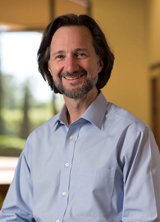
Rev. Rob Renfroe
By Rob Renfroe-
Years ago I heard a preacher say, “It’s not what happens to you, but what happens in you that makes the difference.” I have come to believe that statement is true. And I’m grateful it is because we cannot control what happens to us but we always have a choice about what happens in us – decisions we make going forward.
As we pray for the Bishops’ Commission on A Way Forward for the United Methodist Church, let me share with you three decisions that will guide me as I move forward as a person attempting to follow Jesus faithfully and that I hope will direct us as an evangelical movement within the UM Church.
First, I have decided to see what is happening in the church with the eyes of faith. Life events are not colors. You and I look at the drapes on a wall and we see them the same way. They’re green or blue or red or orange. Within a given culture, there’s pretty much one way of seeing colors. That’s how many of us think about the situations we face in life. We believe there’s pretty much one way of looking at them – and that’s our way.
But I have known people in the very same situation who have seen what’s happening very differently. Both were diagnosed with cancer. Both had lost a child. Both were cheated on by a spouse. One saw God as uncaring and unfair. The other saw God reaching out to them through their tears. One ended up losing their faith. The other became closer to God than ever before. Same event. Very different outcomes. Why? Because of how they chose to see it.
Here we are, more than 45 years into a battle for the faithfulness of the Methodist Church – actually, for the Christian faith. The bishops’ commission is meeting. And we have two years to go before we know where things will stand. How do we see this situation? From some of the letters I’ve gotten, some people see our situation as “Nothing has changed. The bishops still don’t get it. The progressives are still being disobedient and getting away with it. Two years is an eternity.” They see our situation as a never ending battle that’s taking way too long and going nowhere. And some are giving up and walking away.
I’m not saying they’re wrong to see it that way. But that’s not how I choose to see it. I choose to see that we are the only mainline church that hasn’t lost the battle or caved to the culture. On our 50th anniversary, I choose to see that God has honored the faithfulness of those who went before us, who were visionary enough to begin Good News and who were committed enough to sacrifice for the cause of Scriptural Christianity.
I choose to see that after five decades of struggle and prayer and faith, we have less than two years left to finish what godly men and women started when the night was dark and the road was long. I choose to see that we are on the 10 yard line, the game is almost over, and what we do here at the end will make all the difference.
I choose to see through the eyes of faith that God is working to create a kairos moment for United Methodists where, by his grace, we will be able to do what no mainline church has ever done – create a just and amicable solution to our differences that honors Christ and brings about a new and faithful evangelical movement, no longer embroiled in a draining debate about the veracity of God’s Word. We are “this close” to being free of a battle that has consumed so much time and resources from making disciples. That’s what I see through the eyes of faith.
I have decided that I can and will control my emotions. Great power comes into our lives when we realize that we can choose how we respond emotionally. As my church often hears me say, “You are not a microwave oven. People cannot just press your buttons and make you go off.” You are made in God’s image – that means, among other things, you have a rational mind, a will that is capable of making and acting on intentional choices, and the ability to control your emotions.
I learned this lesson from the example of two persons in our congregation who suffered with ALS, Lou Gehrig’s disease. One was a young father who never became bitter or even discouraged. In fact, every time I visited with him, he told me how grateful he was for a God who had blessed him with a wonderful wife, two children that brought him much joy, and with an assurance that he would see his Savior in heaven. When it would have been so easy for him to be down, his spirit soared.
The other was an older woman who suffered from this hideous disease that leaves you paralyzed and that takes everything from you but your mind which realizes all that you have lost. Near the end of her life, it was painful to visit her and see her suffer so greatly. The Scripture passage she asked me to read at her funeral? Habakkuk 3.17-18. “Though the fig tree does not bud and there are no grapes on the vines; though the olive crop fails and the fields produce no food; though there are no sheep in the pen and no cattle in the stalls, yet I will rejoice in the Lord, I will be joyful in God my Savior.”
Life can be unfair and painful. But we can always choose how we will respond emotionally. I have learned that if instead of feeling small and powerless, I feel confident in the power and the goodness of God; if I feel that I can do all things through Christ who strengthens me; if I feel Jesus Christ is the living Lord of his church, I can face life with peace and grace.
Do not let the rebellion of others, do not let how out of touch many of our bishops are, and do not let every little thing you read or hear about the commission or other UM leaders determine how you feel inside. Lift up your eyes to the hills, from whence cometh your help.
The spirit of the Lion of the tribe of Judah lives in you. Do not whimper, do not fret, and do not be afraid. Do not become discouraged or give up. Jesus Christ is Lord. Within our spirits we can be strong and confident. We can decide to live above our circumstances and the negative emotions that would draw us away from Christ and cause us to be less than loving to others.
Finally, I have decided to be responsible for my actions. Ask people why they are where they are in life, and if they’re not doing well, often they will tell you about what someone else did or didn’t do. “My father wasn’t there for me,” “My spouse doesn’t understand me,” “My job puts me under lots of stress,” “My boss is a jerk,” “The progressives won’t follow the Discipline and the bishops won’t enforce it.”
But once we say those things are the reasons for our poor choices or our angry actions, what we are really saying is that we’re not responsible for our lives. And, in so doing, we deny our humanity and we give ourselves permission to be irresponsible in the areas of our lives that matter most.
Friends, you are not a string of excuses. You are not a victim of your circumstances. You are not a powerless pawn of life’s unfairness. You are a human being made in the image of God. You are the most powerful and resourceful creature God put on this planet. And you are surrounded by brothers and sisters all over the world who are committed to the truth of the Gospel and the health of the church as much as you are.
After winning a great victory on Mt. Carmel, the prophet Elijah went into the wilderness and begged to die. Why? Because he felt like he was the only one fighting the battle. “I alone am left,” he cried out. He saw himself as being all by himself. So he felt discouraged. And his action was to run away and give up.
But God saw what was true. “There are 7000 others who have not bent the knee to Baal.” No, Elijah was not alone. Others were being faithful and were willing to help him. Read the rest of the passage and you’ll see that God had a plan for Elijah and for the renewal of Israel.
Friends, you are not alone. You may be weary, but our God has a plan. Believe that. Claim that. Act as if that is true because it is. Together, we can rise to any challenge. We can overcome any obstacle. And, by his grace, we can be faithful and strong to the end.
I have decided that will be my story – my way forward. I pray it will be yours as well.
Rob Renfroe is the president and publisher of Good News.
by Steve | May 23, 2017 | Magazine, Magazine Articles, May-June 2017
 Coffee drinking may be an essential component of any modern day United Methodist church, but John Wesley was not a big fan. Neither did he champion the cause of tea: “But three cups of strong tea will now make my hand shake, so that I can hardly write.” In his health and wellness book Primitive Physick, Wesley wrote, “Coffee and tea are extremely hurtful to persons who have weak nerves.”
Wesley would probably not get very far in convincing contemporary United Methodists to give up their daily fix of caffeine. If you are a Wesleyan without “weak nerves” we want to draw your attention to Drinklings (www.Drinklings.coffee), founded by two Asbury Theological Seminary alumni. The outfit makes quirky coffee mugs (John Wesley and Suzanna Wesley mugs on the left in the picture above), t-shirts, and fresh roasted coffee dedicated to various social issues like crisis pregnancy, addiction recovery, mental health, and so forth. The goal is to be able to provide both short term and long term financial support for various ministries focusing on such issues and raise both church and public awareness in the process through shared coffee and products.
The social mission coffee (“Life,” for example, is the roast dedicated to the pro-life movement) always comes fresh roasted and uniquely crafted for each cause and the mugs work as gifts and collectibles. GOOD NEWS readers can get a 10% off discount by using the code: GOODNEWS at the checkout.
We also enjoy having the John Wesley character mug from Asbury Theological Seminary near our coffee machine at the Good News headquarters (pictured above on the right). While we would stop short of saying that it keeps our coffee “strangely warmed,” we definitely believe it is a fun and unique addition to our office (store.asburyseminary.edu).
– Good News Media Service
by Steve | May 23, 2017 | Magazine, Magazine Articles, May-June 2017
Not long after our deadline, the nine-member Judicial Council of The United Methodist Church (the denomination’s Supreme Court) responded to the South Central Jurisdictional Conference, regarding the election of Mountain Sky Area Bishop Karen Oliveto, the denomination’s first openly gay bishop.
Last summer, Dixie Brewster, a South Central Jurisdiction delegate and lay member of the Great Plains Annual Conference, moved that the delegates request a declaratory decision from the Judicial Council on the following matter: “Is the nomination, election, consecration, and/or assignment as a bishop of The United Methodist Church of a person who claims to be a ‘self-avowed practicing homosexual’ or is a spouse in a same-sex marriage lawful under The Book of Discipline of The United Methodist Church?”
Good News will provide full analysis of the decision in the next issue of the magazine. In the interim, be sure to follow our coverage at goodnewsmag.org.