
by Steve | Jul 10, 2017 | July-August 2017, Magazine, Magazine Articles
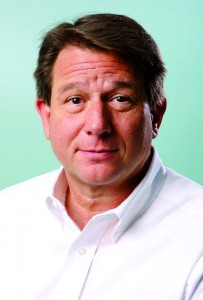 By Frank Decker-
Before I became a missionary, I served a small United Methodist church in Virginia while in my 20s. There was a family in the neighborhood to whom we provided assistance from time to time. One day their grade school-aged daughter was playing with some friends at the church, and she wandered into the kitchen where I was loading a bag of groceries. “Are you going to take that food to a poor family?” she asked me. I responded, “No, sweetie. I’m taking this to your family.” Her eyes lit up and she happily went back to join her friends down the hall.
While I may have stumbled into a quick-thinking response to that situation, I have increasingly become aware of the need to pay attention to the way that those to whom we seek to minister view us – and, how they think we view them. For example, it has always puzzled me why, in mission and evangelism circles, we have referred to those whom we are seeking to reach as “target” people groups. After all, what is the most common use of a target? Doesn’t it usually involve some sort of weapon? In the book Leadership and Self-Deception, The Arbinger Institute points out: “No matter what we’re doing on the outside, people respond primarily to how we’re feeling about them on the inside.”
I am suggesting that whether we are aware of it or not, we are likely to view those outside of our religious fold in one of two general categories: people who should be won, or people who should be served. Correspondingly, they will perceive our intentions, in broad strokes, as the intentions of a “crusader” or the intentions of a “servant.” I realize the potential pitfalls of taking this simple thought too far. Still, I submit that a servant is one who is seen by outsiders as motivated to serve others by meeting their needs, while a crusader is one who is motivated to enlist others and bring them into the fold (even though acts of service are often employed by crusaders to accomplish this).
A missionary who served in the Middle East for more than a decade tells the story of being invited to a mosque by an Imam to speak to his congregation. Before the missionary preached, the Imam said to him, “You can share about Jesus, but not about Christianity.” The missionary said he was initially taken aback by the Imam’s request. Then he remembers thinking to himself, Well, I think that’s okay. That turned out to be a watershed moment in the missionary’s journey. He more fully realized the distinction between helping people to see Jesus versus simply getting them to join the team.
The Apostle Paul said, “Let a man consider us as servants of Christ and stewards of the mysteries of God” (1 Corinthians 4:1). When we are perceived as those whose desire is to serve, defenses against spiritual conversations that otherwise may arise are likely to be relaxed. And the more we behave – and are perceived as – servants, the more receptive people will be to the One who “came to serve and give his life as a ransom for all.”
The way that people outside of the faith perceive our mission efforts is important. If Jesus were merely the founder of one of the world’s religions in competition with other religions, then a crusader mentality might make sense. But if he is the Messiah whose Kingdom can pervade any religious context, then his message must be understood on a level deeper than “our religion versus yours.” Nonetheless, I believe that millions outside of Christianity view us as crusaders instead of servants, with the accompanying conclusion that Jesus is irrelevant to them.
“The vision is Jesus. Not Christianity. Not prayer, mission, and justice,” writes Pete Greig in Dirty Glory. “Not worship-leading or church-planting or evangelism. If you love Jesus, you’ll do that stuff: You’ll pray and worship and go to church and preach the gospel. But in doing all those things, don’t lose the way, don’t get lost in the crowd. It might be healthier if we all just stopped being Christians for a bit – a week, a month, or even a year. We’re just too good at it. It has become habitual. We’ve been operating out of religious muscle memory…. Urgent voices are calling us to abandon the familiar comforts of Christendom, to strike out into the unknown and rediscover the Nazarene.”
It is no surprise that we have this challenge, this tension between servant and crusader. But that is all the more reason why we must ardently pursue his example of a servant.
Frank Decker is the Vice President for Training and Formation at TMS Global – www.TMS-Global.org.
by Steve | Jul 10, 2017 | In the News, Perspective E-Newsletter

Bishop Laurie Haller, Iowa Annual Conference Communications
By Walter Fenton-
Writing to churches and clergy in the Iowa Annual Conference about financial challenges the conference faces, new Bishop Laurie Haller wrote, “Some of our clergy and congregations are making the decision to withhold apportionment payments to protest those who advocate for full inclusion of LGBTQ people in The United Methodist Church. This intentional action weakens our mutual covenant to be in ministry together here and around the world despite our differences.”
Bishop Haller is woefully misinformed if she thinks churches and clergy are withholding apportionments “to protest those who advocate for full inclusion of LGBTQ people in The United Methodist Church.”
Those who support the church’s sexual ethics, its teachings on marriage, and its ordination standards have never contested the right of LGBTQ+ people and their allies to “advocate” for changing the church’s teachings. They are not naïve; they understand people in a large denomination will not always see eye-to-eye on every matter. They know we have a polity, an orderly way of going about discerning God’s will, and they have willingly engaged in that process for decades. If this were not the case many would have started withholding apportionments long ago, perhaps as far back as the early 1980s.
Here, for Haller and other church leaders who are now learning about the crisis within our denomination, are just some of the actual reasons why some clergy and laity are withholding apportionments, particularly in annual conferences like Iowa.
- After the 2012 General Conference some LGBTQ+ people and their allies adopted a strategy of ecclesial disobedience. They disregarded the will of General Conference and our Book of Discipline by presiding at same sex weddings, and in a few cases UM clergy openly acknowledged they were in same-sex partnerships. But these acts only led a few congregations to withhold apportionments.
- In October of 2013 retired Bishop Melvin Talbert joined a growing list of clergy to preside at a same-sex marriage. His defiance gained national attention, and forced clergy to respond to perplexed and sometimes angry laity who could not understand how a bishop could preside at a same-sex wedding when the church explicitly said clergy are prohibited from doing so. This provocation led other congregations to withhold apportionments.
- In tense executive sessions at the Council of Bishops’ November 2013 gathering it instructed its president to file a complaint against Bishop Talbert. It took four months before the complaint was filed, and then another nine before the Western Jurisdiction College of Bishops quietly reported on the late afternoon of December 30, 2014 that a “just resolution” had been reached in the matter. The resolution was widely regarded as a sham since Talbert was in no way held accountable for his breach of church law. This mockery of the Discipline led still other congregations to withhold apportionments.
- In July of 2016 the Western Jurisdiction and its bishops wittingly decided to plunge the denomination into a constitutional crisis by electing, consecrating, and assigning as a bishop a person they all knew had presided at nearly 50 same-sex weddings and was party to one herself. And so, as a matter of conscience, many congregations across the connection have decided to withhold apportionments, particularly churches in the annual conferences over which this bishop presides. They have refused to be complicit in a willful rebellion against the church’s polity and good order. And as many warned, the conferences in the Mountain Sky Episcopal Area are facing serious financial challenges, and in one case, the conference has candidly called it a “financial crisis.”
- Finally, in an incident closer to home for Iowans, the Rev. Anna Blaedel requested a point of privilege at the 2016 Iowa Annual Conference to announce to the gathered assembly, “I am a ‘self-avowed practicing homosexual.’ Or, in my language, I am out, queer, partnered clergy.” A complaint was immediately filed against her, but was dismissed, without comment, by Bishop Julius Trimble. Bishop Haller just recently reappointed her.
Haller seriously misjudges and mischaracterizes people who stand at the church’s center when she says they are withholding apportionments “to protest those who advocate for full inclusion of LGBTQ people.”
Nonsense. They are withholding apportionments because of bishops and church leaders who refuse to defend the church’s teachings, its polity, church law, and now even the rulings of its judicial branch.
Faithful United Methodists have decided they can no longer support, in good conscience, a dysfunctional institution. And they certainly have no interest in financially supporting bishops who mock their values and the church they have faithfully supported for years.
Recently, Bishop Haller characterized the aforementioned Rev. Anna Blaedel’s actions as “holy disobedience.” If she takes the time to patiently listen to people at the center of the UM Church who are withholding apportionments, she might come to realize they are acting out of “holy obedience.”
Walter Fenton is a United Methodist clergy person and an analyst for Good News.
by Steve | Jul 10, 2017 | In the News, Perspective E-Newsletter

The Judicial Council 2017, UMNS
By Walter Fenton-
The United Methodist Church’s Judicial Council has declined a request to reconsider a portion of its April 2017 decision regarding the consecration of an openly lesbian bishop.
In a brief email to Mr. Richard Marsh, an attorney representing the Western Jurisdiction College of Bishops in its bid for reconsideration, the Rev. Lui Tran, Council secretary, wrote, “After careful review and prayerful consideration, the Motion to Reconsider [Judicial Council Decision] 1341 of the Western Jurisdiction College of Bishops has been denied.” Tran also noted the Council’s decision to deny was unanimous.
The Western Jurisdiction College of Bishops took particular issue with the Council’s ruling that “A same-sex marriage license issued by competent civil authorities together with [a] clergy person’s status in a same-sex relationship is a public declaration that the person is a self-avowed practicing homosexual for purposes of [church law].” It claimed the Council had exceeded its mandate to interpret church law, and instead usurped the General Conference’s sole authority to create and define standards for clergy ordination.
The ruling is a setback for any clergy who have obtained a same-sex marriage license, and it poses a serious risk for Bishop Karen Oliveto, episcopal leader of the Mountain Sky Episcopal Area in the Western Jurisdiction. Oliveto’s July 2016 election and consecration as a UM Church bishop engendered JCD 1341. While the Council ruled it did not have the authority to vacate Oliveto’s election and consecration, it did rule bishops could not consecrate as a bishop a clergy person found to be in a same-sex marriage.
“The motion to reconsider was without merit as it raised no new matters for consideration by the Judicial Council,” said the Rev. Keith Boyette, the attorney who opposed the Western Jurisdiction College of Bishops during the Council’s oral hearing on April 25, 2016 in Newark, New Jersey. “I am gratified that the Council has denied the motion. Oliveto’s status as a bishop continues under a cloud, so it is in the best interest of the church, the episcopal area where she is assigned, and of Oliveto herself that this matter be resolved as expeditiously as possible and in conformity with the requirements of the Book of Discipline. I urge the Western Jurisdiction College of Bishops to fulfill their responsibilities expeditiously and in accordance with church law.”
Although it was widely known at the time of her election and consecration that Oliveto was in a same-sex marriage and had secured a marriage license, none of her supervisory authorities (bishops and district superintendents) or any other party had filed a complaint against her. At least in part, the delegates who elected her and the bishops who consecrated her regarded their actions as a direct challenge to the church’s sexual ethics, teachings on marriage, and standards on ordination.
In its April decision the Council instructed the Western Jurisdiction College of Bishops to review and act on complaints that were filed against Oliveto shortly after her election. Should the complaints result in a church trial, the Judicial Council’s denial to reconsider its ruling forecloses a defense tactic used in the past.
In two previous cases clergy have openly advertised they were in same-sex partnered relationships, but when questioned at trial, they refused to acknowledge whether they were “practicing homosexuality.” Consequently, the complaints were dismissed. But now, according to the Council, “A same-sex marriage license issued by competent civil authorities” is equivalent to a clergy person’s declaration that he or she is “a self-avowed practicing homosexual for purposes of [church law].”

Western Jurisdiction Bishops participate in Bishop Karen Oliveto’s consecration service. (Photo by the Rev. David Valera, PNW Conference)
Some United Methodists regarded the Western Jurisdiction College of Bishops’ request for reconsideration as an attempt to further delay processing the complaints against Oliveto. The complaints were filed in August 2016, but to date nothing has been publicly reported regarding their disposition. If the complainants and Oliveto cannot reach a “just resolution” of the matter, a church counsel will be appointed to investigate their validity and bring the case to trial if necessary.
“The Council’s refusal to reconsider their decision makes perfect sense,” said the Rev. Rob Renfroe, president of Good News. “For millennia, people in various cultures have regarded sexual intimacy as integral to marriage. The Council is not making new law; it is simply using common sense when it comes to the church’s understanding of marriage. I am grateful that they saw the WJ Council’s request for what it was – a cynical delaying tactic – and dismissed it promptly and unanimously.”
Walter Fenton is a United Methodist clergy person and an analyst for Good News.
by Steve | Jul 10, 2017 | July-August 2017, Magazine, Magazine Articles
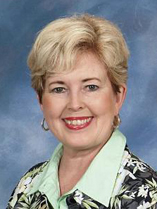
B.J. Funk
By B.J. Funk-
Motel Six television commercials are known for their “We keep the light on” advertisements. These words might not mean much to some, but they send a comforting beacon to many for whom the light has been turned off. Weary travelers find hope when they reach a place of safety and rest.
The same is true for heartbroken or rejected people. For those who have ever had a door slammed in their faces, or a rejection that feels like hard fists in the stomach, the encouragement of finding a place that actually keeps the light on is an oasis of hope, a contrast to their desert of darkness. Just as Motel Six reaches out for weary travelers, weary lives find hope when they reach a place of safety and rest.
Already today, you have probably passed by someone in the grocery store or at work who longs for a light to be left on for them. You likely did not notice, for many searchers of light are masters at covering up their need. They mix their hurts with an addiction to numb the pain, taking on excessive swallows of poison as they grow deeper into their belief that they don’t really matter to anyone else. Why, then, should they matter to you?
Or, perhaps it is the opposite. They laugh a little too loudly, tell a few more jokes than anyone else, and maybe, if you look deeply enough, they never allow you to really get into their lives. We only see portions of them, the sunny side of them, the “I’ve got life, and I’m great” side of them. One gets the feeling that honesty has never rested its head on their heart, as they cake on layer after layer of “Everything is okay! Really, it is.”
Then, on a night when no one expects, a crash comes through their cover-up plans, and a raw pain that hurts deeper than they ever imagined comes forth. Pretense falls, and truth walks in. It is not fun. It’s not fun to realize that all your hidden secrets are hidden no more, that now your family and friends will see the dark side of you. It is more than you can bear. You want to climb in a closet, and shut out the world.
Except for one giant, marvelous word, you might. One word that dares to break the closet door open and pull you out. A soothing, yet forceful word that is claimed by the one who made it, the one who is the very same, the one who is over and above all others. God is that one, and the healing word is Mercy.
Mercy takes the same hammer that nailed Jesus to the cross and yanks out the nails that hold you captive inside the closet. God paid too much for you to live in an embryonic state of mind inside of mold, dark, and nothingness. Mercy claims you, holds you, enfolds you, and calls you His own.
Come out from hiding. Your life is not over yet. Mercy will always keep the light on for you. Mercy kept the light on for one of our heroes in the Bible. King David was at one time surrounded by as many as ten thousand enemy soldiers. He was running for his life from his rebellious son, Absalom, and a host of traitors. David could have trusted his army to defeat his enemies, but instead he trusted in the mercy of God. He wrote in Psalm 3: “But you are a shield around me, O Lord; you bestow glory on me and lift up my head. To the Lord I cry aloud, and He answers me from his holy hill. I lie down and sleep. I wake again, because the Lord sustains me.”
Mercy kept the light on for David. Even when his enemies sat in the dark shadows of evil plots against him, David trusted God for mercy.
Whatever you are facing today, wherever you went wrong yesterday, however your fear blocks tomorrow, look for the sign that assures you that mercy blinks a welcome light for you. Then, settle peacefully into this moment, and allow the Light of Jesus to do what it always does. Receive peace as you rest in this place of safety and hope.
Discouraged? Hopeless? Mercy will always keep the light on for you.
by Steve | Jun 30, 2017 | In the News, Perspective E-Newsletter
 By Walter Fenton-
Lifetime Good News Board member the Rev. John Grenfell, Jr. died this past Sunday, June 25, 2017. He was 86 years old.
John was one of those United Methodist pastors who never really retired; he was not the retiring type. He played ice hockey into his mid-60s, and always gave as good as he got. The passion he exhibited on the ice was an extension of how he lived his life: full-tilt, fearless, and filled with intensity.
John always struck me as a wiry, Old Testament prophet, ready at a moment to burst forth with a jeremiad on the importance of justice, truth, and integrity in our church. And then five minutes later he would be weeping with joy as he told you about a lost soul who accepted Christ into his heart, had his life turned around, and in the process, found a fellowship of caring friends at a church he pastored.
After graduating from Garrett Evangelical Theological Seminary, John served the United Methodist Church for 41 years of active ministry. He pastored congregations in Iowa, Wisconsin, and Michigan. He also served as a district superintendent in the Detroit Annual Conference, and represented it as a General Conference delegate on more than one occasion.
John joined the Good News Board in 1974. “John Grenfell’s life and ministry have had a profound influence on The United Methodist Church,” said the Rev. Dr. James V. Heidinger II, president emeritus of Good News. “Faithfulness to the message of the gospel remained the top priority for John. He was a pastor and church leader of unquestioned integrity – acknowledged even by those of a more liberal persuasion.”
Grenfell was elected a lifetime Good News board member in the 1990s, and received the Edmund Robb Jr. United Methodist Renewal Award in 2007. The Good News board of directors has bestowed the award on only 12 people. Other recipients include Maxie Dunnam, Tom Oden, and Helen Rhea Stumbo.
In retirement, John dedicated much of his time to serving as an advocate for clergy and local churches in disputes with district superintendents and bishops. He was passionate about justice, and dedicated to providing clergy and local churches with informed and wise counsel. He was committed to the idea that every pastor and local church deserved a vigorous defense of their due process rights. For his efforts, he received the Conscience of the Conference Award from the United Methodist Associates in Advocacy in recognition of a “lifetime ministry of integrity, compassion, and courage in upholding and defending the covenant of the clergy.”
“John had a profound conviction that the ministerial covenant meant that the UM Church should be administered by its leadership with absolute integrity and fairness,” said Heidinger.
When John was not advocating on behalf of others, he filled interim pastoral appointments, and also served as Camp Director at Simpson Park in Romeo, Michigan, the state’s oldest Holiness Camp Meeting for families.
John was a man of strong conviction, deep faith, loyal commitments, and persevering love. His love of God, family, and the people of the congregations he served, inspired many throughout his long life and dedicated service to the UM Church.
He is survived by his wife by of 65 years, Jeanine (Neal) Grenfell, two sons, three daughters, a sister, in-laws, and numerous grandchildren, and great-grandchildren.
His son, the Rev. Dr. John Grenfell III, senior pastor at Plymouth First UM Church (Michigan), will preside at his funeral at 11 a.m. Monday, July 3, 2017 at First United Methodist Church in Port Huron, Michigan. John III carries on his father’s legacy as a UM pastor and member of the Good News board of directors.
Walter Fenton is a United Methodist clergy person and an analyst for Good News.