
by Steve | Sep 15, 2017 | Magazine, Magazine Articles, September/October 2017
 By Faith McDonnell-
In 1989, People magazine reviewed Ratushinskaya’s prison memoir, Grey is the Color of Hope. The review recounted how the then-exiled-in-the-West poet had been arrested in 1983 at the age of 29 and sentenced to seven years’ hard labor for “anti-Soviet agitation and propaganda, possession of human rights documents, possession of articles about the Polish labor movement, and possession of anti-Soviet literature,” among other things.
A New York Times review of the book describes Ratushinskaya’s companions in the labor camp’s “Small Zone,” a restricted area for “particularly dangerous female political criminals.” According to the Times: “All of them were defiant nonconformists who chose imprisonment rather than renege on their political or religious principles. They included a leading activist of the Helsinki Watch committee, a recent convert to Roman Catholicism who received a 10-year term for helping an underground priest teach a children’s catechism class, a Pentecostal Christian and the editor of an underground, samizdat, journal dedicated to feminist issues such as the horrors of Soviet maternity wards…”
It is quite probable that the beatings, torture, vitamin-deficient diet, and extreme conditions under which Ratushinskaya spent four years contributed to the cancer that brought about her death. In his obituary of Irina Ratushinskaya for The Guardian, the Rev. Michael Bourdeaux puzzles, “precisely why she was singled out for such inhuman treatment remains a mystery.” He continues, “One might have expected that she would have been given an intimidating rebuke by the KGB and dismissed from her job. Instead she found herself confronting the full force of the Soviet law, but poetry in Russia was always dangerous.” Bourdeaux would know. He founded the British-based Keston College that for years provided information on prisoners of faith and conscience in the Soviet Union and Eastern Europe, including Ratushinskaya.
The People article reveals that 250 poems by this courageous dissident – who graduated in physics from Odessa University in 1976 and became a teacher – were written via a matchstick and a bar of soap. Her poems were smuggled out of the Small Zone by her husband, physicist and human rights activist, Igor Gerashchenko. He risked his own freedom to ensure that Ratushinskaya’s voice was heard by passing the poems on to Western journalists. Because of this initiative two books of her poetry were published in the United States while she was still in prison. And it was obvious from her poems that Ratushinskaya was freer as a labor camp prisoner than her jailers could ever be.
Her poem to which I refer most often when I am writing or speaking about the global persecution of Christians is entitled “Believe Me.” She wrote it the day after she was freed from the labor camp. It is a poem I use to inspire myself and others to pray for those who are persecuted for their faith. The poet’s early release came as part of the negotiations for the summit between Presidents Reagan and Gorbachev in Reykjavik, on October 9, 1986. The next day she wrote this:
“Believe me, it was often thus
In solitary cells, on winter nights
A sudden sense of joy and warmth
And a resounding note of love.
And then, unsleeping, I would know
A-huddle by an icy wall:
Someone is thinking of me now,
Petitioning the Lord for me.
My dear ones, thank you all
Who did not falter, who believed in us!
In the most fearful prison hour
We probably would not have passed
Through everything – from end to end,
Our heads held high, unbowed –
Without your valiant hearts
to light our path.”
– “Believe me,” Irina Ratushinskaya, Kiev, October 10, 1986.
It must have seemed strange to write again in freedom, to write from a distance about the freezing cold solitary isolation cell known as SHIZO with which she had been so intimately acquainted. Ratushinskaya had been subjected to this torture on a regular basis for refusing to renounce her Christian faith, refusing to inform on fellow prisoners, and for refusing to say she would never write poetry again. Years later she still suffered from excruciating headaches because of a concussion she received when a brutal guard threw her headfirst against a wooden trestle in the cell.
On her first day waking up in freedom, Ratushinskaya was eager to put pen to paper. And she used the occasion to write a tribute to her intercessors. The former prisoner revealed how she felt tangibly the effect of their prayers: in a “sudden sense of joy and warmth and a resounding note of love” while “a-huddle by an icy wall.” Her words described the experience of many Christian prisoners of faith and the supernatural warmth they felt while in conditions that had no business feeling warm. The result of, as Ratushinskaya put it, “someone thinking of me now, petitioning the Lord for me.” A mystery, certainly, but undeniable when coming from the person who experienced this miracle, and especially from someone who frequently had been in trouble for speaking truth.
Ratushinskaya spoke of the “valiant hearts” that lit the path for those in the “most fearful prison hour.” Members of Congress – such as the human rights heroes Frank Wolf, Chris Smith, and Tom Lantos – did their part as advocates for the poet. People around the world became prayer warriors.
I first stumbled upon one of those valiant hearts, the Rev. Dr. Dick Rodgers, an Anglican priest and orthopedic surgeon, when I was wandering through England’s cathedrals in the summer of 1985. Rodgers was distributing leaflets about the poet. In 1986 Rodgers spent all of Lent inside a cage at St. Martin in the Bull Ring Anglican Church in Birmingham that functioned as a replica of Ratushinskaya’s prison cell.
Rodgers shaved his head the way that her head had been shaved and ate prison-style rations, to call attention to Ratushinskaya’s malnutrition-inducing prison diet of hard bread and rotted-fish broth. For an age in which there was barely any electronic communication, let alone social media, Rodgers brought the cause of this Christian dissident to the global community. Bourdeaux writes in his obituary for Ratushinskaya that “Irina came to believe that the huge publicity [Rodgers] engendered contributed to saving her life.”
Bourdeaux relates how on the morning of October 10, 1986, the news that Irina Ratushinskaya was free “upstaged the event for which the media had been waiting — the opening of the Reykjavik summit between U.S. president Ronald Reagan and the Soviet leader Mikhail Gorbachev.” He explains that Gorbachev wanted the world to know that he was serious about improving both international and domestic relations. He wanted to show the improvement in human rights brought about by perestroika (reconstruction).
Two months after Ratushinskaya’s release, she and Gerashchenko were allowed to leave the Soviet Union for medical treatment. While they were away they were stripped of Soviet citizenship and so settled in London. Ratushinskaya was also Poet in Residence at Northwestern University from 1987-1989. But after a few years of celebrity and popularity for Ratushinskaya, the West — not learning anything from the example of the Soviet Union — lost interest in the heroism of dissidents from the Soviet Union. In 1993, she and Gerashchenko had twin sons, Sergei and Oleg, and the family returned to Russia in 1998.
In “Believe Me,” Ratushinskaya thanked those who remembered her, “who did not falter, who believed in us.” But it was she who did not falter. To quote her, she “passed through everything — from end to end” with her head “held high, unbowed.” Finally, she passed through suffering the tolls of cancer on a body that had already been tested by the harsh reality of Strict Regime Labor Camp No. 3. She left her beloved Igor once more, as she did when she was wrenched from him in the Kiev Courtroom and he called out, “Hold steady, darling, I love you!” to support her through the long years of separation.
Now Ratushinskaya is gone once more. We often speak glibly of those who have died “receiving their reward in heaven,” but Irina Ratushinskaya has a Hebrews 11 reward. “Some faced jeers and flogging, and even chains and imprisonment … the world was not worthy of them.” Irina and other valiant warriors of the era of Soviet persecution lit the path for me that brought me where I am today. And now, in the true freedom of Eternal Life, the poet is part of the great cloud of witnesses cheering on those of us still running our race.
Faith McDonnell is the Director of Religious Liberty Programs and of the Church Alliance for a New Sudan at the Institute on Religion and Democracy in Washington, D.C. Reprinted by permission. Editor’s note: On March 26, 1987, the Institute on Religion and Democracy presented its third Religious Freedom Award to Irina Ratushinskaya. At the reception, then Secretary of State George P. Shultz said of Irina, “In her dogged determination to live her own life and speak her own mind, regardless of the personal cost, she has taught others the meaning of human freedom.”
by Steve | Sep 15, 2017 | Magazine, Magazine Articles, Perspective E-Newsletter
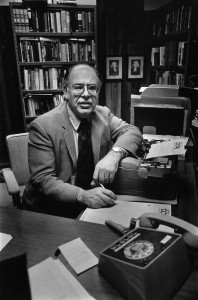
By Charles W. Keysor, Founding editor of Good News
The Risk of Renewal
By Riley B. Case-
When Charles Keysor wrote his article “Methodism’s Silent Minority” in the Christian Advocate in 1966, an article that basically launched the Good News movement, he spoke about numbers of Methodists who affirmed historic Methodism and were faithful and active in their local churches but were basically unrecognized and unappreciated in the larger councils of the church. Keysor referred to these orthodox believers as a “silent minority.” He suggested their numbers were larger than what church leaders had usually assumed.
Keysor’s analysis at the time was in contrast to liberal observers who insisted that “fundamentalism” (a pejorative label used to refer to all evangelicals) was a dying ideology with no future in the Methodist Church, or anywhere else for that matter. Keysor quoted his own professor at Garrett Seminary, Paul Hessert, who foresaw a continued eclipse of orthodox influence within the seminary-trained Methodist ministry, but who believed that such a perspective might continue among supply pastors and pockets of lay people.
Surprise! Something happened on the way to extinction. According to the 2003 book, United Methodism @ Risk: A Wake-Up Call, produced by a group called Information Project for United Methodists, and introduced with great fanfare to the press and to the Council of Bishops, Methodism is in danger of being “taken over” by this very “silent minority” Keysor spoke about.
In what appears to be a near-state of panic, The Information Project charges that “powerful,” “well-organized and funded” conservative renewal groups (the book refuses to refer to them as “evangelicals”) would take the church to a place where “diversity and tolerance and breadth of spirit are in short supply.” The “progressive” bishops, seminary professors, and board and agency staff people who dominate the Information Project characterize the renewal groups as those who “look backwards to times when knowledge was feared, questioning was suppressed, and imagination was squelched.”
The book is a call to action. It argues that the renewal groups and the point of view they represent are to be unmasked and resisted, presumably so that United Methodism can be kept pure for “diversity and tolerance.” Tolerance, in this case, is translated to mean anything that counters the traditional orthodox vision for Christian theology, marriage, and sexuality.
One reads United Methodism @ Risk with sadness. How is it that evangelicals have been so long in the UM Church and yet are so clearly misrepresented and misunderstood? How did evangelicals go from being people whose faith was criticized at one time for being “privatistic,” and “individualistic,” to persons who are really motivated by a certain social and political agenda? When did evangelicals move from being people who simply wanted to be left alone to do ministry in a United Methodist tradition, to being persons who are power hungry and want to take over the church?
The book is an attack on evangelical renewal groups — but it is more. It is an attack on the Book of Discipline of The United Methodist Church and upon many of the most loyal of the church’s members. The alarm is sounded not against people in power who oversaw the monumental decline of membership within the last several decades, but upon the people who believe that the people who are in power (bishops, seminaries, and boards and agencies) are not serving them well.
Consider the typical renewal group supporter: here is a couple in their sixties who have been loyal United Methodist all their lives. They have held most of the church offices; they have taught Sunday school; they have tithed. They have lived through a succession of pastors, some good, and some, while sincere, who didn’t believe much. They have agonized over Sunday school material that they didn’t understand. They have wondered why their local church struggles while the nearby Baptist church thrives.
Our United Methodist couple is finding that a lot of their spiritual nurture is coming not from their church but from a neighborhood Bible study. They struggle on how to answer their friends who show them newspaper clippings of a United Methodist bishop who publicly scorns the church’s affirmation that Christ did truly rise from the dead.
Our couple’s own children, away from home, are not affiliating with a United Methodist church. One daughter, who claims she never heard the gospel in her home church, was converted in college through Inter-Varsity, and is active in an independent church. A son, after marriage, attended a United Methodist church in the city until he and his wife were attracted to a Nazarene church with an active children’s program.
The wife of our couple has been active in United Methodist Women, and enjoys the company of other women in the group, but finds the programs boring. The man has sat through numbers of charge conferences where a district superintendent talks grandly about “the connection” and the importance of paying apportionments. On Mission Emphasis week the “missionary” who speaks at their church is really a person who did a two-week volunteer mission trip to work on a church parsonage in another state. There was no mention of Jesus in the presentation.
Our couple has identified with Good News or the Confessing Movement or Aldersgate Renewal Ministries because they are offer a message of hope. They understand that each ministry is working for change in its own unique way. Our couple may not understand everything implied in the words “doctrinal integrity” but they are aware of the difference between preachers who preach on the necessity of being born again, and those who offer vague homilies on “hope” or “love.” They respond to a Mission Society missionary [now TMS Global] who is working on new church starts in Bolivia.
This couple, however, along with 90 percent of all other United Methodists, would fall in the category of what Bishop Joseph Sprague has labeled “Christo-centric exclusivism that ipso facto prepares the soil of stiff-necked, exclusivistic arrogance.” The people who support the evangelical renewals groups are not “extremists,” nor could they be considered “right-wing,” if one were to understand these words in the context of the whole of Protestantism in America (and around the world, for that matter).
A profile of the supporters of the several evangelical renewal groups shows them to be among the most loyal and faithful United Methodists in their local churches. They pay their apportionments and pray for their bishops. Many claim if it were not for one or several of the renewal groups they would no longer be United Methodist. Neither they, nor the groups they support, wish to “take over” the denomination for a very simple reason. They understand the essence of the denomination to be the local church, not the seminaries, nor the boards and agencies, nor the episcopacy. They also understand that the purpose of the church is to save souls and nurture disciples, not to make public declarations about government public policy.
This is not to say, however, that renewal group supporters, and perhaps the vast majority of United Methodists, are content that their own convictions are often undermined by the seminaries, their own understandings of the Bible’s view on celibacy and faithfulness are continually being challenged, and that their “leaders” claim to represent them while denouncing a fellow United Methodist who is President of the United States.
United Methodism is indeed at risk. It is in the midst of a 100-year decline. According to Roger Finke and Rodney Stark, in their book, Acts 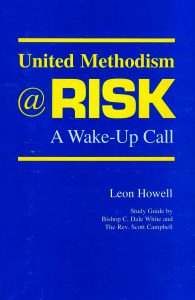 of Faith: Explaining the Human Side of Religion (University of California Press, 2000) the number of Methodist adherents in America has decreased from 84 of every 1,000 Americans in 1890 to 36 in 1990. The years of the decline correspond exactly to the years that liberalism and institutionalism have dominated Methodism.
From 1970 to 2003, membership of the United Methodist Women has declined by 54 percent. One would think, whether liberal or evangelical, that such statistics would call for some sort of reform, or at least some self-examination. Something clearly in not going well. Yet when the renewal groups call for reform of the Women’s Division it is absurdly interpreted as an attack on women. Women’s ministries are alive and well in numbers of churches, but are criticized as being “unofficial” because they do not have the blessing of the Women’s Division (United Methodist Women).
In their sociological analysis Stark and Finke distinguish between “low tension” and “high tension” churches. Low tension churches, where few demands are made (read “tolerance,” “diversity,” and “breadth of spirit”) are becoming increasingly irrelevant and are dying in America. High tension churches, with an emphasis on moral and doctrinal values, are growing. Stark and Finke argue that it seems impossible that once a group becomes low tension and starts down the road to decline, it can ever be reclaimed. There may be an exception, however, in United Methodism. If there is it will be because of groups like Good News and the Confessing Movement. They have done studies in several conferences to substantiate statistically what many of us already know instinctively, namely, that liberal churches are dying and evangelical churches are growing.
Stark and Finke are doing sociological work in a secular setting. If the Information Project really wants “dialogue” perhaps a discussion of the Stark and Finke book would be a good place to begin.
Riley B. Case is the author of Evangelical & Methodist: A Popular History (Abingdon). He is a retired United Methodist clergy person from the Indiana Annual Conference, the associate director of the Confessing Movement, and a lifetime member of the Good News Board of Directors. This adapted essay originally appeared in the September/ October 2003 issue of Good News.
by Steve | Sep 15, 2017 | Magazine, Magazine Articles, September/October 2017
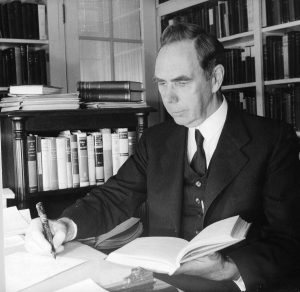
Dr. Edwin Lewis. Photo courtesy of Drew University.
By James V. Heidinger II-
Debate has been renewed in recent months about the role of doctrine for United Methodists. What is the place, for example, of orthodox Christian doctrine in our church? For years we have heard that we are not a creedal church; that Methodists have been more interested in “faith working through love”; that Methodists have always been more experiential than doctrinal; that doctrine should not be the basis for juridical action or for coercion.
There is truth in some of this, no doubt. In 1952, the bishops of The Methodist Church said in addressing that year’s General Conference that “Our theology has never been a closely organized doctrinal system. We have never insisted on uniformity of thought or statement.” However, the bishops went on to say in that address, “There are great Christian doctrines which we most surely hold and firmly believe.” Commenting on this address, Bishop Nolan B. Harmon said, “Methodists have always heatedly rejected the idea that Methodism is simply a ‘movement’ with no formal doctrine” (Understanding the United Methodist Church, Abingdon, 1974).
The oral tradition claiming Methodism to be a non-creedal church has a history that reaches back at least to the early 1900s, the time of the fundamentalist/modernist controversy. Methodism at that time had just experienced the unpleasant controversy about its holiness message. General Conference took action in 1894 to bring holiness evangelists under the church’s strict control. Many left Methodism to form no less than ten different holiness groups. They believed the Methodist Church was not being faithful to Wesley’s understanding of sanctification and perfect love.
In the face of the bitter controversy beginning to brew over the fundamentalist/modernist debate, Methodism was determined to avoid more division. The result was that Methodism moved even further away from careful creedal and doctrinal formulation to a mood of greater openness, tolerance, and emphasis on Christian love in action. There was also the feeling that with so many urgent social ills in America’s growing cities, theological debate might prevent the church from meeting human needs.
This led to a growing antipathy toward creeds, a pattern that can be seen in the periodical literature of 1910-1920. The trend clearly was to shift focus from creeds to human needs. A.H. Goodenough wrote in the Methodist Review in November, 1910: “Creeds have had their day. They are no longer effective. Without doubt, they were well intended. Possibly they have done some good—they certainly have done much harm. The church has been loyal to her creeds, and has spent much good blood and splendid brains in the defense of them. All this was considered the very essence of Christianity. It was child’s play, as we now see it, and in some instances paganism.… The creeds are retired to the museums and labeled ‘Obsolete.’”
Seeing division and strife around them from the fundamentalist/modernist controversy, Methodists were more than ready to relax their attention on creedal and doctrinal formulation. One New York pastor, Philip Frick, wrote with near exhilaration an article entitled, “Why the Methodist Church Is So Little Disturbed by the Fundamentalist Controversy,” (Methodist Review, 1924), in which he gives the reason as being Methodism’s lack of dogmatic creedal assertion.
Further evidence of the growing antipathy to creedal formulation at this time can be seen in the change in requirements for membership. In 1864, the Methodist Episcopal Church required members to subscribe to the Articles of Religion. This requirement was removed in 1916. Belief in the Apostles’ Creed continued to be required after 1924 as it was included in the baptismal ritual, but it, too, was dropped in 1932.
It may well have been in response to General Conference’s dropping of the Apostles’ Creed in 1932, as well as the popular preference for using the new Social Creed rather than theological creeds, that led to Edwin Lewis’ article of alarm over “The Fatal Apostasy of the Modern Church.” Lewis, a professor of systematic theology at Drew Theological Seminary, wrote stinging words in response to these changes: “But what does the modern church believe? The church is becoming creedless as rapidly as the innovators can have their way. The ‘Confession of Faith’ — what is happening to it? Or what about the ‘new’ confessions that one sees and hears — suitable enough, one imagines, for, say, a fraternal order. And as for the Apostles’ Creed — ‘our people will not say it any more’: which means, apparently, that ‘our people, having some difficulties over the Virgin Birth and the resurrection of the body, have elected the easy way of believing in nothing at all — certainly not in “the Holy Catholic Church”.’” (Religion in Life, Autumn, 1933).
So this era saw a transition from doctrinal and theological concerns to a growing new interest in, if not preoccupation with, social ministry.
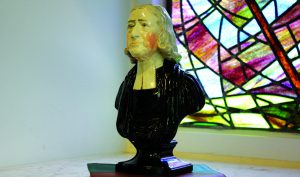
John Wesley.
The church focused not on the content of belief, for that could be divisive, but rather upon Christian love in action through social ministry. This inattention to theology may have been partially responsible for Methodism’s tragic susceptibility to the influence of liberal theology and German philosophy that were rapidly finding a home in our Methodist seminaries.
The move away from doctrine during this period also provided natural cover for pastors who were being trained in the emerging liberal theology. Many could surrender the supernatural elements of apostolic faith — the Virgin Birth, the deity and miracles of Jesus, and his bodily resurrection — and continue on in ministry without ever having to talk much about those things. Social ministry was in, theological definition was out.
This helps us understand the oral tradition that has come down to us today. It is this: United Methodism is not a creedal church, we live in a changing world, and doctrines we used to teach may not be relevant today. And most recently, folks in one annual conference were warned by letter of a “movement away from an evolving and ever-changing understanding of God guided by the Holy Spirit.” Of course, “an evolving and ever-changing understanding of God” could never be expressed in a creed or traditional formulation, for it would be forever changing. The best folks might get would be a list of “Affirmations of the month,” but not “the faith once for all delivered to the saints” (Jude 3).
Looking again at our Wesleyan tradition
But is the oral tradition really our Wesleyan theological tradition? One senses we have done violence to both Wesley and American Methodism with such sloppiness and ambiguity.
Charles Yrigoyen, Jr., in his helpful book, Belief Matters (Abingdon, 2001), reminds us that the church’s doctrine helps us understand the biblical message in a “clearer, holistic, more organized way,” and thus we can communicate it more effectively. Unfortunately, many United Methodists today don’t really understand that message. He also reminds us that the official doctrine of the church “protects us from false and subversive teachings.” Pastors have the responsibility to feed their flocks and make sure they are not grazing in toxic pastures.
Belief certainly mattered to John Wesley, despite the claims of the revisionists. Wesley insisted on doctrinal faithfulness. In 1763 Wesley drafted a Model Deed which stipulated that the pulpits of the Methodist chapels were to be used by those persons who preached only those doctrines contained in Wesley’s New Testament notes and his four volumes of sermons. If a preacher didn’t conform, he was out within three months. Wesley would never have shrugged off reports of an errant preacher by saying, as do many today, “Well, we Methodists think and let think.” (He did say that, of course, in “The Character of a Methodist,” but let’s quote his entire sentence: “But as to all opinions which do not strike at the root of Christianity, we think and let think.”)
While Wesley had a refreshing breadth of spirit about him, there were doctrines he viewed as essential to the faith. Robert Chiles, concurring with Methodist theologian Colin Williams, lists the doctrines that Wesley insisted on at various times in his ministry as “original sin, the deity of Christ, the atonement, justification by faith alone, the work of the Holy Spirit (including new birth and holiness) and the Trinity” (Chiles citing Colin Williams, John Wesley’s Theology Today). This is simply apostolic Christianity.
Yes, we United Methodists take doctrine very seriously. Each person seeking to become a clergy member within our denomination is asked, “(8) Have you studied the doctrines of The United Methodist Church? (9) After full examination, do you believe that our doctrines are in harmony with the Holy Scriptures? (10) Will you preach and maintain them?” (Book of Discipline, Par. 327). Candidates are expected to answer in the affirmative.
The church, in fact, takes doctrine seriously enough that a bishop, clergy member, local pastor, or diaconal minister may be charged formally with “dissemination of doctrines contrary to the established standards of doctrine of The United Methodist Church” (Discipline, Par. 2624.1f), which can lead to a trial. Doctrine is not tangential to the people called Methodists.
Alister McGrath, professor at Oxford, has warned that “Inattention to doctrine robs a church of her reason for existence, and opens the way to enslavement and oppression by the world.” Certainly, attention to doctrine will help United Methodists understand that our doctrinal standards are not, have never been, and must never be, “evolving and ever-changing.” That would be a guarantor of continued confusion and further decline.
James V. Heidinger II is the publisher and president emeritus of Good News. A clergy member of the East Ohio Annual Conference, he led Good News for 28 years until his retirement in 2009. Dr. Heidinger is the author of several books, including the recently published The Rise of Theological Liberalism and the Decline of American Methodism (Seedbed). This essay originally appeared in the September/October 2003 issue of Good News.
by Steve | Sep 15, 2017 | Magazine, Magazine Articles, September/October 2017
 By Courtney Lott-
“But at the beginning of creation God ‘made them male and female.’ ‘For this reason a man will leave his father and mother and be united to his wife, and the two will become one flesh.’ So they are no longer two, but one flesh” (Mark 10:6-8).
What a beautiful and frightening thing marriage is. Two souls on a journey, joining to carry each other’s burdens, to know one another deeply, to image the relationship between Christ and the church in a unique way, and to be fruitful and multiply. It’s fitting that weddings are celebrations, that family and friends gather before God to rejoice in a covenantal relationship, the creation of a new, single flesh.
As the bride walks down the aisle, resplendent in white, we are reminded of John’s description of Jerusalem in Revelation 21 “coming down out of heaven from God, prepared as a bride beautifully dressed for her husband.” We are reminded of how Christ sacrificed himself in order to clothe the church for her wedding day. We clap, we sing, we dance, we cry.
Most of these tears are free and full of happiness. Yet some are tears of longing, tears of fading hope, of loneliness. Torn between joy for friends and mourning for the feeling of being slightly displaced, these are the tears of the single, the divorced, the same sex attracted.
The Single. “We just need to get you married.”
I never quite know how to respond to such statements about my relationship status. Often thrown about with nonchalance, I don’t doubt the purveyors of such declarations mean well. They listen to my story, hear my words, and are sympathetic. Yet their solution is often the same: “We just need to get you married” as if this is as simple as finding a new pair of shoes, as if this always solves the problem of loneliness.
Within our culture, both Christian and secular, romantic relationships are held in high esteem. The secular culture snickers at virginity, slapping on the label of prude, while Christian culture assumes older singles are immature or too picky.
In movies, participation in one is often portrayed as a sign that the main character – once a stagnant workaholic/sad social pariah – has now arrived at life’s deepest meaning and will prance off into the sunset to be forever happy and contented. Phrases like “old maid,” “biological clock,” or “ending up alone” are hung around the necks of singles past a certain age.
More frustrating still, as our younger counterparts join the ranks of the married, we start to age out of our “allotted places” within the church. In my experience, most “singles ministries” are occupied by college students or recent grads. Anyone beyond this is semi-unwelcome, considered at least somewhat awkward, and makes everyone uncomfortable. I know, because when I was just out of college, I felt the same way about older singles. The plank in my own eye is a big one.
Who Sinned? As for our married counterparts, a great many (at least in the south) married young, right out of college or even prior to walking across the stage. Their claims to understanding our singleness ring somewhat hollow and their declarations that we simply need to be “content in the Lord” before he will bring us the right person sting.
There is a sort of unspoken assumption made based on this idea. Like the barren women in ancient Israel or the blind man in Jesus’ day, it seems as if the single is often viewed as an unfortunate misfit.
And we singles are not alone in this category. Many in the church bear a particularly difficult burden that often brings with it a painful dose of shame. The divorced often feel that, like Hawthorne’s heroine, they wear a massive scarlet letter “D” wherever they go.
Communicating their experiences is difficult and uncomfortable. One or both separated spouses often must leave their shared church family after the relationship is broken, thus causing even more pain. A joined life is rent in two and the dynamics change. Like the single, the divorced can feel awkward in situations where most people are couples.
The Outcasts. Oddly enough, the writings of celibate same sex attracted Christians reflect my heart and understand my pain far better than anyone else. Writers like Wesley Hill, assistant professor of New Testament at Trinity School for Ministry in Ambridge, Pennsylvania, and editor of the website Spiritual Friendship, speak of building community apart from romantic relationships, of mourning a certain kind of companionship you’ll likely never have. Spiritual Friendship, an online community of Christians who are primarily same sex attracted, embraces “the traditional understanding that God created us male and female, and that his plan for sexual intimacy is only properly fulfilled in the union of husband and wife in marriage.”
However, these writers also desire to change the discussion surrounding homosexuality. Through their blog posts, the contributors speak on “celibacy, friendship, the value of the single life, and similar topics.” Rather than relying on platitudes or the mistaken idea that God’s goal for all of us is marriage, this community laments their situation and challenges the church in a unique way.
I need them. The church needs them.
The Inner Circle. But I’m often too quick to dismiss the trials and tribulations of the married. Sometimes I get irritated when I hear their complaints. At least you’re not alone, I think. At least you’ll be leaving a legacy in your offspring. Yet when I take a moment to listen, to empathize, I realize they have lessons for me. When they tell me they are lonely in marriage, when they admit their children are driving them crazy, or even worse, when they confess to feeling trapped and embittered, I am reminded marriage is never happily-ever-after. It is not the end all be all, and it will not satisfy my deepest longings, for it is not the purpose of the Kingdom of God. I know this in theory, but I don’t really believe it, not functionally.
We all need each other. The married stay-at-home mom needs the single admin assistant. The single bachelor needs the father of 2.5 kids. The barren woman needs the mom with the child who has autism. The ultra conservative pastor needs the same sex attracted Christian columnist. Our different perspectives, our different paths, offer lessons none of us can learn on our own. Rather than dividing ourselves and telling one another “you can’t understand me,” when we share our stories, our tears, our joys, we unite ourselves in a marriage like covenant.
Within the church, no one should ever be truly alone.
This may all seem obvious. We’re the church. Christ died to make her his body. But we don’t always act like we believe this.
When people don’t follow our cultural norms, they make us uncomfortable and we do what we can to “fix the problem.” We try to get the single married, change someone’s sexual orientation, find a way to quiet the distracting child, or give the barren woman a platitude. What if we mourned with each other instead? What if, rather than trying to make ourselves comfortable by changing another person’s situation, we listened a little better?
I need you. You need me. That’s part of how we reflect the Trinity. We’re made to be relational, even when relationships shove us out of our comfort zones, especially when they shove us out of our comfort zones. Life is hard enough without creating barriers. We’re meant to carry one another’s burdens, to mourn and lament the effects of sin in the world, to love and challenge each other to walk with the Lord.
We need each other.
Courtney Lott is the editorial assistant at Good News.
by Steve | Sep 15, 2017 | Magazine, Magazine Articles, September/October 2017

Rob Bell, HarperOne.
By David F. Watson-
Rob Bell is one of the most innovative and effective communicators in Western Christianity. His work on the NOOMA videos, the rapid growth of Mars Hill Church, and the popularity of his books all demonstrate his ability to convey complex ideas in accessible ways. Bell writes in a conversational style that draws the reader into the world of creative ideas he inhabits. He is a grammarian’s nightmare, but in an age in which popular writing is more beholden to the blogosphere than to Turabian, Bell has been able to speak to people who will never darken the door of a theological library.
His newest offering is ambitiously titled, What is the Bible? How an Ancient Library of Poems, Letters, and Stories Can Transform the Way You Think and Feel About Everything. The book comprises four main sections, the first three of which consist mostly of his own interpretations of biblical texts. In the fourth section, he attempts to answer some key interpretive questions about issues such as the violence in Scripture, the inspiration of Scripture, and its authority. A brief fifth section includes annotated endnotes.
Bell’s best moments in this book occur in the first three sections during his sermonic interpretations of Scripture. He knows the content of the Bible well. One could argue with some of his historical assertions and the conclusions he draws from them, but he has done his homework. He understands the value of historical and literary exegesis, but he never allows the technical work that supports his reading to overshadow his intent to communicate accessibly and clearly. At times he works theologically with Scripture in ways that are eye-opening, surprising, and provocative.
Despite these high moments, the book is marked by serious theological and interpretive problems. Perhaps the most significant of these is his attempt to disconnect the Bible from the Church. He states in the introduction that “the Bible isn’t a Christian book.” Rather, it is “a book about what it means to be human.” He fleshes out this understanding of the Bible throughout much of what follows.
Yes, the Bible is, at least in part, about what it means to be human. To assert that the Bible is not a Christian book, however, is simply wrong. If one means the Old and New Testaments together, the Bible is very much a Christian book. The Old Testament was adopted in its Greek form by the early church. The New Testament was written by some of the earliest followers of Jesus, drawing upon ideas developed in early Christian communities. The selection of books that would become the Christian canon took place within churches. These books were selected, at least in part, because of their usefulness in teaching the faith of the Church. It is the Church that has preserved and proclaimed the Bible over the long history of our faith. By any reasonable definition, historical or theological, the Bible is a Christian book. Why, then, would Bell claim otherwise?
To answer this question, we need to unpack his notion of divine revelation. “So is the Bible the word of God?” he asks. “Yes. Lots of things are,” including “the heavens and the stars” as well as “the mouth of a baby,” “your conscience,” and “poets and philosophers.” Here Bell draws on the biblical tradition that God can be known from creation. “The heavens proclaim the glory of God; the skies proclaim the work of his hands,” says the psalmist (19:1).
Does creation, however, make God known to us in the same way that the Bible does? It is useful here to recall the distinction between general and special revelation. Bell strongly emphasizes general revelation — what we can discern about God and our lives from observing the world around us. For example, we might look upon the beauty and order of the world and derive from these that there is a God, a good God who values order rather than chaos.
What we can’t derive from observations like these, though, are truths such as that God so loved the world that he gave his only Son, that anyone who believes in him will not perish but have eternal life (John 3:16). We could not derive the election of Israel, the necessity of Christ’s atoning work on the cross, or the resurrection of the dead. These require special revelation, the kind we find in the Bible. So, yes, stars and babies and our consciences do in fact testify to us about God, but not in the same way as the Bible does. General revelation can only take us so far. We need special revelation to get to the core claims of Christian faith. If Bell does see special revelation at work in the Bible, he makes little mention of it.
Because Bell largely ignores special revelation, there is no sense that the Bible teaches the “faith once and for all delivered to the saints” 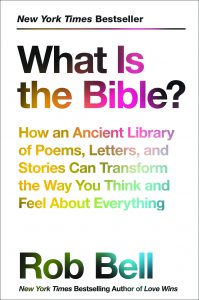 (Jude 3). Rather, its purpose is to teach us universal truths about the nature of human existence. Take, for example, his summary of Paul’s message: “The apostle Paul is stoking a movement, spreading this intoxicating message that there’s another way to be in the world, that the good news of Jesus is about human dignity and goodness.” How he determines this to be Paul’s central message is a mystery. Much more prominent in Paul’s writings are themes of human sinfulness, the salvation available to us through Christ’s death on the cross, and our resurrection from the dead, of which Christ is the firstfruits. Bell criticizes readers of the Bible who are “constantly comparing what they’re reading to what they have already decided about who God is and what God is like.” In this case, one might respond with the old proverb, “Physician, heal thyself.”
Bell repeatedly asserts that the Bible is a “progressive” book that teaches us about the universal nature of human existence. Chapter 30 asks the question, “Why is Leviticus in the Bible?” Rather than answering this question theologically or even historically, Bell reaches for psychology. The offerings and rituals required in Leviticus helped people relate to God, he asserts. They helped them feel at peace with God, to know where they stood. All the “endless details” in Leviticus had “a significant calming effect, reassuring you that you’re doing it correctly and not bringing unnecessary judgment on yourself.” Leviticus, he explains, is a step on the way to a better understanding of the relationship between God and humankind. “It was a revolutionary step forward in human consciousness at that time, inviting people to consider a whole new conception of the divine.” Later in the book, he applies these ideas to the death of Jesus: “God didn’t set up the sacrificial system. People did.” He continues, “The sacrificial system evolved as humans developed rituals and rites to help them deal with their guilt and fear. (This is why the book Leviticus is so radical and progressive — in it you can actually know where you stand with God, you can have peace with God, a truly revolutionary idea at the time).” And just like that, the entire Israelite sacrificial system, the significance of the temple, the priesthood, and Christian atonement vanish in a flash of stunning reductionism. One wonders why the rest of the Bible should not suffer the same fate.
In fact, it does. “When you read the Bible in its context,” he writes, “you learn that it’s a library of radically progressive books, calling humanity forward into a better future.” Particularly in the fourth section of the book, it becomes clear that Bell is deeply beholden to the liberal doctrine of progress: we as human beings are getting better and better as time goes on. We are progressing in terms of scientific knowledge, our understanding of human nature, and our views of right and wrong. The Bible is valuable because it testifies to this progress. It demonstrates the moral and spiritual development of the people of Israel and the first followers of Jesus as they came to apprehend the universal truths available all around them. As Bell puts it, “The Bible is a reflection of a growing and expanding human consciousness.”
He repeatedly exhorts readers to wrestle with the text, sit with its ambiguity, and let it speak to them afresh. “I want you to read the Bible in a whole new way,” he writes. Ironically, he has very little new to offer in this book. His interpretive strategies are simply rehashings of various currents of liberal Protestantism. Scripture teaches us timeless truths. The Bible is inspired, but only in the same way that you or I might be inspired. The authority of Scripture is only as great as we allow it to be. The Bible is a human book. Atonement is a human invention. For those of us in the so-called “mainline” traditions, these kinds of assertions are old hat. Another book reasserting them, no matter how interesting the prose or creative the presentation, is of little use.
David F. Watson is the academic dean at United Theological Seminary in Dayton, Ohio. He is the author, most recently, of Scripture and the Life of God: Reading the Bible to Grow in Faith (Seedbed).