by Steve | Apr 3, 2021 | In the News
By Thomas Lambrecht — 
“For what I received I passed on to you as of first importance: that Christ died for our sins according to the Scriptures, that he was buried, that he was raised on the third day according to the Scriptures, and that he appeared to Peter, and then to the Twelve. After that, he appeared to more than five hundred of the brothers at the same time …” (I Corinthians 15:3-6).
These verses contain one of the earliest doctrinal statements of the Christian faith. This passage was formulated and passed on from person to person in the same form as an expression of the Church’s faith.
This week, we are in the midst of remembering and celebrating the events captured in this statement. We observe not only the events themselves, but appropriate their significance for our lives today, 2,000 years later.
The Christian faith is based on historic events that really occurred. There is secular testimony to the reality of these events just a few short decades after they occurred – a more solid corroboration of history than many other ancient events.
Jesus really did live in Roman Palestine. He died a cruel death on a cross and was buried in a tomb. He rose again from the dead in his body.
The truthfulness of the Gospel rests on these events. As Paul goes on to say, “If it is preached that Christ has been raised from the dead, how can some of you say that there is no resurrection of the dead? If there is no resurrection of the dead, then not even Christ has been raised. And if Christ has not been raised, our preaching is useless and so is your faith” (I Corinthians 15:12-14).
The historicity of these events is established in Paul’s mind by the fact that they are attested “according to the Scriptures.” One is reminded of that great passage of the Suffering Servant in Isaiah: “Surely he took up our infirmities and carried our sorrows, yet we considered him stricken by God, smitten by him, and afflicted. But he was pierced for our transgressions, he was crushed for our iniquities; the punishment that brought us peace was upon him, and by his wounds we are healed. We all, like sheep, have gone astray, each of us has turned to his own way; and the Lord has laid on him the iniquity of us all” (Isaiah 53:4-6 – read the whole chapter to get the full impact).
Jesus’ suffering and death were predicted in Scripture, as was his bodily resurrection. “Though the Lord makes his life a guilt offering, he will see his offspring and prolong his days” (Isaiah 53:10). “You will not abandon me to the grave, nor will you let your Holy One see decay” (Psalm 16:10). The Scriptures confirm that these events took place under the hand of God, orchestrated by him for a purpose.
These events’ historicity was also confirmed by the eyewitnesses who saw and testified to what they saw. The eyewitnesses at the cross and the empty tomb. The 500 witnesses to whom Jesus appeared after his resurrection. As the Apostle John put it, “That which was from the beginning, which we have heard, which we have seen with our eyes, which we have looked at and our hands have touched – this we proclaim concerning the Word of life. The life appeared; we have seen it and testify to it” (I John 1:1-2).
But the events by themselves are not that significant. What matters is why they took place.
We often lament the seemingly meaningless deaths we witness. But Jesus’ death had a purpose. He died “for our sins.” “The Lord has laid on him the iniquity of us all.”
Our sin irrevocably alienated us from God. We are powerless to reconnect with the Source of life. But Jesus. Jesus came and took our sin upon himself on the cross, putting our sin to death along with his own body.
In accepting the benefits of Christ’s death for ourselves on a personal level, the irrevocable alienation we feel from God is healed. We are reconnected to the Heart of love and the Source of life, not because we earned or deserved it, not because of anything we have done. But because of what Jesus did, our sin is forgiven and our relationship with God is rekindled.
Jesus’ burial had a purpose – to prove the reality of his death and set the stage for his resurrection. It was also “according to the Scriptures.” “He was assigned a grave with the wicked, and with the rich in his death, though he had done no violence, nor was any deceit in his mouth” (Isaiah 53:9). He stayed in that tomb until the third day, past the time when the Jews of the period believed that the spirit hovered near the body. He was not merely unconscious in order to spontaneously revive in the cool of the tomb. As the British would say, he was well and truly dead.
Jesus’ resurrection had a purpose. By rising from the dead, Jesus demonstrated his power over death. Death does not have the last word. With Job we can say, “I know that my Redeemer lives, and that in the end he will stand upon the earth. And after my skin has been destroyed, yet in my flesh I will see God; I myself will see him with my own eyes” (Job 19:25-27). “In Christ all will be made alive” (I Corinthians 15:22). Christ’s resurrection assures us that we, too, will be raised with him to life eternal.
By rising, Jesus showed that his death accomplished its purpose. After all, he could have said he was dying for the sins of the world, but just died like any other man. How do we know his death really did procure our forgiveness from God? His resurrection proved that what he said and did was true and effective. It was a demonstration of God’s power. It was one thing for Jesus to raise Lazarus and the widow’s son from the dead while he was on earth. Both those men died again. It is quite another thing for God to raise Jesus from death forever. Jesus is the first of the resurrected people who will never die again! That places God’s seal of affirmation upon Jesus and his work.
These matters truly are “of first importance.” They are a matter of eternal life or death. They hold the promise of comfort and encouragement in everyday life. They provide solace in the face of earthly death. Most importantly, they enable us to reconnect with the God who made us and loves us. We can recapture the purpose for which God created us. In the space of four days, we recapitulate, re-experience, and reappropriate for ourselves the heart of the Gospel. That is what it is all about!
Thomas Lambrecht is a United Methodist clergyperson and the vice president of Good News
by Steve | Mar 26, 2021 | In the News, Perspective E-Newsletter
 By Thomas Lambrecht –
Freedom of religion is often called the “first freedom” because it is the first provision mentioned in the United States Bill of Rights. Many scholars believe all the other freedoms depend upon the foundation of religious freedom to establish and perpetuate the values that will sustain the other freedoms. The First Amendment of our Constitution states, “Congress shall make no law respecting an establishment of religion, or prohibiting the free exercise thereof.”
The definition of religious freedom has been contested since the founding days of our country. It has most often been called into question when dealing with a minority religion, since the practices of minority religions are often not widely known or accepted by the majority of our citizens. The Religious Freedom Restoration Act (RFRA) was adopted in 1993 in response to a Supreme Court decision that allowed two Native American drug counselors to be fired because they used the drug peyote in their Native American religious rituals. Muslims, Sikhs, and other minority religions have also benefited from the guarantee of religious freedom in the U.S.
Religious freedom has become a hotly contested political issue in the U.S. in relationship to efforts to remove discrimination against LGBTQ persons. Famously, a baker who declined to bake a wedding cake for a same-sex wedding as an expression of his religious convictions was protected under the RFRA law. Now in Congress a proposed new law, the Equality Act, would remove religious freedom protections for those who cannot affirm LGBTQ practices.
Defining Religious Freedom
A recent commentary by the Rev. David W. Key, Sr., an ordained Baptist religious historian, asserts “religious liberty protects our individual right to worship how we see fit.” This limiting of religious freedom to the “right to worship” came to prominence during the Obama presidency and was one of the issues that contributed to the election of President Trump in 2016.
The question is: Does the protection of religious freedom only apply to our ability to worship God in the way “we see fit,” or does it protect the freedom to live our lives as our religion teaches us?
The wording of the First Amendment espouses both a freedom from and a freedom for. We are to be freed fromhaving a religion imposed upon us in the form of a government established church or religion. We see this tendency today in the country of India, where the majority of the population believes that to be truly Indian, one must adopt the Hindu religion. Conversely, the amendment says we are to be freed for the exercise or practice of our religion of choice.
Does the practice or exercise of our religion stop when we walk out the church door? Or is it only what we do in private? That is what defining religious freedom as the right to worship requires.
Christianity and most other religions are not simply a way of worship, but a way of life. A religion is a value system that governs our thoughts and desires, promoting a way of living out that value system.
The Apostle Paul writes, “Therefore, I urge you, brothers and sisters, in view of God’s mercy, to offer your bodies as living sacrifices, holy and pleasing to God – this is your spiritual act of worship” (Romans 12:1). He is not talking about human sacrifice in a worship service, but about living our lives for God as an act of sacrificial worship. The Apostle James writes, “Religion that God our Father accepts as pure and faultless is this: to look after orphans and widows in their distress and to keep oneself from being polluted by the world” (James 1:27). Again, religion extends to how we live our lives, here in caring for the vulnerable.
According to a Christian definition of religion, our faith is expressed not just in worship, but in all of life, which is in effect an act of worship to the God who made us. It is nonsensical to think that one can in church worship the God who reveals himself to us through his word and then go out into the world to live in ways contrary to that same word. Jesus rightly called people who do that hypocrites. (Of course, we all struggle at times to be faithful to God’s will for us, but to live a consistent, God-honoring life is our goal.)
The Question of Discrimination
LGBTQ persons are created in the image of God. God loves them unconditionally, and so should we. There is no excuse for demeaning LGBTQ persons or treating them with anything less than the dignity and respect they merit as fellow human beings. Any kind of violence or insult directed at LGBTQ persons is unacceptable and ought to be resisted by Christians and all people of good will.
At the same time, the Equality Act is attempting to impose a belief system (a secular religion?) on all U.S. citizens. That perspective affirms virtually any kind of behavior – heterosexual or homosexual – between consenting adults and enables one to remake one’s gender in line with one’s feelings or self-understanding.
How does that belief system work out in particular areas of alleged discrimination?
Within a secular society, what a person does in their private lives does not affect one’s employment, so long as it does not infringe upon the law or harm the person’s employer. But religious organizations (not just churches, but schools, hospitals, missions, and others) do still expect their employees to reflect the values of the religious organization. Should the government force a Christian school to employ a partnered lesbian as a teacher if the same-sex relationship is contrary to the school’s religious beliefs?
The Christian tradition defines marriage as between one man and one woman. The secular state can define marriage however it chooses. But should the government force Christians to affirm and celebrate the state’s definition of marriage, even though it goes against Christian teaching?
Should the government force Christian adoption agencies to place children with unmarried or same-sex couples, even though such placements run counter to the agency’s values that married parents form the best foundation and example for the raising of children?
Necessary health care is a basic expression of human caring for others and ought not be withheld from anyone for any reason. Should the government force a Christian doctor to administer puberty blocking drugs to a 13-year-old who is confused about their gender and wants to transition to the gender opposite the one in which they were born, despite the doctor’s religious belief that gender is a reflection of God’s creative intent, not to be manipulated?
Should a Christian student group be barred from a college campus because, while it opens its membership to anyone who wants to attend, it insists that officers and leaders of the organization must share the group’s Christian beliefs?
All of the above questions stem from actual examples of Christian organizations that have been taken to court in order to enforce the government’s concept of non-discrimination. They represent conflicts between Christian beliefs founded on Scripture and long-standing tradition versus the government’s interest in promoting the equal treatment of all citizens.
People of good will can differ on how they would decide these difficult questions. I would simply point out that there are some instances where the concept of LGBTQ “equality” is in major conflict with a Christian understanding of sexuality and gender. While all persons, including LGBTQ persons, ought to be accorded their full human dignity and respect, it would be a violation of religious freedom for the government to impose upon all citizens a particular understanding of LGBTQ equality that requires the abandonment of long-standing and well-supported aspects of Christian religious doctrine.
The RFRA act would allow such imposition only in cases of compelling government interest and in the least restrictive way possible. The Equality Act would undo these protections to make possible a broader imposition of the government’s concept of equality and weaken the religious freedom guaranteed by our U.S. constitution. A proposed compromise law, called Fairness for All, is supported by some as a way of balancing these competing interests, preventing unlawful discrimination while protecting religious freedom. (The linked article provides helpful background information.)
To restrict religious freedom only to overt acts of worship is to miss the point behind religion in general and Christianity in particular. Christian faith is meant to transform lives in accord with God’s will for human flourishing. To substitute the government’s definition of human flourishing when it runs counter to Christian faith is, in effect, to impose another religion, a secular one, on Christians. Such a forced substitution would put Christians today in the position of the Apostles Peter and John when they stood before the Jewish Sanhedrin and said, “Judge for yourselves whether it is right in God’s sight to obey you rather than God” (Acts 4:19). Our primary allegiance is, and always must be, to the true Lord of the universe, not to an earthly state.
Thomas Lambrecht is a United Methodist clergyperson and the vice president of Good News.
by Steve | Mar 18, 2021 | Magazine, Magazine Articles, March/April 2021
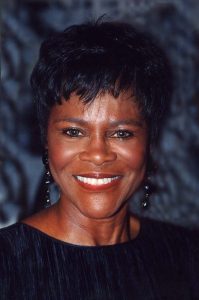
Cicely Tyson, 1997. Photo: © John Mathew Smith.
By Steve Beard —
“We don’t have long here, children. Our hopes and aspirations may feel limitless, but our days are finite, our experiences fading in the twinkling of an eye,” observed actress Cicely Tyson in her recent memoir, Just As I Am.
“Death is a love note to the living, to regard every day, every breath, as sacred. ‘What is your life?’ the scriptures ask us. ‘You are a mist that appears for a little while and then vanishes’ (James 4:14). The Spirit is ever beckoning us to heed that wisdom,” Tyson continued, “to get on with what we’ve been put here to do.”
Her autobiography was published one week before she died on January 28. She was 96.
Having stepped into more than 100 different acting roles over her illustrious career, Tyson was as mystically discerning about the characters she would portray as she was confident that God was authoring her “Grand Story Line,” as she called it. “I am a firm believer in divine guidance. Above all, I am God’s child, cradled in his unfailing arms, guided by his infinite wisdom,” she wrote. “Everything that is happening in my life is unfolding exactly as God has intended. There are no coincidences. Rather, there is a loving Savior who holds my future as securely as he does my life, and at every juncture, he is whispering his will, showing me the way.”
Don’t be mistaken into believing that a life with navigation from above is necessarily an easy one. Her story testifies to that. Although she was a celebrated model, actress, and activist, she suffered crass indignities and discrimination as a Black woman. Although her pioneering roles presented her with a public platform, she was simultaneously on the receiving end of the brutality of bigotry.
“To ever heal these deep racial traumas – and seldom has it felt more urgent that we do – we must acknowledge that they indeed still exist, throbbing and tender beneath the surface, spilling over, like molten rage, into the streets,” she wrote. “Turning a blind eye to our history has not saved us from its consequences.”
Through it all, Tyson’s persistent excellence at her craft helped her capture three Emmy Awards, a Tony, and an honorary Oscar. She appeared in more than 25 films, 60 television shows, and 15 Broadway productions. She was honored by the Kennedy Center and awarded the Presidential Medal of Freedom.
Tyson believed that the arts could truly be a force for good and expand the civil rights vision. “My art had to both mirror the times and propel them forward,” she wrote. After the assassination of Dr. Martin Luther King Jr., Tyson was the co-founder of the Dance Theater of Harlem. In 1995, a magnet school in East Orange, New Jersey, was renamed the Cicely Tyson School of Performing and Fine Arts.
“I couldn’t have dreamed up a script more compelling than the one that played out for me,” Tyson wrote. “Who just happens to be approached on the street by a total stranger, only to have that man propose modeling, only to have that modeling work become a footbridge to the stage? To some, this might look like happenstance, a sequence of coincidences, a string of disconnected flukes. As I see it, my tide shift, my sharp turnaround, had the Savior’s handprints all over it. His sovereignty was apparent to me. It still is. The same Master who holds the firmaments in the crease of his palms, who commands oceans to recede, who maintains humanity’s entire existence with the mist of his breath – that God, the Source of time itself, the Creator of all life, has forever been directing mine.”
Just As I Am is not a conventional Christian bookstore devotional. That is not its intent. The confident testimony that appears is from one who grimaced through the broken marriage of her parents, her own unwed pregnancy, and her tumultuous romantic relationship with jazz legend Miles Davis. Through shipwrecks and sunrises, she consistently testified to the faithfulness of God.
At twelve, she began playing songs from the church hymnal on the piano. “During long afternoons as the sun’s mango rays painted shadows on our walls, I’d sit hunched over those chipped keys, soothing myself with the message of the hymn that has become my daily meditation: ‘Just as I am, without one plea/ But that Thy blood was shed for me/ And that Thou bid’st me come to Thee/ O Lamb of God, I come! I come.’”
Strong roles. As an actress, Tyson was outspoken about refusing to take parts that demeaned Black people – even if it meant going without work. The roles she did chose, however, accentuated her brilliance. In 1972, she portrayed Rebecca, the wife of a Louisiana sharecropper in Sounder. Tyson won an Emmy for her portrayal in “The Autobiography of Miss Jane Pittman,” culminating in an unforgettable scene when she sips from a whites-only drinking fountain. Over the years, she played Harriet Tubman, Coretta Scott King, and Castalia in the mini-series “Oldest Living Confederate Widow Tells All.”
In 1977, she became part of television history by playing Kunta Kinte’s mother in the TV series based on Alex Haley’s “Roots.” Airing over eight consecutive nights at the end of January 1977, the series blew apart the Nielsen ratings. At that time, the final episode became the most-watched TV production with 51.1 percent of all American homes tuning in for the epic story.
Fast forward through her seven-decade career and, at the age of 88, Tyson became the oldest person to win a Tony award in 2013 for her role as Mrs. Carrie Watts in the Broadway revival of Horton Foote’s “The Trip to Bountiful.” One notable part of Tyson’s performance triggered a newsworthy Broadway reaction when the audience joined Tyson in singing the classic hymn “Blessed Assurance” during the second act.
“From the first note, there’s a palpable stirring among many of the black patrons in the audience, which the play, with its mostly black cast, draws in large numbers,” reported The New York Times. “When Ms. Tyson jumps to her feet, spreads her arms and picks up the volume, they start singing along. On some nights it’s a muted accompaniment. On other nights, and especially at Sunday matinees, it’s a full-throated chorus that rocks the theater.”
The gospel song was a special touchpoint for Tyson. She dedicated a third-row pew at Abyssinian Baptist Church in Harlem, her home congregation, to her mother’s memory. The plaque reads, “To mother – Blessed Assurance,” a reference to the beloved hymn.
“On Sundays when I take my seat near her name, I think of all she endured, the many times she surely wanted to give up but pressed onward,” Tyson writes in her book. “I recall her swaying, eyes tightly shut, as the words of that hymn washed through her. ‘This is my story, this is my song,’ she’d belt out during the refrain. ‘Praising my Savior, all the day long.’ Her powerful testimony, grounded in grace and nourished in glory, has since become my own.”
At the age of 93, she gave a message to her home congregation about her religious upbringing. “We were in church from Sunday morning to Saturday night,” she said to laughter in the sanctuary. She played the organ, taught Sunday school, led the choir, and cleaned the church. “I decided at one point that if I ever lived to become a woman, I would never enter the portals of a church again,” she said jokingly – once again, to sustained laughter.
However, the magnetism and solace of faith proved to be almost irresistible. “I look daily toward heaven for restoration, for spiritual healing,” she wrote in her book. “My true identity isn’t rooted in our history, grievous and glorious as it is. It is grounded in my designation as a child of God, the daughter of the Great Physician. In his care, I find my cure.”
Rest in peace, Sister Cicely. Rest in peace.
Steve Beard is the editor of Good News.
by Steve | Mar 18, 2021 | Magazine, Magazine Articles, March/April 2021

Photo from iStock.
By Carolyn Moore-
Thinking back only two years ago, it is hard to imagine that wearing a medical mask could have become a national political conflict. And if someone had told me only a year ago that my faith would be called into question because I suspended in-person worship for three months during a worldwide pandemic, I would have smirked at such Orwellian nonsense and suggested a twelve-step group.
And yet, here we are. These are strange days indeed, as this crisis has frayed the national fabric and exposed the depth of our political and spiritual divide. But as with most things, there is an opportunity here to bring beauty from ashes. In a country fighting – literally fighting – for its life, Christians have a choice to make about our allegiance. Who is our King? Where is our country? What defines our worldview?
We are not the first to need such redefinition. In the New Testament, Peter’s letter to the Christian communities scattered across Asia Minor (a region that would fall inside Turkey’s boundaries today), was written to folks enduring deep and worsening tribulation. Peter’s letters were meant to encourage and inspire them to see themselves not as pawns of the state but as citizens of an alternate Kingdom. Although the world – and in particular the Roman Empire, the dominant earthly power in their world – did not value or want them, God did. And not only that, but God could offer them a country of their own, a worldview that would endure beyond an empire, and a King who loved them, chose them, and had plans for them.
In an age when the emperor was often considered to be a kind of god and a force to be feared, and allegiance was expected without question, Peter’s message was radical. Yet, into that very culture Peter would boldly speak the language of choice and rejection, priming his audience to hear that a choice to follow one empire was a choice to reject another, and that in fact they had already been chosen by one who had already been rejected by the very world that was now rejecting them.
In his letter, Peter would quote Psalm 118:22: “The stone the builders rejected has become the cornerstone” (1 Peter 2:7). Jesus would wield the same verse as a warning to the Pharisees: by rejecting Jesus, they were rejecting the Kingdom of God (Matthew 21:42). Peter would proclaim that this One, though rejected, has become the reigning King. Those who follow him would become citizens of his Kingdom and his gospel would become their worldview.
A citizen of this Kingdom would be known not by party affiliation but by supernatural transformation: “You are a chosen people, a royal priesthood, a holy nation, God’s special possession, that you may declare the praises of him who called you out of darkness into his wonderful light. Once you were not a people, but now you are the people of God; once you had not received mercy, but now you have received mercy” (1 Peter 2:9-10).
Every word in this passage deserves its own exegesis, but for our purposes we will focus on what it means to be chosen as a special possession. Our Wesleyan ears should hear again that chosenness is our theological inheritance, too. It is the gift of a life that has been fundamentally altered to reflect an other-worldly character, resulting in an other-worldly allegiance – in the world but not of it. And it is the leaven that works its way through a culture to fundamentally transform it into God’s special possession as well.
Chosen. A naturally competitive world teaches us to eye each other with suspicion and vie for our place. That spirit creates panic-runs on the grocery store and causes us to pull in and care only for “us and ours.” Chosenness is a critical quality of a Kingdom citizen. It was the missing piece in John Wesley’s spiritual life that – once discovered – changed the trajectory of his ministry and sparked a global revival.
Augustus Spangenberg once asked John Wesley if he knew Christ, only to have Wesley respond academically, “I know He is the Savior of the world.” Spangenberg pressed him on that point. “But do you know yourself?” That question exposed an interior world of self-doubt that plagued Wesley’s spiritual life and ministry effectiveness. 
The conversation with Spangenberg laid the groundwork for a later encounter with the Holy Spirit, after which Wesley could finally embrace the truth of his own personal chosenness. “I felt that I did trust in Christ and Christ alone, and an assurance was given me that He had taken away my sins, even mine …” (emphasis added).
Knowing ourselves as chosen not only allows us to conquer feelings of fear and spiritual inadequacy, but fundamentally shifts how we engage the world around us. We can operate from a secure place, our identity rooted in a firmer foundation than the shifting sands of partisan politics. When we know ourselves as chosen, we can empathize with the pain of others without feeling ourselves diminished in the process.
Jesus’s word to his followers that they were like a city on a hill or a lamp on a stand is a good word for us who worry that we are not enough. When a lamp gives off light, it isn’t diminished by that. Unless it burns out, it keeps giving light at the speed of light, even if everything around it is darkness. When we know ourselves as chosen and not in some way depleted, we can love, share, serve, and listen to understand, and yet be undiminished by all we give. We only increase the circle of illumination around us.
Royal. Peter goes so far as to qualify our chosenness as royal. We are children of the King. In a brutal, competitive, me-first world, Kingship is often acquired or defended by taking the lives – shedding the blood – of challengers. Meanwhile, Jesus is the anti-king-of-the-hill king. Rather than a tyrannical monarch who kills to gain power, King Jesus gave his blood away. When we allow his royal blood to course through our veins, we become members of his household with all the rights and privileges afforded to royalty. When we know ourselves as royal, we begin to see our needs as covered by virtue of our place in the royal family.
By calling Jesus’ followers “royal,” Peter shapes a new definition for citizenship. “Once you had no identity as a people; now you are the people of God. Once you had not received mercy but now you have received God’s mercy” (1 Peter 2:10). As children of the King, we have inherited all the rights and privileges of a royal family. In biblical terms, we are holy; and yet, we are not called to hold ourselves out from the world but to invite others into the Kingdom of God.
“Your task is to find the symbolic ways of doing things differently, planting flags in a hostile soil, setting up signposts that say there is a different way to be human,” writes British biblical scholar N.T. Wright. “And when people are puzzled at what you’re doing, find ways – fresh ways – of telling the story of the return of the human race from its exile, and use stories as your explanation.”
As royalty, we have the right, responsibility, and pleasure of inviting the world out of exile, introducing it to its alternate story of an in-breaking Kingdom that will never end.
God’s own possession. The Greek word Peter uses for “special possession” – peripoiesis – is fire-breathing. We find this word used five times in the New Testament and with various nuances of meaning. It can mean “a purchased possession,” but it is also used to talk about obtaining salvation. Where we see it used in that way, it is as if God is obtaining salvation for us, rather than us obtaining it for ourselves.
This word teaches us something about how God comes for us. He comes to buy us back, to provide a kind of protection, to get us out of bondage. And yet, peripoiesis is even more than that. Peri means “around.” Possession in this sense is literally God drawing a circle around us, as if to say, “This one is mine.” The word radiates the truth of our chosenness, of our regal status.
God has come for us, has drawn a circle around us, has claimed the ground around us as Kingdom soil and us as Kingdom citizens. There seems to be muscle behind this word, a sense not only of coming after us but of snatching us out of the hands of our enemies. Peripoiesis is the Great Lion of Judah hearing our cries and knowing our trouble and coming to stand guard over us until the enemy has passed by. Surely this is the spirit of Paul’s words to the Corinthians. “You are not your own, for you were bought with a price” (1 Corinthians 6:19-20).
Inside that word – peripoiesis – is the word poiesis. In philosophy, poiesis is “the activity in which a person brings something into being that did not exist before,” observes theologian John Polkinghorne. Or as Peter would say in this same verse, God has called us out of darkness into his marvelous light (1 Peter 2:9). When God, who creates new things out of nothing, possesses us and draws us into Kingdom citizenship, he introduces something new into the world, almost as if uncovering a treasure buried in a field.
“Christians are the insiders who have diverted from their culture by being born again,” writes theologian Miroslav Volf. “They are by definition those who are not what they used to be, those who do not live like they used to live. Christian difference is therefore not an insertion of something new into the old from outside, but a bursting out of the new precisely within the proper space of the old.”
And why does God so transform us in this way? So we can declare his praises. As citizens of the Kingdom of God, our work is to declare the praises of our King and to reject anything other than the Kingdom of God as our highest priority and only allegiance. It is not ours to determine whether one party or another (or even one country or another) is more or less holy. The unshakable Kingdom of God is our country, and we are Kingdom people – royalty with power to inform and transform the community and world in which we live, vote, speak, act, and have our being.
King Jesus is our leader, a just and holy God who demands and deserves our absolute allegiance through faith and works. His gospel is our worldview and platform; it informs our every choice. Let that guide our every public comment and private musing as we navigate a volatile culture in desperate need of transformation.
Carolyn Moore is lead pastor of Mosaic United Methodist Church in Evans, Georgia. In addition to being a sought after speaker, blogger (artofholiness.com), author of several books, including Supernatural: Experiencing the Power of God’s Kingdom (Seedbed), Dr. Moore also serves as the chair of The Wesleyan Covenant Association’s Global Council. This essay first appeared at Firebrand (firebrandmag.com) and is reprinted here by permission.
by Steve | Mar 18, 2021 | Magazine, Magazine Articles, March/April 2021
 By Zim Flores –
The book of Jonah chronicles a man of the same name who rebelled against the instructions of God and fled from Nineveh. He was tossed into a tumultuous sea, only to be swallowed by a giant fish that God had appointed. Inside the fish’s belly, Jonah was faced with a decision: he could either force his way out of the fish – gutting it from the inside out – or he could embrace the stillness.
The situation couldn’t have been comfortable for Jonah. It was probably terrifying. He probably felt stranded, trapped on all sides even. But as he prayed to God, he didn’t pray for deliverance, like many would have.
It was only while being still, inside the fish, that he received revelation. There he was, trapped in the belly of this creature for three days and three nights. Instead of trying to escape, he made a declaration. He acknowledged his own shortcomings and thanked God, offering up a sacrifice of praise and proclaiming that God had the final say.
In times like these, it’s important that we don’t find ourselves desiring deliverance more than revelation. Sometimes, when we don’t understand what’s happening around us, we just want the pain to stop. But wanting out too early simply evades the process that God wants us to go through. It eliminates the growth we’ll experience if we stay the course.
There are countless examples of men and women of God being put to the test. But what is most noble and notable about their stories isn’t of their escape; it’s what happened when they endured.
As much as we desire the rescue, we have to find comfort in the discord. Refusing to gut the fish means that we’re committed to the assignment God has for us.
When Jonah was delivered from the belly of the fish, he wasn’t regurgitated into the ocean to fend for himself. He didn’t have to swim miles back to shore. Even though he was tossed into the ocean in the middle of a storm, Jonah was delivered onto the safety of the shore. Jonah was delivered on firm ground with a fresh revelation of his assignment. “Then the word of the Lord came to Jonah the second time, saying, ‘Arise, go to Nineveh, that great city, and call out against it the message that I tell you’” (Jonah 3:1-2).
The Darkest Hours. Even in our darkest hours, we are still under the protection of the Lord. We will never understand our purpose if we always gut the fish.
Choosing not to gut the fish is perhaps the most grueling part of it all. We know that God sees what’s happening, and sometimes it seems like cruel and unusual punishment. But how else will God grow us?
No matter how painful or how terrified we are of the unknown, we have to remember that our former lives weren’t necessarily better. They were just different. When we find ourselves dwelling on the simpler days, we should remember Isaiah 43:18-19, which says, “Remember not the former things, nor consider the things of old. Behold, I am doing a new thing; now it springs forth, do you not perceive it? I will make a way in the wilderness and rivers in the desert.”
Those who stayed in the midst of their challenges benefitted from a full restoration of God’s promise in their lives.
• Joseph was a dreamer who was sold into slavery, but later became a ruler over Egypt.
• Job had everything taken from him, but never cursed God. In the end, his riches were completely restored – and then some.
• David was a shepherd boy who became the king of lsrael.
• Esther was an orphan who became a queen.
• And Rahab was a prostitute who became an ancestress of Jesus Christ.
God wants to deliver us unto our purpose, but it’s up to us to stay the course.
Within the quiet moments of a tumultuous season, you’ll find the answers you need – as long as you don’t force your way out. Pause and praise. We can’t pray our way out of a silent season. But we can pray for the strength to endure and for an open heart to receive. That’s how we make it out to the glory of God.
God is a character-forming God. He turns our times of transition into testimonies for His glory.
The word selah is mentioned roughly seventy-four times in the Bible. Although its exact meaning is unknown, many scholars agree that its meaning necessitates two things: a pause and a praise. Selah then becomes the conduit by which we learn to appreciate the many transitions of life, whether planned or not. When we think about the goodness of God, we cannot fully do so without pausing to reflect on the many ways that he has shaped our lives and saved us from the devices of the enemy. 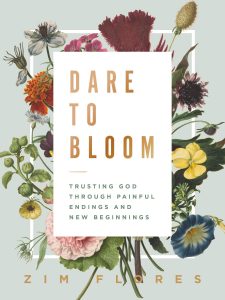
The moment praise dwells on our lips, God is in the midst. The Bible says that God inhabits the praises of his people (Psalm 22:3). Pausing and praising doesn’t just change our hearts, it transforms our minds. When we thank him for the things he’s already done, what he has chosen not to do in our lives begins to fade into the distance.
The reality is that faith in the middle of suffering looks a lot different than faith in the testimony. Faith during our testimony is polished. It speaks of an undeniable, unshakable faith in the goodness of God and his sovereignty. But faith in the middle of our suffering asks questions. It doubts. It can be angry. As we go through new challenges, we realize that faith isn’t pretty. It’s ugly. It’s hard. It can break us. And our lack of it can turn us away from God.
Faith requires a pause. And let’s be honest: no one likes waiting. We wait in long lines. We wait in traffic. We wait for the perfect relationship. We wait months for our babies to arrive. Pausing without praising leaves room for the enemy to introduce tactics of deceit and confusion. An idle mind breeds more contempt.
Think about what we’ll be able to do for God’s Kingdom if we master the art of pausing and praising. Selah means that we are actively positioning ourselves to receive God’s best. It means that we acknowledge God’s direction and timing in our lives. Faith is important. In fact, the Bible says that it is impossible to please God without it (Hebrews 11:6). Imagine your life if during every trial you had absolute confidence that God was with you. Or imagine your response if you knew God was working within the details to leverage everything for your good.
Faith grows from being tested and enduring. We grow from faith to faith; we don’t just magically start with tons of faith in God. According to Romans 12:3, God gives everyone a measure of faith. As Christians, it is then our responsibility to continue to grow in it.

This is not to say that there is always a reward for your pause and your praise. Perhaps it simply means that God will change your heart about that very thing you thought you wanted. When Jesus and the disciples were in a boat that was caught in a big storm, Jesus took a nap while the disciples were beside themselves. They woke him up to ask him to save them. Matthew 8:26 says, “And he said to them, ‘Why are you afraid, O you of little faith?’ Then he rose and rebuked the winds and the sea, and there was a great calm.”
By sleeping through the storm, Jesus was saying that we can trust him even in the middle of it. When we pause without praising, we become hasty. We get impatient. We try to take matters into our own hands to try and help God out. When we choose to stay where God places us, we continue to work as unto the Lord, prioritizing our relationship with him as we serve others.
It may not be our fault that we’re in a given situation. It’s not our responsibility to figure out what got us there. But it is our responsibility to bloom where God plants us if we dare. Everything that we go through is meant for the greater assignment that he has for us: to be more like him. If our life is a staircase and Jesus is on the top step, with every gutted fish, we take a step backward. But God holds us there in his grace. We are already redeemed by his blood. And with every season we stay in the belly of the fish, we take a step toward our purpose.
Zim Flores is the author of Dare to Bloom: Trusting God through Painful Endings and New Beginnings. An entrepreneur, Zim is the founder of Italicist, an online styling service, and is a Forbes “30 Under 30” awardee. (c) Zim Flores. Adapted by permission of Thomas Nelson.