
by Steve | Sep 1, 2023 | In the News, Perspective / News
A Collapsing “Big Tent”?
By Thomas Lambrecht
Throughout this season of disaffiliation, many United Methodist bishops and leaders have attempted to convince traditionalists to remain in the denomination. They have assured traditionalists that there is a place for them in the UM Church and that their views would be respected. Some annual conferences have developed a culture of inclusion that enables traditionalists to participate equally. Other annual conferences – not so much.
Two current examples illustrate the eagerness of some bishops and conference leaders to exclude or punish traditionalist leaders.
Traditionalist Leader Removed from Standing Committee
On August 19, Simon Mafunda, a layperson in Zimbabwe, Africa, received an email notifying him that the (East) Africa Central Conference College of Bishops (the five bishops serving in eastern and southern Africa) had removed him from membership on the Standing Committee on Central Conference Matters. Mafunda has been a General Conference delegate and a member of the Standing Committee since 2016. He also served as lay leader of the Zimbabwe East Conference, elected as such by the annual conference members.
Bishop Daniel Wandabula, president of the College of Bishops, alleged in the email that Mafunda no longer represented the interests of the (East) Africa Central Conference because he is serving as the Vice President for Africa Strategy for the Wesleyan Covenant Association. Wandabula gave no specific example of how Mafunda has failed to represent the central conference in his work on the Standing Committee. Mafunda was removed from the committee and a replacement named by the College of Bishops in time for the next meeting of the Standing Committee, which took place the same day Mafunda received the email.
There is no provision in the Book of Discipline allowing a College of Bishops to remove someone from a committee of the church. Mafunda was named to the Standing Committee by the Council of Bishops (all the bishops serving in the denomination) and ratified by vote of the General Conference. The College of Bishops had no official role in naming Mafunda and has no official role to remove him from the committee.
The Standing Committee itself has the authority under Par. 711 “to remove and dismiss at their discretion any member, officer, or employee thereof:
- Who has become incapacitated so as to be unable to perform official duties.
- Who is guilty of immoral conduct or breach of trust.
- Who for any reason is unable to or who fails to perform the duties of the office or for other misconduct that any council, board, committee, or commission may deem sufficient to warrant such dismissal and removal.”
It is notable that the Standing Committee did not take this action to remove Mafunda. They did not find his participation on the committee to be a “breach of trust,” nor did they find him unable to perform his duties on the committee.
The College of Bishops does have the authority to fill a vacancy on the Standing Committee (Par. 712), but they did not have the authority to create the vacancy in order to fill it.
It is surmised that the bishops removed Mafunda from the Standing Committee in order to smooth the way for approval of the petitions for regionalization. Mafunda had been an outspoken opponent of the Christmas Covenant and other regionalization proposals. His removal allowed the Standing Committee to approve the latest version of the regionalization petitions without opposition.
The (East) Africa College of Bishops seems very selective about what they consider the interests of the central conference. They removed a strong traditionalist leader who has been an advocate for the current Book of Discipline. At the same time, they had nothing to say about the fact that Kenya now has two Reconciling Congregations, one of which was personally dedicated by Bishop Wandabula himself. The designating of a congregation as a “Reconciling Congregation” has been illegal under church law since 1999 (Judicial Council Decisions 847 and 871). Yet, Wandabula was allowed to promote something that is illegal, while at the same time also violating church law in removing a member of the Standing Committee.
It seems that the traditionalist position is not welcome in the (East) Africa Central Conference among its leaders.
North Georgia Vindictiveness
North Georgia Conference leaders were already in a questionable position after “pausing” the disaffiliation process for all churches at the end of 2022. Only a court ruling in response to a lawsuit filed by 190 churches forced the conference to reopen the process for disaffiliation. At this point, some 250 churches have voted to disaffiliate in North Georgia.
The First United Methodist Church of LaGrange, Georgia, failed its disaffiliation vote by 13 votes. The conference pulled out all the stops to keep that church in the fold. They sent in the conference chancellor, five former pastors of the congregation, three college presidents of LaGrange College, and others to advocate for the church to remain United Methodist. Despite the pressure, 64 percent of the 535 ballots cast favored disaffiliation. It missed the required two-thirds vote by 13 ballots.
The week after the vote, a prayer meeting was held to promote healing and unity in the congregation. The district superintendent recruited another pastor to attend the prayer meeting and video record it. At the conclusion of the prayer meeting, that pastor verbally and publicly confronted both the senior and associate pastors of LaGrange First, yelling, “If you had any integrity, you would resign from The United Methodist Church.”
The following Sunday, the senior pastor, the Rev. Dr. John Beyers, preached a conciliatory sermon indicating his hope that the church could continue its ministry and that it could be a strong traditionalist voice within the North Georgia Conference. At the same time, nearly 250 members of the church met in a Baptist Church gym to start a new Global Methodist congregation.
This past Sunday, it was announced that Beyers had been suspended by the bishop and conference board of ordained ministry. One of the former LaGrange College presidents was appointed as the interim pastor. In keeping with the suspension, Beyers was forbidden any contact with church members and barred from the church campus.
Highly unusually, all administrative committees of the church were also suspended from meeting. This included the church council, Staff-Parish, Finance, Trustees, and Nominations Committees. All non-essential expenditures of money were also frozen. There is no provision in the Book of Discipline allowing the annual conference to shut down the operation of lawfully elected leaders of a local church, unless the conference has declared “exigent circumstances” and is closing the church. So far, that has not been the case here.
Chris Ritter reports that “Dr. Beyers is a distinguished member of the World Methodist Council, a trustee of the historic Epworth Rectory, and widely respected as a center-right presence in the UMC.” He has served in ministry for 35 fruitful years. Beyers had also recently been hospitalized for a serious medical condition. He serves as a member of the Good News board.
It is unknown what would prompt North Georgia leaders to treat a respected traditionalist leader in such a callous way, or what would justify the conference’s illegal and heavy-handed attempt to wrest control of a local church away from its elected leaders, especially in a church where the conference won the vote! The church is remaining United Methodist, and there is nothing its traditionalist members could do about that. Yet the conference still came down hard on that congregation.
The interim appointed pastor, The Rev. Dr. Stuart Gulley, had advocated for the congregation to remain UM by stating, “Ten years from now, I fully expect that positions on homosexuality, like with slavery a century ago and women’s ordination over a half century ago, will have evolved to the point that few people will hold that homosexuality is contrary to biblical teaching.” Gulley certainly reflects the direction conference leaders want to take the church in North Georgia. Based on the conference’s actions, it appears there is no longer any room for a traditionalist voice in that conference.
In her announcement of Beyers’ suspension, the church’s Staff-Parish Relations Committee chair said, “Doctor Gulley is prepared to lead you, in his own words, on ‘the right side of history.’ But as for me and my household, we shall serve the Lord.” She then walked out of the service, accompanied by about a dozen other members.
Sadly, power plays by bishops and annual conference leaders will make many traditionalists believe they, too, have no longer any place in the UM Church. It makes one question whether the “Big Tent” approach to Methodism is sustainable.
Thomas Lambrecht is a United Methodist clergyperson and vice president of Good News. Image: Shutterstock.
by Steve | Aug 29, 2023 | In the News, Perspective / News
Contrasting Views of Scripture
By Thomas Lambrecht
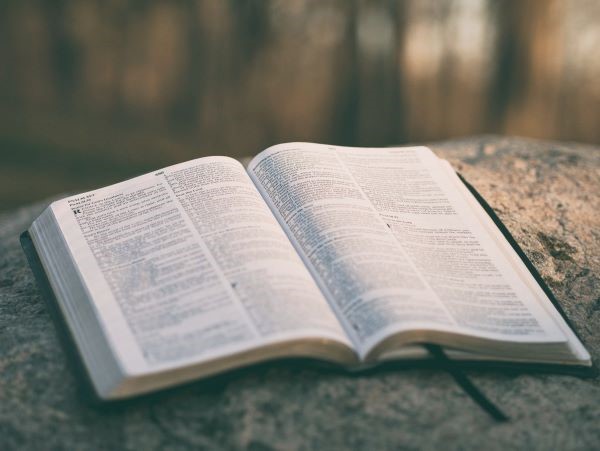
The essence of the conflict currently roiling The United Methodist Church is a disagreement over the teaching and authority of Scripture. This disagreement is manifested in the church’s attitude toward same-sex romantic relationships. But the reason that traditionalists are unwilling to compromise on the historic teaching of the church on the definition of marriage and the proper sphere of human sexual expression is that such a compromise seems to us to violate the clear teaching of Scripture. In the progressive view, either Scripture does not mean what it says about these issues, or there is another authority that is higher than Scripture for what Christians should believe and how we should live.
A recent blog post on the progressive United Methodist site, UM Insight (edited by Cynthia Astle), featured a ten-point summary of a progressive view of Scripture. Written by Ashley Anderson, otherwise unidentified in the article, the summary outlines a series of “revelations” in response to her “reading the sacred scriptures of the world’s religions,” as well as “conversations with people who belonged to other faiths.” The points she pens apply to all the various sacred writings of the world’s religions, including Christian Scripture.
All progressives may not share Ashley’s perspective on Scripture. But I have heard and read similar ideas often enough that I believe there is a common viewpoint held by many progressives that aligns with Ashley’s summary. The virtue of Ashley’s summary is that it puts the points in a very clear and succinct way that enables us to contrast this particular progressive view with the traditional understanding of Scripture held by the church through most of its history.
What is Scripture?
The summary begins, “All religious scriptures are the words of humans about God, not God’s words to humans. They were written by humans no holier than you or I” [sic].
This poses the basic question, “Is the Bible the self-revelation of God (God’s Word) or simply a record of what people thought were their experiences with God?” If it is the latter, then the Bible carries only the weight of authority we might give to the advice of a good friend. It certainly would not bear the weight of forming the basis for a whole religious and theological system, let alone being a reliable guide as to how to live and have a relationship with the living God.
The EUB Confession of Faith, one of our doctrinal standards, says this about the Bible, “We believe the Holy Bible, Old and New Testaments, reveals the Word of God so far as it is necessary for our salvation. It is to be received through the Holy Spirit as the true rule and guide for faith and practice.”
Most traditionalists believe the Bible not only reveals the Word of God, but it is the Word of God. Some would go so far as to say the Bible is without error in all that it teaches. Others would allow for inconsequential errors in things like numbers or limited historical data. All would agree that the Bible is the infallible guide to the way of human salvation, including who God is and how we can relate to him in a personal way.
Some traditionalists would say that every word of the Bible was dictated by God. Certainly, there are large chunks of Scripture that purport to quote God’s exact words, including in the law of Moses and in many of the prophets. The Gospels purport to record the words of Jesus. These sections undoubtedly are the exact words of God/Jesus. Many traditionalists would say that the rest of Scripture, while not directly dictated by God, was inspired by God, so that the human authors, working out of their own culture and experience, conveyed the truth from God in the language and idioms they were familiar with.
The key verse traditionalists point to is 2 Timothy 3:16, “All Scripture is inspired by God and is useful to teach us what is true and make us realize what is wrong in our lives. It corrects us when we are wrong and teaches us to do what is right.” The early church designated which books are considered part of the Bible. All these 66 books are inspired by God. While their authors may not be perfectly holy, they were used by God as instruments to convey his truth to the world. (And some of them were very holy and righteous people!)
Is the Bible authoritative for how we are to live?
Ashley Anderson’s progressive summary says, “Not all the advice given in scriptures is worth following and not all the rules given in them are worth obeying.”
The UM Confession of Faith says, “[The Bible] is to be received through the Holy Spirit as the true rule and guide for faith and practice.” It goes on to say, “Whatever is not revealed in or established by the Holy Scriptures is not to be made an article of faith nor is it to be taught as essential to salvation.”
Does that mean that every word or command of Scripture is to be obeyed now in our time in the Christian church? No. The real question is, how are we to know which parts of the Bible still apply to us today?
The UM Articles of Religion, which are also part of our doctrinal standards, says, “Although the law given from God by Moses as touching ceremonies and rites doth not bind Christians, nor ought the civil precepts thereof of necessity be received in any commonwealth; yet notwithstanding, no Christian whatsoever is free from the obedience of the commandments which are called moral.”
The church distinguishes between ceremonies and rites of worship commanded in the Old Testament, civil precepts that governed the nation of Israel, and moral teachings and commandments. The death and resurrection of Jesus made the Old Testament sacrificial system unnecessary. And the church is not a government, so it need not follow the rules laid out for how the national government of Israel was supposed to function in the Old Testament. Jesus himself abrogated the rules about kosher foods (Mark 7:19). Therefore, the church no longer follows the ceremonial, civil, or food laws of the Old Testament. Even so, however, these laws often contain principles that can be instructive for Christians, and we should not just ignore them.
The church does acknowledge the continuing authority of the moral commandments, those teachings that lay out the “principles concerning the distinction between right and wrong or good and bad behavior,” as the Oxford dictionary puts it. The laws about marriage and human sexuality unquestionably fall into this category.
The point is that individuals are not equipped to go through the Bible and pick and choose which “advice” or “rules” apply to us. The church has established guidelines about which types of teachings are still applicable, and there is a long tradition of how these teachings are to be applied in our lives. Coming to a conclusion about whether a certain teaching is still applicable today is a determination made by the church as a whole, informed by biblical scholarship and theological reasoning. And it has to be rooted in the various categories listed above. The Ten Commandments are still in force!
Is the Bible to be trusted?
Anderson’s progressive summary states, “People who claim to have been chosen by God to give final and definitive messages to humanity should not be trusted, especially with children.” Leaving aside the snarky humor in that point, I guess that leaves Jesus out of the equation.
Jesus said, “I am the way, the truth, and the life. No one can come to the Father except through me.” And, “Anyone who has seen me has seen the Father” (John 14:6, 9). Jesus was pretty clear that he was sent by God the Father to reveal him to humanity. As the writer to the Hebrews says, “Long ago God spoke many times and in many ways through the prophets. And now in these final days, he has spoken to us through his Son. … The Son radiates God’s own glory and expresses the very character of God” (Hebrews 1:1-3). As Paul put it from the ancient Christian hymn, “Christ is the visible image of the invisible God.”
The essence of the Christian faith is that Jesus is the way to the Father (not just one way among many). He teaches and embodies the truth about God and about humanity. He gives us life in the here and now, as well as throughout eternity.
How do we know these things? How do we know what Jesus said? In those hackneyed words, because “the Bible tells me so.” If we do not trust the Bible, there is no way we can trust Jesus. We have no way of reliably knowing Jesus outside the written words of Scripture. The good news is that the Bible has been proven true time after time. Whether it is an archaeological confirmation of some recorded historical detail, or the wisdom of finding salvation through faith in Jesus Christ, the Scriptures are trustworthy.
Ultimately, to not trust the Bible is to instead trust our own wisdom and understanding. It is we who would determine what we believe from the Bible and what we would reject. It is we who would decide what we think God is like, who Jesus is, and how we can please God (if we think we even need to do that!). It becomes the religion of me, instead of the Gospel, the Good News of Jesus Christ that has been proclaimed and lived for 2,000 years and has transformed countless lives and changed the course of human history. In the end, it is to put ourselves in the place of God, making our understanding of God match our own image. Surely, that is the ultimate idolatry.
The progressive tendency to downplay the reliability and authority of the Bible and elevate human wisdom and experience (“follow the science!”) has proven to be a blind alley throughout human history. The contrasting perceptions of Scripture are the real issue at stake in our Methodist separation. This is why most traditionalists believe we are dealing with bedrock issues of faith, not simple disagreements about peripheral issues. It is why it was found necessary to separate from United Methodism, despite the cost and the conflict, and to begin the Global Methodist Church founded explicitly on the foundation of an infallible, trustworthy Bible and a consensual tradition of its interpretation throughout church history.
Thomas Lambrecht is a United Methodist clergyperson and vice president of Good News.

by Steve | Aug 25, 2023 | In the News
Supporting Maui Relief —
We know that Methodists of all stripes are generous people when there is a tremendous need. If you have been watching the news over the last few weeks regarding the tragic and heartbreaking fires in Lahaina town on Maui and are looking for ways to contribute to faith-based ministries, please consider one of these three avenues.
1. Samaritan’s Purse. You can contribute HERE. You can read about Samaritan’s Purse’s ministry on Maui HERE.
2. The Lahaina United Methodist Church. Sadly, the historic sanctuary of Lahaina United Methodist Church was destroyed in the fire. Contributions can be made directly to the congregation HERE. The congregation can receive checks sent to LUMC, 142 Baker St., Lahaina, HI 96761, payable to Lahaina United Methodist Church. Written checks can be made payable to “HUMU” with the memo as “Lahaina UMC Donation” and mailed to the Hawai`i District Office, 20 S Vineyard Blvd, Honolulu, HI 96813. Individuals can also contribute through the Lahaina Relief Fund at calpacumc.org/donate.
You can read Sam Hodges’ UM News article “United Methodist connection at work for Maui” HERE.
3. The Salvation Army. Reliable and beloved, the Salvation Army provides food, emotional and spiritual care to survivors of the Maui wildfires. It uses 100% of all donations designated “disaster relief” to support disaster operations.Contributions can be made HERE.
Photo by Steve Beard. (Lahaina was the royal capital of the Kingdom of Hawaii from 1820 to 1845.)

by Steve | Aug 23, 2023 | Features, Home Page Hero Slider, Sept-Oct 2023
Editorial: More Hopeful Than Ever —
By Rob Renfroe —
I have enjoyed the reports coming out of Global Methodist annual conference meetings from all over the United States and Europe. Delegates report that the conferences have been filled with an air of excitement, anticipation, and joy. They state the meetings have the feeling of a revival and there is the sense that something new is being born and a fresh outpouring of the Holy Spirit is being experienced.
I have also listened carefully to those who have attended the last round of United Methodist Church annual conferences earlier this summer. The word I heard most often coming out of those meetings was “hope.” Some pastors and bishops have even stated they “now feel more hopeful for the United Methodist Church” than they have ever felt in the past.
I wish to state clearly that I pray God will bless the ongoing UM Church with a wonderful future. I pray he will so anoint the UM Church with his Spirit that it will be a church where the Gospel is preached with power, where many lost souls find a new life in Christ, and where acts of mercy and justice are so prolific that the goodness of God’s kingdom becomes apparent to everyone.
So, I pray great things, I wish great things, I hope great things for the ongoing United Methodist Church. But UM leaders who state they are more hopeful than they have ever been for the UM Church mean something more than that. They say they are now more hopeful than ever. Now, for them, is a different time, a better time, a more hopeful time than ever before.
What has changed recently? What’s different now from the last time UM annual conferences met? The change is that over 6000 traditional churches have disaffiliated from the denomination. That’s what’s different now.
The UM Church still has the same bishops; the same seminary professors; the same “open hearts, open minds, open doors” slogan; and the same willingness to allow bishops, pastors and seminary professors to teach a defective Christology, to promote a faith that is far from orthodox, and to bless lifestyles that are contrary to what the Scriptures approve.
The old adage states: Keep doing what you’ve done, and you’ll keep getting what you’ve gotten. And what the UM Church has gotten in the past has not been great. Since the UM Church was founded in 1968, its membership has never grown year over year. Not once. Not once in the past five and a half decades. From 1970 to 2021 UM membership in the United States has declined from 10.7 million to 5.7 million. And it’s getting worse. The loss of membership in 2021 (the last year before disaffiliation began in earnest) was greater than any other single year in the denomination’s history. That is, until 2022 when membership decreased by over 500,000.
I’m not hopeful for the UM Church’s future growth and I won’t be until evangelism becomes one of its chief priorities, until its pastors are given a thoroughly orthodox education at its seminaries, and until the entire denomination admits that the progressive values that have led the church to where it is now will not lead it to a better place in the future.
“But,” I’ve heard centrist and progressive leaders state, “once the traditionalists leave with their narrow-minded, bigoted beliefs, we UMs will be perfectly positioned with our message of grace to reach our culture.” Well, that’s a hope, but not one founded on what other mainline Protestant denominations have experienced. Many of them are far ahead of the UM Church when it comes to ridding themselves of their traditionalists and liberalizing their sexual ethics. What was the result? Their decline in membership, attendance and finances has continued, only at a more rapid rate than ever before.
Since affirming gay marriage and the ordination of practicing gay persons membership, in the Presbyterian Church (USA) has decreased by 20 percent and youth professions of faith by over 50 percent. Since making the same changes, The United Church of Christ has seen its membership decline by 30 percent. The Evangelical Lutheran Church in America has experienced such a rapid decline that its Office of Research and Evaluation projects that the whole denomination will have fewer than 16,000 persons in worship by 2041. Rather than seeing an influx of secular people since adopting a liberalized sexual ethic, The Episcopal Church (USA) has experienced a decrease in its attendance that is so dramatic that church growth expert the Rev. Dr. Dwight Zscheile wrote, “The overall picture is dire … At this rate there will be no one in worship by around 2050 in the entire denomination.”
What reason, what hope do UM leaders have that it will be different for the UM Church? Do they really believe that the UM pastors remaining in the UM Church are so spectacularly different from the pastors of our sister denominations that our story will be different when it comes to reaching the culture? Are our pastors more committed, more spiritual, more insightful, more compelling than the clergy in the PCUSA, the UCC, the ECUSA, and the ELCA? So different from the pastors of other liberal denominations that our team will crack the cultural code and we will be able to reach the masses where all the others have failed? That doesn’t sound like hope. That sounds like hubris.
Some centrist leaders have said, “Those who are leaving are primarily small churches. We hate to see them go. But losing them will not have a big impact on the denomination as a whole.”
It’s true most of the churches that have left the UM Church are small churches. That’s because most UM churches are small churches. Before the devastating impact of the pandemic on church attendance, fifty percent of all UM Churches had less than fifty persons in worship on a Sunday. Seventy-five percent had less than a hundred. The numbers are even worse now. To be honest the leaders telling people that most of the churches that are leaving are small churches need also to report that most of the churches remaining are small churches.
They also need to tell their followers that many of the denomination’s largest congregations have left. A partial listing includes three of the four largest in the Texas AC, the largest in the Rio Texas AC, and the largest in the Central Texas AC. The four congregations in Louisiana with the highest attendance have left, as well as the two largest in the Alabama-West Florida Conference. The largest church in North Georgia, Illinois Great Rivers and in Mississippi exited years ago. Two of the three largest congregations in North Alabama are out. The two congregations with the highest attendance in Oklahoma have disaffiliated, as well as the churches with the highest attendance in the Michigan, North Carolina, South Georgia, and the Northwest Texas Annual Conferences. The results are similar in other Annual Conferences, but these examples illustrate that those saying the churches that have exited are primarily small congregations are misrepresenting the truth of what has happened in the UM Church.
If the majority of the 6000 churches that have left are so small, why has the General Council on Finance and Administration proposed that the denomination’s budget for the next quadrennium be cut by 40 percent? That is an astounding number. That is an alarm bell loud enough to awaken all those who have ears to hear.
Membership is declining. Attendance is decreasing. Finances are struggling. And the plan is to blame the traditionalists, keep electing progressive leaders, double down on the liberal agenda that has brought the UM Church to where it is – and be hopeful.
Hope is a wonderful thing. But hope is not a strategy or a plan or a way forward. In fact, if it’s a blind “hope against hope” kind of hope, it can be a detriment to making the changes that need to be made.
Do I wish the UM Church well? I do. Am I hopeful for the UM Church? I want to be. But I can’t be until I hear its leaders deal with the real reasons it has declined for the past fifty-five years, acknowledge that something went very wrong when 20 percent of its churches and five of its bishops felt compelled to leave the denomination, and admit that maybe, just maybe, they are part of the problem.
Rob Renfroe is the president and publisher of Good News. Photo by James Barr on Unsplash.

by Steve | Aug 23, 2023 | Features, Sept-Oct 2023
Polishing the Golden Rule —
By BJ Funk —
It was a beautiful spring day as I prepared my kindergarten class for our Easter egg hunt. Outside my classroom were plenty of trees and bushes to hide eggs, and several of my parents were doing just that as I stayed inside and talked with my children. They brought their Easter Egg baskets to school, eagerly awaiting the happy moment when they could start hunting.
Most of the children had dressed for the hunt, wearing clothes that their mamas would not care if they got dirty. South Georgia dirt cleverly hides in the most secure places until a child finds it and then wears it.
“Fill up your basket,” I said, and with that we walked out to the playground.
Ten minutes into the hunt, I heard Mary crying. Not a shy little cry, but a loud bellowing. I got to her quickly. Fire ants? Skinned knee? No, it was neither of those things.
Mary was crying because she had not found any eggs. Not one. The children began running up to me calling out the number of eggs they had found, and then moving on to find more. Only two children remained by me. One was Mary, crying even louder, and one was Johnny, whose basket was filled to the top.
The two represented the contrasts in my classroom that year. Mary, who always dressed like a princess. Perfect hair flowing down her back in soft curls. Perfect dress, ironed to perfection with socks and shoes to match and with a large hairbow that perfectly matched her dainty pink laced dress. And Johnny, with hand-me-down shoes flopping as he walked because they were too large. Johnny’s T-shirt was old and wrinkled, which is the same way he came to school almost every day.
And then I saw an amazing thing. It was as if the ground beneath me became holy ground, as the sun fell on the three of us, its warmth softly playing the “Hallelujah Chorus” in the background. Time stood still.
Johnny walked up to Mary and without a word he began taking Easter eggs out of his basket, one at a time, and putting them in hers. He gave her half of the eggs in his basket. Mary stopped crying, and I almost started.
Johnny, without saying a word, demonstrated the Golden Rule: “Do unto others as you would have them to do unto you.” Does that mean when Johnny shared his eggs this time that Mary would then share with Johnny the eggs in her basket next time?
We wish it worked that way. But it doesn’t. This is how it works: When we treat others the way we want to be treated, something breaks inside of us, something hard and crusty, something like a dam, calling for us to treat others with fairness, not expecting them to return the favor.
We want to question Jesus with, “Why didn’t you put another clause in the Bible that states if the other person has hurt you over and over again, you don’t have to treat them like you want to be treated?”
But he didn’t. His command is always to love, and he doesn’t say anything about how the other person should act. There is nothing in this command that guarantees that the recipient of your doing good will do good back to you.
We are called always to do unto others as you would have them do unto you. As Christians, we are called to do the extra thing, to go above and beyond in treating others the way we want to be treated.
Why are we to follow this rule? Not so others will do good back to us, but because it makes us be like God, for this is how he acts. God sends the rain on the just and unjust. He is kind to the person who brings him joy, and equally kind to the one who grieves his heart. God’s love embraces the saint and the sinner.
The dynamic Golden Rule came to life for me that day, its clear message reverberating in my head. In my thoughts, I pulled out the Golden Rule in my life, checking to see if it was tarnished.
You don’t need to know. But I will say this. I’m having a Polishing Party at my home next week. You are invited.
B.J. Funk is Good News’ long-time devotional columnist and author of It’s A Good Day for Grace, available on Amazon. Artwork: bobysbk via Unsplash.