
by Steve | May 23, 2017 | Magazine, Magazine Articles, May-June 2017

The family of JT Olsen (second from left, top row), including his adopted daughter Gracie (center, bottom row). Photo: Both Hands.
By Courtney Lott-
What would you spend your entire life savings on? Would you buy a house? That car you always wanted? The flow of our money generally reveals where our hearts, our passions, our desires lie. It’s an easy thing to hold onto, like a security blanket, or to toss around with gravitas like a lotto winner. For JT Olson, founder of Both Hands, a faith-based nonprofit that serves orphans and widows, a life savings was something that could be used to save a life.
One of five children, Olson grew up on a small farm in Harper’s Ferry, Iowa. Together with his parents and paternal uncle, the family farmed 380 acres of what he describes as some of the most beautiful land in the entire state. Eight people in a 1,500 square foot home might have been tight, the hours baling hay long, and a half-mile trek to the bus stop (uphill and in the snow) grueling, but Olson also remembers having a lot of fun. Not many children can claim to be allowed to drive before having a driver’s license after all, even if it was just an Oliver tractor.
Then, at the age of twelve, everything changed. On the way back home from celebrating their 16th wedding anniversary, Olson’s parents were killed in a car accident. When his brother told him the news, he simply remembers hitting the floor and crying. “You just don’t realize how much a mom and dad stabilize you,” said Olson. “It’s just one of those things you kind of count on. I know what it’s like to be an orphan, to hear those words ‘mom and dad are dead.’ To wonder what’s going to happen to us, who’s going to take care of us, or where we’re all going to go.”
Fortunately for Olson, three months before the accident his parents had made plans for their children in case anything happened. Therefore, when tragedy hit, the five siblings found a new home with their aunt and uncle, but not before the community gathered around them to help with the farm. “I remember [getting] off the bus … and there were all our neighbors in our fields with their tractors and their plows and their planters and they were planting our crops,” Olson says. “It was like all my dad’s friends were taking care of us. And I realized, this is what you do.”

Jonathan and Amy Whitt and their adopted daughter, Emery.
That sense of community established a desire in Olson to do the same for others caught up in the midst of tragedy. While working with college students for The Southwestern Company, he witnessed how an organization called Bethany Christian Services served young women in difficult situations. When one of his students became pregnant out of wedlock, the Olsons invited her into their home and Bethany came alongside her.
“What I saw, while she was pregnant, was the way Bethany Christian Services came in and ministered to her, helped her figure it out, helped her figure out what to do, and just loved on her,” says Olson. “It’s just a great organization and they didn’t charge her a thing. So when I left Southwestern, I said if I’m going to give my life away in a volunteer position it’s going to be with Bethany.”
During his work with Bethany, Olson participated in a number of fundraisers – such as golf tournaments – to drum up support for the ministry. It wasn’t until a friend refused to donate because he was “simply golfing,” however, that he realized there might be a better way. “He took a magic marker and scribbled on my letter: ‘JT if you told me you were working on a widow’s house I might have sponsored you, but you’re just golfing’,” Olson says. “’Nice cause, but not my money.’”
This got Olson thinking, but it took hearing a friend’s adoption story to convince him to act. About three years later, a man from church named Don told him he planned to adopt four kids from Moldova, an Eastern European country and former Soviet republic, and that it would probably cost around $65,000. It was this that spurred Olson on to organize what would later become the Both Hands ministry.
In order to raise money for the adoption, Olson and more than a dozen other men mailed letters to everyone they knew asking for people to sponsor them while they worked on the home of Ms. Lucile, a widow. The donations to fix the house rolled in. “Local merchants and individuals who loved what we were doing asked how they could help,” recalled Olson. “The only thing we spent money on was stamps. We ended up raising $72,000.”

Ms. Debbie served by a Both Hands project in 2016.
This success led to more opportunities to help widows and orphans. “We started our organization in August of ‘08 and since that time we’ve done 652 projects in 42 states,” Olson says. “723 widows have been served. 793 kids are no longer orphans. And we’ve raised $7.5 million for families for adoption. And of that $7.5 million we haven’t taken anything out for our expenses. I set it up that way. We don’t take anything out. Whenever there’s a project we take out a grant.”
One of these orphans includes the Olson’s daughter, Grace. In spite of his passion for adoption, Olson was initially hesitant to do so himself. Though financially comfortable, they did have four kids of their own and had only their life savings to live on. Then, one Christmas eve, Olson had a revelation in their attic.
“All I see is car seats, strollers, cribs, and I just thought to myself, ‘We’ve got everything we need, what’s wrong with using a life savings to save a life?’,” Olson says. “And that was my watershed moment in my life that made me realizes what’s important. What burns and what doesn’t burn.”
By the next July, they received a referral for a girl from China who they planned to name Gracie. Later on they found out that Grace was, in fact, the name an orphan worker had decided to call the little girl who’d been left on their doorstep. Now, whenever people ask why they went to China for their daughter, Olson says that this was where Grace was.
Courtney Lott is the editorial assistant at Good News.
by Steve | May 22, 2017 | Magazine, Magazine Articles, May-June 2017

Dr. Thomas C. Oden (1931-2016)
By James V. Heidinger II-
We can learn much from the remarkable theological journey of the late Professor Thomas C. Oden, who taught for more than 30 years as a professor of theology and ethics at the theology school at Drew University. Dr. Oden, a longtime colleague in denominational renewal, was a courageous, loyal United Methodist who loved the church. He was a theologian without peer within United Methodism. He was also highly respected in Protestant, Catholic, and orthodox communions as well as numerous evangelical denominations. He authored more than 20 books, including a three-volume Systematic Theology. He was also the general editor of the acclaimed Ancient Christian Commentary on Scripture series, a 27-volume work published by lnterVarsity Press. The importance of his contribution cannot be overstated.
“I left seminary having learned to treat scripture selectively, according to how well it might serve my political idealism,” he wrote in The Rebirth of Orthodoxy. “I adapted the Bible to my ideology – an ideology of social and political change largely shaped by soft Marxist premises about history and a romanticized vision of the emerging power and virtue of the underclass.” This ideology led him to involvement in numerous trendy movements, such as the United World Federalists promoting world government, liberalized abortion, the demythologizing movement (about which he did his PhD dissertation), transactional analysis, parapsychology, biorhythm charts, tarot cards, and the list goes on. Oden looked back on those years with some amusement at his obsession with such trends, and admitted that he felt he was doing Christian teaching a marvelous favor by it and even considered this accommodation the very substance of the Christian teaching office.
He wrote, “For years I tried to read the New Testament entirely without the premises of incarnation and resurrection – something that is very hard to do.” He assumed that truth in religion “would be finally reducible to economics (with Marx), or psychosexual factors (with Freud), or power dynamics (with Nietzsche).” He confessed “I was uncritically accommodating to the very modernity that pretended to be prophetic, yet I did not recognize modernity’s captivity to secular humanistic assumptions.” During those years, Oden acknowledged, “I never dreamed that I would someday grant to scripture its own distinctive premises: divine sovereignty, revelation, incarnation, resurrection, and final judgment.” Reading those words, one is struck that they described, as we have seen earlier, the very premises that were essentially put aside during the heyday of theological liberalism. They were rejected because they assume the reality of the supernatural and the miraculous.
Oden went on to say, “I had been taught that these premises were precisely what had to be transcended, reworded, circumvented, and danced around in order to communicate with the modern mind.” Frankly, this is the kind of theological ballet many evangelicals have watched for decades as liberal pastors and theologians have often “wrongly handled the word of truth” (to paraphrase Saint Paul), dancing and circumventing and rewording the plain meaning of the biblical text. The phrase Oden used is haunting as one reflects upon it. He wrote, “I had been taught.” But taught what, exactly? Well, in his words, taught that the premises of divine sovereignty, revelation, incarnation, resurrection, and final judgment had to be “transcended, reworded, circumvented, and danced around.” He was taught that these premises or theological convictions could no longer be valid in a new era of enlightenment. These were premises we must somehow improve upon. Yes, Oden had been taught, by sincere and no doubt well-meaning professors. One wonders how many seminarians have had such theological instruction in their preparation for ministry but never came back home to reaffirm the integrity and intellectual credibility of apostolic Christianity.
Thankfully, Thomas Oden came back home. He had a major theological reversal, as he described it. He celebrated the grace of God at work in his bizarre journey. He wrote, “Now I revel in the very premises I once carefully learned to set aside: the triune mystery, the preexistent Logos, the radical depth of sin passing through the generations, the risen Lord, the grace of baptism.” Let’s admit the obvious here: when you set aside these major themes of Christian doctrine, what remains of the historic Christian faith? There was a commendable honesty in Oden’s admission. He didn’t claim that he was simply reinterpreting those themes. He admitted these were themes he had learned “to set aside.”
What was it, then, that brought about this remarkable reversal in Oden’s life and theology? Hear this brief portion in his own words: “What changed the course of my life? A simple reversal that hung on a single pivot: attentiveness to the text of scripture, especially as viewed by its early consensual interpreters.” Most laity would be perplexed that a theologian might not give great attentiveness to the text of Scripture. That seems so basic to the ministerial vocation. But again, it “reflects how Scripture was, and is, perceived in the liberal/modern perspective. Oden wrote, “Before my reversal, all of my questions about theology and the modern world had been premised on key value assumptions of modern [liberal] consciousness – assumptions such as absolute moral relativism. After meeting new friends in the writings of antiquity, I had a new grounding for those questions.”
Before his reversal, Oden “distrusted even the faint smell of Orthodoxy. I was in love with heresy – the wilder, the more seductive,” he wrote. “Now I have come to trust the very consensus I once dismissed and distrusted. Generations of double-checking confirm it as a reliable body of scriptural interpretation. I now relish studying the diverse rainbow of orthodox voices from varied cultures spanning all continents over two thousand years.”

Professor Thomas C. Oden
One smiles, but with thanksgiving, at this former movement theologian writing of his newly found commitment to “unoriginality.” He insisted, “That is not a joke but a solemn pledge. I am trying to curb any pretense at ‘improving’ upon the apostles and fathers.” Acknowledging the “deceptiveness of originality,” he went on to write, “I can now listen intently to those who attest a well-grounded tradition of general consent rather than a narrow contemporary bias. I listen to voices that echo what has been affirmed by the community of saints of all times and places.”
In his autobiography, A Change of Heart, he described it as a “cycle of learning, unlearning and relearning.” This was reflected in “my joyful reception, then in my sophisticated rejection, then later in my embracing the hymns of my childhood.” At first he believed naively that God had come in the flesh. Then he learned that God had not really come in the flesh “but rather in some symbolic sense acceptable to modern assumptions.” Then, “At last I learned to recover the uncomplicated truth that God precisely becomes human in the flesh, dies for me, rises again and saves me from my sins. All these are viewed by consensual Christianity as historical events.”
It should come as no surprise that a theologian who spent his professional life in the world of theological education would write a book that addressed the problems of modern-day seminary education. Oden did so, though regretfully he admitted, as he loves the United Methodist Church and he loved the school of theology at Drew, where he spent so much of his professional teaching career.
In Requiem, he critiqued the failure of contemporary theological education and called for a return to classical Christian theology. He could have chosen to just gloss over the current ailment in the seminary world, he admitted, but “not with a healthy conscience.” While confessing that he is a “conflict-avoiding peace lover,” he wrote these sober and troubling words: “So after a lifetime of teaching … I am very nearly convinced that the present system is practically irreformable. This I say sadly, not irately.” He lamented the seminaries being “tradition-deprived,” and wrote about an academic tenure system that is “fixed in stone.” He also noted the academic distrust of the parish. In fact, “brilliant academics with no experience whatever in the actual practice of the ministry of Word, Sacrament, and pastoral care are often those who compete best in the race to become teachers of ministers in the trendy, fad-impaired seminary.” He noted sadly that having parish experience is more likely to be a negative factor than a positive one when seeking a teaching position in the seminary today.
Oden also cited the triumph of latitudinarianism, that is, a complete tolerance of all doctrinal views. The result is the complete absence of heresy. He wrote frankly that “heresy simply does not exist.” This is something never before achieved in Christian history, he observed. But the “liberated seminary” has finally “found a way of overcoming heterodoxy [departure from traditional doctrine] altogether, by banishing it as a concept legitimately teachable within the hallowed walls of the inclusive multicultural, doctrinally experimental institution.” The only heresy one might possibly encounter, said Oden, is an offense against inclusivism. One might add another – the failure to use politically correct language for God. (This, perhaps, would be considered a part of inclusivism.)
In the late 1970s, studies reported the sobering news that United Methodism’s seminaries were failing. There was a high dropout rate among young clergy, both male and female. In addition, there was an increasing struggle for student registration and tuition. Oden suggested at the time that if his seminary would only appoint a few new faculty who could connect with evangelical students, it would help solve that problem. Unfortunately, the new faculty appointments were “all in the opposite direction,” Oden wrote in A Change of Heart. “Most new appointments were made to left-leaning scholars who were dedicated to their ideologies and who either ignored, loathed or demeaned evangelicals.”
The day of ignoring what is happening in our denominational seminaries is over, according to Professor Oden. In a word of warning in Requiem, he wrote, “Christian worshipers can no longer afford to neglect what is happening to the young people they guilelessly send off to seminary, entrusting that they will be taught all that is requisite for Christian ministry.” He concluded with a sober but very timely warning to the church about seminaries that have clearly lost their way theologically: “When the liberated have virtually no immune system against heresy, no defense whatever against perfidious [treacherous, breaking of trust] teaching, no criteria for testing the legitimacy of counterfeit theological currency, it is time for laity to learn about theological education.”
Professors often justify teaching anything they want to teach by appealing to academic freedom, but Oden was not so ready to let them off the hook on that. He wrote, “If the liberated have the freedom to teach apostasy, the believing church has the freedom to withhold its consent.” He made the case even stronger: “If they reach counter-canonical doctrines and conjectures inimical to the health of the church, the church has no indelible moral obligation to give them support or to bless their follies.”
Oden affirmed that as a former sixties radical and now an out-of-the-closet orthodox evangelical, he shared concerns with a new generation of young classic Christian men and women who affirmed the faith of the apostles and martyrs. He found himself “ironically entering into a kind of resistance movement in relation to my own generation of relativists, who have botched things up pretty absolutely.” We must not miss the sobering implications of what he said – that he as an “orthodox evangelical” saw himself as being part of “a kind of resistance movement” in today’s church. He would assure us that this was not fantasy or hyperbole or some messianic obsession. He engaged the church theologically for more than four decades and his words are a sobering critique, perhaps an indictment, of the theological setting in contemporary United Methodism: to be an “orthodox evangelical” is to be part of a “resistance movement.” Many evangelical seminarians would understand that sentiment from their own personal seminary experience.
James V. Heidinger II is the publisher and president emeritus of Good News. A clergy member of the East Ohio Annual Conference, he led Good News for 28 years until his retirement in 2009. Dr. Heidinger is the author of several books, including the recently published The Rise of Theological Liberalism and the Decline of American Methodism (Seedbed). This essay is excerpted from that volume with permission.
![A Peek Behind the Curtain]()
by Steve | May 22, 2017 | Magazine, Magazine Articles, May-June 2017
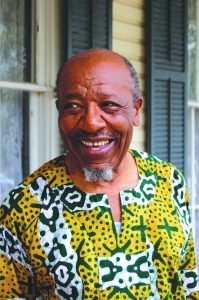
Civil rights leader John M. Perkins, founder and President Emeritus of the John and Vera Mae Perkins Foundation-Jackson, MS. Photo courtesy of Voice of Calvary.
By Courtney Lott-
“I looked, and behold, a great multitude which no one could count, from every nation and all tribes and peoples and tongues, standing before the throne and before the Lamb, clothed in white robes, and palm branches were in their hands; and they cry out with a loud voice, saying, ‘Salvation to our God who sits on the throne, and to the Lamb.’” (Revelation 7:9-10 NASB)
In John’s vision of the kingdom of God we are presented with a very diverse picture of its citizens. The worshippers come from every race, every language, every nation. Far from monochromatic, the kingdom of Heaven is an undoing of Babel, a breaking of barriers, the unification of Christ’s body. But when we look at our churches today, at our congregations, what do we see? Though in many ways the church has taken great strides against racism, the after effects of old structures and mindsets remain like fingerprints on a mirror. As Christians, we are called to take a sober look at these things. Racial reconciliation is hard, but thankfully, many have undertaken to aid the church in this difficult journey. The following books are helpful perspectives for this conversation. Each voice is different and offers its own unique angle.
Holding Up Your Corner
For situations fraught with sensitivity, practical guidance is essential. In Holding up Your Corner, the Rev. F. Willis Johnson, a United Methodist pastor, provides wisdom and insight. Offering helpful definitions and sober advice that is practical rather than preachy, this book equips leaders and readers to approach racial reconciliation with grace. Through his accounts of the racial strife in Ferguson, Missouri, and similar events, Johnson gives his audience the unique experience of seeing the world through his eyes.

“Once we have acknowledged someone’s humanity, we can move on to affirmation – respecting their humanity,” Johnson writes. “Hear this: affirmation is neither an act of complicity nor condemnation. Affirming someone’s experience – their humanity in their own experience – does not mean you approve their ideology or behavior. We can love people without agreeing with them. That bears repeating: we can love people without agreeing with them. In the words of Howard Thurman, ‘Hatred does not empower, it decays. Only through self-love and love for one another can God’s justice prevail.’ In short, affirmation is a willingness to emphasize our interdependence and commonality over our difference.”
Holding up Your Corner is carefully rooted in the scriptural idea of balancing both justice and mercy, truth and grace, the practical and prophetic. It reaches out with gentleness and humility that challenges the reader in such a way as to promote conversation rather than dampen it. Johnson’s humble way of engaging his audience invites engagement rather than shutting it down. This book is a desperately needed guide through the difficult terrain that the church now faces in regard to loving the “other.”
Unashamed
Unashamed, the autobiography of mega-star Christian rapper, Lecrae, holds as its central concept the need for acceptance. From the first page, the writing conveys the painful sting of rejection. The reader can’t help but wince through the author’s childhood abandonment issues and heartache, then rejoice at the acceptance found in Christ. Yet Lecrae offers a starkly honest picture of his conversion and doesn’t shy from sharing his struggles with sanctification.
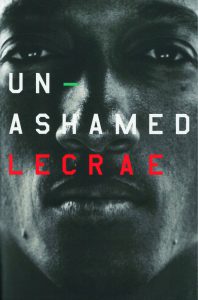 As a poetic artist, Lecrae makes a distinction between a “Pastor Rapper” and that of a “lamenter” – a passionate expression of grief or sorrow that is an outgrowth of his youth and the abandonment he felt. When he was free from trying to preach like a “Pastor Rapper,” Lecrae felt the words and rhythms flow when he allowed himself to be vulnerable and honest about his own battles.
Lecrae describes his unique position within the industry and how it provides him with the opportunity to reach people others might not be able to. He writes: “Operating as a ‘Pastor Rapper’ was hard work for me because it wasn’t playing to my strengths. Rather than letting the music pour out of me when the inspiration came, I would spend hours studying beforehand … Being theologically educated is a great thing. And using music to explicitly express theology is needed. But I mistakenly believed it was the only way to make music. On the rare occasion, however, I would let go and let the ‘lamenter’ in me come out. When I did – when I let Lecrae just be Lecrae – it would spark magic… Rather than make myself the winner, I allowed myself to be the loser… People wrote to say how much that song impacted them because it was real and vulnerable. And this was one of the first moments I began to wonder if maybe God was calling me to make a shift in my music and begin producing new songs that were truer to how I was naturally made.”
Who Lynched Willie Earle?
Centered around a specific event, Who Lynched Willie Earle approaches the issue of race from a historical standpoint. Bishop Will Willimon creatively reimagines Pastor Hawley Lynn’s thought process leading up to his sermon condemning the lynching of a black man accused, but not convicted, of murder. Pastor Lynn confronted his own congregation with the mindset he believed led to the lynching, the deeply ingrained attitudes that allowed the mob to pervert “democratic justice” and execute Willie Earle.

Willimon, prolific author and retired United Methodist bishop, proceeds to analyze the sermon. Not only does he take into consideration the history of America, but also connects this with Israel, the Gentiles, and the kingdom of God. Willimon also points out Pastor Hawley’s own blind spots, in which he failed to address systemic, institutional racism. In this, Willimon says, the church was able to “disassociate themselves from the sin and to bolster their confidence in Jim Crow.” In spite of his failings, Willimon calls Pastor Hawley’s sermon “heroic homiletics”.
“Though these sociological and historical facts about racism are significant, race is a specifically Christian problem because of the God we are attempting to worship and to obey,” Willimon writes. “In the gospel, we are given the means to be color-courageous, to talk about matters our culture would rather keep silent. That you have persevered this far in this book suggests you are exercising a bravery that is not self-derived. Paul says that, in God’s realm, Jews and Greeks, slave and free, ‘You all are one in Jesus Christ’ (Galatians 3:28). It is a baptismal call, not for color-blindness or arguing that gender or race are inconsequential, but rather a theological affirmation that Jesus Christ enables a new eschatological community where conventional, worldly signifiers don’t mean what they meant in the kingdoms of this world.”
Dream with Me: Race, Love, and the Struggle We Must Win
Like Unashamed, Dr. John Perkins’ approach is extremely personal and humble. In spite of this, he does not shy away from calling out injustice and racism. Quoting Frederick Douglas and sighting the stark reality of his own experience with segregation, Perkins focuses on the “walls that have kept black people and white people apart, even in places where we had so much in common.”
 “Anyone who knows my story would expect this book to ooze with justice issues. After all, the pain caused by injustice has motivated me to spend a lifetime working for social change on behalf of widows, prisoners, the poor, and anyone who struggles,” writes Perkins, the civil rights veteran who has led the Voice of Calvary Ministries in Jackson, Mississippi, since 1975. “So how did someone who has experienced the anguish of poverty, racism, and oppression end up wanting to write a book about love as his climactic message? Good question… I’ve come to understand that true justice is wrapped up in love. God loves justice and wants His people to seek justice (Psalms 11 and Micah 6:8). But I’ve come to understand that true justice is wrapped up in love. The old-time preacher and prophet A.W. Tozer had a way of making the most profound truths simple and palatable. He once said, ‘God is love, and just as God is love, God is justice.’ That’s it! God’s love and justice come together in the redemptive work of Jesus Christ, and we can’t be about one and not the other. They’re inextricably connected.”
Perkins takes a strong look at motivation. By keeping in mind questions about his own choices, he tempers his assessment with a great deal of grace and mercy. Perkins challenges parents to be mindful of the way that education choices may have a positive or negative effect on black children in public schools. Additionally, he asserts that integrating our churches is at the very heart of the gospel, the very heart of 2 Corinthians 5:19.
If we want to work toward racial reconciliation in a country that desperately needs it, if we desire to share the love of Christ with all nations, we must take steps to build empathy for our brothers and sisters. The books on this list are testimonies, a mere peek behind the curtain, but they may also serve as first steps. Ultimately, God alone through Jesus Christ can accomplish this. Racism, comparison, pride, arrogance, greed all root deep down in the hearts of man. But thanks be to God that he does not leave us in this sad state!
Courtney Lott is the editorial assistant at Good News.
by Steve | May 22, 2017 | Magazine, Magazine Articles, May-June 2017

Photo courtesy of Compassion International.
By Shannon Vowell-
Did you know that Methodism has been in India for a long time? I didn’t. For me – for many – the Methodist Church and the country of India intersect only in the work of the illustrious E. Stanley Jones, 20th century Methodist missionary giant and friend of Gandhi. But Jones’s seminal work, Christ of the Indian Road, was written 69 years after the first emissaries from the Methodist Episcopal Church in America arrived in the then-state of Oudh.
Not only has Methodism been in India 161 years, Methodism maintains a prominent place in the Indian pantheon of faiths. The autonomous Methodist Church of India has 12 regional conferences under 6 Episcopal areas. Total membership for the MCI and the Churches of North and South India (members of the World Methodist Council) approaches 5,648,000. (To put that in perspective, total membership for the UMC in the U.S. in 2015 was 7,067,162.)
This historic and ongoing connection is one of several compelling reasons why United Methodists should take note of recent events in India. What has happened to Christian ministries there matters to us, because we share with them the purpose of “making disciples of Jesus Christ for the transformation of the world.” Further, what happens next may depend on us, because ever-fewer disciple-makers remain in place.

Photo courtesy of Compassion International.
On March 15, 2017, Compassion International – the Christian global ministry giant specializing in serving vulnerable children– ended 50 years of Indian ministry. Nearly 150,000 children who had had access to food, clean water, medical care, education, and the encouragement of foreign sponsors and local community centers, lost access to all of the above in the space of a day.
Why? Well, we’ll start with the politically correct, official, version of what happened.
American politicians bemoaned a mysterious inability on the part of Compassion and the Indian government to identify and agree on a mutually acceptable compromise regarding regulation and tariff laws. Legal representatives for Compassion pointed to egregious misapplication of Indian laws on the part of the Indian government.
In reality, Compassion is the largest of hundreds of charitable (mostly Christian) non-government organizations (NGOs) being systematically ousted from India, because the prevailing worldview of the most recently elected regime there has influenced the way the law is applied. The issue is not whether Compassion violated or failed to compromise on some obscure regulatory code embedded in Indian tax law. Nor is it that the Indian government misinterpreted its own laws for financial gain. Rather, the issue is that a Hindu Nationalist regime cannot be true to its own principles while accommodating foreign operatives who have overtly Christian motives.
Stating these truths – politically incorrect as they are – has to be our first step in identifying what challenges may lie ahead for Methodist brothers and sisters who remain in place in India.
Next steps include cultivating a basic understanding of the ways Hinduism and Christianity are mutually exclusive. For example, the caste system. Officially extinct but actually in full force and effect, especially in rural areas among the poorest poor, this system categorizes Indian citizens into spiritual social tiers, between which there is no movement. The tiers and one’s place in them, are fixed and connected to the Hindu doctrine of karma. Karma explains a person’s life station and suffering as part of the cycle of existence; repeated reincarnations allow a human soul to make reparations for past sins in past lives. Progress can occur with each rebirth of the soul, as good works accrue and past sins are expiated. This progress leads the soul toward transcendence – moksha.
For a Hindu, serving the poor and marginalized can be personally expedient, because good deeds build good karma for oneself; this in turn accelerates progress toward moksha. But at the same time, one must not interfere with the karma of those being served. Within Hinduism, to artificially elevate someone to a different life station is to condemn them to further incarnations in which penance is required – delaying moksha and actually prolonging suffering. Politically incorrect to acknowledge, but nevertheless true: Karma provides justification for non-interference in the cycle of suffering – and karma labels indifference to the desperately poor a moral good.
By contrast, the Christian doctrine of reconciliation to God and equality in the eyes of God requires Christians to embrace and serve the poor as family, literally! Jesus gathered in the marginalized and comforted the forsaken, so Christians must do likewise. Historically, Methodists have applied this doctrine of reconciliation by founding and funding institutions whose very purpose is the interruption (and abnegation!) of the cycle of suffering: orphanages, schools, soup kitchens, hospitals, ministries of healing and help.
We United Methodists share the Indian dilemma faced by Compassion and ministries like it. Looking at a country where an estimated majority of the world’s poorest poor live, our Christian work appears urgently relevant and necessary. But the government which can give or withhold access to its needy population literally sees things differently.

Photo courtesy of Compassion International.
Hinduism protects the status quo as just and right within karma, and understands the alleviation of suffering as more harmful than the suffering itself. Christians challenge the status quo as part of the call to transform the world in Jesus’s name. Such deep contradictions in basic understandings of human worth, life purpose, and duty to fellow man must be acknowledged, no matter how politically incorrect such acknowledgement feels. To do otherwise – to “explain away” the situation in India as some petty money matter – makes a mockery of both Hindu and Christian belief systems.
The world of diplomacy often treats belief systems as side issues. But the inconvenient fact is that governments legislate based on systems of belief. These belief systems are not interchangeable. Indeed, they are often mutually exclusive.
Rather than capitulate to the stalemate of the world’s status quo, Christians must stand firm on the faith that puts the world in its proper perspective. We serve a God who is neither constrained nor confused by the idiocies of political correctness!
John Wesley’s example of persistent, faithfully offensive shrugging off of the world’s expectations of him surely makes Methodists uniquely qualified to handle situations like the one in India. And E. Stanley Jones’s testimony to the cross-cultural power of Wesleyan witness within the specific context of India surely applies all the more urgently today. Perhaps it is within the unique, Methodist application of the gospel that we may find the way forward for ministry in India (or anywhere the gospel is officially rejected)?
As Wesley taught us, we are to be people of One Book and servants of One Master. Because the children of India are children, and because they are suffering, and because we are Christians, we must be moved to compassion. “Little children, let us love, not in word or speech, but in truth and action” (1 John 3:18).
Following the example of Christ, who admonished his disciples when they prevented the children from drawing near to Him, we must find ways to serve the poor children of India. We must look beyond the shrugged shoulders of worldly governments and rely on the One on whom rests all the authority of the cosmos. “… our citizenship is in heaven, and it is from there that we are expecting a Savior, the Lord Jesus Christ” (Philippians 3:20).
For our part, United Methodists should pray that Christian and other non-profit humanitarian organizations would be permitted to resume their work in India. We should also pray that a new generation of Hindi-speaking Christians be granted wisdom in order to reach India with the love of Jesus. Lastly, we should pray that the hearts and minds of the government officials working with Prime Minister Narendra Modi would be softened and changed.
Perhaps the words of Jesus himself define the terms of our obligation most clearly: “Take care that you do not despise one of these little ones; for, I tell you, in heaven their angels continually see the face of my Father in heaven” (Matthew 18:10).
Politically incorrect and discomfiting as it may be, United Methodists cannot allow governments to dictate which children may be loved. Compassion, the organization, has been jettisoned from India for one reason: because they served the poor in Jesus’s name. Compassion, the core characteristic of Jesus, cannot be redefined in order to justify or explain away that historical fact.
Shannon Vowell writes and teaches on loving Christ and making disciples.
by Steve | May 22, 2017 | Magazine, Magazine Articles, May-June 2017

Ruth Burgner
By Ruth Burgner-
Those of us in the missionary community get to hear stories of extraordinary fruitfulness. For example, a TMS Global missionary family serving for the past 16 years in Peru recently reported that more than 8,200 people in 13 states in Peru are being discipled. This all started in 2006 with only three small groups meeting in this family’s house.
But as you know, in ministry there are other smaller, quieter happenings. These might go untold because they might seem to us too unremarkable or too unfinished to seem worthy to mention. They might be the planting parts, not the harvesting parts. They might be the details of the times when nothing, or only the most miniscule thing, appears to be happening. I sometimes wonder if missionaries – and all of us – hesitate to tell those bits. After all, says author and spiritual director Mark Yaconelli (Nomad, podcast 114), most people don’t tell our story until there is a happy ending. Is it okay to testify about the middle parts, even before we know how it all turns out, even before everything seems resolved?
Recently, I heard the telling of a “middle part.” One of our missionaries, Sue Fuller, who has served for the last 22 years among orphans in the Russian Far East, recalled events of a particular week. She and her-then roommate, Ari (who now serves on the home office staff), had enjoyed a day with the girls of the orphanage. They decided they would also plan a fun event for the boys. Planning for boys, though, seemed less intuitive. So they did what they knew to do. They planned food (always a winner) and karaoke (which is apparently big in Russia). The event all went well enough, although pretty low-frills in their eyes. They just hoped the orphan boys felt loved and had a good time.
But then days later, Sue overheard one of the boys talking about it to a friend. He told details about every single thing he ate and every song they played. And then this young orphan boy told his friend, “It was the best day of my whole life.”
From this account, we don’t know what happens next in the life of this young orphan, for whom one karaoke-and-snacks event was his all-time highlight. Even so, the graces in this story stand out like the colors of a sunrise. I love that Sue took note of them.
Pay attention to the graces; hunt for them, our TMS President Max Wilkins told the audience of a recent event. “Heaven and earth are full of the glory of God. …We train our missionaries to go as ‘glory sighters.’” And our missionaries are some of the best “glory sighters” I know. Eagerly, they spy out the signs of God’s activity, even in the seemingly bleakest settings.
For example, Kathleen,* a TMS Global missionary and nurse, was working in a hospital in one of the most difficult areas in Southeast Asia. When she was asked why she stayed, here is how she answered: “Why do I stay in this sweltering, filthy, difficult place? It’s not as hard a question to answer as some might think. Jesus is here in this place. I see Him all around me. I see Him in the gentle touch of the nursery staff as they attempt to care for too-small, too-weak infants who are often lying three to a crib. I see Him in the sorrow on a father’s face as he sits at the bedside of his child slowly squeezing an ambu bag because there are no more ventilators available. I feel Him with every new experience, every new story, one more baby who won’t die in a sack in a drainage ditch, one more daughter-in-law who won’t be beaten to death, one more child who won’t be sold into slavery, one more family laughing, dancing, and rejoicing in their new-found hope in a Savior called Jesus. This is a place surrounded by hardship, discouragement, struggle, and frustration. This is the Garden of Gethsemane. Jesus is sweating great drops of blood here, and I want to be with Him.”
You and I might not often see like Kathleen and Sue. It’s easy to view the world through lenses of dull gray. After all, notes Eugene Peterson, “We do not live in a world that promotes or encourages wonder.” And yet into this world the kingdom of God has come. The crucified Christ is risen. The whole earth is full of His glory. Like these missionaries, we can learn to see with new eyes. We can develop a disposition of awe. We can learn to “rejoice in the Lord always” (Philippians 4:4). “We have to cultivate responses of awed reverence,” says Peterson, “or risk missing the very heart of what is going on.”
Ruth A. Burgner is the senior director of communications for TMS Global – www.tmsglobal.org. *A pseudonym.