
by Steve | Nov 28, 2017 | Magazine, Magazine Articles, Nov-Dec 2017
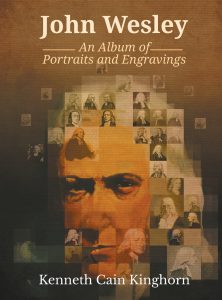
John Wesley: An Album of Portraits and Engravings collected by Kenneth Cain Kinghorn. A deeply valued friend of Good News, Kinghorn is the recently deceased professor of history from Asbury Theological Seminary. Like Kinghorn’s other books, this will be of lasting value to all Christians, especially the innumerable heirs to Wesley’s theology and ministry. This book is the definitive collection of his portraits and engravings.
Empathy for the Devil: Finding Ourselves in the Villains of the Bible by JR Forasteros (IVP). Finally, someone has creatively profiled notorious Bible bad guys (and girls) such as Cain, Delilah, Jezebel, Herod the Great, Herodias, Judas, and Satan. Go ahead and ask the big question: Why does evil exist? But then follow that up with the more important question: Why does evil exist in me?
 Bob Dylan: A Spiritual Life by Scott M. Marshall (WND Books). Marshall has marvelously drawn a bead on the enigmatic artistic and spiritual journey, most recently the winner of 2016 Nobel Prize in literature. This volume is faithful to the task in honestly tracking Dylan’s pursuit of redemption. Also, keep your eye out for Trouble No More – The Bootleg Series Vol. 13/ 1979-1981, an exploration of Dylan’s “gospel years” and the three resulting albums: Slow Train Coming, Saved, and Shot of Love.
Seven Women: And the Secret of their Greatness by Eric Metaxas (Thomas Nelson). Metaxas profiles seven fascinating women who shaped the course of history through their faith and character. Everyone can benefit from learning about the lives of Joan of Arc, Susanna Wesley, Hannah More, Sister Maria of Paris, Corrie ten Boom, Rosa Parks, and Mother Teresa. All of these remarkable women followed God’s call upon their lives and made a profound difference with their discipleship.
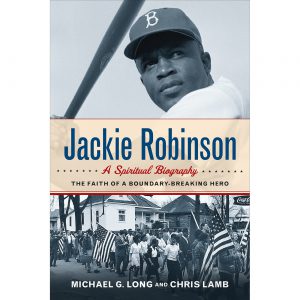 Jackie Robinson: A Spiritual Biography. The Faith of a Boundary Breaking Hero by Michael G. Long and Chris Lamb (WJK Press). The rock-solid faith of Jackie Robinson, a Methodist, was tested and challenged at every facet of his remarkable life as a beloved and tormented athlete who shattered racial barriers in major league baseball.
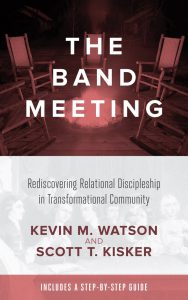
The Band Meeting: Rediscovering Relational Discipleship Through Transformational Community by Kevin M. Watson and Scott T. Kisker (Seedbed). If your church is needing to rethink your small group approach with an eye toward tapping into the richness of the early Methodist tradition of spiritual formation, Watson and Kisker have provided a perfect blueprint. This volume helps lay and clergy alike to understand John Wesley’s approach to discipleship.
by Steve | Nov 28, 2017 | Magazine, Magazine Articles, Nov-Dec 2017

Jim Ramsey
By Jim M. Ramsay-
The nation of Liberia has had its share of challenges in recent decades. The brutal civil war led by Charles Taylor and his subsequent rule dominated the 1990s until he was removed in 2003. More than 300,000 Liberians lost their lives during those years. The nation was still trying to rebuild when it again was in the headlines in 2014 in the wake of the Ebola outbreak. Ebola claimed the lives of nearly 5,000 people and devastated the country and its social institutions.
One of those affected by the Ebola outbreak was the family of the Rev. Isaac Wheigar. Isaac and his wife, Precious, had four living children. A son had been lost to sickle cell anemia as a baby before the condition had been identified in the family. Two others of their children were also diagnosed with the condition, which can be managed with medical care. In August 2014 their eldest son, Ike, experienced an episode that required hospital care, but the hospitals were closed due to Ebola and Ike tragically passed away at only 17 years old before he could receive treatment that normally would have been readily available. Even as Isaac and Precious grieved Ike’s death, they were deeply concerned for their eight-year old daughter, Yeato, who also had the sickle cell condition.
Having served 10 years as superintendent of the Wesleyan Church in Liberia, in 2012 Isaac was selected to be general secretary of the Association of Evangelicals of Liberia. In this role, his team had developed a vision entitled EXPO Liberia 2020 to plant 10,000 churches by the year 2020. The vision invited all church traditions to join the effort through church multiplication. But then came Ebola and their personal loss and the vision had to be set aside.
Through a miraculous series of divine appointments with people who were in Liberia to assist during the Ebola crisis, the Wheigars were invited to come to the United States for Yeato to receive treatment at the Emory Medical Center. While in Atlanta, Isaac and Precious were introduced to the staff of TMS Global where Isaac now serves as a consultant on African partnerships. Isaac’s work in leading an indigenous church association and developing a national church planting movement have made him an expert in addressing issues of unhealthy dependency and sustainability in church growth.
After two years of getting his family stabilized in the Atlanta area, Isaac’s and Precious’s gaze is again on Liberia. While he is grateful for the care Yeato receives at Emory, he is eager to re-engage the vision for church planting and development in Liberia, now needed more than ever. He has put together a roadmap for moving forward. The effort will begin in Liberia, but move across borders into Ivory Coast, Sierra Leone, and Guinea. This area, also known as the Mano River region, includes many areas that have had limited access to the gospel. The vision is to do church planting through church multiplication.
Working with Isaac is consistent with TMS Global’s desire to work alongside capable, indigenous leaders. We believe that this is a kairos opportunity to impact an area where there is great need and great opportunity for kingdom engagement. It is an opportunity for churches in the United States through prayer, support, and onsite visits to be part of a vision that is locally developed, well-led and long-lasting, and which will impact the region deeply spiritually, socially, and physically.
In 2006, The New York Times ran an article entitled “A Master Plan Drawn in Blood.” The article described the brutal plan of Charles Taylor that began with a small band of guerilla fighters who, using terror, recruited increasing numbers toward his vision to destabilize and brutalize the entire Mano River region. Isaac said, “Here is a man serving evil using the blood of men. He succeeded for a time. What if we drew up a plan to reverse this evil vision, still drawn in blood, but drawn using the blood of the Lamb? We will recruit people to build families instead of destroying them, to educate children instead of their being child soldiers, to use the blood of the Lamb to reverse the kingdom of darkness.”
Jim Ramsay is the vice president for global engagement at TMS Global. To learn more about Isaac’s vision, Jim can be reached at jramsay@tms-global.org
by Steve | Nov 28, 2017 | Magazine, Magazine Articles, Nov-Dec 2017
 By B.J. Funk-
God came to earth wrapped in an ordinary package. His birthing room had a dirt floor, his crib contained remnants of dried animal feed, and instead of “Lullaby” being played over a hospital loud speaker at the birth of a child, there was a mixed chorus of animals braying loudly, possibly over the intrusion of this couple and their baby.
Here is a simple illustration of how that happened. In that land called heaven, the Son, Jesus, stood up one day, gave the Father and the Spirit a good-bye hug, and made a bold, gigantic decision, all in obedience to the Father. The Son stepped off the glittering streets, outside of the abundance of rainbow colors that dripped wonderful smells of beauty, and became a tiny seed inside the womb of a young woman. The seed grew into a baby who later moved into the sin, dirt, and humanity of earth. Upon first opening his eyes in his new home, he saw darkness. He took his first breath and smelled stench. He opened his ears and heard animals screeching.
And while human life would become painfully ugly and hurtful on earth, the Son brought with him a manual of instructions handed to him by his Father, a manual that contained many promises. Best of all was the promise that his relationship with God and the Spirit would be unbroken. He clung to that knowledge and counted on this relationship to remain secure. This would be the only way that he would have strength to keep going, even when His physical body knew complete exhaustion, rejection, and eventually murder.
On an ordinary night in an ordinary town in an ordinary and rough cave used for a stable, surrounded by ordinary animals, and two very ordinary parents, God became man. As Eugene Peterson writes in The Message, he “moved into our neighborhood.”
Before the shepherds were given this celestial message by the angels, those shepherds stood on a hillside, dressed in quite ordinary clothes, and would now be sent to find a baby that was anything but ordinary.
At first there was a huge orchestra of voices appearing in the heavens exclaiming in rich voices some very unordinary news. No wonder the shepherds were afraid. Shepherds were poor and uneducated, and because they lived among the sheep, they carried an odor everywhere they went. For that reason, they were not allowed in the Temples. They weren’t allowed in the synagogues. But they would be allowed at the birth of Jesus. This astounding fact gives me a deeper look into the God I serve: He is most comfortable around the ordinary, and that should make the ordinary comfortable around Him.
Jesus rarely comes where we expect. He appears where we least expect Him, and in the most illogical situations. On this very ordinary day, God sent a message to ordinary people like you and me. His message was and is, “I love the ordinary. No matter what your sins or transgressions in 2017 or before, I love you and I forgive you. I reach out especially to the poor, the hurting, the lonely, the unsuccessful, and I say, ‘Come unto me all ye who are burdened and heavy laden. I came to bring you peace.’”
Today, because of God’s extraordinary reach to ordinary people, you and I are caught up in the wonder of seeing royalty wrapped in ordinary humanity, lying in a manger and sending this intimate message to you: “I came for the ordinary. I died for the ordinary. Never let anyone make you feel that you are not worthy of my love.”
To make this story even better, Jesus came to set us free from our own wounded natures, promising to help us overcome earth’s descending pull. He even desires a relationship with us, will sprinkle his love all over us, and will promise to stay by our side as we seek holiness above the ordinary. What a beautiful story, made real by the fact that millions of followers testify to their changed lives!
Thanks be to God. Because of Jesus, ordinary people like us will forever be wrapped in royalty.
by Steve | Nov 24, 2017 | In the News, Perspective E-Newsletter
 By Thomas Lambrecht-
As we gather to celebrate Thanksgiving with our families and friends, we are a nation that has experienced much suffering and tragedy within the last few months. Many families will gather around a makeshift table in a home that is being rebuilt after flooding and hurricane damage. Others will be celebrating Thanksgiving in a temporary shelter because they lost their home in a fire. Still other families will huddle around a dining room table without a loved one who was killed in one of the tragic shootings experienced in our nation.
The United States of America is actively recovering from both natural and human-made disasters. We are also beset by political conflicts that threaten to tear our country apart. At the same time, our United Methodist Church is dealing with schism and theological divisions that jeopardize the future of the denomination.
We might be tempted to feel like not giving thanks, due to the dire circumstances that many among us are experiencing. But it is just at such times that we need to remember God’s mercy and blessing and acknowledge him as the Source of all good gifts.
It was President Abraham Lincoln who officially made Thanksgiving a national holiday – enacting what President George Washington first proposed as an official national celebratory “day of public thanksgiving and prayer.” For Lincoln, the first Thanksgiving holiday was declared in 1863 after a major Union victory at Gettysburg in the midst of the bloody and bitter Civil War that would not end until two years later.
“The year that is drawing towards its close, has been filled with the blessings of fruitful fields and healthful skies,” Lincoln said. “To these bounties, which are so constantly enjoyed that we are prone to forget the source from which they come, others have been added, which are of so extraordinary a nature, that they cannot fail to penetrate and soften even the heart which is habitually insensible to the ever watchful providence of Almighty God … No human counsel hath devised nor hath any mortal hand worked out these great things. They are the gracious gifts of the Most High God, who, while dealing with us in anger for our sins, hath nevertheless remembered mercy.”
President Lincoln continued: “I do therefore invite my fellow citizens in every part of the United States … to set apart and observe the last Thursday of November next, as a day of Thanksgiving and Praise to our beneficent Father who dwelleth in the Heavens. And I recommend to them that while offering up the ascriptions justly due to Him for such singular deliverances and blessings, they do also, with humble penitence for our national perverseness and disobedience, commend to his tender care all those who have become widows, orphans, mourners or sufferers in the lamentable civil strife in which we are unavoidably engaged, and fervently implore the interposition of the Almighty Hand to heal the wounds of the nation and to restore it as soon as may be consistent with the Divine purposes to the full enjoyment of peace, harmony, tranquility and Union.”
It is highly appropriate, as Lincoln did, to use this time of Thanksgiving to appeal to God for the healing of our nation, for comfort and healing for the sufferers of these disasters, for the restoration of those damaged by tragedy, and for the repentance and healing of our church. We pray for “the full enjoyment of peace, harmony, tranquility and Union,” both in our country and in our church.
This is also an appropriate time to be ever mindful of the proud heritage and subsequent plight of our Native American brothers and sisters who too frequently end up becoming mere caricature figures in our elementary school Thanksgiving plays. While we may not always know the best way to rectify national mistakes of the past, the first step for peace for our future is acknowledging that we are all in need of the mercy and forgiveness of the Almighty.
Our staff at Good News is especially grateful for you, our supporters and constituents. You have kept us in prayer. You have encouraged us with your letters and emails. You have made our work possible by your financial gifts. As we head toward Giving Tuesday next week, we invite you to give a special Thanksgiving gift to Good News in honor of the blessings the Lord has poured out in your life. (To make a gift, you may click here or utilize the letter you recently received in the mail.) You make it possible for us to stand strong for the proclamation of the Father’s sacrificial love in Christ, his transformative mercy and grace toward all people, and his divine revelation through the words of Scripture, leading United Methodists to a faithful future. We thank you from the bottom of our hearts.
Make sure you set aside time this weekend to remember the source of all blessing and to pray for the healing of our land. May you and your family have a blessed Thanksgiving!
Thomas Lambrecht is a United Methodist clergyperson and vice president of Good News.
by Steve | Nov 22, 2017 | In the News

Cover art of Time magazine in 1947.
By Philip Tallon
On November 22, 1963, the world’s foremost Christian apologist died of kidney failure. Despite his literary fame, in the following week’s newspapers, his death was overshadowed by the assassination of John F. Kennedy, and received little notice. The New York Times made up for the oversight and published an obituary three days later, on November 25, chronicling the main features of Lewis’s life and work. (Though they did misspell Narnia as “Narvia.”)
Today, however, C. S. Lewis is still the world’s foremost apologist, and his literary fame eclipses the fame of many U.S. Presidents. Lewis’ Mere Christianity is currently the top-selling work of apologetics on Amazon.com. Christianity Today recently dubbed it the “Book of the Century.”
Lewis’ prominence as a fiction writer is even more secure than his fame as an apologist. His Christian fantasy series, The Chronicles of Narnia, has sold over a hundred million copies. Over the last 10 years, the first three books in the Narnia series were adapted by Hollywood and grossed over a billion dollars. The only other fantasy author who tops Lewis’ fame is his long-time friend and fellow Oxonian, J. R. R. Tolkien.
For a man who once described himself as a “dinosaur,” Lewis’ legacy shows no sign of going extinct. For those who have read almost anything by Lewis, his staying power isn’t surprising. His prose is chatty and charming. He manages to be crystal clear whether he’s discoursing on hell or 16th century English literature.
Take, for example, Lewis’ chapter from Mere Christianity on the Trinity – a topic that sends many preachers into stammers or silence. In a brisk five pages, Lewis describes Augustine’s theology of the Trinity in layman’s language and offers several concrete and helpful analogies that most readers can easily visualize.
“An ordinary simple Christian kneels down to say his prayers. He is trying to get into touch with God. But if he is a Christian he knows that what is prompting him to pray is also God: God, so to speak, inside him. But he also knows that all his real knowledge of God comes through Christ, the Man who was God — that Christ is standing beside him, helping him to pray, praying for him,” Lewis wrote. “You see what is happening. God is the thing to which he is praying — the goal he is trying to reach. God is also the thing inside him which is pushing him on — the motive power. God is also the road or bridge along which he is being pushed to that goal. So that the whole threefold life of the three-personal Being is actually going on in that ordinary little bedroom where an ordinary man is saying his prayers.”
Lewis lets us into the experience of the Trinity: the Father before us, the Son beside us, the Spirit within us. Nowhere does he use anything but plain, ordinary language. The only word with more than three-syllables is “ordinary.”
This was Lewis’ gift. He could channel the best of the Christian tradition effortlessly. Nowhere does one feel him talking “down” to the reader. Despite being trained in the best schools in England, Lewis thought the best language to describe an idea was the kind of conversation carried on in the pubs and pews (both of which Lewis inhabited frequently).
Lewis also channels the great thinkers of the Christian tradition. Without realizing it, the reader of Lewis’ work will be introduced to key ideas from Thomas Aquinas, Augustine, and Athanasius. Owen Barfield, a friend and sparring-partner of Lewis’, described this as Lewis’ “presence of mind.” Barfield wrote, “somehow what [Lewis] thought about everything was secretly present in what he said about anything.” To read Lewis is to get a walking tour (often without knowing it) of some of the most important ideas in Western civilization.
Yet in Lewis’ best and most lasting work, the effortlessness of Lewis’ prose transmitted ideas that Lewis had struggled and fought with for decades. His confidence in the truth of Christianity did not come effortlessly. He fought for years against the existence and goodness of God, the truth of the resurrection, and the meaning of Christ’s sacrificial death.
As a young man, Lewis’ mother died of cancer. This and other setbacks as a boy darkened Lewis’ view on life. The world was a place of frustration and pain, and so Lewis and his brother retreated into the world of imagination. Coming eventually to deny God’s existence altogether, Lewis searched for beauty in romantic poetry and heroic mythology.
For Lewis, everything beautiful was fictional, while reality was depressing. As he wrote in his autobiography, Surprised by Joy: “Such, then, was my position: to care for almost nothing but the gods and heroes, the garden of the Hesperides, Launcelot and the Grail, and to believe in nothing but atoms and evolution and military service. At times the strain was severe…”
This strain on Lewis continued from his adolescence through his early career, until he struck up an unlikely friendship with J. R. R. Tolkien. As a Northern Irishmen, Lewis had a cultural bias against Catholics. Prejudices in the English department made the friendship even more improbable: “When I arrived in this world, they … warned me to never trust a papist, and upon my arrival in the English faculty, they (openly) warned me never to trust a philologist. Tolkien was both.”
Despite the implausibility of the pairing, Lewis and Tolkien’s friendship blossomed, and led to a crucial conversation between the men that changed Lewis’s perspective. One windy evening in Oxford, Lewis, Tolkien and another friend met in Lewis’s rooms at Magdalen College and talked late into the night.
What Lewis learned was that beauty and truth do not necessarily have to be at odds. Lewis loved mythology but thought beautiful stories could not be true because reality was ultimately ugly – our best imaginings cut against the grain of the universe. Tolkien showed Lewis that the very capacity to dream, to create beauty, was a sign that reality was not ultimately ugly. God created us with a deep desire to imagine. In short, our capacity for making fiction – for telling stories of gods and heroes, Launcelot and the grail – was a pointer toward the truth that reality was ultimately beautiful.
This “good satisfying talk” changed Lewis’ perspective on the the story of the Bible and, in short order, led to Lewis’ conversion. Almost immediately Lewis began combining his rational capacities and his imagination. In 1933 he published his first work of imaginative apologetics, an allegory of his conversion called The Pilgrim’s Regress, an interesting, if not wholly successful, marriage of fiction and philosophy.
Lewis’ first big success as an apologist would not emerge for another seven years. Invited to write on the problem of evil, a subject Lewis was personally familiar with, The Problem of Pain established Lewis’ voice as a Christian apologist and led to his invitation to give a series of wartime radio talks on the Christian faith. These talks would later be collected and published as Mere Christianity.
Perhaps Lewis’ most potent and lasting legacy, however, was the way he expressed his Christian worldview through the world of fiction. Beginning with The Screwtape Letters in 1942, Lewis found ways to sneak past what he called the “watchful dragons” of cultural suspicion against the faith. Through the satirical and scabrous voice of Screwtape, we see the Christian life rightly again because we are forced to look at it topsy-turvy.
“Your patient has become humble,” Screwtape wrote to his nephew, the tempter-in-training Wormwood, “have you drawn his attention to the fact? All virtues are less formidable to us once the man is aware that he has them, but this is specially true of humility.” Lewis in a nutshell: imaginatively re-engaging the Christian tradition. In one stroke he was passing on moral wisdom, introducing us to a classical understanding of the virtues, using common language, and filtering it all through the lens of fiction.
The Chronicles of Narnia stands as Lewis’ ultimate achievement in re-enchanting the Christian faith by helping us to see it with fresh eyes. We see God again in Narnia in the form of Aslan, the creator and savior of a parallel world discovered by some English children named Peter, Susan, Edmund, and Lucy. Aslan is a big, joyful presence: gentle with the children and yet, at turns, fierce when facing off against evil. In The Voyage of the Dawn Treader, when Edmund and Lucy have to return to England, never to return to Narnia, their words echo the sentiments of many readers. Speaking to Aslan, she said:
“It isn’t Narnia [we’ll miss], you know,” sobbed Lucy. “It’s you. We shan’t meet you there. And how can we live, never meeting you?”
“But you shall meet me, dear one,” said Aslan.
“Are-are you there too, Sir?” said Edmund.
“I am,” said Aslan. “But there I have another name. You must learn to know me by that name. This was the very reason why you were brought to Narnia, that by knowing me here for a little, you may know me better there.”
Stealing past the “stained-glass” associations we have with Jesus, Lewis awoke love for God’s goodness through the figure of Aslan.
There is another contribution that often goes unnoticed even by Lewis’ many fans. Though Tolkien was instrumental in helping Lewis convert to the faith, Lewis, in turn, helped Tolkien to finish The Lord of the Rings. Tolkien was a perfectionist and easily distracted, a deadly combination for completing any major work. Only through the steady encouragement of Lewis and a few others did Tolkien finally complete his great work. Such are the designs of providence that these two men connected. If not for their friendship, it’s likely we would not have Narnia or Middle-Earth.
Lewis brought the best out of Tolkien through the gift of friendship. For many, many readers of Lewis, he has served in this way as well: walking beside us, keeping company, teaching, and helping us to see how to wrestle with our own doubts.
Lewis brought the best out of Tolkien. And he continues to bring the best out of us today.
Philip Tallon is a member of the Honors College faculty and Chair of the Apologetics Department at Houston Baptist University. He is also the author of The Absolute Basics of the Christian Faith: A Quick Sketch of Biblical Beliefs, The Poetics of Evil, and the co-editor of The Philosophy of Sherlock Holmes. You can find him on Twitter (@philiptallon). This article first appeared in the November/December 2013 issue of Good News.