by Steve | Jun 25, 2018 | In the News, Perspective E-Newsletter
 By Thomas Lambrecht –
“Here we are today, unable to face the reality of a deeply divided church that can no longer function in a healthy way in unity. And we are unable to consider an option that graciously and respectfully allows congregations and clergy to go their separate ways to pursue ministry that they believe honors God,” said the Rev. Thomas Lambrecht, vice president of Good News, in his address to the Wesleyan Covenant Association of the Iowa Annual Conference.
“Instead, we have a proposal for separation within the church, which is the Connectional Conference Plan. And we have two proposals for separation from the church – a “One Church Plan” that separates out evangelicals and a Traditional Plan that separates out progressives.
“So we are left with no choice but to fight – and fight to win. Our battle is not against people, but for the Gospel. We fight for the faith once for all entrusted to the saints (Jude 3). We are not in this battle alone,” said Lambrecht, a member of the Commission on a Way Forward.
“There will be a Traditional Plan put forward at General Conference. It will retain our current biblical position on marriage and sexual ethics, and it will make it easier to enforce that position across the church. And the Traditional Plan will graciously open the door for those who because of conscience cannot live within the boundaries set by our church, setting them free to follow the leading they have from God.
“This plan is a faithful way forward,” Lambrecht concluded. “It is faithful to the Bible. It is faithful to 2,000 years of Christian teaching. It is faithful to the more than seven generations of men and women who built the church that we now call home. It is faithful to a global church that overwhelmingly holds to a traditional understanding of morality and biblical interpretation.
“We can and we must fight for this faithful way forward. We owe it to ourselves and to those who come after us to take our stand on the truth of the Gospel.”
Click HERE to watch Rev. Lambrecht’s complete address.
Thomas Lambrecht is a United Methodist clergyperson and the vice president of Good News.
by Steve | Jun 15, 2018 | In the News
 By Carolyn Moore –
As Annual Conference season approaches, conversations are guaranteed to start heating up. Amidst high emotions, Rev. Carolyn Moore, lead pastor of Mosaic Church in Evans, GA, reflects on discussions she would like to see the United Methodist Church having.
“Let’s talk Christologically,” Rev. Moore writes. “Does the conversation about the future of the UMC begin with Jesus? If my experience is any indication, then the Lordship of Jesus–the exclusive nature of Jesus–is where we in the United Methodist Church part ways long before we ever get to the topic of sexual ethics. In the UMC, there is a great divergence around the nature and role of Jesus Christ; yet, we spend all our energy on other things. We rarely acknowledge what is. What is, for those of us who embrace an orthodox understanding of faith and truth, is that Jesus is the most true being. Those of us who are committed to absolute truth (and that Jesus alone embodies that Truth) also believe deep in our spirits that the people we like and the people we have feelings for and the people for which we have great compassion and the people we want to see living holy lives and the people we want to see in Heaven are not the authors of our faith. The author of our faith is Jesus Christ. In other words, we have a Person-centered faith, not a people-centered faith. Our conversations must reflect this ‘Kingdom down’ perspective while resisting the urge of a ‘humanity up’ perspective. If we start with Jesus Christ, I suspect we will find plenty to discuss and (grievously) much on which we fundamentally disagree.”
Click HERE to read her entire column.
by Steve | Jun 15, 2018 | In the News, Perspective E-Newsletter

First United Methodist Church, Louisville, Mississippi.
By Thomas Lambrecht –
Much has been made of the ability of congregations to leave The United Methodist Church with their property through a negotiated settlement with their annual conference. Some bishops are saying that the Book of Discipline already provides an exit path for congregations desiring to leave, and that no further provisions for exit are needed. (For Discipline nerds, they are referring to ¶ 2548.2, which allows an annual conference to instruct local church trustees to deed church property to an “evangelical denomination under an allocation, exchange of property, or comity agreement.”)
Some point to the example of two large churches in Mississippi and one in Eastern Pennsylvania that were able to negotiate withdrawal for the payment of one year’s apportionments. What all three churches had in common was a high level of debt, which the annual conference was unable financially to assume. The annual conference then had basically no choice but to allow the congregations to leave with their buildings.
Recent events have shown that such a “gracious exit” will not be allowed for most churches seeking to leave the denomination under current rules, particularly if they are a typical, average-sized congregation.
First United Methodist Church of Louisville, Mississippi, voted in March by a margin of 175-6 to leave the denomination. In May, the conference announced it was going to keep the church buildings and appoint a new pastor to preserve a congregation in Louisville. As a result, the congregation has sued the conference and won a temporary restraining order to keep doing ministry in the building. The dispute will now go through a court process to determine whether the congregation can keep its building while departing from the denomination. The church’s pastor, the Rev. Mike Childs, has a long record of effective service and was a current General Conference delegate. He has now surrendered his credentials. The fate of the Bevil Hills UM Church, yoked with Louisville First, has not yet been determined. That congregation’s 22 members voted unanimously to leave the denomination.
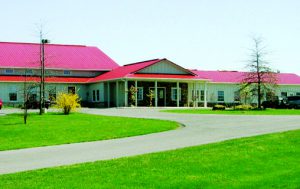
In an even more egregious example, Oakland United Methodist Church inCharles Town, West Virginia, voted in April by a margin of 81-16 to begin the process to leave the denomination. They sought negotiations with the Baltimore-Washington Conference of which they are a part. Instead, a district superintendent showed up unannounced in worship on Easter Sunday and demanded to read a letter from the bishop to the congregation rebuking them for their desire to leave, according to the co-pastor, the Rev. JoAnne Alexander. (Alexander is married to the Rev. Mike Tice and they serve the church as pastors together, although Tice was the only one appointed to the church.) One can only imagine the impact such a letter had on the celebration of Christ’s resurrection and the many visitors in the congregation who knew nothing of what was going on. So much for pastoral sensitivity on the part of the annual conference.
According to Alexander, the week after Easter, all of the church council members received a letter from the conference chancellor (lawyer) reminding them that the church property is held in trust for The United Methodist Church, that congregations are not free to leave, and that the annual conference “stands ready to take all appropriate steps, including the prosecution of civil judicial proceedings, to ensure that those principles are honored by all local church officers.” (Perspective was provided a copy of the letter.) The members of the church council read this letter to be a threat to sue them individually for their action to allow the congregation to begin a process to leave the denomination.
In early May, the bishop called Tice in for a meeting, stating that if he did not show up at the assigned time, he would be removed as pastor. Alexander told Perspective that Tice was accompanied by another elder who was not allowed to speak in the meeting. During the meeting Tice was summarily removed from his appointment and forbidden from setting foot inside the church building without the district superintendent being present. (Tice had retired earlier this year and hoped to serve in retirement until after the 2019 General Conference determined the future direction of the church.)
Oakland United Methodist Church, Charles Town, WV
By the time that Tice had driven back to his home, the locks on the church were already being changed by the conference, and all leaders and members of the church were locked out of the building. According to Alexander, no one was allowed to remove any personal property. They were informed that the district superintendent would decide what items they were allowed to take out of the church, including many items made by church members for use in the church and the pastor’s personal property. Previously scheduled ministry events, including a regular Friday evening community dinner, had to be canceled.
Tice and Alexander (also an ordained elder), have served in ministry at the Oakland UM Church for 32 years. When Alexander began at the church, it had an attendance of 17. Before the recent conflict, attendance had risen to 250. However, in the last several years a number of families had left the church in response to the Frank Schaefer trial (where a United Methodist clergyperson was defrocked for performing a same-sex wedding, but then reinstated on appeal) and the fallout from the 2016 General Conference. The church building had been literally built by the parishioners themselves, but has now been taken from them.
The congregation, now called Oakland Community Church, has declined to sue the conference to keep its building. They believe it is more important to move on in ministry to the community. Its first worship service was at a funeral home, and nearly 100 people attended. Fittingly, the last article posted (from December) on the church’s United Methodist website was entitled, “True Love Means Sacrifice.”
These two examples demonstrate the need for a prescribed exit path in the Book of Discipline for congregations (whether liberal or conservative) who cannot in good conscience remain in The United Methodist Church. We simply cannot trust that the bishops and annual conferences will provide a way at all, let alone a gracious way, for churches that want to leave to keep their buildings and property.
It seems fair and reasonable to require congregations to pay their fair share of unfunded pension liabilities, since these liabilities are the result of the pastors who served each church down through the years. But it is unjust and unacceptable for annual conferences to hold congregations hostage to their buildings in order to force them to compromise their consciences.
That approach is morally questionable and it will only precipitate numerous legal conflicts that burn up millions of dollars that should be going toward the mission of the church. These heavy-handed tactics are symptomatic of a heart at war, not a heart of peace. And they demonstrate church leaders saying one thing, but doing another. It’s a good way to tear down what little trust remains in a denomination about to come apart at the seams.
Thomas Lambrecht is a United Methodist clergyperson and the vice president of Good News.
by Steve | Jun 4, 2018 | In the News, Uncategorized
 Message by the Rev. Rob Renfroe, president of Good News, at the Confessing Movement luncheon of the Texas Annual Conference taking on the bishops who put forth the “One Church” Plan. “It has to be very frustrating for centrists and progressives to come up with an approach that they believe to be very reasonable and allows everyone to do what they desire only for us to find it unacceptable,” said Renfroe. “After all, what can be more American that allowing everyone to have it their way.” Watch the video HERE.
by Steve | Jun 1, 2018 | In the News, Perspective E-Newsletter
 By Thomas Lambrecht-
Every Sunday, all around the world, faithful United Methodists give their tithes and gifts to the church. But apparently it’s not enough to secure them a seat to observe the proceedings of one of the most important General Conferences in the church’s history.
Just a few months ago the General Council on Finance and Administration (GCFA) was boasting that giving to the general church was setting new records, but now they’re pleading poverty. Apparently, funds are so tight the church must take the unprecedented step of charging United Methodists who want to observe their church at work $200 to $300 for the privilege. Previous General Conferences have charged less than one-tenth that amount for a conference three times longer.
A twenty minute review of the financial statements from the UM Church’s general boards and agencies (including GCFA’s) makes it amply clear there are plenty of reserves on hand to cover the $700,000 GCFA says it needs to help defray the expenses for the special General Conference scheduled for February 23-26, 2019, in St. Louis, Missouri.
But of course more than money is at play here. Since the 2000 General Conference demonstrators have either disrupted or attempted to disrupt the quadrennial gatherings. Our bishops, who preside at the conferences and so are charged with maintaining order, have frequently failed to do so. So some people think the bishops, or those planning the General Conference, may have hit on a strategy for stemming the disruptions: charge people to attend. That approach would absolve them of doing what they are supposed to do, and would have the added benefit of protecting the millions of dollars in reserves held by the general church’s boards and agencies.
This might be clever, but it sets a bad precedent and is harmful to reputations of church leaders who are already running a significant trust deficit. People all across the UM connection have critiqued the discernment process the Council of Bishops (COB) has been presiding over during the past two years as lacking transparency. Our episcopal leaders are not even willing to share the results of the critical balloting they took at their last meeting. Their poorly worded press release and follow-up “clarification” created confusion and competing reports of what actually transpired. Closing General Conference to everyone except those United Methodists who can afford to attend will only erode their credibility.
Ironically, the exorbitant registration fee for observers will not keep protesters away, since their commitment to their cause will easily enable them to raise the necessary funds. But it will deny United Methodists of modest means, who give sacrificially to the church, the opportunity to observe in person this historic conference precisely because they give sacrificially to the church.
An interesting side question involves the potential scenario where demonstrators are so disruptive that, in order to continue, the General Conference has to be closed to all observers. (Such a strategy was considered in Tampa in 2012.) In that case, even those innocent of causing problems could be excluded. Will their registration fee be refunded? I doubt it.
Even worse, the fee structure demonstrates a measure of unfairness. Spouses of delegates, for example, have to pay a fee, but bishops’ spouses do not. Persons who serve the church at General Conference, including members of the Judicial Council (who are required to attend) and the Commission on a Way Forward, are being charged a fee. Most egregious of all is that those covering General Conference for the press are being charged a fee. Will the New York Times, Washington Post, or Christianity Today be willing to pay to cover this historic meeting? What about United Methodist News Service? If not, how will our church ensure that the story of what happens be told accurately and with context and balance? And how does limiting press coverage increase transparency and trust?
When the proposal for a special called General Conference was put forward at the 2016 General Conference, delegates raised questions about whether adequate funding was available for the proposed Commission on a Way Forward and the special General Conference. Delegates were assured that adequate funds could be found to cover the anticipated costs. Now, it appears that is not the case. This is just another example of unkept promises generating further mistrust and even cynicism. Why should delegates (or the church at large) believe anything they are told when assurances prove to be unfounded?
The bishops should develop the political will to solve this problem and strongly encourage the GCFA to find the funds necessary to keep General Conference open to all United Methodists. If you agree, contact Bishop Ken Carter, president of the COB (bishop@flumc.org), and Mr. Moses Kumar, general secretary of the GCFA (gcfa@gcfa.org), politely appealing to them to make sure all United Methodists have the opportunity to observe all the General Conference proceedings in person and be part of this momentous event in the life of our church.
Thomas Lambrecht is a United Methodist clergyperson and the vice president of Good News.