
by Steve | Sep 9, 2019 | In the News, Perspective E-Newsletter

Minneapolis Convention Center, location of the 2020 United Methodist General Conference. Photo: Meet Minneapolis.
By Tom Lambrecht –
As I participate in conversations around the church seeking a way to resolve the crisis facing The United Methodist Church, I have become aware that different people have different goals. A person’s top priority will affect how they evaluate a particular plan or strategy that is proposed to move our church forward. It is helpful to identify some of those top priorities and how they affect our perceptions about the various plans.
One top priority I have heard is the desire to avoid pain or minimize change. “Don’t make us vote!” is one manifestation of this priority. Some want to keep going as we are because they are afraid of the pain involved in facing our crisis and attempting to resolve it. “Our congregation is doing all right now. Please don’t do something that will cause an upheaval that tears our church apart.”
These people will not look kindly on a plan that raises up the issues that divide us, asking individuals and congregations to make a choice. But this approach ignores the fact that change is coming, whether we like it or not. It is not possible for The United Methodist Church to continue as it is. The rapid decline of membership, attendance, and giving in the U.S. is precipitating change, quite apart from the conflict we face.
On top of that, no congregation is going to be able to escape defining its theology and ministry around LGBTQ persons. Sooner or later, someone is going to ask to have their same-sex wedding in your church. How will you answer? Given the fact that a large percentage of clergy across the country in our church favor same-sex marriage and the affirmation of same-sex relationships, your church may soon (if it hasn’t already) receive a pastor who will try to convince your congregation to adopt a progressive view on these questions.
We cannot avoid the pain of living in a culture that is becoming increasingly permissive when it comes to human sexuality. We can allow the culture to determine our ministry standards and moral teachings, or we can study the Scriptures and our Christian tradition to come up with a faithful response. As when facing any painful experience, it is often better to face the pain head-on and get it over with. As my parents used to say, the sooner you “bite the bullet” and go through the pain, the sooner you can heal and move on in a positive direction. That is why the 2020 General Conference ought to seek a once and for all resolution to our church’s crisis. It is time to move on, and the only way we can create a positive future for our church is to go through the pain of birthing a new reality.
Another top priority that I hear a lot is the need to “win.” A number of people have written or said to me that they believe a negotiated separation is to “surrender” the fight and betray the victory that we “won” in 2019 at St. Louis. I agree that the St. Louis General Conference was a strong victory for the traditional Scriptural teaching on marriage and sexuality. But what does that victory look like now? We have a church in turmoil, with large segments of the church refusing to submit to the decision of General Conference. The only way to achieve a lasting “victory” in this scenario is to drive out of the church those who are unwilling to live by our teachings, including a significant number of bishops. Some might leave voluntarily, but others are determined to stay and cause as much pain as possible through resistance. We have to ask: is the “victory” worth the cost?
The leadership of “UMC Next,” a new LGBTQ-advocacy caucus, is bent on “winning” in Minneapolis next May. They believe they have a chance to win because they made significant gains in electing a delegation sympathetic to reversing the St. Louis decision. Many of them are not willing to compromise. They want to change the church’s teaching on marriage and sexuality to become more permissive and force evangelical traditionalists to leave. (We would be unable to stay because changing the church’s teaching would violate our principled obedience to God and Scripture.)
Those bent on “winning” on either side are not in favor of a negotiated separation because they believe it is too much of a compromise. Some even describe it as a “sellout.” Why should we “surrender” when we won the vote in 2019? Why should we “surrender” when we won the annual conference elections this past spring? We should double down on our previous strategy because “victory” is within our grasp.
The “win the battle” factions on both sides would set us up for an even more ugly General Conference in 2020 than what we experienced in St. Louis. Some are so committed to winning that they are willing to use any means to do so, including lying, deception, slander, personal attack, parliamentary tricks, and just plain bullying. The spectacle of the church in conflict that was broadcast to the world from St. Louis was not a flattering one. It did not demonstrate Christ-like love or integrity. Do we want an even worse battle next year? Whether the result of the battle is a traditionalist victory with some progressives leaving or a progressive victory with some traditionalists leaving, what will be birthed will be forever tainted by the ugly manner of its birth.
Let me be clear that, if there is no viable alternative, I am fully prepared to work tirelessly to preserve the church’s faithfulness to the Bible and the Gospel (see below). I would do so with as much integrity and honor as God’s grace would enable within me. But Jesus warns us we should count the cost of such a course of action.
Another bottom line concern of some United Methodists is getting or hanging on to as much of the church’s assets as possible. Some have accused evangelicals of being “all about the money.” The leaders of “Mainstream UMC,” another special interest caucus group, are lobbying hard to keep as much of the church’s assets as possible, even to the extent of distorting the truth.
I believe that whatever new expressions or denominations are formed out of The United Methodist Church over the next few years should receive a fair allocation of the general church’s $1 billion in assets. Many of those assets may not be accessible for allocation due to legal restrictions or the fact that they are in property, rather than liquid form. For one expression to get or keep all the assets would be unfair. We have all contributed to those assets, regardless of our theological perspective. For generations, Methodists have contributed to the economic stability of our denomination that included a historically traditional view of marriage and sexuality.
Some social media provocateurs have claimed that evangelicals have failed to contribute our fair share toward the ministry of the church. Like so much of the flamboyant rhetoric these days, that charge is pure fantasy. There are thousands of evangelical churches who have faithfully and sacrificially contributed financially through apportionments over the years. And the money that has been contributed to the church is now the church’s money — it does not belong to those who originally gave it. It was given for the sake of mission and ministry, and it can fulfill that purpose in any of the denominations that are formed. Money should not be used as a weapon in our current conflict.
We should seek a fair distribution of the church’s assets. It is one way to treat each other with love and respect, despite our disagreement. It communicates that the church is not forcing one group out, but rather that we are mutually agreeing to separate for the sake of the church’s mission.
But the failure to receive a fair allocation of the assets should not prevent us from moving forward into a faithful future. A blogger friend recently reminded his readers that when Solomon was faced with the dilemma of the baby claimed by two mothers, the true mother was the one who was willing to let her baby go to save its life, rather than cling to the “half” of the baby that would kill it (I Kings 3:16ff.). Jesus said, “Be on your guard against all kinds of greed; life does not consist in an abundance of possessions” (Luke 12:15). Proverbs wisely states, “Better a little with the fear of the Lord than great wealth with turmoil. Better a small serving of vegetables with love than a fattened calf with hatred” (15:16-17).
My own top priority in developing a way forward is to arrive at a church that is faithful to Scripture and to the doctrines of the church, and is in a position to be fruitful in mission and ministry. Right now, there are many who are not faithful to Scripture and the doctrines of the church, not only with regard to marriage and the church’s moral teachings, but also with regard to the foundational doctrines of the church. For many, Scripture is no longer the primary authority by which we measure our beliefs. Some do not believe Jesus Christ is the divine Son of the living God and only Savior of the world. Many annual conferences have allowed doctrinal relativism and even universalism to become accepted doctrinal positions among their clergy.
Because of this doctrinal confusion, local church members are not being discipled in the faith. Instead, they hear one belief system from one pastor, then a contradictory belief system from the next pastor assigned to their church. Many laity do not know what to believe. As Jesus lamented over the people of Israel, they are “sheep without a shepherd.” How can our church be fruitful in ministry amidst such doctrinal confusion? It cannot, and we see the membership decline to prove it.
Furthermore, the conflict in our church is hindering our fruitfulness in ministry. No one wants to join a church that is fighting. And no one wants to join a church that does not know what it believes. Millions of dollars and thousands of hours are devoted to winning the conflict that could be better spent in spreading the Gospel and helping the poor. What we are doing is not bringing honor to Jesus Christ.
I am for a plan (whatever it is) that resolves our conflict once and for all, that enables at least a portion of The United Methodist Church to unite together in common doctrine, and that frees us to be wholeheartedly devoted to carrying out the mission of making disciples of Jesus Christ with the result that the world is transformed.
We could get to such an outcome by continuing to stand strong for the traditional teachings of the church regarding marriage and sexuality, while hoping that those who cannot live by those teachings would voluntarily leave the church. But such a course of action will probably take another 20 years of fighting the same battles for accountability and working hard to reform the general church agencies to make them effective for fostering ministry fruitfulness. If we have to go that direction, I am willing to do so, and the Renewal and Reform Coalition will be submitting petitions to General Conference to further strengthen accountability.
However, I would rather get to a faithful and fruitful church more quickly than in 20 years. I only have a few years of active ministry left, and I would like to spend them in service of a church moving forward in a positive direction. If a negotiated settlement can be worked out that is mutually respectful and relatively equal and fair, that would resolve the conflict and free us for faithful ministry in the months after General Conference, I think we should take it. We continue to prayerfully commit ourselves to God’s guidance in working toward that best outcome.
Thomas Lambrecht is a United Methodist clergyperson and the vice president of Good News.
by Steve | Sep 3, 2019 | Magazine, Magazine Articles, September-October 2019
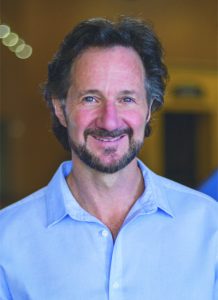 By Rob Renfroe –
Which is more important: what you think or how you think? Don’t spend too much time working on an answer. Both are critical. As orthodox Christians we rightly emphasize that what we believe is essential. But people can believe all the right doctrines and still not live a joyful life that makes a difference in the world. That’s because how we think makes a difference in our marriages, at our work, in difficult times, and in all our relationships.
How we think will also make a difference in finding a faithful way forward for evangelicals within The United Methodist Church.
It’s normal for many people to think pessimistically. “Things are bad and they’re going to get worse. My problems are big and they’ll only get bigger. Everyone’s against us. Why try? There’s nothing we can do to change things.”
Other people tend to think judgmentally. They see a problem and their first reaction is to find someone to blame – their spouse, their boss, politicians, the bishops. They spend their emotional energy looking back to fix the blame instead of looking forward to fix the problem.
Still others think naively. “It’ll work out. Things always do.” No, they do not. Kids do not always get off drugs. They need parents who will pray and fight for them. Marriages do not always get better. They need two people who will do the hard work of making a troubled relationship good again. Finances do not always work themselves out. People must make a plan and be disciplined. It’s naïve to think otherwise.
I hear these ways of thinking in the conversations with people about the future of the UM Church. Some of us are pessimistic about our future and what we can do to change it – some of us have even given up. Others are judgmental and angry, consumed with blaming whoever they see as the villain. And still others are naïve – like an ostrich with its head in the sand, they refuse to acknowledge the deep trouble we are in and do not feel a need to try to make things better.
What we believe may be right. But if how we think is wrong, we will never be part of the solution. How do we need to think to make a difference and be used by God – whether it’s in the lives of others or in bringing about the exciting future God has for faithful Wesleyan Christians?
First, we must think bottom line. More people know what they don’t want out of life than know what they do want. They cannot tell you their bottom line. They cannot tell you what their purpose is, what their goals are, or what they believe they are on earth to accomplish. What happens when we do not have a bottom line? Not much. We have no direction, no purpose, no passion, and no power.
One reason Paul was so effective in spreading the Gospel in the first century is that he knew his bottom line: “I want to know Christ and the power of his resurrection and the fellowship of sharing in his sufferings” (Philippians 3:10). Bottom line, Paul said he was here to grow closer to Jesus, to open his life to the power of God so that souls would be saved and lives would be changed, and to spend his life for the Gospel – even if it required sacrifice and suffering.
Paul’s bottom line gave him a purpose which birthed a passion that generated a power to keep going in spite of persecution and suffering – and the world did not change him; he changed the world.
When thinking about our denomination’s future, what’s your bottom line for a way forward for evangelical Wesleyans? For me, it’s being united with others who love Jesus, trust the Scriptures, have a missional passion for the lost and the poor, and want to embrace all people without letting go of the church’s historical sexual ethic. My bottom line does not care about proving I’m right or villainizing those who see things differently. I have no desire to control or prosecute others. My primary concern is not that we evangelicals receive every last penny of the denominational assets we deserve. My bottom line is to end the fighting and get on with being a church that changes the world.
Second, we need to think positively. Here I am not referring to “the power of positive thinking” but to the faith-filled way of thinking that characterized Paul when he wrote, “I can do all things through him who strengthens me” (Philippians 4:13).
Do you remember how David responded when Saul said he was too young to fight and defeat the Philistine giant Goliath? “When a lion or a bear came and carried off a sheep, I went after it, struck it, and rescued the sheep. Your servant has killed both the lion and the bear, and this Philistine will be like one of them” (1 Samuel 17:34-36). David told Saul he knew he could defeat Goliath because he had faced the lion and the bear and he had won.
When your life becomes difficult, you need to remember the lion and the bear. You have faced huge problems and overwhelming challenges before. You have undergone terrible trials and you have been filled with fear in the past. And you overcame. Do not underestimate your own strength or resourcefulness.
Shifting our thinking to United Methodism, evangelicals within our denomination have been struggling against the influence of liberal and progressive theologies for decades. Most of our seminaries, many of our bishops, and leaders of our boards and agencies have tried to belittle, undercut, or misrepresent a traditional theology and intimidate those who promote it. The full force of the institutional church came against us in St. Louis. But for 50 years we have stood together, and we are still here. Those who have gone before us have been faithful and courageous in the face of the lion and the bear. That’s our heritage, and that’s who we are.
But there was more to David’s answer to Saul than self-confidence. Here’s the rest of his answer to Saul. “The Lord who delivered me from the paw of the lion and the paw of the bear will deliver me from the hand of this Philistine” (1 Samuel 17.37). David had a deep confidence in God – he believed that the God who had fought for him in the past would fight for him in the future.
I do not know what the outcome of General Conference 2020 will be. But I do know that God wants a church that is faithful to his word, committed to his Son, and unashamedly proclaims the Good News of salvation. Will God keep the UM Church together, will he birth two or three new entities, or will he do something different? We will see. But we can be confident and positive that the same God who has kept our global denomination from caving to the culture in the past will be our deliverer and our defender in the future.
Finally, we need to think simply – not simplistically, but simply. It’s easy to obsess over every possibility, plan out complicated strategies to counteract what others might or might not do, or get lost in the details of the challenge we are facing. When we do, our problems become overwhelming. The internal conversation that goes on in the minds of people who get stuck in life is full of statements that begin with “what about,” “but if this happens,” and “here’s why that will never work.” It’s a complicated and confusing world inside their heads and they often get stuck inside their own thinking.
What’s needed is a mentality that says, “Even if I don’t have it all figured out, I will take a simple step forward in the direction of my bottom line.” Nothing great will ever be accomplished if every possible objection must first be solved and every theoretical eventuality must be addressed before we move forward. That’s true of the challenges we face as individuals and as a denomination.
Take a simple step forward – and you are moving. Take a simple step forward – and you are closer to your goal. Put enough simple steps in the right direction together and a solution will appear and you will overcome.
Our plan for a faithful UM Church is simple. Find nonevangelical partners who want to stop the fighting, who do not want to repeat the ugliness of St. Louis, and create legislation together that leads to an amicable parting of the ways.
Simple is not always easy. Sometimes it’s hard work and often there are real challenges. But it’s not complicated. If there are enough progressives and centrists of good will who want the best for the church, we will find them and we will work with them and there will be respectful separation. It is that simple. Not easy, but not complicated, either.
Thinking about the bottom line, we should know what we want. We need to think positively and act in faith, simply taking the next faithful step forward. That’s how we move forward.
by Steve | Sep 3, 2019 | Magazine, Magazine Articles, September-October 2019
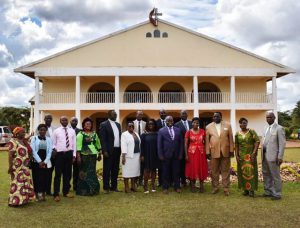
The Zimbabwe Episcopal delegation stand in front of Joli Site Church in Galilee during their visit in the South Congo Episcopal Area. Photo by Chenayi Kumuterera, UM News.
By Chenayi Kumuterera (UMNS) –
KOLWEZI, Congo – Inspired by the story of Barnabas (Acts 4:36), who sold his land and gave the money to the early apostles, members of Jerusalem Francophone United Methodist Parish donated their salaries, pledges, and other gifts to construct Centennial Memorial Temple.
Accommodating more than 5,800 people, the temple is the largest structure of Joli Site Church in Galilee District, South Congo Conference. Construction took seven years. Their contributions were worth the equivalent of $2.5 million. (The average annual income in the Congo is $400.)
The Rev. Albert Masengo Tshiwewa leads the French-speaking congregation, assisted by the Rev. Jacques Mutond Tshibang, the Rev. Robert Mwape Kapembwa, the Rev. Eugene Kalenga Mashawu, the Rev. Isaac Tshonga Mandjiata, and the Rev. Gilbert Mwanza Kasongo.
“It all started with a collective awareness of trying to build a temple where we would be comfortable praying and worshipping because of the growing numbers of worshippers each Sunday,” said Gomer Chamusa Kasweshi, lay leader. “The administrative council at that time had decided to save money and to call people of goodwill to contribute to the purchase of land at the entrance of the city on the side of the international airport of Luano.” Now, he noted, “we are focused on raising funds to finalize the ceiling and continue with other social projects such as education and health and the construction of pastoral homes.”
When the land was acquired, the administrative council set up a construction commission of volunteers and other committed people to contribute to the project. They were asked to raise $100,000 from voluntary contributions. Competitions and other fundraising strategies were developed.
“Joli Site Church was built through collection of funds from members of the local church, commitment of each member of the construction committee to give a fixed amount each month and commitment of parish families to offer their monthly salaries,” said Masengo, senior pastor. “Other families were committed to donating all the doors of the church,” he added. “Other families pledged to pay part of the bill of the contractor who had fixed the roof. This was amazing.”
At the laying of the first stone, the former governor of Katanga, His Excellency Moise Katumbi Chapwe, who is not a United Methodist, contributed 5,000 bags of cement to the project.
“I [have] witnessed state-of-the-art buildings (sanctuaries, parsonages, offices, and fellowship halls) built by individuals and families,” said the Rev. Gift Machinga, chair, Zimbabwe East Conference Board of Discipleship. “The biggest and most beautiful church, Joli Site in Galilee District, is a case in point. This is the highest level of giving to be witnessed anywhere.”
Simon Mafunda, Zimbabwe East Conference lay leader said the church is “a testimony of great vision and foresight.”
Chenayi Kumuterera is a communicator with the Zimbabwe West Conference.
by Steve | Sep 3, 2019 | Magazine, Magazine Articles, September-October 2019
Harriet: AME Zion Heroine on Big screen
By Courtney Lott –
Harriet Tubman, the fearless conductor of the Underground Railroad, escaped slavery in 1849. She found refuge at a nearby farm and eventually made her way to Pennsylvania. Marveling at her newfound freedom, she looked at her hands to see if she was the same person. “There was such a glory over everything,” Tubman said. “The sun came up like gold through the trees and over the fields, and I felt like I was in Heaven.”
But Tubman was never satisfied with her own freedom. She worked multiple jobs, lived frugally, and saved her wages to rescue her own family. Citing God’s rescue of his people from Egypt, Tubman swore she would allow nothing to make her stray from her God-given task to fight against slavery.
“I was free,” Tubman said, “and they should be free also; I would make a home for them in the North, and the Lord helping me, I would bring them all there. Oh, how I prayed then, lying all alone on the cold, damp ground; ‘Oh, dear Lord,’ I said, ‘I ain’t got no friend but you. Come to my help, Lord, for I’m in trouble!’”
Tubman made 19 return trips to the South to save others from slavery. Listening for the voice of God for guidance, she only went where she felt he was leading. Abolitionist Thomas Garrett said he had never met anyone with more confidence in God’s voice. Other abolitionists cited God as the source of her strength, and claimed that she trusted him as protector and deliverer of the weak.
To protect her “passengers” as well as her ultimate mission, if a slave considered returning to his master, Tubman would hold a gun to their head and ask them to reconsider. A slave who went back could easily give away the others and risk ending the entire operation. “…if he was weak enough to give out,” Tubman said, “he’d be weak enough to betray us all and all who had helped us, and do you think I’d let so many die just for one coward man?” In spite of this, Tubman said she never had to shoot anyone she helped.
Throughout her work with the Underground Railroad, Tubman freed over 300 slaves. In the Civil War, Tubman worked as a laundress, nurse, and a spy for the Union army. She was also the first woman to lead an armed expedition in the war. Though she received accolades from the government, Tubman died in poverty in 1913, in her home in Auburn, New York – a property she left to the African Methodist Episcopal (AME) Zion Church.
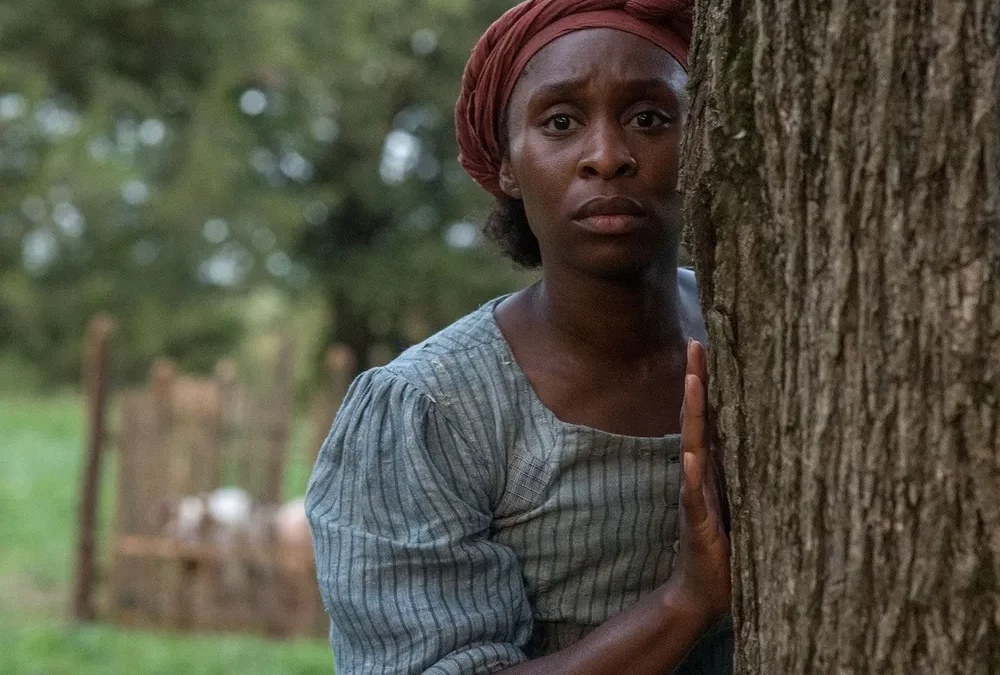
This fall, Focus Features film Harriet will be in theaters. Starring Tony Award Winning Actress, Cynthia Evivo (Widows, Bad Time at the El Royale) as Tubman and directed by Kasi Lemmons (Luke Cage, Talk to Me), Harriet will follow Tubman’s escape from slavery and her work with the Underground Railroad. Make sure to check out this movie.
Courtney Lott is the editorial assistant at Good News. Photo: Cynthia Evivo as courageous abolitionist Harriet Tubman in Harriet. Image via Focus Features.
by Steve | Sep 3, 2019 | Magazine, Magazine Articles, September-October 2019

Art by John Stuart, aka Stushie.
By Steve Beard –
In the grand scheme of things, it may seem like an insignificant victory – but Eddie O’Neill sees it from a different vantage point. In July, Sunday services finally were begun for Christian prisoners at a medium-security London mental health unit – and the services included communion.
O’Neill was transferred to the mental health facility in January 2018, and discovered there were no Sunday services for Christians. His requests were ignored by administrators – at the same time that regular Friday prayers were being organized for Muslim in-patients.
According to the Church Times in England, O’Neill, 57 years old, has been in prison for ten years, and became a Christian behind bars. He testifies that he “grew up in care, and was abused by the system as a child and came into the adult world not knowing what God, family, and love are.” O’Neill is, by self-description, “a damaged person, a convicted criminal, but the only true redemption I have found in my life is hope in Jesus Christ.”
The facility eventually relented and provided a “spiritualist” to provide the sacraments. Without utilizing an appropriate liturgy, the spiritualist allegedly administered holy communion by merely saying, “Here you go.”
Eighteen months later, the injustice was rectified this past July when communion with the proper liturgy was offered. The Christian Legal Centre, who acted as O’Neill’s advocate, said that all the Christian patients wanted “was to have a service and holy communion on a Sunday, which recognized the hope they had in Jesus Christ, and to exercise their faith in him. This was not being taken seriously, and what the [mental health] centre was providing was wholly inappropriate ….”
For his crime, O’Neill is rightly serving his term in the hands of justice. Communion, at the same time, rightly wraps him in the redemptive arms of grace.
The Lord’s Supper, as it is called, has been controversial from the very beginning. Broken bodies and shed blood give ample room for justifiable misunderstanding and unjustified hostility. To those uninitiated in the faith, the ancient Christian ritual appears beyond strange and seemingly-Gothic. Through the eyes of faith, however, the sacraments are – to borrow from Augustine – an “outward, visible sign of an inward, invisible grace.”
In one sermon, Methodism’s founder John Wesley called communion “the grand channel whereby the grace of his Spirit was conveyed to the souls of all the children of God.” On another occasion, he said, “As our bodies are strengthened by bread and wine, so are our souls by these tokens of the body and blood of Christ. This is the food of our souls….”
I understand Wesley’s phraseology. Now more than ever, I cognizantly look forward to the first Sunday of every month when communion is served at my church. At this juncture in my spiritual life, the most vibrant 30 seconds of each month is when someone from my church looks me eye-to-eye and says, “The Body of Christ broken for you” and offers me the Bread of Life. Moments later, another church member says, “The Blood of Christ shed for you.” There, I dip into the Cup of Salvation.
Long ago at the Last Supper, Jesus said, “Do this in remembrance of me.” And, I do. It is one of his commands I faithfully, eagerly, and desperately obey. And something stirs. More than any other element on a Sunday morning, communion helps me to detect or perceive the presence of Christ. He is here. I recognize that communion is, for many of my Christian friends, more obligatory than sensory. We are all wired differently. But, like the disciples on the road to Emmaus, communion mysteriously opens my eyes to Jesus.
Last year, I wiped away tears as I read the testimony of another prisoner who had been cut off from the Bread and Cup. While there was a volunteer-led Bible study at his prison, there was not a worship service and no Eucharist.
His Lutheran pastor tried many times to bring communion but was inexcusably thwarted as he was given the institutional runaround. Lee A. Moore was reduced to Sunday mornings spent communing “in spirit” with his congregation as he followed the liturgy from worship bulletins that his pastor sent. With “wine” made from water and grape jelly and a slice of bread from the mess hall, he joined – in the isolation of the prison – in sharing the body and blood of Christ.
“It may seem uncouth or even foolish to join in communion remotely, like a child having pretend tea in plastic cups, but these were vital moments of grace that preserved me in my time of desperate need,” Moore wrote in a moving article for Christianity Today.
He was eventually befriended by another prisoner who invited him to the Roman Catholic service. Although he was interested, Moore was vexed about the etiquette and asked about the rule banning non-Catholics from participation. The man smiled and put his hand on Moore’s shoulder. “This is prison,” he said. “Do you really think God cares if you steal some grace?”
The song of invitation at the service included these lines: “I am hope for all who are hopeless, I am eyes for those who long to see./ In the shadows of the night, I will be your light, come and rest in me.”
When the elements were offered, Moore held out his hands “overlapped and open to show both emptiness and the expectation of receiving something,” he wrote. He described feeling like a beggar “scrounging for the body of Christ.”
The song continued: “I am the strength for all the despairing, healing for the ones who dwell in shame./ All the blind will see, the lame will all run free, and all will know my name./ Do not be afraid, I am with you. I have called you each by name./ Come and follow me, I will bring you home. I love you and you are mine.”
The history of the Church has been punctuated with spirited and sometimes grievous debates and disagreements about communion. As for his prison experience, Moore was unofficially granted special permission from the priest to receive the elements. In the contentious history of questions surrounding communion, there are three undeniable factors we can agree upon. First, “Jesus said to do this,” writes Moore. Second, “His grace is available to us in a special way when we do this.” And lastly, “all our human attempts at describing this holy mystery fall short. We are not worthy. But Christ still bids us all to come to the table of grace.”
Even the great novelist and lay theologian C.S. Lewis struggled to describe what actually takes place during the Lord’s Supper. “I find no difficulty in believing that the veil between the worlds … is nowhere else so thin and permeable to divine operation,” he wrote. As the imaginative author of The Chronicles of Narnia, Lewis poetically described it as the “big medicine” that was like a “hand from the hidden country” that touches not only our body, but also our soul.
Take, eat. Take, drink. It is the food for your soul.
Steve Beard is the editor of Good News.