by Steve | Jul 8, 2020 | July-August 2020, Magazine, Magazine Articles
 By Max Wilkins –
The worldwide protests in response to the death of George Floyd in Minneapolis took place during the week that God’s people celebrate Pentecost – the birthday of the Church, the birthday of the mission of Jesus, and the Lord’s sending of Holy Spirit, the Breath of Life.
In massive events all around the globe, activists of all races, creeds, and religions recalled his plea, “I can’t breathe!”
There is a Pentecost message in all of this, and it provides some grounding and some hope.
That first Pentecost took place when the disciples had gathered at Jesus’ direction in a prayer meeting in Jerusalem (see Acts 1:6-11). Also gathered there, just outside the room where they were meeting, were people from every race, every tribe, every language in the known world. “Now there were staying in Jerusalem God-fearing Jews from every nation under heaven. When they heard this sound, a crowd came together in bewilderment, because each one heard their own language being spoken” (Acts 2:5-6).
Immediately upon receiving the promised Holy Spirit, the disciples went out into that gathering and shared this Breath of Life with the people. That very day a Spirit led community formed that included more than 3,000 people – African people, Asian people, Europeans, and Semitic people.
One of the principle purposes of the sending of that Breath of Life was to inspire community and unity (not sameness or negation of culture and distinctiveness, but a unity of spirit, of purpose, of value for life before God).
Jesus was initiating his mission with the coming of the Spirit. “You will receive power,” he had told the disciples, “when the Holy Spirit comes upon you AND you will be my witnesses, in Jerusalem and Judea and Samaria and to the ends of the earth.”
Those recipients of the Breath of Life were sent to bring together communities from all parts of the world, and to recreate that first Pentecost by coming together across lines of division, expectantly anticipating the sharing of the Breath of Life. The mission is to help those who are unable to breathe – physically, spiritually, emotionally – to be able to breathe the Breath of Life. And God’s people can only join that mission by fighting, in prayerful and tangible ways, against the very systemic forces that are crushing the breath out of people.
George Floyd died in Minneapolis, suffocated in broad daylight in front of a crowd. Many people around the country have taken up the cry of “I can’t breathe” in protest of Mr. Floyd’s violent murder and in solidarity with his experience of helplessness in the face of racial injustice.
I recognize, however, that these words are not just the dying gasp of George Floyd. They are also the suffocating cry of millions of people around the world whose necks are being crushed by the systemic evils of racism, of injustice, of economic deprivation, and of indifference. Evil, in its various forms, has been crushing the life out of human beings forever. And evil as it relates to racism, to abuse of power, to white supremacy, and to indifference to the suffering of those outside our own tribe, is particularly virulent right now. It is also totally contrary to the will of God and to God’s plans for the people of God.
Make no mistake, although the issues can be politicized, these are essentially spiritual issues. Some legal justice may occur in this situation. Yet, even if there are criminal convictions in this case, it is only a bandage on a hemorrhage if the inherent injustice built into the system and rampant in our society is not addressed and acted upon in tangible ways. Systems need to change; hearts need to change. And I don’t think that can happen apart from the work of the Holy Spirit in and through his people.
I praise God that by his grace we are a part of his people. Please continue to be instruments of the Breath of Life.
Come Holy Spirit.
Max Wilkins is the president of TMS Global.
by Steve | Jul 8, 2020 | July-August 2020, Magazine, Magazine Articles
 By B.J. Funk –
I have such sweet memories of my mother, who has been vacationing with Jesus in heaven for 18 years. Imagine my surprise when I recently found an issue of Good News from 1984 among her valuables. Even more precious is her handwritten note on the front: “Read Maxie Dunnam’s article, page 7.”
A personal message from Mama? What beautiful irony that I am now blessed to write for a magazine my mother was reading 36 years ago. I had no idea! I love God’s surprises.
In his article, “You Can Grow in your Walk with God,” Maxie discusses how E. Stanley Jones was so instrumental in renewing his spiritual life. In addition to reading Dr. Jones’ book In Christ, Maxie also attended a Christian ashram. There, at this place of religious retreat, Maxie learned about being the actual dwelling place of Christ.
Searching for deeper meaning, Maxie vividly remembered his experience at the altar as the ashram service ended. Brother Stanley asked if the participants wanted to be whole, adding that the only possibility for wholeness was the indwelling Christ. Dunnam responded with an enthusiastic YES! I nodded my own silent YES!
He began to change his attitude about his Christian life, from that of ministering for Christ to that of allowing Christ to live through him. Jones’ In Christ put Maxie in touch with what would become the central reality of his faith journey: the indwelling Christ. Maxie’s quest for a deeper walk with God brought new life into his personal relationship with Christ. He then wanted his vocational purpose to be helping others develop a deeper walk with God. He developed the following definition of spiritual formation: “That dynamic process of receiving through faith and appropriating through commitment, discipline, and action, the living Christ into my own life to the end that my life will conform to and manifest the reality of Christ’s presence in the world.”
My mother underlined these next words: “Simply put, the task of every Christian is to learn to say yes to Christ in every area of life every day. That’s the bottom line of developing a deeper walk with God.” I was being given a rare and beautiful look into my mother’s sold-out commitment to Christ. She lived before me always the words she underlined.
Maxie, instead of focusing only on the three major ingredients for developing and keeping our faith alive – prayer, Scripture study, and corporate worship – as vital as these are, focused his article on other necessary commitments which don’t receive as much emphasis.
The first is being aware of God’s presence throughout the day. More than only the importance of a daily quiet time, we must develop practices that keep us aware of Christ’s presence. To build awareness, Maxie commits each day to Christ. He visualizes Christ’s presence in every situation he will encounter throughout the day.
Mama carried these thoughts into the Children’s Division of our United Methodist Church, where she served as Superintendent for 35 years.
The second is Christian conferencing, deliberately seeking out and listening to the stories of other Christians. Structured small groups are good for this, as is a spontaneous sharing of our faith.
A third discipline is that of solitude. Maxie wrote that his times of silence are sometimes only a few hours or maybe a 24-36-hour period of silent retreat. The purpose of silent times is not just to talk to God, but to learn how to listen.
Confession and examination of conscience bring important questions to the forefront. “Was I condemning today? Did I speak the truth in love?”
A final discipline is generosity, which includes not only tithing but generosity with our time and attention to others. Recognizing that my mother’s Christian life was enhanced by this article makes me know that I will refer to Maxie Dunnam’s article again and again, wanting to take every word into my own desire for a deeper walk with Christ.
Thank you, Maxie. And thank you, Mama.
by Steve | Jul 2, 2020 | In the News, Perspective E-Newsletter
By Thomas Lambrecht –

United Methodists in Liberia load supplies as part of the church’s Anti COVID-19 Taskforce. The food relief is supported by UMCOR and other global partners. Photo by E Julu Swen, UM News.
How do Christians deal with discouragement?
Some parts of the United States, as well as some other countries around the world, have recently seen an uptick in the number of Covid-19 cases, with increased hospitalizations and deaths. The increases have led governments to pause steps to reopen the economy and, in some cases, roll back opening steps that had already been taken. Some businesses that were already open have been closed again. People that were back to work are now furloughed or laid off again. Texas, where I live, has been identified as one of the “hot spots” where increases are threatening to go out of control. Hospital capacity is filling up rapidly. Harris County (Houston) has encouraged residents to return to complete lockdown status. Some churches that were open for in-person worship have now closed again, while other churches have once again postponed in-person worship.
This week, I received the following report from a missionary in Honduras, who indicates the situation there is much worse than in the U.S.
Currently in Honduras, we have been under martial law for months, and it will last until at least July 12, or 117 consecutive days. Fines and imprisonments accompany the failure to wear a mask, shopping for food and water is only permitted once every 14 days. All residents must remain in their homes on the 13 days they cannot shop. All residents are confined to their homes from 5 pm on Fridays until 6 am on Sundays. There is no such things as curbside pickup for food. One week, for a few days, I was thrilled to taste a drive-in BIG Mac! That privilege lasted for one week. Millions are starving here.
This turn of events is discouraging on several levels. It is discouraging to see the progress made in containing the virus undone in a few weeks’ time. It is discouraging to see the continued suffering of millions due to very high unemployment and in some cases the lack of food and for others the possibility of being evicted from their homes for inability to pay rent. It is discouraging to see the thousands who suffer from Covid-19, family members who are ill, and people who are still dying alone in a hospital. It is discouraging that, although we may have one or several vaccines by the end of the year, they may not prevent people from getting the virus, only make the symptoms less severe. And of course it will take months for any vaccine to reach the bulk of the population here and around the world. It is discouraging to see people protesting against measures to protect public health, including one protest against wearing masks orchestrated by people carrying guns! It is discouraging to see government leaders giving conflicting directions in the midst of the pandemic. We need to understand this is an unprecedented event for which there is no “playbook,” and our leaders are learning as we go, developing policies on the fly.
It has often been said that the Church is the heart and hands of Jesus to an unbelieving world. Those congregations and ministries that are reaching out during this pandemic to those lacking food, on the verge of homelessness, or grieving for departed loved ones, are truly doing gospel work. “If anyone has material possessions and sees a brother or sister in need but has no pity on them, how can the love of God be in that person? Dear children, let us not love with words or speech but with actions and in truth” (1 John 3:17).
We, the Church, need to be diligent to respond to both the practical and spiritual needs around us.
At the same time, how do we handle such discouragement? We are witnessing in our national and global life what sometimes happens in personal life. We take two steps forward, but then take one step back. It seems like we are making little progress at times in life.
The Apostle Paul has some wonderfully encouraging words for us, born out of his own experience of trial and difficulty during his many missionary journeys.
But we have this treasure in jars of clay to show that this all-surpassing power is from God and not from us. We are hard pressed on every side, but not crushed; perplexed, but not in despair; persecuted, but not abandoned; struck down, but not destroyed. We always carry around in our body the death of Jesus, so that the life of Jesus may also be revealed in our body. For we who are alive are always being given over to death for Jesus’ sake, so that his life may be revealed in our mortal body. … Therefore, we do not lose heart. Though outwardly we are wasting away, yet inwardly we are being renewed day by day. For our light and momentary troubles are achieving for us an eternal glory that far outweighs them all. So we fix our eyes not on what is seen, but on what is unseen. For what is seen is temporary, but what is unseen is eternal. (II Corinthians 4:7-12, 16-18)
What Paul is talking about here is relying upon the power of God when our own power is weak or non-existent. The power of God “surpasses all” but is housed in “jars of clay” — our mortal, human, frail bodies and minds. The power of God working in and through us makes up for what we lack. He is strong when we are weak. He is love when we are tempted to hatred and discord. He is assurance when we are in panic mode. He is everything when it feels like we have nothing.
If we focus on what we have and what we bring, we will surely lose hope. But if we focus on what God has and what he brings, we will not lose hope. God is able when we are not. God works when we cannot. God gives courage when we have lost ours. God is there when we need him the most.
To all outward appearances, says Paul, there are times when it looks like we are wasting away — forgotten, hopeless, hungry, homeless. Yet if we rely upon the Lord, he will renew our spirits inwardly moment by moment, day by day. Even if all should be lost in this world, we have the assurance of an eternity of blessing and joy in the Lord’s presence.
As Paul says, “We live by faith, not by sight” (II Corinthians 5:7). We live with confidence in the unseen realities appropriated only by faith. That makes it easier to cope with the discouraging realities of life in a fallen world, alienated from God even to the point that the fallen creation works to bring disease and death.
Jesus, on the night when he was betrayed, knowing he would pass through unimaginable suffering the next day and knowing what lay ahead for his disciples, said these words:
Peace I leave with you; my peace I give you. I do not give to you as the world gives. Do not let your hearts be troubled and do not be afraid. … I have told you these things, so that in me you may have peace. In this world you will have trouble. But take heart! I have overcome the world. (John 14:27, 16:33)
When everything around us or even within us is falling apart, God can give us the “peace that transcends all human understanding” (Philippians 4:7). So when it seems like this trial will go on forever, may the peace of God guard your hearts and your minds in Christ Jesus. And may the Holy Spirit renew and strengthen your faith moment by moment and day by day, as you rely upon him.
May we, the Church, continue to rise up and reach out in love to our hurting communities. In our earthly existence coping with trouble, may the world see the life and love of Jesus shine through us. Seeing Jesus, may they be drawn to him, giving all glory to the Father, who made us for relationship with himself. Even in the midst of a pandemic, God can use us to fulfill his plan and his purpose for us and for his world.
Thomas Lambrecht is a United Methodist clergyperson and the vice president of Good News.
by Steve | Jun 29, 2020 | In the News, Perspective E-Newsletter
By Thomas Lambrecht –
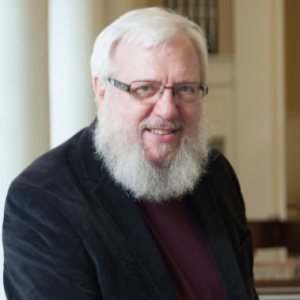
Dr. William J. Abraham
In a ground-breaking development, Baylor University in Waco, Texas, this week announced the formation of a Wesley House of Studies at its Baptist-oriented Truett Theological Seminary.
Dr. William J. Abraham has been named the inaugural director to establish this new center of pastoral training at a Division-I university reaching students from 90 countries. It will be able to combine the resources of a school solidly committed to an orthodox, evangelical understanding of scriptural Christianity with the dynamic Wesleyan tradition.
“We are on the cusp of a new day for the future of the Wesleyan network of families across the world,” Abraham said. “In order to fulfill the promise in store for us, we urgently need fresh ways of providing the spiritual, practical, and intellectual resources that are essential for the work up ahead.
“Baylor University is a world-class institution, and the creation of a Wesley House of Studies at Baylor University’s George W. Truett Theological Seminary is a landmark development,” he said. “I can think of no better place to be home to a vibrant Wesley House. I am thrilled to play my part in making it a stellar center of excellence that the Holy Spirit can use for reform, renewal, and awakening on a global scale.”
The significance of this development can hardly be overstated. It is in part a response to the acknowledgement that, in general, our United Methodist seminaries have failed the church. That is an overgeneralization, to which there are exceptions, but the truth remains that our seminaries as a whole have not formed a generation of clergy leaders who have led the church to growth and vitality.
In the words of leadership guru John Maxwell, “Everything rises and falls on leadership.” The fact is that our denomination in the U.S. has experienced a consistent decline in membership since 1968 and a more recent drastic decline in participation. Membership in the U.S. is down over 37 percent. United Methodists in 1970 made up 5.8 percent of the U.S. population, but now it is less than half that percentage. Dozens of churches close every year. There are many factors that play into this decline, but one of the most significant is the leadership provided by the 30,000 clergy persons in our denomination. Some are highly effective, but many are not.
In my experience, a major reason for clergy ineffectiveness is the training that is offered to our pastors. Most United Methodist seminary preparation gives insufficient attention to United Methodist doctrine, biblical studies, preaching, and the practice of ministry. Although some steps have been taken to address the need, there is also insufficient mentoring and supervision for clergy in the first ten years of their active ministry after seminary.
Regarding theology and doctrine, nearly all of our UM seminaries take a pluralistic approach. Rather than teaching theology from the viewpoint of our UM doctrinal standards (the Articles of Religion and the Confession of Faith), seminaries are teaching a liberal/progressive theology that downplays or even contradicts our Wesleyan doctrinal foundation. The message that is often proclaimed in our pulpits is a nebulous theology that may be unobjectionable but is also uninspiring and undemanding. Too often, it seems as though the Wesleyan message of the need for personal salvation and the urgency to return to God through the crucified and risen Jesus by the power of the Holy Spirit is replace by a message about how we can make our world a better place through living better lives personally and advocating for a particular kind of political change in our country.
Unfortunately, most of our UM seminaries have become inhospitable environments for students who believe in the primary authority of the Bible and in the validity of our Wesleyan doctrinal heritage. Teaching of the Bible is often destructive rather than constructive. One seminary leader once described the goal of the seminary to deconstruct the faith of its students before putting that faith back together in a new way.
In my experience, UM seminaries are often better at the former than the latter. Students are given many reasons to question the historical accuracy and divine inspiration of the Bible. They are taught that scholars can be the arbiters of what parts of the Bible should be accepted and what parts relegated to irrelevance. Certain key passages are lifted up as the parts of biblical teaching to emphasize, and the Bible is read in light of modern experience, rather than allowed to speak with its own voice — the voice of God. The ability to do proper exegesis and discern the validity of various interpretations of Scripture are often not emphasized. As a result, we have heard from people in the pews that their pastors seem unable to “correctly handle the word of truth” (II Timothy 2:15). Many sermons end up being the pastor’s opinion, perhaps quoting from some recent books they have read, rather than winsomely communicating the teaching of Scripture with passion and power.
There is no question that a prospective pastor cannot learn all they need to know about the practice of ministry in seminary. It takes years of experience and the input and guidance of more experienced pastors to learn how to do ministry. However, seminary can teach the basics and how to think through issues pastorally and theologically. Unfortunately, many seminaries seem unable to do even this, and many pastors make decisions based on “gut feelings” or what might be least offensive to others, rather than being informed by Scripture, theology, and the tradition and experience of the church.
The onset of Covid-19 has upended higher education in general and theological education and the practice of ministry in particular. Suddenly, pastors are being asked to do ministry in ways they were not taught in seminary. Seminaries are being forced to offer education in ways that they were not designed to offer, emphasizing online education and revamping the curriculum to deal with the new ways of doing church. Where previously seminaries have been dipping their toes in the water of online pastoral training, they are now being forced to bodily dive in. The whole model of pastoral training is up for reexamination, and the business model that supported seminary education may not survive the pandemic. In addition, seminaries have seen a drastic decline in the number of students interested in a traditional, three-year on-site seminary education.
In the midst of this ferment in pastoral training, a new Methodist denomination is being prepared. If the 2021 General Conference enacts a plan of separation such as the Protocol for Reconciliation and Grace through Separation, the need for trained pastors in the new denomination will be acute. I am encouraged by the directions that are being developed by those tasked with preparing the skeleton of a new paradigm for pastoral training.
As previously reported by the Wesleyan Covenant Association, the process of ordination may be dramatically shortened, so that nearly every local church will have an ordained clergy person to serve as its pastor. At the same time, there is a commitment to an educated clergy who may be prepared for effective ministry in a variety of ways. In addition to a traditional seminary education, provision would be made for a more comprehensive Course of Study leading to elder’s orders and a hybrid online/in-person program for obtaining a seminary degree. Some of these learning environments are more suitable for combining experiential learning, mentoring, and classroom learning that might lead to greater pastoral effectiveness.
Significantly, the commitment to an educated clergy is being backed up by the intention to provide denominational loans to prospective pastors attending seminary before and during their pastoral service. In return for serving as pastors in the new denomination, those loans would be forgiven over time. The goal is to both incentivize continued education and growth and to eliminate the problem of seminary student debt. Considerable financial resources from apportionments will be needed to ensure effective clergy leadership for the future. Such resources would not go toward blanket grants to schools, but be used to directly support individual students at whatever approved seminary they attend.
Not only will existing seminaries need to shift how they do pastoral training, but there may be a need for new training programs and seminaries that foster education that is biblically based and promotes our traditional Wesleyan understanding of the faith. The new Wesley House at Baylor is one example of this trend. In countries outside the United States, there will be a need to strengthen and further equip existing Methodist seminaries and start new ones where there are none, as well as offer the same support to students preparing for the ministry as that offered to U.S. students.
New developments like the Wesley House at Baylor and new models for pastoral training envisioned by the Wesleyan Covenant Association for a new Methodist denomination give me great hope that God will raise up and equip effective clergy leaders for the next generation to spread the Gospel of Jesus Christ and build his church across the globe. It will be gratifying to be part of a growing, dynamic church once again!
Thomas Lambrecht is a United Methodist clergyperson and the vice president of Good News.
by Steve | Jun 25, 2020 | In the News
Dr. William J. Abraham
“We are on the cusp of a new day for the future of the Wesleyan network of families across the world,” Abraham said regarding the creation of The Wesley House of Studies at Truett Seminary and his appointment to serve as its founding director. “In order to fulfill the promise in store for us, we urgently need fresh ways of providing the spiritual, practical and intellectual resources that are essential for the work up ahead.
“Baylor University is a world-class institution, and the creation of a Wesley House of Studies at Baylor University’s George W. Truett Theological Seminary is a landmark development,” he said. “I can think of no better place to be home to a vibrant Wesley House. I am thrilled to play my part in making it a stellar center of excellence that the Holy Spirit can use for reform, renewal and awakening on a global scale.”
Read the full story.