
by Steve | Aug 3, 2022 | In the News
By Thomas Lambrecht
In the midst of the sometimes heated rhetoric around separation and the conflicts engendered by bishops and annual conferences who are imposing draconian requirements on churches desiring to disaffiliate from The United Methodist Church, it is easy to overlook the annual conferences where the process is conducted fairly.
Out of 53 annual conferences in the U.S., 12 (23 percent) are imposing requirements that make it nearly impossible for local churches to disaffiliate. An additional 17 conferences (32 percent) are imposing additional requirements beyond the two years of apportionments and the church’s share of pension liabilities that Par. 2553 stipulates, but the additional requirements are not normally deal-breakers. Local churches can usually afford the additional amounts if they can afford the apportionments and pension liability.
Conferences Facilitating Disaffiliation
There are 21 annual conferences (40 percent) who are imposing a straight Par. 2553 process with no added financial requirements. A few are requiring payment of retiree health liabilities, but that amount is usually modest. Some are requiring reimbursement of the conference’s legal expenses, which also should be minor.
Of these 21 annual conferences, six have gone out of their way to accommodate churches wanting to disaffiliate.
The Northwest Texas Annual Conference voted in 2021 by over 80 percent to signal its intent to disaffiliate as an annual conference. When the Judicial Council and the Council of Bishops closed the door on that avenue, the conference did all it could to facilitate local church disaffiliation. It voted to spend down its reserves, reducing or eliminating apportionment payments for the next two years. It also used pension reserves to pay down the unfunded pension liability, so that local churches disaffiliating will need to pay very little to do so. Since the conference was small to begin with, it expects to be folded into another UM annual conference when all the churches who desire to disaffiliate have done so. Annual conference members believed that the conference’s assets should benefit all the churches that contributed those assets, not just the churches that remained United Methodist. The gracious result was that pensions and annual conference programming were cared for and churches that desired to disaffiliate could do so, unhindered by the need to raise large sums of money.
Similarly, the Great Plains Annual Conference used pension reserves to reduce its pension liability by two-thirds, easing the burden on disaffiliating churches and also benefitting congregations remaining in the UM Church.
The Texas Annual Conference (covering east Texas) used pension reserves along with market factors to reduce its pension liability nearly to zero.
The Dakotas Annual Conference is providing an 80 percent discount on the second 12 months’ apportionment amount that local churches need to pay. It’s formula for allocating pension liabilities favors small churches, particularly churches that have not had a pastor who participated in the pension program (e.g., served by a part-time local pastor or supply pastor). The formula is based on the number of years of pension credit received by still-living pastors while they served the given congregation.
The Central Texas Annual Conference passed nearly unanimously a “plan of separation” that used pension reserves to reduce pension liability. The plan also created a conference level position to administer disaffiliations.
The Oklahoma Annual Conference also used pension reserves to reduce its pension liability and limited the apportionment amounts owed to the current and previous calendar years.
These and the other 15 annual conferences that are offering a straight Par. 2553 disaffiliation are to be commended for facilitating the separation process in a way that is respectful and honors the decisions of local churches without trying to coerce them into remaining United Methodist. This process still presents a barrier to particularly small churches that cannot afford the pension liability payment.
The annual conferences in this category include: Alaska, Central Texas, Dakotas, East Ohio, Great Plains, Indiana, Iowa, Minnesota, Mississippi, New Mexico, New York, North Alabama, North Carolina, Northwest Texas, Oklahoma, Pacific Northwest, South Georgia, Tennessee-Western Kentucky, Texas, Western North Carolina, Wisconsin.
Conferences Adding Requirements
The next group of 17 annual conferences add some requirements to the basics of Par. 2553, but those requirements may not apply to all churches or they pose a relatively modest additional cost, compared to what Par. 2553 requires. Some of these conferences require payment of retiree health care liabilities. Some require repayment of grants received from the annual conference anywhere from the last one to ten years (which of course would only affect those churches that received grants). Some require an extra year or two of apportionments. Some require payment of pastoral compensation to the current pastor if he/she does not also disaffiliate and either takes a pay cut or cannot be appointed to another congregation.
Disturbingly, Holston, Eastern Pennsylvania, Northern Illinois, and Western Pennsylvania are still developing their terms of disaffiliation. There should be no excuse for being this far behind, when Par. 2553 has been on the books since 2019. Since this provision for disaffiliation expires at the end of 2023, these annual conferences will need to work extra hard to enable churches to meet the deadline. And the imposition of additional financial terms might move these conferences into the “impossible” category below.
Also of concern in this group of conferences, the Rio Texas Conference apparently will not release to the local church its total financial obligation until AFTER the local church has voted to disaffiliate. How can a local church make an informed decision about disaffiliation unless they have all the information needed? The financial piece is a very important part of the decision process. One hopes that provision will be quickly changed.
The New England Conference does not impose additional costs, but it requires an onerous eight-month study process that includes input from other UM churches, conference leaders, and non-UM members of the local church’s community. People from outside the church should not have the ability to block a local church’s disaffiliation. Requiring such a long, complicated discernment process is mainly designed to discourage local churches from even considering disaffiliation and is thus a form of coercion.
Conferences in this group that require more than the Par. 2553 minimum, but still make it possible for most churches to disaffiliate include:
Alabama-West Florida, Arkansas, Eastern Pennsylvania, Holston, Kentucky, Louisiana, Michigan, Missouri, New England, North Georgia, North Texas, Oregon-Idaho, Rio Texas, Upper New York, Virginia, West Ohio, Western Pennsylvania.
Conferences Blocking Disaffiliation
A group of annual conferences are imposing additional financial and other requirements that in effect block churches from disaffiliating by making it unaffordable. Nearly all of these 12 conferences require payment of a percentage of the local church’s property value, ranging from an undetermined amount (at the discretion of the conference trustees) up to 100 percent in one case! In addition, South Carolina Bishop Jonathan Holston is not allowing any church to disaffiliate because he says he is not violating the Book of Discipline, and thus no local church qualifies to separate under Par. 2553. West Virginia Bishop Sandra Steiner Ball is also refusing to use Par. 2553 for the same reason. That annual conference appears to have no disaffiliation process. A few churches are looking at disaffiliation through Par. 2549, which requires the annual conference to close the church and then allow the church to buy back the facilities.
In addition to having no disaffiliation process available to local churches, the Northern Illinois Conference is even now still removing licensed local pastors who are exploring disaffiliation along with their congregation. Fear and intimidation tactics obviously prevent local churches from even considering the possibility of disaffiliation, for fear of losing their pastor. Such heavy-handed tactics reflect poorly on the annual conference and will alienate even more churches.
The Florida Conference, while not requiring payment of a percentage of the property value, is requiring a form of liability insurance that is rarely available commercially, and when it is available, is prohibitively expensive. That has given rise to a lawsuit by 106 local churches there, as reported in last week’s Perspective.
The Greater New Jersey Conference takes the prize as the worst state for churches to disaffiliate. Their list of additional costs include: unfunded retiree health care liability, the church’s share of the BSA abuse settlement, 18 months of compensation for clergy who do not disaffiliate with the congregation, moving costs for two moves for such clergy, a percentage of the church’s cash and investments equal to the percentage of the congregation voting against disaffiliation, a $3,500 administrative fee, and a possible payment for the property value at the discretion of the conference trustees. Unfortunately, trust law in New Jersey favors the denomination, making it almost impossible for a local church to gain its property through litigation. If the 2024 General Conference does not pass some form of uniform exit path that curbs this abusive list of fees, congregations in New Jersey may be better off simply walking away from their property and starting over.
Conferences making it very difficult or impossible to disaffiliate include: Baltimore-Washington, California-Nevada, California-Pacific, Florida, Greater New Jersey, Illinois Great Rivers, Mountain Sky, Northern Illinois, Peninsula-Delaware, South Carolina, Susquehanna, West Virginia.
Some More Keys
In order to do disaffiliation right, annual conferences should post their disaffiliation policies and requirements on their websites. One-fifth of all U.S. annual conferences fail to do so. Transparency is the gold standard for building trust, and these conferences are failing the test.
Another step annual conferences can take to do disaffiliation right would be to schedule a special annual conference session (or more than one) to approve local church disaffiliation. At least a dozen annual conferences have already scheduled such extra sessions for this fall. Some are also considering special sessions for fall of 2023 to catch churches who are moving through the process at the last minute before the provisions expire at the end of December 2023. Such sessions can be done virtually and would entail minimal expense. It would behoove annual conferences to graciously provide for churches that are at different points in the disaffiliation process, rather than insist all churches in the conference must conform to a rigid schedule.
As is evident by the survey above, there is a crying need for a uniform and equitable disaffiliation process, both in the U.S. and for annual conferences overseas. The failure of church leaders to hold General Conference as scheduled at least in 2022 is facilitating great harm to many congregations.
The 2024 General Conference has a chance to belatedly right this wrong by passing the Protocol or a version of Par. 2553 that curbs the abusive requirements imposed by some annual conferences and facilitates the ability of congregations to act on the dictates of their consciences. Wespath has proposed a different way of handling pension liabilities that could save local churches a lot of money, while still ensuring the soundness and viability of future pension benefits. As of yet, however, there is no support coming forth publicly from the centrist or progressive camps for adopting a uniform disaffiliation policy in 2024. Adopting that will require broad support across the spectrum. One hopes it will yet materialize.
Thomas Lambrecht is a United Methodist clergyperson and the vice president of Good News.

by Steve | Jul 25, 2022 | In the News
By Thomas Lambrecht
It was announced this week that 106 United Methodist congregations in Florida have filed lawsuits against the annual conference after invitations to negotiate an amicable exit were ignored and rejected by the Florida Annual Conference. The purpose of the lawsuits is to gain reasonable terms for the departure of these congregations in order to join the Global Methodist Church.
These congregations represent 19 percent of the 560 Florida UM congregations. The separation of 13 additional congregations was approved at the 2022 annual conference session.
“The continued disobedience to and selective enforcement of our denominational covenant contained in the Book of Discipline by denominational leaders, and the continual degrading of traditional Methodists within the [Florida] Conference, leave traditional churches no other option if they want to live out and contend for their orthodox faith — they sadly must leave the denomination,” said the Rev. Jeremy Rebman, president of the Florida chapter of the Wesleyan Covenant Association.
Based on their press release, the churches taking legal action want to use ¶ 2548.2 of the Book of Discipline for disaffiliation, which would allow the conference to permit the payment of pension liabilities over time, rather than as a lump sum payment up front at the time of departure. The current pension liability figure in Florida is running about 5-6 times a church’s annual apportionment. For many smaller churches, this lump sum is unaffordable.
However, from what I have been told by leaders in the Florida WCA, the sticking point that is preventing most of the churches from disaffiliating relates to a unique requirement imposed by the Florida Conference trustees. Due to the prevalence of hurricanes, the Florida Conference self-insures all its churches for property and liability. The churches pay their insurance premiums to the annual conference for this required coverage.
The conference trustees are requiring any local church that disaffiliates to renounce the liability insurance they have already paid for in the past and purchase new private insurance to cover the past three years. Churches would not be allowed to file any claims for insurance coverage from the past, dating back to at least 2009, even though they paid the premiums to obtain that coverage over the years. That means if an allegation of negligence or misconduct surfaced for an occurrence more than three years ago, the church would bear the entire risk and need to pay for its own defense against that claim. In today’s litigious climate, million-dollar awards are fairly common, which could bankrupt the local church. The legal expenses alone in defending against a claim could equal a small or medium-sized church’s annual budget.
Under normal circumstances, it would be irresponsible of local church leaders to assume that kind of risk on behalf of the congregation. And they should not have to. The local church already paid for that insurance coverage for all previous years. They should be able to avail themselves of the insurance coverage they purchased.
To add insult to injury, the conference is requiring local churches to purchase private liability insurance retroactive for the previous three years. Such coverage must also cover the conference and its leaders, even though (again) the conference insurance already covers those years. There is only one company doing business in Florida willing to write retroactive liability insurance. And the premiums for such retroactive insurance are steep. One church found that the cost would be $130,000 per year for three years, with the ability to obtain such insurance doubtful.
So the local churches seeking disaffiliation are essentially required to forgo insurance they already paid for, leaving them on the hook for years of potential liability claims. And they are required to pay double insurance premiums for the past three years, including covering the annual conference and its officers on behalf of the local church.
I have been told that some of the 13 churches already approved for disaffiliation in 2022 may not be able to complete their disaffiliation due to being unable to obtain that retroactive insurance. The simple unfairness of being unable to avail themselves of insurance already paid for is enough to justify an attempt to gain more favorable terms, let alone the unfair requirement to pay double for three years’ retroactive insurance.
The 106 churches desire to amicably separate from the UM Church. The Florida Conference is making that nearly impossible. The lawsuits are aimed at moving the needle toward a negotiated settlement that is more reasonable and would allow the churches to disaffiliate without jeopardizing their future ministry through insurance risk and financial costs.
“These churches are merely asking for an exit that is ‘in the spirit of the Protocol’ which is a phrase Bishop [Ken Carter] frequently uses,” said Rebman. “We pray for the softening of hearts within the leadership of the Florida Conference. We pray that they will bless traditional Florida churches by allowing them to depart amicably, without paying exorbitant amounts of money that would all but collapse most churches. This was what the Protocol called for; this is what Bishop Carter signed onto when signing the Protocol. This is what we pray will result from the legal action taken today. Let us go!”
Florida Conference leaders, including Bishop Carter, have called for an amicable process of disaffiliation. Let’s hope they will reconsider their current approach and work out an amicable settlement of these lawsuits that would allow both the 106 congregations and the annual conference to move unhindered into their best future.
Thomas Lambrecht is a United Methodist clergyperson and the vice president of Good News. Photo: Shutterstock.
by Steve | Jul 5, 2022 | In the News, July-August 2022
By Rob Renfroe
Will the post-separation United Methodist Church be “the big tent” denomination that centrist pastors and bishops claim it will be? Leading centrists tell us that there will always be a place for traditionalists. The beliefs of conservatives will be respected and valued, we’re told. Some centrists will even go so far as to say that the future denomination needs traditionalists to be at its best. The promise is conservatives will never have to do anything they don’t feel comfortable doing and they certainly do not need to leave. You know, open hearts, minds, and doors – open enough to embrace even the likes of you and me.
Can we trust what our centrist brothers and sisters are telling us? In a word, no. I’m sad to say this is a lesson I have learned after working with leading centrist pastors and bishops for the past two decades. What they promise they will do today is completely forgotten tomorrow if it proves inconvenient. There are exceptions, of course; but at the upper level, those who can be depended upon to be true to their promises are just that – exceptions.
In Portland at the 2016 General Conference, progressive, centrist, and traditional leaders were called together by the president of the Council of Bishops to discuss moving forward with respect. What was to be one two-hour meeting turned into four. Before we were done, everyone in the room agreed there was no position that could hold the church together, not even “the one church plan” that progressives and centrists had supported. Out of those meetings came the Commission on a Way Forward that was to propose a new solution that would end the fighting.
However, the Commission brought to the church not a new solution that would lead to a respectful separation, but the same plan that had been defeated in 2016 – the same plan that centrist leaders had agreed could not hold the church together. Their commitment to a gracious parting that was made in Portland was forgotten, and they lobbied fervently for the passage of a plan they had agreed could not hold the church together. Why? Because they were convinced that with the full support of the bishops and with the misinformed belief that a good number of African delegates had changed their position, they could win. So, they reneged on their commitments, they broke the bonds of trust we had created and forced a fight that did not need to occur.
General Conference 2019 was billed as the Conference that would settle our differences once and for all. We would pray, we would engage in holy conferencing, and this special called Conference, dedicated to this one issue, would declare who The United Methodist Church was to be and how we would live together. Of course, when the progressives and the centrists lost, they refused to see the Conference as God giving us his will. Instead, it was decried as mean-spirited traditionalists and Africans infecting the church with a terrible virus (those were the words of a leading centrist pastor). In full-page statements in leading newspapers across the nation, the prayerful deliberations of General Conference were excoriated as prejudiced and hateful. Who signed these statements? Hundreds of centrist and progressive pastors and leaders. Why? Because they lost. All their talk about how together at GC 2019 we would receive God’s will for our future sounded so good. But, of course, their words meant nothing when the result was different from what they believed it would be.
Later in 2019, a group of leaders representing the vast spectrum of theological opinions within the UM Church met to create a plan to end our fighting. Miraculously, they did. Called The Protocol for Reconciliation and Grace Through Separation, it was endorsed by every special interest group in the denomination. However, even before General Conference 2022 was postponed, some centrist leaders who had supported the Protocol began to speak against it, saying that it would have to be renegotiated. Why? Because they believed they were gaining the upper hand and could negotiate a more favorable deal. Again, their word meant less than their desire for a political victory and greater control.
When GC 2022 was postponed until 2024, many traditional churches decided it was time to disaffiliate. Without the Protocol each bishop now has enormous power in determining what will be required for churches wanting to leave. Bishops can be gracious or punitive. Ironically, those who have accused traditionalists of being legalistic are requiring that exiting churches pay every cent that is required by the Book of Discipline. Some “centrist” bishops are even requiring that churches pay what the Discipline does not require. In addition to apportionments and the unfunded pension liability specified in the Discipline, they are demanding anywhere from 25-50 percent of a church’s total assets before allowing them to leave. These bishops know that these fees will either make it impossible for many churches to leave or will cripple them financially, if they leave, and greatly diminish their future ministries for the Kingdom. Why are they doing it? Because they can. Because they are angry institutionalists.
How can we trust centrists who have lectured us about having hearts of peace if they are now demanding their piece of flesh? One UM pastor said, “Well, Christians should not begrudge paying a price for their convictions.” She seemed to miss the part that those requiring us to pay that price were other Christians.
Can we trust these centrist leaders when they tell us that our views will be respected? Views that we have been told are unloving and unjust? Leaders who have proven themselves duplicitous and hypocritical and willing to use their power to control and damage faithful congregations who simply want to live by the standards General Conference has set?
The post-separation UM Church – a place of peace, a big tent, a denomination where traditionalists will be respected? How can we ever believe such a claim? We should not trust those who do not keep their commitments. From my experience, those making the promises are the same leaders who see those who disagree with them as hatemongers and bigots.
So, when centrist and progressives assure you the big tent of the UM Church will be grand enough for you, trust me, sometimes past results do predict future performance. Some will tell you we can all get along because they are naïve enough to believe it to be true. Others know it’s not true, but they will say it anyway. Why? Because they can. Because it makes them feel better about themselves when they pretend to be open-minded. Because it serves their purpose of keeping as many traditional churches as possible within the UM Church until they can appoint a centrist or a progressive pastor to serve those congregations and turn them into “a real United Methodist Church.” Why? Because they know some good-hearted traditionalists cannot believe that their bishop or their pastor would ever tell them something that’s untrue.
You may want to stay in the UM Church. You may be progressive in your theological views and that’s your prerogative. But if you are a traditionalist, think twice about trusting the assurances and the promises made by centrist bishops and pastors. Their track record of keeping those promises speaks for itself. Do not stay because you hope you’ll be treated well if you remain. You won’t.
There are many centrists and progressives of character who desire a peaceful solution to our division that does not create winners and losers. For them we are grateful, especially for those bishops who are working in good-faith with traditional churches. But those who are telling you that the UM tent will always be big enough for traditionalists – I cannot think of a single reason you should stake the future of your church upon their promises.
Rob Renfroe is a United Methodist clergyperson and the president of Good News. This editorial appeared in the July/August 2022 issue of Good News.
by Steve | Jul 4, 2022 | July-August 2022, Uncategorized
By B.J. Funk
There are some decisions we should never make. Like the decision to get in God’s way, especially when it comes to our children. We are sure God did not mean to place our child in that difficult situation. We are sure we must help him or her get out of their misery.
In the story of the prodigal son (Luke 15) the younger son asked for his inheritance and spent it foolishly. Eventually he had no money to buy food. Hungry enough to eat the pods that the pigs ate, he finally came to his senses. He woke up to his rebellious nature and longed to return to his father.
What if someone had told the prodigal son’s father that his boy was working in a filthy pig pen and had no food except the pods the pigs ate? What if the father stopped at nothing until he located his son and brought him back home to fill his boy’s belly with the richest meats?
What if the pods in the trough never fulfilled their assignment?
He sat down in the pig’s mud, a loud boisterous cry escaping his throat, hot tears covering his face. Why, he was the son of a rich man! Should he have to live like a poor man?
What if this story ended before God’s business ended?
The strong smell of rot moved into his nostrils. He no longer wanted the far country, but he was starving. He determined to eat a pod and dip into the slop, but he couldn’t. Instead, he got nauseous. The prodigal screamed several curse words into the night air and cursed his life.
The rebellious son, looking at his own face reflected in the slop, thought how much better life was for his dad’s hired help. The hired help can eat delicious food, and I can’t!
He was better than this! Sitting among the stench, he became angry. At himself! At his father! At the whole world! His own smell repulsed him. He remembered the warm smells of scrumptious food encircling his kitchen table. Could his father ever forgive him? He wanted to go home.
He got up grumbling that his energy was spent and that he could not get any help from anyone! But he was determined. His torn shoes seemed to talk, the loose straps mocking any effort on his part to get away.
A decision formed in his heart. It could be the most foolish decision he would ever make. Or, it could be the best. He would go home, if indeed his father would have him.
Alone, crying and stinking, he slowly found the long road back home. He rehearsed: “Father, I have sinned against God and against you. I am no longer……” He turned around – and the pig pen called his name.
However, the call of home became stronger with each step. How often did he turn around and head back to the stench of the pig slop? Two, seven, a dozen times? Each time he practiced what he would say: “Father, I have sinned. I am not worthy to be called your son. Make me your hired help.”
Daylight surrounded him with new hope. Then, the most amazing sight he had ever seen came into view. Someone saw him and was moving down the long road toward him. Wait. Not moving. But running. The Prodigal whispered to his heart his well-rehearsed line once more. “I’m not worthy to be called your son” over and over until he recognized the image was his own father running toward him.
No questions asked. No scolding. Just tears and hugs from this father who had waited so long for this moment. The late Reverend Frederick Wilson writes that when the two met, the father embraced his son – stink and all – and welcomed him home as the son began his apology. The Father interrupted with words of love. “Hush boy. You’re home!”
Got a wayward child? Let the far country do its work. Give the pods a chance to fulfil their purpose.
B.J. Funk is Good News’ long-time devotional columnist and author of It’s A Good Day for Grace, available on Amazon.
by Steve | Jul 4, 2022 | July-August 2022
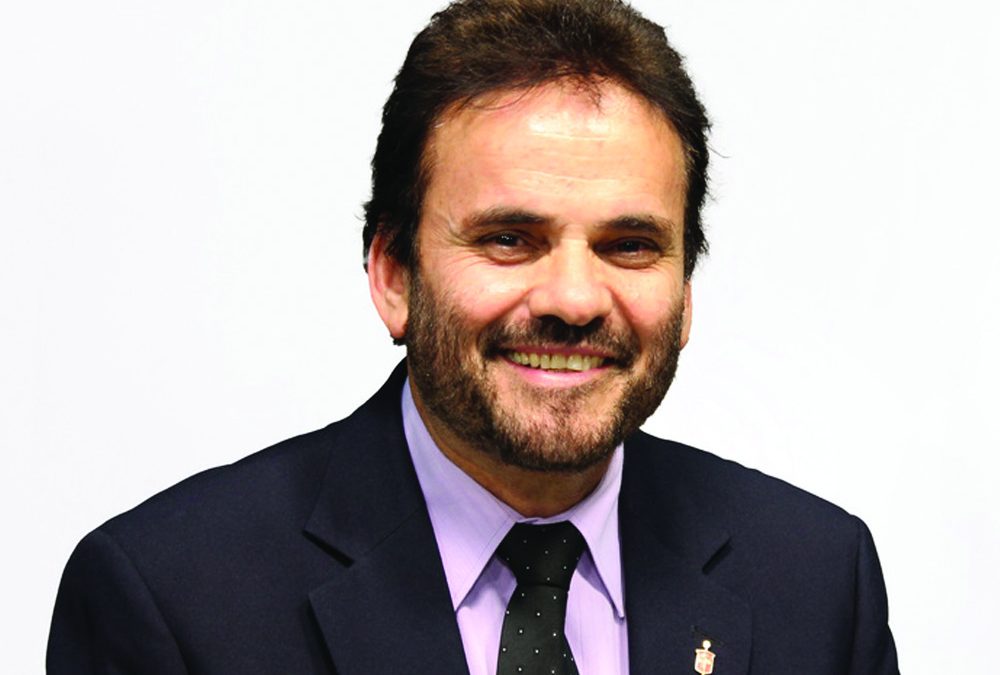
By Bishop Joao Carlos Lopes
I have been a bishop in the Brazilian Methodist Church for 25 years. After a few years in the episcopal office, I realized that our churches were stagnant. Not many people were joining the church by profession of faith. After much prayer and conversation with the conference leaders we decided, among other things, that no one would become an elder candidate before planting a church.
“Give me a church and I will give you the title” became a well-known saying in our conference. Now, 17 years after that decision, we have witnessed thousands of new believers as well as dozens of pastors who have experienced the joy of planting a new church even before entering the probationary period and becoming an elder. I am convinced that church planting is a key element in spreading the Good News of the Kingdom.
In Acts 10:38, in his dialogue with Cornelius, Peter said that “God anointed Jesus of Nazareth with the Holy Spirit and power, and he went around doing good…” There are a lot of good, loving, and even sacrificial things that we Christians in the Wesleyan tradition do specifically because we are followers of Jesus. After all, we are disciples of the one who “went around doing good.” All over the world we express our love for our neighbor by feeding the poor, fighting for justice, and caring for the orphans and the sick. By doing so we offer ourselves as channels of God’s grace to all people.
However, unless those efforts are aimed at getting the gospel to people who have never heard it and then gathering those people into local communities, we are neglecting the mission Jesus gave to his disciples.
Of course, I am very aware that there is no command in the Bible such as “go and plant churches.” But Jesus told his disciples that they should go to every village, every town, and every nation “making disciples … baptizing them and teaching them to obey Jesus.” And, as we know, all these things happen in the context of local communities.
When we do evangelism, the best way to teach and strengthen the new believers is gathering them together in local churches. So planting churches is essential for evangelism that bears fruit that will last.
In his journal of August 25, 1763, John Wesley wrote: “I was more convinced than ever that the preaching like an apostle, without the joining together those that are awakened, and training them up in the ways of God, is only begetting children for the murderer.”
I am sure that same spirit was present in the late 1800s when the Methodists were planting more than one new congregation a day. That inspired the writing of a hymn that was sung in missions gatherings, campmeetings, and Sunday services: “We’re building two a day, dear God, we’re building two a day! All hail the power of Jesus’ name, we’re building two a day.”
We need that same fire. We need to take seriously the challenge of planting new churches. It is the only way for us to make sure that we will not have a wonderful and large church only in our “Jerusalem,” neglecting the command to go to people who have not heard the good news of salvation.
The experience we have had in the Sixth Conference of the Brazilian Methodist Church has taught me a few principles:
1. Church growth is not the same as church planting. The church in Jerusalem, according to Acts 2, was experiencing amazing growth, but the disciples were not planting new churches elsewhere until the persecution came upon them in Acts 8. Only then did church planting began to take place, for example, in Samaria and Antioch.
The reality is that most leaders prefer church growth to church planting. And the main reason is that church growth does not necessarily take us out of our comfort zone. Church planting always does. But it is worth it. Our experience is that many churches planted by new pastors are now planting new churches. It has become a new culture.
2. Evangelism is not the same as church planting. By itself, evangelism doesn’t necessarily give birth to new churches. According to Acts 19, the men from Cyprus and Cyrene shared the good news about Jesus in Antioch. They evangelized! But it was Barnabas and Saul who planted a church there.
Brazilian people used to use Bill Bright’s “Four Spiritual Laws” as a means of evangelism. At the end of every presentation, after the prayer of confession, the evangelist was supposed to say: “Look for a church in your neighborhood (or look for the nearest church to your home).” For evangelism aiming at creating community, this is not acceptable. The evangelist also has the responsibility to make sure that the person evangelized is integrated into a community of believers.
3. Evangelism can be moment-based but church planting is always a process. Church planting takes building relationship, sharing the good news, bringing people together, assimilating them, and training new leaders.
Churches are not planted in the pastor’s office. Churches are not planted at Church Planting Conferences. Nor are churches planted in Church Planting Research Centers. Churches are planted on the streets, where the unbelievers are. We need to focus on reaching the unreached and the unchurched, making sure that we are “not building on someone else’s foundation” (Romans 15:20).
Joao Carlos Lopes has been the resident bishop of the Sixth Conference of the Brazilian Methodist Church since 1997. He earned both his M.Div. and Doctor of Missiology degrees at Asbury Theological Seminary. Besides his episcopal role, he is also a professor of pastoral theology at the Paraná Evangelical University and a member of the Board of Trustees of Asbury Theological Seminary. This is the fifth of a series of articles provided by TMS Global to platform some important voices in global Methodism.