by Steve | Dec 8, 2023 | Home Page Hero Slider, Nov-Dec 2023
Following the Lead of the Healer –
By Stephen Seamands –
Healing played an essential part in Jesus’s three-year earthly ministry. In fact, along with teaching and preaching, it was one of his three major activities. The Gospel of Matthew sums up Jesus’s ministry in Galilee like this: “Jesus went through all the towns and villages, teaching in their synagogues, proclaiming the good news of the kingdom and healing every disease and sickness” (9:35, emphasis added; cf. 4:23-24).
Not only did Jesus heal, but he insisted that his disciples and followers heal as well. Sending them out two by two, he “gave them authority to drive out impure spirits and to heal every disease and sickness” (Matt. 10:1), and he commanded them to “heal the sick, raise the dead, cleanse those who have leprosy, drive out demons” (Matt. 10:8). And they did.
But what happened after Jesus died, rose, and ascended into heaven? Did his ministry of healing come to an abrupt end? Definitely not. It merely assumed a different shape. Now Jesus’s healing ministry, like his preaching and teaching ministry, continues on earth through his body, the church.
The healing ministry to which we are called is not primarily our ministry but Christ’s. What we are called to do is to participate in the ongoing healing ministry of Jesus Christ.
Luke emphasized this at the very beginning of the book of Acts. In his first book (the Gospel of Luke) he said that he wrote about “all that Jesus began to do and teach” (Acts 1:1, emphasis added). Notice he didn’t say “all that Jesus did and taught” as we might expect. That’s because Luke was convinced that Jesus’s ministry on earth didn’t end when he ascended into heaven. In reality, it had only just begun. The reason Luke was writing this second book (Acts) was to tell the story of the ongoing ministry of Jesus through his apostles and his followers.
So this seemingly insignificant phrase – “All that Jesus began to do and teach” – is actually extremely significant. We are called to participate in his ongoing ministry of healing, to join him in his ministry rather than asking him to help us carry out ours. He is the healer – not us. Our job is to follow the Healer.
Because of our deep-seated tendency as fallen human beings to put ourselves at the center of everything, to make things about ourselves, we must be constantly reminded of this. Healing ministry is not primarily your ministry. It’s not about Jesus helping you as you minister to others; it’s about you joining him as he continues his ministry of healing through you.
Why this matters so much. This foundational truth about healing ministry has profound practical implications. I’ll tell you about four of them.
First, it shapes the way we pray as we engage in healing ministry. As we prepare for healing ministry, we often pray “Lord, help me” prayers. For example, “Lord, they’ve asked me to pray with people who come forward to request prayer for healing during the Communion service this Sunday at church. Would you help me as I pray for them?”
To be sure, there’s nothing wrong with “Lord, help me” prayers like that. There are many in the Bible, especially in the Psalms. But when you realize that it’s more about you joining Jesus than him helping you, then it’s better to pray, “Lord, help yourself to me. Lord, use me. You are here working. What do you want to say or do? Let me join you. Don’t let me get in the way of what you are doing.”
Someone once asked Mother Teresa the secret of her amazing, awe-inspiring ministry among the sick and dying in Calcutta. “I’m just a little pencil in God’s hands,” she immediately replied. “He does the thinking. He does the writing. He does everything and sometimes it is hard because it is a broken pencil, and He has to sharpen it a little more” (The Joy in Loving).
Mother Teresa understood that her job was to be a pencil – and notice she said a little, not a big pencil. She was willing to be little enough. And she also understood that it was God’s job to do the thinking and writing.
Like Mother Teresa, understanding whose ministry it is shapes the way we pray in preparation for healing ministry. We find ourselves praying, “Lord, help yourself to me. Help me simply to be a little pencil. Dull and broken though I am, use me to accomplish your work through me.”
Second, and perhaps most importantly, understanding whose ministry it is relieves us of the burden of ministry. For if, in fact, it’s Christ’s healing ministry, then ultimately he is the one who is responsible. It’s his burden, not ours. We don’t have to make it happen. He does. Our task is merely to let it happen.
A Christian leader who was in a class I taught several years ago shared with me what a difference it made as she began to grasp this. Here’s how she described what happened:
“I work at a mental health hospital as a clinical counselor. In the past, my prayer, as I entered work, was always to ask Christ to lead me and guide me through my ministry, helping me to be a vehicle instead of a barrier. For one week I prayed instead that Christ would allow me to accompany him, asking him to fill me with the Holy Spirit and allow me to piggyback on his ministry.
“It was the most exciting ministry with the most surprising results. The anxiety I usually experienced as I entered the building was gone. I was smiling and felt a power around me that felt unstoppable. My colleagues responded to me differently, often asking for guidance or consultations. And the clients prospered.
“My days were filled with something bigger than I ever could have imagined. I liked coming to work. My journey became bigger than I am because it was bigger than I am. I was tagging alongside Jesus through the Holy Spirit.”
Knowing whose ministry it is means knowing whose burden it is – Jesus’s not ours. Ultimately, we are not the ones who are responsible. We don’t have to lead or to heal. We just must follow the Leader and the Healer.
Third, understanding that healing is a participation in the ongoing healing ministry of Christ increases our confidence and boldness as we minister. Think of it this way: every time we enter a place to engage in healing prayer ministry with someone, we can rest assured that the risen Christ is there with us. Actually, he arrived there before we did and is waiting for us to join him.
In her wonderful book The Healing Presence, Leanne Payne captures this idea well: “He it is who comes and heals. It is he who befriends the sinner, releases the captive, and heals the lame in mind and body …. We learn to practice the Presence of Jesus within (our bodies are temples of the Holy Spirit), without (he walks alongside us as Companion and Brother), and all around (he is high and lifted up, and we exalt him as Sovereign God). And we ask him to love the world through us. We learn to collaborate with him. We do what we see him doing … we simply trust in his Presence with us.”
Knowing that Jesus is present with us and will meet us also enables us to approach ministry with greater confidence – not in ourselves, but in who Jesus is and what he desires to do.
Years ago, when I had first begun to engage in healing prayer, I was ministering to the wife of a seminary student. As I listened to her unpack the tangled, sordid story of her life, I felt overwhelmed. There was so much trauma, pain, and baggage, so many complicated problems and emotional issues to deal with, so many layers that needed healing. As a result, I found myself desperately praying, “Lord, I don’t have a clue where to begin. But I know you do. You’ve been working in her life, and you’re here now. Come now and reveal yourself and your presence in our midst.”
I can’t remember what I said, what questions I asked, or even if I said anything, but before I knew it, Jesus had answered my prayer. He came into the situation, revealed himself to her, and put his finger on the exact place where she needed to begin her healing journey. Forty-five minutes later, as she left my office, she was effusive in thanking me over and over for how much I had helped her.
After she had left, I sat there stunned and silent, shaking my head in awe at what had just transpired. “Lord,” I asked, “how in the world did that happen? I didn’t do anything!”
“Yes, you did,” Jesus seemed to whisper. “You made yourself available to me. You invited me to come, and when I did, you didn’t get in the way.”
The key to fruitful healing prayer ministry is to be so open and available to the risen Christ that he is free to manifest himself as you listen and counsel and pray with people. Knowing it’s his ministry in which we’ve been invited to participate increases our confidence and expectancy. He really does want to show up!
Fourth, understanding whose ministry it is determines our primary calling. Abiding in Christ, not healing ministry, is what matters most. As Jesus stressed in his parable of the vine and the branches (John 15:1-8), branches bear fruit only as they abide in the vine. “Those who abide in me and I in them bear much fruit, because apart from me you can do nothing” (v. 5 NRSV). When we make abiding in him our top priority, Jesus himself will come and dwell in us. And then he will accomplish his healing ministry through us.
Often when I am taking time in the morning to abide in Christ through prayer, devotional reading, and meditating on Scripture, I will find myself thinking about a healing prayer appointment I have with someone later in the day. When that happens, my natural tendency has been to pray, “Lord, help me as I meet with so-and-so. …”
Most of the time I hear nothing. Instead of answering my prayer, Jesus seems to say, “Steve, don’t worry about that appointment right now. Just concentrate on me and your relationship with me. Abide in me. In fact, I really care more about that than anything you’ll ever do for me, Steve. So dwell in me, worship me, and love me. Receive my love for you. Enter into the joy of my rest.”
I’ve discovered that when I focus on that – when I make it more about abiding in Christ and less about asking for help concerning what lies ahead – then when I’m in the healing prayer session, he will have freer rein and will come and accomplish his healing work through me.
Abiding in Christ is our primary calling. And Jesus promised that if we abide in him, he will abide in us (John 15:4) and we will bear fruit (v. 5). This, of course, is why the various spiritual practices or disciplines, or “means of grace,” as John Wesley liked to call them, are so vital and indispensable. As many and as varied as they are, they are all ways of abiding in Christ.
I trust you are beginning to realize why it matters so much that you understand whose ministry it is you are entering. Knowing that it’s essentially Jesus’s ministry and not ours shapes the way we pray, relieves us of the burden of ministry, increases our confidence in his healing presence, and determines our primary calling.
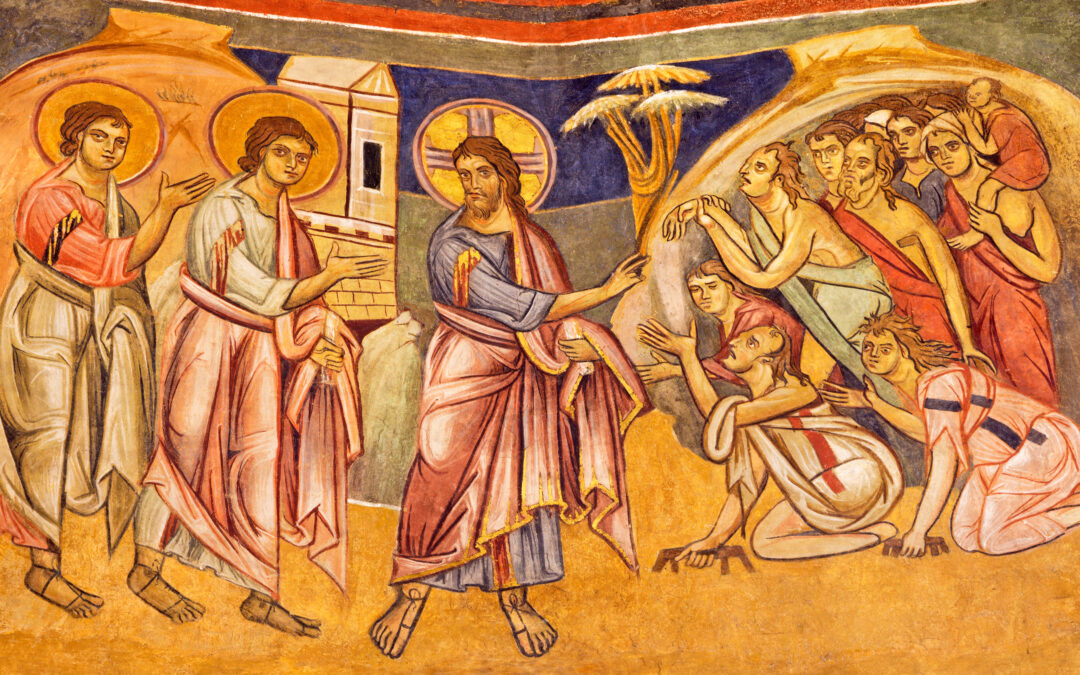
Stephen Seamands is emeritus professor of Christian doctrine at Asbury Theological Seminary in Wilmore, Kentucky. He is the author of numerous books such as Wounds That Heal, Ministry in the Image of God, and The Unseen Real. This article is taken from Follow the Healer by Stephen Seamands. Copyright © 2023 by Stephen A. Seamands. Used by permission of Zondervan Publishing. www.harpercollinschristian.com. Artwork: Parma, Italy: The fresco Jesus healing the ten lepers in Byzantine iconic style in Baptistery probably by Grisopolo from 13 century. Photo by Renata Sedmakova/Shutterstock.
by Steve | Dec 8, 2023 | Nov-Dec 2023
With Faith, Pondering Death –
By Terry Mattingly –
There was nothing unusual, in the early 1970s, about a student hearing one of his professors preach during chapel.
But one sermon – “How Would You Like to Die?” – impressed the seminarian who would later become United Methodist Bishop Timothy Whitaker of Florida. Theologian Claude H. Thompson had terminal cancer and, a few months later, his funeral was held in the same sanctuary at the Candler School of Theology in Atlanta.
“What hit me was that he calmly preached on that subject – even while facing his own death,” said Whitaker, reached by telephone. “It hit me that if death is one of the great mysteries of life, then that needs to be something that the church openly discusses. …
“Yes, we live in a culture that is reluctant to talk about death. But I decided that it’s important for us to hear from our elders who are facing this issue, head on.”
Thus, soon after doctors informed him that his own cancer is terminal, Whitaker wrote a lengthy online meditation, “Learning to Die.” The 74-year-old bishop is retired and receiving hospice care, while living in Keller, a small town near the Virginia coast.
“Being a pastor, I considered it a privilege and also an education to linger beside many deathbeds. I have tried to never forget that, unless I die abruptly in an accident or with a heart attack or stroke, sooner or later the subject of death will feel very personal to me,” he wrote. Now, “in the time that remains for me I have one more thing to learn in life, which is to die. … I had always hoped that I would be aware of the imminence of my death so that I could face it consciously, and I am grateful that I have the knowledge that I am going to die soon.”
Certainly, Whitaker noted, the Orthodox theologian Father Thomas Hopko was correct when he quipped, while facing a terminal disease: “This dying is interesting.”
Dying is also complicated – raising myriad theological questions about eternity, salvation, and the mysteries of the life to come, he noted. The Bible, from cover to cover, is packed with relevant stories, passages, and images. The same is true of the writings of early church leaders who preached eternal hope, even when suffering persecution and martyrdom. Over and over, the saints proclaimed their belief in the resurrection of Jesus.
Whitaker noted that Methodists can ponder this quote from their pioneer John Wesley: “But what is the essential part of heaven? Undoubtedly it is to see God, to know God, to love God. We shall then know both His nature, and His works of creation and providence, and of redemption. Even in paradise, in the intermediate state between death and resurrection, we shall learn more concerning these in an hour, than we could in an age, during our stay in the body.”
But what about the big questions that modern believers may struggle to ask? What about their fears of living with a terminal disease and the complicated questions surrounding death itself?
Early Methodists believed that preparing for death was simply part of life, and outsiders noted that “Methodists die well,” said Whitaker, in the telephone interview. The problem in churches today is that dying is often viewed as “a counseling issue,” or merely a “therapeutic challenge” for busy clergy.
For centuries, Christians developed rites linked to what they called the “good death,” or even the “happy death,” he noted. While millions now shudder at the thought of dying alone in a hospital, clergy should teach – especially in the age of hospice – how believers can plan to die surrounded by family and their fellow believers.
Yet many clergy are reluctant to discuss these subjects from the pulpit or in educational events addressing modern realities, as well as centuries of rituals and prayers.
“I can understand this reluctance – because they’re going to have many parishioners who will be alarmed or upset by any open discussions of these topics that our culture wants to ignore,” said Whitaker.
“But the church is supposed to help us prepare for death. And this isn’t just about someone receiving a terrible diagnosis. Death is something that can strike at any moment. … The church can’t be silent in the face of death.”
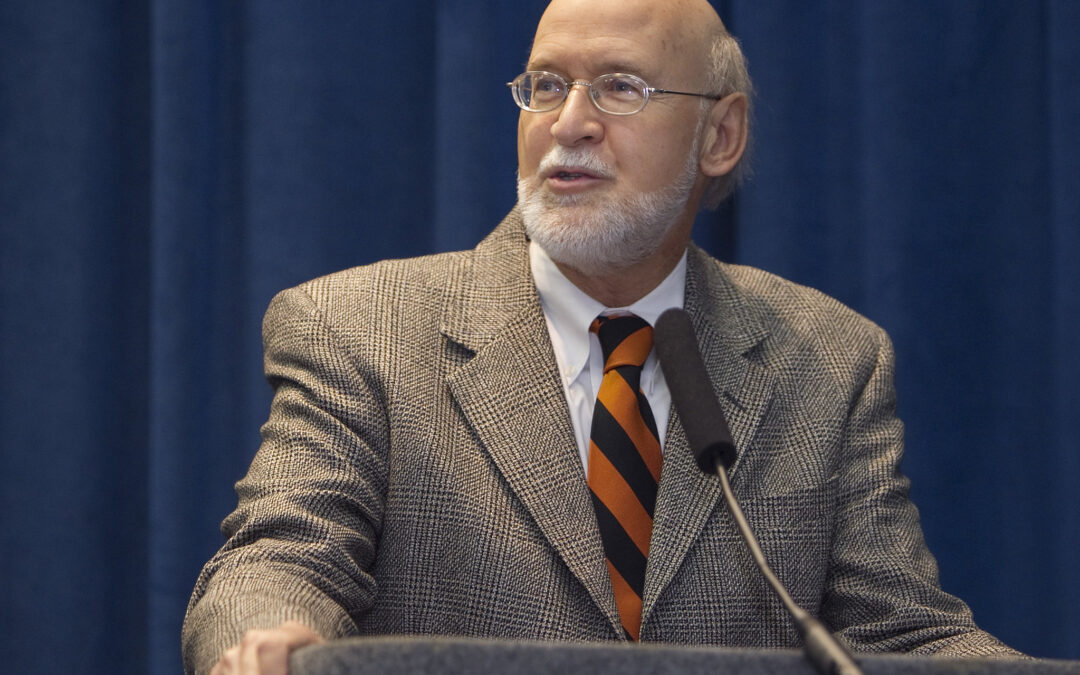
Terry Mattingly (tmatt.net) leads GetReligion.org and lives in Oak Ridge, Tennessee. He is a senior fellow at the Overby Center at the University of Mississippi. A 2012 UMNS photo Mike DuBose.
by Steve | Dec 8, 2023 | Home Page Hero Slider, Nov-Dec 2023
Offer them Christ –
By Rob Renfroe –
I had a strange reaction as I read a United Methodist News article about a youth conference held this summer. The theme of “Youth 2023” was BOLD – Being Ourselves, Living Different. It was sponsored by Discipleship Ministries and brought over 2,500 students together in Daytona Beach.
The article’s title “Students Reflect on ‘Life-Changing’ Youth 2023” took me back to my teen-age years when my life was changed. The year was 1972 and I was sixteen years old.
We received our first youth director during the same period as the recent movie “Jesus Revolution.” The revival that had begun in Southern California had reached a United Methodist Church in Dallas, Tyler Street UM Church. They had recruited college students who were willing to go to other UM churches and share the Gospel with youth. Eddie Wills was one of those sent out from Tyler Street and we were thrilled when he was introduced to us one summer Sunday evening at MYF (Methodist Youth Fellowship) as our first youth director.
I was a church kid. I read the Bible and prayed every night. I was a good kid who didn’t smoke, drink or curse, and I was too afraid of girls to get into trouble that way. And I was a kid who was asking questions, like “how can I be sure I’ll go to heaven when I die?” Knowing that some people were going to make it, I thought I needed to do my best to be in the top 10-20 percent of the world’s “good people.” I felt fairly certain that by being a good kid and going to church I’d probably make the cut. So I set out to be as nice and polite and as good and as religious as I could be. That was my plan for going to heaven. That was my life.
Then I met Eddie Wills. In short order I could see that Eddie and I were different. Eddie knew God. I knew something about God. I had a religion about God, Eddie had a relationship with God. Eddie had a confidence that came from trusting in Jesus. I had a constant concern that maybe I wasn’t doing enough to get to heaven.
By God’s grace my eyes were opened to see that what Eddie had was real and beautiful. I wanted that for myself. When I spoke with him about it, Eddie told me how to accept Jesus as my Savior and begin a personal relationship with him. That summer my life was changed. I treasure the friends I made that summer. I can still sing some of the “cool” Christians songs we sang. But they didn’t change my life. Jesus did.
So, I read the article about the Daytona youth conference with a good bit of nostalgia and excitement. Nostalgia because I remembered how my life was changed as a teenager when I came to Christ. Excitement because Jesus is still at work and he still loves teens.
Eight youth from several states were quoted in the article. They talked about how meaningful BOLD had been, elaborating on all the things youth rightly value – meeting different kinds of people, new ways of seeing themselves and others, incredible music, the beauty of the beach, and making friends they never would have met without going to the conference. I’m glad the conference provided those experiences for the youth there.
As I continued to read, though, I became concerned. Something seemed to be missing. I read the article again. Then again. Finally, I did a word search of the article. And what was missing wasn’t something. It was Someone. Nowhere in the article was Jesus mentioned. At that point, my concern turned into real, genuine sadness. Had a great opportunity to introduce 2500 youth to a personal relationship with Jesus been missed?
Maybe I should not read too much into that. Maybe the news story didn’t relate the full extent of what students experienced at BOLD. Maybe Christ was clearly and compelling presented, and those attending really got it – that Jesus is the life-changer.
Here’s why I’m possibly more concerned than I should be. Before retiring I was a pastor at The Woodlands United Methodist Church for over 20 years. Over those two decades I received the same report from dozens of our members. Some had moved away and had been looking for a new church home. Others had been on vacation and had attended worship on a Sunday morning. And the reports, usually about attending church in one of the western states, or the northeast, and sometimes the mid-west went like this, almost verbatim: “Rob, we went to a United Methodist Church and it wasn’t anything like ours. They didn’t even mention Jesus.” I’d follow up with, “Well, what did they talk about?” Again, the answers were strikingly similar. “They talked about politics.” “They talked about social issues.” “They talked about how bad corporate America is.” More than one told me, “It felt more like a political rally than a service of worship.”
Offer them Christ. In 1784 an elderly John Wesley sent Thomas Coke to America to ordain Francis Asbury and organize the first Methodist Church. Wesley, standing on a pier on the River Avon, gave a final, simple charge to Coke and his party as they set off for the New World: “Offer them Christ.”
The Methodist Church has always believed, and its founder certainly did, that we are called to make the world a better place for others – materially and spiritually. We are to work to make society fair and just. We must oppose all forms of oppression and prejudice. We are called to spread scriptural holiness across the land. But above all we are to “offer them Christ” because it is Jesus who changes lives, brings hope and gives us the power to fight injustice. Without Jesus, we are just another social agency, just one more special interest group, just one more political party.
One of my mentors, Dr. William Hinson, was appointed to First United Methodist Church in Houston in the early 1980’s. The church was in rough shape – finances were difficult, the building was in disrepair, and membership had declined. All this was made worse by an oil bust that had rocked the city. Downtown, where First Church was located, was becoming a ghost town. It was no longer thought to be safe.
Bill was a man of immense strength and faith. He went to work, preaching the Gospel, casting vision, and raising money. After a few years both downtown and the church began to turn around. One Sunday after church, a young couple waited to speak to Bill privately. They were bright, gifted, both were leaders, and they were financially committed to the church.
After everyone had left, the couple told Bill, “Dr. Hinson we love you. Because we respect you so much, we didn’t want to just stop coming without telling you that we are going to start attending another church.” Bill responded, “May I ask why?” They answered, “It’s not that we don’t like your sermons. It’s just that with you it’s always the same thing. It’s always, ‘Jesus, Jesus, Jesus.’”
They were right. Bill preached the whole Gospel of God, including justice and social holiness. But no matter what he spoke about, it always came back to “Jesus, Jesus, Jesus.”
Jesus our teacher. Jesus our example. Jesus our healer. Jesus the Son of God. Jesus the light of the world. Jesus the way, the truth and the life. Jesus the Lamb of God who takes away the sins of the world. Jesus the Word who was with God and who was God. Jesus the King of kings and the Lord of all. Jesus the One who changes our lives.
With Bill, it always came back to Jesus, to offering them Christ. And struggling First Church came back under his preaching and his leadership both downtown and at a second campus on the west side of Houston which the church built while he was there. What that young couple meant as a polite criticism, Bill took as a supreme compliment. “With you, it’s always, ‘Jesus, Jesus, Jesus.’”
I know I shouldn’t read too much into that article about this summer’s youth conference. I have to believe that Christ was presented and lives were changed by the presence and the power of Jesus. I just want to remind myself, the GMC, and the UMC to “offer them Christ.” No one else is who he is. Nothing else can do what he can do. No other power can save a soul or fully transform a life. So, offer them Christ. First, foremost, forever: offer them Christ.
Rob Renfroe is the president of Good News. This was his editorial in the November/December 2023 issue.

by Steve | Dec 1, 2023 | In the News
Will Regionalization be an Option for Africa? –
By Jerry Kulah –
It has become abundantly clear in recent times that the issue of “regionalization” has taken center stage within The United Methodist Church body politic. This is evidenced by the fact that some influential structures within the general church, such as the Connectional Table, the Standing Committee on Central Conference Matters, and the Council of Bishops have given their endorsement of the plan. The centrists and progressives within the UM Church have made it their common talking point, claiming that it is the most reasonable path to pursue going into the 2020 General Conference, scheduled for April 23 to May 3, 2024 in Charlotte, North Carolina.
We understand regionalization as the process whereby each of the seven central conferences in Africa, Europe, and the Philippines will function as a regional conference, while the five jurisdictions in the United States will combine to form one regional conference. Following their formation, each region would create its own “book of discipline” that addresses its missional needs. The general church would maintain a general book of discipline to address needs and operations of the general church. Proponents claim that regionalism would promote missional effectiveness. One retired bishop even claims that it would “keep the UMC alive and relevant in a worldwide context,” and would address “the mandate of Jesus Christ in Matthew 28: 16-20: ‘Go and make disciples of all nations.’”
This assertion could not be further from the truth.
Not only has the regionalization conversation become prevalent within the United States and Europe, it has also found a fertile soil among African bishops, who made the issue of regionalization a priority during their recent annual meeting in Lubumbashi, Democratic Republic of Congo, September 2-8, 2023. Without initiating conversations about the regionalization proposal within their various annual conferences, the African bishops took a vote among themselves to determine whether to accept regionalization as the path to pursue in Africa. But consideration of any regionalization legislation will be the prerogative of General Conference delegates in North Carolina, not the bishops (Book of Discipline, 2016, para 406). Bishops have no vote in this matter.
Apparently, most African bishops are now inclined to remain with the worldwide UM Church even if its biblical interpretation, theology, and polity contradict the clear teachings of Scripture, including its legalization of same-gender marriage, ordination of self-avowed homosexuals, and election and consecration of gays and lesbians as bishops to represent the UM Church worldwide. According to them, “Notwithstanding the differences in our UMC regarding the issue of human sexuality especially with our stance of traditional and biblical view of marriage, we categorically state that we do not plan to leave The United Methodist Church and will continue to be shepherds of God’s flock in this worldwide denomination.” We consider this a contradiction.
Our current African bishops cannot claim that they uphold the sanctity of Scripture regarding human sexuality and yet remain in an ecclesial marriage with those who vehemently oppose this biblical view and theological position, unless there are other factors relative to some personal benefits necessitating their decision. Their decision runs contrary to the biblical stance and spiritual formation of the majority of the members and clergy within the UM Church in Africa whom they claim to shepherd. We doubt many United Methodists in Africa consider regionalization an acceptable option.
The African church is aware of the history of the regionalization plans within the worldwide UM Church. Since 2008 to present, centrists and progressives have featured it in several forms at past General Conferences without success. At the 2008 General Conference, a task force on the Worldwide Nature of the Church proposed 32 constitutional amendments. Twenty-three of those amendments sought to create regional conferences within the denomination, while the remaining nine were devoted to other vital concerns of the denomination. Concluding these changes counterproductive to the connectional polity of the general church, almost all annual conferences in the United States and Africa voted against those proposals in 2009.
African bishops supporting regionalization seem ready to betray the doctrinal integrity of the UM Church in Africa. However, the Africa Initiative stands with a majority of African United Methodists and delegates to make it clear that regionalization is not an option for the UM Church in Africa. We stand ready to vote against these multiple changes to the constitution at the upcoming General Conference. If the General Conference approves them, we will work at the level of the annual conferences to make sure they do not receive the 2/3 majority support needed for ratification.
While we respect the rights of liberals, progressives, and centrists to endorse and promote the regionalization proposal, it is equally our right to reject legislation that does not align with our understanding and practice of biblical Christianity. Here are further reasons why we reject regionalization:
1. Regionalizing the UM Church is biblically and theologically wrong. Regionalization would create national churches, with the probability of different doctrinal standards and practices, under one general UM Church umbrella. In essence, we will be different denominations pretending to be one. Each region would have no say in what other regions of the same church may believe, teach, and practice.
While we will claim to be a one denomination/church, our moral qualifications for church membership and for becoming a clergy or bishop within the same UM Church will differ greatly, as per regional requirements. For example, while it would be illegal to ordain persons involved in same gender marriage or elect and consecrate gays and lesbians in one region, it would be biblically and theologically legal to do it in some other regions of the same church. This is deception; for by doing so, we would pretend to ourselves to be one denomination, yet preach different gospels (Galatians 1:6-9; 6:7).
Our founding father, John Wesley, referred to himself as a homo unius libri: “a man of one book,” the Holy Scriptures. While tradition, experience, and reason aid in our theological reflection, Scripture remains primary. The Gospel is above culture, not below or of culture. Hence, we believe that every cultural practice must align with and not contradict Scripture. The African church wants to maintain the clear and consistent teaching of Methodist doctrinal statements. We want to be a part of a church that maintains a robust accountability to its doctrines.
2. Regionalization contradicts the connectional nature of the UM Church. Regionalization disconnects the general church and does not reflect the United Methodist way of serving Christ. The principle basic to the UM Church is that all leaders and congregations are connected in a network of loyalties and commitments that support, yet supersede, local concerns. Regionalization divides while connectionalism unites. Regionalization is therefore counterproductive to the worldwide connectional nature of the UM Church. We want to be a part of a church whose statement of faith, doctrinal standards, and ethical teachings apply to all, irrespective of the region of the world in which one finds oneself. The General Conference is the highest decision-making body of the church where all the annual conferences come together each quadrennium to make decisions jointly that will govern the programs, projects and ministries of the church. To attempt to change this unique polity of the denomination for regionalization is counterproductive.
3. Regionalization is a recipe for segregation and marginalization. Regionalization bars other members of the UM Church who do not belong to certain regions from having a say in what fellow United Methodists believe, teach, or practice. Richard Allen and Absalom Jones were among the first African Americans licensed to preach by the Methodist Episcopal Church. They received their licenses at the St. George’s Church in 1784. Three years later, protesting racial segregation in the worship services, Allen led about forty black members out of St. George’s. Eventually they founded the Mother Bethel A.M.E. Church, which led to the formation of the African Methodist Episcopal denomination. We are concerned that regionalization might take us along this path.
4. Regionalization enhances financial inequity within the general church. We believe regionalization enhances financial inequity within the general church, in favor of the jurisdictions in the United States. It further impedes our pursuit toward mutual partnership, and the empowerment of financially less privileged annual conferences within the general church. Among the 80 million worldwide Methodists and 12.5 million United Methodists, Africa accounts for the largest membership anywhere on the planet. Until recently, the United States has enjoyed majority membership. With the great decline of Western Christianity, the UM Church in Africa has ascended to the majority position in terms of membership. However, the UM Church in America is still the economic powerhouse of the denomination.
Currently, the UM Church in the United States accounts for 99 percent of budgetary support to the ministries, projects, and programs of the general church, including the payment of salaries and operational funds for episcopal offices in Africa. Regionalization, given the Western liberal and progressive stance on many cardinal biblical issues like human sexuality, would silence the voice of the church in Africa. Proponents could certainly bring economic pressure to bear on African conferences lacking financial self-sustainability. Regionalization is therefore detrimental to the continued growth of a biblically committed and Christ-centered church in Africa.
5. Regionalization undermines African community life. We are a communal people. The concept of the Bantu word, Ubuntu, describes this: “I am because we are.” The concept of Ubuntu describes how Africans live in community with and for each other, share common affinity, working together to achieve the common good. We seek to have equal access to assets of the community to benefit everyone. We come together, through the elders, to discuss our needs and concerns and address them corporately. We live in unity, working collectively and harmoniously for the common good.
Another concept we cherish within our community life is umuntu ungumuntu ngabantu. That is, “a person is a person because of others” (Gordon, D.M. and Krech, S. Indigenous Knowledge and the Environment in Africa and North America. 2012: Ohio University Press, Athens.). Hence, in African culture, the community, rather than individuals, raises a child. We translate these concepts into the way we understand biblical Christianity (Hebrews 10:24-25) and do church. On the contrary, regionalization promotes ethical autonomy, and disconnects the church as individual regions develop different rules and ways of doing church. Under such circumstances, many important areas of church life that the General Conference previously decided would now be the decisions of individual regions. This is unacceptable for the UM Church in Africa.
Inevitably, regionalization is a difficult, if not impossible, path to pursue for the general church. As Mark Holland of “Mainstream UMC” admits, “Regardless of how generous [some] delegates and Bishops in Africa may feel towards regionalization, they face serious social, political, and even legal pressure back home unlike anything we [centrists/progressives] face in the US and Europe.” In addition, we have a strong holy discontent about the creation of several national, partly independent churches under one umbrella denomination. This is incompatible with our connectional polity and lacks any effective way to give the church the unity it needs to be alive and effective.
Proposal for the Way Forward: Amicable Separation. While the path to regionalization, in our opinion, is almost impossible, we wish to proffer a recommendation that could help both the progressive and conservative wings of the church to move forward. We acknowledge that Centrists and Progressives within the UM Church desire regionalization. As traditionalists, we desire the same opportunity to disaffiliate as was afforded to traditionalists in the United States. We deserve justice! In addition, we believe that a more acceptable way forward for both wings of the church would be to pursue the path of amicable separation. In this way, we can bless each other and go our separate ways to fulfill our mission as we know best. We can then endeavor to do some ministries together where we both find it appropriate.
Against this background, we have submitted two petitions for disaffiliation for the next General Conference. The first is a new ¶576. This petition, when passed, gives the rights to annual conferences outside the United States to disaffiliate from the UM Church and join another Wesleyan church.
The second is a revised ¶2553. Even though we voted for passage of the original disaffiliation pathway, we were shocked and surprised when the Council of Bishops informed Central Conferences in Africa that its implementation did not apply to us. If this is not an act of segregation and marginalization of the UM Church in Africa, then I do not know what it is.
Our denial by the Council of Bishops to implement paragraph 2553 in the Africa Central Conferences was another action of marginalization. It is similar to another case in point: While jurisdictions in the U.S. and central conferences in the Philippines, and Europe, by decision of the Judicial Council, elected new bishops in 2022 to replace their bishops due for retirement, the Africa College of Bishops, with the acquiescence of the Council of Bishops, denied its central conferences the right to elect new bishops.
Despite these impediments, the UM Church in Africa continues to forge ahead in raising faithful disciples of Jesus Christ for the transformation of the people of Africa in particular, and the world in general.
Jerry P. Kulah is Vice President of the School of Graduate and Professional Studies, United Methodist University in Monrovia, Liberia. He is also the General Coordinator of the UMC Africa Initiative. Image: Shutterstock.

by Steve | Nov 22, 2023 | In the News, Perspective / News
Giving Thanks (Even Now) –
By Shannon Vowell –
This is the first Thanksgiving in my adult life when the scripture verse that most accurately describes our collective mood seems to be Matthew 10:34-36.
Jesus said, “Do not think that I have come to bring peace to the earth; I have not come to bring peace but a sword. For I have come to set a man against his father, and a daughter against her mother, and a daughter-in-law against her mother-in-law, and one’s foes will be members of one’s own household.”
Enmity dominates. From the profound evils of attempted genocide and ongoing war internationally, to the more plebian peevishness of home-grown politicians, the world is living up to its reputation for worldliness.
If only it were “just” the world!
Methodist schism, that necessary but excruciating process of separation, has put both profound evils and plebian peevishness on display in the Church – and Methodists of all stripes are the walking wounded.
As we stagger toward Thanksgiving, temptations abound: Deny the undeniably grim status quo and put on a good show for the sake of faux festivity. Embrace the cynical pessimism of the zeitgeist (implicitly implying Christ isn’t big enough for these problems). Duke it out with whomever still has energy to fight. Etc.
Such temptations, while understandable, exacerbate the misery that inspires them.
Where to turn for alternatives?
Blessedly, Jesus doesn’t just offer us an accurate description of our sorry situation. He also offers us a bridge to beyond the heaviness of the present moment. The bridge, of course, is himself.
In Matthew 5:11-12, he says, “Blessed are you when people revile you and persecute you and utter all kinds of evil against you falsely on my account. Rejoice and be glad, for your reward is great in heaven, for in the same way they persecuted the prophets who were before you.”
In Luke 21:19, he says, “By your endurance you will gain your souls.”
In John 16:33, he says, “In the world you face persecution, but take courage: I have conquered the world!”
This aspect of discipleship is not our favorite. It contradicts the prosperity gospel and undermines the American Dream and inverts all our wishful thinking about waking up in Heaven after a pleasant and painless life. But because Jesus so accurately predicts our need for endurance and courage, it’s wise to not just believe him – but to receive what he offers by way of sustenance for the battle.
In John 4:14, Jesus promises refreshment. “… those who drink of the water that I will give them will never be thirsty. The water that I will give will become in them a spring of water gushing up to eternal life.”
In John 10:11, Jesus promises protection. “I am the good shepherd. The good shepherd lays down his life for the sheep.”
In Matthew 11:28 – 30, Jesus promises rest. “Come to me, all you who are weary and are carrying heavy burdens, and I will give you rest. Take my yoke upon you, and learn from me, for I am gentle and humble in heart, and you will find rest for your souls. For my yoke is easy, and my burden is light.”
Claiming those blessings from Jesus doesn’t instantly transform the troubles of our times, but it does transform us – even as we navigate those troubles. He replaces our lack with his lavishness. He lifts our burdens so we can stand tall to praise him. He shines his light into those dark corners, and in that shining he banishes the demons of doubt and despair.
It may be helpful to remember that the first Thanksgiving officially celebrated as a national holiday occurred in the middle of the bloody, bitter Civil War – a conflict which still holds the dubious distinction of costing more American lives than any other. In November of 1863, Lincoln enjoined an exhausted, traumatized, demoralized nation:
“It has seemed to me fit and proper that (God’s mercies) should be solemnly, reverently, and gratefully acknowledged as with one heart and one voice by the whole American people. I do, therefore, invite my fellow-citizens in every part of the United States, and also those who are at sea and those who are sojourning in foreign lands, to set apart and observe the last Thursday of November next as a Day of Thanksgiving and Praise to our beneficent Father who dwelleth in the heavens.”
God’s mercies.
If we had nothing else for which to praise him, God’s mercies would be more than enough.
As the Apostle Paul wrote to the church at Corinth, “For our slight, momentary affliction is producing for us an eternal weight of glory beyond all measure, because we look not at what can be seen but at what cannot be seen, for what can be seen is temporary, but what cannot be seen is eternal” (2 Corinthians 4:17-18).
The approach of Thanksgiving this year need not be “one more thing” to endure. If we rest in our Savior and recall the example of the Great Emancipator, we can be empowered to live into a national holiday as citizens of Heaven – and what glory to our King that kind of witness generates!
Paul’s pragmatic advice on the “how” of this witnessing gives us a step-by-step manual, easier (by far) than the checklist most turkey feasts require.
“Rejoice in the Lord always; again I will say, Rejoice. Let your gentleness be known to everyone. The Lord is near. Do not be anxious about anything, but in everything by prayer and supplication with thanksgiving let your requests be made known to God. And the peace of God, which surpasses all understanding, will guard your hearts and your minds in Christ Jesus” (Philippians 4:4-7).
May we be fueled by our faith this holiday season, that others might be encouraged by glimpses of Christ in us.
Shannon Vowell, a frequent contributor to Good News, blogs at shannonvowell.com. She is the author of Beginning … Again: Discovering and Delighting in God’s Plan for your Future, available on Amazon. Photo: Shutterstock