by Steve | Jan 19, 2024 | In the News, Perspective / News
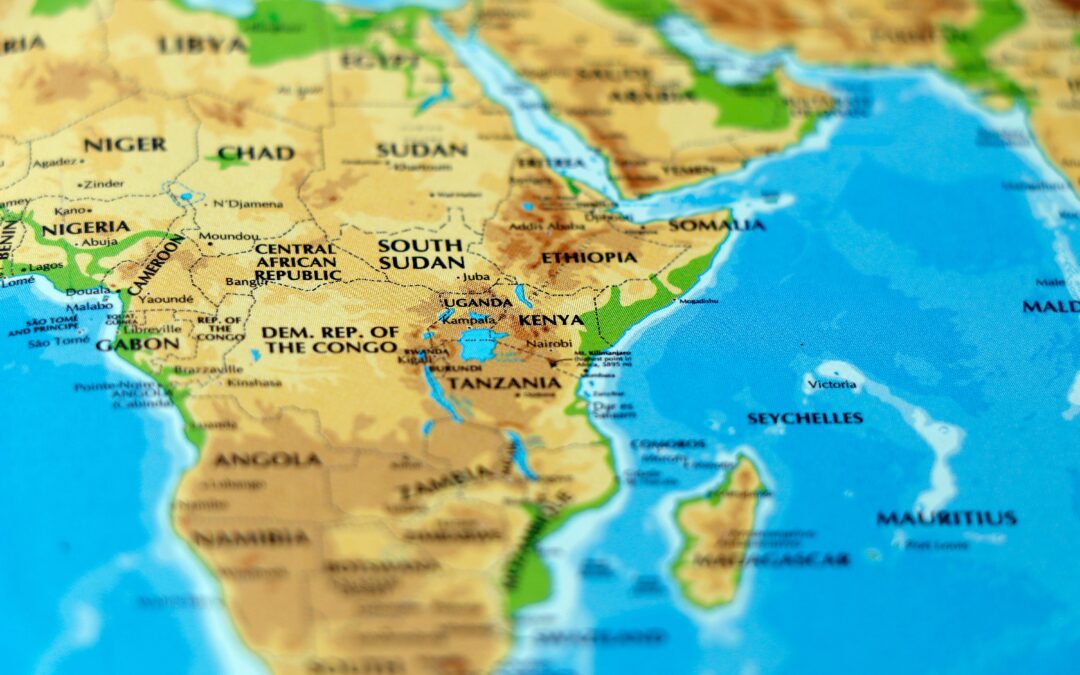
Regionalization: the New Colonialism?
By Thomas Lambrecht
The top agenda item for the 2024 General Conference in April for most progressives is to adopt “regionalization” as the new mode of United Methodist governance. This proposal would be a dramatic shift in how the UM Church functions. It would move from being a connectional church to a regional church, or even an association of national churches.
The regionalization proposal is similar to the U.S. central conference proposal that passed General Conference in 2008 but was overwhelmingly defeated by annual conferences in 2009. It would set up the U.S. as its own regional conference, along with three regional conferences in Europe, three in Africa, and one in the Philippines.
The key is that each regional conference would have the authority to create its own policies and standards in a number of key areas. These include:
- Qualifications and educational requirements for clergy – so there could be different qualifications to be ordained as a clergyperson in each regional conference.
- Standards and qualifications for lay membership – so the standards for being a lay member of a local church could be different from region to region.
- Rules of procedure governing investigations and trials of clergy and lay members – how clergy and lay members are held accountable could differ from region to region.
- Changes in chargeable offenses and their penalties – what is a chargeable offense in one region could be perfectly allowed in another.
- Each region could have its own hymnal and worship rituals. It is unclear from the proposals whether each region could have different baptismal and membership vows or ordination vows.
Why Regionalization?
This type of regionalization is a relatively recent development. In 2012, the General Conference began to move toward allowing central conferences outside the U.S. greater flexibility in adapting the Book of Discipline to their particular context. However, this was not finalized in 2016, but only in process until 2020 (which was of course postponed by the pandemic).
The original concept of adaptability for the Discipline was meant to allow for different laws and property procedures in different countries outside the U.S. But the expansion to other areas of adaptability was (I believe) a precursor to justifying greater adaptability for the U.S. church. If the central conferences outside the U.S. had the ability to adapt the Discipline in the ways listed above, one could hardly deny the U.S. church the same ability to adapt the Discipline. Never mind that the majority of General Conference delegates has always been from the U.S. and the Discipline has always been written primarily from a U.S. context, meaning that such adaptation was hardly necessary.
The real reason for regionalization and adaptability is to allow the U.S. church to liberalize its standards regarding marriage and LGBT persons. Each of the bullet points above has a direct relationship to LGBT persons. Adapting the qualifications for ordination would allow the U.S. church to ordain non-celibate LGBT persons. Adapting the qualifications for lay membership would allow the U.S. church to forbid pastors from preventing non-celibate LGBT persons to become local church members and serve in leadership in the local church, district, and annual conference. Adapting the rules of procedure for holding clergy and lay members accountable would allow the U.S. church to prevent trials for LGBT clergy or for clergy performing same-sex weddings. Adapting the chargeable offenses would allow the U.S. church to remove from the list of chargeable offenses anything related to same-sex marriage and non-celibate LGBT persons serving as clergy. Adapting the hymnal and the rituals would allow the U.S. church to create liturgies for same-sex weddings and potentially alter the ordination vows to mandate support for LGBT persons.
In the wake of the 2019 General Conference’s affirmation of a traditional perspective on marriage and human sexuality, progressives have rebelled. They decided to move ahead with same-sex weddings and the ordination of non-celibate LGBT persons regardless of what the Discipline said. Regionalization would give them the legal ability to do so within the Discipline by codifying different standards and policies for the U.S. church than those adopted in Africa and other regions.
This is the goal of regionalization, as articulated in a recent Mainstream UMC fundraising letter. “Homosexuality is the flashpoint in this conversation. A US-only vote likely would have permitted LGBTQ ordination and marriage as many as 12 years ago, just like the US Presbyterians, Lutherans, Episcopalians, and Disciples have done. … The mean-spirited Traditional Plan of 2019 – which doubles down on the harm – has proven to be the tipping point in the United States. Either this policy is completely repealed at General Conference 2024, along with the other anti-LGBTQ language, or the exodus continues, and likely accelerates, in the United States.” (The letter is referring to an exodus of progressives and LGBT persons, which Mainstream UMC blames for the decline in UM membership over the past 40 years. Never mind that, while LGBT-affirming mainline denominations have all declined precipitously, non-denominational evangelical churches and Pentecostal denominations with a traditional understanding of marriage and human sexuality have grown.)
What about colonialism?
It is unquestionably true that UM governance has always had a U.S.-centric approach. Particularly in the realm of social issues and resolutions on particular justice issues, the focus was predominantly on the U.S., although that had begun to change by 2016 with greater attention and sensitivity to global issues and how resolutions could be worded to be more inclusive of global concerns.
The question is whether to solve the problem of U.S. centrism by decoupling the connection through allowing wholesale adaptability of the Discipline, or by allowing greater input from non-U.S. delegates to the forming of a global Discipline. Most progressives and the church’s “establishment” chose the route of adaptability, first through the defeated U.S. central conference plan and then through initiating changes in the Discipline in 2012. Traditionalists have consistently favored the second approach of moving toward a more globally inclusive Discipline. That was the stark contrast between the One Church Plan in 2019 that would have allowed maximum adaptability, and the Traditional Plan that maintained a global standard.
But in its quest to rid the denomination of its U.S. centrism and colonial undertones, does the new regionalization proposal codify a new form of colonialism? Some African leaders have said yes. A closer analysis of the proposal shows they are right.
Curious Timing
It is interesting that the big push for regionalization comes just as the U.S. church membership has moved into a minority status. Even before disaffiliations began, membership outside the U.S. had pulled even with U.S. membership. This was not reflected in the percentage of delegates at General Conference, particularly for Africa, as the formula for delegates favors the U.S. with its very large number of retired clergy and clergy serving in extension ministry.
Even as African membership was increasing by 10 to 20 percent per quadrennium, their delegate percentage would only increase by less than five percentage points. It was going to be at least a decade or more before African delegate percentage more accurately reflected their percentage of membership. That, of course, changed with disaffiliation, which has drastically cut U.S. lay and clergy membership.
But Mainstream UMC is panicking over the fact that U.S. delegates will soon be in the minority. “In 2012, … international delegates totaled nearly 1/3 of the votes. For General Conference 2024, the delegates from outside the US will be close to 45 percent. In four years, it will be almost 55 percent.”
In other words, just when non-U.S. delegates are poised to have a significant voice in denominational governance, progressives want to marginalize them through regionalization. No matter what the non-U.S. delegates believe, the U.S. delegates that are a majority progressive can do what they want. Non-U.S. delegates will no longer be able to “interfere” with what the U.S. delegates want. In another fundraising letter, Mainstream UMC says, “There is a growing sentiment in the US that we will not fund a church that constrains our outreach to our local mission field. Period.”
No Override Option
The current regionalization proposal has no provision for the General Conference to override the decision of a regional conference. If a regional conference enacts something that is contrary to UM governance, the only recourse is to file an objection with the Judicial Council, which is difficult to do and made more difficult by the regionalization plan itself. Another region may not have standing to bring an action before the Judicial Council under the new regime of regionalization.
A previous version of the regionalization proposal allowed a regional action to be overturned by a two-thirds vote of the General Conference. Of course, the U.S. would have more than one-third of the votes, so its actions would not be overturned. But Europe, the Philippines, and the three African regions would each have less than one-third of the votes, so their actions could be overridden, while the U.S. would not.
Other Favorable U.S. Treatment
There are other ways in which the U.S. gets favorable treatment under the current proposal. Other regions could set the tenure of their bishops, but the U.S. bishops would be guaranteed life tenure by the Constitution.
The Standing Committee on Central Conference Matters would continue with its current 30 to 40 percent U.S. representation. But the U.S. regional conference would have only 14 non-U.S. delegates, making up only 3 percent of the conference. Thus, the U.S. would have a bigger say in non-U.S. matters than non-U.S. delegates would have for U.S. matters.
The General Conference could change the boundaries of non-U.S. regional conferences without the consent of its annual conferences but changing the boundaries of jurisdictions in the U.S. would still require annual conference consent. Again, U.S. conferences would have more say in their affairs than non-U.S. conferences in theirs.
It is no wonder that some African leaders and delegates are opposing the regionalization proposal. In an effort to ostensibly remove colonialism from UM governance, regionalization as currently proposed installs new, discriminatory provisions that reinforce U.S. autonomy and superiority. One must ask whether the UM Church is exchanging one form of colonialism for another. It is enough to cause second thoughts on whether this is the direction the UM Church should take going forward. Time will tell how the General Conference delegates and annual conference members evaluate this proposal.
Thomas Lambrecht is a United Methodist clergyperson and vice president of Good News. Image: Shutterstock.

by Steve | Jan 13, 2024 | Jan-Feb 2024
Things Haven’t Changed
By BJ Funk
I love to watch reruns of the “Andy Griffith Show,” which ran from 1960-1968. During the 30-minute show, I fall back into a slower time in America. I laugh at Barney and enjoy the absolutely hilarious facial antics he brings to the show. I enjoy Andy’s wisdom with Opie, and I allow a quieter, more restful time to hold my interest for half an hour.
However, I looked at today’s recording a little differently, as it carried an important lesson coming through the script. It was Sunday, and Andy’s family was dressing for morning church. A pastor from New York visited Mayberry and would bring the message. Their excitement displayed their inner joy that a preacher all the way from the Big Apple would be in their pulpit.
Aunt Bee called her friend, Clara, and asked what she was wearing. Then, she got down to the really important thing about church when she asked Clara if she would be wearing earrings that day. Aunt Bee asked Clara if church goers in New York wore earrings. Clara didn’t know, so they decided to wear them, anyway. Their conversation ended, and the next scene shows them inside of the church.
The theme of the pastor’s sermon was “Slow down. Rest. Don’t Be in Such a Hurry.” Each one sat as if glued to his seat until suddenly, on about the fourth row, Gomer began to snore. Somebody gave him a nudge. Then, the quietness of the church joined the steady voice of the preacher, making for a very sleepy morning. Barney succumbed next, but Andy shook him a bit, and he woke up.
As the family was leaving the church, everyone was smiling and congratulating the pastor for his excellent sermon. I, however, was sitting in my chair wondering what just hit me. What sermon? In the 1960’s did pastors really get by without talking about Jesus in a sermon? Not even one time? For real? Or was that just to make an interesting script?
Here’s a question for you to ponder. Have you ever heard a Sunday morning sermon that didn’t mention Jesus? Or God? Or Faith? Or hope? Or grace? Or love? What about salvation, Pentecost, the Holy Spirit?
Do we have enough time to leave cherished, hallowed words out of our sermons? Is there enough time left for us to do more than just tickle ears, bring a feel-good sermon and make sure that the pastor knows how much we love the sermon even if nothing was said about the gospel?
Then, there’s the challenge of the earrings. Do we have enough time left in this life to stay on the phone trying to find out if ladies in New York decorate their ears for church? Is that the most important question of the day?
Some things haven’t changed that much. We do not have enough time left for the frivolous, the mundane, the unimportant, the trivial, the silly. We only have time to give them Jesus and to proclaim him as Savior and Lord.
People come to church thirsty for a drink of Living Water, starved for the Bread of Life, and hoping an hour in church will help them know there is always room for them at the altar. Hurting souls come to find a smile, get a hug, hear a Word, make a friend, and learn to believe in themselves again. They come to church to find out if there is hope for them at the foot of the cross. And, they don’t give one thought if the ladies in New York wear earrings or not.
God help us. I have watched the following scene many times in my life. You have, too. People are leaving church with big smiles, shaking the pastor’s hand and saying how much they loved the sermon. It’s just what you do.
What if – just what if – a weary soul fell upon the pastor as she walked out? And what if – just what if – the pastor stopped shaking hands, sat down on the steps by her and led her in the sinner’s prayer?
Heaven comes to earth, an explosion of angels’ voices ring out, a heart changes, and church might never be the same. It would all happen regardless of whether the ladies in New York wear earrings to church or not.
B.J. Funk is Good News’ long-time devotional columnist and author of It’s A Good Day for Grace, available on Amazon.
by Steve | Jan 13, 2024 | Jan-Feb 2024, Uncategorized
A Place of Rest
By Jenifer Jones
About 300 miles west of Paris, in the center of the Brittany region of France, stands a three-story stone manor house.
Over the past 410 years it’s been home to lords, ladies, their servants, and in the 1960s and 70s, a famous Breton singer.
Today it’s inhabited by Mike and Valerie Smith and guests who stay at Le Manoir Du Poul Coeur de Bretagne Bed & Breakfast. Some are tourists, others are cross-cultural witnesses (CCWs) who come for rest and rejuvenation.
An answer to prayer. The Smiths have been in Brittany for more than two decades. They had served in France years before and were looking for an opportunity to move back.
“We felt strongly that God spoke to our hearts saying, ‘You will return to France, but next time it will be with a job,’” Mike said.
It was an answer to prayer when friends purchased the manor house and offered the Smiths the role of property managers. That’s how Valerie, an artist, and Mike, a musician who used to work in a bank, found themselves running a bed-and-breakfast.
Learning to serve. The Smiths make the beds in rooms decorated in bright whites, light blues, soft yellows, and neutral tones. In the kitchen, a load of laundry tumbles in the washing machine, while a sink-full of dishes fills with soapy water.
“I even like to wash dishes now,” Mike confesses. “Before moving to France, I just dreaded it. And that was just for our little family. Now we’re doing it for groups, and we love it. We don’t have a dishwasher. It’s all by hand. So it’s funny how we evolve.”
In the dining room, wooden beams run across the ceiling, connecting one stone wall to another. The space is decorated with Valerie’s artwork. Jars of homemade jam sit on the windowsill. A large stone fireplace occupies much of one wall, its mantle reaching nearly to the ceiling.
“I didn’t even know how to set a table properly before we came here,” Valerie said. “In my family, we just put out stuff. It didn’t matter. Just plop it on the table. I had to learn. It always made me nervous at the beginning, but now it just comes naturally.”
When Valerie and Mike lived in the United States, they didn’t have people over often because she was always nervous about what to make, and afraid her guests wouldn’t like it.
“I can’t believe now how many hundreds of people we feed every year now,” she said.
Valerie notes she had to learn to stop being self-conscious and remember that serving is not about her.
“It’s all about meeting their needs and making it wonderful for the guests and just doing my very best to make it as nice and as good as possible for them,” Valerie said. “They’re not there to judge me. That freed me up to serve and concentrate on blessing them. I think that changed me. We love the service.”
Mike adds, “I never thought we were hospitable before, but well, it turns out we are.”
And then there’s the yardwork. The B & B is surrounded by 30 acres of woods. The Smiths maintain the lawn and flower beds. The birds love it here.
“I worship when I’m working in nature,” Valerie said. “It’s the most amazing thing and it makes me feel so good, like we are accomplishing something that God wants us to do. And I think, but it’s just gardening. And yet I feel such a sense of pleasure that God is happy with me for taking care of his ground.”
The Smiths serve people from all over the world who come to the B & B on holiday. But they also serve CCWs who need rest and restoration. “And they love it because it’s so peaceful,” Mike reports.
A light in a dark region of France. He says serving CCWs keeps him encouraged. In this region of France, he says, it’s easy for Christian workers to want to give up. Though each town in Brittany has a Catholic church, many are closed. Protestant Christians are few and far between.
“Most communities don’t have one single Christian living in it,” Mike observed. “But there are communities that might have one or a family, and so they have to search. They’re just scattered.”
The Smiths helped plant a church in their area.
“And once we started that, a few more hidden Christians came out of the woodwork and appeared,” Mike said. “So maybe we’re just trying to establish something there to be a light and draw more people. But it is difficult. A lot of French people prefer to be atheist.”
The Smiths continue to build relationships in their community. Valerie is in an artist group, and Mike plays in a band.
In the daily grind of caring for the manor house, its grounds, and the guests who come to enjoy them, it can be hard to see the fruit of ministry.
Valerie notes, “I often think, what am I really accomplishing when all I’m doing is cleaning rooms and weeding and all of that. You can wonder, am I really doing the right thing, you know? And yet, no, I know I am. God put us here.”
Mike adds, “When we lived in Texas, I worked in a bank with my white shirt and tie. I can’t even picture that now. I’m a completely different person.”
Jenifer Jones is a communicator for TMS Global (tms-global.org).
by Steve | Jan 13, 2024 | Jan-Feb 2024
After the Holidays
By Scott N. Field
By all accounts from the signals in our broader culture, I’m a voice crying in the wilderness on this issue: the “holiday mashup” was in full swing these past few months. Disorientation was a high probability for many of us.
For example, a week before Thanksgiving, I noticed at a local big box retailer that the Thanksgiving décor was already pushed to a small section of “clearance” items while the Amazing and Expansive ToyLand was full to overflowing.
After the holidays, how about a bit of theological untangling as we launch the new year and move forward in our ongoing, church by church, conference by conference, disaffiliation conflict that is overshadowing our Methodist family?
I want to step away from the denominational drama for a moment to bring your attention to three post-seasonal observances that are of particular importance to Christians, yes, but are deeply connected to three timeless dynamics of God’s relentless redemptive action in our world here and now.
Thanksgiving: The Holy Spirit is Always at Work in Everyone Everywhere. “Let all that I am praise the Lord; with my whole heart, I will praise his holy name. Let all that I am praise the Lord; may I never forget the good things he does for me” (Psalm 103:1-2 NLT).
We live in a time of simmering unrest, conflicts that threaten individuals, families, and social order, and, for many, rising apprehensions about the future. And that is just a description of the world within Methodism. If we consider the wider world, it is no wonder that many of us were running a little low on gratitude as we gathered “together to ask the Lord’s blessing” over the holidays.
Looking at our current situations through the lens of Scripture can change our perspective dramatically, however. God’s unwavering purpose is the redemption of the world. “The Lord isn’t really being slow about his promise, as some people think. No, he is being patient for your sake. He does not want anyone to be destroyed, but wants everyone to repent” (2 Peter 3:9 NLT).
Jesus said that the continuing work of the Holy Spirit involves convicting the world of its sin, convincing the world of God’s righteousness, and inviting the world to redemption rather than certain judgment (John 16:5-11). Anyone anywhere at any time who responds to this convicting, convincing, and inviting through faith in and devotion to Jesus Christ are adopted into God’s family.
We not only read about adoption into the family of God in the Scripture, but we know it unmistakably by the personal witness of the Holy Spirit within us (Romans 8:15-17). God’s redemptive initiative promised to and through Abraham now, by the presence and empowering of the Holy Spirit, comes to and through us to others (Galatians 3:5-6, 4:6-7).
In his book Simply Christian (Harper Collins), N.T. Wright observes what he calls “echoes of a voice” woven throughout our world: the longing for justice, the quest for spirituality, the hunger for relationships, and the delight in beauty. Each of these echoes points beyond itself. From my perspective these echoes are related to the existential questions whispering in the soul of every person: Who am I? What am I here for? What gives meaning to my life? What is my destiny?
Beginning to explore any or all of those questions opens the door to the unexpected and wondrous gospel of the Lord Jesus. In Christ we know who we are, why we are here, to whom we belong, and where we are headed in life and in life after life.
This is part of what Wesleyan Christians mean when we speak of “prevenient grace.” It is the grace of God all around and within us that draws us to faith in Christ.
The Thanksgiving observance months ago had its roots in a recognition that, as the old and familiar hymn puts it:
This is my Father’s world. O let me ne’er forget/ That though the wrong seems oft so strong,/ God is the ruler yet./ This is my Father’s world: why should my heart be sad?/ The Lord is King; let the heavens ring!/ God reigns; let the earth be glad! (UMH # 144 / OGRP # 19).
As we begin a new year, let’s begin by giving thanks that, in the providence and the prevenient grace of God, throughout the world’s events and within each person’s soul the Holy Spirit is always engaged in the compassionate work of redemption. Always. Everywhere. In all situations. Even in times of denominational disaffiliation.
Advent: We Live Between the Cradle and the Coming Again. The commercial juggernaut of a Commercial Christmas makes a joke out of waiting. But waiting is where we find ourselves almost all of the time. Advent lifts up the gift of waiting in active faith for God’s promises to be fulfilled. We live between the coming of the Messiah Jesus, conceived by the Holy Spirit, born of the Virgin Mary, who suffered under Pontius Pilate, was crucified, dead, and buried; who descended to the dead, rose again on the third day, ascended into heaven, is seated at the right hand of the Father, and is coming again to judge the living and the dead. Throughout the year, we are reminded that we live between the cradle and coming again, between his cross and the consummation of the New Heaven and New Earth.
In the brokenness of the world, even while we are waiting, we are sent together, under the influence of the Holy Spirit, for the healing of the world in Jesus’ name.
During the Christmas season – this included concerts, movies, parties, parades, sales, and celebrations – we may have had a hard time keeping ourselves steady between the cradle and the coming again. And since many of us have been fully engaged in denominational disaffiliation conflicts, we may have been anxiously focused on our local church strategies for separation success or, alternatively, deeply disillusioned with a failed vote.
It’s tempting, isn’t it, to prefer our plans to God’s promises?
As we close out the holiday season, take some time to stay close to the person and the promises of Christ. Ponder the Advent Scripture readings. Worship. Join or launch a small group gathering. Use your money to reflect your devotion to Christ and the mission he has entrusted to us. Hold all of the discord of disaffiliation with open hands, waiting and wanting the wisdom, guidance, and restoration of the Holy Spirit.
During Advent we were invited to be pointed in the appropriate direction:
Come, Thou long-expected Jesus/ Born to set Thy people free;/ From our fears and sins release us,/ Let us find our rest in Thee./ Israel’s strength and consolation,/ Hope of all the earth Thou art;/ Dear desire of every nation,/ Joy of every longing heart. (UMH # 196/ OGRP # 163)
Indeed, may the desire of every nation also be the joy of our hearts, too.
Christmas: Messiah Jesus is the Center – Always. Of all the distractions in the holiday mashup, none seemed more common than the hijacking of Christmas. It gets hijacked, of course, by commoditizing Christian devotion, generosity, compassion, and love. Those options are recognizable for most of us, though. The ones that so easily creep in, however, are things like worry, anxiety, disappointment, and anger.
I bring up these dynamics within us because, well, it seems we can easily rationalize them in our current disaffiliation conflict. Some of us might have resented Thanksgiving-Advent-Christmas as an interruption in our path to congregational disaffiliation. We’re still a bit miffed that this time of recognizing God’s providence, of living between Jesus’ cradle and his coming again, and the joyful celebration of his birth, with all of those “Holiday Special Worshipers” – those ChrEasters! – showing up to light a candle and sing, “Silent Night” on Christmas Eve… I mean, don’t they know we have the serious business of disaffiliation to attend to?
Friends, let’s turn it down a couple of clicks.
During this time – in season and postseason – someone you know is trying to respond to the echo of God’s voice in their soul. Perhaps somebody near you recognizes the world is hopelessly broken and is wondering if there is any word of hope. Or maybe when they attended a Christmas Eve worship they wondered if Jesus is still worthy of their devotion … and whether they might add their voice to the Christmas carols, too. Invite them to Jesus. Put off the temptation to recruit them to your team in a church fight.
Jesus knows all about our troubling and worrisome concerns. His directive is clear: “Seek the Kingdom of God above all else, and live righteously, and he will give you everything you need” (Matthew 6:33 NLT).
If that “seeking the Kingdom of God” got a bit foggy, now would be a good time to read again the entirety of Matthew 5-7, what we call Jesus’ Sermon on the Mount. The Lord teaches us there what it means to live a Kingdom-devoted life. And it will help us remove the hijackers from our hearts so that we can be among those genuinely faithful who come to worship “joyful and triumphant,” no matter the worry, anxiety, disappointment, and anger that might lie so close by.
May we, like Simeon, recognize Messiah Jesus as the center of it all: “I have seen your salvation, which you have prepared for all people. He is a light to reveal God to the nations, and he is the glory of your people Israel!” (Luke 2:30-32).
This disaffiliation drama and its outcomes is for a season. God’s relentless desire, beyond our immediate situation, is that all would repent and come to faith in and devotion to Messiah Jesus.
Sursum corda, friends. “Lift up your hearts.” It is a right and good and joyful thing always and everywhere to give thanks to the Lord our God. We are sent, together, under the influence of the Holy Spirit, for the healing of the world in Jesus’ name. Don’t settle for anything less.
Scott N. Field is the President of the Wesleyan Covenant Association. Dr. Field is a retired United Methodist clergyperson who has worked for renewal for decades through his work with the Good News Board of Directors and the Northern Illinois chapter of the Wesleyan Covenant Association.
by Steve | Jan 13, 2024 | Jan-Feb 2024
Will Regionalization Be An Option for Africa?
By Jerry Kulah
It has become abundantly clear in recent times that the issue of “regionalization” has taken center stage within The United Methodist Church body politic. This is evidenced by the fact that some influential structures within the general church, such as the Connectional Table, the Standing Committee on Central Conference Matters, and the Council of Bishops, have given their endorsement of the plan. The centrists and progressives within the UM Church have made it their common talking point, claiming that it is the most reasonable path to pursue going into the 2020 General Conference, scheduled for April 23 to May 3, 2024, in Charlotte, North Carolina.
We understand regionalization as the process whereby each of the seven central conferences in Africa, Europe, and the Philippines will function as a regional conference, while the five jurisdictions in the United States will combine to form one regional conference. Following their formation, each region would create its own “book of discipline” that addresses its missional needs. The general church would maintain a general book of discipline to address needs and operations of the general church. Proponents claim that regionalism would promote missional effectiveness. One retired bishop even claims that it would “keep the UMC alive and relevant in a worldwide context,” and would address “the mandate of Jesus Christ in Matthew 28: 16-20: ‘Go and make disciples of all nations.’”
This assertion could not be further from the truth.
Not only has the regionalization conversation become prevalent within the United States and Europe, it has also found a fertile soil among African bishops, who made the issue of regionalization a priority during their recent annual meeting in Lubumbashi, Democratic Republic of Congo, September 2-8, 2023. Without initiating conversations about the regionalization proposal within their various annual conferences, the African bishops took a vote among themselves to determine whether to accept regionalization as the path to pursue in Africa. But consideration of any regionalization legislation will be the prerogative of General Conference delegates in North Carolina, not the bishops (Book of Discipline, 2016, Par. 406). Bishops have no vote in this matter.
Apparently, most African bishops are now inclined to remain with the worldwide UM Church even if its biblical interpretation, theology, and polity contradict the clear teachings of Scripture, including its legalization of same-gender marriage, ordination of self-avowed homosexuals, and election and consecration of gays and lesbians as bishops to represent the UM Church worldwide. According to them, “Notwithstanding the differences in our UMC regarding the issue of human sexuality especially with our stance of traditional and biblical view of marriage, we categorically state that we do not plan to leave The United Methodist Church and will continue to be shepherds of God’s flock in this worldwide denomination.” We consider this a contradiction.
Our current African bishops cannot claim that they uphold the sanctity of Scripture regarding human sexuality and yet remain in an ecclesial marriage with those who vehemently oppose this biblical view and theological position, unless there are other factors relative to some personal benefits necessitating their decision. Their decision runs contrary to the biblical stance and spiritual formation of the majority of the members and clergy within the UM Church in Africa whom they claim to shepherd. We doubt many United Methodists in Africa consider regionalization an acceptable option.
The African church is aware of the history of the regionalization plans within the worldwide UM Church. Since 2008 to present, centrists and progressives have featured it in several forms at past General Conferences without success. At the 2008 General Conference, a task force on the Worldwide Nature of the Church proposed 32 constitutional amendments. Twenty-three of those amendments sought to create regional conferences within the denomination, while the remaining nine were devoted to other vital concerns of the denomination. Concluding these changes counterproductive to the connectional polity of the general church, almost all annual conferences in the United States and Africa voted against those proposals in 2009.
African bishops supporting regionalization seem ready to betray the doctrinal integrity of the UM Church in Africa. However, the Africa Initiative stands with a majority of African United Methodists and delegates to make it clear that regionalization is not an option for the UM Church in Africa. We stand ready to vote against these multiple changes to the constitution at the upcoming General Conference. If the General Conference approves them, we will work at the level of the annual conferences to make sure they do not receive the 2/3 majority support needed for ratification.
While we respect the rights of liberals, progressives, and centrists to endorse and promote the regionalization proposal, it is equally our right to reject legislation that does not align with our understanding and practice of biblical Christianity. Here are further reasons why we reject regionalization:
1. Regionalizing the UM Church is biblically and theologically wrong. Regionalization would create national churches, with the probability of different doctrinal standards and practices, under one general UM Church umbrella. In essence, we will be different denominations pretending to be one. Each region would have no say in what other regions of the same church may believe, teach, and practice.
While we will claim to be one denomination/church, our moral qualifications for church membership and for becoming a clergy or bishop within the same UM Church will differ greatly, as per regional requirements. For example, while it would be illegal to ordain persons involved in same gender marriage or elect and consecrate gays and lesbians in one region, it would be biblically and theologically legal to do it in some other regions of the same church. This is deception; for by doing so, we would pretend to ourselves to be one denomination, yet preach different gospels (Galatians 1:6-9; 6:7).
Our founding father, John Wesley, referred to himself as a homo unius libri: “a man of one book,” the Holy Scriptures. While tradition, experience, and reason aid in our theological reflection, Scripture remains primary. The Gospel is above culture, not below or of culture. Hence, we believe that every cultural practice must align with and not contradict Scripture. The African church wants to maintain the clear and consistent teaching of Methodist doctrinal statements. We want to be a part of a church that maintains a robust accountability to its doctrines.
2. Regionalization contradicts the connectional nature of the UM Church. Regionalization disconnects the general church and does not reflect the United Methodist way of serving Christ. The principle basic to the UM Church is that all leaders and congregations are connected in a network of loyalties and commitments that support, yet supersede, local concerns. Regionalization divides while connectionalism unites. Regionalization is therefore counterproductive to the worldwide connectional nature of the UM Church. We want to be a part of a church whose statement of faith, doctrinal standards, and ethical teachings apply to all, irrespective of the region of the world in which one finds oneself. The General Conference is the highest decision-making body of the church where all the annual conferences come together each quadrennium to make decisions jointly that will govern the programs, projects, and ministries of the church. To attempt to change this unique polity of the denomination for regionalization is counterproductive.
3. Regionalization is a recipe for segregation and marginalization. Regionalization bars other members of the UM Church who do not belong to certain regions from having a say in what fellow United Methodists believe, teach, or practice. Richard Allen and Absalom Jones were among the first African Americans licensed to preach by the Methodist Episcopal Church. They received their licenses at the St. George’s Church in 1784. Three years later, protesting racial segregation in the worship services, Allen led about forty black members out of St. George’s. Eventually they founded the Mother Bethel A.M.E. Church, which led to the formation of the African Methodist Episcopal denomination. We are concerned that regionalization might take us along this path.
4. Regionalization enhances financial inequity within the general church. We believe regionalization enhances financial inequity within the general church, in favor of the jurisdictions in the United States. It further impedes our pursuit toward mutual partnership, and the empowerment of financially less privileged annual conferences within the general church. Among the 80 million worldwide Methodists and 12.5 million United Methodists, Africa accounts for the largest membership anywhere on the planet. Until recently, the United States has enjoyed majority membership. With the great decline of Western Christianity, the UM Church in Africa has ascended to the majority position in terms of membership. However, the UM Church in America is still the economic powerhouse of the denomination.
Currently, the UM Church in the United States accounts for 99 percent of budgetary support to the ministries, projects, and programs of the general church, including the payment of salaries and operational funds for episcopal offices in Africa. Regionalization, given the Western liberal and progressive stance on many cardinal biblical issues like human sexuality, would silence the voice of the church in Africa. Proponents could certainly bring economic pressure to bear on African conferences lacking financial self-sustainability. Regionalization is therefore detrimental to the continued growth of a biblically committed and Christ-centered church in Africa
5. Regionalization undermines African community life. We are a communal people. The concept of the Bantu word, Ubuntu describes this: “I am because we are.” The concept of Ubuntu describes how Africans live in community with and for each other, share common affinity, working together to achieve the common good. We seek to have equal access to assets of the community to benefit everyone. We come together, through the elders, to discuss our needs and concerns and address them corporately. We live in unity, working collectively and harmoniously for the common good.
Another concept we cherish within our community life is umuntu ungumuntu ngabantu. That is, “a person is a person because of others” (from Indigenous Κnowledge and the Εnvironment in Africa and North America, edited by David M. Gordon and Shepard Krech III, Ohio University Press, Athens, 2012). Hence, in African culture, the community, rather than individuals, raises a child. We translate these concepts into the way we understand biblical Christianity (Hebrews 10:24-25) and do church. On the contrary, regionalization promotes ethical autonomy, and disconnects the church as individual regions develop different rules and ways of doing church. Under such circumstances, many important areas of church life that the General Conference previously decided would now be the decisions of individual regions. This is unacceptable for the UM Church in Africa.
Inevitably, regionalization is a difficult, if not impossible, path to pursue for the general church. As Mark Holland of “Mainstream UMC” admits, “Regardless of how generous [some] delegates and Bishops in Africa may feel towards regionalization, they face serious social, political, and even legal pressure back home unlike anything we [centrists/progressives] face in the US and Europe.” In addition, we have a strong holy discontent about the creation of several national, partly independent churches under one umbrella denomination. This is incompatible with our connectional polity and lacks any effective way to give the church the unity it needs to be alive and effective.
Proposal for the Way Forward: Amicable Separation. While the path to regionalization, in our opinion, is almost impossible, we wish to proffer a recommendation that could help both the progressive and conservative wings of the church to move forward. We acknowledge that Centrists and Progressives within the UM Church desire regionalization. As traditionalists, we desire the same opportunity to disaffiliate as was afforded to traditionalists in the United States. We deserve justice! In addition, we believe that a more acceptable way forward for both wings of the church would be to pursue the path of amicable separation. In this way, we can bless each other and go our separate ways to fulfill our mission as we know best. We can then endeavor to do some ministries together where we both find it appropriate.
Against this background, we have submitted two petitions for disaffiliation for the next General Conference. The first is a new Par. 576. This petition, when passed, gives the rights to annual conferences outside the United States to disaffiliate from the UM Church and join another Wesleyan church.
The second is a revised Par. 2553. Even though we voted for passage of the original disaffiliation pathway, we were shocked and surprised when the Council of Bishops informed Central Conferences in Africa that its implementation did not apply to us. If this is not an act of segregation and marginalization of the UM Church in Africa, then I do not know what it is.
Our denial by the Council of Bishops to implement Par. 2553 in the Africa Central Conferences was another action of marginalization. It is similar to another case in point: While jurisdictions in the U.S. and central conferences in the Philippines, and Europe, by decision of the Judicial Council, elected new bishops in 2022 to replace their bishops due for retirement, with the acquiescence of the Council of Bishops, the Africa College of Bishops denied its central conferences the rights to elect new bishops.
Despite these impediments, the UM Church in Africa continues to forge ahead in raising faithful disciples of Jesus Christ for the transformation of the people of Africa in particular, and the world in general.
Jerry P. Kulah is Vice President of the School of Graduate and Professional Studies, United Methodist University in Monrovia, Liberia. He is also the General Coordinator of the UMC Africa Initiative.