by Steve | Jan 15, 2026 | Uncategorized
An Appreciation to Steve Beard —
By James V. Heidinger II —
In October of 2024, the Good News renewal movement celebrated 57 years of renewal efforts within the United Methodist Church, and marked the end of its ministry. With the Global Methodist Church having launched as a new, more orthodox denomination in the Wesleyan theological tradition, the Good News board and leadership believed its ministry of renewal within the United Methodist Church had come to an end.
Though I had retired from the ministry in 2009, my wife Joanie and I were extended a gracious invitation and made the trip to Houston for the final Good News board meeting at the beautiful Woodlands United Methodist Church followed by a celebratory dinner at a nearby restaurant. The dinner was a wonderful evening, sharing fellowship with Good News leaders Rob Renfroe, Tom Lambrecht, Steve Beard, other staff, board members and a few major donors to the ministry. A number of us spoke briefly about Good News’ 57 years of prayerful efforts for renewal and reform within the United Methodist Church.
Though Good News’ ministry was coming to an end in December of 2024, the ministry’s board took action to continue one more year of Good News magazine, providing the funds for its publication and Steve Beard’s editorship. This last year it has been under the auspices of the Institute on Religion and Democracy and its long-time President Mark Tooley, and the John Wesley Institute, headed by its President, Ryan Danker. The magazine’s focus during 2025 has been on impressive, enriching articles in the Wesleyan theological tradition, but aimed at the larger, world-wide Wesleyan community.
While I was pleased with the extension of the magazine for another year, I have felt something more needed to be said about the ministry of Steve Beard. He has served as editor of Good News magazine for some 34 years, a lengthy tenure of excellent, faithful service that is now finally coming to an end. Wow! We all should pause a moment and reflect on whether we know of anyone who has continued faithfully in a single ministry assignment for 34 years! By any measure, this is a remarkable feat of faithful and fruitful service. Thinking about it makes me think of Eugene Peterson’s great Christian classic, A Long Obedience in the Same Direction.
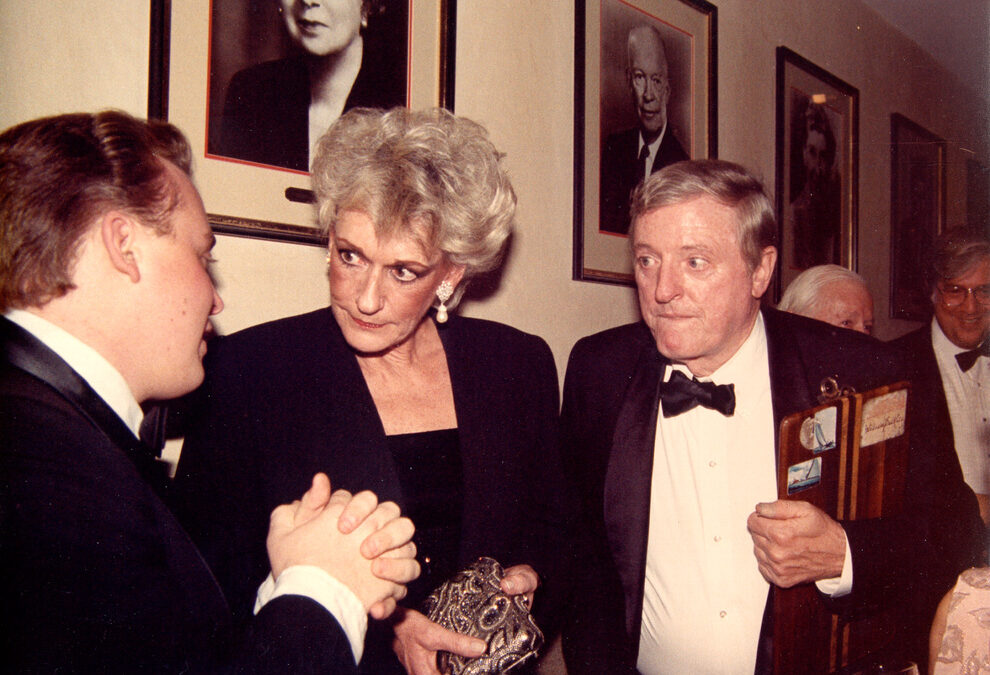
I remember when Steve came to Kentucky to join our staff in 1991, having served previously at the Ethics and Public Policy Center and the Institute on Religion and Democracy, both located in Washington, D.C. One of my favorite photos of Steve’s was taken from a conversation he was having back then with no less than the famed William F. Buckley, founder of National Review magazine, and his wife Pat at a dinner. Both Buckley and his wife were leaning forward listening carefully to what the young staffer at EPPC, Steve Beard, was saying. Usually, people were leaning forward listening carefully to what the brilliant Bill Buckley was saying. I grew to understand how bright and engaging this young man was when he became a part of our Good News staff, editing our ministry’s magazine.
There are so many things I have appreciated about Steve’s work with Good News magazine. He was committed to producing a magazine that had balance, making sure there was something for our entire United Methodist readership, both clergy and laity. After a number of years, I realized how easy it would have been for me to lean toward a publication geared mainly for just clergy. Steve made sure that didn’t happen. There were articles for persons of all ages, for clergy and laity, men and women, urban and rural, and with racial sensitivity. He was careful that we not be consumed by the negatives, which of course, there were many. In a time when general readership magazines were languishing, Steve continued to make Good News a quality, well-informed, inspirational, edifying, and always challenging publication—just a great read! He had keen insight and concern about how the Good News movement would be perceived across the denomination, and he was always careful to avoid things that would invite unnecessary criticisms of Good News’ larger renewal efforts.
Steve also maintained cordial and positive professional relationships with those involved at United Methodist Communications in Nashville. He respected them, treated them cordially, and I sensed that they responded positively to Steve in return, even while understanding that he represented a renewal ministry with which they often disagreed.
I would add that Steve is an excellent journalist, that is, a very gifted writer, in church matters and beyond. Many of us were impressed at his articles reviewing movies and critiquing pop culture. He was a contributor to National Review Online and BreakPoint.com. He was a contributing author to Spiritual Journeys: How Faith Has Influenced Twelve Music Icons (Relevant, 2003) in which he wrote chapters on Bono, Johnny Cash, and Al Green. He was also asked to contribute the forward to Steve Stockman’s book, Walk On: The Spiritual Journey of U2 (Relevant Books, 2001). Steve’s articles have appeared in Charisma, Discipleship Journal, The Washington Times, and World magazine. Yes, Steve was and is a profoundly gifted writer.
Steve also has great instincts to see the larger picture of things. He regularly helped me with articles, editorials, as well as the monthly letters to our constituents. He made me a better writer. I am thankful for his patience and gentle critiques during those many years we worked together.
So, it has been hard to see this major investment of Steve’s life and energy come to an end without some acknowledgement or recognition for all he’s done. Thanks to you, Steve Beard, for serving faithfully for 34 years as an editor who consistently gave us a first-class magazine of which we could all be proud (about 200 issues in all)! I wish there could have been one final magazine to give many of us a chance to say a much-deserved thank-you, well-done, and “Farewell.”
Do know, Steve, that for many of us who have been your colleagues and co-laborers, we know well the significance of your ministry—for a full third of a century—to the vital renewal venture in which we have all shared. You have made an enormous contribution to this endeavor.
Then, as your friend and brother in Christ, I want to express personally my heart-felt gratitude and appreciation for you, your friendship, and what your ministry has meant to me. You, dear friend, have my deep and enduring admiration. For all you have done, I give thanks to our Heavenly Father. You are an example, indeed, of “a long obedience in the same direction.” Do keep writing!
James V. Heidinger II is President Emeritus of Good News. This article first appeared on the Institute on Religion and Democracy’s website Juicy Ecumenism.

by Steve | Jan 7, 2026 | Uncategorized

Dr. Thomas C. Oden (1931-2016)
By James V. Heidinger II-
We can learn much from the remarkable theological journey of the late Professor Thomas C. Oden, who taught for more than 30 years as a professor of theology and ethics at the theology school at Drew University. Dr. Oden, a longtime colleague in denominational renewal, was a courageous, loyal United Methodist who loved the church. He was a theologian without peer within United Methodism. He was also highly respected in Protestant, Catholic, and orthodox communions as well as numerous evangelical denominations. He authored more than 20 books, including a three-volume Systematic Theology. He was also the general editor of the acclaimed Ancient Christian Commentary on Scripture series, a 27-volume work published by lnterVarsity Press. The importance of his contribution cannot be overstated.
“I left seminary having learned to treat scripture selectively, according to how well it might serve my political idealism,” he wrote in The Rebirth of Orthodoxy. “I adapted the Bible to my ideology – an ideology of social and political change largely shaped by soft Marxist premises about history and a romanticized vision of the emerging power and virtue of the underclass.” This ideology led him to involvement in numerous trendy movements, such as the United World Federalists promoting world government, liberalized abortion, the demythologizing movement (about which he did his PhD dissertation), transactional analysis, parapsychology, biorhythm charts, tarot cards, and the list goes on. Oden looked back on those years with some amusement at his obsession with such trends, and admitted that he felt he was doing Christian teaching a marvelous favor by it and even considered this accommodation the very substance of the Christian teaching office.
He wrote, “For years I tried to read the New Testament entirely without the premises of incarnation and resurrection – something that is very hard to do.” He assumed that truth in religion “would be finally reducible to economics (with Marx), or psychosexual factors (with Freud), or power dynamics (with Nietzsche).” He confessed “I was uncritically accommodating to the very modernity that pretended to be prophetic, yet I did not recognize modernity’s captivity to secular humanistic assumptions.” During those years, Oden acknowledged, “I never dreamed that I would someday grant to scripture its own distinctive premises: divine sovereignty, revelation, incarnation, resurrection, and final judgment.” Reading those words, one is struck that they described, as we have seen earlier, the very premises that were essentially put aside during the heyday of theological liberalism. They were rejected because they assume the reality of the supernatural and the miraculous.
Oden went on to say, “I had been taught that these premises were precisely what had to be transcended, reworded, circumvented, and danced around in order to communicate with the modern mind.” Frankly, this is the kind of theological ballet many evangelicals have watched for decades as liberal pastors and theologians have often “wrongly handled the word of truth” (to paraphrase Saint Paul), dancing and circumventing and rewording the plain meaning of the biblical text. The phrase Oden used is haunting as one reflects upon it. He wrote, “I had been taught.” But taught what, exactly? Well, in his words, taught that the premises of divine sovereignty, revelation, incarnation, resurrection, and final judgment had to be “transcended, reworded, circumvented, and danced around.” He was taught that these premises or theological convictions could no longer be valid in a new era of enlightenment. These were premises we must somehow improve upon. Yes, Oden had been taught, by sincere and no doubt well-meaning professors. One wonders how many seminarians have had such theological instruction in their preparation for ministry but never came back home to reaffirm the integrity and intellectual credibility of apostolic Christianity.
Thankfully, Thomas Oden came back home. He had a major theological reversal, as he described it. He celebrated the grace of God at work in his bizarre journey. He wrote, “Now I revel in the very premises I once carefully learned to set aside: the triune mystery, the preexistent Logos, the radical depth of sin passing through the generations, the risen Lord, the grace of baptism.” Let’s admit the obvious here: when you set aside these major themes of Christian doctrine, what remains of the historic Christian faith? There was a commendable honesty in Oden’s admission. He didn’t claim that he was simply reinterpreting those themes. He admitted these were themes he had learned “to set aside.”
What was it, then, that brought about this remarkable reversal in Oden’s life and theology? Hear this brief portion in his own words: “What changed the course of my life? A simple reversal that hung on a single pivot: attentiveness to the text of scripture, especially as viewed by its early consensual interpreters.” Most laity would be perplexed that a theologian might not give great attentiveness to the text of Scripture. That seems so basic to the ministerial vocation. But again, it “reflects how Scripture was, and is, perceived in the liberal/modern perspective. Oden wrote, “Before my reversal, all of my questions about theology and the modern world had been premised on key value assumptions of modern [liberal] consciousness – assumptions such as absolute moral relativism. After meeting new friends in the writings of antiquity, I had a new grounding for those questions.”
Before his reversal, Oden “distrusted even the faint smell of Orthodoxy. I was in love with heresy – the wilder, the more seductive,” he wrote. “Now I have come to trust the very consensus I once dismissed and distrusted. Generations of double-checking confirm it as a reliable body of scriptural interpretation. I now relish studying the diverse rainbow of orthodox voices from varied cultures spanning all continents over two thousand years.”

Professor Thomas C. Oden
One smiles, but with thanksgiving, at this former movement theologian writing of his newly found commitment to “unoriginality.” He insisted, “That is not a joke but a solemn pledge. I am trying to curb any pretense at ‘improving’ upon the apostles and fathers.” Acknowledging the “deceptiveness of originality,” he went on to write, “I can now listen intently to those who attest a well-grounded tradition of general consent rather than a narrow contemporary bias. I listen to voices that echo what has been affirmed by the community of saints of all times and places.”
In his autobiography, A Change of Heart, he described it as a “cycle of learning, unlearning and relearning.” This was reflected in “my joyful reception, then in my sophisticated rejection, then later in my embracing the hymns of my childhood.” At first he believed naively that God had come in the flesh. Then he learned that God had not really come in the flesh “but rather in some symbolic sense acceptable to modern assumptions.” Then, “At last I learned to recover the uncomplicated truth that God precisely becomes human in the flesh, dies for me, rises again and saves me from my sins. All these are viewed by consensual Christianity as historical events.”
It should come as no surprise that a theologian who spent his professional life in the world of theological education would write a book that addressed the problems of modern-day seminary education. Oden did so, though regretfully he admitted, as he loves the United Methodist Church and he loved the school of theology at Drew, where he spent so much of his professional teaching career.
In Requiem, he critiqued the failure of contemporary theological education and called for a return to classical Christian theology. He could have chosen to just gloss over the current ailment in the seminary world, he admitted, but “not with a healthy conscience.” While confessing that he is a “conflict-avoiding peace lover,” he wrote these sober and troubling words: “So after a lifetime of teaching … I am very nearly convinced that the present system is practically irreformable. This I say sadly, not irately.” He lamented the seminaries being “tradition-deprived,” and wrote about an academic tenure system that is “fixed in stone.” He also noted the academic distrust of the parish. In fact, “brilliant academics with no experience whatever in the actual practice of the ministry of Word, Sacrament, and pastoral care are often those who compete best in the race to become teachers of ministers in the trendy, fad-impaired seminary.” He noted sadly that having parish experience is more likely to be a negative factor than a positive one when seeking a teaching position in the seminary today.
Oden also cited the triumph of latitudinarianism, that is, a complete tolerance of all doctrinal views. The result is the complete absence of heresy. He wrote frankly that “heresy simply does not exist.” This is something never before achieved in Christian history, he observed. But the “liberated seminary” has finally “found a way of overcoming heterodoxy [departure from traditional doctrine] altogether, by banishing it as a concept legitimately teachable within the hallowed walls of the inclusive multicultural, doctrinally experimental institution.” The only heresy one might possibly encounter, said Oden, is an offense against inclusivism. One might add another – the failure to use politically correct language for God. (This, perhaps, would be considered a part of inclusivism.)
In the late 1970s, studies reported the sobering news that United Methodism’s seminaries were failing. There was a high dropout rate among young clergy, both male and female. In addition, there was an increasing struggle for student registration and tuition. Oden suggested at the time that if his seminary would only appoint a few new faculty who could connect with evangelical students, it would help solve that problem. Unfortunately, the new faculty appointments were “all in the opposite direction,” Oden wrote in A Change of Heart. “Most new appointments were made to left-leaning scholars who were dedicated to their ideologies and who either ignored, loathed or demeaned evangelicals.”
The day of ignoring what is happening in our denominational seminaries is over, according to Professor Oden. In a word of warning in Requiem, he wrote, “Christian worshipers can no longer afford to neglect what is happening to the young people they guilelessly send off to seminary, entrusting that they will be taught all that is requisite for Christian ministry.” He concluded with a sober but very timely warning to the church about seminaries that have clearly lost their way theologically: “When the liberated have virtually no immune system against heresy, no defense whatever against perfidious [treacherous, breaking of trust] teaching, no criteria for testing the legitimacy of counterfeit theological currency, it is time for laity to learn about theological education.”
Professors often justify teaching anything they want to teach by appealing to academic freedom, but Oden was not so ready to let them off the hook on that. He wrote, “If the liberated have the freedom to teach apostasy, the believing church has the freedom to withhold its consent.” He made the case even stronger: “If they reach counter-canonical doctrines and conjectures inimical to the health of the church, the church has no indelible moral obligation to give them support or to bless their follies.”
Oden affirmed that as a former sixties radical and now an out-of-the-closet orthodox evangelical, he shared concerns with a new generation of young classic Christian men and women who affirmed the faith of the apostles and martyrs. He found himself “ironically entering into a kind of resistance movement in relation to my own generation of relativists, who have botched things up pretty absolutely.” We must not miss the sobering implications of what he said – that he as an “orthodox evangelical” saw himself as being part of “a kind of resistance movement” in today’s church. He would assure us that this was not fantasy or hyperbole or some messianic obsession. He engaged the church theologically for more than four decades and his words are a sobering critique, perhaps an indictment, of the theological setting in contemporary United Methodism: to be an “orthodox evangelical” is to be part of a “resistance movement.” Many evangelical seminarians would understand that sentiment from their own personal seminary experience.
James V. Heidinger II was the publisher and president emeritus of Good News. A clergy member of the East Ohio Annual Conference, he led Good News for 28 years until his retirement in 2009. Dr. Heidinger is the author of several books, including the recently published The Rise of Theological Liberalism and the Decline of American Methodism (Seedbed). This essay is excerpted from that volume with permission. This article first appeared in Good News in 2017.

by Steve | Aug 18, 2025 | Front Page News, Home Page Hero Slider, Juloy-August 2025
Yesterday & Today: Church of God in Christ —
By John Mark Richardson, Sr. —
The Church of God in Christ (COGIC), a Holiness-Pentecostal denomination, has a deep spiritual heritage dating back to over 128 years. It has become one of the largest denominations in the United States and is the largest Holiness-Pentecostal denomination worldwide. It is a rich tapestry woven from the threads of African American faith, experience, suffering, resilience, hope, and community.
The COGIC was founded by Bishop Charles Harrison Mason, Sr., who was born on September 8, 1866, (although some records have 1864) in Shelby County, Tennessee, just over a year after the end of the Civil War. He was the son of former slaves and worked alongside his parents as sharecroppers throughout his adolescent years.
Mason grew up during a difficult and challenging era in America, particularly for African Americans. In a nation that had just torn itself apart primarily over the preservation of slavery and Southern states’ rights, survival was no easy feat.
The family of Bishop Mason faced the pervasive and devastating poverty that afflicted many Black individuals and families and Black communities following the Civil War. Amid this turmoil, Mason’s mother fervently prayed for her son, asking that he would be dedicated to God. Her prayers had a profound impact, inspiring the young Charles Mason to not only dedicate himself to God but also to incorporate daily prayer into his life. He earnestly prayed alongside his mother, asking above all things for God to grant him a religion like the one he had heard about from the old slaves and seen exemplified in their lives. This deep yearning for the God of his forebears became a central theme in his life, shaping his spirituality and purpose.
In 1880, just before his fourteenth birthday, Mason fell gravely ill with chills and fever, leaving his mother in despair over his life. However, in an astounding turn of events, he experienced a miraculous healing on the first Sunday of September that year. Eager to express their gratitude, Mason, along with his mother and siblings, attended church the following Sunday, at the Mt. Olive Baptist Church near Plumerville, Arkansas. An atmosphere of praise and thanksgiving enveloped the congregation as Mason’s half-brother, the pastor, baptized him, marking a transformative moment in Mason’s life after surviving a near-death experience.
During this moment of celebration, Mason said to his family and the local parishioners, “I believe God has healed me for the express purpose of alerting me to my spiritual duty.” From that moment on, Mason acknowledged and felt called into full-time ministry throughout his teenage and young adult years. His gratitude to God for his miraculous healing, his profound love for God, and his yearning to experience God like the saints of old fueled his desire to serve in ministry and live a life pleasing to God.
Mason’s Holiness Influencers
This deep sense of purpose and spiritual awakening naturally drew Mason towards the Holiness movement, which was making great strides in America during the 19th Century. This movement emphasized personal piety, sanctification, and a deeper, experiential faith, where adherents sought to experience God’s grace and power in transformative ways. Consequently, Mason attended various Holiness meetings and embarked on a quest to explore the Holiness movement further, eager to understand sanctification and embrace the sanctified life.
Mason’s readings on holiness and entire sanctification by various writers — John Wesley in particular — helped him establish roots in the Wesleyan tradition. John Wesley, the founder of Methodism, championed the notion of personal holiness and social justice. Mason embodied these Wesleyan distinctives, and the Wesleyan Quadrilateral — scripture, tradition, reason, and experience — shaped Mason’s theological framework, integrating biblical authority, rich traditions, and vibrant spiritual experiences.
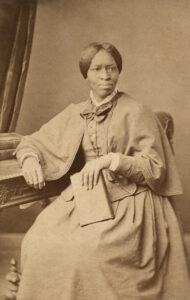
Additionally, and more importantly, Sister Amanda Berry Smith’s Holiness’s writings helped shape Mason’s beliefs and teachings that would lead to the Church of God in Christ’s deeply held beliefs and practices. Amanda Smith (pictured below) was a notable figure in the Holiness movement during the late 19th century. She was an African American evangelist, writer, and one of the first Black women to gain prominence in the Holiness and Pentecostal movements.
Amanda Smith’s writings and preaching focused on holiness and empowerment, significantly influencing many, including Bishop Charles H. Mason. Her work highlighted the importance of spiritual transformation and the experience of entire sanctification — a doctrine asserting that believers could attain a second work of grace that cleansed them from sin and empowered them for holy living and service in the present world. This doctrine resonated deeply within the African American church community, particularly for the Church of God in Christ and Bishop Mason, who claimed the grace of divine sanctification after reading Sister Amanda Smith’s autobiography.
After immersing himself in the writings of John Wesley, Sister Amanda Smith, and others, and experiencing entire sanctification during prayer, Mason’s life was transformed. However, his teachings on holiness and his fervent discussions about spiritual empowerment caused significant friction with the established order of the Baptist Church. In the 1890s, as he began advocating for sanctification and a more spirited form of worship, he found himself at odds with church authorities. His passionate emphasis on holiness was viewed as radical and contrary to traditional Baptist teachings.
Excommunication, Disputes, and Disfellowship
This escalating tension reached a culmination when Mason was formally excommunicated from the Baptist Church due to his beliefs and teachings regarding holiness. Consequently, this pivotal moment motivated Mason to team up with a former Baptist Pastor, Reverend Charles Price Jones, who was expelled from his pastorate for preaching holiness. These two incredible leaders collaborated to promote and disseminate the Holiness message more broadly. They did this through preaching, revivals, planting Holiness churches, providing guidance to pastors and churches wanting to embrace the holiness life, publishing literature, and writing inspired hymns and songs of praise.
This holiness fellowship and movement, led by two influential African Americans, attracted many to their cause. During this time, Bishop Mason (pictured below) received a revelation from God. In 1897, while walking and praying on a street in Little Rock, Arkansas, he heard God speak to him: “If you choose the name Church of God in Christ [based on 1 Thessalonians 2:14], there will never be a building big enough to hold all the people I will send your way.”
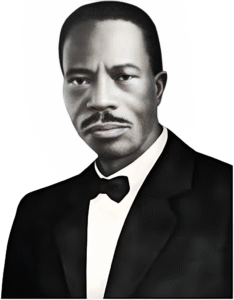 To this, Bishop Mason replied, “Yes, Lord!”
The collaboration between Mason and Jones was a beautiful but short-lived moment. Mason eventually experienced disfellowship from Reverend Charles Price Jones and others with whom he had served in ministry. After returning from the Azusa Street revival in Los Angeles, California, Mason’s report about the events he witnessed and his personal testimony of baptism in the Holy Spirit and speaking in tongues were met with skepticism, criticism, and resistance. However, what Mason experienced at the Azusa Street revival reaffirmed his belief that God had more for His people to experience and receive — a third work of grace: power!
Mason was profoundly impacted by the outpouring of the Holy Spirit during the Azusa Street Revival, which manifested through various signs, including speaking in tongues, healings, and a deep sense of community among diverse groups of people. His reports highlighted the revival’s emphasis on holiness, the power of prayer, miracles, and the importance of evangelism.
Mason also noted the racial and cultural diversity present at Azusa Street, which broke down barriers between African Americans and Whites, creating a unique space for unity in worship. This experience of inclusiveness informed his later work in establishing COGIC as a vital denomination within the Holiness and Pentecostal movements.
The disfellowship was a painful experience. Mason and Jones were dear friends, and many in the group were close to Mason. Although Jones and Mason could no longer serve in the ministry together, they continued to respect each other as leaders and loved each other as brothers. Ultimately, Jones would establish a different faction of the Holiness movement, Church of Christ Holiness U.S.A., while Mason continued to promote his distinctive teachings and practices.
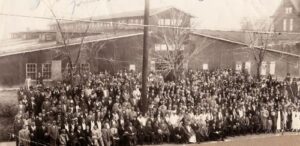
COGIC Holy Convocation, 1938. Courtesy Charles H. Mason & Mother Lizzie Robinson Museum (COGIC Museum)
The Formal Establishment of COGIC
By 1907, the seeds had been sown for the formal and legal organization of the COGIC. That year, Mason held a gathering in Memphis, Tennessee, where he officially established the Church of God in Christ as its own denomination.
This organizational meeting laid the groundwork for what would become a significant movement within the American religious landscape. Mason’s leadership was affirmed during this gathering as he was recognized for his theological vision, charismatic personality, and commitment to evangelism and spiritual empowerment. The attendees, composed of various clergy and laypersons inspired by Mason’s teachings and leadership, were the Church of God in Christ’s first General Assembly, and they voted to elect Bishop Charles Harrison Mason as the first Bishop of the COGIC.
The news and outcomes from this meeting attracted a diverse group of adherents to the Church of God in Christ, including many white congregants and preachers impacted directly or indirectly by the Azusa Street Revival, and who resonated with the tenets of Holiness. They embraced the radical inclusivity suggested by Galatians 3:28: “that in Christ, all believers are equal, regardless of their ethnic or social background.” As one affirmed, “the color line was washed away by the blood.”
An Interracial Denomination
From 1907 to 1914, the COGIC was arguably the largest interracial denomination worldwide. In congregations of the Church of God in Christ, black and white saints worked, worshiped, and evangelized together in an interracial, egalitarian fellowship modeled after the fellowship at Azusa Street. This occurred throughout the South, including Mississippi, Tennessee, Arkansas, Florida, Louisiana, Alabama, and Georgia, during a particularly racially tense time in the United States.
Additionally, because the Church of God in Christ was legally incorporated, they could ordain clergy whose status civil authorities would recognize. Clergy who wished to perform marriages and other ministerial functions that had legal consequences needed this official recognition. Mason also played a crucial role in carrying out the Azusa Revival from its movement phase to its denominational phase. Through Mason’s influence, scores of white ministers sought ordination at the hands of Mason. Therefore, large numbers of white ministers obtained ministerial credentials carrying the name of the Church of God in Christ.
Many white brothers and sisters who formed the Assemblies of God had been part of the Church of God in Christ from 1907 to 1914, during which time Bishop Mason ordained about 350 white ministers. In 1914, the Assemblies of God was organized, and in the second week of April that year, Mason traveled to Hot Springs, Arkansas, to attend the organizing meeting of the Assemblies of God. He preached on Thursday night, illustrating the wonders of God by holding up an unusually shaped sweet potato. He sang his spontaneous improvisation of spiritual songs that Daniel Payne in 1879 referred to as “corn field ditties.” With Mason were the “Saints Industrial” singers from Lexington, Mississippi. Mason bid the white leaders a warm farewell and gave his blessing for the white ministers to form their own organization. He also gave them permission to void their Church of God in Christ credentials in order to switch to those of their new denomination.
Bishop Mason’s Tenure and Accomplishments
During his tenure as founder and first Bishop of the Church of God in Christ, Bishop Mason led the church through phenomenal growth while championing civil rights and social justice. He actively worked to create a more equitable society, standing against racism and Jim Crow discriminatory practices, all while supporting the United States government in its fight against Nazism and Fascism.
He oversaw the construction of the largest African American church campus of the early 20th century, featuring a sanctuary that seated five thousand worshippers. This historic landmark campus was where Dr. Martin Luther King Jr. delivered his famous “I’ve Been to the Mountaintop” speech — just a day before he was tragically assassinated.
Above all, Bishop Mason was a holiness preacher, inspiring people to live free from sin. He was also unapologetically Pentecostal, embracing the gifts of the Spirit and advocating for baptism in the Holy Spirit and the fruits of the Spirit.
Following Bishop Mason
Bishop Charles Harrison Mason, Sr., the beloved founder and first Bishop of the Church of God in Christ, died November 17, 1961. He served the denomination he founded for fifty-four years. Since the death of Bishop Mason, seven leaders have served as Presiding Bishop: Ozro Thurston Jones Sr. (1962–1968); James Oglethorpe Patterson Sr. (1968–1989); Louis Henry Ford (1990–1995); Charles David Owens (1995–2000); Gilbert Earl Patterson (2000–2007); Charles Edward Blake (2007–2021); and John Drew Sheard (2021–pictured below).
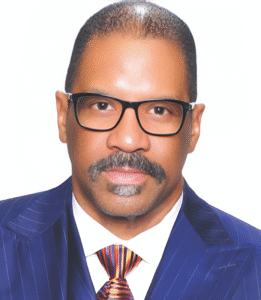 Bishop Sheard of Detroit, Michigan, serves as COGIC’s Presiding Bishop, embodying the spirit of Bishop Mason in his leadership. He has been a gracious and kind leader, guiding COGIC into a time of organizational peace, unity, prosperity, and national and international influence. He has coordinated the completion of major building projects, repaired and beautified existing structures, paid off existing debt, and responded to national and global crises and tragedies that have impacted the COGIC family. Bishop Sheard has reformed ministerial education and training for clergy, the COGIC Seminary and University, and has helped transition the COGIC into a more digital and innovative era. Bishop Sheard has also led the church in embracing a multi-faceted approach to ministry, prioritizing spiritual growth and evangelism, while maintaining a strong focus on:
• Youth and Education. The COGIC organization offers programs to engage young people in ministry and service, highlighting the importance of active, informed citizenship.
• Health Initiatives. Recognizing the critical health disparities in many African American communities, COGIC has implemented various health initiatives to promote wellness, access to care, and health education.
• Social Justice Activism. In response to contemporary social issues, COGIC has positioned itself as a leader in the conversation on justice, racism, and equity. This commitment echoes the church’s historical roots in the civil rights movement, as COGIC remains dedicated to lifting the voices of the marginalized.
• Global Outreach. By establishing missions in 112 nations, COGIC transcends geographical and cultural barriers, embodying Christ’s love in action.
• Connecting with the Wesleyan Tradition. The connection between COGIC and the larger Wesleyan family is not simply historical; it is a living relationship characterized by shared values and missions. As denominations continue to navigate modernity, COGIC stands with the Wesleyan movement with its emphasis on holiness and empowerment.
• Embracing Contemporary Challenges
As COGIC embraces its role in today’s society, it is also addressing contemporary challenges its congregants and communities face.
Looking ahead, the Church of God in Christ remains steadfast in its mission to spread the Gospel and serve local and global communities. It is poised not only to influence its members but to inspire churches across different denominations, including those within the Wesleyan family, to respond to the ever-changing landscape of faith and social responsibility.
By John Mark Richardson, Sr., is Regional Bishop, Church of God in Christ (COGIC), and Executive Director, Wesleyan Holiness Connection.
by Steve | Aug 18, 2025 | Juloy-August 2025
Transformational Love of God: Christian Perfection —
By Wendi. J. Deichmann —
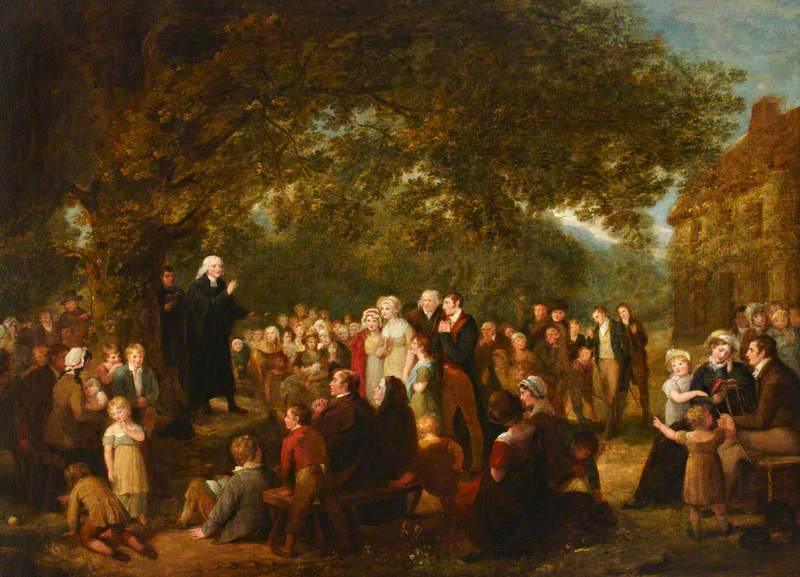
For centuries Methodists have enthusiastically sung the hymn, “Love Divine, All Loves Excelling,” the lyrics of which poetically articulate the Wesleyan doctrine of Christian perfection. Composed by Charles Wesley in 1847, this hymn doubles as a teaching primer for a doctrine that is often neglected or misunderstood, even by fervent Methodists. It is simple enough to understand the concept underlying the title. Love divine, God’s love, surpasses all other loves. After all, to quote well-known Bible verses, “God is love” (1 John 4:8); “For God so loved the world that he gave his only Son so that everyone who believes in him may not perish but may have eternal life” (John 3:16); and “greater love has no one than this: to lay down one’s life for one’s friends” as Jesus himself has done for us (John 15:13).
Believers can readily agree, then, based upon Scriptural revelation, that God’s “divine love” excels in comparison with all other loves. It is what we sing in the rest of the hymn that takes us further down the path toward the sometimes perplexing Wesleyan doctrine of Christian perfection. Phrases like: “fix in us thy humble dwelling” (verse 1), “take away our bent to sinning” (verse 2), and “finish, then, thy new creation; pure and spotless let us be” beckon us to wrap our hearts, minds, and voices around the full meaning of Christian perfection. The purpose of this article is to explore and explain this central biblical doctrine as it was understood and taught by both John and Charles Wesley, founders of Methodism.
For John Wesley, the doctrine of Christian perfection was so important that he believed its propagation was the main reason the Holy Spirit had raised up the people called Methodists. He came to this conclusion through his study of Scripture, when he compared what was written in the Bible about the extent of God’s love and the Holy Spirit’s work within believers, with the less than holy attitudes and behaviors exhibited by many “so-called Christians” of his day. Wesley clarified in great detail his conclusions concerning this doctrine in several widely read publications still available today. These included a lengthy treatise entitled “A Plain Account of Christian Perfection,” “Thoughts on Christian Perfection,” and a sermon entitled, “Christian Perfection.”
In these documents Wesley grappled with promises he found in scripture that were the basis not only for his belief in God’s work of grace in sanctification, but also in entire sanctification, an expression he used interchangeably with Christian perfection. These Biblical promises included for example, “He shall redeem Israel from all his sins” (Psalm 103:8) and “let us cleanse ourselves from all filthiness of flesh and spirit, perfecting holiness in the fear of God” (2 Corinthians 7:1).
Likewise, Wesley pondered seriously the petition in the Lord’s Prayer, “Deliver us from evil” and Jesus’ prayer for his followers (John 17:20-23): “that they all may be one; as thou, Father, art in me and I in thee, that they also may be one in us; I in them, and thou in me, that they may be made perfect in one.” Similarly in Ephesians 3:16-19, “that ye, being rooted and grounded in love, may be able to comprehend, with all saints, what is the breadth, and length, and depth, and height, and to know the love of Christ, which passeth knowledge; that ye may be filled with all the fulness of God.” Finally, in 1 Thessalonians 5:23, “The very God of peace sanctify you wholly. And I pray God, your whole spirit, soul, and body, may be preserved blameless unto the coming of our Lord Jesus Christ.”
In Holy Scripture, moreover, Wesley encountered explicit commands about perfection from Jesus himself: “Be ye perfect, as your Father who is in heaven is perfect” (Matthew 5:48) and “Thou shalt love the Lord thy God with all thy heart, and with all thy soul, and with all thy mind” (Matthew 22:37). If the heart is full of the love of God as commanded, he concluded, there is no room for sin to reside there. Thus, for Wesley there was no denying that entire sanctification is possible in this life. Based upon his reading of Scripture, it should be expected. In fact, it would be unconscionable to truncate the desired, sanctifying work of God in the believer short of Christian perfection.
When Wesley’s detractors demanded proof in the form of a living example of Christian perfection, he replied that to identify one or more would be imprudent and unfair as it would only “set a mark for all to shoot at.” Furthermore, it would do no good, he argued, mirroring the words of Jesus in Luke 16:31: “’For if they hear not Moses and the Prophets,’ Christ and his Apostles, ‘neither would they be persuaded though one rose from the dead.’”
Wesley began both his treatise and his sermon on perfection by describing what it is not, namely, those very things that many assume that it is. In “A Plain Account of Christian Perfection,” he characterized those who are on the path of perfection, as not being perfect in knowledge. Nor are they free from ignorance, mistakes, infirmities, temptations, irregularities, ungracefulness of speech, or other “defects” in this life.
If Christian perfection is not all these things, what exactly, according to John Wesley, is it? Again, drawing directly from Scripture, he stated simply that it is “The loving God with all our heart, mind, soul, and strength. This implies, that no wrong temper, none contrary to love, remains in the soul; and that all the thoughts, words, and actions, are governed by pure love.”
But how is this kind of perfection possible in mere humans who are chronically plagued by ignorance, error, and weakness? Only by the perfecting grace of God, Wesley was quick to state. He explained that those characterized by Christian perfection not only need Christ and his forgiveness; but they are keenly aware of their constant need for Christ and his merits. In fact, in Wesley’s thinking Christian perfection is intimately dependent upon one’s relationship with Christ, who “does not give life to the soul separate from, but in and with, himself.” Again, drawing directly from Scripture, Wesley wrote that the words of Jesus are “equally true of all . . . in whatsoever state of grace they are: ‘As the branch cannot bear fruit of itself, except it abide in the vine; no more can ye, except ye abide in me. Without (or separate from) me ye can do nothing.’” (John 15:5)
Wesley reminded the reader that it is only through God’s grace that any progress can be made on the path of salvation. In “every state,” Wesley wrote, the believer needs Christ (1) for the gift of grace that Christ gives freely to us, (2) because of the debt of gratitude we always owe to him, (3) because we receive this grace “not only from Christ, but in him,” (4) because we are dependent daily upon his intercession on our behalf,” and (5) even the best of Christians need Christ to atone for our shortcomings and our mistakes in judgment and practice. Even if no wrong was intended, these are deviations from God’s perfect law.
Christian perfection is not dependent upon our own righteousness, then, and it is never our possession. Rather, like the air we breathe and the light by which we see and move, Christian perfection is a gift of God’s unsurpassable love received daily from Christ through his grace, effected through the power of the Holy Spirit.
This brief foray into John Wesley’s teachings about the doctrine of Christian perfection provides a context for understanding the lyrics in the Charles Wesley hymn referenced earlier. It is exactly because of the atoning and sanctifying nature of God’s “all loves excelling” love that the faithful believer moves from praising love divine in the first stanza, to a prayer for finishing then “thy new creation; pure and spotless let us be” in the last stanza.
Magnificent and popular as is this Charles Wesley hymn, even more significant is the doctrine of Christian perfection it expresses. Not only biblical, this particular core doctrine of Wesleyanism is also eminently worshipful, hopeful and practical. It puts the spotlight on the unceasing love of God that is both for us and in us. It teaches about the limitless power of a love strong enough not only to human forgive sin, but also to change believers’ lives, to cultivate holy relationships, and to propel disciples into the world as witnesses to the good news of Jesus Christ. In other words, when the pure love of God toward us also resides in us, we are already being transformed in our capacity to love others with the same purity of transformational love with which God loves us.
John Wesley believed this doctrine was a gift of God given especially to Methodists in the 18th century to undergird their God-given, audacious mission “to spread scriptural holiness” across the land. But Christian perfection is not solely the preserve of the Methodists. Rather, it is a biblical doctrine that depicts a divine love so powerful and pure that it readily transcends denominational, theological, cultural, and a host of other human-made distinctions and barriers.
Ironically, our own time is characterized by intense, theological squabbling and division over the meaning of holiness. Can it be that the biblical doctrine of Christian perfection, in concert with the work of the Holy Spirit in our midst, has the capacity to help us rediscover the pure love of God for us and in us, the practice of sincere Christian unity beyond denominational lines, and a wonderful season of revival within the body of Christ?
Wendy J. Deichmann is President Emerita and Professor of History and Theology at United Theological Seminary. An ordained elder of The United Methodist Church, Dr. Diechman is Director of the Center for the Evangelical United Brethren Heritage; Academic Dean (2005-2008).

by Steve | Aug 18, 2025 | Front Page News, Home Page Hero Slider, Juloy-August 2025
Justified by Faith: Why the Details Matter — A Lesson from Making Bread —
By James R. Morrow —
How hard could it be? I had just tasted one of the best slices of homemade bread I’d ever eaten. Perfect texture, with a delightful taste (especially when slathered in butter!). I decided right then that I would make bread too. After all, it’s just flour, water, and yeast … or so I thought. Hours later, I tasted the most disappointing slice of bread I’d ever eaten.
A quick watch of “Bread Week” on The Great British Baking Show could have saved me a lot of trouble. It turns out, bread-making is more complex than it looks. You’ve got to pay attention to the type of flour, make choices about hydration levels, and don’t forget to activate the yeast! Then there’s rising and proofing times (cue Paul Hollywood declaring, “It’s underproved!”) and the mysterious world of gluten development. Yes, bread is bread, and we can find it almost anywhere. But the details make a huge difference. The more we understand about each part of the process, the greater our enjoyment of the final product.
Salvation is a lot like that.
Many of us can remember the first time we truly tasted salvation — an initial encounter with God’s grace that changed everything. That moment matters! But if we stop there, we risk missing the deeper beauty. Like baking bread, the details and distinct movements of human salvation matter. The more we understand what’s happening beneath the surface — what God has done, is doing, and will do — the richer our experience becomes. Paying attention to what occurs in salvation leads to a richer experience of the whole.
In the Wesleyan tradition, salvation is more than a single moment; it is the entire life of grace — a journey marked by God’s initiative and our continued response. God’s love meets us before we are aware of God (prevenient grace), pardons us from our sin (justifying grace), and reshapes us in holy love (sanctifying grace). Salvation is God’s work from beginning to end, from rescue to being made perfect in love, from alienation to union.
One of the first major movements in salvation is justification. It isn’t the whole story, but it is a vital part. It is the doorway to experiencing the fullness of salvation. Every subsequent experience of salvation rests on justification. That’s why it’s worth pausing to pay attention to what happens in this moment of grace.
What is Justification?
Simply put, justification is pardon. I like the way that John Wesley puts it in his sermon “On Justification”: “The plain scriptural notion of justification is pardon, the forgiveness of sins.” Justification brings a relative change in our status — from guilty to acquitted, from alienated creation of God to child of God, from lost to welcomed home. It is the work God does for us. (Regeneration and sanctification involve the work that God does in us.)
One way to picture this is through a legal metaphor. In the American legal system, a president or a governor can pardon someone who is awaiting trial or sentencing. That pardon nullifies all legal proceedings and releases the person from liability. When we are justified, God pardons us — fully. All of our past sins —whether in thought, word, or deed — are forgiven. All of them. We are washed white as snow. Our record is clean. The punishment is lifted.
The legal metaphor also helps us see how justification restores relationship. A criminal, once pardoned, can live again in good standing with society. Similarly, justification reconciles us to God. Once alienated from God by sin, we are welcomed into a right relationship and restored friendship with God.
Why We Need Justification
Reflecting on justification reminds us just how fallen we were. To be pardoned means that we were once guilty, condemned, and alienated from God. Scripture describes our natural condition as one of spiritual death, separation, and bondage to sin (Romans 3:23; Ephesians 2:1-3). We are not merely wounded or weakened; we are lost and utterly incapable of saving ourselves. This is true for all people, regardless of their status, morality, or religious efforts. Unless God acts, we are lost.
What God Has Done
Thankfully, God has acted. Romans 5:10 reminds us that we are “reconciled to God by the death of his Son.” Justification is possible because, in love, the Father sent the Son, who lived perfectly, gave his life for the world, rose from the dead, and now intercedes for us. And the Holy Spirit awakens our hearts, gives us grace to believe, and applies Christ’s saving work to our lives. (Notice how salvation is a Trinitarian thing!)
This is all God’s doing, accomplished through God’s love, for the sake of sinful humanity. No one deserves it, nor does anyone have the capacity to earn it — even those who have done seemingly good deeds. God justifies the ungodly, and all people prior to salvation qualify for that group.
The Role of Faith
There is only one necessary condition for justification: faith. As Ephesians 2:8 says, we are justified by “grace through faith.” Now, faith is not simply belief that God exists, that Jesus is real, or that forgiveness is a possibility. Wesley preaches that faith is “a sure trust and confidence that God both hath and will forgive our sins, that he hath accepted us again into his favor, for the merits of Christ’s death and passion.” In the spirit of Wesley’s own faith journey, we are reminded that faith is the conviction that Christ died for us, that our sins are forgiven, and that we, like the young prodigal son, are welcomed back into relationship with the Father.
I want to be clear here so that we don’t get tripped up by the YouTube apologists: faith is not a human work. It is only made possible by the grace of God. Without God acting first — by what we refer to as prevenient grace — we would have no capacity for faith. Our capacity for faith is an act of God to which we respond through surrender. God makes faith possible through grace, but God will not force someone to have faith. Justification, like all of salvation, is entirely an act of grace.
Let’s Talk About Some Questions
First, what about repentance — isn’t that important? Yes! While we can examine the various parts of the journey of salvation, that doesn’t mean they can be separated or cleanly delineated in real-life experience. Like ingredients in a loaf of bread, they’re all baked together. You can marvel at the results of gluten development and proofing, but you can’t separate them from the loaf. Wesley reminds us that repentance is a fruit of faith. Although it’s often all wrapped up together in experience, justification follows repentance as God’s pardoning work.
Second, isn’t this just “getting saved?” When people talk about getting saved, they’re often describing justification. And they’re not wrong. Justification is the moment when we’re pardoned, accepted, and set right with God. But that’s not all there is! Even in our initial experience of conversion, God is doing distinct but related work in us — namely, regeneration. If justification is the work that God does for us, regeneration begins the work that God does in us.
Wesley puts it this way in his sermon, “The Great Privilege of Those That Are Born of God”: justification “is the taking away the guilt,” while regeneration takes “away the power of sin.” He reminds us that “although they are joined together in a point of time, yet are they of wholly distinct natures.”
We don’t want to reduce salvation to justification any more than we want to reduce bread to flour, water, and yeast. But neither should we overlook the beauty and power of reflecting on what justification means in the life of salvation.
Why the Details Matter
Paying attention to the details of salvation — those distinct yet interconnected works of God — doesn’t complicate salvation. It enriches it. Justification isn’t just a theological concept; it’s a powerful work of God. It is a doorway. Through it, we step into the joy of full salvation.
When we pause to reflect on that moment — the pardoning mercy, new standing with God, the doorway swinging open to the fullness of salvation — we can celebrate just how deeply we are loved and find assurance that God has pardoned us.
That kind of reflection feeds our faith. It awakens worship, increases our gratitude, and sets our feet on the path of transformation. Justification may be the entryway, but from there, salvation unfolds one grace-filled room after another.
I’m a little better at baking bread these days, and I have a deeper appreciation for every bite of it I take. The details matter. And justification is one worth savoring.
(If you’d like to take a deeper dive into justification, I recommend reading John Wesley’s sermon, “Justification by Faith,” and grabbing a copy of Seedbed’s The Faith Once Delivered: A Wesleyan Witness to Christian Orthodoxy.)
James R. Morrow is an elder in the Global Methodist Church and lead pastor of the First Methodist Church of Albany in Albany, GA. Along with First Methodist Church, Jim is passionate about offering Christ from the heart of downtown for an awakening in Southwest Georgia.