
by Jonathan Powers | Mar 3, 2026 | Uncategorized
But I Prayed about It!
By Stephen Rankin
There once was a man who went to talk with his pastor about a personal family catastrophe that he had managed to cause. A Christian friend of his pitched an investment idea to him that promised to bring a return three or four times the going rate for companies in a particular sector of the stock market. The man knew this possible investment was risky, but his own business had been through some recent hard times, and he could really use an infusion of cash. The man poured out his heart to the Lord, and, after a time, he felt that he had gotten an answer. He threw some big money at the investment.
In the end, the man not only failed to receive the three-fold return, but he also wound up losing a lot of money. His business went on life support. His wife was furious with him. He was deeply discouraged and confused and even more frustrated. “But I prayed about it!” he exclaimed to his pastor.
A good deal of confusion exists around how God speaks to us in prayer. It is a big topic, so in this article I am limiting my focus to just one area of concern, namely, the problem of subjectivism. The man’s plight illustrated in the story above is a prime example of what subjectivism looks like in prayer. The term “subjectivism” refers to that compelling inward sense of the absolute rightness of decision or plan, intensified by having prayed about the matter. For example, I remember, as a naïve college boy being absolutely convinced that God was bringing a certain girl and me together. Apparently, God had not spoken to her! On the basis (alone) of having prayed about something, complicated, perhaps, by cherry-picking Bible verses for confirmation, too often people can conclude that God has blessed their plan and will guarantee the right outcome.
Subjectivism in prayer is a genuine problem and not a matter for scorn and condescension. Sometimes people can make a shipwreck of their lives if prayer is not approached properly. Improper postures of prayer can also provoke spiritual crises, even if the situations are not as high stakes as the opening example.
Before going any further, it is important to make clear that I am not encouraging hesitance to ask boldly in prayer, nor is any of this to cast doubt on the fact that God does speak to us in prayer. In fact, my goal is quite the opposite. As we grow in grace and in the knowledge of the Lord (2 Peter 3:18), we should find a growing efficacy in prayer, coupled with the confidence that we have real fellowship with the Triune God. As James says, we can trust the Father of lights in whom there is no variation or shadow due to change. I can name several crucial times in my own life in which I have no doubt that God spoke directly in response to my appeals.
What we need, then, is wisdom and discernment in prayer. To grow in this direction, we must recognize pitfalls and build proper theological boundaries around prayer. A good starting point is addressing the influence of our American culture. In the past fifty or sixty years, in general as a society, we have become much more prone to trust our subjective impressions. It’s a form of what the sociologist Robert Bellah calls “expressive individualism.” Many people have come to believe that to thrive and to experience the good life, they need the freedom to express a deeply felt inward core of their identity. Many Christians recognize this as problematic and disagree with the basic concept; however, we can still fall prey to its influence. Generally, it can be easy for Christians to think about their relationship with God in more individualistic terms. They therefore are more prone to a kind of Christianized version of expressive individualism. “But I prayed about it!” fits well within this framework.
What guidance can then be given as a corrective? It never hurts to start with John Wesley. In “Cautions and Directions Given to the Greatest Professors in the Methodist Societies,” published in 1762, Wesley offers this wise caution: “Do not ascribe to God what is not of God. Do not easily suppose dreams, voices, impressions (emphasis added), visions, or revelations to be from God without sufficient evidence.”
What prompted Mr. Wesley to write these words? That date, 1762, gives us a clue as it situates us in the middle of an extraordinary work of God among Methodists. In particular, the Methodists were witnessing a substantial increase in the number of testimonies to Christian perfection, the raison d’etre for the Methodist movement to exist. A whole slew of people claimed to have experienced perfect love for God and perfect freedom from sin.
Wesley was not entirely confident in the legitimacy of some of the “professors’” testimonies, however, since he did not see them exhibiting the kind of character that should accompany the experience. There should be sufficient evidence, Wesley insisted, to go along with the experience. The fruit needs to be tested.
To determine the legitimacy of the experience, then, such professors then and now need to apply certain guidelines.
The first guideline is always to start with Holy Scripture. “Try all things by the written Word, and let all bow down before it,” Wesley admonished. Therefore, we test the impressions that surface in prayer: Are they firmly grounded in Scripture? Do they align with what Jesus teaches about the kingdom of God? Do the align with what Scripture says about holiness?
Or course, determining whether a particular conviction gained through prayer is supported by Scripture takes some work; thus, this guideline helpfully slows down the decision process. It also calls for us to test our sense from Scripture with other wise Christian friends. In the same context as mentioned earlier, Wesley speaks of the importance of “consulting the children of God.” It’s a reminder of the proverb that “in an abundance of counselors there is safety” (Proverbs11:14b).
Finally, along with searching Scripture and asking for counsel, we consider the disposition of our hearts: Is my heart open, humble, and yielded to good guidance, even if that guidance cautions me away from what I feel strongly about how God is leading? Is my mind changeable on the matter? Again, along with Scripture, we need input from others to know our own hearts.
Once more, the goal of this writing is not to incite such caution about prayer that someone is afraid to trust what they sense God is saying in and through prayer. Instead, the goal is for more of us to gain wisdom, confidence, and efficacy in prayer, and to live more fully in light of what Scripture says about prayer. “But I prayed about it,” by itself, is an insufficient measure. We can do better.
Steve Rankin is the Contributing Editor for Good News magazine.
by Jonathan Powers | Feb 25, 2026 | Uncategorized
Learning How to Love Again:
Augustine’s Cure for the Modern Soul
By Jonathan A. Powers
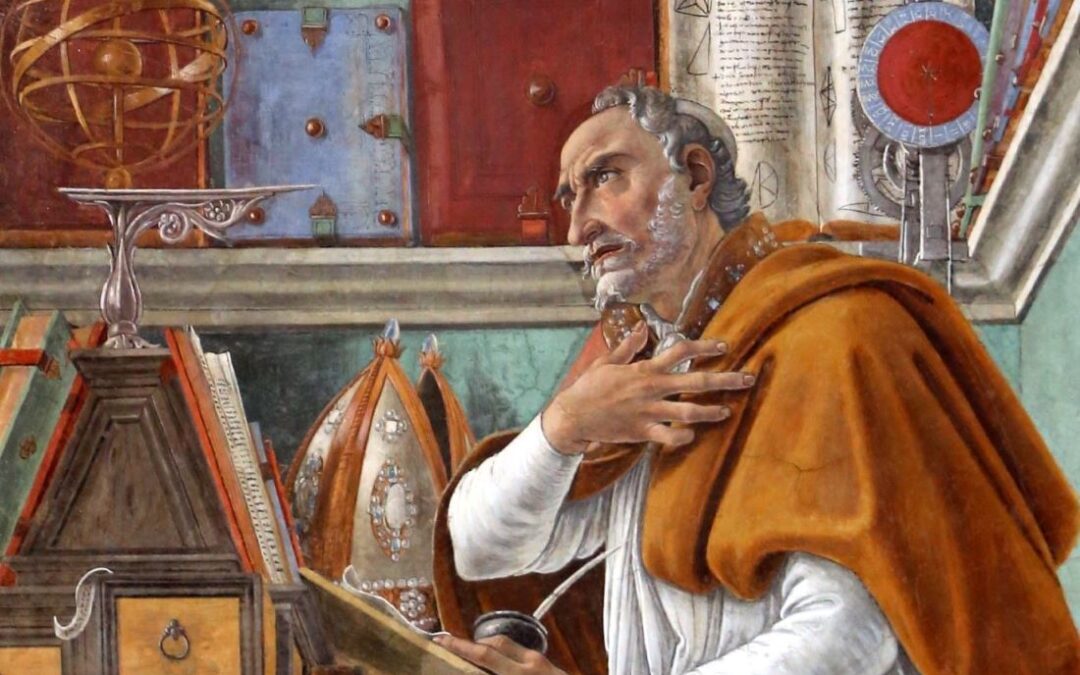
In the long history of the Christian Church, few figures stand as tall as Saint Augustine of Hippo. Throughout his ministry Augustine proved himself to be a brilliant thinker, a prolific writer, a persistent polemicist, and a devoted pastor. Trained in philosophy and rhetoric and living in a time of cultural collapse and ecclesial crisis, Augustine managed to articulate a vision of God, humanity, and the Church that still shapes Christian thought today. He was more than a philosopher or rhetorician, though. Augustine was at heart a pastor-theologian committed to shepherding people toward the love of God, helping them navigate the complex terrain of their own hearts.
From Sinner to Saint
Born on November 13, 354 in the North African town of Thagaste (modern-day Algeria), Augustine grew up in a home marked by both tension and grace. His mother Monica, a devout Christian, prayed ceaselessly for his salvation while his father Patricius, a pagan, encouraged his worldly ambition. Augustine’s intellect was evident from an early age. He pursued rhetorical training in Carthage and later taught in Rome and Milan, gaining a reputation as a gifted speaker and philosopher.
Yet even as his public success grew, Augustine’s soul remained restless. He dabbled in various belief systems, including the dualistic faith of the Manichees and the metaphysical musings of Neoplatonism, all the while struggling with inner conflict. His passions, especially his sexual appetites, clashed with his moral instincts. For years he resisted the Christian faith, fearing it might demand the death of internal desires he could not imagine living without.
Everything changed during his time in Milan. Influenced by the preaching of Bishop Ambrose and the quiet witness of his mother, Augustine came under conviction. As famously captured in his work Confessions, while sitting in a garden he heard a childlike voice say, “Take and read.” Opening the Scriptures to Romans 13:13–14, he found himself pierced by Paul’s call to leave behind the deeds of darkness and put on Christ. He surrendered his life to God in that moment, marking the beginning of the great conversion that would transform him from a restless seeker into one of the Church’s most profound pastor‑theologians.
Augustine was baptized the following year. After returning to North Africa, he was ordained a priest and then appointed bishop of Hippo in 395. He served in that role until his death in 430 during the siege of Hippo by the Vandals, ministering faithfully as the Roman Empire crumbled around him. His final days were spent in prayer, immersed in the Psalms he had loved and preached, embodying to the end the pastoral heart that shaped his life and legacy.
The Bishop at Work
It can be easy to think of Augustine primarily as a scholar behind a desk, but to do so is to miss the heart of his vocation. As a bishop, he oversaw a bustling and burdened church. It was bustling in the sense that the Church in Hippo was a center of spiritual, social, and civic life. People came to the Church not only for worship but for teaching, counseling, charity, and even legal arbitration. Daily preaching drew crowds. Catechumens were trained and baptized in large numbers. The poor and the sick sought help and healing. Clergy under Augustine’s leadership needed continual formation and guidance. The church was teemed with life and activity, a place where theological ideas met human need.
But it was also burdened. The pressures on the North African Church were immense. Political instability and the looming threat of invasion from Germanic tribes created an atmosphere of fear and uncertainty. Heresies like Donatism and Pelagianism fractured communities and required ongoing theological and pastoral responses. Poverty, famine, and illness plagued the people. As bishop, Augustine bore the weight of these burdens as he interceded in civil disputes, provided relief for the destitute, disciplined errant clergy, and defended orthodox doctrine with clarity and conviction. His theological brilliance was not just good teaching but also a tool for tending to the wounds of a weary and often divided flock.
For Augustine, theology was never abstract. It was a tool for formation, healing, and communion with God. His sermons and letters often address the concerns of everyday believers: How should we respond to suffering? What does forgiveness look like in a fractured community? Why does God seem silent at times?
He was deeply aware of human frailty, not just because he saw it in others, but because he had wrestled with it in himself. As bishop, he both a guardian of doctrine and a physician of the soul. His writings pulse with the heart of a pastor who believed that the health of the soul depended on the direction of the heart. To be healed, God’s grace must transform us to love rightly.
Rightly Ordered Love
At the heart of Augustine’s theology lies a profoundly simple insight: we are what we love. For Augustine, the spiritual life is not primarily about following rules or gaining knowledge; rather, it is about the transformation of our desires.
In Augustine’s view, sin is not loving bad things but loving good things in the wrong order. He called this ordo amoris, i.e., the proper ordering of love. Food, family, work, pleasure, even the Church are all good things, but when we elevate them above the love of God, we become disordered. Our souls lose their orientation.
The Christian life, then, is about the reordering of our loves. “You have made us for yourself, O Lord,” Augustine wrote in the Confessions, “and our heart is restless until it rests in you.” The goal is not to extinguish desire, but to direct it rightfully. God is the highest good, the summum bonum, and only when He is loved above all else can we enjoy other goods rightly.
This vision of love flows through all of Augustine’s theology. In his doctrine of grace, we find a God who heals our broken wills so that we can love rightly. In his sermons, we hear a call not simply to believe in God but to delight in Him. In his pastoral practice, we see a bishop guiding people not to mere behavior modification but to the kind of complete inner transformation that comes only from an encounter with divine love.
Augustine’s Greatest Hits
Augustine’s literary output is nothing short of astounding. He wrote more than a hundred books, hundreds of sermons, and numerous volumes of letters. Among these, three works rise to prominence.
Arguably Augustine’s most famous work is his Confessions, which is a spiritual autobiography, a prayer, a theological treatise, and a philosophical meditation all rolled into one book. Although the work stands as the first Western autobiography, it is deeply theological. Augustine uses his own life to explore memory, time, desire, and God’s beneficial work. In it, Augustine recounts his journey from youthful rebellion to Christian faith, but he does not merely tell his story as a reflective narrative. Instead, the book is written as a prayerful confession to God, meant to direct readers to reflect on the status of their own hearts and to God’s grace in their lives. Centuries later, it remains one of the most widely read and beloved Christian texts because of its raw honesty and spiritual depth.
Another noteworthy work in Augustine’s corpus is On the Trinity. In this complex and theologically demanding work Augustine explores the mystery of the triune God, which certainly is no easy task. Drawing on Scripture, reason, and experience, Augustine offers analogies to help explain how Father, Son, and Holy Spirit can be distinct yet one. His famous analogy of the human mind—memory, understanding, and will—illustrates his attempt to ground the Trinity in relational love. His vision of the Trinity as a communion of love profoundly shaped later theological thought. The book remains a cornerstone of Western Trinitarian theology to this day.
If Confessions helps open a window into Augustine’s inner life and On the Trinity reveals the depth of his theological imagination, then The City of God displays the breadth of his public vision. In essence, The City of God is Augustine’s sweeping response to a collapsing empire offering blueprint for how Christians should live as pilgrims on a journey between two worlds. Written after the sack of Rome in 410, The City of God is Augustine’s response to those who blamed Christians for the fall of the empire. In it, he draws a contrast between the “City of Man,” marked by pride and self-love, and the “City of God,” founded on humility and the love of God. This massive and sweeping work provides a theology of history, politics, and God’s providential work (which he shows to be more complicated than mere determinism). Throughout the work Augustine insists that the Church must not place its hope in earthly power. Instead, Christians are citizens of a heavenly city, and their allegiance is to a kingdom not of this world.
Together, these three works—Confessions, On the Trinity, and The City of God—represent the breadth and depth of Augustine’s theological legacy. Through personal reflection, doctrinal clarity, and public vision, they reveal a mind captivated by God and a heart devoted to shepherding the Church in truth and love.
Enduring Legacy
In addition to his own writings, Augustine’s influence extends through centuries and across traditions. Both Catholic and Protestant theologians claim him as a significant father in the faith. Reformers like Martin Luther and John Calvin drew heavily on Augustine’s teachings about grace, sin, and salvation. Luther, himself an Augustinian monk, found in Augustine a kindred spirit who understood the depth of human need and the radical nature of divine grace.
Augustine also profoundly shaped Roman Catholic theology. Thomas Aquinas cited him extensively, and the Council of Trent drew on his thought in defining doctrine. More recently, Vatican II reaffirmed his importance, particularly in articulating the Church’s mission in the modern world.
Contemporary philosophers and theologians continue to draw upon Augustine’s insights. For example, in A Secular Age, Charles Taylor uses Augustine’s understanding of inwardness and identity to explain the modern self. Many of James K.A. Smith’s books have been written to reintroduce Augustine as a guide for navigating the desires and dealing with disillusionments of modern life.
Of course, Augustine is not without flaws. As a bishop, he could be combative in theological disputes. His teachings on predestination and sexuality have sparked many debates, sometimes reflecting the influence of his earlier philosophical and cultural context more than clear biblical exposition. His willingness to align the Church with imperial authority in suppressing heresies has also drawn critique. Despite these shortcomings, what makes him enduringly compelling is the unity of his heart and mind, his pastoral concern, and his relentless pursuit of God. He was not a scholar detached from the life of the Church but a bishop who cried, preached, labored, and loved. His theology was written from the pulpit, the altar, and the bedside of the dying. In all of this, Augustine reminds us that theology is not merely about getting ideas right but also about love rightly ordered, lived out in the messy and beautiful reality of the Church.
In our age of disordered desires, cultural fragmentation, and spiritual longing, Augustine’s voice still calls: Come back to the One who made you. Come back to the God who is your true rest. Learn again how to love, not just broadly or sentimentally, but rightly.
A Final Word
Augustine of Hippo remains one of the most influential voices in Christian history, not simply because of what he wrote, but because of the kind of Christian he was. He was a lover of truth, a shepherd of souls, and a man whose restless heart found its home in God. Through his writings, his sermons, and his legacy he invites us to make that same journey—to reorder our loves, to rest in grace, and to be formed by the beauty of the God who fist loved us.
Jonathan Powers is the Associate Professor of Worship Studies at Asbury Theological Seminary in Wilmore, KY and the Editor-in-Chief for Good News magazine.
by Jonathan Powers | Feb 18, 2026 | Uncategorized
Don’t Take Calling God “Father” for Granted:
Gregory of Nyssa on the Lord’s Prayer
By J. Warren Smith
Today when we hear the term “theologian” people tend to think of a professor in a seminary or in the religion department of a college or university in contrast with the pastor of a local congregation. Yet, in the world of early Christianity, that period between the death of the apostles and the rise of Islam, the men whose theological writings shaped the Church’s fundamental understanding of the Gospel and the God who revealed himself in it were bishops. In antiquity, bishops were not primarily administrators but pastors. Not the least among their duties was preaching. Therefore, some of their most important theological writings that the Church has preserved over a thousand years hence are collections of sermons. One set of sermons that has been preserved was a series on the Lord’s Prayer written by a fourth century bishop from the Roman province of Cappadocia in modern day Türkiye. The bishop’s name was Gregory of Nyssa.
Gregory was from an old Christian family whose ancestors had been converted in the previous century by a missionary named Gregory the Wonderworker from the region of Palestine. Among their ancestors were the Forty Martyrs of Sebaste, a group of Christian soldiers who, for their refusal to offer sacrifices to pagan deities, were thrown into a lake overnight in the cold of winter. Gregory’s father, Basil the Elder, was a teacher of rhetoric and saw to it that his sons were also educated in the arts of oratory and philosophy so that they could follow after him. However, Gregory and his older brother, Basil, known as Basil the Great, entered the priesthood. In time, they became leaders of the Church and defended the Nicene Creed against those preachers – often called “Arians” – who denied that Christ shared the same divine nature as God the Father who begat him. Gregory gained a reputation both for eloquence of his preaching and wisdom of his theology. Eventually, along with his brother Basil and their sister, Macrina, a holy woman who established a religious community and family for women who otherwise would have been homeless, Gregory was canonized as a saint in the Orthodox Church.
In many churches today, it is common for the Lord’s Prayer to be introduced with the words, “And now with the confidence of children we are bold to pray, ‘Our Father…’” In his opening sermons on the Lord’s Prayer, Gregory highlights the paradoxical character of the confident boldness with which we address God. He recognized that, because the words of the Lord’s Prayer have become so common place, we often forget how truly bold it is to address the God and author of the universe with the familiar address “Father.” As Gregory knew, only Jesus, the Father’s coeternal Son, rightly can call God “Father”. Christ alone is Son of God by nature whereas you and I are children of God by grace. Jesus is, as John puts it in his prologue, “the only begotten who is in the bosom of the Father [who] has made him known,” (Jn 1:1). When the Church confesses Jesus to be “the Son of God,” we mean, in the words of the Nicene Creed, that he is “eternally begotten of the Father, God from God, Light from Light, True God of True God, of the same nature with the Father, begotten not made.” Whereas a table is not “begotten” but “made” out of wood and nails and so is of a different nature than the carpenter who made it, by contrast a child, who comes from the egg and seed of her mother and father, is not “made” but “begotten” from her parents. Therefore, she is of the same nature as her parents. Christ, who is begotten by the Father, so shares the same divine nature as the Father. Therefore, he can reveal the Father’s divine glory and goodness to us. This is why, in answer to Philip’s request, “Show us the Father,” Jesus could answer, “If you have seen me, you have seen the Father. For I am in the Father and the Father is in me,” (Jn 14:11); for, “I and the Father are one [in nature],” (Jn 10:30).
We, on the other hand, are not begotten from God but made. Therefore, John says of Christ the Word, “Through him all things [i.e., we] were made and without him was not anything that was made,” (Jn 1:3). All of us are God’s creatures, made in love. But John makes an important but often overlooked distinction between being God’s creatures and being “children of God.” For he goes on to describe the tragic condition of sinful humanity, “[Christ] came to his own and his own received him not…but to everyone who received him he gave the power to become children of God,” (Jn 1:12). In other words, we are not made a child of God by virtue of our creation, but subsequently become children of God by receiving Christ and being born again of water and the Spirit (Jn 3:5). Through the new birth of our baptism, we become children of God; then, as Paul writes to the church at Rome, we receive the Spirit of adoption who reveals that we are children of God by giving our spirit the boldness to cry out in prayer, “Abba, Father,” (Rom 8:15). Because Christ the only Begotten became our brother in the Incarnation and gave us his Spirit, he gives us the privileged of calling his eternal Father, “Our Father.” This is the robustly Biblical foundation of Gregory’s sermons.
In his opening homily, Gregory reminds his congregation that we can address God as “our Father” because Jesus the Only Begotten has become our “Great High Priest” (Heb 4:14-16). He compares prayer to Moses’s ascent of Mt. Sinai. For, prayer is nothing less than ascending to God and coming into his presence even as Moses came into his presence when he encountered God in the impenetrably dark cloud (Ex 19:16-20). Gregory compares the cloud to the Temple containing the Holy of Holies with the Ark of the Covenant, the throne of the Almighty. Yet, Gregory points out, there is a critical difference. Moses ascended Sinai to make intercession for Israel but left the Israelites behind at the foot of the mountain. By contrast, Jesus ascended but did not leave us behind. For, our High Priest ascended on high to intercede for us at the right hand of his Father. But, whereas Moses left the Israelites behind, Christ who unites us to himself in baptism carries us with him into the Holy of Holies on high.
How do we ascend in this life coming into God’s presence and presume to address him with the familial term, “Father”? Afterall when Isiah had his vision of God enthroned in majesty, his reaction was not one of rejoicing but of terror, “Woe is me for I am a man of unclean lips dwelling among a people of unclean lips,” (Is 6:5). Gregory’s answer was that we can enter into fellowship with God because Christ our High Priest has not only taken us up with him but has purified us so that we might be worthy to come into God’s presence. As Jesus told the disciples, “Blessed are the pure in heart, for they shall see God.” So Christ has, by his sacrifice, purified our affections turning our hearts from the vanities of the world to the true glories of the world’s Creator. As a result, although we are but adopted children, through Christ and the gift of his Spirit we actually become partakers of Christ’s divine nature (II Pt 1:4) so that we might be in a sense kin to God. Thus, we fulfill God’s will that we might “be holy as I [the Lord] am holy,” (I Pt 1:16). As children of God, we can be confident that God will hear and answer our prayers according to his wisdom.
Gregory the preacher, however, exhorts his congregation reminding them that they cannot take calling God “Father” lightly. It is a gift, but one that we cannot take for granted. We must receive it in a just manner. In other words, we cannot forget the conditions for that privilege. As a child’s actions reveal the character of her parents, so too, Gregory reminds his listeners, our actions reveal who our true father is. Jesus rebuked the Jews, who rejected him and called him a blasphemer, telling them that his Father was not their father – their father was the Devil, the father of lies,” (Jn 8:44). So too, unless our works reflect the holiness of God, then our father too is the devil. Then our prayers turn out to be addressed, not to God, but to “the father of lies.”
Gregory does not leave his people with that dreadful warning. Instead, he shifts tone reminding his congregants that when we cry out “Father,” we should see ourselves in the position of the prodigal son who approached his father with the words, “Father, I have sinned against you and against heaven, and am no longer worthy to be called your son…”(Lk 15:21). So too, when we pray, “Our Father…” we, like the prodigal, recognize our unworthiness but nonetheless are bold enough to believe that God is quick to forgive and receive us the repentant sinner with mercy (cf. Ps 86:5, 15).
For Gregory, the Christian lives in the tension between confidence and boldness. We are bold because we sinful creatures presume to call the holy God Father and expect him to receive us as his children. At the same time, we can have a childlike confidence in the love of our heavenly Father because of his grace revealed in the Son who claims us as his sisters and brothers, forgives our sins, and sanctifies us that we might be worthy of the title, “children of God.”
Gregory of Nyssa’s Homilies on the Lord’s Prayer can be found at https://www.paulistpress.com/Products/0255-2/18-st-gregory-of-nyssa.aspx?srsltid=AfmBOoqNMabTcGqh1dSenLrkp2LtRMmom_emMbNHA9xY84_Tu2QddMu2
J. Warren Smith is the Professor of Historical Theology and Director of the Th.D. Program at Duke Divinity School in Durham, NC.
by Jonathan Powers | Feb 11, 2026 | Uncategorized
The Ancient Faith for Today
By Joel Scandrett
Tradition is trending these days. Many churches in recent years have added liturgical elements to their worship. Many younger Christians are drawn to Christian traditions that prize ancient forms of liturgy, sacraments, and spiritual practice. And books like Tish Harrison Warren’s Liturgy of the Ordinary: Sacred Practices in Everyday Life are in demand.
What we see at the popular level reflects a deeper movement that has been taking place for several decades: the turn, or re-turn, to ancient Christianity. Many readers will know Thomas Oden’s Classic Christianity and Ancient Christian Commentary on Scripture, or Robert Webber’s Ancient- Future series. These works, and others like them, identify a longing in the modern church, a disenchantment with what many experience as a privatized, disembodied, and fragmented way of Christian life. Our faith is too often separated and cut off from our work, our community, our daily patterns of thought and life, and ultimately our sense of identity—who we are as human beings, our nature and our purpose as creatures made in God’s image and living in God’s world.
What is it about the faith of the ancient church that so many find compelling? What antidote does it offer to counteract the disintegrative effects of late modernity? And what alternative does it offer the church today as we seek to walk and grow in Jesus Christ?
The Way of Jesus Christ
What stands out most about the ancient church is its comprehensive, holistic understanding of the Christian faith is a unified and complete Way of being in Christ. This conviction was rooted in Jesus’ acclamation of himself as “the Way, the Truth, and the Life” (Jn 14:6) and affirmed by the apostle Paul’s constant use of the phrase “in Christ”—that through faith, repentance, and baptism, they had really and truly been incorporated by the Holy Spirit into the very life of God in Jesus Christ. And the ancient church followed this truth to its ultimate conclusion: that our union with God in Christ grounds, centers, and encompasses us in every aspect of our lives. Jesus is The Way—both the way to God the Father and our whole way of being in the world. As the eternal Word of God and Head of the church, through whom all things were made and hold together (Col 1:15-20), He is Life itself, He is Truth itself, and He is our entire Way of being and of living. So, asks Leo the Great in the fifth century:
How shall we share in the name of Christ except by being inseparably united to him who is, as he himself asserted, “the way, the truth and the life”—the way, that is, of holy living, the truth of divine doctrine, and the life of eternal happiness? (Sermon 72)
When compared with this ancient understanding of the Christian faith as an all-encompassing way of being in Christ, modern notions of Christian faith often seem partial and inadequate. We may have a “Christian worldview” but does our faith define and shape our entire lives? Our challenge today, both as individuals and as the church, is to reclaim and live into the Way of Jesus Christ, which so deeply shaped the life of the ancient church, such that our lives are rooted and centered, integrated and enfolded, in him.
The Way of His Word
Because Jesus is the incarnation of the eternal Word of God, all that God speaks to humanity is spoken through him and fulfilled in him (Jn 5:39, Lk 24:44). The ancient church saw all of Scripture, both Old and New, as a revelation both by and of the preincarnate Christ. For example, the burning bush narrative of Exodus 3 was understood as both a prefigurative revelation of Jesus Christ (God in the form of a creature) and the preincarnate Christ speaking to Moses—and through Moses to us. As such, Scripture is nothing less than “God’s Word written,” with Jesus Christ as the unifying, integral center and lens through which it is interpreted. And it is through Scripture, with eyes of faith given by the Holy Spirit, that we come to know him.
However, Scripture is not only the way to Jesus Christ, it is also the way to the Triune God—Father, Son, and Holy Spirit—and all other things in relation to God. Early Christian theologians recognized that a faithful reading of Scripture revealed the intrinsically Trinitarian character of God’s being and works of creation and redemption. Irenaeus of Lyons, writing around 180 AD, states:
The church . . . has received from the apostles and their disciples this faith: in one God, the Father Almighty, Maker of heaven, and earth, and the sea, and all things that are in them; and in one Christ Jesus, the Son of God, who became incarnate for our salvation; and in the Holy Spirit, who proclaimed through the prophets the dispensations of God, and the advents, and the birth from a virgin, and the passion, and the resurrection from the dead, and the ascension into heaven in the flesh of the beloved Christ Jesus, our Lord, and His [future] manifestation from heaven in the glory of the Father “to gather all things in one.” (Against Heresies)
This early statement or “rule” of faith, and others like them, became the basis for the early Christian creeds, such as the fourth-century Nicene Creed, universally recognized to this day as a definitive summary of Scripture and Christian faith.
The creeds frame not only a right understanding of Scripture, but of our entire world, which can only rightly be understood and inhabited according to the nature and purposes of its Triune Creator.
This view of Scripture, as not only the unique self-revelation of God but also the God-given matrix of meaning through which we understand all of reality, stands in contrast to many contemporary approaches. Whether “conservative” or “progressive,” modern Christians often view Scripture as an isolated assortment of claims about God, the world, and human history. By contrast, ancient Christians were spiritually immersed in the world of Scripture, encountered God in and through Scripture, and inhabited a universe defined and encompassed by Scripture. The story of Scripture was the story of the world, their identity and purpose were found in the death and resurrection of Jesus Christ, and his life was the mold in which their lives were cast.
Are we immersed in Scripture? Are we encountering God there? Do we find in it our purpose for life in the world? One of the great gifts of the ancient church was the monastic tradition, which inherited from Jewish practice the use of daily Scripture readings, or lectionaries, as well as the memorization of large portions of Scripture. Countless generations of Christians have followed their precedent—why? Because when we seek to “read, mark, learn, and inwardly digest” God’s Word written, we advance in the Way of Jesus Christ.
The Way of His Worship
This Scripture-shaped, Christ-centered, Trinitarian understanding of God and the world also served as the basis for ancient Christian worship.
Writing in the mid-second century, Justin Martyr describes it for us:
On the day called Sunday, all . . . gather together to one place, and the memoirs of the apostles or the writings of the prophets are read . . . then, when the reader has ceased, the president verbally instructs, and exhorts to the imitation of these good things. Then we all rise together and pray, and . . . when our prayer is ended, bread and wine and water are brought, and the president in like manner offers prayers and thanksgivings, . . . and the people assent, saying Amen; and there is a distribution to each, and a participation of that over which thanks have been given, and to those who are absent a portion is sent by the deacons. (First Apology)
Here we see, barely a century after Jesus’ resurrection, an established pattern of weekly Sunday worship that persists to this day: the gathered community, hearing the Old and New Testament scriptures read and preached, lifting their voices in prayer, nourished by weekly Communion, and giving thanks and praise to God.
While weekly Sunday worship may seem prosaic to us, the fact that the ancient church gathered on Sunday—Resurrection Day—reveals the foundation upon which the entire pattern of Christian worship was based: the birth, life, death, resurrection, ascension, and reign of Jesus Christ. As such, the Christian year is a continual rehearsal of the life of Jesus and the birth of his church. Annual observance of Jesus’ birth, death, and resurrection were established by the second century, as well as Pentecost and what became All Saints Day. Other holy days and seasons were added in the next few centuries, together with fasts such as Lent and Advent. By the fourth century, the entire Christian year, with minor variations, appears to have been firmly established.
Why was this weekly, seasonal, and annual cycle of Christian observance so important for the ancient church? Because, amid the corruption of pagan Greco-Roman society, in which the powers of religion and empire were arrayed against them, it continuously reinforced their life together in Christ. This Christ-centered, Christ-shaped pattern of life and worship both formed them in the way of Christ and assisted them to abide in Christ.
Today, many Christians are recognizing the need to reclaim these ancient practices for analogous reasons. As our increasingly post-Christian Western society seeks to conform us to its image, these patterns of life and worship help us to remain centered and grounded in Christ. While they should never be confused with the substance of our faith, they can be vital aids to faithfully living in the Way of Jesus Christ.
The Way of His Body
Among the many memorable lines from Robert Wilken’s masterful The First Thousand Years: A Global History of Christianity, this one stands out: “Christianity came into the world as a community, not a casual association of individual believers.” For ancient Christians, to be Christian was to BE the church, living members of the one Body of Christ—because through faith and baptism they had really and truly been united to Christ and to one another in Christ. This conviction of life in Christ as utterly inseparable from the life of His Body can be seen in the early creeds. The Nicene Creed affirms that “we believe in” four things: the Father, the Son, the Holy Spirit, and “in one, holy, catholic, and apostolic church.” An essential, integral aspect of ancient Christian faith was the belief in the church as the singular, God-given, Christ-formed, and Spirit-filled means of grace and salvation in the world. And it was in that grace that they knew themselves to be continually united and formed as the Body of Christ on earth.
The Way of Jesus Christ is a way of life together. Yet this is arguably the greatest stumbling block for Christians today, both for their own faith and the potential faith of their unbelieving neighbors. Many of us can recount the abysmal failures of the church, both in human history and in our personal history.
However, without minimizing the real harm that some have suffered, the fact that the church errs and sins should no more surprise us than the fact that each of us errs and sins—because the church is a Body of sinful human beings. The fact that the church really is the Body of Christ is not a claim to its immaculate, sinless perfection. It is to acknowledge that we really are one in Christ, called by God and formed by the Holy Spirit, while also acknowledging that we are a diseased Body, a broken Body, and yes, at times a wicked Body. But with Christ as our living Head, we are also a Body that is being healed—forgiven and forgiving one another, growing in conformity to His image, pursuing His upward call in faith and repentance, and spurring one another on to love and good works.
Today, no greater longing is common to our society than the longing for community—real, true, loving community. And no matter our failures and imperfections, this is what God calls us to be in Christ—his redeemed people, his church. The Way of Jesus Christ is the way of his Body, the new humanity in him, redeemed by the love of God, united across barriers of ethnicity and class and culture, and called to love one another and the world for His sake.
The Way of His Life
The late missiologist Lesslie Newbigin famously asked:
How is it possible that the gospel should be credible, that people should come to believe that the power which has the last word in human affairs is represented by a man hanging on a cross? . . . The only answer, the only hermeneutic of the gospel, is a congregation of men and women who believe it and live by it. (The Gospel in a Pluralistic Society)
Early Christians understood the Way of Jesus Christ as a human life to imitate in word and in deed. They sought to imitate Christ through personal habits of prayer and repentance, but also through hospitality and care for those in need. Ministries of healing and care for the poor and destitute were embodied ways in which early Christian cared for one another, and by which they exemplified the Gospel in relation to their pagan neighbors. Over time, these practices became the basis for orphanages, hospitals, and other social ministries that so profoundly shaped Christendom.
Tragically, much of American Christianity has become divided in the last century between two versions of the Gospel: one in which faith in Jesus Christ leads to salvation and eternal life, the other in which following Jesus means social action on behalf of the poor and disenfranchised. For the ancient church, such a dichotomy between personal salvation and good works would have been inconceivable. It would be to separate the root of the Gospel from its fruit. “Let your light so shine before all people that they may see your good works, and glorify your Father in heaven,” says Jesus in the Sermon on the Mount. Accordingly, the ancient church proclaimed the Gospel through both words of truth and works of love. If the Gospel is to flourish in our time, we will need to heal the modern divide between a faith that we affirm with our lips and a faith we embody in our lives, both individually and as the church. The Way of Jesus Christ is an embodied way that seeks to imitate him in both word and deed.
The faith of the ancient church, which is the biblical and apostolic faith, still offers us a complete way of being in Christ in which every aspect of our lives, as individuals and as the church, is rooted in him and formed according to his image. And it is an excellent way.
The Rev. Dr. Joel Scandrett is the Associate Professor of Historical Theology at Trinity Anglican Seminary in Ambridge, PA.
by Steve | Jan 15, 2026 | Uncategorized
An Appreciation to Steve Beard —
By James V. Heidinger II —
In October of 2024, the Good News renewal movement celebrated 57 years of renewal efforts within the United Methodist Church, and marked the end of its ministry. With the Global Methodist Church having launched as a new, more orthodox denomination in the Wesleyan theological tradition, the Good News board and leadership believed its ministry of renewal within the United Methodist Church had come to an end.
Though I had retired from the ministry in 2009, my wife Joanie and I were extended a gracious invitation and made the trip to Houston for the final Good News board meeting at the beautiful Woodlands United Methodist Church followed by a celebratory dinner at a nearby restaurant. The dinner was a wonderful evening, sharing fellowship with Good News leaders Rob Renfroe, Tom Lambrecht, Steve Beard, other staff, board members and a few major donors to the ministry. A number of us spoke briefly about Good News’ 57 years of prayerful efforts for renewal and reform within the United Methodist Church.
Though Good News’ ministry was coming to an end in December of 2024, the ministry’s board took action to continue one more year of Good News magazine, providing the funds for its publication and Steve Beard’s editorship. This last year it has been under the auspices of the Institute on Religion and Democracy and its long-time President Mark Tooley, and the John Wesley Institute, headed by its President, Ryan Danker. The magazine’s focus during 2025 has been on impressive, enriching articles in the Wesleyan theological tradition, but aimed at the larger, world-wide Wesleyan community.
While I was pleased with the extension of the magazine for another year, I have felt something more needed to be said about the ministry of Steve Beard. He has served as editor of Good News magazine for some 34 years, a lengthy tenure of excellent, faithful service that is now finally coming to an end. Wow! We all should pause a moment and reflect on whether we know of anyone who has continued faithfully in a single ministry assignment for 34 years! By any measure, this is a remarkable feat of faithful and fruitful service. Thinking about it makes me think of Eugene Peterson’s great Christian classic, A Long Obedience in the Same Direction.
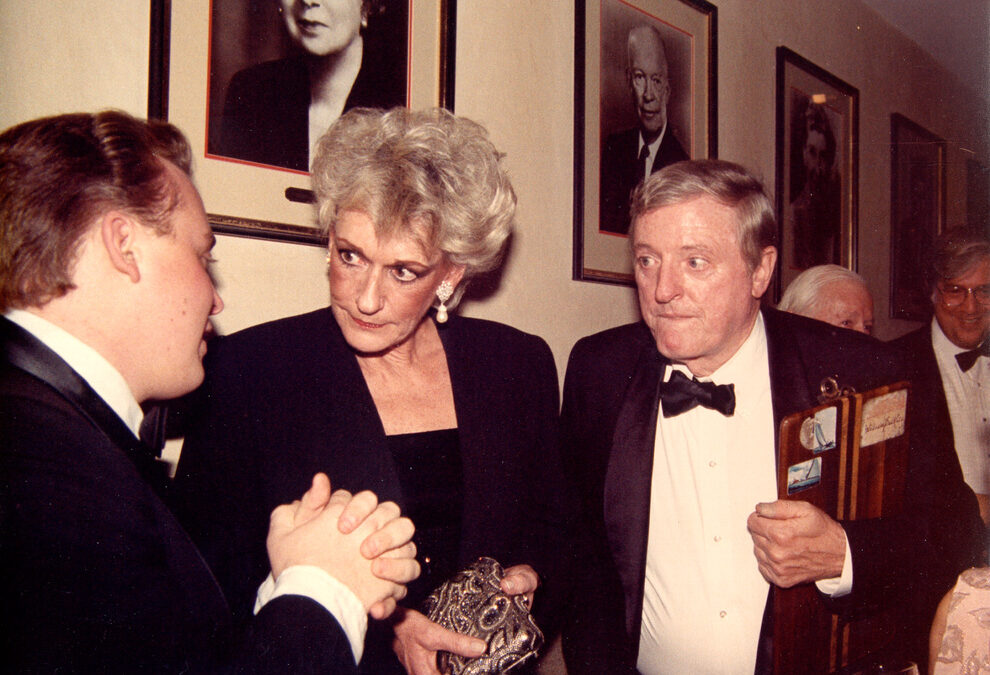
I remember when Steve came to Kentucky to join our staff in 1991, having served previously at the Ethics and Public Policy Center and the Institute on Religion and Democracy, both located in Washington, D.C. One of my favorite photos of Steve’s was taken from a conversation he was having back then with no less than the famed William F. Buckley, founder of National Review magazine, and his wife Pat at a dinner. Both Buckley and his wife were leaning forward listening carefully to what the young staffer at EPPC, Steve Beard, was saying. Usually, people were leaning forward listening carefully to what the brilliant Bill Buckley was saying. I grew to understand how bright and engaging this young man was when he became a part of our Good News staff, editing our ministry’s magazine.
There are so many things I have appreciated about Steve’s work with Good News magazine. He was committed to producing a magazine that had balance, making sure there was something for our entire United Methodist readership, both clergy and laity. After a number of years, I realized how easy it would have been for me to lean toward a publication geared mainly for just clergy. Steve made sure that didn’t happen. There were articles for persons of all ages, for clergy and laity, men and women, urban and rural, and with racial sensitivity. He was careful that we not be consumed by the negatives, which of course, there were many. In a time when general readership magazines were languishing, Steve continued to make Good News a quality, well-informed, inspirational, edifying, and always challenging publication—just a great read! He had keen insight and concern about how the Good News movement would be perceived across the denomination, and he was always careful to avoid things that would invite unnecessary criticisms of Good News’ larger renewal efforts.
Steve also maintained cordial and positive professional relationships with those involved at United Methodist Communications in Nashville. He respected them, treated them cordially, and I sensed that they responded positively to Steve in return, even while understanding that he represented a renewal ministry with which they often disagreed.
I would add that Steve is an excellent journalist, that is, a very gifted writer, in church matters and beyond. Many of us were impressed at his articles reviewing movies and critiquing pop culture. He was a contributor to National Review Online and BreakPoint.com. He was a contributing author to Spiritual Journeys: How Faith Has Influenced Twelve Music Icons (Relevant, 2003) in which he wrote chapters on Bono, Johnny Cash, and Al Green. He was also asked to contribute the forward to Steve Stockman’s book, Walk On: The Spiritual Journey of U2 (Relevant Books, 2001). Steve’s articles have appeared in Charisma, Discipleship Journal, The Washington Times, and World magazine. Yes, Steve was and is a profoundly gifted writer.
Steve also has great instincts to see the larger picture of things. He regularly helped me with articles, editorials, as well as the monthly letters to our constituents. He made me a better writer. I am thankful for his patience and gentle critiques during those many years we worked together.
So, it has been hard to see this major investment of Steve’s life and energy come to an end without some acknowledgement or recognition for all he’s done. Thanks to you, Steve Beard, for serving faithfully for 34 years as an editor who consistently gave us a first-class magazine of which we could all be proud (about 200 issues in all)! I wish there could have been one final magazine to give many of us a chance to say a much-deserved thank-you, well-done, and “Farewell.”
Do know, Steve, that for many of us who have been your colleagues and co-laborers, we know well the significance of your ministry—for a full third of a century—to the vital renewal venture in which we have all shared. You have made an enormous contribution to this endeavor.
Then, as your friend and brother in Christ, I want to express personally my heart-felt gratitude and appreciation for you, your friendship, and what your ministry has meant to me. You, dear friend, have my deep and enduring admiration. For all you have done, I give thanks to our Heavenly Father. You are an example, indeed, of “a long obedience in the same direction.” Do keep writing!
James V. Heidinger II is President Emeritus of Good News. This article first appeared on the Institute on Religion and Democracy’s website Juicy Ecumenism.
by Steve | Jan 7, 2026 | Uncategorized

Dr. Thomas C. Oden (1931-2016)
By James V. Heidinger II-
We can learn much from the remarkable theological journey of the late Professor Thomas C. Oden, who taught for more than 30 years as a professor of theology and ethics at the theology school at Drew University. Dr. Oden, a longtime colleague in denominational renewal, was a courageous, loyal United Methodist who loved the church. He was a theologian without peer within United Methodism. He was also highly respected in Protestant, Catholic, and orthodox communions as well as numerous evangelical denominations. He authored more than 20 books, including a three-volume Systematic Theology. He was also the general editor of the acclaimed Ancient Christian Commentary on Scripture series, a 27-volume work published by lnterVarsity Press. The importance of his contribution cannot be overstated.
“I left seminary having learned to treat scripture selectively, according to how well it might serve my political idealism,” he wrote in The Rebirth of Orthodoxy. “I adapted the Bible to my ideology – an ideology of social and political change largely shaped by soft Marxist premises about history and a romanticized vision of the emerging power and virtue of the underclass.” This ideology led him to involvement in numerous trendy movements, such as the United World Federalists promoting world government, liberalized abortion, the demythologizing movement (about which he did his PhD dissertation), transactional analysis, parapsychology, biorhythm charts, tarot cards, and the list goes on. Oden looked back on those years with some amusement at his obsession with such trends, and admitted that he felt he was doing Christian teaching a marvelous favor by it and even considered this accommodation the very substance of the Christian teaching office.
He wrote, “For years I tried to read the New Testament entirely without the premises of incarnation and resurrection – something that is very hard to do.” He assumed that truth in religion “would be finally reducible to economics (with Marx), or psychosexual factors (with Freud), or power dynamics (with Nietzsche).” He confessed “I was uncritically accommodating to the very modernity that pretended to be prophetic, yet I did not recognize modernity’s captivity to secular humanistic assumptions.” During those years, Oden acknowledged, “I never dreamed that I would someday grant to scripture its own distinctive premises: divine sovereignty, revelation, incarnation, resurrection, and final judgment.” Reading those words, one is struck that they described, as we have seen earlier, the very premises that were essentially put aside during the heyday of theological liberalism. They were rejected because they assume the reality of the supernatural and the miraculous.
Oden went on to say, “I had been taught that these premises were precisely what had to be transcended, reworded, circumvented, and danced around in order to communicate with the modern mind.” Frankly, this is the kind of theological ballet many evangelicals have watched for decades as liberal pastors and theologians have often “wrongly handled the word of truth” (to paraphrase Saint Paul), dancing and circumventing and rewording the plain meaning of the biblical text. The phrase Oden used is haunting as one reflects upon it. He wrote, “I had been taught.” But taught what, exactly? Well, in his words, taught that the premises of divine sovereignty, revelation, incarnation, resurrection, and final judgment had to be “transcended, reworded, circumvented, and danced around.” He was taught that these premises or theological convictions could no longer be valid in a new era of enlightenment. These were premises we must somehow improve upon. Yes, Oden had been taught, by sincere and no doubt well-meaning professors. One wonders how many seminarians have had such theological instruction in their preparation for ministry but never came back home to reaffirm the integrity and intellectual credibility of apostolic Christianity.
Thankfully, Thomas Oden came back home. He had a major theological reversal, as he described it. He celebrated the grace of God at work in his bizarre journey. He wrote, “Now I revel in the very premises I once carefully learned to set aside: the triune mystery, the preexistent Logos, the radical depth of sin passing through the generations, the risen Lord, the grace of baptism.” Let’s admit the obvious here: when you set aside these major themes of Christian doctrine, what remains of the historic Christian faith? There was a commendable honesty in Oden’s admission. He didn’t claim that he was simply reinterpreting those themes. He admitted these were themes he had learned “to set aside.”
What was it, then, that brought about this remarkable reversal in Oden’s life and theology? Hear this brief portion in his own words: “What changed the course of my life? A simple reversal that hung on a single pivot: attentiveness to the text of scripture, especially as viewed by its early consensual interpreters.” Most laity would be perplexed that a theologian might not give great attentiveness to the text of Scripture. That seems so basic to the ministerial vocation. But again, it “reflects how Scripture was, and is, perceived in the liberal/modern perspective. Oden wrote, “Before my reversal, all of my questions about theology and the modern world had been premised on key value assumptions of modern [liberal] consciousness – assumptions such as absolute moral relativism. After meeting new friends in the writings of antiquity, I had a new grounding for those questions.”
Before his reversal, Oden “distrusted even the faint smell of Orthodoxy. I was in love with heresy – the wilder, the more seductive,” he wrote. “Now I have come to trust the very consensus I once dismissed and distrusted. Generations of double-checking confirm it as a reliable body of scriptural interpretation. I now relish studying the diverse rainbow of orthodox voices from varied cultures spanning all continents over two thousand years.”

Professor Thomas C. Oden
One smiles, but with thanksgiving, at this former movement theologian writing of his newly found commitment to “unoriginality.” He insisted, “That is not a joke but a solemn pledge. I am trying to curb any pretense at ‘improving’ upon the apostles and fathers.” Acknowledging the “deceptiveness of originality,” he went on to write, “I can now listen intently to those who attest a well-grounded tradition of general consent rather than a narrow contemporary bias. I listen to voices that echo what has been affirmed by the community of saints of all times and places.”
In his autobiography, A Change of Heart, he described it as a “cycle of learning, unlearning and relearning.” This was reflected in “my joyful reception, then in my sophisticated rejection, then later in my embracing the hymns of my childhood.” At first he believed naively that God had come in the flesh. Then he learned that God had not really come in the flesh “but rather in some symbolic sense acceptable to modern assumptions.” Then, “At last I learned to recover the uncomplicated truth that God precisely becomes human in the flesh, dies for me, rises again and saves me from my sins. All these are viewed by consensual Christianity as historical events.”
It should come as no surprise that a theologian who spent his professional life in the world of theological education would write a book that addressed the problems of modern-day seminary education. Oden did so, though regretfully he admitted, as he loves the United Methodist Church and he loved the school of theology at Drew, where he spent so much of his professional teaching career.
In Requiem, he critiqued the failure of contemporary theological education and called for a return to classical Christian theology. He could have chosen to just gloss over the current ailment in the seminary world, he admitted, but “not with a healthy conscience.” While confessing that he is a “conflict-avoiding peace lover,” he wrote these sober and troubling words: “So after a lifetime of teaching … I am very nearly convinced that the present system is practically irreformable. This I say sadly, not irately.” He lamented the seminaries being “tradition-deprived,” and wrote about an academic tenure system that is “fixed in stone.” He also noted the academic distrust of the parish. In fact, “brilliant academics with no experience whatever in the actual practice of the ministry of Word, Sacrament, and pastoral care are often those who compete best in the race to become teachers of ministers in the trendy, fad-impaired seminary.” He noted sadly that having parish experience is more likely to be a negative factor than a positive one when seeking a teaching position in the seminary today.
Oden also cited the triumph of latitudinarianism, that is, a complete tolerance of all doctrinal views. The result is the complete absence of heresy. He wrote frankly that “heresy simply does not exist.” This is something never before achieved in Christian history, he observed. But the “liberated seminary” has finally “found a way of overcoming heterodoxy [departure from traditional doctrine] altogether, by banishing it as a concept legitimately teachable within the hallowed walls of the inclusive multicultural, doctrinally experimental institution.” The only heresy one might possibly encounter, said Oden, is an offense against inclusivism. One might add another – the failure to use politically correct language for God. (This, perhaps, would be considered a part of inclusivism.)
In the late 1970s, studies reported the sobering news that United Methodism’s seminaries were failing. There was a high dropout rate among young clergy, both male and female. In addition, there was an increasing struggle for student registration and tuition. Oden suggested at the time that if his seminary would only appoint a few new faculty who could connect with evangelical students, it would help solve that problem. Unfortunately, the new faculty appointments were “all in the opposite direction,” Oden wrote in A Change of Heart. “Most new appointments were made to left-leaning scholars who were dedicated to their ideologies and who either ignored, loathed or demeaned evangelicals.”
The day of ignoring what is happening in our denominational seminaries is over, according to Professor Oden. In a word of warning in Requiem, he wrote, “Christian worshipers can no longer afford to neglect what is happening to the young people they guilelessly send off to seminary, entrusting that they will be taught all that is requisite for Christian ministry.” He concluded with a sober but very timely warning to the church about seminaries that have clearly lost their way theologically: “When the liberated have virtually no immune system against heresy, no defense whatever against perfidious [treacherous, breaking of trust] teaching, no criteria for testing the legitimacy of counterfeit theological currency, it is time for laity to learn about theological education.”
Professors often justify teaching anything they want to teach by appealing to academic freedom, but Oden was not so ready to let them off the hook on that. He wrote, “If the liberated have the freedom to teach apostasy, the believing church has the freedom to withhold its consent.” He made the case even stronger: “If they reach counter-canonical doctrines and conjectures inimical to the health of the church, the church has no indelible moral obligation to give them support or to bless their follies.”
Oden affirmed that as a former sixties radical and now an out-of-the-closet orthodox evangelical, he shared concerns with a new generation of young classic Christian men and women who affirmed the faith of the apostles and martyrs. He found himself “ironically entering into a kind of resistance movement in relation to my own generation of relativists, who have botched things up pretty absolutely.” We must not miss the sobering implications of what he said – that he as an “orthodox evangelical” saw himself as being part of “a kind of resistance movement” in today’s church. He would assure us that this was not fantasy or hyperbole or some messianic obsession. He engaged the church theologically for more than four decades and his words are a sobering critique, perhaps an indictment, of the theological setting in contemporary United Methodism: to be an “orthodox evangelical” is to be part of a “resistance movement.” Many evangelical seminarians would understand that sentiment from their own personal seminary experience.
James V. Heidinger II was the publisher and president emeritus of Good News. A clergy member of the East Ohio Annual Conference, he led Good News for 28 years until his retirement in 2009. Dr. Heidinger is the author of several books, including the recently published The Rise of Theological Liberalism and the Decline of American Methodism (Seedbed). This essay is excerpted from that volume with permission. This article first appeared in Good News in 2017.