by Steve | Jan 10, 2023 | In the News, Jan-Feb 2023
By Phillip C. Thrailkill —
It’s a romantic ballad from 1970, but John Denver’s “Follow Me” has a chorus that echoes many of the themes of being a disciple:
“Follow me where I go, what I do, who I know/ Make it part of you to be a part of me/ Follow me up and down/ All the way and all around/ Take my hand and say you’ll follow me.”
My catholic (little c) theology is that I’ve been Christian since my baptism at age nine months on Easter 1954. Trinitarian water on my brow, a flame of the Spirit to light a candle within, a new family to sing me into the reality of “I Have Decided To Follow Jesus.”
A baptismal certificate hangs in my study above my ordination credentials. It came first and reminds me that I belong to One who claimed and then reclaimed me at a late adolescent turning point. Grace is developmental.
The Triune God was always part of life, sometimes ignored, but always an object of fascination and occasional fits of faith and repentance. I was an American by nationality, an unreflective son of the South by cultural heritage, and a loyal but sometimes loose-living Methodist during my mid to late teens. It was an inherited faith and the foundation for a soon-to-arrive living version. Someone was after me.
Those were the early days of the Jesus movement, and a honey blonde who was a year older and well into a new walk with Christ once asked me in the middle of a date, “Phil, are you a Christian, a follower of Jesus?”
My answer was, “I guess so. I’m a member of the Methodist Church.”
It did not impress her, “That’s not what I asked.” I’d given an institutional answer to a spiritual question.
She was soon done with me as a prospect, and when I soon made a surrender to Christ late one rainy summer night in an Episcopal church that left its doors open for local prodigals, it was with a bruised heart. Cupid’s arrows are painful in their extraction.
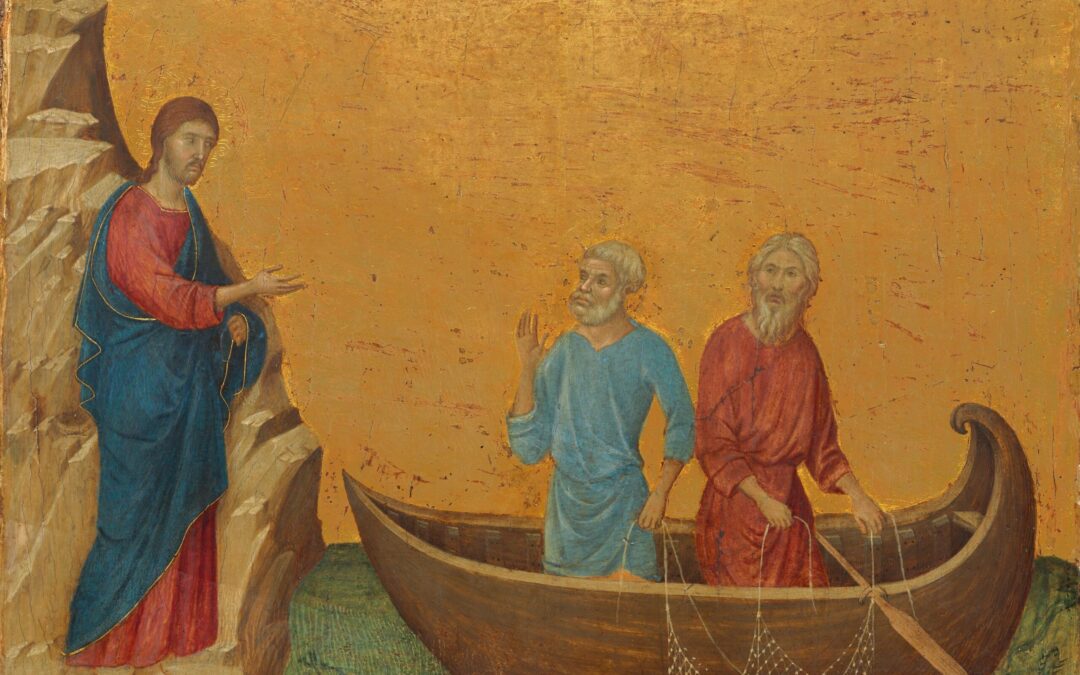
I wept my way into the Kingdom in the middle of a thunder storm, and when I rose from the kneeler, life had a new center. I was eager to be led, and for 50 years I’ve lived into an invitation first given to Peter, “Follow me, and I will teach you how to fish for people” (Luke 5:10b). Following means missions.
It’s a great deal to get a new life that keeps unfolding with fresh opportunities. I wear several hats, but at the center I’m a disciple of the man, an apprentice, a fan and follower, a part of his minority report and looking forward to being there when the new reality (my spin on the kingdom of God) comes in full.
Sometimes I sneak into St. David’s, pull down the same kneeler, and pray, “Do it again, Lord!” It’s good to have a site of sacred pilgrimage.
A Formative Teacher. Within two months of these events I found myself sitting in a Wake Forest classroom listening to lectures by Dr. Charles Talbert in his “Introduction to the New Testament” class. My head and heart were ravenous for the riches of the faith. Little did I know he was a rising star and would soon be regarded as one of the world’s experts on Luke-Acts.
After that I took all his classes I could cram in. My father, a country doc, taught me to read the human document. Talbert taught me how to read the biblical document, and pastors need to have both skills. A call was not far off.
He taught me to map the text using the insights of ancient rhetoric that were designed for an audience of listeners. Once mapped, it’s much easier to follow the flow of the author’s thought and to extract its original intent and implications for preaching and teaching, worship and witness. Providence was at work.
A Big Project. I’ve spent close to 8,000 hours with Luke in the last two decades. Twice I’ve preached through it in order, covering all 94 thought units (think video clips). In the five years since retirement I’ve spent a thousand hours a year in research and writing, one of the fruits being three teaching manuals for a course I teach in Nigeria, Liberia, and Kenya. My goal is to prepare pastors to preach through Luke in order and to preach through one of the other three gospels every fourth year.
Luke is the “Discipleship Gospel.” Like Matthew he includes birth and resurrection narratives, but then goes on in Acts to demonstrate the grand continuities between Jesus and his followers. What he does in Luke, they do in Acts, with the Holy Spirit providing the linkages and holy energies. He rules them from above as they spread his name and fame.
So when a recent convert asked, “Why do you want me to read Luke?” my answer was, “I want you to know who’s messin’ with you! Reading our longest biography will prepare you for the roller coaster ride. You’ve trusted Jesus in order to follow him and to learn the ways and means of the new reality.”
“Can I really do that?” she asked.
“Yes you can. I’ve been at it a half century now, and every day I feel like a goober. Join the club! There’s always more of him to learn, and along the way you become a new kind of human being.”
“I need that,” she said, and laughed.
Two years ago I came up with a list of essays to strengthen my teaching manuals, and one was to be titled “Discipleship in Luke.” But when I reviewed Luke’s 94 thought units (think paragraphs), I discovered that 51 touched on discipleship.
The best image for the third gospel is a rope of two strands: a rich gold cord representing Jesus intertwined with a deep blue cord representing his followers. A smaller red thread is for his foes and a light blue thread for his fans. Luke’s intent is to answer two basic questions: Who is the trustworthy Jesus? And who are his not-so-trustworthy followers? Think not the three but the Twelve Stooges!
Layer by layer Luke builds up a portrait of Jesus as the God of Israel’s only Son and chief Agent dropped behind enemy lines in a surprising conception. His words and works reveal the mystery of his identity.
In the light of Jesus’ bodily resurrection we read Luke a second time with insight and appreciation for the disciples who became his new reality road show and a mutually corrective memory bank for their three years together. It was the finest education ever offered. The lectures were at the speed of walking and listening. The lab was every day and all day long. Theirs was an immersive formation in Jesus and the new reality of loving God and neighbors with wisdom and power from above.
Luke’s Christology has been well explored, but not his Discipleology (my new term!)
Two Case Studies. Luke’s literary preface to his biography of the founder of a new movement is 1:1-4. All who heard it read would be impressed with its rhetorical sophistication. Style as well as substance mattered to Luke, who in addition to being a physician and missionary was a first class biographer according to the standards of his day.
What interests me most is that Luke was a special kind of academic disciple. Someone has to have the time, interest, support, and rhetorical training to gather the sources, interview the eyewitnesses, then dictate a complex story to a scribe for a first copy. Luke was a traveler, sleuth, archivist, compiler and arranger, theologian and publisher. That he made the canonical four is the church’s “Yes” to his labors. All disciples follow the same Jesus, but some form a brain trust for the preservation and propagation of the records of divine revelation. We need a few eggheads and artists!
A second teaser is the call of Peter (Luke 5:1-11). It’s technically a “Call and Commission Story,” and Luke-Acts contain 25 examples of this genre (a great Bible study). What’s often missed is how prepared Peter was to confess his sins (5:8) and accept Jesus’ call (5:10-11). He and Jesus had a brief history.
The tool Jesus used to prepare Peter for the dislocations of discipleship was a series of miracles where the love and power of God broke in to deliver and heal. The Father willed it; the obedient Son took action; the Holy Spirit provided the powers of holy love to make it happen. Jesus lived and worked in radical dependence.
Peter, the married fisherman, is facing a Triune Reality deeper than he can comprehend. He’s likely in the Capernaum synagogue when Jesus casts a noisy demon out of an afflicted man (4:31-37). In the next scene Jesus enters Peter’s home to heal his fevered mother-in-law with a word of command (4:38-39). That Sabbath evening Peter’s courtyard becomes an emergency room as Dr. Jesus moves from one to another to heal and deliver (4:4-41). The new reality descends on Peter’s town, and none are disappointed. This is what life looks like when God shows up.
Early the next morning Jesus announces his mission to move beyond Capernaum (4:42-44). Only then does Luke narrate the reluctant obedience of Peter leading to the miraculous catch of fish and of Jesus’ invitation to have Peter and his friends join him in the laboratory of the kingdom of God (5:1-11). Miracles may be a catalyst to trust and faith. Discipleship involves both the seen and unseen worlds that overlap and interlock.
The gold and blue cords are woven together. Christology (the doctrine of the person and work of Jesus) is the basis for Discipleology. Luke has 51 such stories. It’s time to follow and learn. Truth is where you find it, and often in unlikely places:
“Follow me where I go, what I do, who I know/ Make it part of you to be a part of me/ Follow me up and down/ All the way and all around/ Take my hand and say you’ll follow me.”
Phillip C. Thrailkill is a retired United Methodist minister teaching in Nigeria, Liberia, and Kenya. His two previous books are Mary: Lessons in Discipleship from Jesus’ Earthly Family (2007 ), and Resurrection: A Pastor’s Reading of the Major New Testament Resurrection Passages (2014). He served for seven years as the Chair of the Theology Commission for The Confessing Movement and for five years chaired the board of The Mission Society for United Methodists.
by Steve | Jan 10, 2023 | In the News, Jan-Feb 2023
By Carolyn Moore —
I’m beginning to think it was a sign from God.
Maybe that’s because it was in fact a sign. It was standing in front of The Holy House of Prayer of Jesus Christ, a little building with burglar bars on the windows situated deep in the heart of one of the most impoverished areas of Georgia. The lettered sign held a string of announcements about repenting and where you can find the church on the radio. The last line on the marquee, placed like a proverb across the bottom, read, “God have [sic] never called a woman to preach. Never will.”
That sign was the kind of thing that ought to have downright agitated me. As a woman in ministry, I’m acutely aware that a remarkable amount of prejudice still exists around the issue of female leadership in the church. I don’t hear it in every conversation, of course, but I have had enough experiences to know it is very real.
That’s why that beat-up banner in front of The Holy House of Prayer not only caught my attention the day I saw it, but in some odd way validated my feelings. It exposed my reality in such stark relief. The fact is, people unfairly, maybe even unknowingly, discriminate against women who lead. It is not just my imagination. What people like me experience is real, and that sign exposed the problem royally.
Sadly, it also exposed my own angry heart. That church, with burglar bars on the building, stood in the poorest part of town. Rampant crime. Deep poverty, serious drug issues. But because bitterness had taken root in my spirit from years of experiencing inequity, I’d been too eager to prove a point that day. I took a picture of the sign and neglected to say so much as a prayer over the community.
Shame on me.
Let me back up a bit and tell you a little more of my story. I graduated from seminary and moved with my family to Athens, Georgia, in the late 1990s to serve as an associate pastor in a large downtown church. A historic vaudeville theater stood just across the street from that church, and it seemed like a great place for contemporary worship, so I was charged with starting that service on behalf of the church. Who doesn’t want to lead worship in a cool venue like that? I was smitten by the challenge.
The theater was beautiful. The people were treasures. The experience was miserable. I felt a little like the people who tried to put Humpty Dumpty back together. All the slick marketing and all the creative worship planning and all the sweat-producing sermon prep couldn’t build a congregation.
Even though that first dip into starting something new was a mostly miserable experience, I caught the bug from it. When I was offered a chance to start a church from scratch, I couldn’t say yes fast enough. I’d been itching to start another new thing for a while, but the regional church development officer of my denomination told me straight up that it had not been proven that women could plant churches. My hopes might have died there, if not for another denominational leader who found out about my interest. She asked if I’d be willing to plant a new church in Evans, Georgia.
I moved to Evans with my husband and daughter in 2003. We were what you’d call in church-planting circles a “parachute drop,” which means we’d been dropped into a community with no team or resources beyond a starting budget and timeline. We had to be fully self-supporting within eighteen months. No one believes the parachute model is a sane idea anymore, but back then, it was how many new churches got started.
What we have built under the power of the Holy Spirit is a very sweet missional community that serves our little corner of the world well. Because it is who I’m wired to attract, many of the folks who attend Mosaic have fallen through the cracks of more traditional congregations. In fact, many are first-generation followers of Jesus. Some have come to us from prison, jail, or addiction. Half the women in our church (literally half) are single, many of them with multiple dependent children in their care. We are also home to young families struggling to make ends meet and single adults with addiction issues. We have a former felon on staff, and the current chair of our vision team is a recovering addict (and both are doing fabulous jobs as leaders).
To mission-minded ears, our demographics make us sound glamorous, but I need to be transparent here. These weren’t the people I set out to attract. I am as competitive as the next person, and I wanted my church to look like all the other seeker-friendly church plants my colleagues were planting in that season when it was the “thing” to do. What I mean to say is, I wanted my church to be big. I figured if I could do the things they did and I could – then I’d get the results they got. Never mind my gender. In fact, I was doggedly determined not to let my gender interfere with our ministry. I would serve Jesus and let him take care of our reputation. And Jesus, for his part, would give us big crowds with lots of people getting saved every week. That was the plan. Or, at least, that was my plan.
I didn’t understand how an inspiring vision plainly articulated would not yield the same results for me as it did for my male colleagues who were also starting churches. I did not take into account how hard it would be for a female pastor to attract leader-quality adults into our ministry. For that matter, I didn’t realize how hard it would be to attract people period. Nearly twenty years in, our weekly attendance still runs around 200, far less than what I set out to build. Statistically, this is a pretty strong attendance figure for a female church planter, but that doesn’t make it any less frustrating.
In the absence of rapidly growing attendance, Mosaic grew deep in mission. We now worship in a warehouse that hosts both our church and a nonprofit we developed to house our local ministries. Our mission on the church side is to help broken people become whole, so we focus heavily on small-group discipleship, healing prayer, and recovery. Our nonprofit side is dedicated to building lives and breaking cycles. We host a thriving food pantry that serves veterans and low-and no-income adults with disabilities; a full-time, professional therapeutic ministry for children with special needs; and a volunteer-led weekly recovery ministry. GED tutoring and mentoring for low-income women help us to cultivate a culture of empowerment. All of this helps us guard against navel-gazing. Serving is in our DNA.
New piece of the puzzle. I can’t count the number of times in more than two decades of ministry that a newcomer to our church has come to me asking to talk about my place as a woman pastor. Based on what I know about them, I can almost always predict what’s coming. They’ll spend the first few minutes telling me how much they love the church. They’ll compliment my preaching. Then, they get to their point. “I have no problem with women pastors,” they’ll say, “and I think you’re awesome. But my mother/coworker/last pastor/book I read/thing I’ve always believed since childhood has me thinking about it, and I guess I just need to know how it all works for you, you know – with what’s in the Bible and all. Can you explain the part about women pastors to me?”
Nine times out of ten, they don’t actually know what’s in the Bible. They haven’t done any real research on their own. They just know what they’ve heard, and until now, they’ve had no reason to question it. But here we are, and now my job is to help them think through something they desperately want to be true, even if they can’t shake the funny feeling that something is wrong.
I’ve had enough of these conversations to know there is an inner hesitancy to accept the place of women in leadership, especially spiritual leadership. In my conversations with women pastors and leaders around the country, I’ve collected dozens of stories just like mine.
Literally half the Christians in the world – comprised of Roman Catholics, the Orthodox Church, Southern Baptists, and several Reformed movements – do not accept women in church leadership. Or, to spin it differently, almost all Christians have a strong memory of male church leadership while few have a strong memory of female church leadership.
What You Believe Matters. Most folks center the debate about women in church leadership around two New Testament passages written by Paul to the early church:
• “Women should remain silent in the churches. They are not allowed to speak, but must be in submission, as the law says. If they want to inquire about something, they should ask their own husbands at home; for it is disgraceful for a woman to speak in the church. Or did the word of God originate with you? Or are you the only people it has reached?” (1 Corinthians 14:34-36).
• “I do not permit a woman to teach or to assume authority over a man; she must be quiet” (1 Timothy 2:12).
Far better academics than I have written extensively on these passages, so I won’t spend time here exegeting them, but there are common exegetical choices and decisions interpreters make. These passages must be taken within the context of the overall message of the Bible. They must be read through the lens of Deborah’s story (Judges 4-5) and through the lens of Mary’s charge (John 20:18); through the lens of Galatians 3:28 (“there is neither Jew nor Gentile, neither slave nor free, nor is there male and female”) and the stories of Phoebe, Priscilla, Tryphena, Tryphosa, and the great host of women who co-labored in the gospel with Paul (Romans 16). God has not called all women into vocational, pastoral leadership (nor has he called all men into ministry leadership), but he has surely called us all to serve the kingdom in the ways we are gifted. That women were mentioned at all in the Bible is a testament to their dynamic contribution to the early church and gospel story.
The problem is that we begin these conversations about women in spiritual leadership in the wrong place. Rather than starting with Paul’s epistles, we should begin in Genesis 1 and 2, in the opening pages of the story of God, because where we begin makes all the difference. The argument for female leadership within the church begins in the garden of Eden. The core theological question is this: Is the tendency to resist women leaders a fact of God’s original, intended design or a fact of the fall? John Piper, a noted Baptist pastor and theologian, argues for God’s design and intention for men and women and makes it clear that this created design is not just a matter for the home. “We are persuaded that the Bible teaches that only men should be pastors and elders … it is unbiblical, we believe, and therefore detrimental, for women to assume this role.” Complementarian arguments like this affirm a distinction between men and women and deny the full and equal partnership of men and women in leadership, asserting that from the beginning, women were designed to play the role of “helper” (Genesis 2:18), with the role of leadership reserved for men alone.
An egalitarian view, on the other hand, argues that while the fall is responsible for setting man and woman against each other in an antagonistic relationship, God’s intended purpose at creation was for man and woman to fight the battle of evil together as equal partners.
Egalitarians and others who promote the full inclusion of women in church leadership read Paul’s comments about women through the lens of the creation story – a narrative that didn’t create hierarchies but gave us clues to the fulfillment of God’s created purposes:
“Then God said, ‘Let us make human beings in our image, to be like us. They will reign over the fish in the sea, the birds in the sky, the livestock, all the wild animals on the earth, and the small animals that scurry along the ground.’ So God created human beings in his own image. In the image of God he created them; male and female he created them” (Genesis 1:26-27 NLT).
The first creation story in Genesis describes the work of man and woman together. The clear hierarchy established in both creation stories of Genesis is the hierarchy of humans over animals, not male over female. Men and women are cut from the same cloth, as it were; their creation story is not a text of hierarchy or value but of unity and interrelatedness.
The created goodness of men and women is not found in the roles they play but in their very existence, and it is the combination of the two sexes – male and female – that reflects the image of God. Moreover, their relationship reflects an ontological equality as well as a functional equality. To say this simply, men and women are both created in the image of God, and both are given the task of stewarding creation.
The fall, when humanity sins in Genesis 3, turns this partnership of equals into an antagonistic relationship. Adam will fight against the ground, even as he works it for his existence. Eve will no longer have a partnership with Adam; he will rule over her. Genesis 3 describes what happens when the Enemy of God and humanity attempts and succeeds at distorting the created design. This narrative is descriptive, not prescriptive, and that makes all the difference. We were meant to fight in partnership together against evil, but in his attempt to throw us off our game, the Enemy of God divided us so he could conquer us, and we’ve been trying to recover that unity and partnership between the sexes ever since.
The first-century church proved that when men and women work together to build the kingdom of God, operating in freedom and in the power and giftedness of the Holy Spirit, the effects of the fall can be reversed, and the glories of the gospel will be exposed. I believe that can happen again.
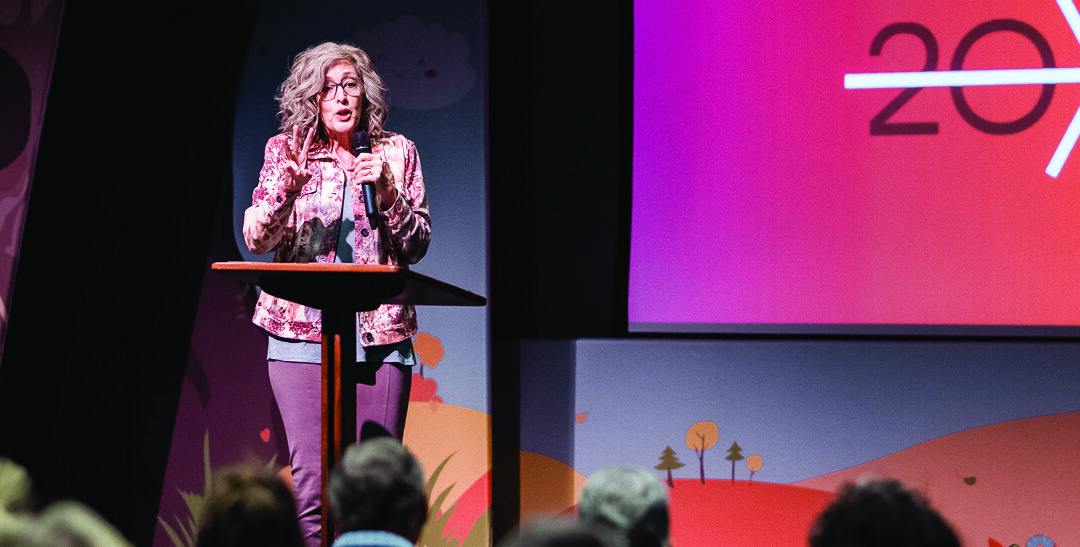
Carolyn Moore is the founding pastor of Mosaic Church in Evans, Georgia. She has an MDiv and Doctor of Ministry from Asbury Theological Seminary with a focus on church planting. She co-hosts a podcast and writes on the topics of holiness, healing, supernatural ministry, and Wesleyan theology at artofholiness.com. She is the chairperson of the Wesleyan Covenant Association. This essay is an adapted excerpt from her book When Women Lead (Zondervan). Reprinted by permission. Photo: The Rev. Dr. Carolyn Moore speaking at the New Room Conference in 2021. Photo by Abigail Bobo, courtesy of New Room.
by Steve | Jan 10, 2023 | In the News, Jan-Feb 2023
From United Methodist News
In November, United Methodists in the United States elected 13 new bishops during their gatherings around the denomination’s five U.S. jurisdictional conferences.
Jurisdictional leaders recommended electing 14 new bishops; however, the Northeastern Jurisdictional Conference voted to suspend its rules and delay the election of a second bishop until the 2024 jurisdictional conference.
The elections bring the number of active U.S. bishops to 39, but the U.S. currently has 46 episcopal areas. Twenty United Methodist bishops in the U.S. will have retired between 2021 and the end of this year.
Each jurisdiction’s college of bishops and committee on the episcopacy within The United Methodist Church arrange coverage of the remaining episcopal areas, with some assigning bishops to serve more than one episcopal area as 16 bishops have done over the last two years with General Conference postponed by the pandemic. Here are the assignments, by conference.
Southeastern Jurisdiction
• The Rev. Thomas M. Berlin, lead pastor of Floris United Methodist Church in Herndon, Virginia. He has been assigned to Florida.
Berlin was the endorsed candidate of the Virginia Conference. He grew up at Braddock Street United Methodist Church in Winchester, Virginia. After graduating from Virginia Tech, he earned his Master of Divinity degree from United Methodist Candler School of Theology in Atlanta and entered ordained ministry in Virginia in 1988. He subsequently was appointed pastor of the Brucetown-Welltown Charge in Frederick County, followed by appointment as pastor of Toms Brook United Methodist Church in Toms Brook.
Since 1997, he has been lead pastor of Floris United Methodist Church in suburban Washington. The congregation has grown from an average worship attendance of 400 when he began his appointment to 1,200 before the pandemic. Under Berlin’s leadership, the church also launched two satellite campuses: Restoration Reston and Restoration Loudon. The congregation’s combined online and in-person attendance is now around 1,000. The church also has been in partnership with the Sierra Leone Conference since 2000.
• The Rev. Robin Dease, a pastor and former district superintendent in the South Carolina Conference. She has been assigned to North Georgia.
Dease has served as senior pastor of St. Andrew By-The-Sea United Methodist Church in Hilton Head Island, South Carolina, since 2021. She joined the South Carolina Conference in 1992 and was ordained an elder in 2001. She has served as pastor of Wesley United Methodist Church in Johns Island, John Wesley United Methodist Church in Greenville, and St. Andrew By-The-Sea United Methodist Church in Hilton Head. She also has served as superintendent of the Hartsville District, and in 2012, was interim chair of the Department of Philosophy and Religion at Claflin.
Her appointment as senior pastor at St. Andrew By-The-Sea made her the first African-American woman to serve as lead pastor of a historically white United Methodist church in South Carolina.
• The Rev. Connie Mitchell Shelton, district superintendent in the Mississippi Conference. She has been assigned to North Carolina.
Raised in the Southern Baptist tradition in her native Mississippi, she later found that Methodist theology resonated in her life. She subsequently joined Oak Grove United Methodist Church in Hattiesburg, Mississippi, where she and her husband, Joey, served as volunteer lay youth directors. Eventually, both she and her husband discerned a call to full-time ordained ministry.
She has a bachelor’s degree in radio, television and film and a master’s in public relations, both from the University of Southern Mississippi. She and her husband moved to Durham, North Carolina, to study at Duke Divinity School.
Since 2015, she has been superintendent and missional strategist of the East Jackson District in the Mississippi Conference. Since July, she also has served on a team of four superintendents overseeing the Hattiesburg District.
She previously served as director of connectional ministries and communications for the Mississippi Conference. Before that, she served in appointments at both rural and urban United Methodist churches. She also was executive director of “The United Methodist Hour” television and radio broadcast, which reached across the Southeastern United States.
North Central Jurisdiction
• The Rev. Kennetha Bigham-Tsai, chief connectional ministries officer for the Connectional Table. She has been assigned to Iowa.
Since 2018, Bigham-Tsai has served as the chief connectional ministries officer for the Connectional Table, which discerns and articulates the vision of The United Methodist Church and helps determine how finances are used for worldwide connectional mission. She has been a member of the Connectional Table since 2012.
She has been actively involved as a delegate from the Michigan Conference at General Conference and North Central Jurisdictional Conference since 2012. She was co-chair of the 2022 delegation as a clergy delegate. She also serves as secretary of the North Central Jurisdiction Committee on the Episcopacy.
As superintendent of the Lansing District of the Michigan Conference for five years, from 2013 to 2018. Ordained as a United Methodist elder in 2009, Bigham-Tsai served congregations in Portage and East Lansing, Michigan.
• The Rev. Lanette Plambeck, assistant to the bishop and director of clergy and leadership excellence in the Iowa Conference. She has been assigned to Dakotas-Minnesota.
Ordained an elder in the Iowa Conference in 2005, Plambeck earned a degree from Morningside University in religious studies and political science. After serving as an intelligence analyst in the Army, she worked as an executive and therapist for person-centered agencies. In 2001 she completed her Master of Divinity degree with an emphasis on evangelism at Saint Paul School of Theology in Kansas City, then received a Doctor of Ministry in church leadership excellence in 2013 from Wesley Theological Seminary.
Before being on staff at the Iowa Conference, Plambeck was the lead pastor for Broadway United Methodist Church in Council Bluffs, First United Methodist in Atlantic, Manning United Methodist Church in Manning and Emmanuel United Methodist Church in Granger, all in Iowa. She also served as the chaplain at Morningside University.
• The Rev. Dan Schwerin, assistant to the bishop for the Wisconsin Conference. He has been assigned to Northern Illinois.
Schwerin has enjoyed many contexts for pastoral ministry, including urban and rural churches; a new church plant; and a multi-staff downtown setting that became a Reconciling Congregation. He launched non-profits to benefit persons with disabilities, children dealing with grief, persons wanting to help battle generational poverty, and children who desired instruments and music lessons.
In the Wisconsin Conference, he served as the superintendent of two districts. Bishop Jung selected Schwerin to lead a collaborative effort with conference partners to increase racial justice and radical inclusion.
He was elected in 2019 as a delegate to General Conference and the North Central Jurisdiction. He has served on the General Conference Task Force on Funding Patterns in The United Methodist Church and the North Central Jurisdiction’s Episcopacy Committee.
Northeastern Jurisdiction
• The Rev. Héctor A. Burgos-Núñez, the superintendent of the Central District in the Greater New Jersey Conference. He has been assigned to Upper New York.
With his election, he became the first Hispanic/Latino bishop elected in the Northeastern Jurisdiction. Burgos was the endorsed candidate of MARCHA, the Hispanic/Latino caucus of The United Methodist Church.
Burgos has served as superintendent of the Central District since 2019. Prior to that, he served as director of connectional ministries from 2015 to 2019.
He also served as interim executive director, NextGen Ministries, in the Greater New Jersey Conference; director of worship and urban ministries in Greater New Jersey; lead pastor at Oasis United Methodist Church in Pleasantville, New Jersey, from 2009 to 2014, and as associate pastor, First United Methodist Church in Tuckerton and assistant pastor at West Creek United Methodist Church, both in New Jersey.
Western Jurisdiction
• The Rev. Carlo A. Rapanut, assistant to the bishop in the Greater Northwest Episcopal Area. He has been assigned to Desert Southwest.
Rapanut is the first Filipino American bishop in The United Methodist Church, and the first U.S. bishop who was ordained in a central conference – a United Methodist region outside the U.S. He is an elder in the Pacific Northwest Conference.
Since 2014 until May this year, he served as co-dean of the Greater Northwest Area bishop’s cabinet and conference superintendent of the Alaska United Methodist Conference. He also was the Alaska Conference’s director of connectional ministries from 2014 until becoming assistant to the bishop. He previously served as pastor of United Methodist Church of Chugiak in Chugiak, Alaska.
Rapanut grew up in Baguio City, Philippines. Before moving to the U.S., he was senior pastor of Baguio City First United Methodist Church and later assistant to now-retired Bishop Benjamin A. Justo.
• The Rev. Cedrick D. Bridgeforth, director of innovation and communication in the California-Pacific Conference. He has been assigned to Greater Northwest.
Bridgeforth becomes the first openly gay African-American man to be elected a bishop in The United Methodist Church.
An elder in the California-Pacific Conference, he has directed its office of innovation and communications since 2021. He previously has served as lead pastor of Grace United Methodist Church, a historically Black congregation in Los Angeles, and before that as lead pastor of Santa Ana United Methodist Church, a multi-ethnic congregation. During that time, he was also director of academic programs and outreach for the Ecumenical Center for Black Church Studies at the University of La Verne.
He also served as a district superintendent in the California-Pacific Conference from 2008 to 2015 and cabinet dean from 2011 to 2015.
Bridgeforth has written books on leadership and prayer. In 2021, he published his memoir, Alabama Grandson: A Black, Gay Minister’s Passage Out of Hiding. A native of Decatur, Alabama, Bridgeforth is a U.S. Air Force veteran.
• The Rev. Dottie Escobedo-Frank, senior pastor of Paradise Valley United Methodist Church in Paradise Valley, Arizona. She has been assigned to California-Pacific.
Escobedo-Frank will be the Western jurisdiction’s third Hispanic bishop. She is an elder in the Desert Southwest Conference and has served appointments as pastor to churches ranging from the small and rural to the big and urban. For three years, she also was an associate pastor at an Evangelical Lutheran Church in America megachurch in Glendale, Arizona.
She also has experience as a district superintendent based in Tucson and dean of the bishop’s cabinet. She served twice as Hispanic Ministries chair in the Desert Southwest Conference.
She also is a prolific writer, publishing seven books about church life and church seasons with Abingdon Press, an imprint of the United Methodist Publishing House.
South Central Jurisdiction
• The Rev. Delores “Dee” Williamston, director of clergy excellence and assistant to the bishop of the Great Plains Conference. She has been assigned to Louisiana.
Williamston is the first Black female bishop for the South Central Jurisdiction. She has been assistant to the bishop and director of clergy excellence at the Great Plains Conference since 2021. Prior to that, she spent seven years as a district superintendent in the Great Plains.
She has a degree in management and Christian ethics from Manhattan Christian College; a Master of Divinity degree from Saint Paul School of Theology, with a specialization in evangelism and Black church studies; and is scheduled to receive a Doctor of Ministry degree in transformational leadership in improvisational ministry from Phillips Theological Seminary in May 2023.
Williamston is a 22-year veteran of the Kansas Army National Guard, rising to sergeant first class, and has also worked for the U.S. Property and Fiscal Office, State of Kansas food stamp department, American Federation for Television and Radio Artists, and a New York law firm.
• The Rev. David Wilson, assistant to the bishop of the Oklahoma and Oklahoma Indian Missionary Conference. He has been assigned to Great Plains.
Wilson became the denomination’s first Native American bishop.
Wilson has been the assistant to the bishop for the Oklahoma Indian Missionary Conference since 2021, following 19 years as a conference superintendent. He was lead coordinator for the North Oklahoma City Native American Ministry for eight years, following eight years as a pastor of a church in Norman, Oklahoma. He served seven years as director of promotions/interpretations for the Oklahoma Indian Missionary Conference, after being pastor of a church in Tahlequah, Oklahoma, and campus minister for the Native American Campus Ministry program at Northeastern State University.
He received an undergraduate degree in mass communications from Oklahoma City University, a Master of Divinity degree from Phillips Theological Seminary in Tulsa, Oklahoma, and an honorary doctorate in humane letters from Bacone College in Muskogee, Oklahoma.
• The Rev. Laura Merrill, Central District superintendent for the Rio Texas Conference. She has been assigned to Arkansas.
Prior to her current position, she was assistant to the bishop and director of clergy excellence for Rio Texas. A former church secretary, she served as assistant to the dean and director of communications for Candler School of Theology at Emory University before becoming associate pastor at a church in Victoria, then pastor of churches in Los Fresnos and Wimberley.
Merrill also served as a missionary in Chile for the Desert Southwest Conference.
She received a bachelor’s degree in international studies from Southwestern University in 1984, and a master’s in divinity from Candler in 1995.
A third-generation United Methodist pastor, she has two children.
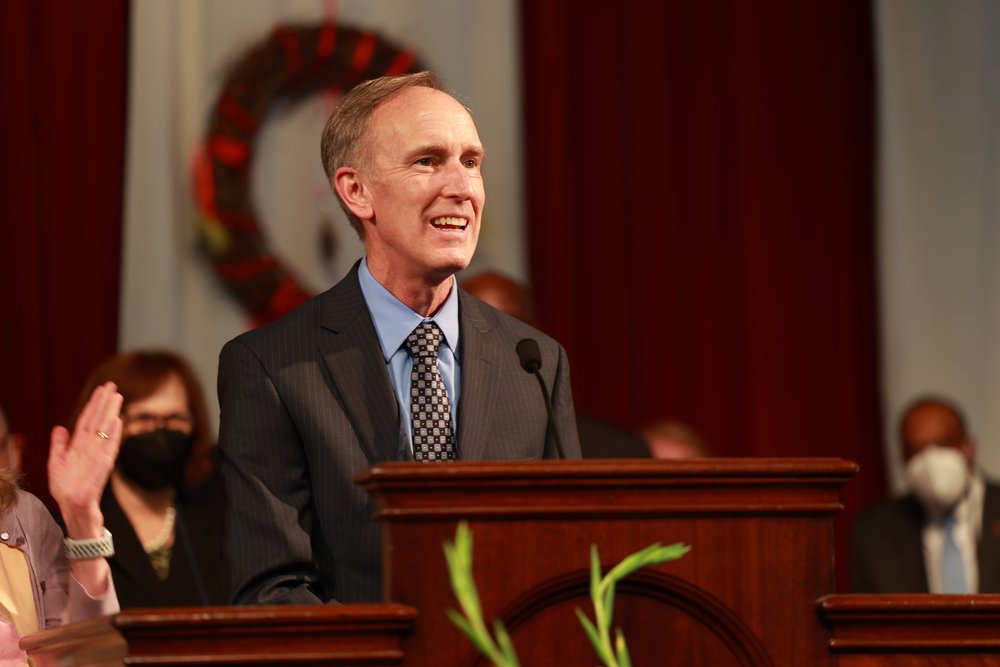
This story was adapted from the UM News reporting. Photo: The Rev. Tom Berlin speaks to delegates at the Southeastern Jurisdictional Conference (photo by Ben Smith for the Southeastern Jurisdictional Conference).

by Steve | Jan 10, 2023 | In the News, Jan-Feb 2023
By Thomas Lambrecht —
With the recent election of 13 new bishops, the active Council of Bishops will be made up of one-third new members on January 1, 2023. As such, they will play a powerful role in setting the direction of The United Methodist Church into the future. What do their election and the other actions of the jurisdictional conferences tell us about what that direction might be?
More Diversity. According to news reports, this group of elected bishops represents several “firsts,” recognizing the expanding ethnic diversity of the Council of Bishops. David Wilson is the first Native American bishop in the UM Church. Carlo A. Rapanut is the first Filipino American bishop. Hector A. Burgos-Nuñez is the first Hispanic/Latino bishop in the Northeastern Jurisdiction. Delores “Dee” Williamston is the first Black woman bishop in the South Central Jurisdiction. Cedrick D. Bridgeforth is the first openly gay Black male bishop. (Karen Oliveto was the first openly gay female bishop, elected in 2016.)
The diversity, however, did not extend to including one single theological traditionalist or conservative.
Expanding the “Big Tent” Leftward. Furthermore, the theological diversity of the newly elected bishops seems to run only in a more progressive direction. For example, all 13 bishops favor changing the language of the Book of Discipline defining marriage as the union of one man and one woman. They would endorse the ordination of practicing gay and lesbian pastors and support the ability of pastors to perform same-sex weddings.
In other words, the entire slate of new bishops made it clear that they all reject the United Methodist consensus on marriage and sexuality for the past 40 years of Christian “conferencing” at General Conference – including the 2019 gathering in St. Louis that was supposed to resolve our dispute.
However, the most eye-opening theological expansion was the statement by Kennetha Bigham-Tsai, from the North Central Jurisdiction, who was the first of the 13 elected. In a mystifying answer to a question, she stated, “It is not important that we agree on who Christ is. … God became flesh, but not particular flesh. There’s no particularity around that. God became incarnate in a culture, but not one culture. There is mystery and wideness and openness and diversity in who Christ is and who God is, so that every living human being has a way to touch God, to connect with God, to have a relationship with God in Christ.”
This picture brings to mind the parable of the blind men and the elephant, which originated in India centuries before Christ. In the parable, seven blind men who have never seen an elephant touch different parts of the elephant’s body (leg, tail, side, tusk) and come away with very different understandings of what an elephant is like. It seems like Bigham-Tsai is saying that Jesus Christ is different things to different people, so that each person has a way of connecting with Jesus.
It is true that Jesus meets each of us where we are in a way that opens our ability to receive him as our Savior and Lord. That is the essence of prevenient grace. However, the radical pessimism about our inability to have a unified understanding of Jesus’ basic identity is unwarranted and contrary to an orthodox understanding of Christianity.
When Jesus asked his disciples, “Who do you say I am?” Peter responded, “You are the Christ (Messiah), the Son of the living God” (Matthew 16:15-16). Jesus blessed Peter for his understanding that had been revealed to him by the Father, thus affirming Peter’s statement. We ought to be able to at least have a common understanding that Jesus is the Messiah, God’s Son.
Our United Methodist doctrinal standards go into much greater detail about who Jesus is.
“The Son, who is the Word of the Father, the very and eternal God, of one substance with the Father, took man’s nature in the womb of the blessed Virgin; so that two whole and perfect natures, that is to say, the Godhead and Manhood, were joined together in one person, never to be divided; whereof is one Christ, very God and very Man, who truly suffered, was crucified, dead, and buried, to reconcile his Father to us, and to be a sacrifice, not only for original guilt, but also for actual sins of men” (Articles of Religion, Article II)
Is Bigham-Tsai really saying that it is not important for United Methodists to agree with our doctrinal standards’ shared understanding of who Jesus is?
Given Article II’s statements, it is difficult to understand how a United Methodist bishop could state that God was not incarnate in “particular flesh.” How can it be said that “God became incarnate in a culture, but not one culture?” God was born of a virgin Jewish mother in Bethlehem at a known historical time. He lived and died as a practicing, devout Jew. His message and his life were in continuity with the Jewish Old Testament and in fulfillment of it. All of this took place within one person in one particular culture.
Yes, Jesus has relevance to every person and every culture, but God’s presence was made manifest in the particularity of one person and one culture. Without that bedrock understanding, we have no historical basis for interpreting the “Christ event” or its application to our own lives and culture.
Bigham-Tsai’s statements illustrate very well what is meant by the “big tent” approach to United Methodism. It gives the impression that United Methodist leaders do not view the doctrinal standards as actual standards, but suggestions or guidelines, to be disregarded whenever they do not “make sense” or are judged to be not helpful.
The Book of Discipline is very specific about the role of a bishop: “To lead and oversee the spiritual and temporal affairs of The United Methodist Church which confesses Jesus Christ as Lord and Savior, and particularly to lead the Church in its mission of witness and service in the world. … To guard, transmit, teach, and proclaim, corporately and individually, the apostolic faith as it is expressed in Scripture and tradition, and, as they are led and endowed by the Spirit, to interpret that faith evangelically and prophetically.”
By its very nature, this “big tent” excludes traditionalists who believe there are certain doctrinal propositions that are essential to Christianity. We believe the faith defined in the Articles of Religion and Confession of Faith. Without these doctrinal understandings, we do not have Christianity, but some other religion loosely based on Christianity.
Delegates at the North Central Jurisdictional Conference were aware of these doctrinal questions regarding Bigham-Tsai, yet elected her the first bishop in this year’s class. That can be viewed either as an indifference to doctrine or the adoption of a doctrine-less United Methodism. In any case, it speaks volumes about the theological direction of the future United Methodism.
Expanded Disobedience. To great fanfare, the Western Jurisdiction elected a gay man who recently married his male partner. This election carries on the precedent the same jurisdiction set by electing Karen Oliveto as bishop in 2016, who is married to another woman. Cedric Bridgeforth was elected even though the Judicial Council ruled that Oliveto’s consecration was contrary to church law and that her standing as a clergyperson must be brought up for judicial review (it never was).
Additionally, the Northeastern Jurisdiction came close to electing as bishop another gay man married to his male partner, Jay Williams. At one point, Williams was within 20 votes of having enough to be elected.
It appears that, for many delegates, the requirements of the Discipline are to be disregarded when they do not line up with one’s ideological commitments. One episcopal candidate made the comment that change comes from the bottom up, and that rules are often disregarded by the grass roots before they are changed formally by the legislative body.
The expanded disobedience is also seen in the fact that all five jurisdictions passed a resolution that affirms a moratorium on complaints surrounding sexual orientation, asks not to pursue complaints against clergy around their sexual orientation or against pastors who officiate LGBTQIA+ weddings, and supports the election of bishops who uphold these aspirations. Questions of law were asked in at least two of the jurisdictions hoping the Judicial Council will declare the resolution null and void because it encourages disobedience to the Discipline. No matter what the Judicial Council rules, the resolution indicates the overwhelming sentiment of U.S. delegates, as well as their disregard for what the General Conference has enacted in the Discipline.
Traditionalists in the Post-Separation UM Church. Some traditionalists will unquestionably remain in the UM Church following the current spate of separations. A 2019 survey found that 44 percent of United Methodist grassroots members identified as theologically conservative or traditional. Twenty-eight percent identified as theologically centrist or moderate. Twenty percent identified as theologically liberal or progressive. Even if half of the traditionalist members leave the UM Church, those remaining would be more than one-fourth of the church’s members. Their share would still be larger than those identifying as progressive.
The question is whether traditionalists will be represented in leadership of the denomination after separation. In 2016, seven of the 15 bishops elected in the U.S. (nearly half) could be considered theologically traditionalist. (Some of those might be classified more as institutionalists than by their theological perspective, but they at least come from a traditionalist viewpoint.) In contrast, none of the 13 bishops elected now in 2022 could be considered theologically traditionalist.
Due to bishops’ retirements, seven of the 39 U.S. bishops going forward could be considered traditionalist, and even some of them would again be more institutional than traditional in their approach to leadership. At best, that means around 18 percent of the active bishops are traditionalist. If current trends continue and no new traditionalist bishops are elected, that percentage will shrink further, and traditionalists will be grossly underrepresented on the Council of Bishops.
Even more stark is the realization that nearly all the general secretaries of the general boards and agencies of the UM Church reflect a centrist or progressive theology. Traditionalists are underrepresented on the agency staffs and among the agency board members – and have been for decades. The same is true in many annual conferences when it comes to district superintendents and conference agency heads and staff.
For the foreseeable future, the traditionalist voice in the UM Church will be a minority voice and not well represented among the denominational leadership. Traditionalist members are not likely to hear their perspective communicated from bishops or general church or annual conference leaders.
Voting Strength. When the jurisdictional delegates were elected in the aftermath of the 2019 General Conference, there was a notable swing toward more progressive delegates being elected, particularly among the clergy. Since then, some of the traditionalist delegates have resigned due to their disaffiliation from the UM Church, further reducing traditionalist voting strength.
The projections made in 2019 were borne out by the vote counts at the various jurisdictions. The three resolutions passed by every jurisdiction obtained over 80 percent support in most cases. The most conservative jurisdiction is the Southeastern Jurisdiction. There, centrists and progressives made up two-thirds of the delegates.
Based on these vote counts, it is likely that the U.S. delegates to the 2024 General Conference will be at least 75 percent centrists and progressives. This would give centrists and progressives a solid majority of the conference if this year’s delegates continue to serve for General Conference.
If new delegates are elected for the 2024 General Conference, there will be a reduction in U.S. delegates and an increase in African delegates due to changing membership numbers. Unless traditionalists are completely shut out in the U.S., this shift will result in a much narrower margin for centrists and progressives. The wild card here is what would happen in annual conferences that experience high rates of disaffiliation. If those conferences, like Texas, South Georgia, and Alabama-West Florida, shift markedly toward centrist and progressive delegates, that would increase the margin and give centrists and progressives a solid majority at General Conference.
Future Directions of the UM Church. It is abundantly clear from the three resolutions passed by the five jurisdictions that the affirmation of LGBTQ+ persons and lifestyles will be a primary agenda item for the denomination. The Queer Delegates’ Resolution (the official title) affirms that each jurisdiction:
“Commits to a future of The United Methodist Church where LGBTQIA+ people will be protected, affirmed, and empowered in the life and ministry of the church in our Jurisdiction, including as laity, ordained clergy, in the episcopacy, and on boards and agencies.”
One jurisdiction held a two-hour presentation for all delegates on combatting heterosexism, which affirmed all sexual orientations and gender identities, as well as promoting the acceptance of same-gender relationships and transgender reassignment.
Another priority for the UM Church going forward will be to continue addressing the challenge of racism. Two of the jurisdictions encountered difficult circumstances around bishop elections and nomination of candidates that contributed to a perception that racism had entered into the process. One jurisdiction adjourned into executive closed session to address issues of racism connected to the conference.
The United Methodist Church is the second most white mainline Protestant denomination in the U.S. (94 percent white), following the Evangelical Lutheran Church of America. Unfortunately, even a decades-long focus on representation and gender and ethnic diversity in the church’s leadership has not translated into a growing diversity at the grass roots of the church. Nevertheless, the emphasis on diversity continues. This strategy deserves rethinking.
A third priority for the UM Church will be instituting a regionalized system of governance. The Christmas Covenant proposal was overwhelmingly endorsed by all five jurisdictions. This proposal would create the U.S. part of the church as its own regional conference, along with three conferences in Africa, three in Europe, and one in the Philippines. Each regional conference would have broad powers to create its own rules and standards and adapt the Book of Discipline to fit the context and opinions of that region. The driving force behind this proposal is to allow the U.S. and Western European parts of the church to affirm LGBTQ+ relationships and lifestyles, while allowing Africa and perhaps the Philippines to maintain their more traditional understandings of marriage and sexuality. Although there may be a majority of delegates supporting this proposal, it will not have the two-thirds vote needed to pass General Conference unless the African delegates can be persuaded to support it. African leaders have previously said they could not remain in a church that endorsed same-sex relationships, even if they themselves were not forced to join in that endorsement. African delegates and members have the numbers to single-handedly block regionalization if they do not support it.
A fourth priority for the UM Church going forward will be a realignment of conference boundaries. Due to the disaffiliation of 10-20 percent of United Methodist members and churches, some annual conferences will become too small to be sustainable. There will likely be mergers and consolidation of some annual conferences. The jurisdictions recognized this reality by not filling all the vacant bishop positions. There will be seven episcopal areas with no resident bishop, with those areas being covered by nearby bishops (three in Northeast and two each in Southeast and South Central; additional vacancies will occur in North Central in 2024 due to episcopal retirements). Some annual conferences may remain intact but share a bishop with an adjacent annual conference.
There is also a working group studying the possibility of revising or eliminating the jurisdictional system altogether, which came up during floor debate in some of the jurisdictional conferences. The jurisdictions are a holdover from a racist past, having been formed in the 1939 Methodist Church merger of North and South, which also created a separate jurisdiction for Black Methodist congregations and clergy. That separate jurisdiction was eliminated in the 1968 United Methodist merger, but the regional jurisdictions remain and have fostered regional differences in the church that led to disunity. Changes to the jurisdictional system will require a two-thirds vote to amend the church’s Constitution.
Given these four priorities, two of which would entail major structural changes, it is questionable whether denominational leaders will have the bandwidth or energy to pursue essential components like evangelism, church revitalization, caring for the poor, church planting, and cross-cultural ministry. Local churches will be expected to assume primary responsibility for these areas, and they may or may not be equipped to do so.
The 2022 jurisdictional conferences provided an illuminating look at the current reality of the UM Church in the U.S., as well as some of the potential directions the denomination might take into the future. In the words of Jesus, “Anyone with ears to hear should listen and understand!” (Matthew 11:15).
Thomas Lambrecht is a United Methodist clergyperson and the vice president of Good News. This essay first appeared in Firebrand (firebrandmag.com) and is republished by permission. Photo: Shutterstock.
by Steve | Jan 10, 2023 | In the News, Jan-Feb 2023
By B.J. Funk —
“I don’t go to church because I know too much about those who do! They’re a bunch of hypocrites!”
How often have you heard that statement from someone who never goes to church? This seems to be the number one complaint of those who desire to remain outside. Sometimes, they even give examples of individual hypocrisy, labeling the particular sin(s) associated with a name.
What made those outside the church think that we try to get on the front row of the sanctuary, just to be seen, then afterward we sit down on ivory benches, holding our noses in the air because we think nobody is as good as us? Where did that silly nonsensical idea come from anyway?
What you are thinking is right. It comes from us. It comes from those inside the church who have never caught on to what sin and redemption is all about. It comes from the redeemed among us, as well as the smug among us. Unfortunately, we are giving the wrong image of the churched, and the unchurched are listening. And watching. And forming opinions.
So, what’s the truth about those of us inside the church?
We live inside of Revelation 3:15-16. We are neither hot nor cold. We are lukewarm and rather like it this way. That way we can stay out of arguments, away from announcing our beliefs, and remain in our comfortable pews.
We are the prodigal son from Luke, demanding our inheritance and running away from our Father’s protection.
We are Jacob cheating Esau out of his birthright and scheming with his mother to trick his father, Isaac.
We are David, wanting Bathsheba so much that he arranged for her husband to be killed in the line of duty.
We are one of the disciples, running away on that dreadful night when Jesus was betrayed. Are we Judas? Oh, surely not! Are we Thomas, doubting the reality of the resurrection?
We are just like the sinners mentioned in the Bible. We have the tendency to fall into temptation just as those outside of church. We cry when we spill our milk, we get angry when someone hurts us, we fuss with the idea of forgiveness and sometime, we gossip and – oh help us, Lord – we act like we are better than anyone else.
No wonder then. No wonder. How can we change our image? Where do we even start?
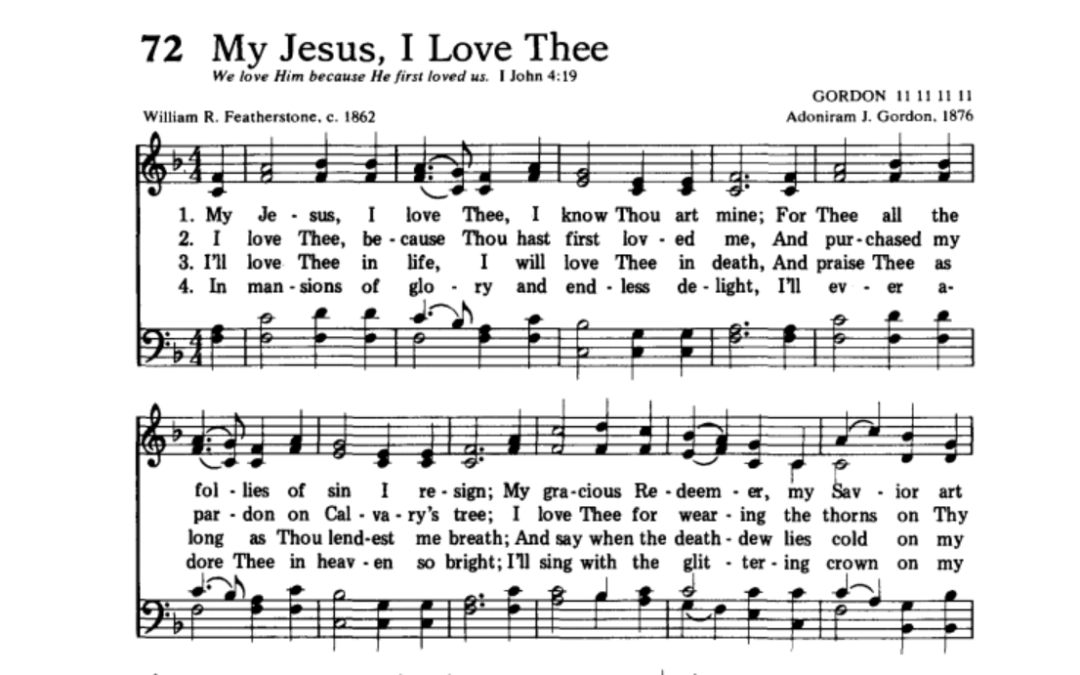
An ancient hymn, written in the 1800s by William Featherstone is a good place to start; it begins with loving Jesus and welcoming the intimate relationship he offers. It moves in the second verse to acknowledging that Jesus died for us. The third verse confesses our love for Jesus, stating I will love him in life and in death. The last verse says that I will love Jesus in the mansions in heaven and that I will continue to adore him.
“My Jesus, I love thee, I know thou art mine; For thee all the follies of sin I resign. My gracious Redeemer, my Savior art thou; If ever I loved thee, my Jesus, tis now.”
Those words make me feel safe, wanted, loved, saved. Redeemed. And completely knowing that I am his and he is mine.
In the second verse I feel I am where I belong. I am with the Master of my soul who makes arrangements to be with me. The third verse proclaims: “I’ll love thee in life, I will love thee in death.” The last verse speaks of a “glittering crown” on our brow, while the writer is exclaiming “I still love you!”
This hymn is a love song from beginning to end. And therein lies the secret to a Christian’s authentic life, the answer to our every question and the antidote for hypocrisy. LOVE. Be the love song.
B.J. Funk is Good News’ long-time devotional columnist and author of It’s A Good Day for Grace, available on Amazon.