![Jesus Changes Everything]()
by Steve | Jan 7, 2019 | Jan-Feb 2019
 By Carolyn Moore –
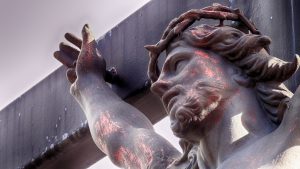
One child’s birth in Bethlehem radically altered human history. In addition to his life, death, and resurrection, Jesus Christ transformed the way that we view many aspects of everyday life.
For example, Jesus’ take on the value of life changed how we value children. “Let the little children come to me, and do not hinder them, for the kingdom of heaven belongs to such as these,” he said (Matthew 19:14). Google “Jesus and children” and you’ll find a menu of articles, some of them claiming that Jesus basically invented children, in the sense that he defined them as people of worth. Before the culture of Christ permeated the Roman world, children were considered property, not people. They were used as slaves, often for sex, and infants were left on the street to die. Baby girls were abandoned more often which meant more boys than girls, which meant more tension among adults and more abuse of women. When Jesus gave children value, the paradigm shift was global. And to think God did it by sending a baby, so we could no longer question what God really thinks about children and about the value of life.
Jesus made it crystal clear that women played a central role in the story of God’s redemption of the world. The incarnation occurred through a woman. Jesus was the son of God, but he was also the son of Mary. Women were with his disciples as they traveled. Women funded ministry. Women were last at the cross, first at the tomb, and first to be told to go and tell the others. “There is neither Jew nor Gentile, neither slave nor free, nor is there male and female, for you are all one in Christ Jesus,” wrote Paul in Galatians 3:28. This was a radical statement, and it flowed out of Jesus’ own treatment of women. Jesus offered a paradigm that values women, children, the poor, the oppressed, the ones who never knew they had the favor of God. That changed everything.
It even changed the way we view education. One of the most radical social statements of Paul within a male-dominated culture was the permission he gave women to learn (1 Timothy 2;11). It meant admitting that women had potential beyond their ability to bear children. And as Christianity progressed, schools became part of the Great Commission. Some of the finest academic institutions in the world were begun by Christians. Literacy is a Christian value. Global literacy was introduced with the movable press, and the first book printed on the Gutenberg press? The Bible.
Christianity opened us up to love. Jesus gave us a charge to love the hard ones – those who are sick and in prison and those who are poor. We’re told over and over in the Bible to make room in our hearts and lives for widows and orphans. This led to the development of what we now call hospitals. One of the early Councils of church leaders (the Council of Nyssa) made it a standard that every church should be attached to a place that cares for sick and poor people.
Jesus made humility and forgiveness stand-out virtues. In Philippians 2, Paul explains the crucifixion and its value of humility in such clear terms. Jesus humbled himself even unto death as a way of serving humanity and that personality trait changed the way a hierarchical world valued humility as a virtue. Conan the Barbarian was once famously asked, “What is best in life?” This was his answer: “To crush your enemies, see them driven before you, and hear the lamentations of their women.” In contrast, Jesus said, “You have heard that it was said, ‘Love your neighbor and hate your enemy.’ But I tell you, love your enemies and pray for those who persecute you, that you may be children of your Father in heaven” (Matthew 5:43). Hannah Arendt, a professor at Princeton, goes so far as to say that, “The discoverer of the role of forgiveness in the realm of human affairs was Jesus of Nazareth.” That is quite a claim.
Jesus changed the way we value people. The hymn “Amazing Grace” was written by John Newton, a slave trader who became a Christian as a result of a miracle on his ship. He continued to trade in slaves for years after his conversion but eventually God changed his heart, and he wrote a scathing pamphlet read by every member of the British Parliament, entitled, “Thoughts Upon the Slave Trade.” He said, “It will always be a subject of humiliating reflection to me, that I was once an active instrument in a business at which my heart now shudders.” It was a Christian emperor who banned gladiator fights, and it has been Christian missionaries who have helped humans end the practice of cannibalism.
Christians have made some of the most profound scientific discoveries. One of the biggest misconceptions of our faith is that somehow science and Christianity stand in opposition to each other, when in fact, Christianity promotes the idea of a rational God as Intelligent Designer. We consider our God the inventor of the scientific laws discovered by Christian scientists – Galileo, Johannes Keppler, Robert Boyle, Blaise Pascal, Louis Pasteur, Isaac Newton, Henry F. Schaeffer. Dr. Stanley Jaki was a physicist who famously developed the theory that, “modern scientific inquiry cannot only exist alongside religion, but that modern science only could have arisen within a Christian society.” Sir Francis Bacon said he practiced science as a way to learn more about God. He wrote, “A little philosophy inclines man’s mind to atheism, but depth in philosophy brings men’s minds about to religion.”
What Christians believe has fundamentally changed the course of human history. The change was in process with the Jewish people, but Jesus – the life, death, and resurrection of Jesus Christ – changed everything. And because of that, our day to day circumstances are not the ground of our hope. The only circumstances in which we can place hope are the circumstances surrounding the birth, death, and resurrection of Jesus, and on our acceptance of those circumstances. If we place our hope in anything else, we set ourselves up for disappointment.
This is the message of the Gospel. It is a message to the world that our Messiah has come and his coming changes everything at the most basic level. This baby changes my value, changes my capacity for forgiveness, changes my personality, changes my potential for understanding the world around me. This Son of God has chosen to reside in my heart, and in the hearts of all who invite him, and claiming that as my hope changes everything.
Carolyn Moore is a United Methodist clergywoman, writer, and pastor of Mosaic United Methodist Church in Evans, Georgia. She is the author of several books, including The 19: Questions to Kindle a Wesleyan Spirit (Abingdon Press, 2018).
by Steve | Jan 7, 2019 | Jan-Feb 2019, Magazine Articles
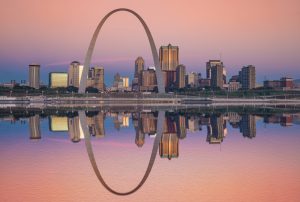
The special called 2019 General Conference will be held in St. Louis.
By Thomas Lambrecht –
The special called General Conference on February 23-26, 2019, is fast approaching. Over the next several weeks, delegates will be focusing on the proposals with singular and prayerful attention, hoping to find a solution to the 40-year conflict that has led to schism in The United Methodist Church.
The Commission on a Way Forward has submitted three plans to General Conference. The One Church Plan (OCP) would change the definition of marriage to “two adults,” allow pastors to perform same-sex weddings, and allow annual conferences to ordain self-avowed practicing homosexuals as clergy. At the same time, the OCP maintains the validity of both traditional and progressive views toward marriage and sexuality, believing that both perspectives can co-exist in one denomination indefinitely. It contains protections for persons of both persuasions, so that under this plan (for the most part) no one would be forced to act counter to one’s conscience.
The Traditional Plan (TP) maintains the current position of the church that all persons are of sacred worth and loved by God, that sexual relations are to be reserved for marriage between one man and one woman, and that the practice of homosexuality is contrary to Christian teaching. The TP continues the prohibition on pastors performing same-sex weddings and annual conferences ordaining self-avowed practicing homosexuals as clergy. It requires annual conferences and bishops to declare their willingness to uphold and enforce the Book of Discipline in all respects, and institutes other accountability measures in order to gain compliance with the Discipline. At the same time, it provides a gracious exit for annual conferences, local churches, bishops, and clergy who cannot abide by the requirements of the church.
The Connectional Conference Plan (CCP) replaces our current five geographical jurisdictions in the U.S. with three theological connectional conferences – Progressive, Traditional, and Unity. All three branches would continue to share some general church agencies, such as pensions, Publishing House, UMCOR, and missions. Other agencies would serve only those connectional conferences that desire to participate in them. Each connectional conference would have its own rules for clergy conduct and standards for ordination. Conferences outside the U.S. would be their own connectional conference or could join one of the three U.S. conferences. Bishops and clergy would serve only within their chosen connectional conference under that conference’s rules.
In addition to these three plans, individuals have submitted eight other plans for General Conference consideration. All but two of the plans are a variation of the One Church Plan. Most of them are not as well thought-out as the Commission’s work and will probably not gain much traction.
Because the Connectional Conference Plan requires constitutional amendments, meaning it needs a two-thirds vote at General Conference and a two-thirds vote of all the annual conference members to ratify it, most delegates are not considering the CCP as their first choice. The plan’s complexity and four-year implementation schedule are also drawbacks to that plan.
So we are left with primarily the Traditional Plan (with a few modifications proposed by the Renewal and Reform Coalition) and the One Church Plan as the primary options under consideration. What are the most important factors in choosing which direction the church should take?
Scripture. For evangelicals, the Bible has to be the first consideration in determining a faithful way forward for the church. The OCP elevates unity and the teaching of John 17 as the primary scriptural value to pursue. The TP focuses instead on faithfulness to Scripture’s teaching on the theological meaning of marriage and holiness in sexual relationships.
Because of the deep chasm between the two perspectives over which scriptures take precedence and how they are to be interpreted, there is no agreed-upon foundation for making a biblically faithful decision. Lost in all of the back and forth is the bare fact that there is no credible interpretive framework that explains the biblical teaching on marriage and sexuality in a way that allows the church to approve the practice of homosexuality. Progressive biblical scholars do not agree on any one approach, and many of them have a vested interest in a non-traditional interpretation because they have a loved one who has come out as gay.
Evangelicals regard faithfulness to Scripture as the beginning point and often the endpoint of discussion. The TP is the only plan that remains faithful to the scriptural teaching on marriage and sexuality. Most of the other plans adopt a position that contradicts Scripture.
Conflict. The motivation for appointing the Commission on a Way Forward was to find a way to resolve the conflict that is disrupting the ministry of the denomination, sapping time and energy that could be more fruitfully spent on leading people to Christ and serving the poor and needy.
Unfortunately, neither the TP nor the OCP is likely to bring a quick end to the conflict. Under the TP, bishops and annual conferences would be required to declare whether or not they would uphold and enforce the Book of Discipline, including on matters of marriage and sexuality. If not, they could be disciplined by the church and would be encouraged to withdraw and form a more progressive denomination that would operate according to their beliefs and values. If those not willing to abide by the Discipline act with integrity and withdraw from a denomination that they cannot support, the conflict would largely end. Many progressives, however, have stated that they will not voluntarily leave the denomination and would insist that the church “kick them out.” While the TP has enhanced accountability measures that should make discipline more certain, progressive insistence on continuing the fight will likely mean that some accountability actions will continue for some time.
While the OCP insists there is room in the church for a variety of beliefs and practices around marriage and sexuality, its adoption promises to multiply the conflict, rather than end it. Every annual conference would have to decide whether to ordain self-avowed practicing homosexuals. Those that choose not to would face increasing pressure from both culture and the progressive wing of the church to capitulate. This would entail annual battles at recalcitrant conferences until they finally vote “the right way.” Local churches, too, would face increased conflict. Whenever a church member or friend would ask for their same-sex wedding to be performed in the church sanctuary, there would have to be a congregational meeting to vote whether or not to allow it. Instead of deciding based on principle alone, the local church would now need to consider the personalities requesting the same-sex wedding, making the decision that much more emotionally laden.
Central Conferences. More than 40 percent of United Methodism’s members exist in what we call “central conferences” outside the United States. How would the plans affect them?
The vast majority of the central conference members favor a traditional understanding of marriage and human sexuality. Many have told us that they strongly support the Traditional Plan. It would enable them to continue as part of a global denomination guided by a common identity and shared theology and ethics.
The One Church Plan would pose great challenges to the central conferences, particularly in Africa and Eastern Europe and Eurasia. In many of those areas, the practice of homosexuality is strongly opposed and in some cases illegal. Being part of a global church where the practice of homosexuality is affirmed would place these central conference churches at a great disadvantage, and in some cases could even be life-threatening, particularly in Muslim areas of Africa. Although the central conferences could continue to operate according to traditional standards, they would be in active partnership with bishops and clergy from the U.S. who may be openly homosexual, which could jeopardize the partnership or the mission of the church in that area. Many central conference leaders have told us that they could not remain part of a global UM Church under a One Church Plan.
Unity. Much has been made about the need to maintain the structural unity of the denomination. It must be acknowledged, however, that maintaining such unity in a denomination already riven by schism is an impossible task. The deeply felt convictions of progressives and evangelicals are incompatible with each other, however much we wish it were different.
Because the Commission on a Way Forward was never allowed to consider an equitable plan of separation, we are left with two plans that would each bring about a somewhat unfair separation.
The OCP would change the church’s position to affirm same-sex relationships and affirm the ordination of self-avowed practicing homosexuals in annual conferences that do not adopt a traditional position. For many evangelicals, that change in the church’s position is an unacceptable violation of our consciences. We have heard from hundreds of individual lay members and dozens of congregations that they would seek to leave The United Methodist Church if the OCP passes. And those are just the ones we have heard about. In a poll this year in North Georgia, fully one-fourth of the annual conference members said that they would leave the church if the OCP is adopted. I estimate that the U.S. part of our church could lose anywhere from ten to twenty-five percent of its membership in this scenario, and it is possible that up to a half-dozen annual conferences might seek to withdraw.
On the other hand, the TP is straightforward about the fact that those who cannot live by the rules established by our denomination ought to withdraw and form a new church more in line with their beliefs and desired practices. The same North Georgia poll indicated about five percent of the annual conference members said they would leave the church if the TP were adopted. As many as a dozen annual conferences might seek to withdraw, and they represent about ten percent of the U.S. membership. Not all congregations in those conferences would want to leave, but some congregations in other annual conferences would want to join a more progressive church, meaning that the U.S. church might lose as much as ten percent of its membership. The TP believes that those who want to change the church’s historic teaching ought to be the ones to depart, not those who want to maintain it.
At least the TP provides a gracious exit path for annual conferences, congregations, bishops, and clergy. The OCP as it stands provides no such exit path, although one could be added from the five different exit paths proposed by various individuals.
What is unity? This brings up the question of how we should define unity. Can we have unity as a denomination when we have different moral standards and different qualifications for ordained ministry?
The OCP stems from the belief that we can have unity around a common relationship with Jesus Christ, and that everything else can be up for negotiation. However, it is really only in this one area of sexuality that the compatibilists want to push for allowing different practices. No compatibilist that I know of is promoting that we should allow pastors to practice only believer’s baptism, that we should allow annual conferences not to ordain women, or that local churches could choose not to pay apportionments. In all these areas and many more, compatibilists expect everyone to have the same practice. And rightly so! These are the decisions we make as a denomination that fulfill our identity as United Methodists. This is the ethos or way of doing things that is uniquely United Methodist. So it is somewhat hypocritical of compatibilists to insist that only in this one area, where the church is in great danger of being influenced by our surrounding culture, we should allow variations of practice.
The TP believes that we should have a much stronger unity around a common belief system and shared practices to which we all subscribe. This does not mean uniformity in every circumstance, but it means that there is conformity on those practices that the denomination determines are central to our identity. One cannot believably make the case that moral standards regarding sexuality and qualifications for ordained ministry are less central than whom we baptize or how we share in ministry through apportionments. And if we agree on a common mandatory standard for ordaining women, how can we turn around and say we can have conflicting standards on ordaining LGBTQ persons?
The OCP “local option” approach makes no coherent sense theologically. It would weaken our connectionalism, another essential element of our United Methodist identity. And it would create a climate of congregationalism that would further dilute what it means to be United Methodist. These do not appear to be a recipe for greater unity, but rather for gradual centrifugal disintegration of the church.
Where the OCP would lean toward a “least common denominator” form of unity, the TP would seek a more robust unity around shared doctrine and discipline. Those who could not conscientiously agree to that shared doctrine and discipline would be allowed to graciously exit the church. This kind of unity gives a sense of shared values, shared purpose and mission, and a shared way of doing things that can powerfully focus the passion, time, and resources of the church on making disciples of Jesus Christ. Instead of fighting each other over foundational matters of theology and ethics, we would be able to direct attention outward in evangelism and service. Resources now devoted to intra-church conflict could instead be channeled into ministry. Congregations now uncertain of who we are as United Methodists would gain a new sense of shared identity that could energize them toward health and vitality. No longer would there be confusion about what it means to be United Methodist. Each local church would be preaching the same gospel according to the same standards, with the freedom to do so in the most culturally appropriate way for that congregation.
The Traditional Plan holds the greatest potential for unifying the church. It holds the greatest potential for ultimately resolving the conflict within our denomination, setting us free to focus on ministry and mission. The TP would open the door for further reforms that are needed to bring our mostly ineffective general church structure in line with a 21st century reality.
Please continue praying for our General Conference delegates and for the work of the Renewal and Reform Coalition, as we seek to birth a new future direction for our church.
Thomas Lambrecht is a United Methodist clergy person and vice president of Good News. He is a member of the Commission on a Way Forward.
by Steve | Jan 7, 2019 | Jan-Feb 2019, Magazine Articles
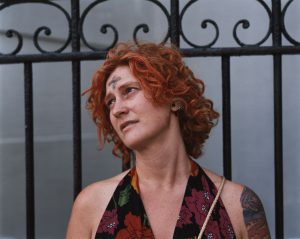
“Adelyn, Ash Wednesday in New Orleans.” Photo by Alec Soth.
By Dennis W. Derr –
Ash Wednesday is a most unusual day. It begins the season of Lent, a 40 day period before Easter Sunday (excluding Sundays). It is a religious season of fasting and prayer arising from the ancient Jewish tradition of penance and fasting. The lection from Joel 2:1-2, 12-17 reaches back to that tradition. Ashes are placed on the forehead in the sign of the cross – a symbol of grief, grief that we have sinned and caused a separation of ourselves from God. Ash Wednesday opens Lent. But neither Lent nor Ash Wednesday is mentioned in the Bible. So why observe this most unusual day in a United Methodist Church?
I remember as a child, going to school on Ash Wednesday (just another day for us Protestants); and the Catholic kids would show up with an ashen cross on their foreheads. They’d been to early mass – it was a Catholic thing. In that era, no Protestant church in my community kept the observance. Many years later, after 10 years serving as a United Methodist pastor, I was in an area where the only other churches were a Lutheran and Catholic Church. There I participated in my first Ash Wednesday service with the imposition of ashes, thanks to my Lutheran colleague. It was a strange and foreign thing to me.
After 42 years in ministry, Ash Wednesday is still strange and foreign. A few years after participating in my first service with the imposition of ashes, I was in a community that was largely Catholic. My five United Methodist colleagues thought that during our annual joint United Methodist Lenten services – which always began on Ash Wednesday (with no ashes; but rather holy communion) – we should offer the imposition of ashes. They asked if anyone had any experience with ashes. I was the only one – thanks to my Lutheran neighbor years before. And so it was that I became the designated “imposer” for the 16 years I served in that community.
I’ll never forget the first time ashes were offered. As people came forward to receive holy communion at either side of the chancel, those desiring the mark of the cross, came to the center where I marked their forehead with the ashen cross, saying, “Remember that you are dust; and to dust you shall return.” We pastors thought a few people might decide to receive the mark of the cross before receiving holy communion. Oh we of little faith. We were all surprised. Nearly every person in attendance, more than one hundred, came to be marked. Tears were streaming down the faces of worshippers and pastors alike as the meaning of Ash Wednesday took root in our souls. It was not a Catholic thing; it was a faithful remembrance of God’s grace.
After those evening Ash Wednesday services, it was not uncommon to find many of the United Methodist worshippers at the nearby Giant grocery store with the mark of the cross upon their foreheads. Some of us commented about our childhood days in school when we’d mock the Catholic kids with dirty foreheads. Sometimes the Catholic kids made comments that made us Protestant kids think we were going to Hell because we didn’t have an ashen cross on our forehead. Sometimes we all have ways of degrading others with our religious beliefs.
Too often our religion gets in the way. And all the while, God, like a good parent, is patiently coaxing the childish ways out of us. More than 20 years ago, God began coaxing the childish thoughts and ways regarding Ash Wednesday out of six United Methodist pastors in Central Pennsylvania. God showed us the foolishness of our childish ways and our overdue need for repentance. We began to talk about moving our Ash Wednesday service earlier in the day so that we had the opportunity to bear the mark of the cross and be a witness to the grace of God throughout our work day.
In my last appointment, I added a noon time service to our Ash Wednesday schedule; and many folks who did not like to drive after dark came for the imposition of ashes. In the world in which we live, churches that want to make an impact upon lives for Christ will find ways to make the strange and foreign practices of faith meaningful. We must provide these opportunities for connecting the bruised and broken spirits of people in our communities to the God who loves them, who forgives sin, and heals all brokenness. We must provide alternate options and locations for the holy to break in upon the busy world around us.
However, there is a serious warning, which our Lord Jesus gives in his teaching known as the Sermon on the Mount. This is the second lection from the Gospel of Matthew 6:1-6, 16-21. It is a warning about not letting any spiritual discipline become a source of spiritual pride. Of course, no religious ritual can make our heart right with God. Some who receive that ashen mark, may be tempted to wear it proudly. Some may feel a profound and silent connection with others they see who have also received ashes this day. I have found that embracing this ritual, too often forgotten in most Protestant traditions, has added to my keeping of a faithful Lent. For me, the ashen cross is not a badge of pride or honor. It is a mark of love, grace, and forgiveness; a reminder of my impending mortality and death; and the hope of resurrection and new life.
It is good for us to repent of our sin; but that is something we should do each day, not just on Ash Wednesday. It is good to clearly identify as a Christian, but again this should be an everyday identification. In a world marked by division, discord, and racial and religious hatred where Christian values and individuals are often targeted, now is the time to stand up and clearly identify ourselves as “Cross People!” It is time to live boldly for Jesus Christ! We belong to God. When on Ash Wednesday we voluntarily receive the mark of the cross, we identify ourselves publicly as Christians. God has marked us as God’s own. The liturgical words heard in many churches on this day are: “Remember that you are dust, and to dust you shall return.” These words remind us of the brevity of our life, and the weight our relationship with God carries. Yes, we are all dust. But we are more than that. Our life matters!
Too many people give in to the burdens of stress, depression, and feelings of inadequacy. Rather people should cling to the hope that those things don’t really matter. All our human worries will, at the end of our days, seem like specks of dust in the vast expanse of infinite time and space. The writer of Ecclesiastes seems to understand this line of thinking, asserting, “Everything is hevel.” “Everything is meaningless,” as some English translations say it. A more accurate translation is vapor, vanity, or dust. “All we are is dust in the wind,” as the song by the group Kansas says. Kerry Livgren, the songwriter, is a Christian.
But we are also the crown of creation. Grace Slick (to my knowledge not a Christian) of the Jefferson Airplane, sang “You are the crown of creation.” And she was right. We humans are the crown of God’s creation. God has given us dominion over all the earth. And we have fouled it up. A brief channel surfing of the evening news starkly lets us know how badly we humans have fouled things up.
Ash Wednesday calls us to repent for the way we have treated ourselves, our fellow human beings, and our fellow creation. St. Francis and other theologians did not view Nature as “Mother Earth,” but as our “sister” – not a goddess to be worshipped, but a “sister” to be admired and protected.
As God said to Abraham, “Look at the stars…” When you look at the stars, what are you that God should care for you? You are dust. Ah, but you are also the crown of creation. Look at the stars, how vast the universe is, and how small even our whole galaxy is in comparison to all of space. If the Milky Way is but a speck, how small Earth is, and how much smaller is our aching heart. Truly we are dust.
And yet, in the midst of that existential realization, know that God still cares for you! Our God cares about sparrows and lilies. They matter to God. And people matter even more. All that God created matters. God created people from the dust of the earth and breathed into us the breath of life.
No matter how small a speck of dust you are, God loves you. You matter to God. You are the crown of creation. Oh, we are blessed to be dust – the dust from which God created us in his image, the dust to which God gave dominion for the earth, the dust to whom God offers life eternal, the dust which God loved so much to redeem through his only Beloved Son.
And that is what Ash Wednesday is about. This strange and foreign religious ritual is a mark of faith in God. You are dust, and yes you will someday die physically; but you shall live eternally. You are loved. You are special. You are the crown of God’s creation. Oh, you are dust now, and to dust you will return; but even so, you are more precious than gold. You are a beloved child of God!
Dennis W. Derr is a retired elder in the Susquehanna Conference. He resides in coastal Delaware and serves as a Director of Travel Ministry with Educational Opportunities.
by Steve | Jan 7, 2019 | Jan-Feb 2019, Magazine Articles
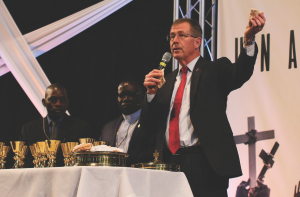
Bishop Scott J. Jones (right) speaks to those preparing to receive communion at the Wesleyan Covenant Association gathering in Mariotta, Georgia. Also on stage was Bishop Kasap Owan (center) and the Rev. Willy Banza. Photo by Steve Beard.
By Kathy L. Gilbert and Thomas Kim –
The Wesleyan Covenant Association began working on a contingency plan for a Methodist movement within or outside of The United Methodist Church — a plan that depends on the decisions coming from the 2019 General Conference.
The group held its first global legislative assembly on November 2 and passed four resolutions, including one that said adoption of the One Church Plan would be “untenable and would force us to leave.” The One Church Plan is one of several proposals that will be considered by the General Conference when it meets in February.
After the legislative gathering for delegates, more than 2,500 WCA members gathered for a celebration that included presentations from bishops, a medical doctor, pastors, and theological professors. The November 3 gathering at Mt. Bethel United Methodist Church in Marietta, Georgia, was simulcast at 105 sites hosted by the association, which represents 125,000 people in 1,500 churches.
At the legislative assembly, the Rev. Carolyn Moore preached to the delegates before voting started. She led the assembly in praying on their knees for God to provide a “fresh dose of faith,” a “supernatural ability to love,” and a spirit of perseverance in staying engaged in every conversation as long as God tells them to stay in it.
The delegates endorsed a modified Traditional Plan and voted on Empowering Preparations for Next Steps, doctrinal standards, features and principles of a new denomination, and a statement offering radical hospitality and genuine community to all persons.
Ethan Oltremari, a delegate from Mississippi, introduced the radical hospitality statement that says in part, “We long for and are working for a church that offers radical hospitality and genuine community to all persons.” Oltremari told United Methodist News Service the Mississippi delegation wanted to let people who are struggling with their sexual identity know that the church still wants them. “Even though we do not affirm their lifestyle, we still want them to know they are welcome to worship with us,” he said.
The Rev. Jeff Greenway, WCA council chairman, read a statement by the council that said the adoption of the One
Church Plan, with its “changing of the definition of marriage and the changing of ordination standards,” would force WCA members to leave The United Methodist Church.
The One Church Plan would leave decisions to allow same-gender weddings up to churches and gay ordination up to annual conferences. It would also eliminate the statement from the United Methodist Book of Discipline that the practice of homosexuality “is incompatible with Christian teaching.” A majority of the United Methodist Council of Bishops recommend the One Church Plan.
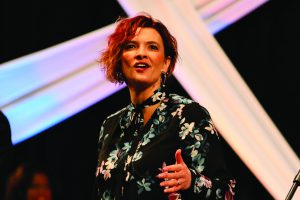
The Rev. Kelly Brumbeloe of Mt. Bethel United Methodist Church in Marietta, Georgia, was the co-host of the WCA Global Gathering. Photo by Steve Beard.
The Wesleyan Covenant Association endorsed the Traditional Plan with modifications. The modified Traditional Plan would maintain the denomination’s current stands on homosexuality and marriage, while mandating stricter enforcement in the case of violations.
The denomination’s Judicial Council, meeting in October, ruled that several parts of the Traditional Plan violated the church’s constitution. However, the Rev. Keith Boyette, the association’s president, said the plan will be brought into conformity with Judicial Council Decision 1366.
The association also supported a proposed gracious exit that would allow congregations and institutions wanting to leave the denomination to leave with all their property and assets following the adjournment of the February 23-26 called General Conference.
Delegates voted to form a working group to prepare a plan for a new “revitalized Methodist movement within or, if necessary, outside the UM Church.” The group will meet monthly beginning in December and submit its proposals to the association by February 20. The Wesleyan Covenant Association Council will decide whether to convene a special conference of the association to be held within 60 days of the adjournment of the 2019 General Conference.
Boyette said WCA chapters are being incorporated in every annual conference, and international chapters are being formed in the central conferences. “This is a grassroots movement. This is not something that’s happening from the top down,” he said.
At the general gathering, called “Unashamed” after 2 Timothy 1:8, speaker after speaker proclaimed, “I am not ashamed of Jesus Christ and the Bible.” They emphasized the need to be faithful to Scripture and to transform the culture rather than to accommodate it.
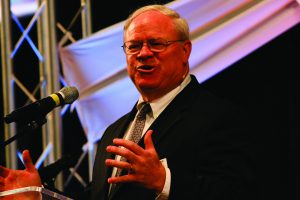
The Rev. Keith Boyette, president of the Wesleyan Covenant Association.
“Make no mistake, friends; make no mistake at all: The days of casual Christianity are over,” said Bishop J. Michael Lowry, who leads the Central Texas Conference.
The Rev. Madeline Carassco-Henners said the DNA of the Wesleyan movement encompassed the “charismatic nature of revival that even shocked Wesley.” Methodism’s founder, John Wesley, was a fervent defender of the faith, who preached in the fields and saw the power of the Holy Spirit fall and lives changed, she said.
In the church today, she said clergy who don’t teach the basics of the Christian faith are not being held accountable, and she echoed other speakers who called for the denomination’s bishops to enforce accountability.
South Congo Area Bishop Kasap Owan, speaking in French with an English interpreter, brought resounding applause when he preached at the closing worship. “Africa is the fruit of mission work,” he said. “Africa will not walk away from Christ. If you bring us another teaching on marriage, our churches will be empty. But if you are faithful to the word of God, the church will grow.
“Jesus was protected in Africa. Africa will remain the place to protect the Gospel.”
David Richards from the Memphis Conference, said the day was uplifting. “It is uplifting to know there are still clergy and laity that stand for the truth of Christ and are not going to be compromised by what the world says. But in the same light they do it in a way that is graceful and loving and not judgmental.”
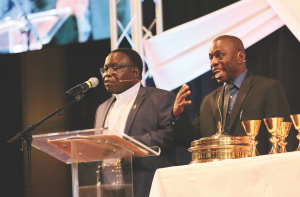
Bishop Kasap Owan (below left) and the Rev. Willy Banza, translator for Bishop Kasap. Photos by Steve Beard.
The Korean United Methodist Association came to the gathering as observers, and had a private meeting with Bishops Scott Jones, Texas; Lowry, Central Texas; Mark Webb, Upper New York; Gary E. Mueller, Arkansas; and Eduard Khegay, Moscow Area in the Northern Europe and Eurasia Central Conference.
“If the One Church Plan is passed, it will not be possible to continue as a global church in Russia,” Khegay said. “They (the government) will use local media to attack The United Methodist Church as influenced by western ideas and thoughts. I hope we continue to do mission together.”
The Rev. Noko Kellum, Japanese American clergywoman from Florida, said her main concern was losing the biblical teachings of a marriage. “I still trust in God, and my hope for the future comes from God,” said Kellum.
Manirakiza Godelieve, Burundi, said she was excited to be at the conference. “We want to keep The United Methodist Church united; we want to stick with Wesleyan doctrine and stay with the faith. It was a good opportunity to see and hear people talk about their beliefs. We have hope the church will remain united and stick with the good news of the gospel.”
Gilbert is a multimedia news reporter for United Methodist News Service. Kim is director of Korean and Asian news at United Methodist Communications. Tim Tanton, chief news officer for United Methodist Communications, contributed to this report.
by Steve | Jan 7, 2019 | Jan-Feb 2019, Magazine Articles
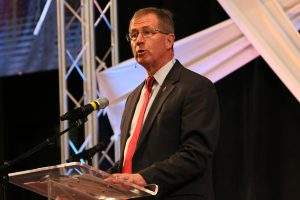 By Bishop Scott J. Jones –
Serving Christ with biblical faithfulness, intellectual integrity, and cultural relevance has become increasingly difficult in my lifetime.
Nevertheless, I can repeat with joy the words of the apostle Paul: “I am not ashamed of the gospel; it is the power of God for salvation to everyone who has faith.” With John Wesley, I understand that difficult passages of Scripture are best interpreted in accordance with the analogy of faith, “that grand scheme of doctrine which is delivered in the Bible.” This general theme of Scripture is the way of salvation. …
Let me remind you of Wesley’s opening words in his “Thoughts Upon Methodism:”
“I am not afraid that the people called Methodists should ever cease to exist either in Europe or America. But I am afraid, lest they should only exist as a dead sect, having the form of religion without the power. And this undoubtedly will be the case, unless they hold fast both the doctrine, spirit, and discipline with which they first set out.”
Three key elements: spirit, discipline, doctrine. We must maintain the spirit and by that I understand our focus on our mission. We are at heart a missionary movement. We were raised up to reform the continent and to spread scriptural holiness across the land. You should know that the first draft of our current mission statement quoted that phrase found in the first discipline of the Methodist Episcopal Church. … Our mission is to make disciples of Jesus Christ for the transformation of the world, and our future vitality depends on aligning all our resources on that mission.
Wesley’s admonition also calls us to maintain our discipline. Our disciplined approach to serving Christ is a hallmark of our identity. We obey our conferences. We obey our rules. In Charles Ferguson’s famous phrase, we are organizing to beat the devil. We are methodical.
Wesley’s admonition also focuses on our doctrine. We are a biblical people, and our way of reading Scripture is faithful and fruitful. Our Wesleyan understanding of the gospel, contained in our doctrinal standards is a precious resource for accomplishing our mission. …
God’s primary tool is the church, because all holiness is social – we do this in community. We do this by participating in the means of grace which are the ministries of the church – weekly worship, accountability groups, holy communion, daily Bible study, daily prayer, acts of mercy toward the poor. The Holy Spirit is aching to use us for the transformation of lives. We must embrace the gospel and our role in its proclamation and embodiment. I want to be part of a church that conveys God’s amazing grace to people in need.
I belong to a denomination where many local churches are embodying God’s amazing grace. What a privilege it is to be part that process. Thanks be to God for his gospel.
Bishop Scott J. Jones is the Resident Bishop of the Texas Annual Conference/Houston Episcopal Area.