
by Jonathan Powers | May 5, 2026 | Uncategorized
By the Renewing of Your Minds
by Stephen Rankin
Many people have Romans 12:1-2 memorized, or, at the least, are familiar with its basic message. Here it is in shortened form:
“I appeal to you therefore, brothers and sisters, by the mercies of God, to present your bodies as a living sacrifice…Do not be conformed to this world, but be transformed by the renewing of your minds…”
We Wesleyans/Methodists love to talk about holiness. It’s easy, in this light, to focus on Paul’s warning not to be conformed to this world. Those of us who have been around a while know how easily and often we and our elders talked about the problem of worldliness and the need for holiness people to avoid getting caught up in the world. This is a good biblical principle, of course. We should avoid worldliness. Sadly, I don’t hear much of this sort of talk these days.
But how does holiness connect to the renewing of our minds? It’s a crucial connection, but a specific aspect of it often goes unnoticed in our late modern Christian culture and likely explains why not as many people in the holiness tradition talk about holiness anymore. It’s time to understand the connection and to take the renewing of our minds with utmost seriousness.
First, let’s not make the mistake of thinking that the renewing of our minds simply has to do with correct, orthodox thinking. We can be as orthodox as the devil, as Mr. Wesley said, and not be true followers of Christ. The renewing of our minds means more than getting right ideas lined up in the right order.
On the other hand, renewing our minds requires much more than the typical Sunday School curriculum or Bible study offers. I am aware, of course, of wonderful exceptions to my criticism. I know some people who write curriculum and they offer real meat. Nonetheless, we live in a very impatient and pragmatic culture, which means that many Christians want to get quickly to the practical application of a teaching and often skip over the “heady” stuff. This dismissiveness of substantial amounts of Christian doctrine condemns us to shallowness and, ironically, we fall short of the application we desire by missing the deeper aspects of Christian doctrine, where the real transformation takes place.
Let’s dig a little deeper, then, to what Paul means by the call to renew our minds. The Greek word for “mind” that he used is nous (more specifically, the plural, noos). It refers to reason and understanding, as we might expect, but it means more than simply grasping ideas. It includes “making sense,” you might say, of ideas or circumstances or relationships. It means making connections that aren’t obvious and recognizing implications that don’t come without some reflection. If those Roman Christians were to avoid being conformed to this world, they needed to understand the realities of the world they inhabit. They needed to go below surface-level appearances. They needed to think and to probe and to consider, which would lead them to godly action.
The renewing of their minds included recognizing how the Greco-Roman culture of their day continued to influence not only their understanding, but also their desires and inclinations. They needed real clarity of thought to know how to live as real Christians in the real world, the sort of clarity that Paul illustrates so well in Romans 7. They needed to understand that Christ, by the Spirit, was re-making them top to bottom and inside-out.
Consider another powerful bit of Pauline encouragement related to our minds, from Philippians 2:5, “Let the same mind be in you which was also in Christ Jesus.” Here, the Greek word is phronema, a term indicating a kind of deep, practical wisdom. And Christ is the example par excellence of the phronema we are called to embody: alert, teachable, humble, committed, thinking more highly of others than we think of ourselves. John Wesley loved to quote this verse. To be entirely sanctified is to have the mind of Christ and to walk as Christ walked. It is most definitely a goal to which we all should aspire.
These words, nous and phronema, complement each other to encourage us toward the kind of work we need to do if we desire to follow Christ fully. They prompt a number of thoughts. Let me share two among the most important:
- The renewing of our minds requires the development of the habit of study. Every Christian needs to study as a normal aspect of discipleship. This means you! I’m currently reading a book by the sociologist, Christian Smith, titled, Why Religion Went Obsolete. One of the major conclusions he draws is that most Christians live vicariously through their clergy. Pastors are supposed to study. It’s their job. Many people somehow think that it’s enough for the rest of us to let the clergy do the work for us. It’s a dangerous assumption. If you sincerely desire to follow Christ, then you are committed to the renewing of your mind. And that means study. Not occasionally, but consistently, habitually.
- The renewing of our minds requires that we study more than the Bible. It may surprise you (maybe not) to realize that, to understand biblical truth, we need to read theological sources outside the Bible, and I don’t mean just biblical commentaries. (A foundational example of this point is the doctrine of the Trinity.) By all means, we need to study the Bible thoroughly, but to do so fruitfully means that we look carefully at other people’s conclusions about biblical truth as well as examining Scripture ourselves. This is exactly what studying theology means. A wealth of insight and encouragement awaits those who are willing to make the effort. Read contemporary writers, but don’t forget rich resources of the historic church.
I end, therefore, with a practical suggestion. If study has not been a big part of your life, I encourage you to dig into The Faith Once Delivered: A Wesleyan Witness to Christian Orthodoxy (Seedbed, 2022). Use its internal references to Scripture, to John Wesley’s writings, and to other authors from across the centuries, go further. Do the work prayerfully, with a heart open to the renewing of your mind. Stay with it. I think you’ll be amazed and how God transforms your life.
Stephen Rankin is the Contributing Editor for Good News Magazine.
by Jonathan Powers | Apr 29, 2026 | Uncategorized
The Glory of God Revealed (Part 2): Seeing the Risen Christ Who Comes to Us
By Jonathan A. Powers
In my last article, I reflected on the glory of God revealed in the resurrection of Jesus Christ, the decisive moment in which death is defeated and new creation breaks into the world. Yet, as we linger a bit longer on the nature of His glory, Scripture invites us to move beyond the event itself and into the encounters that follow it. In these post-resurrection moments, we begin to see that God’s glory is not merely something proclaimed, but something seen, experienced, and personally encountered. John 20, in particular, presents two powerful scenes: Mary in the garden and the disciples in the upper room. Each of these accounts help us understand what the glory of God looks like when it meets us in our deepest need.
MARY (JOHN 20:11–18)
John’s Gospel opens this post-resurrection scene with Mary Magdalene standing outside the tomb of Jesus on Easter morning. She is weakened and weeping, overcome with sorrow. She has come to visit Jesus in the tomb, but His body has disappeared. Fearing that someone has taken Him away, she is left distraught, grieving not only His death, but now even the loss of His body. And yet, even in death, her longing is clear: she simply wants to be in His presence, in the presence of the One who, in His life, had made Himself so fully present to her.
Mary comes to the garden on this Easter morning worn by Good Friday and wearied by Holy Saturday. Her only desire is to see and to tend to the crucified body of her Lord. However, what she does not yet realize is that, in that very garden, at that very grave, she will not find a body to tend, but a Savior who has come to tend to her. She had come to attend to His body, but He was already there, ready to attend to her soul.
As the passage unfolds, Mary turns away from the empty tomb in her sorrow and encounters a figure standing before her in the garden. We know this figure to be Jesus, but she does not recognize Him. Instead, she assumes Him to be a gardener. And in a profound sense, she is not entirely wrong. For it was in a garden long ago that all creation was made through Him, and now, in this garden of resurrection, the firstfruits of new creation are being brought forth in Him. Here stands the true Gardener, about to reveal the glory of God in a way Mary does not yet expect.
Seeing her in her distress, Jesus asks, “Woman, why are you weeping? Whom are you seeking?” Still unaware of who He is, Mary replies, “Sir, if you have carried Him away, tell me where you have laid Him, and I will take Him away.”
Mary’s response is striking. Three times she uses the word “him,” yet she never speaks the name “Jesus.” She assumes that this gardener will know exactly whom she is seeking, as if there were no other reason to be in that place, and no other person who could possibly matter.
Of course, Jesus knows why Mary has come. She has come seeking Him. What she does not yet understand is that He has already come seeking her. She is searching for a dead and defeated body, but He stands before her in resurrected glory, ready to reveal Himself.
In her sorrow, Mary cannot recognize Him, nor can she even speak His name. But in His compassion, Jesus reveals Himself with a single word, her name: “Mary.” Like a shepherd calling his sheep, His voice breaks through her grief. In that moment, she sees. “Rabbouni!” she cries; “Teacher!” And what a fitting confession, for in that moment Mary is being taught how to see the glory of the risen Christ. She is learning to perceive not only with her physical eyes, but with the eyes of faith the God who has come to her in her need.
It is worth remembering that Mary had been among the last to see Jesus at the cross. Now she is the first to see Him at the resurrection. She becomes the first witness to the God who comes to rescue, not only in life, but even through death itself. She had seen Him crucified, and now, in her grief, she encounters Him in His risen glory.
THE DISCIPLES (JOHN 20:19–29)
From the garden, John immediately shifts our attention to another scene, this time to the disciples gathered behind locked doors. The contrast between them and Mary is striking. While Mary remained near Jesus through His suffering, the disciples had betrayed, denied, and abandoned Him in His final hours. While Mary sought Him at the tomb, the disciples hide in fear.
Like Mary, they are filled with sorrow and uncertainty. The one they had hoped would rescue them had died. They have heard rumors that the tomb is empty and whispers that He may be alive, but they do not know what to believe. And so they remain behind closed doors, confused, fearful, and directionless, like sheep without a shepherd.
It is into this very space that Jesus comes.
Without warning, He appears among them, standing in their midst despite the locked doors. One can only imagine the mixture of shock and fear that filled the room. These were the men who had abandoned Him. What would He say? Had He come to rebuke them? To judge them?
Instead, Jesus speaks the very word they most need to hear: “Peace.”
He then shows them His hands and His side. In doing so, He reveals His crucified body, lest they forget what the world, and even their own failure, had done to Him. Yet He does not show them His wounds to condemn them or to exact retribution. Rather, He shows them His wounds to reveal His glory, the glory of the crucified and risen Christ who has come to their rescue.
This moment is essential. The disciples needed to see not only that Jesus was alive, but how He had brought about their salvation. Unlike Mary, they needed to see both the resurrection and the cross together. They needed to see His scars.
For it is in those scars that the fullness of God’s glory is revealed: the depth of His love, the extent of His mercy, and the completeness of His rescue. Only by seeing what He endured could they begin to understand the hope of His resurrection. Only by receiving His mercy could they be sent into the world as witnesses of that glory.
CONCLUSION
One of the great and beautiful mysteries of the Christian faith is that the risen Jesus still bears His scars. We might assume that resurrection would mean the removal of all marks of suffering, a kind of perfection defined by worldly standards of beauty. But perhaps such assumptions reveal more about our own limited vision than about the glory of God.
For what if true beauty is not found in the absence of wounds, but in the love that endured them?
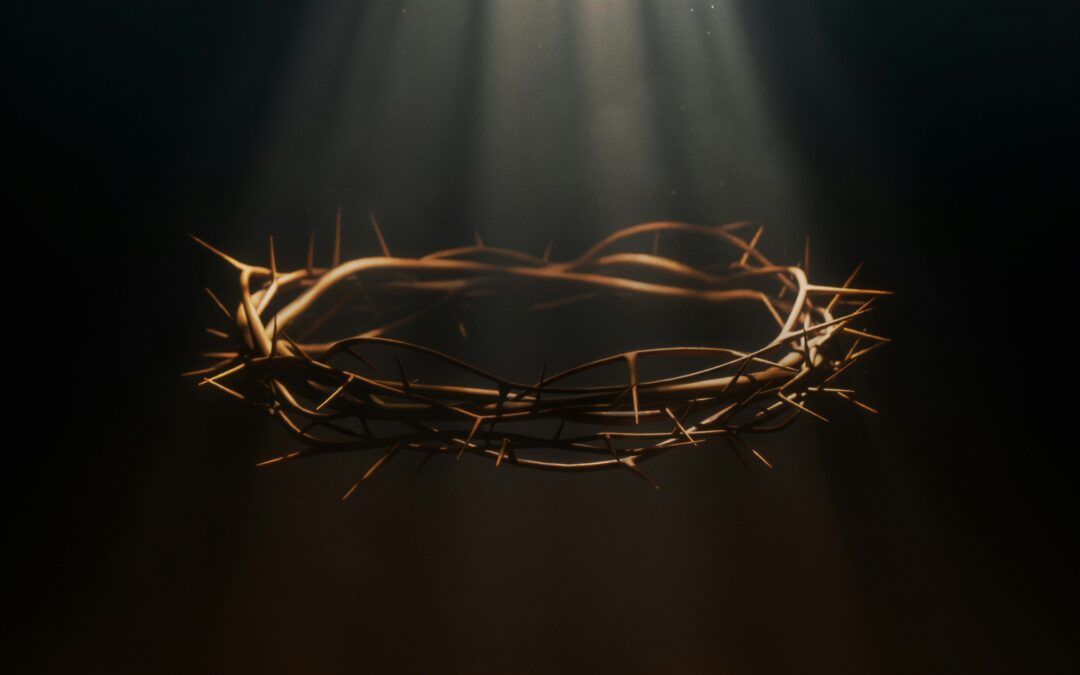
If Jesus still bears the scars of the nails and the spear, might He also bear the marks of the crown of thorns? The wounds of the scourging? The bruises of the beating? The weight of the cross? And if so, what does that mean for how we understand His glorified body?
Perhaps the glory of Christ is not the polished image we so often imagine. Perhaps it is something far more profound, a wounded beauty marked by sacrifice and love. Perhaps the fullness of His glory is seen not merely in power, but in the Lamb who looks as though He has been slain.
Could this be why Mary did not recognize Him at first? Why the disciples on the road to Emmaus failed to see Him? Could it be that to truly behold the glory of God, we must learn to see both the crucified and the risen Christ, the One who still bears the marks of His rescue?
And when we do see Him rightly, perhaps the only fitting response is the same as Thomas: “My Lord and my God!”
This is one reason why as Christians, the regular celebration of the Eucharist matters so deeply. At the Table, Jesus reorients our vision so that we might behold His glory. Mary and the disciples saw Him with their physical eyes, but through that sight they were given the eyes of faith. And we, though we do not see Him in the same way, are called “blessed” because we believe.
In the Eucharist, we encounter the crucified and risen Christ. We behold His broken body and His shed blood. We taste and see the extent of God’s rescue. And we are drawn into His life as we await the day when we will see Him face-to-face.
Until that day, may our eyes remain fixed on Him, the crucified and risen Christ, the One who comes to us, who rescues us, and who reveals the fullness of God’s glory.
Jonathan Powers is the Associate Professor of Worship Studies at Asbury Theological Seminary in Wilmore, KY and the Editor-in-Chief for Good News magazine.

by Jonathan Powers | Apr 21, 2026 | Uncategorized
The Glory of God Revealed: Living the Resurrection
By Jonathan A. Powers
Happy Easter! Yes, we are still in the Easter season, an extended reminder that the Church lingers in the joy of the resurrection rather than moving past it too quickly. One of the beautiful aspects of the Christian faith is that in the life of the Church, Easter is not confined to a single Sunday each year. Rather, in the Christian calendar, the season of Easter unfolds across fifty days, culminating in the celebration of Pentecost. This extended season, also known as Eastertide, is a time of celebration, reflection, and renewed vision. In fact, the rhythm of resurrection continues throughout the year, as every Sunday becomes a fresh celebration of the risen Christ. It is a joyous season that invites the Church not only to remember Christ’s resurrection, but to inhabit it, for Christians are, after all, a resurrected people called to live a resurrected life.
During this season of Eastertide, it is common to dwell on the post-resurrection encounters recorded in the Gospels. These scenes are filled with recognition, wonder, and even surprise. They draw our attention more deeply to the beauty and glory of God revealed in Jesus Christ, the crucified and risen one. In this way, Easter invites us not only to consider what God has done for us in and through Jesus Christ, but also to behold God’s glory. As we linger with these resurrection accounts, then, a deeper question begins to emerge: what do we mean when we speak of the “glory of God”? It is a phrase that rolls easily off the tongue in prayers, hymns, and sermons. It is so familiar that it can pass by with little reflection. Yet when we pause to consider it, its meaning is not always as clear as we might assume. Do we imagine brilliance and radiance, power and majesty? Do we think of something distant and overwhelming, or something near and personal? The language of glory stands at the very heart of the Christian faith, but it calls for careful attention, both so that we might understand what Scripture reveals, and so that we might learn to recognize that glory when it appears in ways we might not expect.
When speaking of the glory of God, many early Christian thinkers offered a striking insight: the glory of God is seen most clearly in His act of rescuing those in need. Understanding God’s glory in this way fundamentally reshapes our expectations. Rather than locating divine glory primarily in displays of power, majesty, or splendor, it draws attention to something more surprising and, in many ways, more profound: God’s redemptive action on behalf of His people. The glory of God, therefore, is not merely something to be observed, but something encountered in His gracious movement toward humanity. It is revealed in His willingness to enter the depths of human brokenness, to meet us in our need, and to act decisively for our salvation. In this light, glory is not diminished by humility or suffering but is disclosed through them. The God who is truly glorious is the God who comes near, who restores, and who redeems. In short, the God who is truly glorious is the God who rescues.
This vision of glory comes into even sharper focus when we consider the life, death, and resurrection of Jesus Christ. For it is here that God’s glory is not only described but displayed. In the light of Easter, the cross—which was a place of weakness, shame, and defeat—becomes the very place where divine glory is most fully revealed. What appears to be loss is, in truth, victory. What seems to be humiliation is, in fact, exaltation. In Christ’s self-giving love, poured out for the life of the world, we see the very heart of God. And in His resurrection, we see that this self-giving love is not overcome by death, but triumphs over it.
This means that to understand the resurrection rightly, we must hold it together with the cross. Easter does not erase Good Friday but reveals its meaning. The wounds of Christ are not abandoned in the resurrection but carried forward as signs of redeeming love. The risen Christ is not a departure from the crucified Christ, but the vindication of Him. In this way, the glory of God is seen not only in victory over death, but in the love that was willing to endure it. The Church, therefore, does not proclaim resurrection apart from the cross, but always as its fulfillment.
To speak of God’s glory, then, is to speak of this pattern of divine life. It is a glory that does not remain hidden in the heavens but is made known in the concrete realities of human life and redemption. It is seen in forgiveness offered when it is undeserved, in mercy extended when it is costly, and in hope sustained even in the face of suffering. And it is precisely this kind of glory that the Church is called to recognize, to proclaim, and ultimately to reflect.
This recognition is not merely an intellectual exercise; it is a transformation of vision. To see the glory of God rightly is to have our imaginations reshaped, our expectations recalibrated, and our lives reoriented. We begin to look for God not only in moments of triumph or grandeur, but in acts of mercy, in quiet faithfulness, and in sacrificial love. We learn to discern His presence not at a distance, but in the nearness of His grace, in the ways He meets us in our need, in the way He restores what is broken, and calls us into new life.
As the Church continues to live within the joy of Easter, this vision of glory becomes both a gift to receive and a way of life to embody. To behold the glory of the risen Christ is to be drawn into His pattern, to become a people shaped by the same self-giving love that brought life out of death. This takes form in ordinary, often unnoticed ways: in offering forgiveness when it would be easier to hold on to resentment; in choosing patience over frustration; in showing mercy to those who cannot repay it; in remaining faithful in seasons that feel quiet or uncertain. It is seen in the courage to hope when circumstances suggest otherwise, and in the quiet confidence that Christ is at work even when His presence is not immediately obvious.
When we begin to live in these ways, the life of Easter begins to take root in us. We become a people who look for Christ not only in moments of celebration, but also in the midst of need in our own lives and in the lives of others. We learn to listen for His voice, to trust His nearness, and to respond with lives that reflect His grace. Therefore, the call of Easter is not simply to remember that Christ is risen, but to live as those who have been raised with Him. We are called to go into our homes, our places of work, and our communities to bear witness to His glory. For the God who is truly glorious is the God who rescues and draws near. And He sends His people to reveal His glory, shown and known in their everyday lives.
Jonathan Powers is the Associate Professor of Worship Studies at Asbury Theological Seminary in Wilmore, KY and the Editor-in-Chief for Good News magazine.
by Jonathan Powers | Apr 14, 2026 | Uncategorized
Connectional Addiction: Retirement, Identity, and the Hidden Temptation of Ministerial Influence
By Mike Powers
Last June (2025) I retired for the third time since 2017. Obviously, I am not very good at this. With each retirement, I experienced some common and rather odd feelings. Some of these feelings reveal the typical stages of grief: denial (“I can’t be this old!”); anger (“I am not appreciated or being treated fairly!”); bargaining (“Maybe…if only…how about…”); depression (“Bummer. This is really happening.”); acceptance (“Ya know, this may not be so bad after all”).
I also have noticed something else, something more difficult than I would have imagined or want to admit: I struggled with not being included in the connectional life of the church. For the past 52 years, I have been a person of influence, recognition, and power. Youth and parents respected me as the youth leader. Small membership churches had high expectations of me as their spiritual director, neighbor and friend. Middle-size churches bestowed upon me the mantle of leadership, giving me more time and space to broaden the scope of my ministry. I learned the primary role and responsibility of staff leadership and development in the two large-membership churches. Being in ministry to more people, I needed to invest deeply in a few key leaders who needed my wisdom and direction. Along this journey as an itinerant minister, I was an eager and a willing participant in the connectional life of the United Methodist Church on the district, conference, jurisdictional and general church levels. Serving as an organizer and Conference Superintendent in the Global Methodist Church, I was immersed in the connectional Church. Throughout my ministry, I was needed and included in all these spheres of influence, and then I was not.
It is a strange feeling, this sense of ‘disconnecting’ with all that ordered my days and nights for 52 years. Oh, I understand I am retiring only from the ‘active itinerant ministry’ and still part of the covenant fellowship with my colleagues, but I am certain that friends who have gone before me into retirement identify with these feelings. When one retires, he/she is disconnected, excluded, and no longer considered a person of influence, recognition, and power. To my surprise, this sense of loss, of no longer ‘being in the loop’ nor part of the ‘powers that be’ (excuse the pun), has revealed how addicted I became to the connection. All of this has been such a dynamic part of my thinking, praying, hoping, planning, investing, reading, talking, decision-making, etc. that the thought of going cold turkey made me wonder if there is life after retirement?
The apostle Paul’s admonition in Ephesians 5:18 comes to mind: “Do not get drunk with wine, for that is debauchery; but be filled with the Spirit.” Paul’s concern is not so much on alcohol-related issues as being dependent on artificial stimuli, getting hooked on something that becomes more important and more energizing than the Holy Spirit. Henri Nouwen explained in his classic work, “In the Name of Jesus,” that Jesus was tempted by satan to be relevant (a person of influence), spectacular (highly recognized) and powerful (all-controlling), i.e., artificially stimulated by and dependent on the anti-spiritual rather than the Holy Spirit. Paul used the word “debauchery” (ἀσωτία: unsavedness, incorrigible, dissolute) only one other time, Titus 1:6, when he is describing the high calling of character of an elder (ἐπίσκοπος), “…someone who is…not accused of debauchery and not rebellious.” Or as we can conclude, someone who is under the influence of the Holy Spirit and only the Holy Spirit.
It has taken me three tries to appreciate that the transition into retirement can be much more than relinquishing spheres of influence, resigning from positions of recognition, and releasing my grip on power and control. This is a God-moment, a Celebration of Recovery-moment for the restoration of my soul, a renewal of the Holy Spirit, and a return to my original call to ministry. May it be so, Lord. May it be so.
A final word. I wonder how many of my clergy brothers and sisters, active and retired, have become addicted to connectionalism, where being a person of influence, holding positions of recognition, and wielding authority over others have become the energizing passion of their lives rather than the pure, simple joy of serving Jesus and all that he loves? I wonder how many of us are willing to honestly confess that this compulsion to be relevant, spectacular and powerful has made life unmanageable, and, like an alcoholic in an AA meetiing, we are ready to admit our only hope of recovery is in the intervention of a Higher Power, the Spirit of Truth? Such serious, intentional transparency and vulnerability may require the relinquishing of positions to demonstrate how desperate we are for the healing power of the Holy Spirit. Such humility, honesty and willingness to do whatever it takes to be personally renewed in the Spirit is our best way forward not only for ourselves but for the recovery of the whole Church. May it be so, Lord. May it be so.
On the other end of my ministry, when I finished college and was sorting out the calling of God on my life, I read a prayer by Christina Rossetti and copied it in my Bible. I hoped this would characterize my life of ministry. “The Lowest Place” is her contemplation on the heart of the apostle Andrew. Now on this end of my ministry career, I want to pray these words more honestly and completely and regularly than before.
Give me the lowest place: not that I dare
Ask for that lowest place, but Thou hast died
That I might live and share
Thy glory by Thy side.
“Give me the lowest place: or if for me
That lowest place too high, make one more low
Where I may sit and see
My God and love Thee so.
May it be so, Lord. May it be so.
Mike Powers is a retired Elder in and the former President Pro Tempore and Conference Superintendent of the Mid-South Conference of the Global Methodist Church.

by Jonathan Powers | Apr 7, 2026 | Uncategorized
Holiness: Becoming Fully Human
By Josh Duckworth
The young denomination to which I belong has, from its inception, placed a major focus on “holiness.” The Global Methodist Church even revised its mission statement at its first General Conference to read: “make disciples of Jesus Christ and spread scriptural holiness across the globe.” It’s new and exciting language for many former United Methodists, even as we seek to understand what it means. I even heard a GMC bishop speak of full support of the statement, while endearingly admitting not being entirely sure yet what “scriptural holiness” even means. In many ways, that’s where a lot of us are. Though holiness is deeply Wesleyan, it hasn’t always been central in United Methodist life.
Holiness Distortions
I’m grateful that holiness is part of the conversation again. But as someone who grew up in the holiness movement, I’ve also seen its distortions.
When I hear the word, I think of the church lady correcting everything we kids did wrong in Sunday school. The word recalls in my mind the women of the church receiving letters from the pastor’s wife when their clothing didn’t meet her standards. Holiness, in that world, often felt like a dividing line: on one side, the self-appointed keepers of the standard; on the other, everyone else not measuring up.
This kind of holiness is a distortion because it makes the Christian faith performative. It tempts us to believe that holiness only matters in how we appear to others. I was reminded of this recently at a GMC worship gathering when a worship leader said something like this from the stage, “Come on, people! Looking at some of your faces and actions is surprising. How is this not moving you? If it isn’t, you need to check your heart!”
In that moment, I was transported back to my childhood, when the teachings on holiness constantly made me question my own faith: “Am I worshiping passionately enough? Do I look the part? Do I need to walk the aisle and be saved again?” I remember always thinking, “be at your best, because people are watching.”
And that is the danger. A distorted holiness theology can create a church full of people who believe at best that they must perform holiness, and at worst know they will never measure up. And in order to become like God, to be holy, we must become less human. Less who we are. More like Jesus, less like us.
Holiness and Our Humanity
But what if the call to holiness is not a call to become less human, but to become fully human? After all, God created us as human beings. It was His idea! What if God’s call is not for us to become something else entirely, but to become what we were created to be?
To understand holiness, we must first begin with God, the one who is holy. To say that God is holy is to say that God is utterly distinct, completely other and set apart from creation. God’s holiness is so “other” that, throughout Scripture, it is portrayed as overwhelming, even dangerous. Humanity cannot approach God casually.
Yet this same God creates human beings in His image. Any holiness we possess is not self-generated and created. It is derivative. It is reflective. It flows from the fact that we bear the “imago Dei” and it points beyond us to the One who alone is holy. True holiness never draws attention to itself; it directs attention to God.
Children, Not Performers
In Knowing God, J. I. Packer argues that the greatest gift of the gospel is not justification or even forgiveness, but adoption. I think he’s right. We are made children of God. And from that identity, holiness begins to make us who we truly are meant to be. Packer writes:
“It is simply a consistent living out of our filial relationship with God into which the gospel brings us. It is just a matter of the child of God being true to type, true to his Father, to his savior and to himself. It is the expressing of one’s adoption in one’s life.”
Holiness, then, is not performance. It is participation. It is not something we achieve for God, but something we receive from Him as we live in relationship with Him. To be holy is to become fully human as God created and redeems us to be: sons and daughters who reflect the character of their Father.
Also, in our pursuit of holiness, we can forget that God’s saving act was to become a son. In the incarnation, Jesus puts on humanity, affirms its original design, and redeems it. Fully God and fully human, Christ reveals not only who God is, but what humanity was always meant to be. God came in the flesh not only to show us God, but to show us who we are meant to be.
Our Great Theological Task
Why is this important? Because one of the great theological tasks of the church today is to recover and proclaim what it means to be human. In an age of rapid technological advancement and the rise of artificial intelligence, not to mention a pervasive gnostic theology within parts of the church, the question of what it means to be human is urgent. And the church must answer it clearly: we are embodied, relational beings, created by God and for God. As much of the innovation and brokenness in the world distorts the image of God in us and even how we see it in others, the church must not move away from our humanity but reclaim it as God intended.
Perhaps, then, the pursuit of holiness begins not with striving to become something more, but with fixing our eyes on the holiness of God. As we do, we are not made less human, but more. We are freed from sin, healed from shame, and renewed in the image we were created to bear.
We are, after all, only the image. God alone is the source. And so we seek Him through all, in all, and above all, trusting that as we do, we will become exactly what He created us to be.
Josh Duckworth is the Senior Pastor at Porterfield Methodist Church in Albany, Georgia.