by Steve | Mar 17, 1988 | Archive - 1988
Archive: What Will Be Hymn #1
The hymnal has been the barometer of the UM faith. What will it say about us now?
By Riley B. Case
The 1935 Methodist hymnal was introduced to the church with rave reviews. The hymnal represented, to borrow a phrase from the Hymn Society of America, “new words for a new day,” meaning that it was in tune with science and modern culture and committed to modernism and the social gospel. Local Methodist churches might still be traditional in style and theology, but, it was argued, the future was with liberalism, and the new hymnal reflected that future.
An analysis of the 1935 hymnal confirms the suspicion that some radical theological redirection had taken place. To illustrate:
1. The number of Wesley hymns had been reduced from 558 in the 1849 hymnal and 121 in the 1905 hymnal to 56 in the 1935 hymnal. Comment was made that the church needed to move beyond Wesley.
2. Sections on “The Need for Salvation,” “Warnings and Invitations,” “Judgment,” “Retribution” and “Heaven” were eliminated. (Sections on “Original Sin” and “Hell” had been removed from earlier hymnals.) New sections included “Kingdom of God,” “Service” and “Brotherhood.”
3. There was deemphasis on the subjects of redemption and the need for redemption, and a new focus on formal worship. An important symbol of this was the replacing of “O For a Thousand Tongues to Sing” (a hymn about redemption), with “Holy, Holy, Holy,” as hymn number one in the book.
4. The testimony to historic Christian doctrines was muted and sometimes revised. A number of references to the blood of Christ were deleted. Wesley’s witness to the virgin birth in “Hark! the Herald Angels Sing” was changed from Late in time behold him come, Offspring of the virgin’s womb” to “Long desired behold him come, Finding here his humble home.” And because liberals were loath to refer to Jesus Christ as God, the last line in “For the Beauty of the Earth” was changed from “Christ, our God to thee we sing” to “Lord of all, to thee we raise.”
5. The ritual of the church was changed significantly. References to “redeemed by the blood” and learning the Apostles’ Creed and the catechism were deleted in the baptismal service. Adults were no longer asked to affirm the Apostles’ Creed and to “flee from the devil and his works” in the service of baptism. Two creeds were added, “A Modern Affirmation” and “The Korean Creed,” both of which posit a Christianity without a cross. And Methodists were now led to believe that the universalist aberration, “brotherhood of man under the fatherhood of God,” was somehow related to Christian faith and ought to be confessed creedally.
6. The hymnal committee responded to requests (more on the part of the few than the many) for hymns about peace and justice and working for one’s “fellow man.” These hymns, it was believed, would reflect newer understandings of missions, brotherhood and the kingdom of God and would represent the future focus of the church.
When evangelicals assess the new 1988 hymnal, it will be helpful to note the theological journey of the hymnal since 1935. Those interested in hopeful signs should mark the following:
There is a new appreciation for Wesley. The number of Wesley texts in the new hymnal will number about 70. The reference to the virgin birth in “Hark! the Herald Angels Sing” was restored in the 1966 hymnal, and opportunity will be given to sing “Christ our God, to thee we raise” in the new hymnal. “O For a Thousand Tongues” will be hymn number 1 and persons will again confess the Apostles’ Creed in the baptismal service. Since the evangelical faith is still around (and growing) there will be more references to the blood of Jesus and more Gospel hymns with an emphasis on redemption. We will have to bear with the Korean Creed for another hymnal, but “brotherhood of man under the fatherhood of God” has been changed and the Modern Affirmation has been retired.
Perhaps even more significant is what we are being spared in the new hymnal. What happened to those hymns supposedly relevant, contemporary and forward-looking, which would save the church for coming generations? Some, indeed, have found their way into the list of United Methodist favorites. “God of Grace and God of Glory,” “Rise Up, O Men of God” and “Are Ye Able” could be mentioned. Others, however, have shown the remarkable propensity for being ignored by United Methodists through the years. The truth is that the extreme liberalism so strongly promoted in the first half of this century is an embarrassment today.
Those who want to explore this further might look at all the hymns written in the last 100 years which appear in either or both of the last two Methodist hymnals but which will not appear in the 1988 hymnal. The theology of the hymns is revealed by a comparison of words and phrases with Wesley texts and with texts of traditional gospel hymns. There are actually 109 such hymns.
What can be said about these hymns? Individually, none is terribly objectionable. The poetry is good, the music uplifting. The emphases sometimes serve as a corrective to evangelical imbalances. At the same time, when analyzed as a group, they portray a weak and uncertain gospel. To illustrate:
1. One is immediately impressed that the theology of “new words for a new day” has no atonement. Christ does not die for sin in these hymns: there is no mention of blood, tears, Calvary or Christ as Redeemer. There are but few references to sin and grace and no mention of hell. Christianity seems reduced to an appeal to God to help us in our human strivings.
2. While these hymns use many different forms of address for God, most of these are not the words and images of Scripture. They use instead references to God-in-general, particularly to “God of” language: “God of love,” “God of beauty,” “God of the ages,” “God of the future,” “God of earth and altar,” “Lord of interstellar space.” References to the second person of the Trinity almost always stress the human rather than the divine nature of Christ. Our Lord is almost never called “Jesus” (the evangelical term of endearment) or “Savior,” or “Lamb of God,” but more likely “Master,” “Carpenter,” “Man of Galilee” or “Master workman of the race.” There are almost no references to the Holy Spirit.
3. Whereas Gospel songs and traditional Christianity emphasize the Christian hope as eternal life, “new words for a new day” hymns place Christian hope in a world that is supposedly getting better and better. It is a belief in which heaven is replaced by a coming kingdom on earth, as witnessed in phrases like “brighter hope,” “earth shall be fair,” “hasten the perfect day,” “nobler life,” “kindlier things.” An example is the present hymn 192:
“These things shall be: a loftier race
Than e’er the world hath known shall rise with flame of freedom in their souls
And light of knowledge in their eyes.”
The hymn goes on to talk about “comrades free,” “man’s lordship” over all the earth and earth becoming a “paradise.” It is hardly a song about the Second Coming, however, or, for that matter, about Christianity.
4. As is common with most of liberal theology, even today, the hymns blur the distinction between the order of creation and the order of redemption. The emphasis is on the created world, rather than on Christ’s act of redemption on the cross and what that means for today. There is no mention in these hymns of the Fall or the distinction between what Wesley called “sinners” and “believers.” Christ is seen only as an example, and, if He is crucified, it is also as an example. The word “world” is almost always used in a positive sense (“This is my Father’s world”) rather than in a negative sense (“This world is not my home”). The word “power” is almost always identified with majesty, might and the created world (“When lightnings flash and storm winds blow, There is thy power”), as in evangelical hymns “power” is usually associated with victory over sin (“There is power in the blood”) and new life in the Spirit.
5. The emphasis is not on the grace of God, but on human effort. One gets the impression from reading these hymns that Christianity has been reduced to a religion of girding up the loins, trying harder, working more, doing better. Some have called this “hairy chest” theology, sexist to the core, where the emphasis is on “man’s” abilities rather than on God’s grace. An example is hymn 243:
“March on, O soul, with strength!
Like the strong men of old
Who against enthroned wrong
Stood confident and bold.”
The difference between this theology and evangelical theology is the difference between “Rise Up, O Men of God” and “Amazing Grace.”
What can we expect in the 1988 hymnal? More gospel. More evangelical hymns. More hymns with theological integrity. There will, at the same time, be the modern equivalent of “new words for a new day” — hymns that will seek to be contemporary, relevant, and forward-looking, which will “save the church for the future” and will make an effort to revive a tired liberalism. In 25 years from now, when the church revises its hymnal once again, we will see whether these hymns have captured the hearts and the faith of United Methodists.
Riley Case is district superintendent of the Marion District, North Indiana Annual Conference.
by Steve | Mar 16, 1988 | Archive - 1988
Archive: Galloway: He Plays Well In Peoria
By Sara L. Anderson
Even during the Great Depression, Peoria, Illinois was synonymous with middle-class prosperity, thanks to the productive beneficence of the Caterpillar company. But in 1981-82, the heavy equipment industry hit a slump. Suddenly Peoria became noted for recession, unemployment and population flight. But First United Methodist of Peoria, in contrast to the area’s decline, continued to experience steady growth.
Back in 1974 Ira Galloway, former associate general secretary of the UM Board of Discipleship and general secretary of the Board of Evangelism, and his wife, Sally, prayed for direction. “I felt led to ask God to give us a chance to go to a downtown church someplace where the church was large enough to impact the city, but was not so large or so far gone that it would be nearly impossible to renew it,” he says now.
First United Methodist, Peoria, was the answer. The largest church in Illinois was declining—in membership and in structure. Having reached a peak of 5,000 members in 1962, attendance now hung around 800, with 450 in church school. In 1956 the congregation decided to stay downtown instead of fleeing to the suburbs. But by the mid 70’s the building itself was in need of renewal with a leaky roof, frayed carpeting and peeling paint. It was surrounded by decaying skeletons of old taverns and retail stores. Galloway’s first renewal step was a complete renovation ($1.4 million-worth) of the beautiful 1914—vintage, Indiana limestone building.
Then Ira began to develop a program to build attendance. It centered on Scripture. “I became convinced a long time ago that there would be no renewal in the church without Biblical renewal,” Galloway says. Besides strong Biblical preaching, small group studies have enhanced church growth. For 13 years the congregation has used the Bethel Bible Series, and more than 700 people have finished the two-year program. The Stephen’s Ministry program teaches members how to minister to people in the name of Christ and has involved 150 lay people. First UMC is also using the new UM Disciple series which Ira helped develop.
New Sunday school classes have brought young families to the church and have “become vibrant centers of faith, social policy and growth in the church,” Galloway says. The church has started two new singles’ groups and a half dozen couples’ groups which have become the core of renewal at Peoria First. The youth group consists of 100 young people, one-third of whose families do not belong to the church.
Sunday school attendance has reached 600. Worship attendance has grown to approximately 950—in an area where the general population has declined by more than 20,000 in the last five years. Ira’s prayers have been answered in abundance. “I can’t tell you what it’s meant to the town as it was declining and working toward renewal,” he says. “Many of the civic leaders have come to me and said, ‘What you’ve done has really spoken to our whole city.’”
by Steve | Mar 16, 1988 | Archive - 1988
I knew the minute the story hit the streets I was …
Archive: On Thin Ice
By Roy Howard Beck
In his new, sure-to-be-influential memoir, On Thin Ice: A Religion Reporter’s Memoir, Roy Howard Beck gives a riveting narrative of his biggest stories during his years at the United Methodist Reporter. In the following excerpts we concentrate on one of the most controversial and one that was too hot to write.
Beck, in his first year at the Reporter, covered a New York City anti-Apartheid meeting sponsored, in part, by United Methodist agencies. He thought the event might be boring. But as the meeting’s closing rally began, Beck could hardly believe what he was hearing.
The crowd really began cheering when the former Marxist-Leninist prime minister of Guyana spoke. “I remember when we heard the United States say there will be no more Cubas in the Caribbean,” he said at the end. “But now we are so happy to see Grenada and Nicaragua.”
Sustained applause.
“The United States stopped us in Bolivia and the Dominican Republic. But they met their match in Vietnam!” the Guyanan screamed. The audience leaped to its feet with a thundering ovation. The people on the stage surrounded the speaker, embracing and kissing him.
“Hysteria,” I wrote on my note pad. This was not dull. But I was growing increasingly bewildered about the church angle here.
Another standing ovation ensued when the moderator of the conference introduced a man from a “tiny island which refused to be intimidated or frightened by U.S. imperialism. They have said, to the terror of this planet, ‘[The U.S.] Go to hell!”’ Comrade Unison Whiteman, minister of foreign affairs of the new coup-created Marxist government of Grenada, moved to the microphone, “I bring you warm and fraternal revolutionary greetings.”
In the hallway just off the stage, a scuffle began. Journalists from the New York News World, a conservative daily paper owned by the Unification Church, had offended the conference leaders. The managing editor told me later that he had been asking one of the conference leaders about funding for the event. Carl Bloice, the conference coordinator, ordered the managing editor away from the stage. When Bloice saw him near the stage later, he asked him to step into the lobby. Once there, the newsman asked Bloice if any speakers would be making any statements on behalf of the Afghan freedom fighters against the Soviet Union, since the conference has wholeheartedly endorsed the revolutionary movements in Africa and some parts of the world.
That was the last straw for Bloice. Two people then blocked the door to keep the newsman from getting back into the auditorium.
The managing editor began to yell. The conference staff shoved him against the wall, grabbed his throat and banged his head repeatedly against the wall. A News World photographer began taking pictures, but Bloice’s men pushed the camera into her face. They forced both journalists into the street
A third News World journalist who had remained in the auditorium was forced out a short time later. When the photographer took pictures of that, the conference coordinator’s men chased her up the sidewalk. The third journalist grabbed the arm of one of the attackers. Two men threw the newsman against a car, tore off his glasses and punched him in the face. One then chased down the photographer, threw her to the ground and tried to take her camera, pulling it with enough force to snap the leather strap around her neck.
And this was a church-sponsored, bishop-endorsed conference!
Back inside, I was shaking my head about how the churches had gotten involved with a conference like this one. The church’s backing of the event was why I was assigned to cover it. I thumbed through the sheaf of pre-conference publicity and weekend materials to make certain I’d not gotten mixed up.
No, every piece of paper had the name “Conference in Solidarity with the Liberation Struggles of the Peoples of Southern Africa” and right under it, “c/o United Methodist Office for the UN.” I later would find that the recommendations I heard adopted were printed on stationary with the United Methodist name on it.
The list of sponsors on the program I was looking at included 23 national leaders and clergy of the United Church of Christ, Catholic Church, United Methodist Church, World Council of Churches, National Council of Churches and African Methodist Episcopal Church.
Returning to Dallas, Beck decided to check out the members of the conference’s around “Secretariat” (i.e. controlling body). To his amazement more than half were either associated with the U.S. Communist party or with organizations strongly linked to the Soviet Union.
The Reporter’s staff decided the church deserved to know the facts. But how could Beck explain what he saw?
To set the scene and the mood, I decided to start the story as if every Reporter reader was getting off the subway with me. After a couple of false starts, I put in a clean sheet and typed three simple paragraphs:
NEW YORK—I climbed from the subway tunnel onto sundrenched Broadway Avenue and into a dimly-lit, dingy auditorium at Columbia University. It was Sunday morning.
Several hundred people inside were cheering a harangue against “U.S. imperialism.”
Several United Methodist general agencies had joined with a wide variety of groups to sponsor this conference. It was billed as a national mobilizing event “to combat current U.S. policy trends” in relation to Southern Africa.
I had no idea of the ribbing and ridicule I would take through the years for those paragraphs. I sounded like a country yokel in the big city for the first time, several said. Many church leaders took the lead sentence to suggest that it was my first time to New York, therefore I was simply overwhelmed by being exposed to urban diversity that didn’t look like the midwest or Dallas, Texas. Mainly, though, it provided a nice joke for people to use in greeting me.
“Hey, Roy, been down in the subway lately?”
“Is that something you learned down in the subway?”
“What does he know, he hasn’t come up out of the dark subway tunnel yet.”
Sometime around midnight I wrote the last paragraph on my South Africa conference story. Then it happened—a chill ran through my tired body. The feeling simultaneously inspired both fear and euphoria. I’d had that feeling several times during my years as a reporter. It came when I felt the full emotional impact of the explosiveness of a story I was writing. I didn’t feel it on every explosive story, but it seemed to hit me when I knew that the integrity covered a lot of bases and that no other person could vouch for its truthfulness.
It was a chill that ran through me when I knew that the minute that story hit the streets, I was on thin ice.
After this story ran in the paper, a church-wide uproar ensued. Most readers focused their anger on the UM agencies which sponsored the conference. But a growing number of left-leaning officials began attacking Beck’s motives for writing the story.
By the first of November, the Reporter’s support base among some of the church hierarchy was eroding. Officials in some of the annual conferences were questioning whether their conferences should be attached to a newspaper that would report what I had.
“I protest the timing of your article,” came the cry from a California local church leader. “Did you deliberately plan to run this expose just before Stewardship Sunday? Some laypeople who do not understand the economic, social and political implications of liberation struggles may be tempted to withhold or reduce their pledges to the local church.” Then in a comment laden with judgments that seemed to undercut the very support he was trying to give the agency, the writer concluded, “Our leaders in New York need support, not criticism, from Dallas. In future years, please wait until after Stewardship Sunday to run articles about the activities of our Board of Global Ministries.”
A Western New York district superintendent wrote about the “‘contribution’ of Roy Beck.” (He put the word “contribution” in quotes.) “It was not reporting as I understand reporting. The article which he wrote was more of a Paul Harvey type of thing.”
Paul Harvey? With the release of one story, I’d gone from a darling of the church left and scourge of the religious right to Ronald Reagan’s radio alter ego! I was feeling a real identity crisis. I didn’t like being labeled a right-winger or McCarthyite or Paul Harvey.
Never before had I done anything that was so despised by liberals. These were the kinds of responses I’d become accustomed to getting from the right wing.
At one church function Beck went to lunch with some UM agency officials. Because of his story on the South Africa conference, the conversation grew tense.
It didn’t take long for the conversation to get around to the value of Marxist systems. Leading the way was Nora Boots, head of the Board of Global Ministries’ mission efforts in Latin America. A Bolivian native, she had bitter experiences with missionaries and U.S. policies she felt were misguided. She now was in a position to place her own imprint on missions.
Nora had a voice that could vary from the sound of a lilting musical instrument to that of a spewing volcano. Her English always was understandable even as it carried rich accents and trills of her Latin roots. As I took my first bite of a BLT sandwich, Nora took a bite out of my profession.
“There’s nothing particularly free about the press in the United States,” she said. “The press is much freer in Cuba.” Nora had a way of offering ideas for people to choke on.
People try to put down Cuba by calling it Communist, she said, but Cuba is one of the few governments in the Americas truly trying to help the poor. On the other hand, she continued, most newspapers in America are in the hands of a few dozen media corporations which run them to make a profit. In Cuba, the press is not beholden to fat-cat corporate advertisers, but it is run for the benefit of the people, Nora continued.
By the time I got fully involved in the conversation, the others at the table had taken to the sidelines. “I agree that the continued media concentration in this country is troubling,” I said. “And the advertiser-supported system of newspapers is not perfect When I worked at daily newspapers I had quite a few disagreements over what I thought were influences over our operations by certain elite groups, whether advertisers or the people who played golf with the publisher. But it is the multiplicity of publications that allows all views to be heard and readers to judge for themselves.”
Not all views are heard, Nora said. The U.S. news media are so conservative people rarely hear the views of liberation movements presented in fairness, she said, in a labeling that defied the common public epithet that the news media are too liberal.
“Well, I visited the Granma newspaper in Havana last spring,” I replied, “and there just is no way that publication, controlled entirely by the Cuban Communist Party, can rival the free flow of information in this country’s publications.”
The mission executive and I had to call it a draw. We just didn’t seem to have enough common ground to reach any kind of consensus on the topic.
Several years passed and Beck followed his South Africa coverage with a series of stories on UM-agency misadventures in Mississippi, when the agencies heavily backed a campaign to free a jailed black official, Eddie Carthan, convicted of assault, corruption, and other offenses, whom they claimed was a victim of a white conspiracy. But when Beck went to Mississippi to find the facts, he discovered most black officials in the area resented church intrusion. Most believed Carthan to be unworthy of such support.
Along the way Beck also wrote a plethora of positive stories on Methodist activities. Yet evidence for a breakdown in intellectual integrity among some church officials continued to haunt him. Perhaps his most disturbing observations concerned moral breakdown. In 1983, he attended a National Council of Churches meeting in San Francisco where the NCC refused to admit a homosexual denomination, the Fellowship of Metropolitan Community Churches, as members of the council. After that vote, Beck heard a shocking claim.
Rev. Troy D. Perry, founder of the denomination, told me the denominations had their heads in the sand. What many didn’t seem to realize, he said, was that a substantial percentage of the mainline Protestant agency leaders were homosexual.
He said at least a fourth of those working at 475 Riverside Drive in all the denominational, NCC, WCC and related organizations were practicing homosexuals. They blended easily into New York’s influential and large homosexual community, he said.
I commented that was a rather easy claim to make and obviously was designed to bolster his position. I asked Perry, “Will you name them?”
He declined, of course, saying individuals had to make decisions on their own about “coming out of the closet.” He insisted, though, that he knew from experience about the preponderance at 475 and that he had talked with many of the homosexual staff people and knew of the others from those talks. I heard him repeat those claims to several others in the press corps.
Walking San Francisco’s hilly streets and dining with others in the press corps, the subject of the lifestyles of church leaders came up. Several people said they knew a number of lesbians and gays in high offices at 475 Riverside. Some influential names were tossed around, as well as that of a bishop whose story created a sensation a few years later, after his death from AIDS.
I filed the rumors in my memory but essentially forgot about them for awhile, choosing to assume they were only rumors.
But as the months passed, more and more stories about agency workers and leaders came my way from a number of sources. Some people told me of sitting in bars with some of the individuals and getting an earful as the night and the drinks passed. Others had been in gatherings where the travails of homosexual church leaders were discussed openly.
I encountered a meeting like that once at the beginning of my stint at the Reporter. My arrival was a surprise to the participants. When I sat down I noticed several people looking awkwardly at me and whispering among themselves. A couple of people eventually asked me to step into the hall.
Several minutes later, a man came out and explained that a number of people were nervous about the presence of the press. The group would allow me to attend the meeting, he said, if I agreed not to quote anybody by name unless given permission.
I realized rather quickly into the meeting that several of the church leaders were homosexuals. Public knowledge of that fact could ruin their careers. The United Methodist Church recognized practicing homosexuals as “persons of sacred worth” who were welcome as church members, but who generally were deemed ineligible for ordination because the sexual practice was considered “incompatible with Christian teaching.”
Part of the agenda of the meeting was to talk about increasing and supporting the number of gay men and lesbian women in church leadership. (As the years passed, several of the national boards and agencies—with many of their members having a very personal stake—joined the effort.)
Piece by piece, there seemed to be some indications of validity to the claims made by Troy Perry. An informal network of lesbians and gays appeared to be present in high Protestant offices.
At the Reporter, we weren’t sure how to handle all the tales. But we talked about them a lot, trying to ascertain their significance. The tales came from liberals, conservatives, “straights,” homosexuals, pastors, lay people, agency staff people and bishops.
One high official at 475 confided to one of us that the reason he couldn’t bring about a solution to an entirely unrelated situation was because of the cohesive power of what he called “the single women.”
Another 475 staffer said outward gestures among some homosexuals had become common enough in one of the restrooms that higher officials had to ask the employees to “cool it.” I soon found that the tales of heterosexual misconduct were even more numerous.
Increasingly it seemed that one couldn’t understand the complete measure of critics’ dissatisfaction with national church leadership without knowing a lot about the sexual conduct of the people in whom they had lost trust.
Even some promotions, staff changes and decisions in some agencies couldn’t be understood without knowing the sexual politics.
A pastor called me once to say an African missionary had been in his home and complained of an affair between two mission executives.
Pastors told me that they had gone to bishops about specific situations and been told there was little they could do.
A wife of an agency official told of fruitlessly seeking help from district superintendents and bishops for years as her husband had one affair after another.
Such stories were multiplied about local pastors. Some bishops told me General Conference had taken so much power away from them over the last two decades there was little they could do if an accused minister denied wrongdoing and if others weren’t willing to appear before a full-fledged church trial.
I began to receive phone calls from secular reporters of daily newspapers around the country, alerting me of rumors of outlandish behavior by ministers in their cities.
Paul’s word to the Christians in Corinth came to mind. He chastised groups of Christians whose personal conduct violated even the pagan world’s idea of morality (I Cor. 5:1).
It would be only a matter of time, I thought, before some of what we in the church feared to challenge would burst forth into the public’s awareness and severely compromise our ability to work toward the kingdom of God.
In fact, a few years later bizarre immoral actions involving sex, violence and finances of a rather large number of Christian leaders became a mainstay on the pages of supermarket scandal tabloids and tittering TV comic monologues. Some instances of efforts to manage the original breaking of scandals—as in decisions to suppress the news—just seemed to heighten the public sensationalism.
Caught in the act were TV evangelists, tall-steeple mainline preachers, bishops, well-known charismatic leaders, highly-visible lay leaders, revered small church pastors, Pentecostals, liberals and conservatives alike.
What a commentary on the church’s role in uplifting society!
by Steve | Mar 13, 1988 | Archive - 1988
Archive: Roy Beck On Why People Need To Know, Even When It Hurts
In his tumultuous six-year tenure at the United Methodist Reporter, the church’s semi-official newspaper, Roy Howard Beck became almost as controversial as the investigative stories he wrote so regularly.
Beck had a habit of digging out new information from far beneath the surface. His tell-it-like-it-is style of reporting earned him a nearly unequaled reputation among his fellow journalists. Yet he also won the enmity of many church institutionalists.
His new memoir, On Thin Ice, recounts his most fascinating investigations (see following story), and, significantly, asks hard questions about intellectual and moral integrity within the Church.
Good News talked with Beck recently to get his thoughts on frank church reporting.
Good News: What is your philosophy of reporting?
Beck: I’m motivated by the feeling that there’s more to a story than most people know. And the kind of reporting I try to do is not something that you’d just read somewhere else if I didn’t do it. I [try] to get at something that will make a new contribution, that will get out new information. And it’s not a cynical view, but it’s a skeptical view that there’s more to a situation than you might imagine.
Good News: Why tell unpleasant facts to people who need, presumably, to feel good about things?
Beck: I think in many cases it can be argued that in the short term people would be better off not to be bothered with unpleasant facts. I really can’t make a case against that. But I think history is full of examples where if you don’t deal with smaller incremental kinds of unpleasantries, they build pressure. To use a metaphor, they become like boils and do much greater damage and inflict greater heartache later on, because you’ve not dealt with problems—smaller type problems—along the way.
Good News: In your experience, does it do any good to tell people the facts?
Beck: Yes, I’ve been doing this since 1969, and right now I feel better than I did in the early years. A lot of times you’ll tell people the facts and it looks like absolutely nothing comes out of it. Occasionally something happens immediately, and that feels good. But a lot of times it seems like people totally ignore the facts.
Yet I’ve had enough experience through the years to know that, in most cases, the facts start to build up in people and cause people to think a little differently, and eventually something happens because of it. It’s a lot like prayer. Fortunately we don’t get everything we ask for. Often when I put out information, the result I desire doesn’t happen, yet some other kind of result does occur. It’s not my responsibility, ultimately, to decide the results of putting down the facts. But [I have a] fundamental belief that people educated with truthful information will make decisions in a more humane way.
Good News: What is the single most important idea in your book?
Beck: The absolute essential importance of exercising intellectual and moral integrity as a Christian disciple. You really aren’t behaving like a disciple if there’s dishonesty and a lack of integrity in the way that you approach issues, approach other people, and in the way you live your life.
Good News: What do you think about the argument that “the end justifies the means”?
Beck: I think I can say that I absolutely reject that. For most of us journalists, our very profession works against that [idea], because [as a reporter] you do look at all the ramifications of what people do. What people do along the way is just as important as what happens in the end. Well, I shouldn’t say it’s just as important, but it is very important.
Goodness, how many times have we watched as a person’s legacy has been so reduced after one finds out about the people that were crushed or hurt along the way to achieving what we thought of at first as a crowning achievement. A very trite example is Christian leaders who have great success in their ministries but are tremendous failures in their families—and they’re failures because of lack of attention, lack of love, whatever. Once you know those things the results of their ministry, it seems to me, are reduced.
Good News: What do you hope your book will accomplish?
Beck: I hope it will make people who take their Christianity seriously think about the message they’re using and about their assumptions. It is so easy to get caught up in a righteous goal or a righteous concern that is well-intentioned. And, really, well-intentioned isn’t enough. You’ve got to be well-informed. And I hope that [the book] will cause all kinds of Christians involved in their own righteous crusades—whether it’s for corporate responsibility, or for peace, or anti-abortion, or any kind of thing that you feel so sure of—to stop and realize that they still have an obligation to examine every step of the way.
Good News: What is your vision for the United Methodist Church?
Beck: I’ll begin with my own feeling about the importance of the United Methodist Church. I think it has a wonderful heritage, a wonderful theological tradition. For me, as a person who was not reared in the Wesleyan heritage, once I found the United Methodist Church and studied the theology, I found that it was like coming home. In fact, it was more than just coming home; it was almost a rebirth for me. Studying Wesley was one of the key ingredients. Here was a person who had absolute conviction about the importance of individual personal spiritual experience and the power of God in the individual life but didn’t step away from the use of reason.
United Methodism has so much to offer as a mainstream faith. There’s a place for a kind of Christianity where people set themselves off from society like the Amish. But I think there’s a tremendous importance in having organized religion that moves in the mainstream of society, that can influence society, that can help build the character and form the values of society—not as a kind of a long, far-off aim like the Anabaptists, but as something that can make a difference, if not this year, three or ten years from now.
And I think the denomination, as all mainline Protestant denominations, has lost a lot of its influence through recent decades because of some of the examples I point out in the book. So my real vision for the denomination is that it would just get back to being what it has been and has continued to be in many areas, and that is a great spiritual and moral force in American society.
Good News: But you have to do it in the right way?
Beck: You’ve got to be using Christian means as well as looking for Christian ends.
by Steve | Mar 13, 1988 | Archive - 1988
Archive: Wesleyan Doctrines Under Question
By Thomas C. Oden
Good News
March/April 1988
The issue of doctrinal standards is of such wide-ranging consequence that it cannot be swept away or politely ignored. From 1763 (and from 1773 on in America) it has been generally assumed by preachers throughout the Methodist connection that to preach contrary to “our doctrines” would be to preach counter to Wesley’s teachings as defined in the Sermons and Notes (and after 1784, the Articles of Religion).
However, this is currently under serious challenge. The report of the Committee on Our Theological Task (COTT) has proposed to change Paragraph 67 in our Book of Discipline by eliminating every reference to the fact that Wesley’s Sermons on Several Occasions and Notes Upon the New Testament are included under the First Restrictive Rule as “our present existing and established standards of doctrine.”
Omitting Sermons and Notes Would be Unprecedented Change
At least three passages in Paragraph 67 of our current Discipline make it quite clear the Sermons and Notes have been normative as our doctrinal standards. I believe it is imperative that these passages be written back into the COTT proposal. If they are, it will reassure United Methodists that the Sermons and Notes are not being abandoned as doctrinal standards under our present Constitution. If they are not written back in, it would be the most drastic change of doctrinal standards in the United Methodist Church (and its predecessors) in two centuries. And it would undoubtedly require serious, lengthy judicial challenges.
A number of United Methodists have been dissatisfied with our present doctrinal statement. That is why the 1984 General Conference authorized a task force to prepare a new doctrinal statement for our Discipline. However, to omit the references to the Sermons and Notes as included in “our present existing and established standards of doctrine” would be a startling omission for United Methodists. It would undoubtedly become a stumbling block, weakening an otherwise acceptable COTT proposal.
To avert such a problem, I propose three specific statements from Paragraph 67 of our current Discipline be retained in the proposed new statement. To do this would assure United Methodists that we are not now, after two centuries, choosing to reject Wesley’s own as well as our historic definition of doctrinal standards. For surely, whatever the committee is proposing, it is not an improvement upon Wesley’s Sermons and Notes.
The first statement that should be retained says:
“The Discipline seems to assume that for the determination of otherwise irreconcilable doctrinal disputes, the Annual and General Conferences are the appropriate courts of appeal, under the guidance of the first two Restrictive Rules” (which is to say, the Articles and Confession, the Sermons and the Notes)(Discipline, 1984, Par. 67, p. 49).
This sentence clearly implies that the Sermons and Notes are protected under the First Restrictive Rule of the Constitution. The new doctrinal proposal regrettably has eliminated this sentence.
The second statement that should be retained says:
“The original distinction between the intended functions of the Articles on the one hand, and of the Sermons and Notes on the other, may be inferred from the double reference to them in the First Restrictive Rule” (adopted in 1808 and unchanged ever since)(Discipline, 1984, Par. 67, p. 45).
This sentence shows that it has long been the official interpretation of the First Restrictive Rule that the Rule has two distinguishable clauses. In the first, the Constitution protects the Articles of Religion and in the second it protects the Sermons and Notes. Unfortunately, the new doctrinal proposal has eliminated this sentence.
The third statement that should be retained has to do with the Plan of Union:
“The Plan of Union for the United Methodist Church, the Preface to the Methodist Articles of Religion and the Evangelical United Brethren Confession of Faith, explains that both had been accepted as doctrinal standards for the new church. It was declared that ‘they are deemed congruent if not identical in their doctrinal perspectives, and not in conflict.’ Additionally, it was stipulated that, although the language of the First Restrictive Rule has never been formally defined, Wesley’s Sermons and Notes were specifically included in our present existing and established standards of doctrine by plain historical inference (Discipline, 1984, Par. 67, p. 49).
This paragraph is a crucial, straightforward, factual report describing accurately the premise of the Plan of Union and its reasoning about doctrinal standards. All Disciplines since the Plan of Union have contained this simple, descriptive paragraph which cannot easily be circumvented by subsequent General Conference action. It belongs to the Plan of Union which cannot be legislatively refashioned by a General Conference. The Plan of Union was itself a significant constitutional act which brought two bodies together to form a new church. Even if this phrase of Paragraph 67 were omitted by the upcoming General Conference or one later, that would not (and presumably could not) revise the terms of Union. And it would undoubtedly bring about a complex series of judicial challenges.
Unfortunately, the new doctrinal proposal has eliminated the important paragraph cited above.
If any one of these three passages mentioned above are preserved in our Book of Discipline, we will have sufficiently preserved the protection of the Sermons and Notes as doctrinal standards. And I believe it is imperative that the delegates to the 1988 General Conference take such action.
Sermons and Notes Give us Our Wesleyan Distinctives
Agreement with Methodist doctrine is both presupposed and required of those seeking to minister within the United Methodist Church. It is of utmost importance that we are clear about what that doctrine is. In a view that fairly and concisely reflects the post-Plan of Union situation, Nolan B. Harmon has written: “United Methodist standards of doctrine are more definitely stated in Twenty-five Articles of Religion, the Confession of Faith, Fifty-Two Sermons of John Wesley, and Notes on the New Testament by John Wesley” (Understanding the United Methodist Church, p. 23, 24).
If one possessed only the Articles of Religion without Sermons or Notes, one would have general Protestant teaching without specific Methodist teaching. The Articles of Religion affirmed what is commonly held in Protestant religion, which Wesley also clearly affirmed, such as the sufficiency of Scripture, the triune God, justification by faith, etc.
When Wesley amended the Thirty Nine Articles in 1784, he made them align more closely to distinctive Methodist teaching. Still, these Articles are not the best place to discover doctrine that is distinctively Methodist, for Methodists share them with Protestantism generally.
Significantly, Wesley did not characteristically use the term “our doctrines” to refer to the Thirty-nine Articles, although he affirmed them (with certain preferred revisions). Rather “our doctrines” was for Wesley and is today a reference to those teachings that have characterized the distinctively defined group of people called Methodists.
The 1988 General Conference should keep the Sermons and Notes as doctrinal standards.
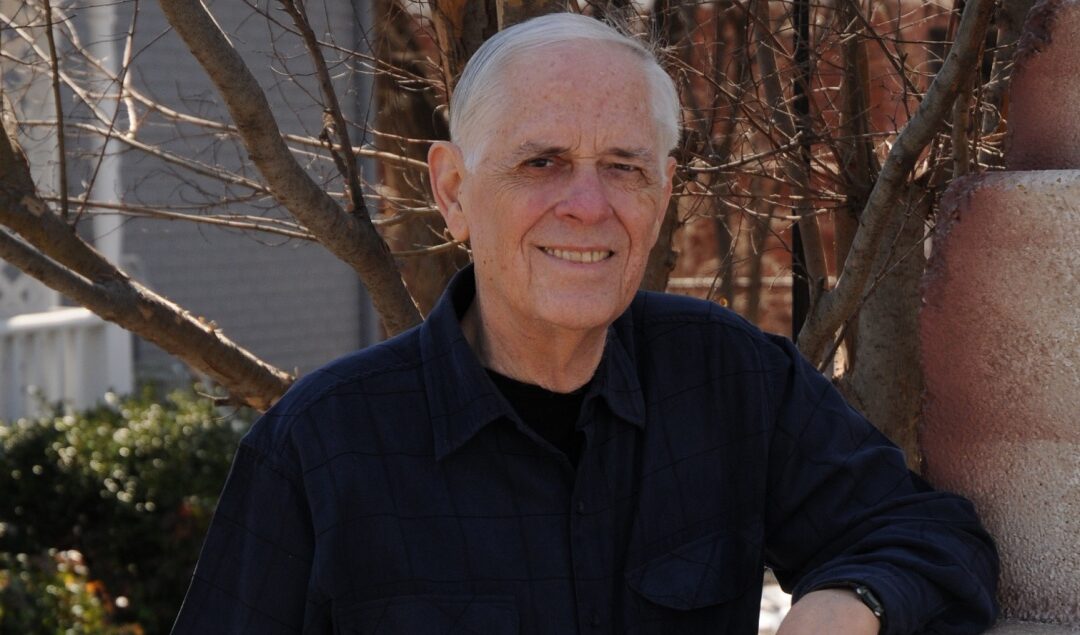
The Rev. Dr. Thomas C. Oden is professor of theology and ethics at the Theologica School and the Graduate School of Drew University in Madison, New Jersey. He is a clergy member of the Oklahoma Annual Conference. Photo: InterVarsity Press.
by Steve | Jan 16, 1988 | Archive - 1988
Archive: Bishops Back UMC Moral Standards
Responding to efforts by some groups to liberalize United Methodism’s stance against homosexuality, United Methodist bishops issued a statement in Lake Junaluska, North Carolina, November 19 calling for high moral standards.
During its semiannual sessions, the Council of Bishops also reminded church members that only the General Conference, not the general boards and agencies, speaks officially for the denomination.
Their “statement of concern” was prepared in response to a presidential address given early in the international body’s week-long meeting by Bishop Earl G. Hunt Jr., Lakeland, Florida. Bishop Hunt urged colleagues to lead the church in warfare against evil, beginning with racism and sexual immorality.
The church’s official stance on homosexuality as found in the 1984 Book of Discipline acknowledges that “homosexual persons, no less than heterosexual persons, are individuals of sacred worth, who need the ministry and guidance of the church” and that their civil rights should be ensured. However, the statement adds, “we do not condone the practice of homosexuality and consider this practice incompatible with Christian teaching.”
Other sections prohibit the use of United Methodist funds by “any ‘gay’ caucus or group” or “to promote the acceptance of homosexuality,” and ban the ordination or appointment of “self-avowed practicing homosexuals.”
The homosexual issue has heated up in recent weeks as official and unofficial groups within the denomination have announced proposals they will take to General Conference in St. Louis April 26-May 6. These include deletion of language condemning the practice of homosexuality and prohibiting ordination of homosexuals.
Noting “this very volatile and controversial issue facing our church and society,” the Council of Bishops called on all United Methodists to “join with us in being faithful to the standards, fidelity in marriage and celibacy in singleness, which have been adopted through the struggles of our covenant community of faith over the years.
“At the same time,” the bishops continued, “we call on United Methodists to exercise the utmost pastoral sensitivity and gracious understanding as we seek to maintain high moral standards and to discuss in a good spirit issues of human sexuality.”
In his address, Bishop Hunt said, “I believe the intercession of episcopal leadership on this issue is warranted because of the involvement of basic principles of historic Christian teaching. I also raise the matter in this setting because I believe the church’s response to serious overtures for radical change in our present positions rising from the proposals now being generated could affect substantively the unity of United Methodism in the next quadrennium.”
The bishop cautioned against compromise saying, “Our collegiality with friends and coworkers who favor a more liberal perspective on human sexuality has often made us reluctant to voice convictions which might offend them, and so we have risked becoming unintentional accomplices in the perpetration of a monstrous and fatal compromise.” He added, “Mere endorsement of ‘safe sex’ is an incalculably weak position to be assumed by a church dedicated to the promulgation of high moral principles and fundamental Christian values. Our worldwide community of Christian believers has a right to expect far more of us.”
He said a statement from the bishops is needed to assure the church that “we will never surrender to the pressures of articulate and persistent groups who propose to write a new chapter for Christian sexual ethics quite apart from the total impact of Scripture and ecclesiastical history … when those people represent only a small contingency in United Methodism.”
Calling for retention of language now in the Book of Discipline, Bishop Hunt said it provides balance between “clear, historic Christian principles and insistence upon all-embracing Christian pastoral compassion and love.”
Bishop Hunt said the potential for divisiveness around the issue of homosexuality is “monumental.”
“Methodism in the 1840s was ruptured by differing views about human slavery,” he said. “It could be that our church in the 1980s must decide if radically differing views on human sexuality will be allowed to rupture it again.”
On the second “evil,” Bishop Hunt called racism “the most disgraceful scandal in United Methodism.”
“The long trains of change seem to be lumbering to a halt in the North as well as the South,” he said. “The latent, inbred racism of my generation of whites … has begun to move in upon our moral exhaustion and bring once more the discouraging specter of satisfaction with the status quo.”
He called on the bishops to take the lead in arresting this “ominous development.” Battle lines within the church, he said, are open itinerancy (bishops’ appointment of pastors to churches regardless of race), ministerial recruitment and stronger clergy leadership in predominantly ethnic minority congregations.
Ethnic quotas in national and regional church organizations have taken leaders from local ministry to “more glamorous and often better-paid positions,” he said.
“Satisfying quotas at the expense of the very constituency such quotas were designed to protect is grotesquely self-defeating.”
In closing, Bishop Hunt said, “we bishops … must lead vigorously in converting or ‘turning around’ the mind of United Methodism to a fully Christian view on the issue of race and to a creative use of the principle of open itinerancy.
“Likewise we must not fear to try to sway the mind of the modern world toward a philosophy of human sexuality that will honor Scripture and civilized tradition as well as safeguard the integrity of the family and the health of the human race.”
About 90 bishops attended the meeting November 16-20. The council includes 46 active bishops in the United States, 15 from overseas, and about 50 retirees.
The council agreed to address the issue of acquired immune deficiency syndrome (AIDS) at its next meeting, saying, “increasingly, United Methodists will be exposed or touched in some way by the effects of this disease.”
The body also commended Soviet and U.S. leaders for their efforts to negotiate elimination of intermediate-range nuclear forces and to cut by 50 percent strategic nuclear weapons. The bishops designated December 6 as a special day of prayer across the church about these negotiations.
The council heard from several study commissions that will report to the 1988 General Conference. A full evening was given to a critique of a report from a commission charged with studying ministry.
The next meeting of the council will be held in Kansas City, Missouri, immediately preceding the General Conference in St. Louis.