by Steve | Mar 15, 2022 | March/April 2022
By Carolyn Moore
So much of what gets published these days regarding the state of Christianity paints a desperate picture. We’re led to believe that in our lifetimes, the Christian movement could well wither on the vine. And in our corner of the world, maybe. There is no question that the U.S. is transitioning into a post-Christian era, if by “post-Christian” we’re talking about regular church attendance and an agreed-upon set of core beliefs.
But that’s just America. Globally, Christianity is more than holding its own.
Let’s consider both the facts and the long-term trajectory. When Jesus was born, maybe half a dozen witnesses had some sense of his divinity. He began his public ministry as an adult with twelve people. Over the course of the four gospel accounts, we read that thousands were exposed in the next three years to the preaching and miracles of this early team. Not all who heard believed, but they did hear – and many followed. The resurrected Jesus appeared to more than 500 people before his ascension.
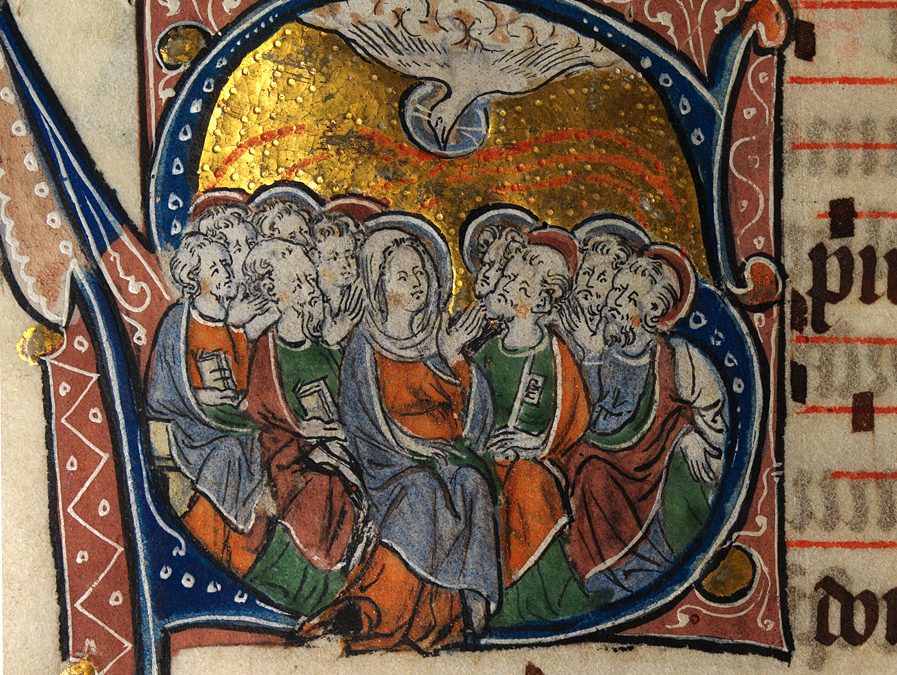
In the book of Acts, chapter two, after the resurrection and ascension of Jesus, we read about the first mass conversion of people to the way of Jesus. Three thousand people were converted in one day. This event set a faster pace for this new movement. After that, we read accounts of explosive growth in the known world. By the year 150 A.D. – roughly 120 years after that event we call Pentecost – there were an estimated 40,000 Christians in the world. Count 50 more years to 200 A.D., and that number had exploded to something like 250,000 believers. By the year 250 A.D., it was well over a million.
Philip Jenkins and Rodney Stark are the historians who did this math (see Stark’s 1996 book, The Rise of Christianity). A few years ago, Jenkins notes that it is stunning to think that within another 50 years (by 300 A.D.), “Christianity would be the dominant religion in the whole Roman Empire.”
To think that Caesar Augustus – when he called for that census that moved Mary and Joseph into position to birth a Messiah in Bethlehem – assumed he was just counting heads in the Roman empire! His count was actually a foretaste of the census to come, when this movement begun in a manger would begin to spread first through the known world and then eventually across the globe. Since the census of Caesar Augustus (which undoubtedly counted some of the first souls who in years to come would hear about the Kingdom of God from Jesus himself), an estimated 13 to 14 billion followers of Jesus have walked the earth.
Today, it is estimated that one in three humans walking the face of the earth are part of that count. That isn’t just folks who have heard the name of Jesus, but folks who are following him. One in three people call themselves followers of Jesus!
Which leads me to conclude that while Caesar Augustus was counting heads in the Roman empire (and unwittingly moving God’s agents into place), God was moving heaven and earth – for you.
Let that fact sink in when you are tempted to believe that you don’t matter, that your life has no purpose or is too overwhelming, or that God doesn’t care. Don’t fall for that lie.
The same God who moved heaven and earth to create the story of His Messiah stands ready today to move mountains for you. And that same God is perfectly capable of seeing this global movement called Christianity all the way through, until one day every tongue confesses that Jesus Christ is Lord, to the glory of God the Father.
Carolyn Moore is the founding and lead pastor of Mosaic Church in Evans, Georgia. She is the chair of the Wesleyan Covenant Association Council. Dr. Moore is the author of many books including Supernatural: Experiencing the Power of God’s Kingdom. She blogs at artofholiness.com. Reprinted from her blog by permission.
by Steve | Mar 15, 2022 | Front Page News
By Joseph F. DiPaolo
A famous phrase was born in 1887, when the British historian known as Lord Acton (1834-1902), wrote a series of letters to Anglican Bishop Mandell Creighton about the problem of writing the history of the medieval church and its abuses, such as the Inquisition:
I cannot accept your canon that we are to judge Pope and King unlike other men, with a favourable presumption that they did no wrong. If there is any presumption, it is the other way against holders of power, increasing as the power increases … Power tends to corrupt and absolute power corrupts absolutely … There is no worse heresy than that the office sanctifies the holder of it.
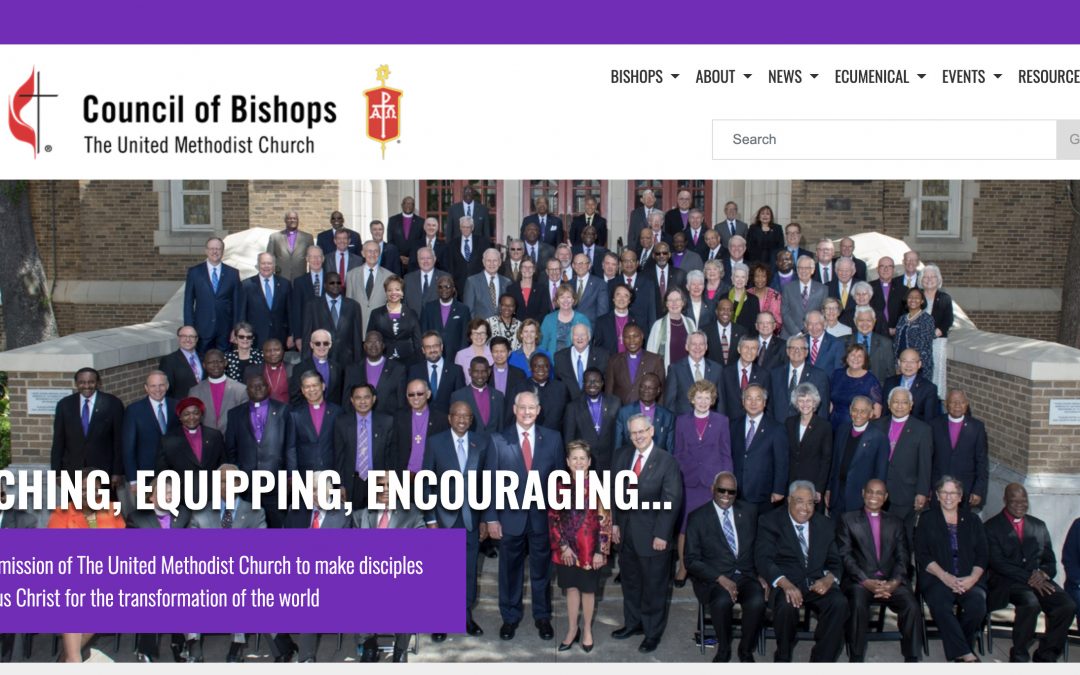
I fear that we are seeing the dangers of unchecked power now beginning to play out among some bishops of The United Methodist Church.
In a previous article, I outlined what I believe to be insincere efforts to hold General Conference and the flawed process the Commission on the General Conference used to decide to postpone it. In this article, I want to widen our view to the potential institutional fallout of that decision.
With the recent decision that no General Conference will meet until 2024 – five years after the special session of 2019 and a full eight years after its last full session in 2016 – a power void has been created, into which many of our bishops are now stepping.
Our polity is clear: General Conference is the governing body of the UM Church, not the Council of Bishops. General Conference alone determines the content of the Book of Discipline and makes policy for the whole denomination. Bishops are supposed to implement those policies.
Now, however, with no General Conference, critical decisions cannot be made about all the challenges before the UM Church, including theological division, separation and restructuring plans, questions of discipline and accountability, approval of agency budgets and personnel changes, and more. So, by default, bishops are now beginning to step into roles they were never intended to have, effectively wresting control of the governance of The United Methodist Church away from the General Conference.
How will this play out? We already see it happening. Be wary and prepare to ask questions if some bishops:
- Increasingly use talking points about how our system of governance is not working, and that pressing matters require them to act in unprecedented ways.
- “Interpret” critical passages of the Discipline – like Paragraphs 2548.2 and 2553 – in ways that depend on their regional context, or disallow disaffiliation under these paragraphs entirely, to maximize their control and thwart the aspirations of traditionalist congregations.
- Increasingly ignore those provisions of the Discipline with which they disagree or that are inconvenient for the bishop’s agenda.
- Call for jurisdictional conferences to be held – despite the fact that the Discipline arguably does not allow for that without General Conference meeting first – so they can pack the Council of Bishops with more progressives and displace conservatives.
- Contend that the 2024 General Conference is actually the postponed 2020 General Conference. Whatever their stated reasons for this, the real reason may be to retain a higher proportion of progressive delegates from the US vis-a-vis international delegates. That is because delegate elections for 2020 were based on 2016 membership figures. Delegate elections for 2024 would be based on 2020 membership figures, which will surely result in a lower proportion of US delegates after four more years of US membership decline and African church growth. (Judicial Council will eventually decide this question.)
There is now little or no way to hold bishops accountable or prevent them from enacting whatever policies they personally deem best. As some have said, we have moved into a diocesan model for bishops, where each bishop is a law unto themselves. Some bishops will continue to ignore parts of the Disciplinethey don’t like, while insisting on the letter of the law for those of us who want an amicable separation. Some will increasingly use their power in tyrannical ways to hold on to as much money and property as they possibly can for the institutional preservation of their annual conferences.
Some bishops are counting on traditionalist United Methodists throwing up their hands and walking away. Many undoubtedly will, especially in larger and wealthier churches that can raise the high price of using the disaffiliation clause (which, by the way, expires at the end of 2023, now that there will be no General Conference in 2022 that could have extended it). Without the Protocol, many traditionalist churches and pastors will find it much more difficult to leave with their property.
In fairness, bishops should use the congregational transfer available in ¶ 2548.2 and implement the principles of the Protocol for congregations choosing to move into the Global Methodist Church. Bishops seeking to provide an amicable resolution to our theological divide have a ready-made avenue in the Discipline that does not expire and does not require onerous financial terms. Several bishops have publicly stated that they want to help churches arrive at the destination where they need to be, honoring their consciences and theological commitments. Bishops have the choice to take this path of peace, rather than escalating the conflict and trying to coerce churches into remaining United Methodist against their will by imposing punitive requirements.
Lord Action’s assertion that power corrupts remains as true today as ever, as does his observation that the mere holding of a sacred office – like that of bishop – does not sanctify its holders, or immunize them from acting in authoritarian ways.
Time will tell how some bishops’ power grab will play out among United Methodists.
|
|
Joseph F. DiPaolo is Lead Pastor at Lancaster First United Methodist Church in Lancaster, Pennsylvania. He is also a member of the Wesleyan Covenant Association’s Global Council and a former member of the Commission on the General Conference.
|
|

by Steve | Mar 15, 2022 | March/April 2022
By Angela Pleasants
I am an avid hiker. My passion for hiking began in high school when my advanced biology class explored the Great Smoky Mountains to examine various species of lichen, mushrooms, and insects. The greatest joy on a hike is looking at the wonders of God’s creation. When I find rare plants, majestic landscapes, and cascading waterfalls, I think only God can create such a masterpiece.
Recently, I was on one of my hiking adventures on an uncharted trail. It was not one of the National Parks. It was unexplored woods. It was one of those places you will not find on any Global Positioning System (GPS).
I was so caught up with looking at the beauty around me I neglected to notice I had wandered deep into the woods. My hiking shirt says, “All who wander are not lost.” Well, I was lost. I looked at my phone, and I had no signal because I was so far into the woods.
Soon the beauty that surrounded me became dark and foreboding. What was the difference? I was in the same wooded area that once was beautiful and light, but now it seemed dark and cold.
The difference in my perception came from the unknown. I was in unfamiliar territory with no tracking device to find my way out of the woods. In the beginning, panic set in, and I felt the shock waves throughout my body. Questions emerged in my mind, “No one knows where I am, what if I run across a wild animal? What if darkness sets in before I find my way out?” I had a lot of “what if” questions with no answers.
What happens when we are confronted with challenges where we don’t have all the answers? What do we do when we are in our wilderness and don’t see a clear path out?
I had to step back and assess my situation. Instead of reacting to the rising panic, I calmed my breathing and focused on what I knew.
A friend gifted me with a portable mini compass for hiking which I always take on my adventures. When I was finally calm, I remembered I had the compass with me. Once I was thinking rationally, I began to use my wilderness skills and followed nature’s guidance. I know moss grows most abundantly on the north side of trees. So, with my compass and signals from nature, I determined my direction and ended up safely out of the woods.
Instead of seeing challenges as obstacles that cause anxiety, how can we view challenges as opportunities for innovation? How can we navigate successfully through the vicissitudes of life?
“Remember not the former things, nor consider the things of old. Behold, I am doing a new thing; now it springs forth, do you not perceive it? I will make a way in the wilderness and rivers in the desert” (Isaiah 43.18-19).
I’m not too fond of surprises. I want to know what will happen before it happens. Sometimes we are like that with life. We want all the answers before we make decisions. Therefore, if something worked in the past, we cling to it while fearful of an unknown future. Even if what we are clinging to no longer works effectively, we still know what we have instead of the unknown before us.
In the Isaiah passage, we are reminded of the work God did in the past through Israel’s exodus from Egypt. We are also reminded not to enshrine God’s methods. God will also act in new ways.
Through our challenges, God can strengthen our faith when we release our grip on needing to be in control of the outcome. Instead, we can stretch our vision to trust in the God who makes a way in the wilderness and rivers in the desert. Notice, God did not remove the wilderness or the desert, but he did make a way in the wilderness and desert.
Sometimes our greatest wilderness is fear and anxiety that can cripple our faith and hinder our creative innovations. We cannot be so consumed in panic and fear that we miss the power of God operating in our wilderness experience.
So how do we respond? When I was lost in the woods, I could not give in to panic. I had to assess what I knew. I put years into study and application about hiking and wilderness experiences. I have a friend who is an environmentalist and experienced hiker; I have hiked alongside him and learned great lessons. When I was lost, the one thing necessary was to draw upon the lessons I learned and my experience as a hiker.
In our Christian journey, where we encounter challenges and obstacles, we should never forget the one thing necessary. “But one thing is necessary. Mary has chosen the good portion, which will not be taken away from her” (Luke 10.42).
How often do we spend so much time worrying about our challenges, others, or decisions? Martha was busy doing valuable work, but she became consumed with her work and the affairs of Mary. She tried to draw Jesus into her complaint against Mary. Instead of Jesus giving room for Martha’s complaint to grow, he honored Mary’s choice. Busyness will often be a part of our life. But we cannot neglect our time of sitting before Jesus in prayer and studying scripture.
How else do we respond to challenges? Before Jesus ascended, the disciples came to him because they had unanswered questions. They wanted to know when the kingdom would be restored to Israel. In Jesus’ response, he does not answer their specific question. Jesus gives the answer that mattered for the work they would begin.
The disciples were focused on an earthly kingdom, but Jesus directed them toward a heavenly kingdom. Jesus replied, “It is not for you to know times or seasons that the Father has fixed by his own authority. But you will receive power when the Holy Spirit has come upon you, and you will be my witnesses in Jerusalem and in all Judea and Samaria, and to the end of the earth” (Acts 1.7-8).
As I used my compass to navigate the woods, it became my guiding light. When we are in our wilderness journey in life, the Holy Spirit will direct our every path. It is the power of the Holy Spirit that is necessary for the Christian life and ministry.
When the Holy Spirit filled the disciples, they stood before a diverse group of people. It may have seemed like a challenge to speak before people who were diverse in their culture and language. But empowered by the Holy Spirit, they began to preach, and the people understood in their language. As a result of the Holy Spirit that empowered Peter, three thousand souls were saved.
When I entered the woods, there was no trail. But I could not become consumed with the “what if” questions that provided no definitive answers. The only way out of my wilderness was to remember and trust what I learned through my experiences. Likewise, God makes a way in our wilderness and provides water in our deserts. So, let us trust his provisions, stretch forth our faith, and receive the new thing God is doing among us.
Angela Pleasants is a United Methodist clergyperson and the Wesleyan Covenant Association’s Vice President for Clergy and Church Relations. She is based in Charlotte, North Carolina. This article first appeared WCA’s Outlook and is reprinted here by permission.

by Steve | Mar 15, 2022 | May-June 2022
By Shannon Vowell
I like to use Google maps on my phone.
I type in the address of where I need to go, and, presto! A map appears right there in the palm of my hand, along with step-by-step instructions for getting from where I am to where I want to be. I can even press a button to translate those instructions into spoken directions, so that I can drive while my phone tells me what to do next.
My children are not nearly as bedazzled as I am by this technology. They have grown up with it, and find it almost incomprehensible that when I was their age I wrote down directions on a piece of paper and/or used a folding map to get from point A to point B. And that I did this (and everything else in life) without use of a phone – unless I stopped and used a “payphone” (like in the old Superman movies).
My husband can’t use Google maps like I do. That’s because he has disabled the automatic location function on his phone. A former military officer, he is not comfortable with apps tracing his every move, and being “off grid” is, to him, worth the trouble of needing to stop for directions occasionally. Notice that his phone is useless for finding his way because Google maps (or any digital direction service) only works if the phone’s location can be pinpointed as a starting point.
In that respect, navigation hasn’t changed from the paper map days. You have to know your beginning point before you can accurately figure your trajectory. That’s true whether you’re punching an address into a phone or looking for a dot on a paper map. Knowing where you want to go is only half the equation. You have to know where you’re starting from, too. And no matter how you figure the navigation, the only place you can begin from is where you are.
Maps and the Maker. Scripture tells us that we are, in our deepest and most eternally stable core, creations of the Creator – made in the image of the One True God. Scripture describes God making us, breathing life into us, calling us “very good,” giving us work and purpose, as well as form. We were made by God. And we were also made like God – in God’s image.
Therefore, we cannot know ourselves unless we know the One in whose image we are made. And we cannot figure out either where we are or where we’re wanting to go until we have a basic grasp of whose we are, for two reasons.
First, because God’s is the only Way that reliably meets us right here (wherever “here” may be).
Second, because God’s Way is also the only route that reliably takes us home to Heaven by way of fulfillment, purpose, and peace.
Therefore, pinpointing our present location on the map of our lives – as well as charting the course of our new beginning – must commence with a review of the One True God.
Mapping for Accuracy. When I was a new Christian, I was confused by people who talked about God as if he had a split personality. The “angry God” of the Old Testament was someone distinct from “gentle Jesus, meek and mild,” some insisted. They rejected the former as a harsh, condemning Angry Man, and embraced the latter as a kind of Embodiment of Universal Affirmation. Old Testament God: Bad; New Testament God: Good.
Say, what?!
During my husband’s years as a Naval Flight Officer, he navigated planes’ routes based on fixed points outside the plane. Sometimes those points were geographic elements – a mountain, a bridge, a light house. Over open ocean, those points were stars. Accurate calculations for a flight path depended on these fixed points.
The quickest way to get off track was to “buy a bad fix” – to calculate based on wrong information regarding those fixed points. Buy a bad fix, and there’s no way to arrive at your destination.
When we think of God as a splintered, schizophrenic character, we are buying a bad fix. We can’t possibly navigate accurately based on bad data about God.
Further, misunderstandings in this category create all kinds of traps for us. Denying the truth of God’s identity as revealed in Scripture sets us up to trip over everything else. Careful reading corrects us. When we read carefully, we find there is no “good cop/bad cop” paradigm in the person of God. Rather, there is seamless wholeness and holiness, manifested across the eons.
God is “One” and every person of the Godhead is present in every action. Over the next few issues of Good News, I will look at Father, Son, and Holy Spirit, to better understand this incredible Triune Lord in whose image we were made.
In this issue, we begin with Abba. Why? As modern people, we often have serious “authority issues.” We have learned to question rules and rule-makers, because they have proven themselves untrustworthy. To receive the peace our Heavenly Father has in mind for us, we need to surrender to the perfect Sovereign who made us and loves us. He is wise and wonderful and faithful forever!
God’s consistent goodness has to be the fixed point from which we calculate our flight path, or we will arrive at inhospitable places ad infinitum.
Compass Corrective. Jesus called God, the Father, ‘‘Abba.” Roughly translated into modern English, Abba means “Daddy.” The Son’s words and works reveal the Father in all his multi-faceted glory: infinite strength alongside infinite tenderness motivated by infinite love.
But it’s important to acknowledge a common navigational error at this point: mistaking our Father in Heaven for a large-scale version of our own fathers. At their best, earthly fathers point us to God through their love, their strength, their protective instincts, and their faithfulness as providers. But sometimes our experience of earthly fathers renders ludicrous the idea of a Good Father in Heaven.
Being abandoned by an earthly father makes one suspicious of the supposed faithfulness of God. Being abused by an earthly father makes one suspicious of God’s purported kindness. Watching an earthly father repeatedly make stupid mistakes or fall victim to addiction makes one skeptical of the very notions of wisdom and purity – and therefore unable to accept that God is both perfectly wise and perfectly holy.
Sadly, some of us hear “Father” and instinctively flinch – or run.
If your experience of earthly fatherhood has left you wounded and cynical, I encourage you to resist the urge to assume God the Father is just like your dad.
God’s version of paternity is flawless and faithful. And God persists in patiently seeking the healing and welfare of all of His children – including you.
Sharon Vowell is a writer, teachers, musician, and mom. She is a frequent contributor to Good News. This is the first of three installments on the Trinity from her new workbook, Beginning … Again: Discovering and Delighting in God’s Plan for Your Future available on Amazon.
by Steve | Mar 15, 2022 | March/April 2022
By James R. Thobaben
In 1864, as the American Civil War turned toward its inevitable (and proper) conclusion, Methodists in North Carolina published The Southern Zion’s Songster. Included in the work, albeit uncredited, was “I’m a Pilgrim and I’m a Stranger,” a poem written by Mary S. B. Dana Shindler and composed in the midst of war, as well as her own significant personal tragedies. Perhaps she was influenced by Methodist Mary Hamlin Maxwell’s 1849, and similarly named hymn, “I’m a Pilgrim and a Stranger.”
With slightly different words, but quite common sentiments, the two women drew from pilgrim imagery to describe their own revivalist spirituality. They were not alone. Highly influential 19th century hymnals, such as The Sacred Harp and The Southern Harmony, are filled with songs of pilgrimage. Life is a journey, and an uncertain one at that. Yet, it is not random, nor a matter of achieving a self-constructed purpose: there is an end, a telos, that draws one through a process toward a goal.
The song “I am a Pilgrim” – as it is generally known today – is a mixture of lyrics from the work of those two women and anonymous contributors along the way. It has been sung as an African-American gospel song (perhaps most wonderfully performed by the Soul Stirrers in 1965), as a Bluegrass / Appalachian music standard (memorably, by Doc Watson, drawing on the shapenote tradition), and by innumerable small country and inner-city church congregations.
But why? Why sing songs of pilgrimage? Why use the imagery? Did not Protestants give up on ‘pilgrimage’ as a spiritual discipline? Both the Anglican and Methodist Articles of Religion include a rejection of “Purgatory, Pardons, Worshipping and Adoration … of Images as of Relics, and also Invocation of Saints, [with any such action being but a] fond thing, vainly invented…”
The Protestant Reformers questioned the value of physical pilgrimage, with more than a few condemning the practice. They were picking up on suspicions that had begun to appear several centuries earlier, in the late Middle Ages. Some had been arguing that pilgrimages simply provided an opportunity for sin, as Geoffrey Chaucer described throughout Canterbury Tales. Others asserted they were spiritually insufficient – not worth the trouble – as seems to be the argument in William Langland’s Piers Plowman.
Looking back, it may be that a turning point was reached when pilgrimages to sites associated with Christ in Israel and places where martyrs had been killed or buried (such as Saint Paul’s Outside the Walls in Rome) were forced just prior to 1100 AD to compete with new sites associated with the Virgin (e.g. Walsingham in England, 1061 AD) and, then, eventually those places with “remaining relics of heaven” (e.g. remnants of the body of Jesus, like his umbilical cord, and pieces of the eucharistic bread, such as at Wilsnack in Germany, 1383 AD).
The proto-Protestants (that is, reformers before the Reformation) began openly challenging the value of such journeys. The true pilgrimage, they strongly argued, is the sojourn of the soul toward heaven. Therefore, physical pilgrimage is, at best, a distraction and, at worst, a corruption.
• For instance, around 1400 AD, reportedly Master William Thorpe told the Archbishop of Canterbury, “I call them true pilgrims travelling towards the bliss of heaven.” These will not “waste God’s goods in the vain pilgrimages, spending their goods upon vicious hostelars…”
• Similarly, church reformer Jan Hus condemned the Wilsnack pilgrimage site and comparables in no uncertain terms; it was one factor leading to his martyrdom. In 1403, he proclaimed: “True Christians should rather remember Christ’s words spoken to the doubting Thomas: ‘Blessed are they that have not seen, and yet have believed.’ Instead of running after false miracles they should turn to the resurrected Christ who is existent in the Holy Sacrament…”
Rejection of physical pilgrimage was all but required during the Reformation. For instance, the site of Archbishop Thomas Becket’s death in Canterbury likely had in excess of 100,000 visitors annually before the shrine was destroyed in 1538. The site of the supposedly inflammable, blood-stained eucharistic wafers at Wilsnack had drawn its own huge crowds, but suddenly closed down when a reforming priest demonstrated they would burn after all in 1558.
Within 50 years of Luther, the “de-physicalizing” of pilgrimage was generally accepted in Protestant regions. By the time Bunyan released The Pilgrim’s Progress in 1678, the single most important devotional work written in the English language, few English-speaking Protestants would have considered the behavior anything but blasphemous.
Does not “earning grace by a work-of-walking” create a sort of spiritual elitism? Yes. Does not required adoration of an object deny the ever-presence of God? Yes. When taken to an extreme, does it not seem more magical than spiritual? Indeed, yes. Could any earthly object or place act as an intermediary when God is directly accessible? No. And, hence the Anglicans and Methodists included that above cited article of religion. Reform was necessary.
Still, as tends to happen, there was an overcorrection. Might not physical pilgrimage, properly conducted, be an instrument, a tool, a means of grace? Yes, it might. Analogically, even if the sacramental bread and wine is not “transubstantiated” into actual body and blood, is it not still the “real Presence”? Yes, it is. Can it not serve instrumentally as what is called a “means of grace”? It can. So, too, can physical pilgrimage.
It certainly seems that humans find instrumental spiritual value in journeying. Sometimes it is to a local church for prayer, sitting in the same pew one has used for years. Sometimes it is proclaiming the Gospel from the top of one’s own father’s grave, as John Wesley did when he returned to his home church in 1742. Sometimes it is journeying to early Methodist sites in Britain in what is called a “Wesleyan pilgrimage.” And, sometimes it is something almost identical to a practice of the Middle Ages, such as a journey to Jerusalem to walk in the steps of Jesus Christ on the Via Dolorosa.
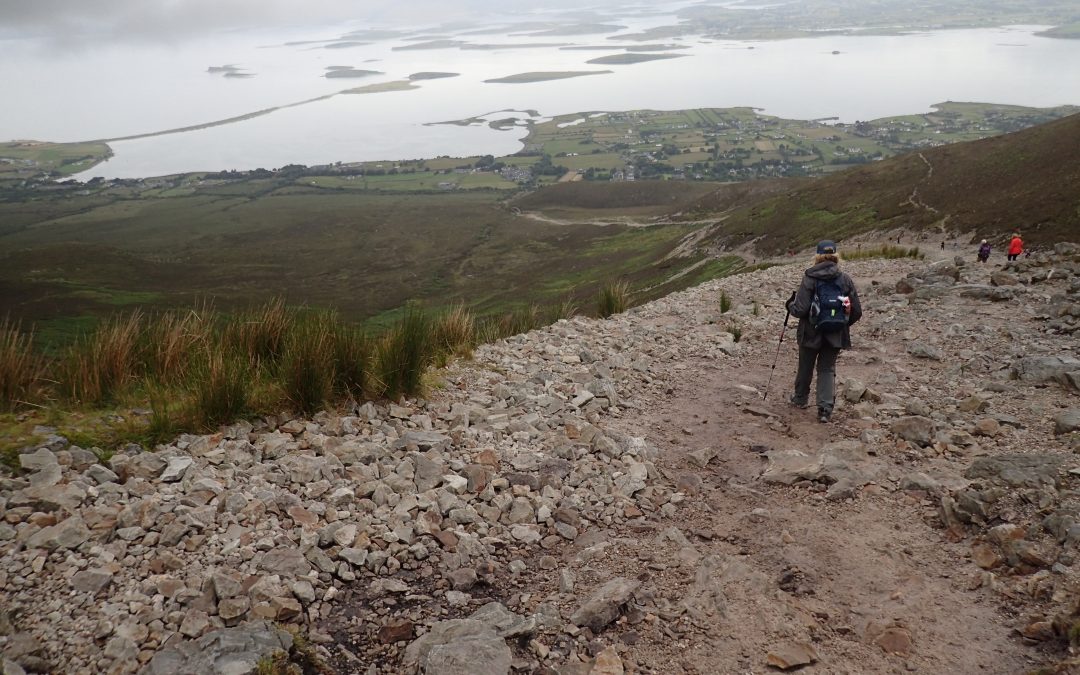
Some 20 years ago, while coincidentally (or providentially) re-reading John Bunyan’s A Pilgrim’s Progress (1678) and using William Langland’s 14th century poem in a course I teach, I decided I really should walk a pilgrimage route. I chose the Camino de Santiago in Spain. Since then I have walked the Camino a second time (along a different route). In Ireland, I trudged up and down Crough Patrick and fasted three days and stayed awake through the night on the island of Lough Derg. My pilgrimage experience has included walking up a dusty road (with cars driving too fast) to reach Chimayo, New Mexico. In England, I’ve journeyed from Rochester to Canterbury (along the path walked by Chaucer’s pilgrims) and waded the tidal pool to Lindisfarne. Mostly out of academic interest, I’ve walked from just north of Berlin to Wilsnack. I am scheduled to go to Israel this summer, and some day – God willing – hope to visit Ethiopia, Armenia, and maybe Rome.
What have I gained? Nothing I might not have obtained through another means of grace. That, though, is true about all the spiritual instruments we use – none are necessary, for Christ alone saves. Walking toward a Christian destination, then, can be a means of grace, but is never a garnering of “spiritual credit” nor proof of spiritual heroism. Rather, physical pilgrimage makes known to us at the deepest level, that our true selves are not disembodied spirits (even in heaven according to I John) and that our Lord assumed this same corporeality.
Physicality matters spiritually. We all recognize that in a hospital room or at the quickening of a baby or when we see cruel injustice. Similarly, the palpable nature of physical pilgrimage reminds one with every step of the tangible nature of the Incarnation and of our journey to be like Him. Pilgrimage is just a tool for focusing one’s mind and will on what the heart should be, but it is a useful tool.
Here, then, are my five suggestions for Protestants interested in using this means of grace:
• The pilgrimage routes one chooses should be focused on Jesus Christ, the Incarnate God. Christian pilgrimage is not a trip to an interesting place, though it may be interesting to take the trip. The final purpose is not exercise, weight loss, seeing new places, wondering at beautiful art or architecture, or enjoying nature – it is Christ. Those other things may and will happen, but only properly if Christ is the focus – ideally of each step, but at least of the last few as the end is reached.
• A pilgrimage should be costly, but reasonably so. It may or may not cost money, but it must cost time and effort. This is not tourism. It is a spiritual discipline. Select a journey that is manageable, but requires effort – significant enough that one moves through discomfort to the recognition of both the cost of discipleship and the joy of walking with Christ toward heaven. By the way, this requires a balance of “means of grace,” so one should commit to the same cost in effort and money for “works of mercy” – some significant service to others – upon return.
• Follow a route that has a history – going where others have gone to worship our Lord. Even if their theology was not always perfect, it is essential to recognize and be part of the community of faith through time and space. Acknowledge one walks in the company of the cloud of witnesses, and seek out places where people knelt, where they gathered, where they stayed.
• The best way to keep that disciplinary focus is to simultaneously use other disciplines – especially, daily Scripture reading and focused prayer (remember, intentionally, those you meet who need Christ and those at home who miss you). Multiple times through the day, journal both as a diary of travel and as a record of spiritual struggle and of the felt presence of the Lord. Take communion. Serve others along the way. Be intentionally polite in accepting the gift of hospitality.
• And, enter into mutual accountability. Recognize that you, as a pilgrim, need the earthy community of saints. Seriously consider whose company you keep while walking. The criticisms in the late Middle Ages still have some validity – too many walking near you recognize they have a spiritual need, but are too ready to seek gratification in pleasures that are not true joy, but worldly and fleeting. Still, you will certainly have the opportunity to tell some confused and lost seekers why you walk and, thereby, speak the Good News. And, you thankfully will meet faithful others on the Way (just as did the character “Christian” in The Pilgrim’s Progress).
One final suggestion: do not listen to people who say “all that matters is the journey.” That simply is not true. You must want to “get there.” That is true about the physical peregrination and true about life’s sojourn to heaven. If this, or any supposed “means of grace” does not further your journey with Jesus Christ toward the goal of the kingdom of God, then abandon it and use something else.
As that old revival hymn “I am a Pilgrim” says, “rough and thorny is the road … but it leads to God.” While that song refers to the pilgrimage to heaven, physical pilgrimage is a foreshadowing that can be a useful tool toward reaching the goal of the upward calling, but it is nothing more.
James Thobaben is the Dean of the School of Theology and professor of Bioethics and Social Ethics at Asbury Theological Seminary in Wilmore, Kentucky. He is author of Healthcare Ethics: A Comprehensive Christian Resource. In addition to his work at the seminary, Dr. Thobaben is co-pastor at Mt. Zion United Methodist Church in Mercer County, Kentucky.