by Steve | Oct 11, 2010 | Magazine Articles
By Rob Renfroe
Good News unequivocally affirms the United Methodist position regarding marriage as stated in The Book of Discipline: “We support laws in civil society that define marriage as the union of one man and one woman.” As Christians, we United Methodists believe that marriage was one of God’s good gifts given to humanity—not just to the Church, but to all persons. Consequently, we are concerned how marriage is defined not just in the Church but in civil society, as well. And our General Conference has wisely defined marriage, religious and civil, in line with the historic Christian understanding that is founded upon the Scriptures.
As the issue of gay marriage was being debated at the General Conference in Pittsburgh, one African delegate made the statement: “When your ancestors brought the Gospel to us, you told us that godly men had only one wife because marriage was one man and one woman. And now some of you are telling us that marriage is one man and one man or one woman and one woman. Did you lie to us when you brought us the Gospel? Did God lie to us? Did God change his mind?”
Even after the recent decision regarding Proposition 8, the United Methodist answer is: No, God has not changed his mind. Marriage is still one man and one woman.
We look forward to our Episcopal leaders in California, where the recent decision was rendered, fulfilling their office by defending and promoting our UM position regarding marriage. As always, we count on our leaders to be compassionate as they speak the truth, but we do expect them to speak the truth.
By Rob Renfroe, President and Publisher of Good News.
by Steve | Oct 11, 2010 | Magazine Articles
By Heather Hahn
A federal court’s rejection of California’s same-sex marriage ban is receiving condemnation and praise from United Methodists.
One thing both sides agree on: The ruling only adds to the longtime debate on how the church ministers to gays and lesbians.
“It certainly won’t mitigate the tension,” said the Rev. Norman Carter, a retired Arkansas pastor and member of the Confessing Movement, an unofficial United Methodist group that views homosexual acts as contrary to Scripture and Christian tradition. “I think it will just perpetuate the battle.”
The Rev. Karen Oliveto, likewise, expects homosexuality will once again be a topic of contention at the next quadrennial meeting of General Conference, the denomination’s top legislative body, in 2012. She serves on the board of directors of the Reconciling Ministries Network, an unofficial United Methodist group that advocates for full inclusion of gays and lesbians in church life.
“As a church, I think we’re going to continue to struggle with this issue,” said Oliveto, pastor of Glide Memorial United Methodist Church in San Francisco. “I know every four years, people say, ‘Why does this issue keep coming up?’ … The reason why the issue keeps coming up is that gays and lesbians are in our pews.”
Civil vs. religious. Vaughn R. Walker, chief judge of the Federal District Court in San Francisco, struck down Proposition 8 as unconstitutional. Proposition 8, also known as the California Marriage Protection Act, passed in November 2008, with 52 percent of the state’s vote.
He put a temporary stay on the August 4 ruling, which means the state of California cannot start issuing marriage licenses immediately. Appeals of Walker’s ruling are expected—perhaps all the way to the U.S. Supreme Court.
In his 136-page decision, Walker differentiated between the concerns of religious groups and civil society.
Marriage in the United States, he wrote, has always been a civil matter. Granting gays and lesbians the right to legally marry does not require religious bodies to change their policies with regard to same-sex couples or require religious officiants to solemnize such a union, he said.
“A private moral view that same-sex couples are inferior to opposite-sex couples is not a proper basis for legislation,” Walker wrote, spelling out that decision in all capital letters.
Religious debate. The debate within the United Methodist Church is a different matter. For United Methodists on both sides, marriage is not just up to the government but a part of God’s plan.
The Book of Discipline, the denomination’s law book, affirms “the sanctity of the marriage covenant that is expressed in love, mutual support, personal commitment, and shared fidelity between a man and a woman.”
Linda Bales Todd, an executive with the United Methodist Board of Church and Society, pointed out that the denomination does have “a very clear statement” in its Social Principles supporting “certain basic human rights and civil liberties” for all people, regardless of sexual orientation.
However, the United Methodist Church opposes same-sex unions and forbids its pastors from performing such ceremonies or allowing them to take place in United Methodist churches. The church’s Book of Discipline states that the practice of homosexuality is “incompatible with Christian teaching.”
“In terms of marriage, we’re very firm on it just being between a man and a woman,” she said.
Teaching church ethics. United Methodists on both sides of the issue agree the church’s stance should not depend on the mood of the country.
“The church has to find a way to retain our commitments no matter what the culture is saying,” said the Rev. Maxie Dunnam, retired chancellor of Asbury Theological Seminary in Wilmore, Kentucky, and a founder of the Confessing Movement.
He believes that a reason more young people support gay marriage is that “the church has not been faithful in teaching what we believe and what our positions are.”
The Rev. Thompson Murray, pastor of Quapaw Quarter United Methodist Church in Little Rock, Arkansas, and a supporter of same-sex marriage, agrees that the church needs to talk about relationships.
“I feel so clearly the church should be in the business of encouraging faithful, healthy relationships—not just traditional relationships,” he said.
Still, the legalization of same-sex marriage in various jurisdictions including Connecticut, Iowa, Massachusetts, New Hampshire, Vermont, and Washington, D.C., has complicated the issue for church leaders.
If California again joins that number, the Rev. Glen Raley, pastor of the United Methodist Church of Los Banos, California, fears he will face increasing pressure to officiate at unions he sees as a clear violation of Scripture and church teachings.
“We need to get back to the authority of Scripture,” he said. “We need to get back to the idea that our Discipline is not just something written frivolously. It’s something to adhere to. It gives us a stand.”
The Rev. Kathy Cooper-Ledesma, pastor of Hollywood (California) United Methodist Church, said a congregation member dropped by the church nearly in tears after the Aug. 4 ruling. The man and his partner of 26 years had been married civilly in 2008 and he was overjoyed to see Proposition 8 overturned.
Cooper-Ledesma wants to uphold her ordination vows to follow the Book of Discipline, but she admits that it’s a struggle.
“There is pain and injustice to say to a couple that I can baptize them, offer them communion, bless their home, baptize and confirm their children, and officiate at their funerals … but cannot marry them because they are of the same gender,” she said.
The subject of same-sex unions has surfaced every four years at the United Methodist Church’s General Conference gathering. Delegates have consistently voted not to change the Book of Discipline.
Heather Hahn is a United Methodist News Service multimedia reporter. Linda Bloom contributed to this report.
by Steve | Oct 11, 2010 | Magazine Articles
Lively, vital churches come in all sizes, locations, and settings says a new study commissioned by the United Methodist Church, but they consistently share some common factors that work together to influence congregational vitality. That means what works to make those churches energetic and growing can likely work for other churches too.
Dynamic churches with high attendance, growth, and engagement tend to have inspirational topical preaching, lots of small groups including programs for children and youth, and a mix of both traditional and contemporary worship services, including contemporary music and multimedia in contemporary services. Other factors include effective lay leaders, rotating lay leadership, pastors who work at developing and mentoring lay leaders, and length of pastoral appointment.
An essential finding of the research was that it’s the combination of factors that contribute to vitality, rather than any one or two.
“We’ve taken a data-driven approach to identify what works for thriving congregations large and small, both rural and urban, all over the U.S.,” said Bishop Gregory V. Palmer, chair of the denominational Call to Action committee that engaged the global consulting firm Towers Watson to conduct the study. “While there’s no silver bullet, we believe these findings can lead to vitality for many more congregations.”
“Lively churches offer more than one style of worship. They work hard to make preaching interesting and relevant. They encourage more lay members to take on leadership roles. They start small groups and keep them going,” Palmer said. “If more churches do these things, we believe we will see measurable positive results over time.”
Robust and comprehensive research on data from various sources using proven data collection and analysis techniques was conducted in order to gain highly statistically reliable information about the cluster of factors that lead to congregations being more vital as evidenced by selected vitality indicators.
The process included interviews with stakeholders across the United Methodist Church, group meetings, and surveys targeted at different stakeholder groups. In addition, data on attendance, growth, and engagement from over 32,000 United Methodist churches in North America was analyzed.
The second body of research was a system-wide operational assessment of the connectional church which looked at how the denomination is currently using people, money, and processes at the district, annual conference, and general church levels.
The report concludes that the church is “confronting a ‘creeping crisis of relevancy’ of both internal and external origin” and “although the crisis is being influenced by financial duress, it is not foremost a financial crisis.”
The study indicated some key areas where improvement is needed including:
• More clarity and understanding about the denomination’s mission, culture, and values
• Less perceived organizational “distance” between and among the foundational units of the church
• Better defined leadership roles, responsibilities, and accountability; and improvements in trust
• More standardized management processes and reporting systems
• Utilizing opportunities for improved affordability and effectiveness.
“It’s important that we align our culture, structures and processes in ways that support vitality in congregations,” said Palmer. “The findings confirmed that there are key areas that need improvement. The steering team and many others share a commitment to address these elements as we enter the next phases of our work.”
This is a special report from United Methodist Communications.
by Steve | Oct 11, 2010 | Magazine Articles
By Liza Kittle
“I sought the Lord, and He heard me, And delivered me from all my fears…This poor man cried out, and the Lord heard him, And saved him out of all his troubles.”
—Psalm 34:4,6
As I write these words, my 18-year-old daughter Frances is walking to her first college class at the University of Georgia. I know she is filled with fear and anxiety, even though my husband and I have encouraged her repeatedly that she will do great. My 22-year-old daughter Caroline is busily preparing for her senior exit show at the Savannah College of Art and Design, the climax of her college experience. I know she is anxious about the exhibit and filled with fear about her future as she takes the next step into adulthood.
A close friend, only forty-six years old, with a loving family and three beautiful sons, is fighting the battle of her life with stage IV colon cancer. I know she has fears about the future, even though she is praying and trusting Jesus for complete healing. Another childhood friend has just learned she has cancer in her trachea, liver, and brain. She fears the months ahead not knowing who will provide and care for her husband, who struggles with health issues due to a heart transplant.
A dear pastor I know, who preaches the gospel with passion and faithfulness, has been relieved of his pastoral duties by a bishop and small group of disgruntled church members. An abrupt change in a job or ministry surely involves fears and trepidation. Another pastor friend in Uganda faces daily challenges from financial hardships, persecution, and societal corruption—causing anxiety and fear.
All human beings will undoubtedly face the gripping fear that hardships and troubles inevitably bring and Christians are not immune to this reality. The beauty of being a Christian, however, is that we have been given resources to face any fear or circumstance. We have Jesus.
The psalmist in the above passage doesn’t ask the Lord to take his fear away. He cries out and seeks the Lord’s face, enabling Jesus to break the grip these fears have on him. Jesus doesn’t always save us from the storms in our lives, but he does desire to save us in the midst of our troubles. It is in the dark and painful places that Jesus is waiting to be our protector, provider, and deliverer—if we earnestly seek his face. When we have Jesus to cling to, our fears can turn to thanksgiving and praise as we experience the overwhelming peace that only Jesus can bring.
In the scenarios described above, what will happen in each individual circumstance isn’t yet known. But whether the person involved has a relationship with Jesus Christ will determine how their journey will proceed. The presence of Jesus in a person’s life can insure a miraculous victory over fear.
The available resources described in Psalm 34 include: the angel of God surrounds and delivers those who revere God (v.7); the favor of God falls on those who cry out and seek his face (v.4); those who look to the Lord are radiant and their faces are never covered with shame (v.5); the Lord is close to the brokenhearted and saves those who are crushed in spirit (v. 18); the Lord redeems his servants and no one will be condemned who takes refuge in him (v. 22).
The scriptural promises of Psalm 34 were recently played out in a miraculous way in the life of Paul Mabonga, the Ugandan pastor described above. In 2008, his nine-year-old niece, Jackline, disappeared from the home of a friend in a neighboring village. After exhaustive attempts to locate her, the family began to fear the worst. Every year in Uganda, children are kidnapped by human traffickers and witch doctors who steal children for brutal sacrifice rituals. Throughout their lengthy ordeal, Paul and his family faithfully clung to Jesus, crying out to God and trusting in his promises.
In August 2010, the police in a distant city contacted Paul with the miraculous news that Jackline had been found! She had been cared for by a foster family while police had searched for her family. While the circumstances of her ordeal are still being investigated, Jackline, now eleven years old, was reunited with her family—a homecoming filled with tears of joy and thanksgiving. It was only by their unrelenting trust and dependence on Jesus and the promises of God were their fears turned into a miracle.
Are hardships and troubles overtaking your life? Is anxiety and fear immobilizing your daily living? God has provided resources to deliver you from this bondage. Renew is here to provide encouragement, prayer, and support in the midst of your circumstances. Let us know how we can be of service to you in ministry. With Jesus, any fear can be conquered.
Liza Kittle is the President of the Renew Network (www.renewnetwork.org), P.O. Box 16055, Augusta, GA 30919; telephone: 706-364-0166.
by Steve | Oct 11, 2010 | Magazine Articles
Three Crucial Demands
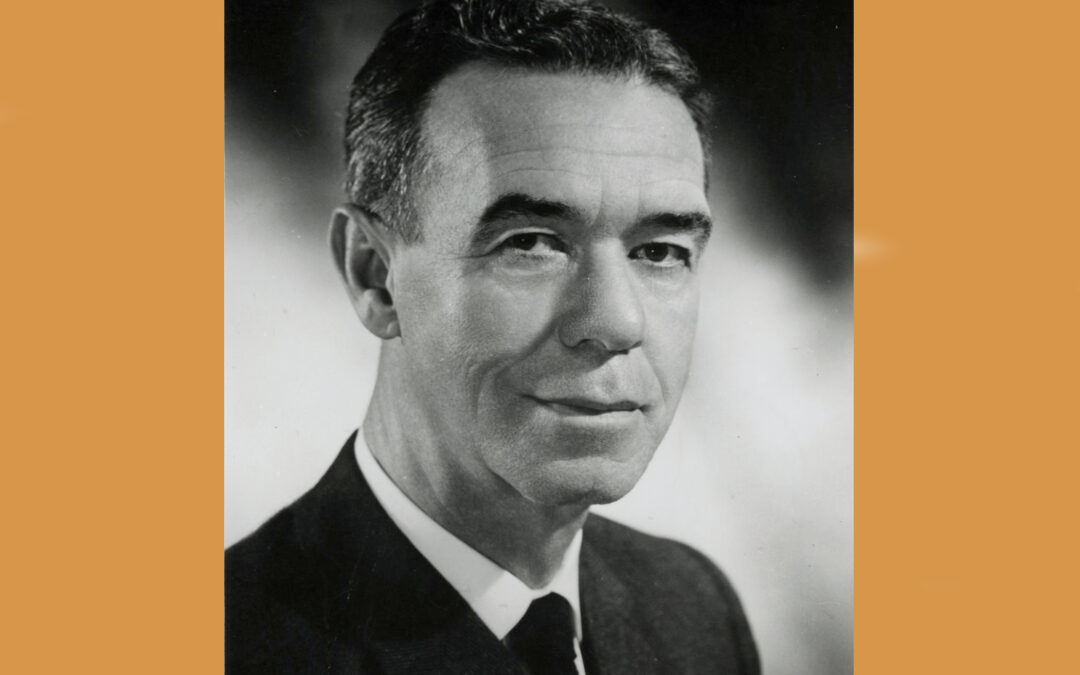
What follows is excerpted from Bishop Gerald Kennedy’s Episcopal Address to the 1964 General Conference of The Methodist Church.
As Methodists, we are now confronted by three crucial demands.
First: the coming of the Holy Spirit in power demands human preparation. To say that we cannot save the world by organization is not to say that we can save it without organization. As a man’s body is to his soul, so is the visible Church to the spirit of Christ. We must use our polity with all the intelligent skill we can muster, remembering that our organization is the means by which we combine our strength, focus our power, and overcome our weakness. In our Methodist polity, we have a mighty weapon to present to our Lord for his use and direction.
Second: the time has come for us to ask ourselves what precisely we believe. We have drifted too long in the shadowy world of obscure theological generalities and we have taken refuge in our vaunted heritage of freedom from creeds. There is spiritual power only in theological conviction. Do we believe that the Gospel is God’s Word to this generation? Do we believe that Christians are commissioned to bring salvation to society? Do we believe that God, through a preacher’s preaching or a layman’s witnessing, can restore a lost soul now? Do we believe that all power has been given unto us? Will we wait together in this General Conference for the rush of the mighty wind and the appearance of the tongues of fire? If we do not leave this place with a new dedication to the all-sufficiency of Jesus Christ for our living and our work, most of what we do here will be of little value. O God, help our unbelief! We do believe that God is able and He has chosen us to bring salvation to each man and His saving health to every nation.
Third: the spirit of expectancy must possess us anew. When men come seeking, they always find. So much of this depends on the preacher that it is hardly too much to say that a worship service is a reflection of his spirit. But the layman has a responsibility too, and if he enters God’s house expectantly, he will hardly ever be disappointed. Methodist churches must be centers of spiritual excitement and hope. We must be rescued from our dullness. We need to learn to sing again the great Wesley hymns and meet together to study the Bible. We need to testify to what God in Christ has done for us and tell our neighbors how Christ has changed our lives and given them eternal meaning.
God called the Wesleys and now He calls their spiritual sons and daughters to a world-wide evangelistic crusade. This evangelism must have the two authentic marks of our tradition, which are the experience of the heart strangely warmed and a deep social concern. It must be broad enough to include all Christians who will join hands with us. Let the Methodist Church around the world unite its power in faith and claim every part of every society for Christ. Let us offer God our organization in the spirit of that ancient cry: “I would fain be to the Eternal Goodness what his own hand is to a man” (Theologia Germanica). We can save our life as a Church only by losing it. Let the Methodists of this world plan a mighty mission to the nations so splendid that future generations will marvel at our courage. Let us pray for a new expectancy that we shall behold God’s mighty acts now.
On February 26, 1791, four days before he died, John Wesley in his last letter to William Wilberforce, the great crusader against slavery, wrote: “Unless God has raised you up for this very thing, you will be worn out by the opposition of men and devils. But, ‘If God be for you, who can be against you’?” On March 2, 1791, Wesley died after speaking his last words in a clear voice: “The best of all is, God is with us.” After lying in state while some ten thousand people passed by him weeping, he was buried at 5 a.m. to escape the confusion of a huge crowd. According to his instructions, he was carried to his grave by six poor men, who were to receive one pound each. All he left behind him, as someone has said, were a badly abused reputation, a worn-out pulpit gown, and the Methodist Church.
We are that Methodist Church, claiming its heritage proudly and facing its future confidently through faith in Jesus Christ our Lord and our Redeemer.