
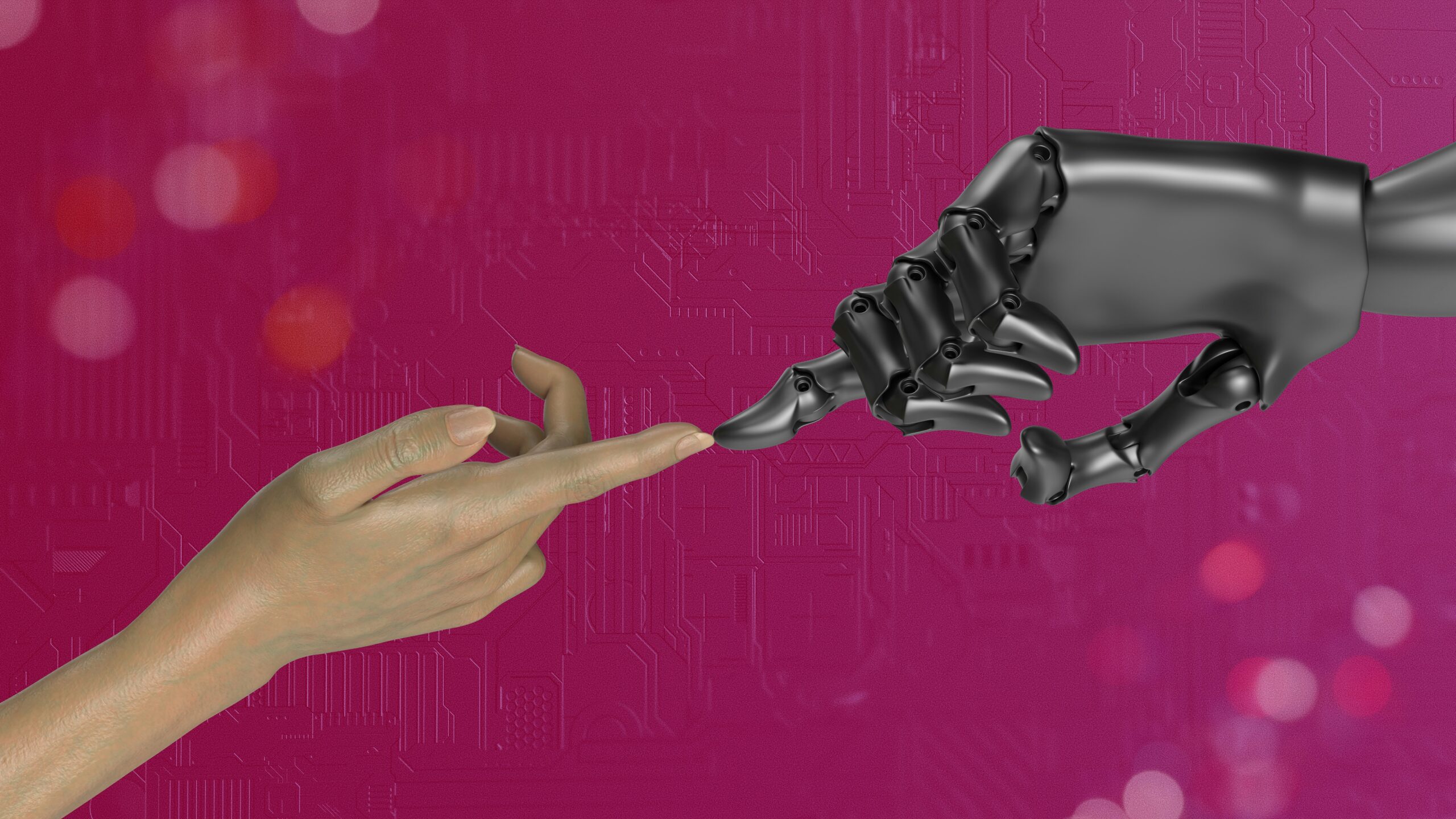
Artificial Intelligence and the Things That Matter Most
By Jonathan A. Powers
“Do not let us begin by exaggerating the novelty of our situation.”
These words come at the opening of C. S. Lewis’s essay, “On Living in an Atomic Age,” written in 1948 as the world struggled to come to terms with the frightening possibilities of nuclear technology. The atomic bomb had introduced a new and terrifying reality: humanity now possessed the ability to destroy itself on a scale previously unimaginable. Understandably, people were anxious about what the future might hold.
Lewis did not dismiss those fears. The dangers were real. But he challenged the assumption that the arrival of a new technological threat had somehow fundamentally changed the human condition. Disease, war, natural disasters, and death had always been part of human existence. The atomic bomb had introduced a new means of destruction, but it had not introduced human mortality or the uncertainty of life.
His advice in the essay was remarkably practical. Rather than allowing fear of the atomic bomb to dominate their lives, people should continue doing the things that make life meaningful: working, praying, reading, spending time with friends, and attending to their ordinary responsibilities.
Nearly eighty years later, Lewis’s words seem particularly relevant as we confront another technological development that promises to reshape our world: artificial intelligence. Of course, AI is not the atomic bomb, and the differences between the two are significant. But the questions surrounding its development have produced a familiar mixture of excitement, uncertainty, and fear. Some believe artificial intelligence will usher in an unprecedented period of human flourishing. Others warn that it could fundamentally disrupt society or even threaten humanity’s future. Somewhere between these predictions, most of us are simply trying to understand what this technology means for our daily lives.
Perhaps Lewis’s wisdom offers a helpful place to begin.
New Technology, Familiar Questions
Human history is filled with technological developments that have changed how we live, work, communicate, and understand the world. The printing press transformed the availability of information and helped make the Protestant Reformation possible. The Industrial Revolution fundamentally altered economies, communities, and patterns of daily life. Electricity, automobiles, radio, television, computers, and the internet each introduced possibilities that previous generations could scarcely have imagined. These developments also brought new challenges. Some disrupted established institutions and livelihoods. Others created ethical questions that societies were not immediately prepared to answer. In nearly every case, people had to learn how to live responsibly with technologies that were advancing faster than their ability to understand all the consequences.
Over time, we developed new practices, expectations, and, when necessary, laws to address these changes. That process was rarely simple, and it certainly did not eliminate every harmful consequence. Nevertheless, humanity learned to navigate much of what once seemed unfamiliar or overwhelming.
Artificial intelligence belongs within this broader history, even as it introduces some genuinely new challenges. Unlike many previous technologies, AI can perform tasks that we have traditionally associated with human intelligence. It can generate written material, analyze complex information, assist with medical research, create images, and participate in conversations that can seem remarkably human. These capabilities are already changing education, business, medicine, entertainment, and countless other areas of life.
There is considerable reason for optimism. AI may help researchers develop treatments for diseases, make education more accessible, improve productivity, and assist people in solving problems that once required enormous amounts of time and resources.
At the same time, there are legitimate reasons for concern. AI systems can produce convincing misinformation, reinforce existing biases, threaten privacy, and make it easier to manipulate others. Their growing capabilities raise questions about employment, national security, human accountability, and the concentration of power in the hands of relatively few companies and governments.
These concerns should not be dismissed as irrational fears of technological progress. They deserve serious attention. But neither should they lead us to believe that humanity has suddenly entered a world in which the ordinary responsibilities of wisdom, moral judgment, and faithful living no longer apply.
The Challenge of Making AI Safe
One of the most important conversations surrounding artificial intelligence concerns safety. How do we ensure that increasingly powerful AI systems operate in ways that benefit humanity rather than harm it? How do we protect personal information, prevent malicious uses, and establish appropriate accountability when these systems make mistakes or produce harmful outcomes?
There is growing recognition that safeguards are necessary. The difficulty comes in determining what those safeguards should look like, who should establish them, and how they should be enforced. These questions become even more complicated when international politics enters the conversation.
The United States and China are engaged in an increasingly significant competition over the development of artificial intelligence. (For more on this, see the September 19th issue of The Economist.) Both countries recognize that leadership in AI could bring substantial economic, technological, and military advantages.
This competition creates a difficult tension. On the one hand, governments have good reasons to establish meaningful safety standards and encourage responsible development. On the other hand, they are concerned that excessive restrictions could slow innovation and allow competing nations to gain an advantage. If American companies face regulations that significantly delay their progress while Chinese developers continue advancing, some fear the United States could lose its position as a global technological leader. Yet abandoning meaningful safeguards in the name of competition could expose society to serious risks.
The challenge is not simply choosing between safety and innovation. Both are important. The challenge is determining how to pursue them together. Even if governments agree that AI should be developed responsibly, they may disagree considerably about what responsibility requires.
A democratic society concerned with individual rights and personal freedom may approach AI regulation differently from an authoritarian government that prioritizes state control. Companies, governments, researchers, and ordinary citizens may also disagree about which risks deserve the greatest attention. International cooperation will be important, but agreement will not come easily.
This is one reason Christians should resist simplistic answers to these questions. Neither unrestricted technological development nor sweeping government control offers an automatic solution. Good intentions do not guarantee good outcomes, and regulations themselves can produce unintended consequences.
What is needed is careful judgment, honest conversation, appropriate accountability, and a willingness to recognize that technological progress does not remove the need for moral responsibility. These are not exclusively Christian concerns. But the Christian faith has something important to contribute to the conversation.
The Question Beneath the Technology
For all the attention given to what artificial intelligence might eventually become, I wonder whether we are overlooking an equally important question: What is artificial intelligence doing to us? Much of the public discussion focuses on the capabilities of the technology. Can AI write better than humans? Can it diagnose diseases more accurately? Can it replace certain professions? Could it eventually surpass human intelligence? These are worthwhile questions, but Christians should also be concerned with how our use of technology shapes our habits, relationships, desires, and understanding of ourselves.
The Christian faith has always maintained that human beings are more than their abilities or accomplishments. Our dignity does not come from our intelligence, productivity, creativity, or usefulness. Rather, it comes from the fact that we are created in the image of God. This truth is especially important in a world increasingly fascinated by artificial intelligence. If a machine can perform tasks once considered uniquely human, does that somehow diminish our humanity?
From a Christian perspective, the answer is no.
Our worth has never depended upon our ability to outperform other creatures or machines. We are created by God, loved by God, and called into communion with God and one another.
The Christian understanding of humanity is fundamentally relational. We were created for love: love of God and love of neighbor. We were made to live in communion, to exercise responsible stewardship over creation, and to reflect God’s goodness in the world. And in Jesus Christ, we discover the fullest revelation of what it means to be human. The eternal Son of God did not merely communicate information about salvation. He became flesh and dwelt among us. He entered the ordinary realities of human existence, sharing our joys, sorrows, relationships, suffering, and even death. The incarnation reminds us that embodied human life matters profoundly to God.
This has important implications for how we understand artificial intelligence. AI may be able to simulate conversation, provide helpful information, and assist us in countless activities. But we should not confuse those capabilities with the fullness of human relationship. A chatbot may offer useful advice, but it cannot replace the mutual responsibilities of friendship. An AI system may generate a sermon, but it cannot replace the spiritual formation, pastoral discernment, and lived witness of the person called to proclaim God’s Word. Technology may help us communicate more efficiently, but efficiency is not the same thing as communion. The question, then, is not simply whether AI can accomplish something. It is whether using AI for that purpose helps us fulfill our calling as human beings created in God’s image.
The Formation of Our Loves
This brings us to what I believe may be one of the most important Christian concerns surrounding artificial intelligence: the formation of our loves. Christians have long understood that we are shaped by what we repeatedly do. Our habits influence our desires, and our desires influence the kind of people we become.
The apostle Paul urges Christians not to be conformed to the patterns of this world but to be transformed through the renewing of their minds (Romans 12:2). Christian discipleship involves more than acquiring information or adopting certain beliefs. It involves the transformation of our whole lives as we learn to love God and our neighbors more faithfully.
Technology is not neutral in this process. The tools we use influence how we spend our time, direct our attention, approach problems, and interact with others. Consider the smartphone. It has made communication and access to information easier than previous generations could have imagined. Yet it has also introduced new struggles with distraction, comparison, isolation, and the constant demand for our attention. The technology itself did not determine how we would use it. But its design and our habits of use have shaped us in significant ways.
Artificial intelligence presents similar questions, perhaps on an even greater scale. If AI can instantly generate answers to our questions, will we become less willing to wrestle patiently with difficult ideas? If it can write our emails, papers, sermons, and personal messages, will we lose opportunities to develop our own abilities to think, communicate, and express ourselves?
If it can provide seemingly endless affirmation and companionship, will we become less willing to invest in the difficult, sometimes uncomfortable work of genuine human relationships?
These outcomes are not inevitable. AI can also support learning, encourage creativity, and free us from certain tasks so that we can devote more attention to the people and responsibilities that matter most. That is precisely why intentionality matters. We must learn to ask not only whether a technology makes our lives easier, but whether it helps us become more faithful, patient, wise, generous, and loving. Convenience is a good thing, but it is not the highest good. Efficiency has its place, but it is not the purpose of human existence. Intelligence, no matter how impressive, is not the same thing as wisdom.
The biblical tradition consistently places wisdom within the context of our relationship with God. Proverbs reminds us that the fear of the Lord is the beginning of wisdom (Proverbs 9:10). Wisdom is not simply possessing information. It is learning to understand and live rightly before God. No technological advancement can remove our responsibility to pursue that wisdom.
Living Faithfully in an Age of AI
This is where I find Lewis’s essay particularly helpful. Writing in the shadow of the atomic bomb, Lewis was not suggesting that people ignore the dangers of nuclear weapons or abandon efforts to prevent catastrophe. Rather, he was reminding readers that fear of an uncertain future should not distract them from the responsibilities and opportunities of the present.
The same principle applies to artificial intelligence. Christians should participate thoughtfully in conversations about AI safety, public policy, education, and technological development. Those working in government, business, research, and technology have meaningful opportunities to shape how these tools are developed and used. Their work deserves our attention and prayers.
The church should also take these developments seriously, considering how artificial intelligence might serve its mission without undermining the very practices through which Christians are formed. But we should not allow the excitement or anxiety surrounding AI to consume our attention. Our calling remains unchanged. We are still called to love God with all our heart, soul, mind, and strength, and to love our neighbors as ourselves. We are still called to care for the vulnerable, seek justice, speak truthfully, practice hospitality, and bear witness to the good news of Jesus Christ. We are still called to gather for worship, receive the Scriptures, pray, share in the sacraments, and participate in the life of the church. And we are still called to cultivate the virtues of patience, humility, self-control, generosity, and love.
None of these responsibilities has become less important because artificial intelligence can now perform increasingly complex tasks. If anything, they have become more important.
The future of AI will undoubtedly involve difficult decisions. Some developments will bring remarkable benefits. Others will create challenges we have not yet anticipated. There will be disagreements about regulation, international competition, and the appropriate boundaries of technological innovation. Christians will not always agree about the best policies or practices, and we should approach these disagreements with humility. But we do have a shared foundation from which to begin.
We believe that human beings possess inherent dignity because they bear God’s image. We believe that knowledge and power must be exercised with wisdom and love. We believe that our lives are meant for communion with God and one another. And we believe that the ultimate hope of humanity rests not in technological achievement but in the person and work of Jesus Christ. Perhaps that is the most important thing for Christians to remember as we navigate this new technological age.
Artificial intelligence may change how we work, learn, communicate, and organize society. It may become one of the most consequential technological developments in human history. But it cannot change the fundamental truth of who we are, whose we are, or what we have been created for. Lewis understood that even in the face of extraordinary technological change, the essential questions of human existence remain.
The same is true today. We should approach artificial intelligence with curiosity rather than suspicion, caution rather than panic, and wisdom rather than unquestioning enthusiasm. And above all, we should remember that our task is not simply to keep pace with the latest technology. Rather, it is to remain faithful to Christ in the midst of it.


0 Comments