by Steve | Jan 19, 2024 | In the News, Perspective / News
Regionalization: the New Colonialism?
By Thomas Lambrecht
The top agenda item for the 2024 General Conference in April for most progressives is to adopt “regionalization” as the new mode of United Methodist governance. This proposal would be a dramatic shift in how the UM Church functions. It would move from being a connectional church to a regional church, or even an association of national churches.
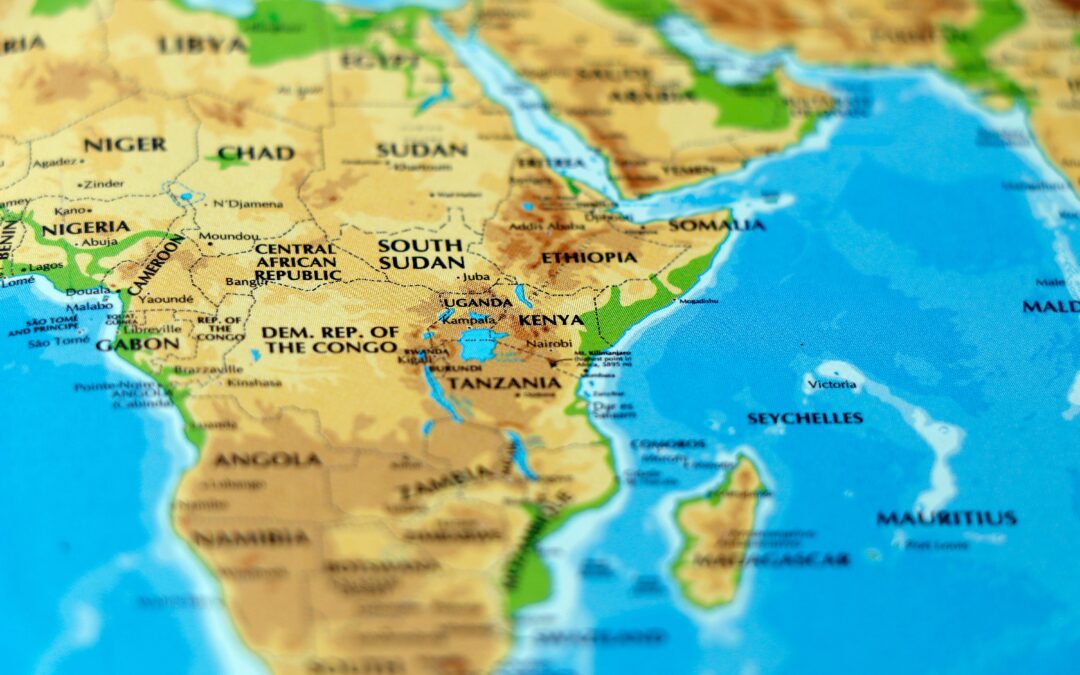
The regionalization proposal is similar to the U.S. central conference proposal that passed General Conference in 2008 but was overwhelmingly defeated by annual conferences in 2009. It would set up the U.S. as its own regional conference, along with three regional conferences in Europe, three in Africa, and one in the Philippines.
The key is that each regional conference would have the authority to create its own policies and standards in a number of key areas. These include:
- Qualifications and educational requirements for clergy – so there could be different qualifications to be ordained as a clergyperson in each regional conference.
- Standards and qualifications for lay membership – so the standards for being a lay member of a local church could be different from region to region.
- Rules of procedure governing investigations and trials of clergy and lay members – how clergy and lay members are held accountable could differ from region to region.
- Changes in chargeable offenses and their penalties – what is a chargeable offense in one region could be perfectly allowed in another.
- Each region could have its own hymnal and worship rituals. It is unclear from the proposals whether each region could have different baptismal and membership vows or ordination vows.
Why Regionalization?
This type of regionalization is a relatively recent development. In 2012, the General Conference began to move toward allowing central conferences outside the U.S. greater flexibility in adapting the Book of Discipline to their particular context. However, this was not finalized in 2016, but only in process until 2020 (which was of course postponed by the pandemic).
The original concept of adaptability for the Discipline was meant to allow for different laws and property procedures in different countries outside the U.S. But the expansion to other areas of adaptability was (I believe) a precursor to justifying greater adaptability for the U.S. church. If the central conferences outside the U.S. had the ability to adapt the Discipline in the ways listed above, one could hardly deny the U.S. church the same ability to adapt the Discipline. Never mind that the majority of General Conference delegates has always been from the U.S. and the Discipline has always been written primarily from a U.S. context, meaning that such adaptation was hardly necessary.
The real reason for regionalization and adaptability is to allow the U.S. church to liberalize its standards regarding marriage and LGBT persons. Each of the bullet points above has a direct relationship to LGBT persons. Adapting the qualifications for ordination would allow the U.S. church to ordain non-celibate LGBT persons. Adapting the qualifications for lay membership would allow the U.S. church to forbid pastors from preventing non-celibate LGBT persons to become local church members and serve in leadership in the local church, district, and annual conference. Adapting the rules of procedure for holding clergy and lay members accountable would allow the U.S. church to prevent trials for LGBT clergy or for clergy performing same-sex weddings. Adapting the chargeable offenses would allow the U.S. church to remove from the list of chargeable offenses anything related to same-sex marriage and non-celibate LGBT persons serving as clergy. Adapting the hymnal and the rituals would allow the U.S. church to create liturgies for same-sex weddings and potentially alter the ordination vows to mandate support for LGBT persons.
In the wake of the 2019 General Conference’s affirmation of a traditional perspective on marriage and human sexuality, progressives have rebelled. They decided to move ahead with same-sex weddings and the ordination of non-celibate LGBT persons regardless of what the Discipline said. Regionalization would give them the legal ability to do so within the Discipline by codifying different standards and policies for the U.S. church than those adopted in Africa and other regions.
This is the goal of regionalization, as articulated in a recent Mainstream UMC fundraising letter. “Homosexuality is the flashpoint in this conversation. A US-only vote likely would have permitted LGBTQ ordination and marriage as many as 12 years ago, just like the US Presbyterians, Lutherans, Episcopalians, and Disciples have done. … The mean-spirited Traditional Plan of 2019 – which doubles down on the harm – has proven to be the tipping point in the United States. Either this policy is completely repealed at General Conference 2024, along with the other anti-LGBTQ language, or the exodus continues, and likely accelerates, in the United States.” (The letter is referring to an exodus of progressives and LGBT persons, which Mainstream UMC blames for the decline in UM membership over the past 40 years. Never mind that, while LGBT-affirming mainline denominations have all declined precipitously, non-denominational evangelical churches and Pentecostal denominations with a traditional understanding of marriage and human sexuality have grown.)
What about colonialism?
It is unquestionably true that UM governance has always had a U.S.-centric approach. Particularly in the realm of social issues and resolutions on particular justice issues, the focus was predominantly on the U.S., although that had begun to change by 2016 with greater attention and sensitivity to global issues and how resolutions could be worded to be more inclusive of global concerns.
The question is whether to solve the problem of U.S. centrism by decoupling the connection through allowing wholesale adaptability of the Discipline, or by allowing greater input from non-U.S. delegates to the forming of a global Discipline. Most progressives and the church’s “establishment” chose the route of adaptability, first through the defeated U.S. central conference plan and then through initiating changes in the Discipline in 2012. Traditionalists have consistently favored the second approach of moving toward a more globally inclusive Discipline. That was the stark contrast between the One Church Plan in 2019 that would have allowed maximum adaptability, and the Traditional Plan that maintained a global standard.
But in its quest to rid the denomination of its U.S. centrism and colonial undertones, does the new regionalization proposal codify a new form of colonialism? Some African leaders have said yes. A closer analysis of the proposal shows they are right.
Curious Timing
It is interesting that the big push for regionalization comes just as the U.S. church membership has moved into a minority status. Even before disaffiliations began, membership outside the U.S. had pulled even with U.S. membership. This was not reflected in the percentage of delegates at General Conference, particularly for Africa, as the formula for delegates favors the U.S. with its very large number of retired clergy and clergy serving in extension ministry.
Even as African membership was increasing by 10 to 20 percent per quadrennium, their delegate percentage would only increase by less than five percentage points. It was going to be at least a decade or more before African delegate percentage more accurately reflected their percentage of membership. That, of course, changed with disaffiliation, which has drastically cut U.S. lay and clergy membership.
But Mainstream UMC is panicking over the fact that U.S. delegates will soon be in the minority. “In 2012, … international delegates totaled nearly 1/3 of the votes. For General Conference 2024, the delegates from outside the US will be close to 45 percent. In four years, it will be almost 55 percent.”
In other words, just when non-U.S. delegates are poised to have a significant voice in denominational governance, progressives want to marginalize them through regionalization. No matter what the non-U.S. delegates believe, the U.S. delegates that are a majority progressive can do what they want. Non-U.S. delegates will no longer be able to “interfere” with what the U.S. delegates want. In another fundraising letter, Mainstream UMC says, “There is a growing sentiment in the US that we will not fund a church that constrains our outreach to our local mission field. Period.”
No Override Option
The current regionalization proposal has no provision for the General Conference to override the decision of a regional conference. If a regional conference enacts something that is contrary to UM governance, the only recourse is to file an objection with the Judicial Council, which is difficult to do and made more difficult by the regionalization plan itself. Another region may not have standing to bring an action before the Judicial Council under the new regime of regionalization.
A previous version of the regionalization proposal allowed a regional action to be overturned by a two-thirds vote of the General Conference. Of course, the U.S. would have more than one-third of the votes, so its actions would not be overturned. But Europe, the Philippines, and the three African regions would each have less than one-third of the votes, so their actions could be overridden, while the U.S. would not.
Other Favorable U.S. Treatment
There are other ways in which the U.S. gets favorable treatment under the current proposal. Other regions could set the tenure of their bishops, but the U.S. bishops would be guaranteed life tenure by the Constitution.
The Standing Committee on Central Conference Matters would continue with its current 30 to 40 percent U.S. representation. But the U.S. regional conference would have only 14 non-U.S. delegates, making up only 3 percent of the conference. Thus, the U.S. would have a bigger say in non-U.S. matters than non-U.S. delegates would have for U.S. matters.
The General Conference could change the boundaries of non-U.S. regional conferences without the consent of its annual conferences but changing the boundaries of jurisdictions in the U.S. would still require annual conference consent. Again, U.S. conferences would have more say in their affairs than non-U.S. conferences in theirs.
It is no wonder that some African leaders and delegates are opposing the regionalization proposal. In an effort to ostensibly remove colonialism from UM governance, regionalization as currently proposed installs new, discriminatory provisions that reinforce U.S. autonomy and superiority. One must ask whether the UM Church is exchanging one form of colonialism for another. It is enough to cause second thoughts on whether this is the direction the UM Church should take going forward. Time will tell how the General Conference delegates and annual conference members evaluate this proposal.
Thomas Lambrecht is a United Methodist clergyperson and vice president of Good News. Image: Shutterstock.
by Steve | Jan 13, 2024 | Jan-Feb 2024
Fighting for Fairness
By Thomas Lambrecht
Some have wondered why Good News is still around. Now that disaffiliation is “over,” shouldn’t Good News just go away?
The Council of Bishops and other UM leaders are anxious to put disaffiliation in the rear view mirror. Advocacy groups like “Mainstream UMC,” a “centrist” caucus group, are stridently opposing any renewal of disaffiliation options at the upcoming 2024 General Conference in Charlotte, North Carolina.
Throughout the disaffiliation process, Good News has been advocating for a fair process to be used. We have wanted to honor the decisions made by local churches, whichever way they decided, as long as the process was fair. But has the disaffiliation process really been fair?
Unfortunately, disaffiliation is not “over.” Although Par. 2553 in the Book of Discipline allowing local churches to disaffiliate expired at the end of 2023, not all churches have had a fair opportunity to disaffiliate. Until they do, Good News will continue to stay and advocate for a fair disaffiliation process for all.
Why Central Conferences still need a disaffiliation process. Par. 2553 provided a process for local churches to disaffiliate and retain their buildings and property. This paragraph was intended to apply to all parts of our global denomination.
However, the Council of Bishops has stated that Par. 2553 does not apply outside the United States. They point to new language adopted by the 2019 General Conference that states, “Legislation passed at the 2019 called session of General Conference shall not take effect in central conferences until twelve months after the close of the 2020 General Conference …” This provision was added to allow central conferences (parts of the church outside the United States) to hold their regular sessions and make any necessary adaptations to the Discipline before it takes effect.
Because of the Covid pandemic, the 2020 General Conference was never held, so Par. 2553 never took effect for the central conferences before it expired on December 31, 2023. (I disagree with this interpretation of church law that allowed a duly adopted provision in the Discipline to never come into force, but that is the reality we are dealing with.)
Congregations in the U.S. could use Par. 2553 to disaffiliate. Congregations outside the U.S. were unable to do so. Is that fair?
Annual Conference disaffiliation. Then there is the question of whether a whole annual conference can disaffiliate. For many annual conferences in Africa, that would be the preferred route, as they often operate in a consensus model whereby they all agree to do the same thing together. Many votes in African annual conferences are unanimous or nearly so.
The Bulgaria Annual Conference disaffiliated in 2022. However, the Judicial Council ruled after the fact that such a conference disaffiliation was illegal under the Discipline. They ruled that annual conferences may disaffiliate, but that the General Conference has to provide a process for them to do so. Since the General Conference has not met since 2019, it has provided no process for annual conference disaffiliation.
There is a process in the Discipline for annual conferences outside the U.S. to become autonomous Methodist churches. Annual conferences could use this process to separate from the UM Church. However, such annual conferences do not want to become autonomous; they want to join the Global Methodist Church. So, this provision really does not answer their need.
Furthermore, the process of becoming autonomous is long and laborious. It would require the annual conference to write its own new “Book of Discipline.” That would be wasted effort in this case, since the annual conference wants to come under the Global Methodist Church Book of Doctrines and Discipline. In addition, the decision to become autonomous would have to be approved by the relevant central conference and the General Conference, which means the process could take four years or longer.
There is no need to provide a way for U.S. annual conferences to disaffiliate, since those that would have been likely candidates have already lost the majority of their traditionalist churches and clergy. But there is a legitimate need to provide a way for annual conferences outside the U.S. to move straight from the UM Church to the GM Church or another Wesleyan denomination that doesn’t take years to accomplish.
Has the U.S. disaffiliation experience been fair? As the disaffiliation process in the U.S. winds down and over 7,000 congregations have disaffiliated, surely we can say that disaffiliation in the U.S. has run its course, right? Unfortunately, the answer is a resounding no.
A small number of annual conferences in the U.S. have handled disaffiliation unfairly, even as the vast majority of conferences followed a mostly fair process. These few annual conferences added costs to the disaffiliation terms that made it nearly impossible for most congregations to disaffiliate and keep their buildings.
Some conferences added the requirement for the church to pay a percentage of the property value. This would require parishioners who paid for the property to be built and maintained once to pay for it a second time to an annual conference that in most cases had put zero dollars into that facility.
Requiring 50 percent of the property value were: Baltimore-Washington, California-Pacific, and Peninsula-Delaware (after July 12, 2022).
California-Nevada required 20 percent of property value, while South Carolina and West Virginia required 10 percent.
Eastern Pennsylvania, Greater New Jersey, and Mountain Sky all gave their trustees discretion to charge for a portion of the property value in individual cases.
On the east and west coasts, inflated property values have made it nearly impossible for congregations to afford the cost of disaffiliation. In California-Pacific, in particular, multi-million dollar property values caused only three of 20 churches who voted to disaffiliate actually being able to afford to keep their property. One pastor estimated the cost of disaffiliation at $60,000 per member.
Greater New Jersey took the prize for requiring nearly a dozen different charges and requirements, including paying 18 months of the pastor’s salary plus moving expenses if the pastor did not disaffiliate, a percentage of all cash and investments equal to the percentage of members voting against disaffiliation, and administrative fees and other costs.
Several annual conferences for a time refused to allow any disaffiliations. This was the case in South Carolina and West Virginia until they finally started allowing disaffiliations near the end of 2022. Churches in North Georgia had to go to court in order to force the conference to allow them to disaffiliate. Alabama-West Florida allowed nearly 250 churches to disaffiliate, but then closed the door on all further disaffiliations, prompting a number of congregations to file a lawsuit against the conference that is still on appeal. Peninsula-Delaware allowed over 100 churches to disaffiliate before suddenly imposing the 50 percent property value fee that prevented any additional churches from disaffiliating.
There was such wide variation between how different annual conferences treated their churches, that it created an unfair playing field across the U.S. One conference that saw over 80 percent of its churches disaffiliate used conference reserve funds to pay for unfunded pension liabilities and future apportionments, so that the cost to a congregation to disaffiliate was practically zero. Another conference used its pension reserves to pay for the unfunded pension liability of all its congregations, including those remaining UM, that drastically reduced the cost of disaffiliation. Use of conference funds in these ways was fair, as all churches had contributed to them and all churches (remaining or leaving) benefited from the funds.
Is it fair that some congregations had to pay nearly nothing to disaffiliate, while others had to pay so much it was impossible for them to raise the money? Is it fair that some conferences and some congregations denied their members from even hearing about or discussing the option of disaffiliation? Is it fair that some bishops summarily removed pastors who indicated they were open to considering disaffiliation?
Denomination-wide, nearly 26 percent of UM congregations have successfully disaffiliated. But among the conferences named above with extra costs, fewer than five percent of congregations disaffiliated. Seven of the ten conferences in the Northeastern Jurisdiction had less than five percent disaffiliate. Three of the seven conferences in the Western Jurisdiction had less than five percent disaffiliate. The unfair playing field had real-world consequences.
Finding a solution. Given the unfair treatment experienced by our brothers and sisters in the central conferences, as well as the examples of unfair treatment here in the U.S., Good News remains committed to working for a fair and just disaffiliation pathway for all congregations globally and annual conferences outside the U.S.
A new Par. 2553 has been submitted to the next General Conference that would reinstate the congregational disaffiliation process. It would limit the costs to those contained in the original 2553 – two years of apportionments and the local church’s share of unfunded pension liabilities. It would also provide for a fair and equal opportunity for congregations to learn about and discuss the options of disaffiliation without heavy-handed interference from bishops and district superintendents, while still encouraging advocates for remaining UM to also present their best case.
A new Par. 576 has been submitted to the next General Conference that would institute a streamlined process for annual conferences outside the U.S. to leave the UM Church in order to join another Wesleyan denomination. It would still require approval from the relevant central conference for an annual conference to make this move, but it would not have to wait until the next General Conference meets in order to take effect. Annual conferences intending to become autonomous or independent would still have to use the old longer process.
It is time for the UM Church to level the playing field and make it fair for all. We ought not discriminate against our central conference members. The ability to successfully disaffiliate should not depend upon what zip code a church is located in.
It is time to honor the consciences and prayerfully considered decisions of UM congregations, instead of believing that the denomination can and should coerce churches into remaining with a denomination that no longer reflects their beliefs. Where congregations have voted to disaffiliate but been turned down by their annual conference, what is left in the UM Church is often only an empty shell of the former congregation. Such an outcome serves no one. It devastates a local church’s ministry, dishonors the congregation’s decision, and besmirches the denomination’s reputation in the community.
It is hoped that General Conference delegates of all perspectives will see the unfairness and act to provide a just solution, for the good of the church and for the advancement of the cause of Christ.
Thomas Lambrecht is a United Methodist clergyman and the vice president of Good News.

by Steve | Dec 18, 2023 | In the News, Perspective / News
Marks of a Methodist 6: Perfection
By Thomas Lambrecht
This edition of Perspective concludes our survey of the marks or characteristics of a Methodist, as put forward by Bishop Gerald Kennedy in his 1960 book of that name. We have seen that the marks of a Methodist include Experience (a personal experience of a relationship with God through Jesus Christ that transforms all of life) and the desire to Make a Difference in this world as an expression of God’s love. We noted the mark of Discipline, a focused and structured effort toward the goal of making disciples of Jesus Christ. We saw Methodism characterized by Mission, the outward focus of the church to proclaim the Gospel and minister to the needs of people. In the previous article, we noted the tendency toward Freedom of thought and proclamation, leading to freedom from sin and the world, yet within a framework of shared doctrinal commitments.
The final mark that Kennedy and Wesley identify is Christian Perfection. As in Kennedy’s day, United Methodists in the time of my ministry have tended to regard Christian Perfection as a joke. Often the only allusion to perfection comes when someone makes a mistake and then remarks that they are “going on to perfection” (using Wesley’s language).
Yet, holiness is not a joke. “Make every effort … to be holy; without holiness no one will see the Lord” (Hebrews 12:14).
Christian Perfection does not mean that a person will never make a mistake. In Kennedy’s words, Wesley “said that [people] could be perfect in their love and their motives.” Wesley believed that one could be free from willful or intentional sin, guided by love and the Holy Spirit. He believed that one could reach this goal in this life, not just at the moment of death. And if one could reach it, one ought to strive for it.
Kennedy notes, “the complete surrender of the life to God was the goal. … If a [person] becomes single-minded, then so far as his love is concerned, he has reached perfection. The disease is always double-mindedness, and Methodism believed that it could be cured by an experience of religion.”
Kennedy points to Jesus’ command in Matthew 5:48, “Be perfect, therefore, as your heavenly Father is perfect.” Jesus describes a God who “causes his sun to rise on the evil and the good, and send rain on the righteous and the unrighteous” (vs. 45). Love for all, and behavior expressing that love, makes us like our heavenly Father, which is the standard of holiness.
Motivation
Kennedy believed that the pursuit of holiness or Christian perfection raises the bar on excitement, enthusiasm, and commitment to the Christian life. “The early Methodists expected miracles and it did not seem unreasonable to them that perfection should be their aim. We are short on enthusiasm. … There [is] a noticeable lack of any sense that the message proclaimed could change a [person’s] life or turn the world upside down.
“There are not many of our meetings where anybody gets excited. … We seem to have lost the sense of the Gospel as good news, and we put our emphasis on new laws. And yet there is no sense in thinking we can stir up enthusiasm by appointing a committee or passing a resolution.”
Striving for spiritual “greatness” motivates our journey of faith much more than just going through the routines of religiosity. In our own time, there is beginning to be a recovery of this emphasis on the pursuit of holiness that is energizing the church.
Hope
The idea that Christians can live in perfect love in this life gives tremendous hope to the believer. In contrast with a world that sees only hopelessness, pain, and brokenness, the Gospel gives us hope that our lives can be transformed into the likeness of Christ.
For Kennedy, this hope was particularly manifested in the ministry that Wesley had with the “miners, tradesmen, and servants” – the forgotten common man. “Beginning his work with the people neglected by society as being of little worth, he came to see in them unlimited possibilities through the grace of God. He saw that the perfect will and motive were just as open to them as to the gentry. Perhaps more so! So he preached the same promises and held forth the same marvelous expectations to [people] of all sorts and conditions.
“There is a great need to get things turned around in our thinking. We are so much aware of the newspaper headlines, where the news is always bad, that we forget to listen to the Good News from another source. It may seem naïve to speak of Christian Perfection as our aim in a world preparing weapons of warfare more horrible than we can imagine. It seemed naïve to preach that doctrine to the gin-soaked inhabitants of London. But all of our trouble springs out of the human heart, which is very sinful, and we have a promise that Christ has won a victory over both sin and death. We must begin to proclaim the reality of hope.”
Along with this hope for the potential of humanity comes a belief in the reality of that potential. Kennedy affirms salvation by faith in God through Christ alone. He calls for us to be “rescued from our service club do-goodism which makes God merely the president of the club. Faith in good works and social planning is nothing to build life on and these puny efforts cannot deal with sin.”
At the same time, he goes on, “It does not follow that we must despise human nature because it is weak and sinful. It does not mean that we must regard human effort as altogether futile. There is a sense in which faith in God must always increase faith in [humanity] and its potentialities. You do not glorify the Creator by despising His creation.”
The challenge is maintaining a balance between dependence upon God and acknowledging the contribution of human effort in spiritual growth. “The danger of believing in the possibility of Christian perfection is that it will lead to pride. … Let us make sure that we are not clearing the way for societies of perfectionists who thank God that they are not as other men [Luke 18:11]. What do we claim? Only that we have faith to believe that people can be perfect in love and that we do not propose to aim for anything less.”
The Holy Spirit
Crucially, Kennedy saw the work of the Holy Spirit as essential in transforming the life of the believer into the likeness of Christ. It is interesting that he points to the need for a “reformation in our day, which I expect to be more deep and searching than that of the sixteenth century, [which] will turn upon the Spirit’s presence and life” (quoting English theologian, Frederick Denison Maurice). In the decade after his book, the Charismatic Renewal hit the church and ushered in the reformation that Kennedy thought was coming.
Kennedy saw that the presence of the Holy Spirit in life was the power of God at work transforming us. He notes Wesley’s Journal “gives the clear impression of a living power at work among the people. There was an invisible stream which, once entered, affected people in wonderful ways. They were exalted and inspired; strengthened and comforted; made confident and unafraid.”
Here, Kennedy becomes practical. “How shall we find this new experience of the Spirit and its promise? We should begin by knowing people who already possess it. We should make a serious search for the path to spiritual power. We must search our own lives for the habits and attitudes which cut us off from God. We can find a like-minded group within our churches to study, pray, experiment. To sum it all up, we must resolve that we shall make it possible for God to brand this ancient mark of a Methodist on our own lives.”
This is exactly what is being captured in the return to an emphasis on accountable discipleship. The recovery of the “class meeting” of early Methodism allows modern-day disciples to go deeper in our walk with Christ, encouraged and supported by fellow travelers. Engaging the spiritual disciplines of prayer, Bible study, worship, Holy Communion, fasting or abstinence can help us continue to be remade into a new creation, with the goal of loving God and one another perfectly.
Kennedy concludes, “We are pressured into watering down our convictions in the name of being tolerant and broad. Sometimes we subscribe to an unwritten theory that we will be better Christians by becoming nondescript Methodists. But I believe we are especially fitted for the living of these days because God has put His hand upon us. … As the Methodist part of the Body of Christ, we bear the marks of our faith in Experience, Results, Discipline, Mission, Freedom, and Christian Perfection. Let no worldly fear trouble us!”
Thomas Lambrecht is a United Methodist clergyperson and vice president of Good News. Image: Shutterstock.

by Steve | Dec 8, 2023 | Front Page News
The Marks of a Methodist 5: Freedom
By Thomas Lambrecht
We have been examining the characteristics of Methodist Christianity in homage to John Wesley’s The Character of a Methodist, but based on the 1960 book by Bishop Gerald Kennedy, The Marks of a Methodist. We have seen that the marks of a Methodist include Experience (a personal experience of a relationship with God through Jesus Christ that transforms all of life) and the desire to Make a Difference in this world as an expression of God’s love. We noted the mark of Discipline, a focused and structured effort toward the goal of making disciples of Jesus Christ. In the previous article, we saw Methodism characterized by Mission, the outward focus of the church to proclaim the Gospel and minister to the needs of people.
The most controversial mark of a Methodist is perhaps the freedom given to its clergy and laity. We shall see that freedom is not absolute and has perhaps been taken further in current Methodism than Wesley or even Kennedy would have allowed.
Doctrinal Freedom
Kennedy states, “We are a Church that makes no specific creedal demands and every Methodist can live in a very large room, theologically speaking.” The canard that “we are not a creedal church” thus dates back at least 60 years.
This, of course, ignores the fact that The United Methodist Church has doctrinal standards, including the Articles of Religion and the Confession of Faith, which are of the nature of a creed. While candidates for ordination may not be required to provide a written and signed statement of agreement with our doctrinal standards, ordinands are asked the historic questions that date back to early Methodism. They include, “Have you studied the doctrines of The United Methodist Church?” (In other words, we do have specific doctrines.) “After full examination do you believe that our doctrines are in harmony with the Holy Scriptures? Will you support and maintain them?” (In other words, ordinands do commit to preach and teach the doctrines of our church.)
The difference is that United Methodist doctrines are the basic teachings of orthodox Christianity, with very little that is uniquely Wesleyan or Methodist in them. Christians from a wide variety of denominations could all assent to our doctrines without compromising. This is unlike some denominations that insist on particular interpretations of Scripture, such as predestination or a specific understanding of the end times of the world.
Kennedy describes it this way, “We are not a people marked by opinions, though our theology is biblical and orthodox. We are not to be distinguished by words or phrases nor by a peculiar mode of speaking. … We are not to be marked by ‘actions, customs, or usages of an indifferent nature.’ We are not food faddists nor people who wear special apparel. Nor do we single out some particular part of religion and act as if it were the whole of religion.”
The key here is distinguishing between doctrines and opinions. The official teachings of the church are expected to be upheld by all. Wesley himself broke from Moravians who believed in “quietism,” that the believer needn’t pursue holiness by using the means of grace, but merely wait upon God. He also broke with the Calvinists, who believed that God’s salvation in Christ was offered only to a select few, not to all people. These both went against essential elements of Methodist teaching.
Opinions, on the other hand, are disputed matters or, in Wesley’s words, matters of “indifference.” Whether to observe the liturgical calendar, whether the world was created in six 24-hour days, or whether Christians may drink alcohol are all opinions, upon which Methodist have the freedom to disagree without it disrupting the unity of our church.
Kennedy goes on to exhort, “This heritage must not be forgotten or minimized. Those among us who rise up to fasten some particular interpretation of doctrine on our preachers do not understand our Church. The groups who demand that a particular economic or political doctrine shall be regarded as orthodox have deserted the faith of their fathers and insult the memory of John Wesley.” We have the freedom to “think and let think” on many aspects of the faith, so long as we maintain unity around the core essentials.
Freedom of the Pulpit
Nowhere is this freedom more evident than in the ability of Methodist preachers to preach “without fear or favor.” Kennedy explains, “This is partly due to our system of appointing preachers rather than calling them. When a congregation has the power to enthrone or dismiss its minister, he [she] can hardly be entirely free. A comparatively small but determined minority can often have its way and silence a voice which does not please it. We appoint our preachers, and they have the status of being sent. They will not be removed at the whim of a few people, and their message is not expected to be adjusted to please one class or one group.”
The freedom of the pulpit, however, imposes a corresponding responsibility upon preachers. In Kennedy’s words, “They must not abuse it and they must know whereof they speak. The saddest figure in the pulpit is the well-meaning but uninformed prophet. We must respect the difference of opinion in the pews, and we must never assume that we cannot be wrong.” While unafraid to address a controversial moral issue from the pulpit, Kennedy maintained that preachers ought not “speak about it every Sunday. The [person] who honestly disagrees with a preacher on one issue, still ought to find much in his [or her] preaching to feed [their] soul.”
Kennedy cites the separation of Church and State as a primary belief of Methodism. This would, of course, have been a foreign idea to John Wesley. Anglicanism, the Church of England, was (and still is) the state church of the country. The monarch is nominally head of the church (a role Queen Elizabeth II took quite seriously and that guided her decisions). Kennedy elaborates the rationale for separation. “We believe that the Church must speak to all of society and the pulpit must be the prow of the ship of state to warn and guide. The Church must be free and the state must never be under the domination of a religious institution.”
Kennedy laments the tendency among Methodists to avoid controversy. “We seem to prefer peace at any price and many a Methodist seems to think that criticism is the worst possible thing that can happen to his Church. Let me tell you that it is much worse to be ignored. The Church that is free must often speak a word of judgment.”
Of course, we have had more than our share of controversy over the last few years, including the breakup of our denomination. Even so, many local churches and many clergy have been unwilling to even discuss the issues and options that are currently under debate, for fear of causing conflict in the congregation. That in itself manifests a tragic lack of freedom. If such discussions are carried out in a spirit of love and consideration and based on biblical principles, it can lead to a deepening of faith and commitment to obedience to one’s understanding of biblical truth, even where some form of separation results. Such faith and commitment lead to a stronger congregation that knows what it believes and how it will live out those beliefs.
Academic Freedom
Kennedy states, “If we have freedom in the pulpit, we also have freedom in the pew. Our scholars and teachers do not submit their writings for official approval. Our families do not find their private affairs made the business of an institution. Our members are at liberty to visit any church and worship in it. We may work together with all churches and with all non-Christian religions.”
While this freedom is real and to be guarded, there is also the corresponding responsibility that scholars and teachers do not undermine the doctrines of the church in their teaching and writing. There should be what Kennedy calls “the joy of free investigation,” but there are also guardrails around our faith in the form of our doctrinal standards. This balance or tension can be difficult to maintain.
We have a history of denominational freedom to participate with other Christian denominations and even work together with non-Christian religions on common goals and interests for the good of the society. Lately, however, animosity toward the Global Methodist Church and against congregations that have disaffiliated has spawned a form of institutional protectionism that has curtailed the freedom that clergy and members have in the past enjoyed. When retired clergy cannot participate in a disaffiliated congregation without being summarily removed from The United Methodist Church and losing their retiree health benefits, it is again an unfair and tragic loss of the freedom that has normally characterized Methodism.
Freedom from Sin and the World
Surprisingly, Kennedy points to freedom from the world as one of the distinguishing characteristics of Methodism. He notes that the poor and marginalized are the ones most likely to respond early to a great religious movement, since they have the least to lose. “When you possess only a little of the world’s goods, it is not too difficult to give up that little. But if you have a great stake in the world, the sacrifice is so considerable that many will never make it.”
Kennedy elaborates, “We need greatly to be set free from the world, and it will be more difficult for us today. For we have great possessions. John Wesley foresaw this and counseled his people to earn all they could, save all they could, and then give all they could. He urged that the Methodist preaching places be kept plain lest there should develop a growing dependence on rich [donors]. Institutions with huge investments and great buildings do not easily accept the counsels of St. Francis or of John Wesley. We depend more on influence and standing. We are too much impressed by the successful and the comfortable. We give too many hostages to the status quo, and we are timid lest we offend. Carried to far, we become slaves to custom and style.”
Kennedy goes on, “The problem with us is to use our possessions but not trust in them. Wealth is such a wonderful servant and such a ruthless taskmaster. Respectability destroys more dreamers and prophets than all the prisons and persecutions in the world.”
We have seen how this plays out in the disaffiliation process, as the primary reason for following that process is for the congregation to keep its building, property, and bank account. Obviously, where the congregation is fairly united, it would be better for the bulk of the congregation to keep and use the property as a tool for ministry. However, we have learned from traditionalists in other denominations, as well as some in our own, who have had to leave their buildings behind, that they experience a new freedom and enthusiasm for ministry, even when they have not a scrap of property to their name. Keeping the building is not always the ultimate or even best goal for a congregation. Leaving it behind where necessary can demonstrate the kind of freedom from the world that Kennedy advocates.
The whole purpose of our freedoms of various kinds is to provide the mechanism for achieving the greatest freedom of all: freedom from sin and release from despair. In Kennedy’s view, this happens not by arguing or reasoning people’s way into the Kingdom, but through the witness of personal experience. He quotes Lord Lindsay, onetime Master of Baliol College, Oxford: “Does this thing work? Then share it with the rest of us.” Kennedy explains, “Everything seems to lead us back to an Experience that sets us free from sin and inadequacy.” (Recall that the first mark of a Methodist is a personal experience of salvation from God through Jesus Christ.)
Kennedy eloquently gives his own witness to his experience of faith. “God gave me power to do what I could not do by myself. My own poor life is an example of salvation. How many crooked paths beckoned, and He led me on the straight way! He gave me a purpose and an assurance that there is an eternal plan for each man and for all the world. I am a part of something wonderful and grand. When I fell under the control of powerful habits which could have destroyed me, He helped me break them. I come to the close of every day with a great song of thanksgiving in my heart that God dwells with me and gives the spiritual gifts without limit. … The mark of a Methodist is to witness to the reality of freedom in Christ.”
Thomas Lambrecht is a United Methodist clergyperson and the vice president of Good News. Photo by Brett Sayles (Pexels.com).

by Steve | Nov 17, 2023 | In the News, Perspective / News
The Marks of a Methodist 4: Mission –
By Thomas Lambrecht –
We have been examining what it means to be a Methodist in honor of John Wesley’s tract, The Character of a Methodist, but following a modern version of those ideas in Bishop Gerald Kennedy’s 1960 book, The Marks of a Methodist. We have seen that the marks of a Methodist include Experience (a personal experience of a relationship with God through Jesus Christ that transforms all of life) and the desire to Make a Difference in this world as an expression of God’s love. In the previous article, we noted the mark of Discipline, a focused and structured effort toward the goal of making disciples of Jesus Christ.
Today we consider the fourth mark, Mission. It could be said of Methodism in general what our pastors say of the local church I attend: “Missions is the heartbeat of our church.” Mission has an outward focus, without which the church turns inward and begins to die.
Kennedy quotes Wesley: “God, in Scripture, commands me, according to my power, to instruct the ignorant, reform the wicked, confirm the virtuous. Man forbids me to do this in another’s parish; that is, in effect, to do it not at all, seeing I have now no parish of my own, nor probably ever shall. Whom then shall I hear? God or man? … I look upon all the world as my parish.”
Methodists throughout our history have admitted no limit to where we should go to proclaim the Gospel and minister to the needs of people.
Go
Kennedy writes, “Sometimes I think the Great Commission was given with the Methodists in mind. For if there has ever been a Church with the word ‘go’ at the center of its life, it is The Methodist Church.”
The need to go sent John Wesley an estimated 250,000 miles by horseback throughout his life and ministry, mostly in the British Isles. That same motivation led Francis Asbury, the founder of Methodism in America, to travel an estimated 270,000 miles by horseback in this country. Asbury was so insistent upon traveling to preach the Gospel and oversee the clergy and churches that historian John Wigger has written, “more people would recognize Asbury on the street than Thomas Jefferson or George Washington,” the famous leaders who lived during the same time.
It was the call to go where the people were that led Methodists to adopt the ministry model of itinerant evangelists and preachers called “circuit riders.” Every six months (and then later, every year) the circuit rider was appointed to a new circuit, or route of towns and churches, on which he rode, preaching and baptizing, performing weddings and funerals. Wherever he went, the circuit rider was establishing new churches. As the frontier in America moved west, the circuit riders moved along with it, always staying on the cutting edge of the country’s growth.
This impetus to go into all the world and preach the Gospel motivated Methodists to be some of the staunchest supporters and participants in the modern missionary movement. Beginning in the early 1800s, thousands of missionaries went to all the continents and countries of the world, establishing schools, hospitals, orphanages, and planting churches.
Today, one can get a sense of going into mission by taking a short-term mission trip, serving on mission projects in the U.S. and other parts of the world. While short-term mission trips bring help and encouragement to the mission field, they more profoundly impact the missioner with the life-changing awareness that God is at work in all places and all cultures. Taking such a trip opens one up to being used by the Lord in new ways to serve others. For many, this experience is transformative.
The need to go where the people are and where the needs are can mean local church members getting outside the walls of the church to serve. It might mean going to the other side of town or into neighborhoods that are different from one’s own. Taking risks and carrying the ministry of the Gospel out to the people of the community is the essence of mission, exemplified by the Apostle Paul and millions of other Christians ever since.
Social Concerns
Mission is born of love – love for God played out in love for others, in response to God’s love for us. That love extends not only to the heart and soul of a person, but to the body, mind, family, and every other part of the person. Kennedy reminds us, “There has never been any willingness to believe that any part of life is beyond the reach of our faith. From the beginning we have had a concern for the physical conditions of life. … The Gospel deals with all of life because it comes to heal the whole [person]. The Bible knows nothing about partial religion, and it has no tendency to divide life into compartments. The goal is a Kingdom in which [each person] will be a citizen under the government of God. So, we may begin where we will and go in any direction, but if Jesus Christ is Lord of our lives, we will travel straight toward human need. We will soon be involved in solving human problems and making life better for all.”
Our goal as Methodist Christians is to seek the welfare of all people in the name of Christ. That is why Methodists have been in the forefront of establishing schools, hospitals, clinics, orphanages, farms, and other social service agencies. That is why Methodists have felt called to advocate for policy changes like the abolition of slavery in the 19th century and the ending of child labor in the 20th century.
Where Methodists have often agreed on the “what” of human need, we have sometimes disagreed on the “how” to meet that need. It is important to acknowledge the validity of different strategies to combat social ills like prostitution, drug addiction, human trafficking, world peace, and crime. When the church limits itself to one approach, it runs the risk of being wedded to an ideology, whether liberal or conservative, rather than focusing on the Gospel and practical love of neighbor. The church is at its best when it goes out to meet the needs of people directly. It is less effective and sometimes harms itself when it ventures into the political arena and begins playing by the rules of advocacy and activism.
Even worse is when the church comes to believe that passing resolutions or governmental laws is the sum total of social concern. Kennedy warns, “The world must be changed, but in the hearts of [people]. There is no system that can do it and laws are poor weak things when you are trying to change society. Wars can stop some things from happening, but they cannot build the new life. What a limited thing is force and how inadequate is money! But God has entrusted to us His love and power to conquer our sin and redeem our wills.”
The transformation of the world comes through the transformation of individual lives by the power of the Holy Spirit, not by the power of political rallies or governmental edicts. But much of that individual transformation happens when people see the love of God in Christ displayed in our loving outreach to minister to human needs. That is the essence of mission.
Evangelism
Individual transformation comes through a personal relationship with Jesus Christ as Savior and Lord. That requires evangelism to be a central part of missions. Kennedy states, “When the Gospel is a living experience, there is no need to talk about evangelism. For to share that experience both consciously and unconsciously is inescapable.”
Living a life of love and caring for others opens the door to relationship. In the context of that relationship, one can then share “the reason for the hope that [we] have” (I Peter 3:15). And certainly, we can use the relationship to invite people to accompany us to church, where they can experience the Gospel in that setting.
Foremost on our minds should be our striving to live a life that is congruent with our message. A life that does not display the grace of God and his love for all the world will not be a great advertisement for the truth of our message of redemption through Jesus Christ. It has been said that you and I may be the only Bible a non-Christian will ever read (at least until they get interested in finding out more about Jesus). On the other hand, Kennedy cites a story about a meeting of college students where one student asked, “What is Christianity anyway?” The response was, “Why Christianity is Oscar Westover” – the name of a Christian believer known to the group. “I love those quiet Christians who move among their friends like a judgment and a benediction,” observed Kennedy. “They are witnesses and evangelists.” Our lives can embody the message we proclaim and be the walking definition of what it means to be a Christian.
Kennedy writes, “There is no joy to compare with bringing Christ to another. The Church has bestowed on me many honors, but nothing compares with the privilege it gives me to call [people] into its saving fellowship.”
Kennedy concludes, “Any church must be missionary in spirit, or it dies. But this is particularly true for Methodism because its whole spirit and polity are not proper for a finished institution. We must march or lose our life.” I wonder if modern Methodism has domesticated the spirit of early Methodism and created that “finished institution” that Kennedy thought we had not attained. That “finished institution” can become a museum piece to be preserved and admired, rather than a vehicle for mission. That way lies the death of the church. May we recover the missionary spirit of early Christianity and of early Methodism. For this God has raised us up!
Thomas Lambrecht is a United Methodist clergyperson and vice president of Good News. A woman has her eyes examined by a medical attendant while other patients sit waiting in line at Gwandum Clinc in Nigeria. Photo by the Rev. Ande I. Emmanuel, UMNS.